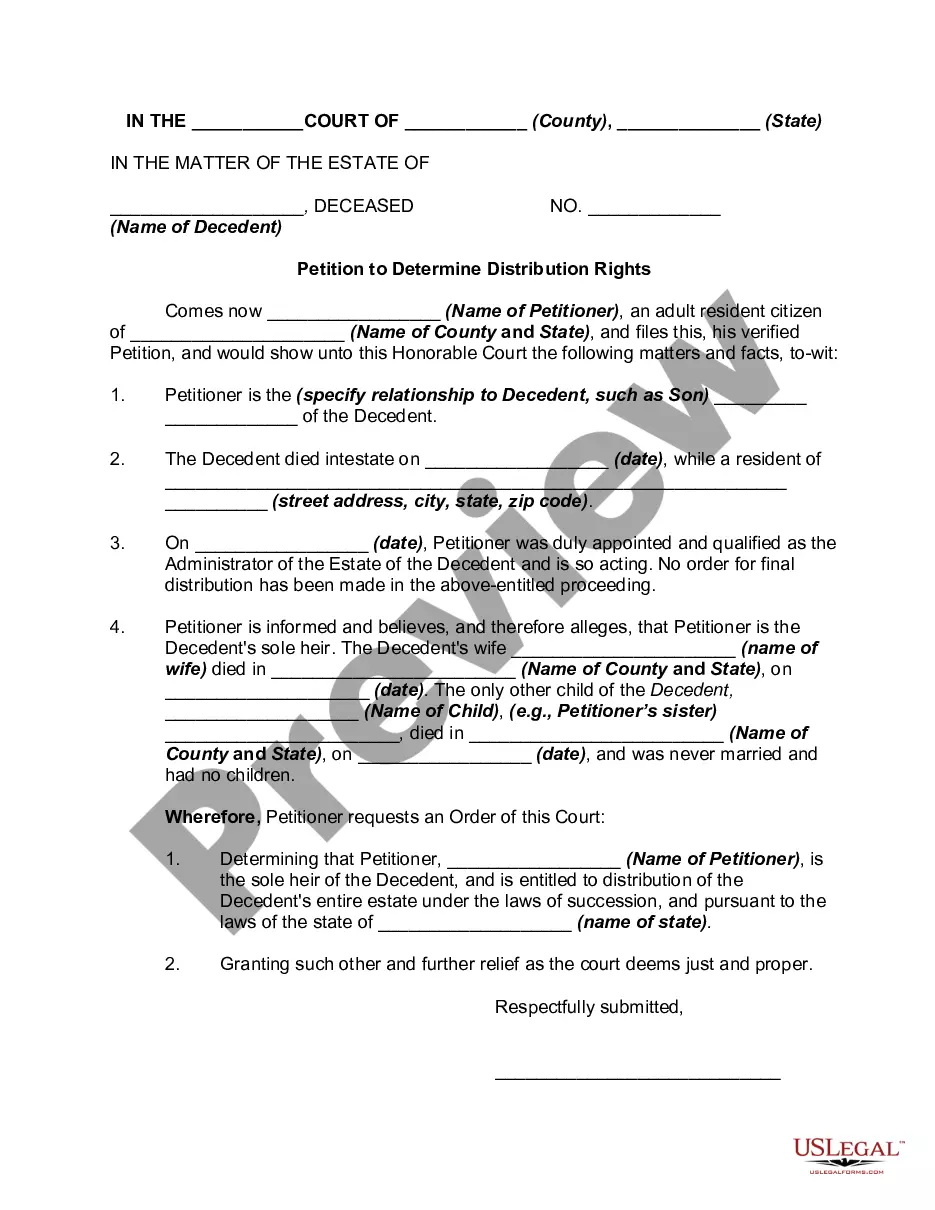
Executor Petition Estate With No Will
Description
Get your form ready online
Our built-in tools help you complete, sign, share, and store your documents in one place.
Make edits, fill in missing information, and update formatting in US Legal Forms—just like you would in MS Word.
Download a copy, print it, send it by email, or mail it via USPS—whatever works best for your next step.
Sign and collect signatures with our SignNow integration. Send to multiple recipients, set reminders, and more. Go Premium to unlock E-Sign.
If this form requires notarization, complete it online through a secure video call—no need to meet a notary in person or wait for an appointment.
We protect your documents and personal data by following strict security and privacy standards.

Make edits, fill in missing information, and update formatting in US Legal Forms—just like you would in MS Word.

Download a copy, print it, send it by email, or mail it via USPS—whatever works best for your next step.

Sign and collect signatures with our SignNow integration. Send to multiple recipients, set reminders, and more. Go Premium to unlock E-Sign.

If this form requires notarization, complete it online through a secure video call—no need to meet a notary in person or wait for an appointment.

We protect your documents and personal data by following strict security and privacy standards.
Looking for another form?
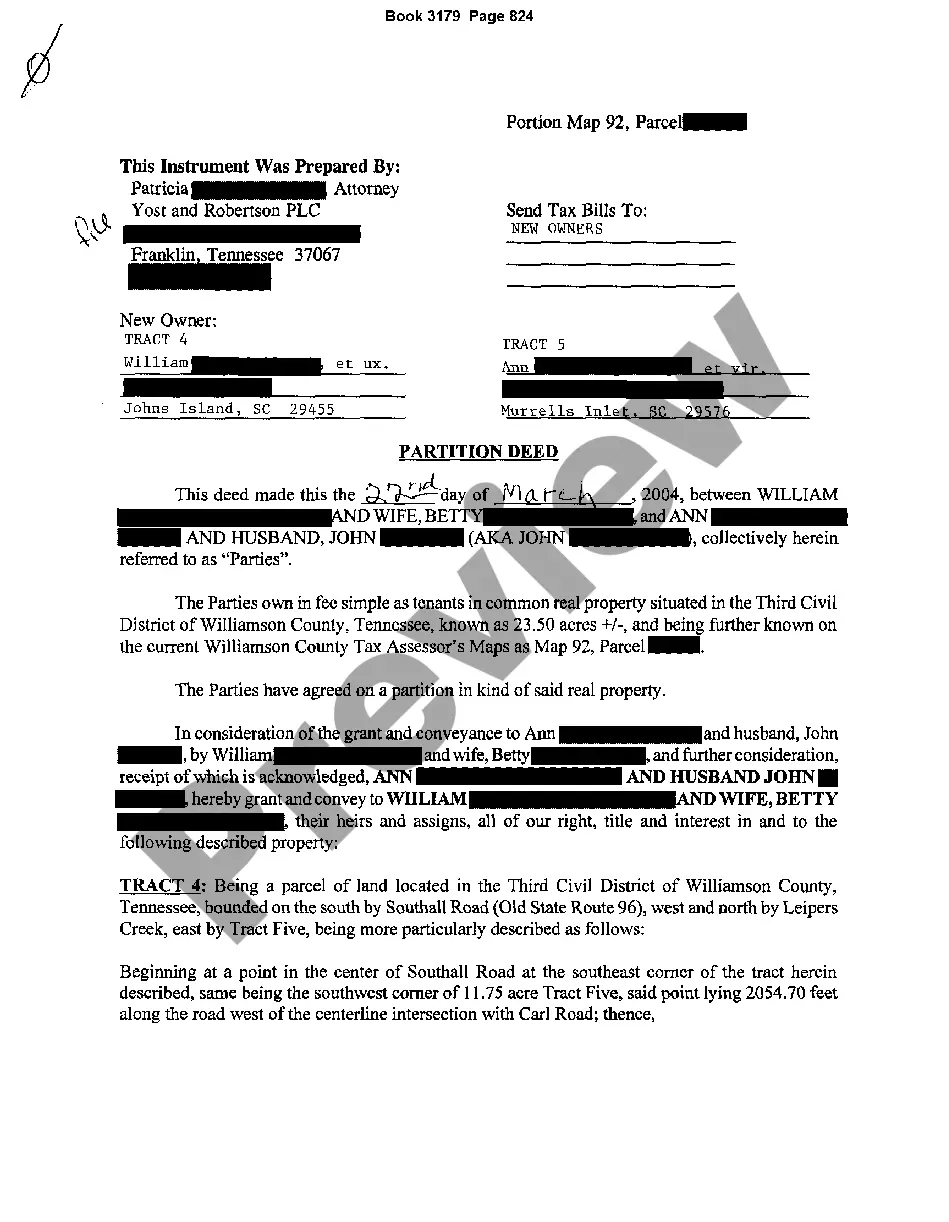




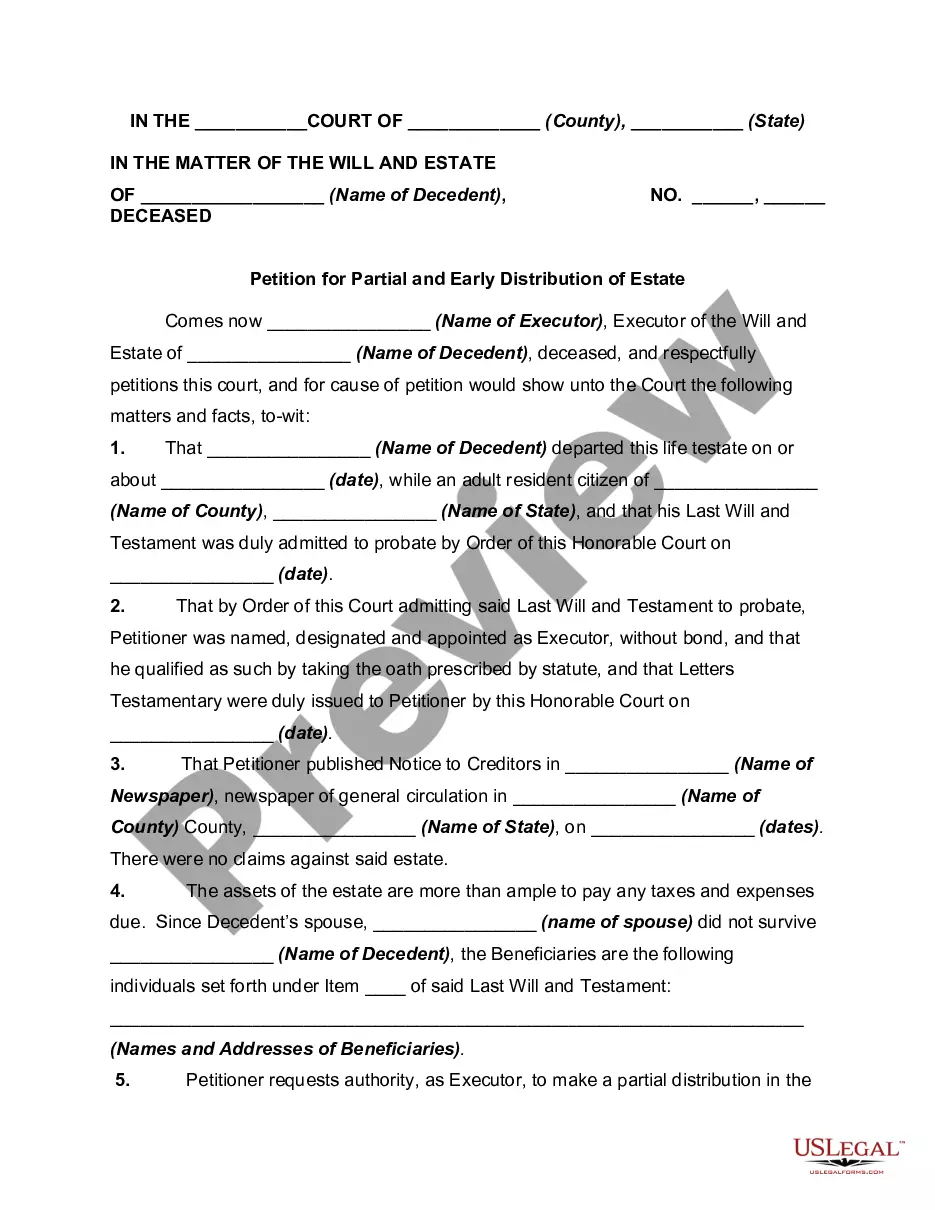
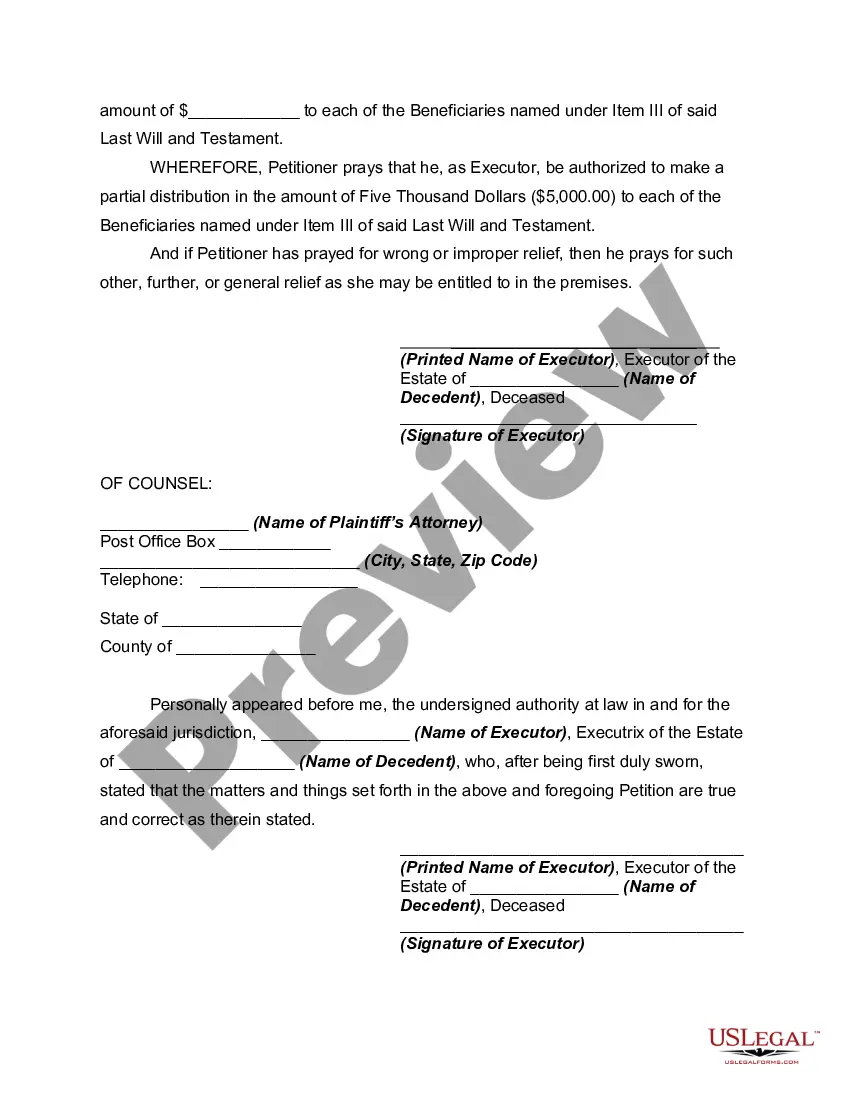
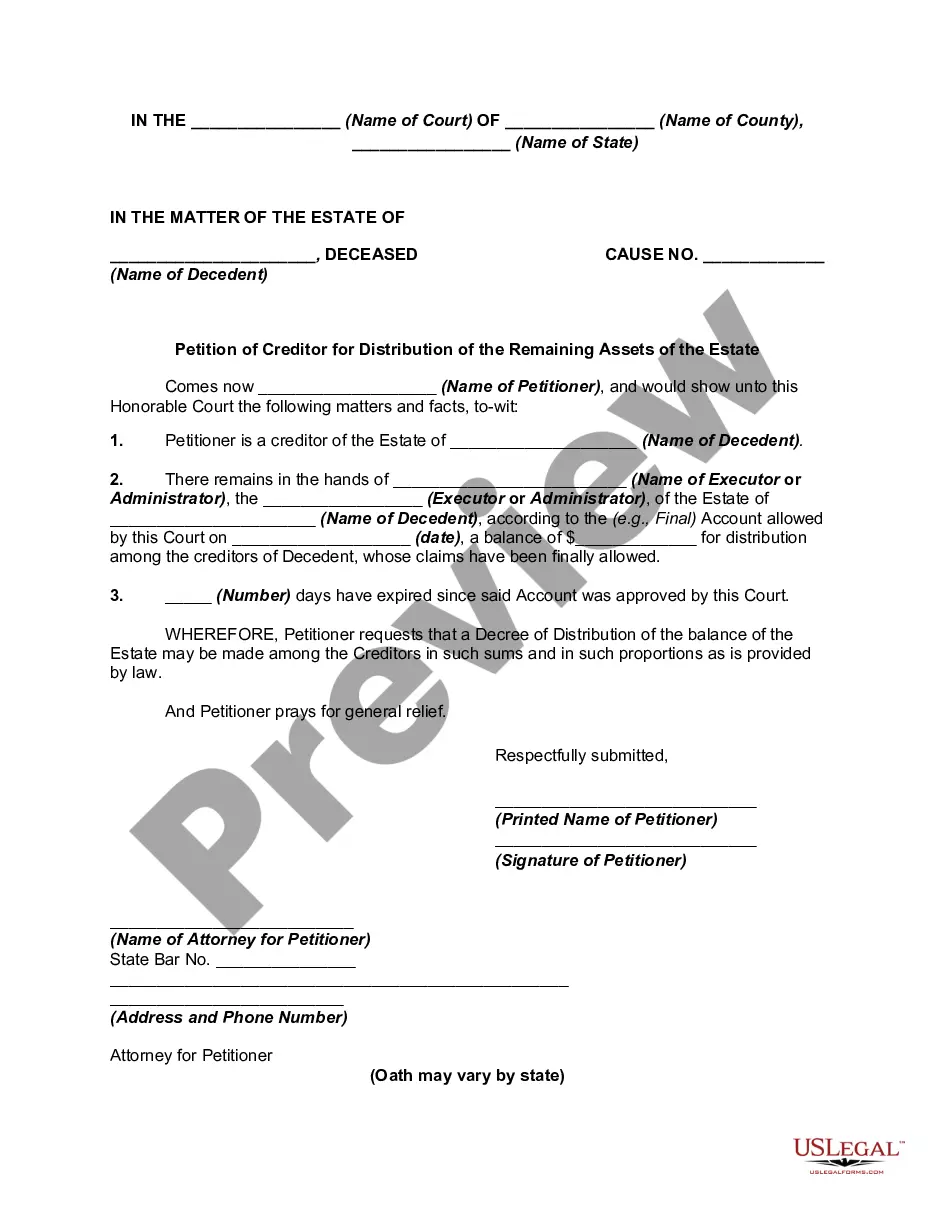
How to fill out Petition For Partial And Early Distribution Of Estate?
- Log in to your US Legal Forms account. If you're a first-time user, you'll need to create an account.
- Browse the extensive collection of legal forms. Use the Preview mode and descriptions to find the executor petition that fits your needs.
- If you don't find what you need, utilize the Search function to locate other related templates.
- Select the document you need and click on the Buy Now button. Choose your subscription plan to gain access to all forms.
- Complete your purchase using your credit card or PayPal to finalize your subscription.
- Download the form directly to your device and store it for easy access through the My Forms section in your account.
By following these steps, you can easily navigate the process of filing an executor petition estate without a will. US Legal Forms not only provides an extensive collection of over 85,000 legal templates but also ensures accuracy and legality with expert assistance.
Take control of your legal needs today—visit US Legal Forms and start your journey towards a smoother estate management process.
Form popularity
FAQ
The 3-year rule for a deceased estate refers to the timeframe in which claims may be made against the estate after death. Generally, creditors have three years to file claims, and this period is crucial for settling debts before distributing assets to heirs. If a claim is not made within this timeline, it may be permanently barred. Understanding this rule can aid in efficiently managing the executor petition estate with no will.
Yes, you can contest an estate even if there is no will. However, the process may differ from contesting a will, as the estate will be distributed according to intestacy laws. Individuals can challenge the appointment of the administrator or their actions if they feel their rights are violated. In such scenarios, an executor petition estate with no will can facilitate the legal proceedings and clarify responsibilities.
Without a will, the executor does not have the power to unilaterally decide who receives what. Instead, the distribution of assets is determined by state intestacy laws. These laws dictate how assets should be divided among heirs based on their relationship to the deceased. Therefore, the executor must follow these guidelines when managing the estate and distributing assets.
Proving an executor of an estate without a will can be done through state intestacy laws. Typically, the court will appoint someone, usually a close relative, as the administrator of the estate. This person can then act on behalf of the estate and fulfill the duties of an executor. Utilizing services like US Legal Forms can help streamline this process and ensure all paperwork is correctly filed.
A will that meets all legal requirements and is properly executed usually cannot be contested. Specifically, if it is a 'self-proving will,' which includes signatures from witnesses and notaries, it is less likely to face challenges. However, disputes can arise if there is evidence of undue influence, lack of capacity, or other factors. Therefore, an executor petition estate with no will can simplify matters when no valid will exists.
Closing an estate without a will involves several steps, primarily the executor petition estate with no will. You start by identifying the heirs, typically following state laws that determine inheritance. Then, you file the necessary legal documents with the court to request the appointment of an administrator. Once appointed, the administrator can then manage the estate and distribute the assets according to the law.
No, an executor cannot unilaterally decide how to distribute assets if there is no will. Instead, state laws dictate how the estate is divided among heirs. An executor must follow these laws when managing an estate without a will, especially during the executor petition process. Utilizing resources like US Legal Forms can provide clarity on heirship laws and the executor's responsibilities in this scenario.
To petition for an executor of an estate, you typically file documents with your local probate court. This process can vary based on state laws and specific circumstances of the estate. If there is no will, you'll be petitioning for an administrator instead, which is similar and requires understanding the legal framework. Using tools from US Legal Forms can simplify this process and ensure you meet all legal requirements.
It is not always necessary to hire a lawyer to become an executor of an estate, especially if the estate is straightforward. However, navigating the legal nuances can be complex, especially when petitioning for an executor in cases of estates without a will. Engaging a lawyer can provide clarity on your responsibilities and ensure that you comply with state laws. Platforms like US Legal Forms offer valuable resources to guide you through this process.
If someone dies without a will in Tennessee, their estate will go through probate under state intestacy laws. The court will identify heirs and distribute assets accordingly, often leading to lengthy delays. Additionally, family disputes may arise over asset distribution if expectations differ. You can simplify this process by exploring executor petition estate with no will options to provide clarity and peace of mind.