Executor Petition Estate With A Trust
Description
Get your form ready online
Our built-in tools help you complete, sign, share, and store your documents in one place.
Make edits, fill in missing information, and update formatting in US Legal Forms—just like you would in MS Word.
Download a copy, print it, send it by email, or mail it via USPS—whatever works best for your next step.
Sign and collect signatures with our SignNow integration. Send to multiple recipients, set reminders, and more. Go Premium to unlock E-Sign.
If this form requires notarization, complete it online through a secure video call—no need to meet a notary in person or wait for an appointment.
We protect your documents and personal data by following strict security and privacy standards.

Make edits, fill in missing information, and update formatting in US Legal Forms—just like you would in MS Word.

Download a copy, print it, send it by email, or mail it via USPS—whatever works best for your next step.

Sign and collect signatures with our SignNow integration. Send to multiple recipients, set reminders, and more. Go Premium to unlock E-Sign.

If this form requires notarization, complete it online through a secure video call—no need to meet a notary in person or wait for an appointment.

We protect your documents and personal data by following strict security and privacy standards.
Looking for another form?


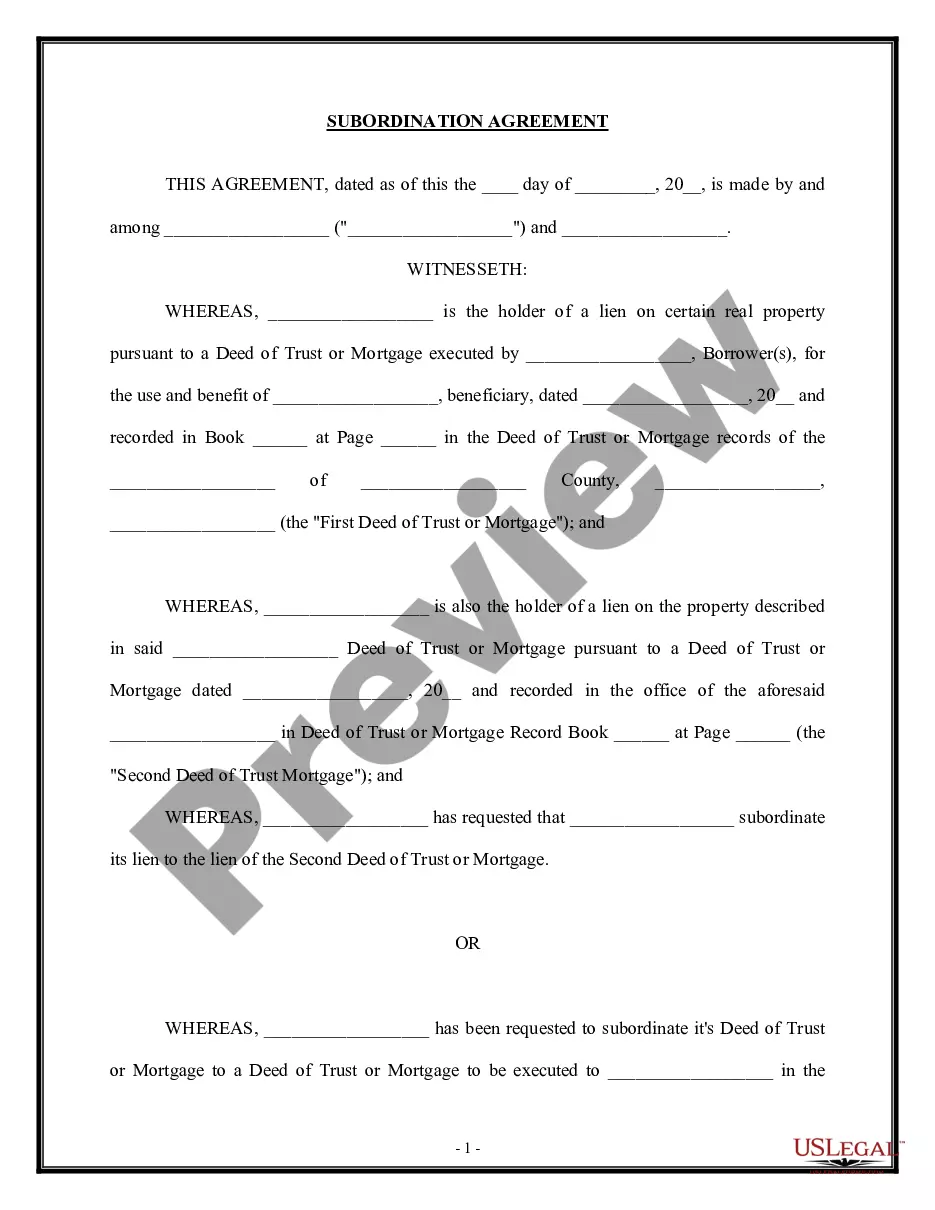



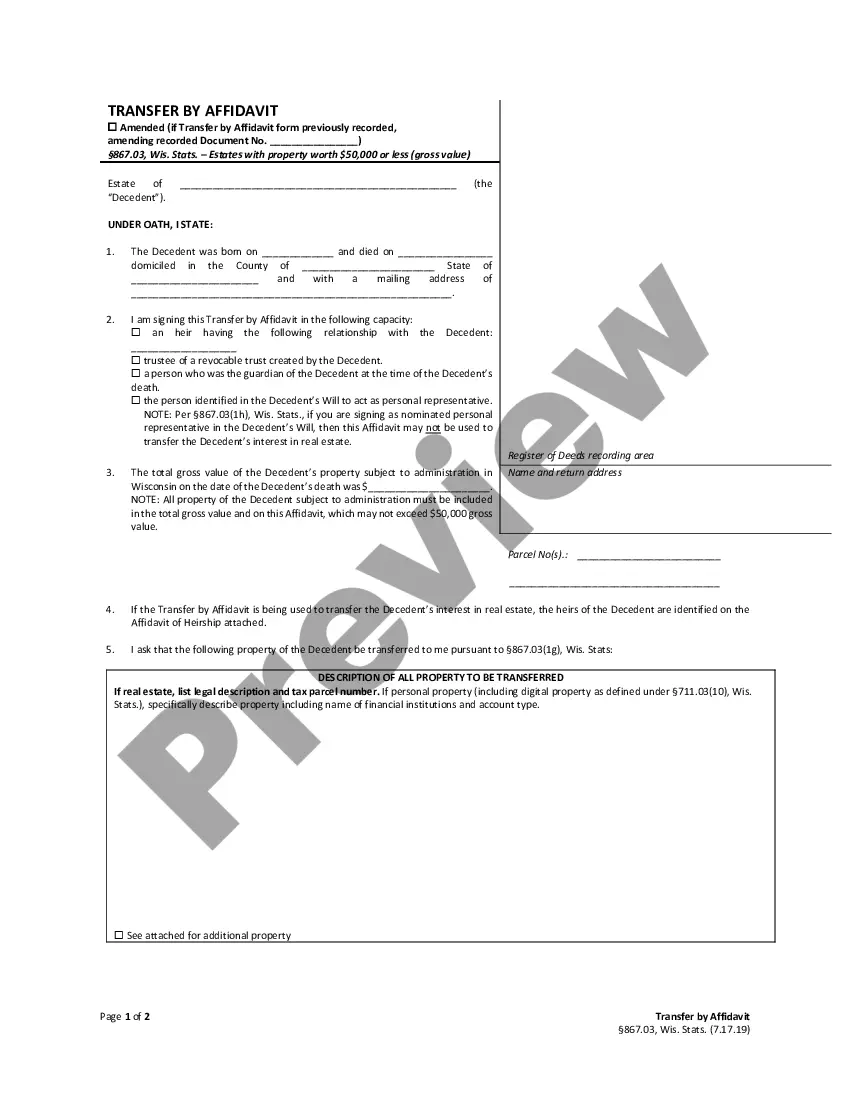

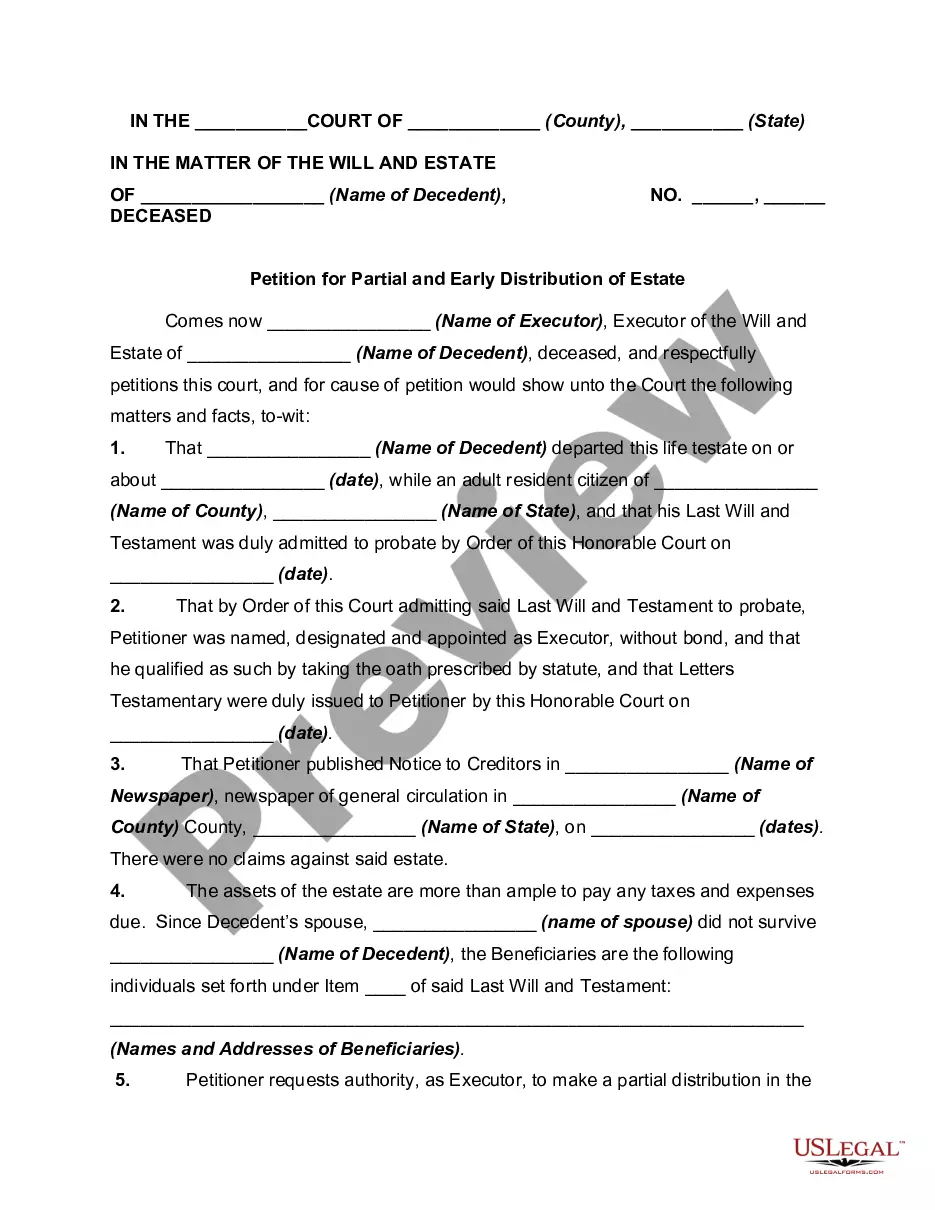
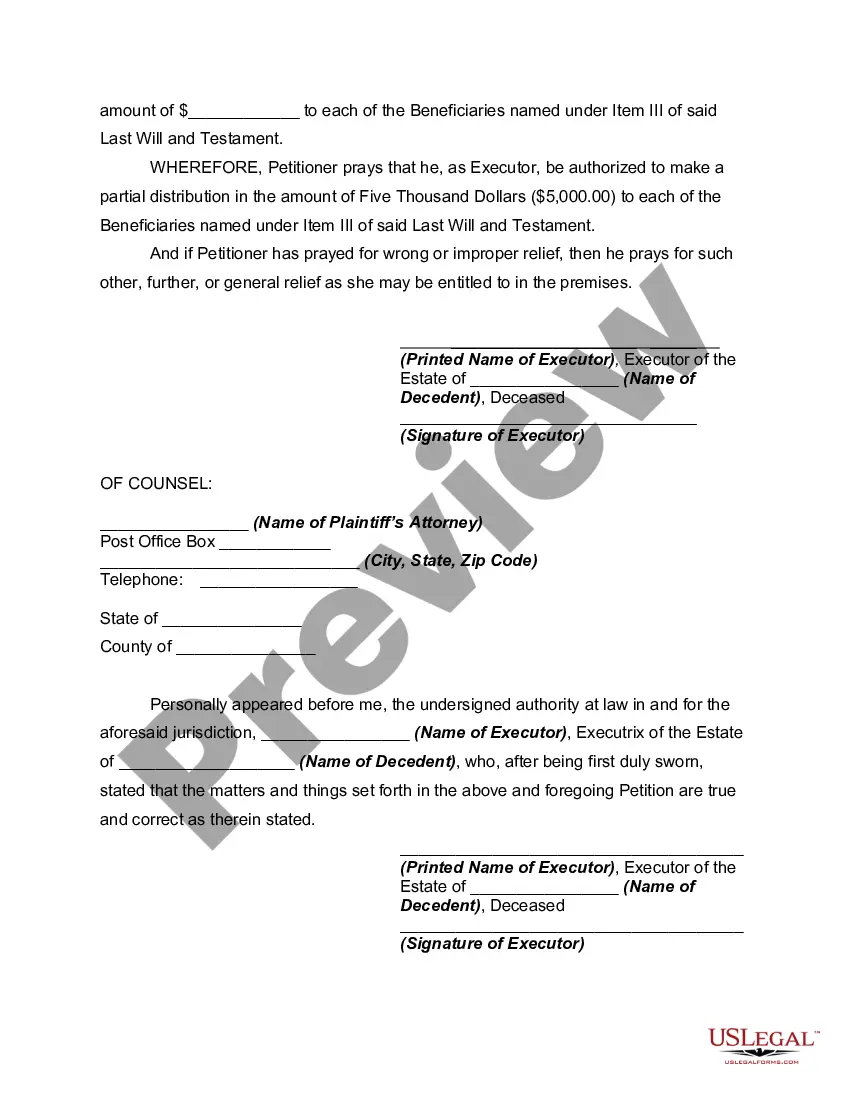
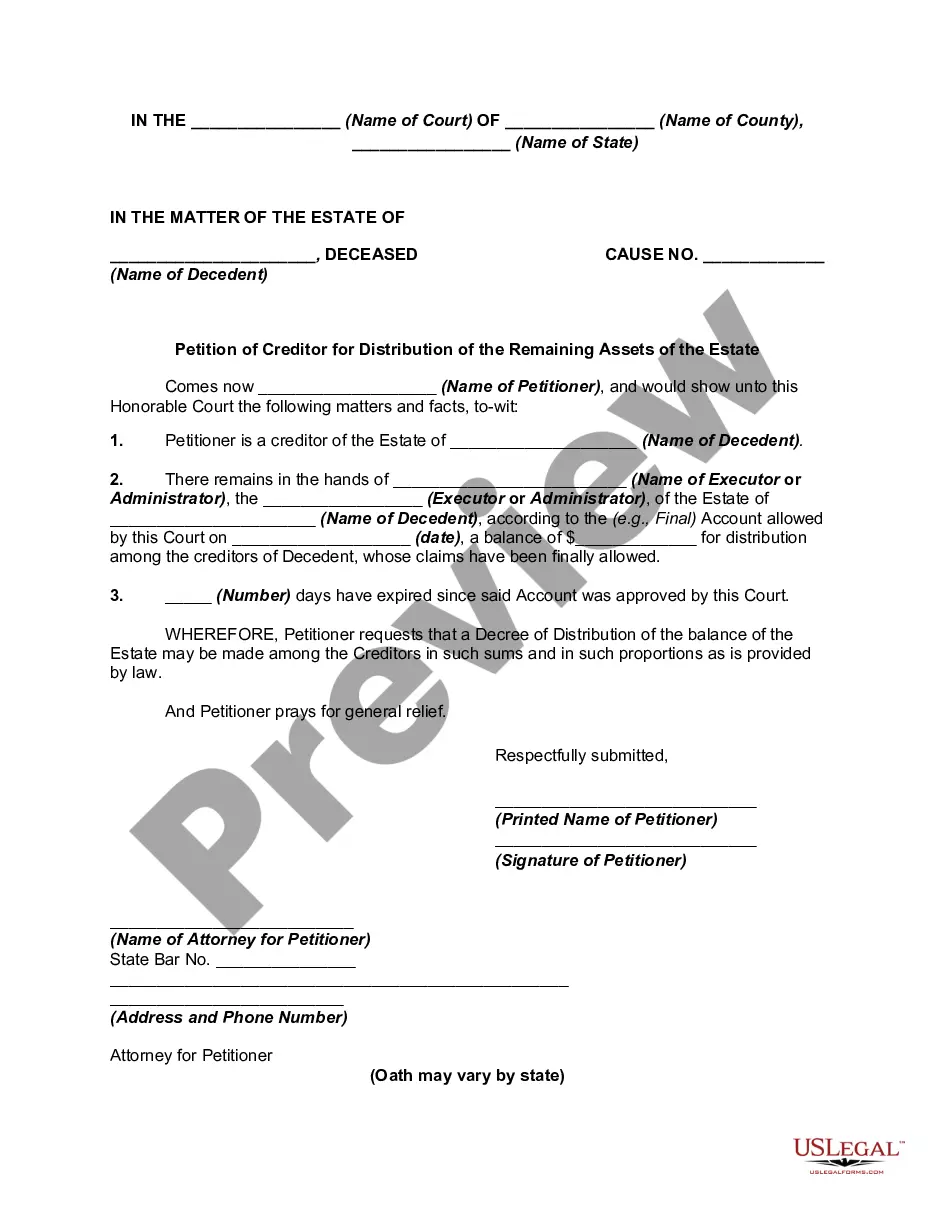
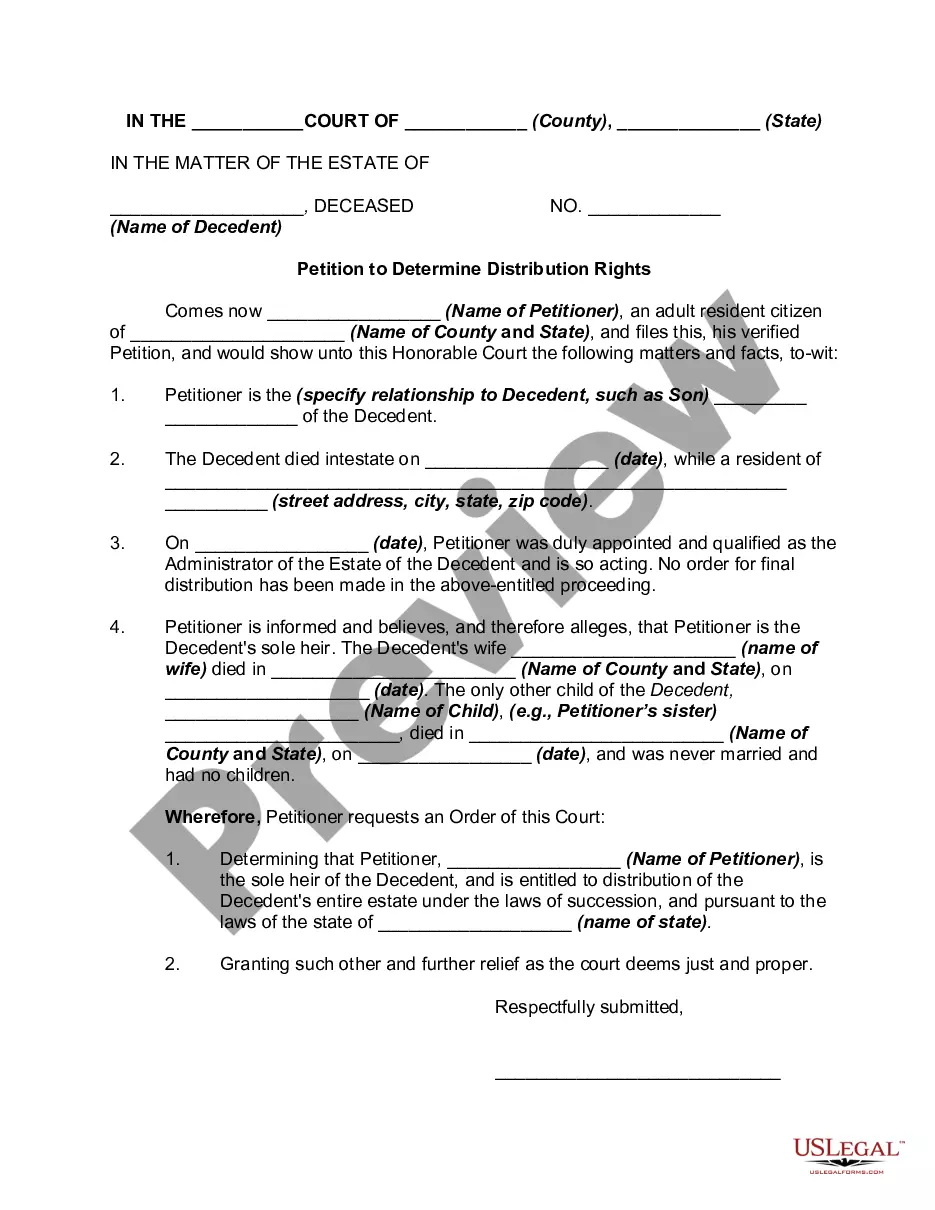
How to fill out Petition For Partial And Early Distribution Of Estate?
Managing legal documents can be daunting, even for experienced professionals.
When searching for an Executor Petition Estate With A Trust and lacking the opportunity to dedicate time to locate the right and current version, the procedure can be stressful.
Access a wealth of articles, guides, and materials related to your situation and needs.
Save time and effort attempting to locate the necessary documents, and make use of US Legal Forms’ enhanced search and Review feature to find Executor Petition Estate With A Trust and obtain it.
Select Buy Now when you are prepared. Choose a subscription option. Select the desired format, and Download, complete, sign, print, and submit your document. Benefit from the US Legal Forms online repository, supported by 25 years of expertise and reliability. Streamline your routine document handling in a simple and user-friendly manner today.
- If you are a member, Log In to your US Legal Forms account, find the document, and download it.
- Check your My documents tab to view the documents you have previously acquired and manage your folders as needed.
- If using US Legal Forms for the first time, create an account and gain unlimited access to all the platform’s features.
- After obtaining the form you need, verify its correctness by previewing it and reviewing its details.
- Ensure the template is acknowledged in your state or county.
- Utilize an extensive online form library that can transform how individuals handle these matters efficiently.
- Access state or county-specific legal and business documents. US Legal Forms meets your various needs, from personal to commercial paperwork, all in one place.
- Employ advanced tools to complete and organize your Executor Petition Estate With A Trust.
Form popularity
FAQ
Sometimes, it might make sense to name a single person as both the executor and trustee, or to make sure that both parties get along with each other since they'll likely have to work together to settle the estate.
An easy take-away: Trustees have power of Trust assets both during and after your lifetime; your Attorney-in-Fact has power over your non-trust assets during your lifetime; and your Executor has power over your Probate assets upon your death.
The executor or trustee functions to act on behalf of the estate, which would be if it's a will, or on behalf of the trust if it's a trust document, to administer the assets, handle any claims, and then distribute the assets as those documents state.
Yes, the executor and beneficiary can be named as the same person in the Will. It's perfectly normal and legal. It's actually a common approach because the executor should be someone you know and trust and it's common sense that your beneficiaries fall into that column.
All three roles have different obligations. Generally, an executor administers the estate of the person who died, while a trustee administers a trust for the benefit of the named beneficiaries. A guardian makes decisions for minor children of the person who died or for an incapacitated adult.