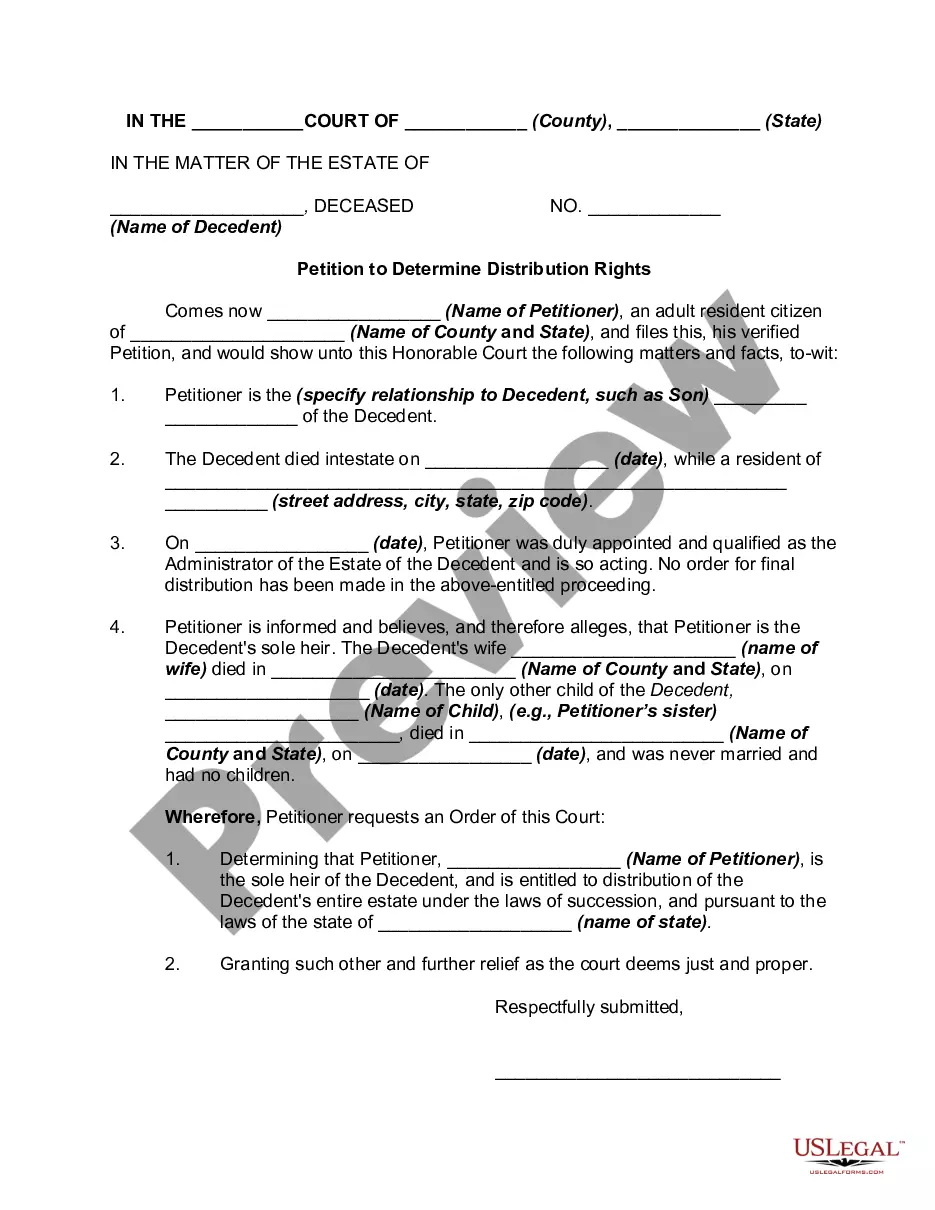
Estate Distribution Form For Taxes
Description
Get your form ready online
Our built-in tools help you complete, sign, share, and store your documents in one place.
Make edits, fill in missing information, and update formatting in US Legal Forms—just like you would in MS Word.
Download a copy, print it, send it by email, or mail it via USPS—whatever works best for your next step.
Sign and collect signatures with our SignNow integration. Send to multiple recipients, set reminders, and more. Go Premium to unlock E-Sign.
If this form requires notarization, complete it online through a secure video call—no need to meet a notary in person or wait for an appointment.
We protect your documents and personal data by following strict security and privacy standards.

Make edits, fill in missing information, and update formatting in US Legal Forms—just like you would in MS Word.

Download a copy, print it, send it by email, or mail it via USPS—whatever works best for your next step.

Sign and collect signatures with our SignNow integration. Send to multiple recipients, set reminders, and more. Go Premium to unlock E-Sign.

If this form requires notarization, complete it online through a secure video call—no need to meet a notary in person or wait for an appointment.

We protect your documents and personal data by following strict security and privacy standards.
Looking for another form?










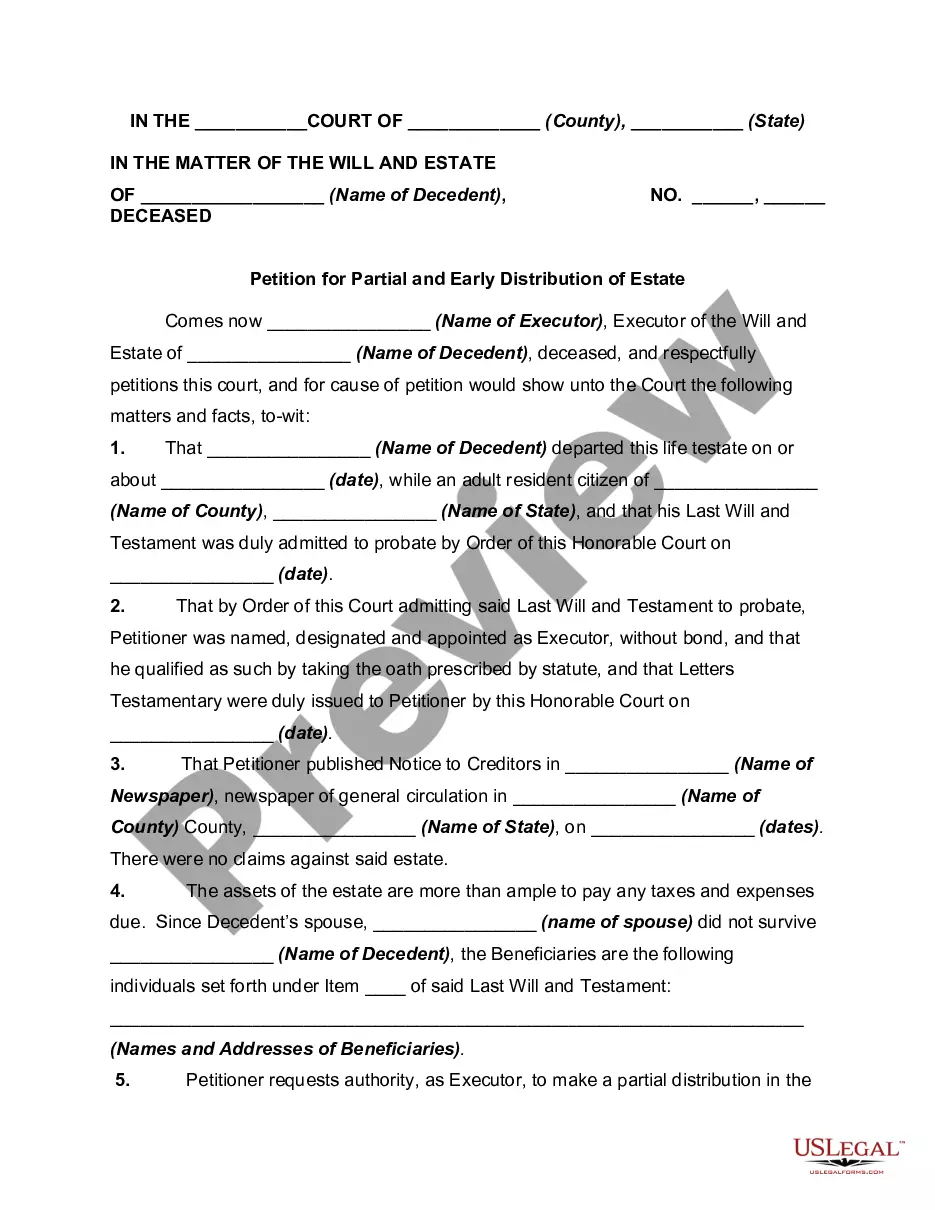
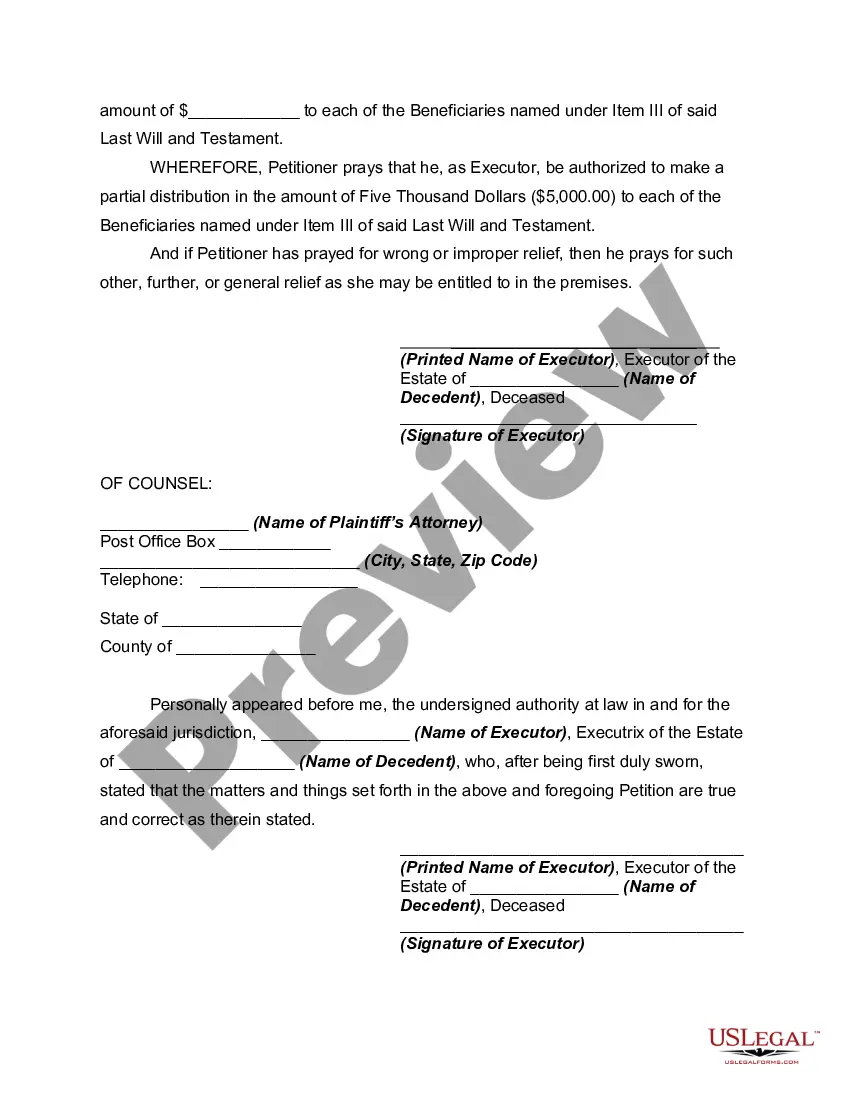
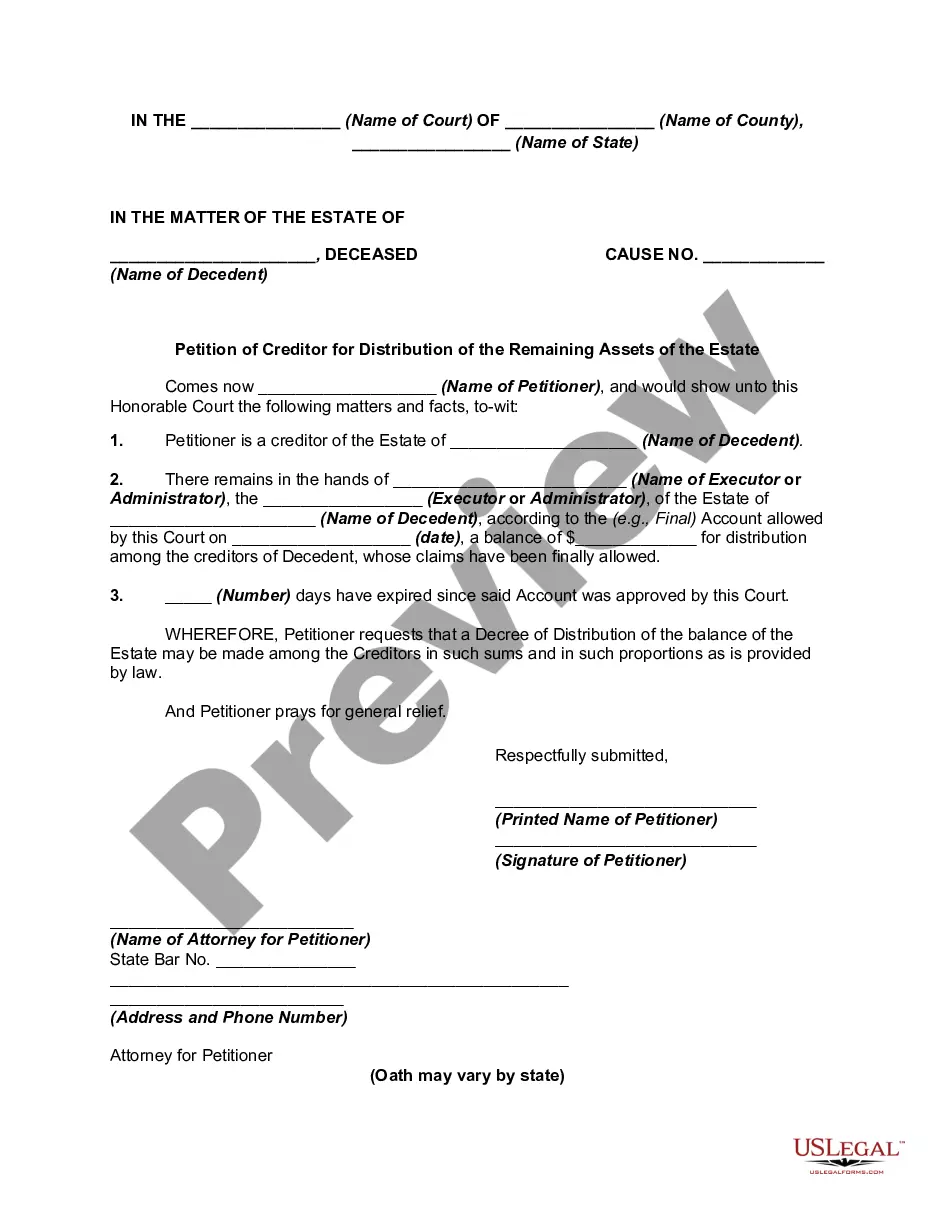
How to fill out Petition For Partial And Early Distribution Of Estate?
Utilizing legal document examples that comply with federal and state regulations is essential, and the internet provides numerous choices.
However, what's the purpose of spending time hunting for the right Estate Distribution Form For Taxes template online when the US Legal Forms digital repository has such documents conveniently gathered in one location.
US Legal Forms is the largest online legal database featuring over 85,000 editable templates crafted by attorneys for various professional and personal situations. Navigating the library is straightforward, with all documents organized by state and intended use.
All documents found through US Legal Forms are reusable. To re-download and complete previously acquired forms, navigate to the My documents section in your account. Take advantage of the most comprehensive and user-friendly legal document service!
- Our experts keep abreast of legal updates, ensuring your Estate Distribution Form For Taxes is current and compliant when obtained from our site.
- Acquiring an Estate Distribution Form For Taxes is quick and easy for both existing and new users.
- If you already possess an account with an active subscription, Log In and save the form you require in the desired format.
- If you are new to our platform, follow the steps outlined below.
- 1. Review the template using the Preview option or through the text outline to confirm it suits your needs.
Form popularity
FAQ
The primary tax form for reporting inheritance distributions is Form 1041, the U.S. Income Tax Return for Estates and Trusts. This form captures the income the estate generates during its administration and shows how distributions are taxed. Understanding this process is crucial because it lays out the estate distribution form for taxes that beneficiaries must comply with. If navigating this complexity feels overwhelming, uslegalforms can provide you with user-friendly forms and resources to simplify your needs.
To obtain an IRS transcript from an estate, you must submit Form 4506-T, Request for Transcript of Tax Return, to the IRS. This process allows you to access tax information related to the estate, which can be essential for finalizing the estate's tax obligations. Having the correct estate distribution form for taxes on hand can streamline this process, ensuring you relate the correct information. You can simplify your experience by exploring services offered by uslegalforms to assist with these requests.
Recording an inheritance on your taxes involves declaring it as part of your taxable income, depending on the type of assets you received. In most cases, inheritances are not taxable, but you should report any income generated by the inherited assets. To complete this process accurately, having the right estate distribution form for taxes, like Form 1040, will be useful in guiding you through the required disclosures. If you're unsure how to proceed, uslegalforms can provide helpful templates and guidance.
To report inheritance to the IRS, you will generally need to fill out Form 706, the United States Estate (and Generation-Skipping Transfer) Tax Return. This form acts as the estate distribution form for taxes and helps you specify the details related to the estate's value and the beneficiaries. It’s essential to check whether any applicable tax applies based on the size of the estate. If you need assistance, consider using the services from uslegalforms, which can guide you through the complexities of estate reporting.
Filing form 709 is essential for reporting gifts that exceed the annual exclusion amount, especially in the context of estate distribution. However, it is important to understand that this form should be filed separately and not with your standard tax return. The estate distribution form for taxes plays a crucial role in properly documenting gifts for federal tax purposes. For a seamless experience, consider using US Legal Forms, which simplifies the process of managing and filing your tax-related documents.
Form 709 is used to report gifts made during the calendar year, while form 706 is for reporting the estate tax after someone's passing. Both forms serve different purposes related to tax liabilities, particularly concerning estates and gifts. It's crucial to understand these distinctions when dealing with an estate distribution form for taxes to ensure compliance with IRS requirements. Utilizing platforms like USLegalForms can help clarify which form applies to your situation.
Form 1310 is required by individuals who are claiming a tax refund on behalf of a deceased taxpayer. If you are the executor or legal representative handling the estate, you will need to file this estate distribution form for taxes to process any refunds due. Its completion demonstrates your authority to act on behalf of the deceased. Using resources like USLegalForms can help ensure you complete it correctly.
A US estate tax return must be filed by the estate of a deceased person if their gross estate exceeds a specific threshold, which is adjusted annually. Generally, if the estate is valued above this limit, filing an estate distribution form for taxes becomes mandatory. Executors and administrators should familiarize themselves with these requirements to ensure compliance and timely filing. Consulting with a platform like USLegalForms can provide clarity on necessary filings.
Form 1310 is a tax form used to claim a refund on behalf of a deceased person. This estate distribution form for taxes is necessary when you are filing an estate tax return and the deceased individual overpaid their taxes. By completing this form, you can help ensure that the estate receives any potential refunds owed. Familiarizing yourself with this form can simplify your tax obligations.
Processing form 1310 typically takes about 8 to 12 weeks after submission. However, this timeframe can vary based on the workload of the IRS and the accuracy of your submission. To ensure quicker processing of your estate distribution form for taxes, double-check all information before filing. Using a reliable platform like USLegalForms can help streamline the process and minimize errors.