Profit Sharing Agreement Template With Vesting
Description


Get your form ready online
Our built-in tools help you complete, sign, share, and store your documents in one place.
Make edits, fill in missing information, and update formatting in US Legal Forms—just like you would in MS Word.
Download a copy, print it, send it by email, or mail it via USPS—whatever works best for your next step.
Sign and collect signatures with our SignNow integration. Send to multiple recipients, set reminders, and more. Go Premium to unlock E-Sign.
If this form requires notarization, complete it online through a secure video call—no need to meet a notary in person or wait for an appointment.
We protect your documents and personal data by following strict security and privacy standards.

Make edits, fill in missing information, and update formatting in US Legal Forms—just like you would in MS Word.

Download a copy, print it, send it by email, or mail it via USPS—whatever works best for your next step.

Sign and collect signatures with our SignNow integration. Send to multiple recipients, set reminders, and more. Go Premium to unlock E-Sign.

If this form requires notarization, complete it online through a secure video call—no need to meet a notary in person or wait for an appointment.

We protect your documents and personal data by following strict security and privacy standards.
Looking for another form?







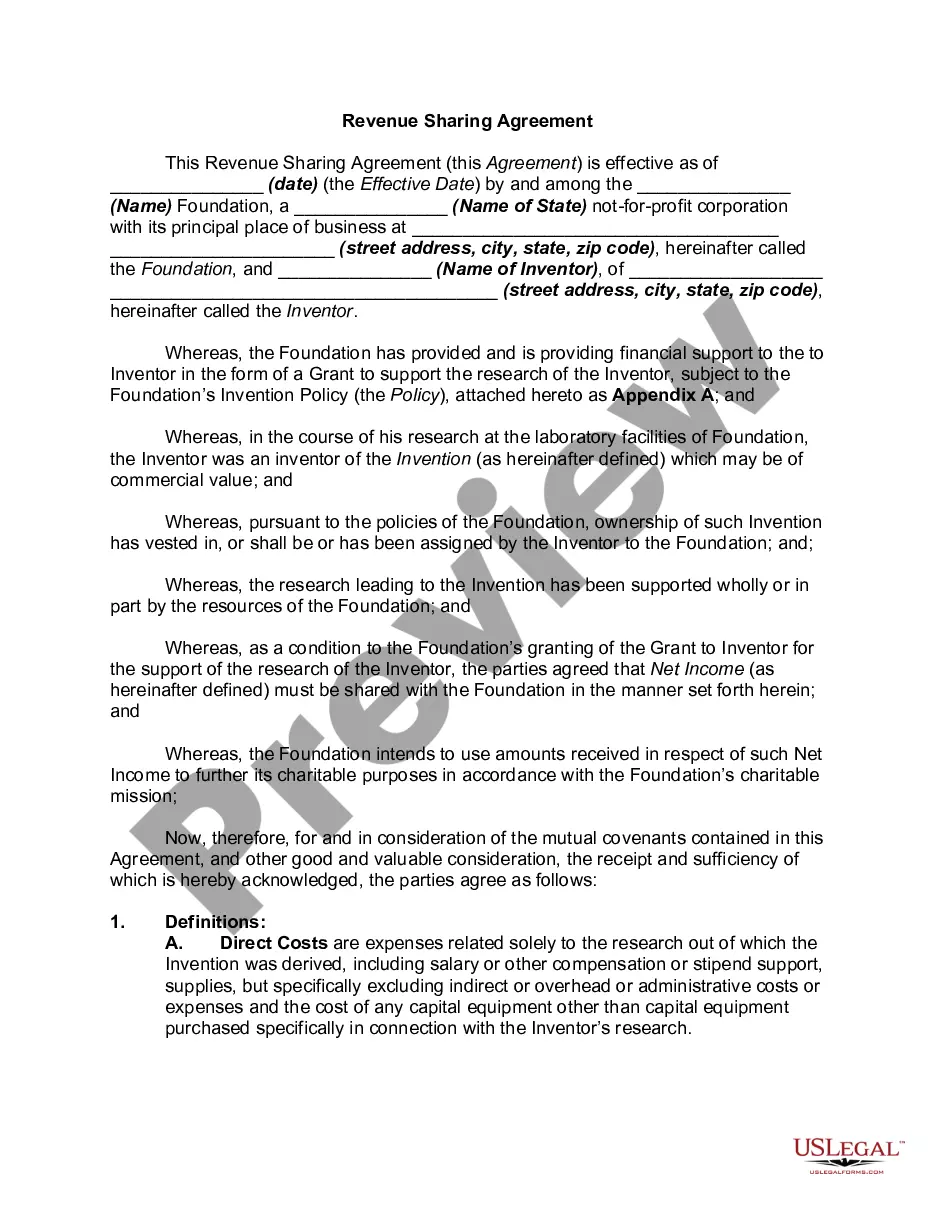
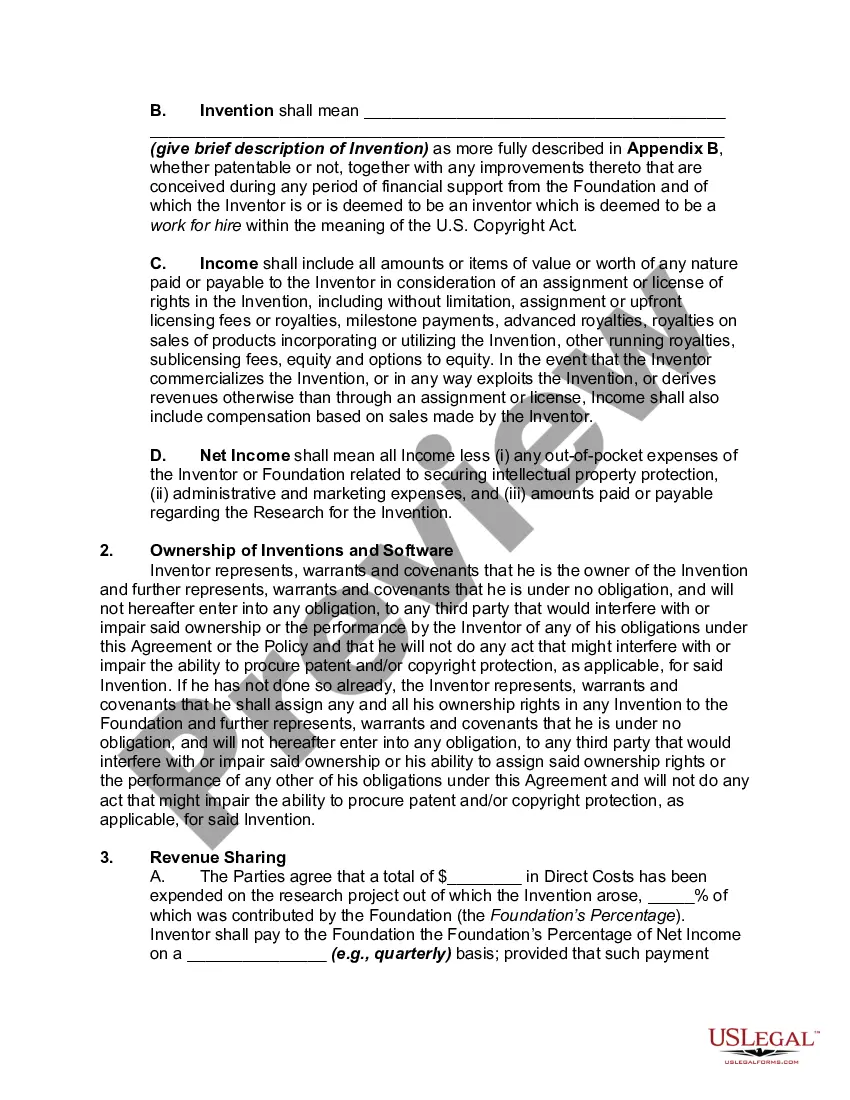
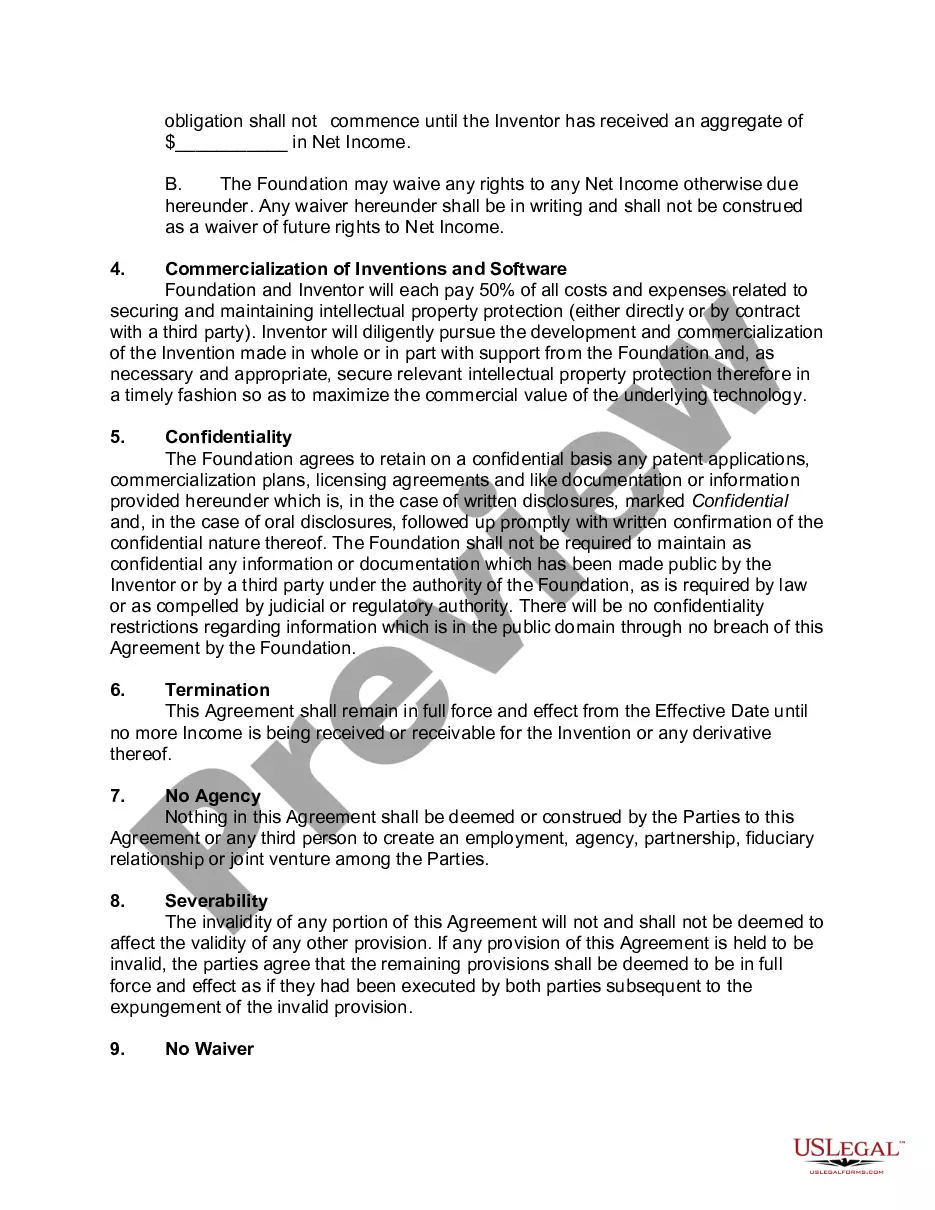
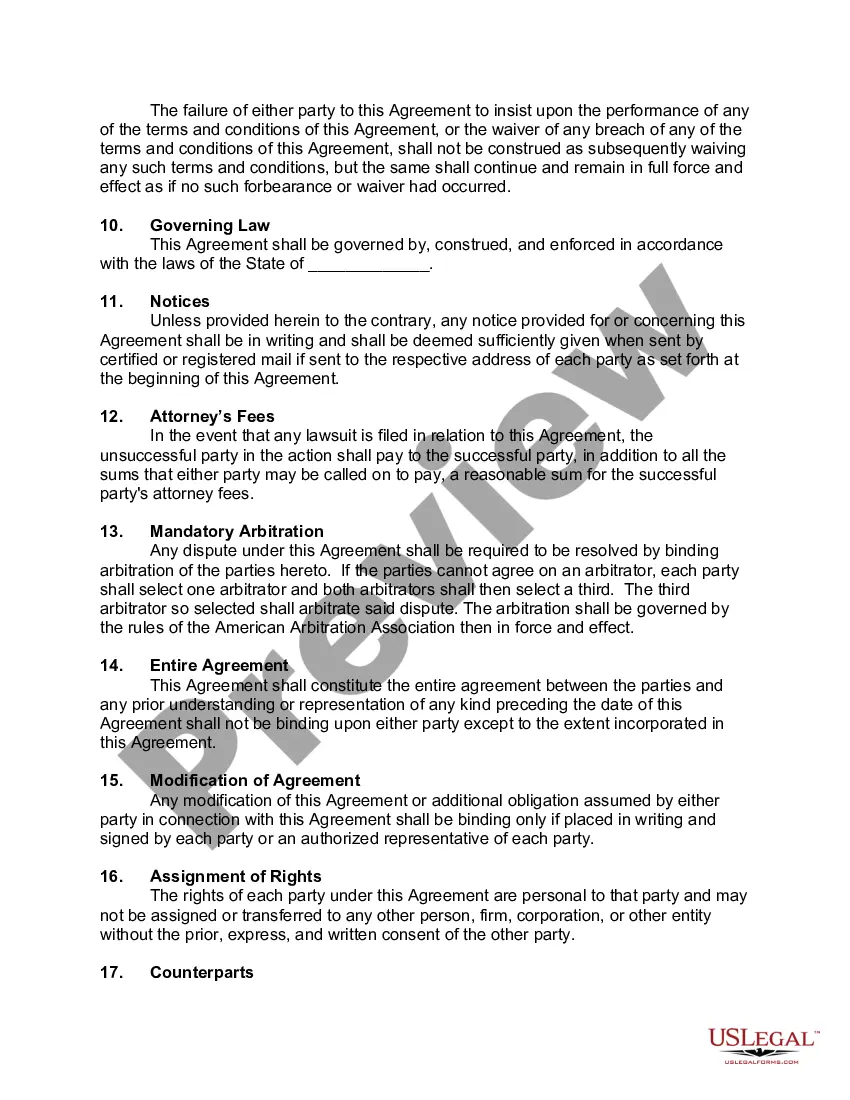
How to fill out Revenue Sharing Agreement?
Individuals typically connect legal documentation with something complex that only an expert can handle.
In a sense, this is accurate, as crafting a Profit Sharing Agreement Template With Vesting requires considerable expertise in subject matters, such as state and county laws.
Nevertheless, with US Legal Forms, everything has become simpler: pre-crafted legal templates for any personal and business situation tailored to state regulations are compiled in a single online collection and are now accessible to all.
All templates in our collection are reusable: once purchased, they remain stored in your account. You can access them anytime through the My documents tab. Discover all the advantages of using the US Legal Forms platform. Subscribe today!
- US Legal Forms provides over 85,000 current documents categorized by state and application area, making it easy to search for the Profit Sharing Agreement Template With Vesting or any other specific template within minutes.
- Users who are already registered with an active subscription must Log In to their account and click Download to obtain the form.
- New users to the site will first need to create an account and subscribe before downloading any documents.
- Here is a step-by-step guide on how to acquire the Profit Sharing Agreement Template With Vesting.
- Carefully review the content of the page to ensure it meets your preferences.
- Read the form description or preview it using the Preview function.
- If the initial one does not meet your needs, use the Search bar in the header to find another example.
- Once you locate the suitable Profit Sharing Agreement Template With Vesting, click Buy Now.
- Select a pricing plan that suits your needs and budget.
- Create an account or Log In to continue to the payment page.
- Complete payment for your subscription using PayPal or a credit card.
- Choose the desired file format and click Download.
- Print your document or upload it to an online editor for quicker completion.
Form popularity
FAQ
Under a revenue-sharing contract, a retailer pays a supplier a wholesale price for each unit purchased plus a percentage of the revenue the retailer generates. Such contracts have become more prevalent in the video cassette rental industry relative to the more conventional wholesale price contract.
In a cash profit sharing plan, employees are awarded profit sharing contributions in the form of cash or checks, but sometimes also as stock. The amount is taxes as part of their regular income and is considered a type of employee bonus.
If you want your profit-sharing agreement to be rock solid, here are a few clauses that you must include in it.Profit Sharing. Clearly mention the ratio/percentage in which you will be dividing the profits.Termination.Dispute Resolution.Confidentiality.Obligations.Intellectual Property.Indemnities and Liabilities.
A revenue sharing agreement is a legal document between two parties where one party has to pay a percentage of profits or revenues received to the other for the rights to use something.
The simplest and most common is known as the comp-to-comp method, where contributions are based on the proportion of an employee's compensation to the total compensation of all employees of the organization. There's no required profit-sharing percentage, but experts recommend staying between 2.5% and 7.5%.
