Supplemental Type Certificate
Description



Get your form ready online
Our built-in tools help you complete, sign, share, and store your documents in one place.
Make edits, fill in missing information, and update formatting in US Legal Forms—just like you would in MS Word.
Download a copy, print it, send it by email, or mail it via USPS—whatever works best for your next step.
Sign and collect signatures with our SignNow integration. Send to multiple recipients, set reminders, and more. Go Premium to unlock E-Sign.
If this form requires notarization, complete it online through a secure video call—no need to meet a notary in person or wait for an appointment.
We protect your documents and personal data by following strict security and privacy standards.

Make edits, fill in missing information, and update formatting in US Legal Forms—just like you would in MS Word.

Download a copy, print it, send it by email, or mail it via USPS—whatever works best for your next step.

Sign and collect signatures with our SignNow integration. Send to multiple recipients, set reminders, and more. Go Premium to unlock E-Sign.

If this form requires notarization, complete it online through a secure video call—no need to meet a notary in person or wait for an appointment.

We protect your documents and personal data by following strict security and privacy standards.
Looking for another form?



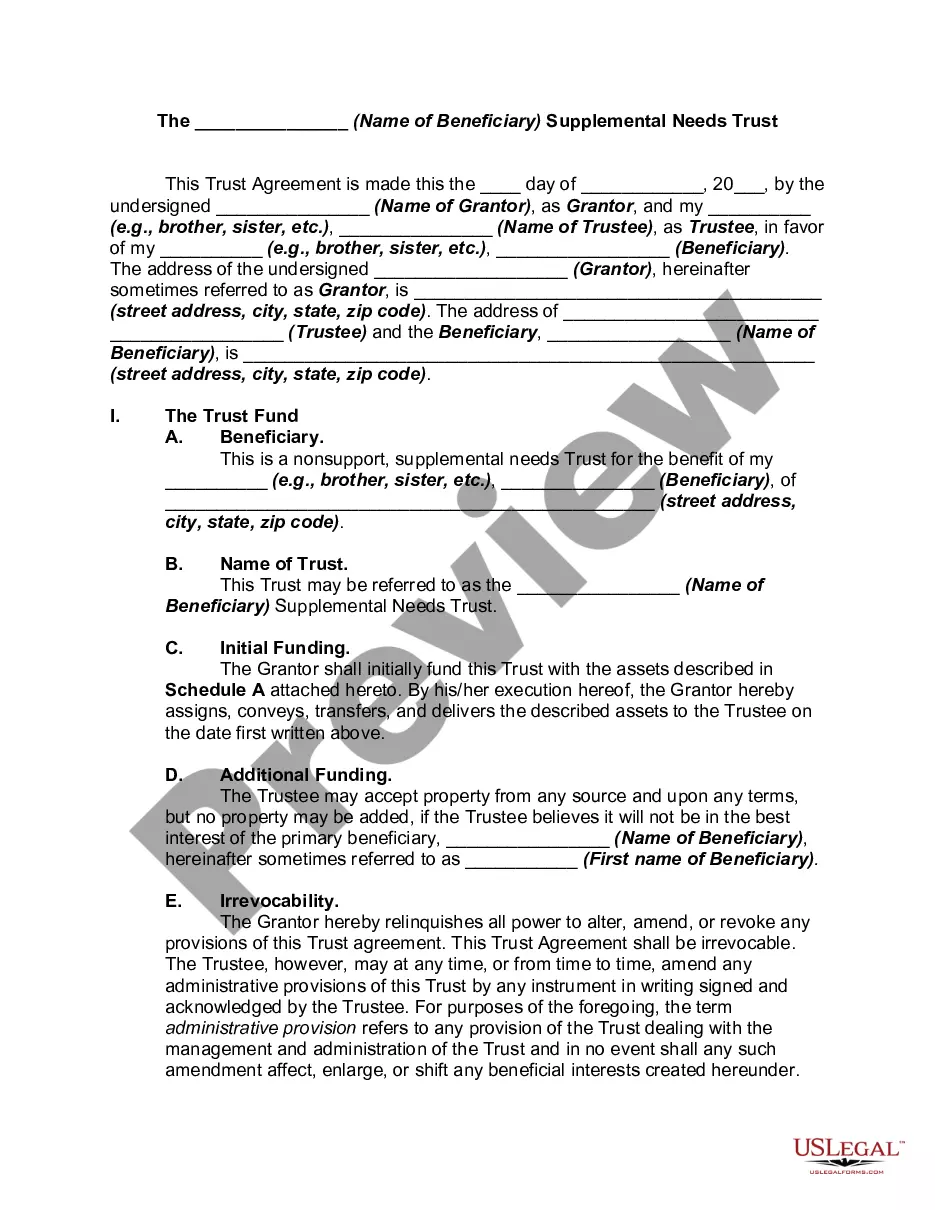
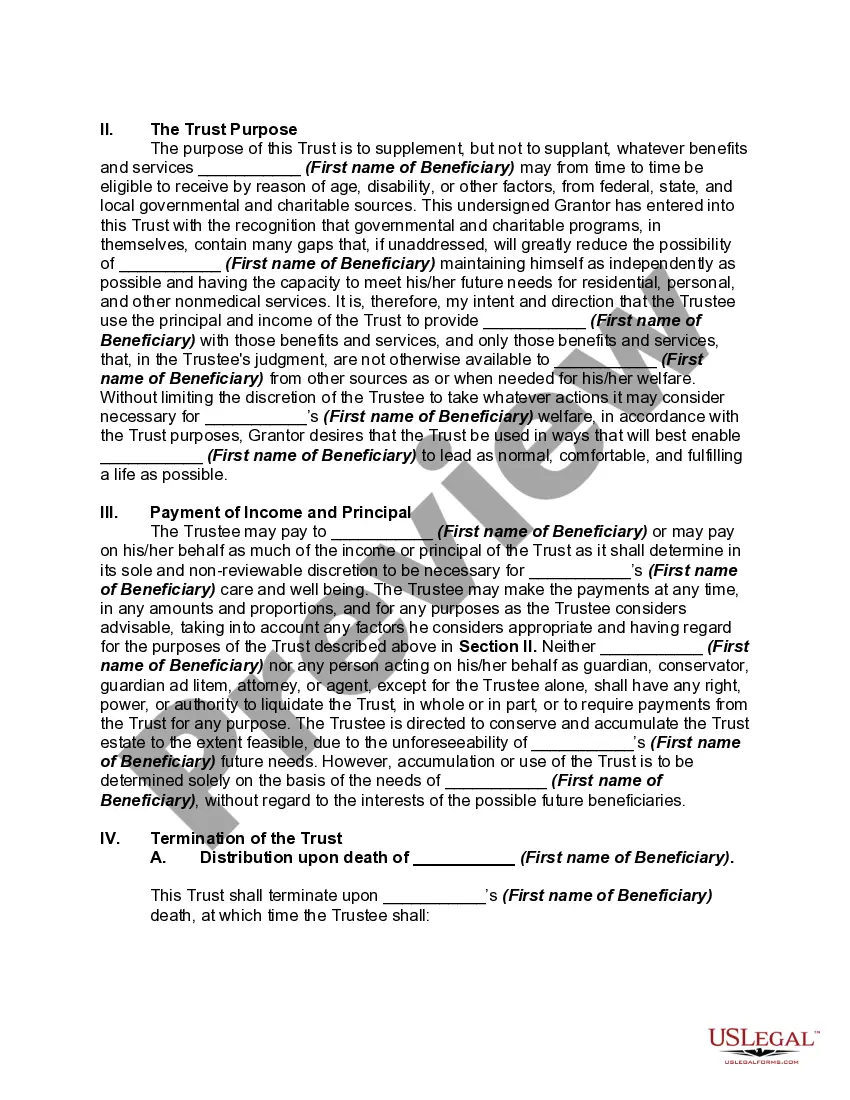
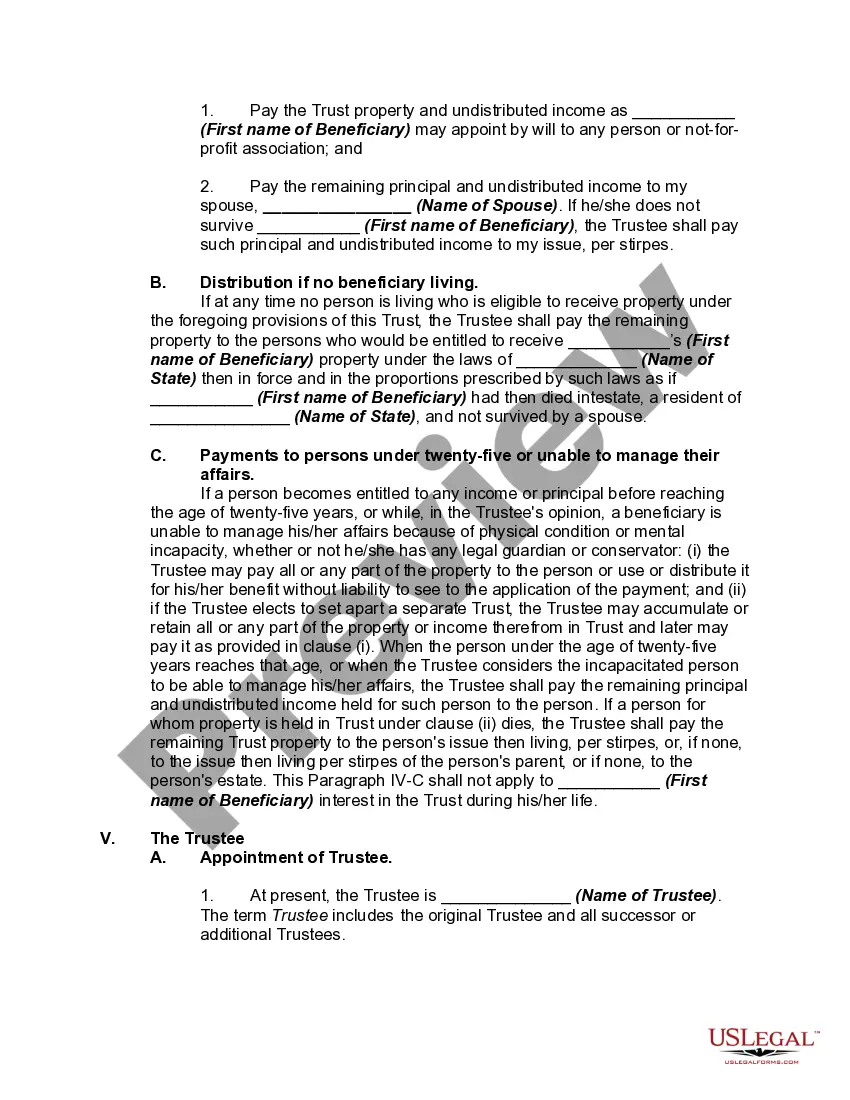
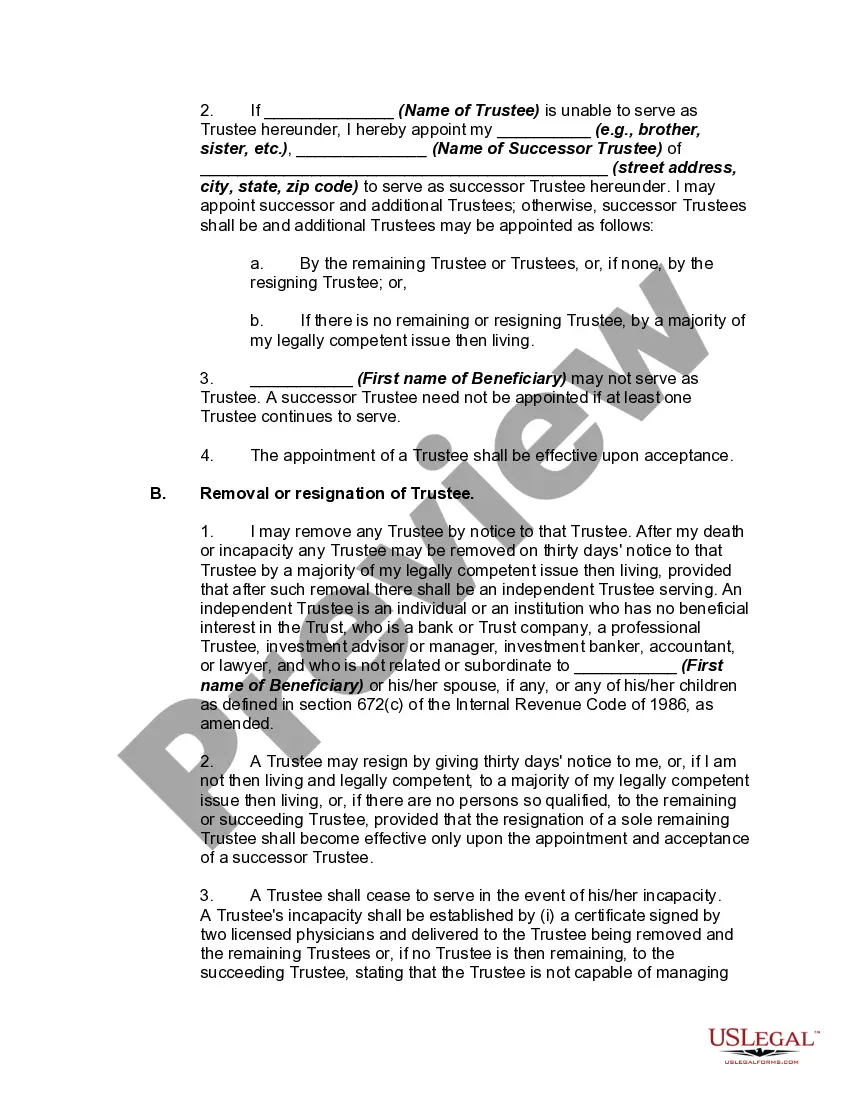
How to fill out Supplemental Needs Trust For Third Party - Disabled Beneficiary?
- Log into your US Legal Forms account if you're an existing user. Ensure your subscription is active; if not, renew it based on your payment plan.
- For new users, begin by checking the preview mode of the form you're interested in. Verify the form meets your local jurisdiction requirements.
- If the current form isn’t suitable, utilize the search feature to find an alternative template that meets your needs.
- Once you find the right document, click the Buy Now button. Choose a subscription plan that fits your requirements and create an account to access their extensive library.
- Proceed to the payment section, where you can enter your credit card information or use PayPal to finalize your purchase.
- After purchasing, download the form to your device. Access it anytime later through the My Forms section in your profile.
By following these steps, you can efficiently create legally sound documents using US Legal Forms. The platform not only offers a robust collection of over 85,000 forms but also access to expert advice for precise completion.
Start your legal journey today with US Legal Forms to ensure you have the correct documentation. Sign up now for instant access!
Form popularity
FAQ
As mentioned before, the duration for obtaining a supplemental type certificate generally ranges from a few weeks to several months. This timeframe primarily depends on the complexity of your modifications and how quickly the documentation is approved. To streamline this process, consider utilizing resources like uslegalforms, which can help you navigate the application requirements efficiently.
Obtaining your STCW, which stands for Standards of Training, Certification, and Watchkeeping, typically takes between a few days to several months, depending on your preparedness and the specific requirements of the course. While it may seem lengthy, proper planning can greatly reduce the time needed. If you have any questions about certification processes, uslegalforms can provide assistance to help you navigate the various requirements.
A good example of a supplemental type certificate is one that permits the installation of modern avionics in older aircraft models. These modifications enhance navigational capabilities and improve safety features, making them invaluable for many operators. By obtaining an STC for such modifications, operators can ensure their aircraft remains compliant while benefiting from advancements in technology.
The timeline for obtaining a supplemental type certificate can vary significantly based on the complexity of the modifications involved. Typically, the process may take anywhere from a few weeks to several months, depending on factors such as thoroughness of your submission and the FAA's current workload. Engaging experienced professionals can help expedite the approval process by ensuring your application is complete.
Obtaining a supplemental type certificate (STC) involves several steps. First, you will need to gather all necessary documentation and design data for your proposed modifications. Then, submit these materials to the FAA, along with a detailed application. Platforms like uslegalforms can assist you in gathering required documents and ensuring that your application meets regulatory expectations.
An STC is generally considered a major change because it affects the aircraft's type certification. This means that any alterations covered under a supplemental type certificate must be approved to ensure safety and compliance with federal regulations. Consequently, it's essential to understand the implications of obtaining an STC before proceeding with any modifications.
To get a supplemental type certificate (STC) approved, you must first submit a request to the Federal Aviation Administration (FAA) that outlines your intended modifications. Next, ensure that you provide detailed documentation that demonstrates compliance with applicable regulations. Additionally, working with knowledgeable consultants can streamline the approval process, helping you navigate any technical aspects.
The supplemental type certificate process is a crucial pathway for aircraft modifications and upgrades. It allows manufacturers and aircraft owners to seek approval for changes that enhance safety or performance. This process involves submitting detailed design and testing information to the Federal Aviation Administration (FAA) to ensure compliance with established safety standards. For those seeking streamlined assistance, USLegalForms provides resources that simplify navigating the complexity of acquiring a supplemental type certificate.
The difference between a type certificate (TC) and a supplemental type certificate (STC) is fundamental in aviation. A TC is the comprehensive approval granted to an aircraft model upon meeting all safety standards, while an STC provides approval for modifications to that aircraft model. Both are vital for compliance, but they cater to different stages of the aircraft's lifecycle. Knowing how to navigate these certificates can streamline processes within the aviation industry.
The distinction between a supplemental type certificate (STC) and an airworthiness type certificate (ATC) is quite clear. An STC permits specific alterations to an aircraft, while an ATC confirms that an aircraft is safe for operation. Both certificates are integral to aviation, but they serve different roles in the certification process. Familiarity with both can enhance your understanding of aircraft compliance.