Employment Discrimination For Sex
Description

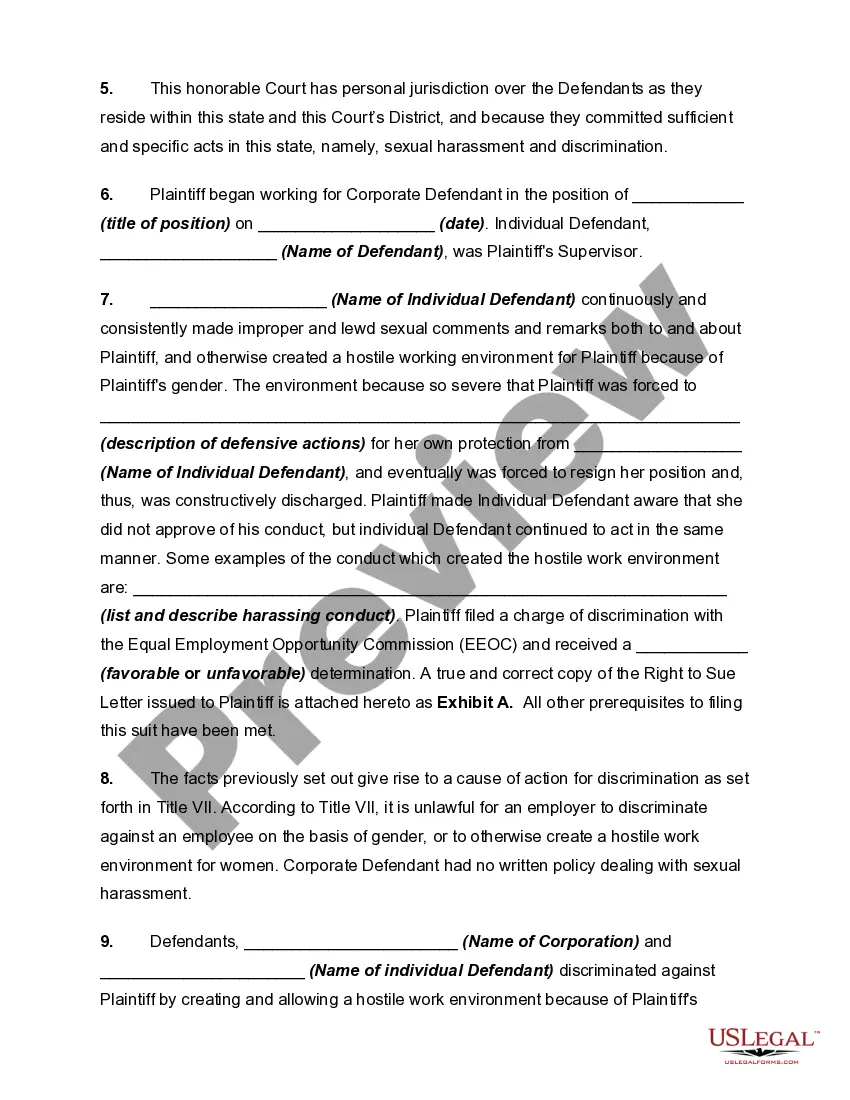
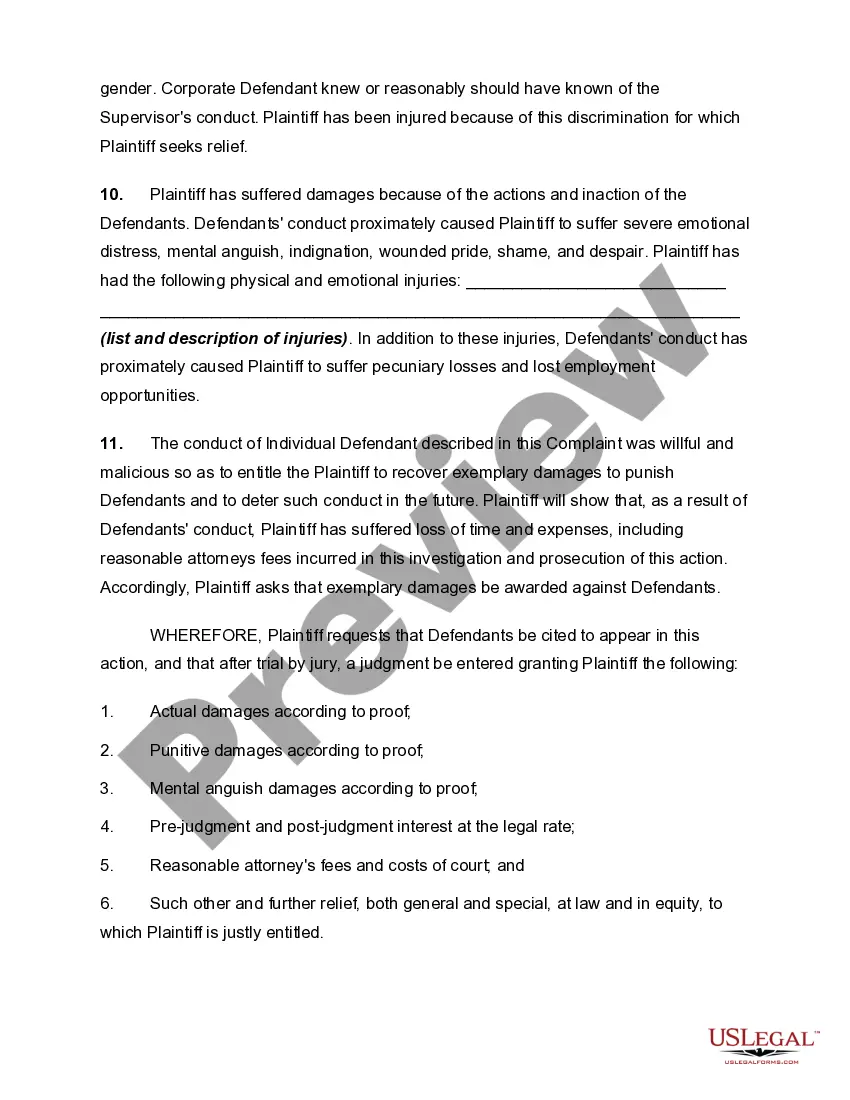
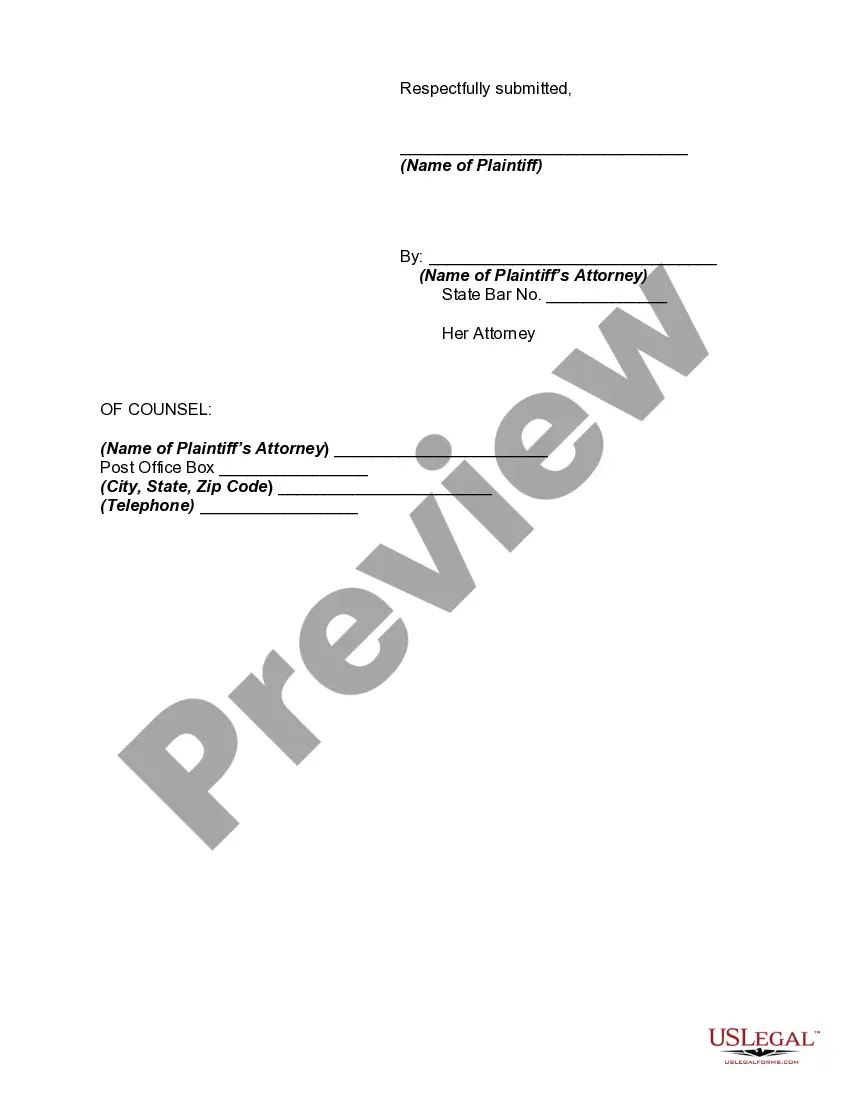


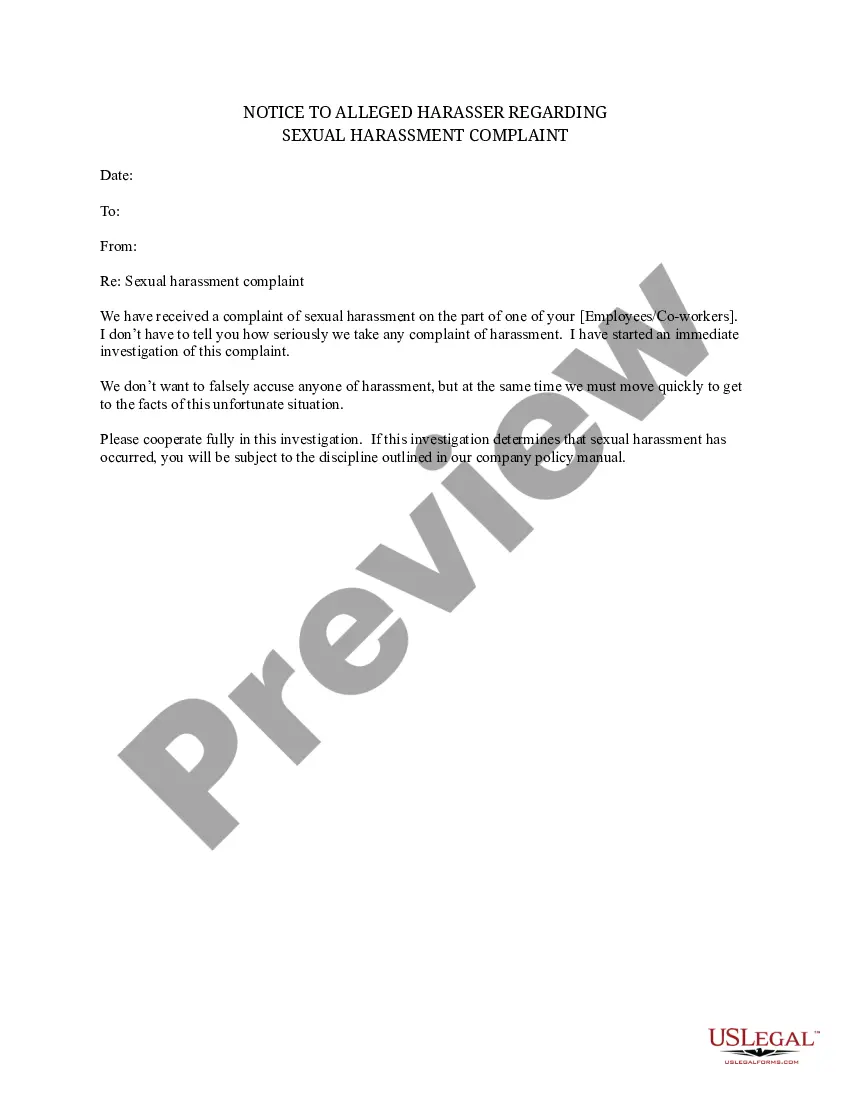
How to fill out Complaint For Discrimination In Employment Based On Sex - Sexual Harassment And A Hostile Work Environment?
Whether for commercial aims or for individual matters, everyone must confront legal circumstances at some stage in their lives.
Filling out legal documents requires meticulous attention, commencing with selecting the appropriate form template.
Select the document format you prefer and download the Employment Discrimination For Sex. After it is saved, you can fill out the form using editing software or print it and complete it manually. With a vast catalog available at US Legal Forms, you won't need to waste time searching for the appropriate sample online. Utilize the library’s easy navigation to find the right form for any circumstance.
- For instance, if you select an incorrect version of an Employment Discrimination For Sex template, it will be dismissed upon submission.
- Thus, it is crucial to obtain a reliable source of legal documents like US Legal Forms.
- If you need to acquire an Employment Discrimination For Sex template, adhere to these straightforward steps.
- Locate the sample you require using the search bar or catalog navigation.
- Review the form’s details to confirm it corresponds with your case, state, and county.
- Click on the form’s preview to inspect it.
- If it is the wrong form, return to the search function to find the Employment Discrimination For Sex template you need.
- Download the template if it fulfills your criteria.
- If you possess a US Legal Forms account, simply click Log in to access previously saved templates in My documents.
- If you haven’t yet created an account, you can download the form by clicking Buy now.
- Select the appropriate pricing option.
- Complete the account registration form.
- Choose your payment method: either a credit card or PayPal account.
Form popularity
FAQ
The 80% rule in discrimination refers to the principle that a protected group should represent at least 80% of the selection rate of the majority group in hiring or promotion decisions. This rule helps identify potential employment discrimination for sex, as significant discrepancies may indicate biased practices. Understanding this rule can empower individuals to address discrimination, and tools from US Legal Forms can assist you in navigating the legal aspects.
An example of gender-based discrimination includes a situation where a woman is passed over for a promotion in favor of a less qualified male colleague solely based on her sex. This scenario exemplifies employment discrimination for sex, as it unfairly disadvantages individuals based on their gender. It's critical to recognize these practices and advocate for fair treatment in the workplace.
To report sexism at work, first document the incidents you have experienced or witnessed. Gather evidence, such as emails or messages that illustrate the behavior. Next, approach your supervisor or your HR department to file a formal complaint. Your situation may fall under the category of employment discrimination for sex, and utilizing platforms like US Legal Forms can help you draft necessary documents for your case.
Gender discrimination in employment refers to unfair treatment of employees based on their sex. This may include disparities in hiring, salary, job assignments, or promotions. If you suspect you've faced employment discrimination for sex, it’s vital to seek support, and platforms like US Legal Forms can help guide you through your options and rights.
An example of gender discrimination in the workplace is hiring practices that favor one sex over the other, like choosing male candidates solely based on gender rather than qualifications. This unfair treatment can lead to a hostile environment and violates principles of fairness and equality. If you've experienced such issues, knowing your rights in relation to employment discrimination for sex is essential.
Sexist behavior includes actions or comments that belittle someone based on their sex. For instance, if an employer consistently assigns men more challenging tasks while assigning women easier, less important duties, this constitutes employment discrimination for sex. Such practices create an unfair work environment and can limit opportunities for career advancement.
To report sexism at work, begin by documenting instances of discriminatory behavior and gathering supporting evidence, such as emails or messages. Next, follow your company’s reporting procedures, which may include notifying HR or management. If your concerns remain unaddressed, consider reaching out to external organizations that handle employment discrimination for sex cases for assistance.
To show gender discrimination, document specific events that indicate bias based on sex. Collect testimonies from coworkers who witnessed discriminatory actions and track patterns in hiring or promotions favoring one gender. Presenting this evidence clearly aids in establishing a strong case of employment discrimination for sex.
An example of gender discrimination at work occurs when a female employee receives a lower salary than her male counterpart for the same role and responsibilities. Another instance may involve a male employee facing backlash for taking paternity leave, while female employees are encouraged to take maternity leave. Both scenarios highlight the need to address employment discrimination for sex in the workplace.