Firearm Offenses - Material Defined (revised 2014)
Overview of this form
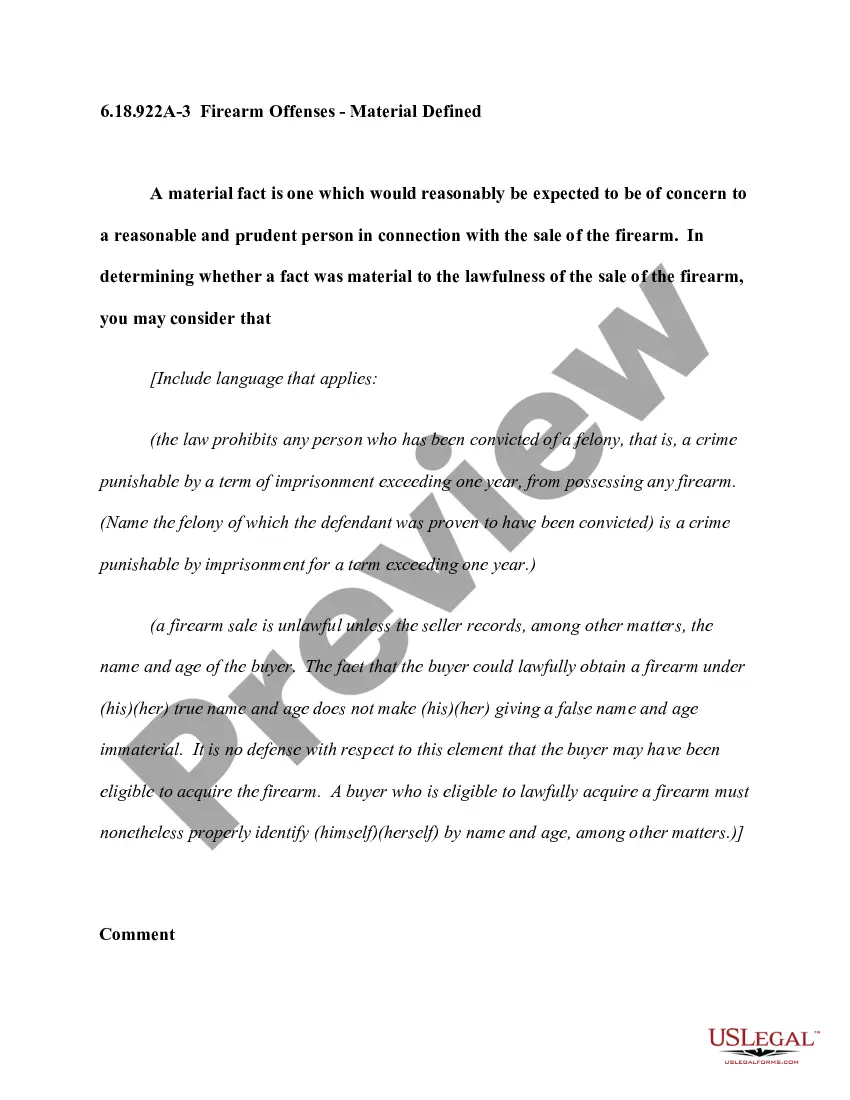
The Firearm Offenses - Material Defined form (revised 2014) provides guidance on the concept of material facts in the context of firearm sales. This form outlines what constitutes a material fact that could influence a reasonable person's decision regarding a firearm transaction, particularly focusing on legal definitions and applicable laws related to eligibility and responsibility. Unlike other legal forms concerning firearm transactions, this form specifically addresses the jury's role in determining materiality in firearm offenses, as well as pertinent case law that informs these legal concepts.
What’s included in this form
- Definition of material facts related to firearm sales
- Legal stipulations for firearm ownership concerning felony convictions
- Requirements for sellers in documenting buyer identity
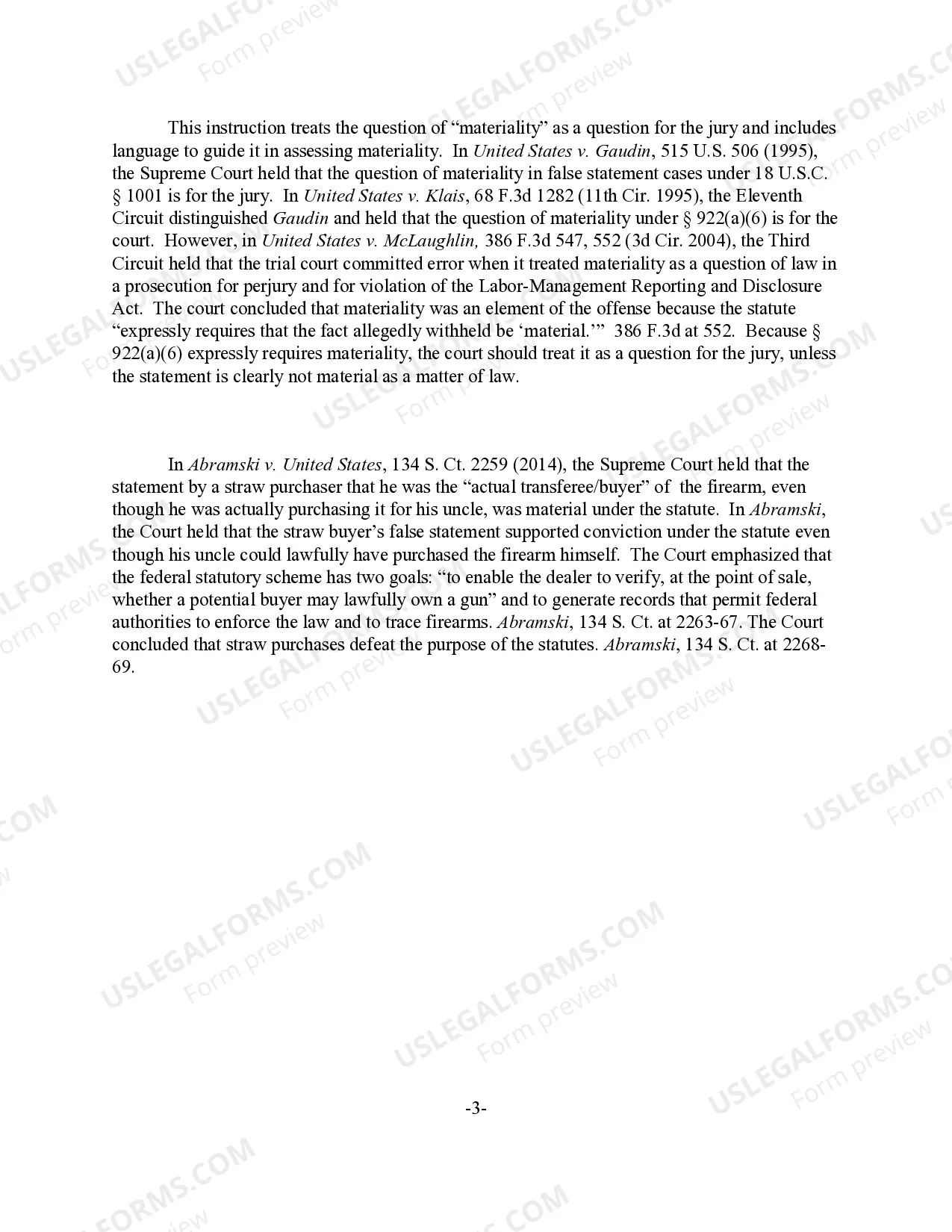
- Jury's role in determining materiality under relevant firearm statutes
- Citing important case law that impacts materiality in firearm legal cases

Situations where this form applies
This form is necessary when addressing legal issues related to the sale of firearms, particularly in cases involving allegations of unlawful transactions. Use this form if you are involved in a legal dispute concerning material facts in a firearm sale, or if you are part of a jury responsible for determining the impact of certain statements made by buyers or sellers in a firearm transaction. It can also serve as a reference for legal practitioners in preparing for trials or evaluating case law regarding firearm offenses.
Who should use this form
- Jury members evaluating firearm offense cases
- Legal professionals involved in firearm sales litigation
- Individuals seeking to understand their rights and responsibilities in firearm transactions
- Law enforcement officers needing clarification on legal definitions in firearm cases
How to prepare this document
- Identify all parties involved in the firearm transaction, including the seller and the buyer.
- Assess and state any prior felony convictions of the buyer that would affect their eligibility to purchase a firearm.
- Document the age and true name of the buyer, ensuring accurate identification to comply with legal requirements.
- Include information regarding the legality of the transaction and any material facts that could affect the decision.
- Review relevant case law to support your understanding of materiality in the context of firearm sales.
Does this form need to be notarized?
This form does not typically require notarization to be legally valid. However, some jurisdictions or document types may still require it. US Legal Forms provides secure online notarization powered by Notarize, available 24/7 for added convenience.
Get your form ready online
Our built-in tools help you complete, sign, share, and store your documents in one place.
Make edits, fill in missing information, and update formatting in US Legal Forms—just like you would in MS Word.
Download a copy, print it, send it by email, or mail it via USPS—whatever works best for your next step.
Sign and collect signatures with our SignNow integration. Send to multiple recipients, set reminders, and more. Go Premium to unlock E-Sign.
If this form requires notarization, complete it online through a secure video call—no need to meet a notary in person or wait for an appointment.
We protect your documents and personal data by following strict security and privacy standards.

Make edits, fill in missing information, and update formatting in US Legal Forms—just like you would in MS Word.

Download a copy, print it, send it by email, or mail it via USPS—whatever works best for your next step.

Sign and collect signatures with our SignNow integration. Send to multiple recipients, set reminders, and more. Go Premium to unlock E-Sign.

If this form requires notarization, complete it online through a secure video call—no need to meet a notary in person or wait for an appointment.

We protect your documents and personal data by following strict security and privacy standards.
Typical mistakes to avoid
- Failing to correctly identify felony convictions that affect gun ownership eligibility.
- Not documenting the buyer's true name or age as required by law.
- Assuming material facts do not impact the legality of the sale without proper legal guidance.
Why complete this form online
- Immediate access to a comprehensive legal framework regarding firearm transactions.
- Easy to download and print for court use or personal records.
- Convenient, high-quality forms drafted by licensed attorneys with expertise in firearm law.
Legal use & context
- This form assists in understanding the legal definition of materiality in firearm sales.
- Materiality relates to whether certain facts, like eligibility to purchase, are significant in a legal context.
- Understanding materiality can impact the outcome of legal proceedings involving firearm transactions.
Looking for another form?
Form popularity
FAQ
Under federal law, people are generally prohibited from purchasing or possessing firearms if they have been convicted of a felony or some domestic violence misdemeanors, or if they are subject to certain court orders related to domestic violence or a serious mental condition.
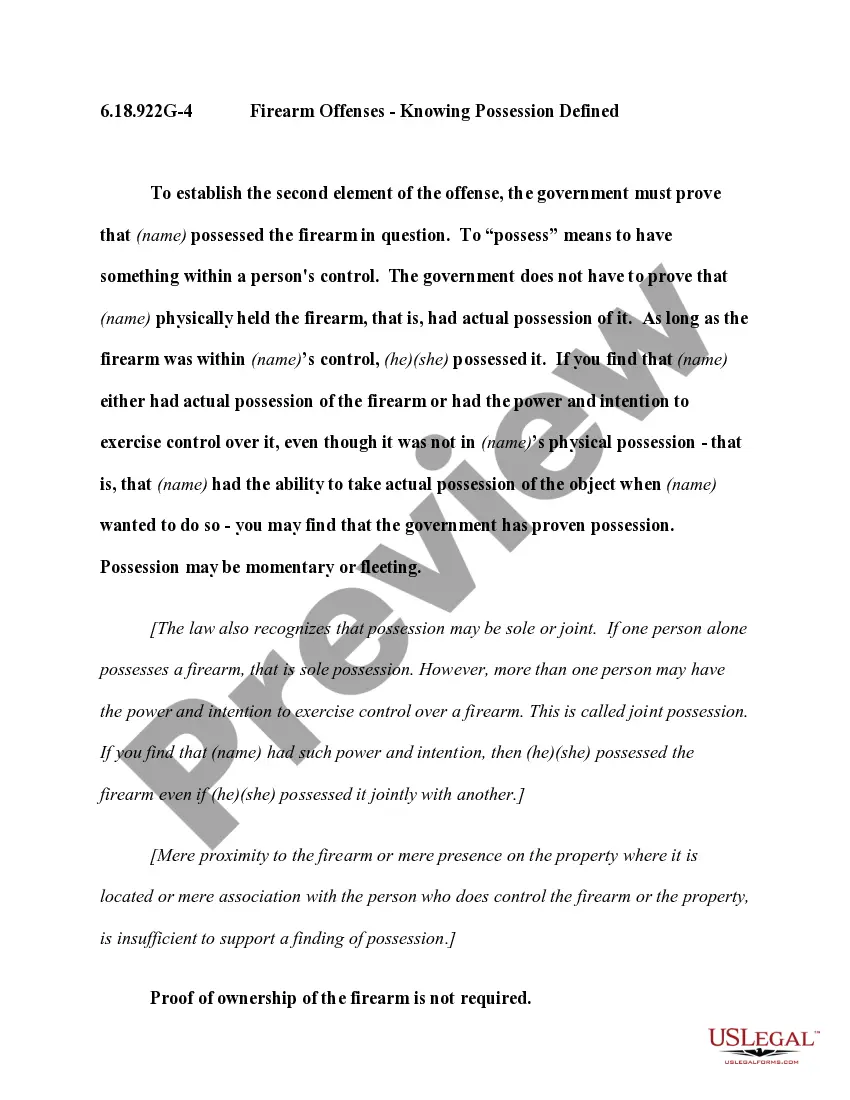
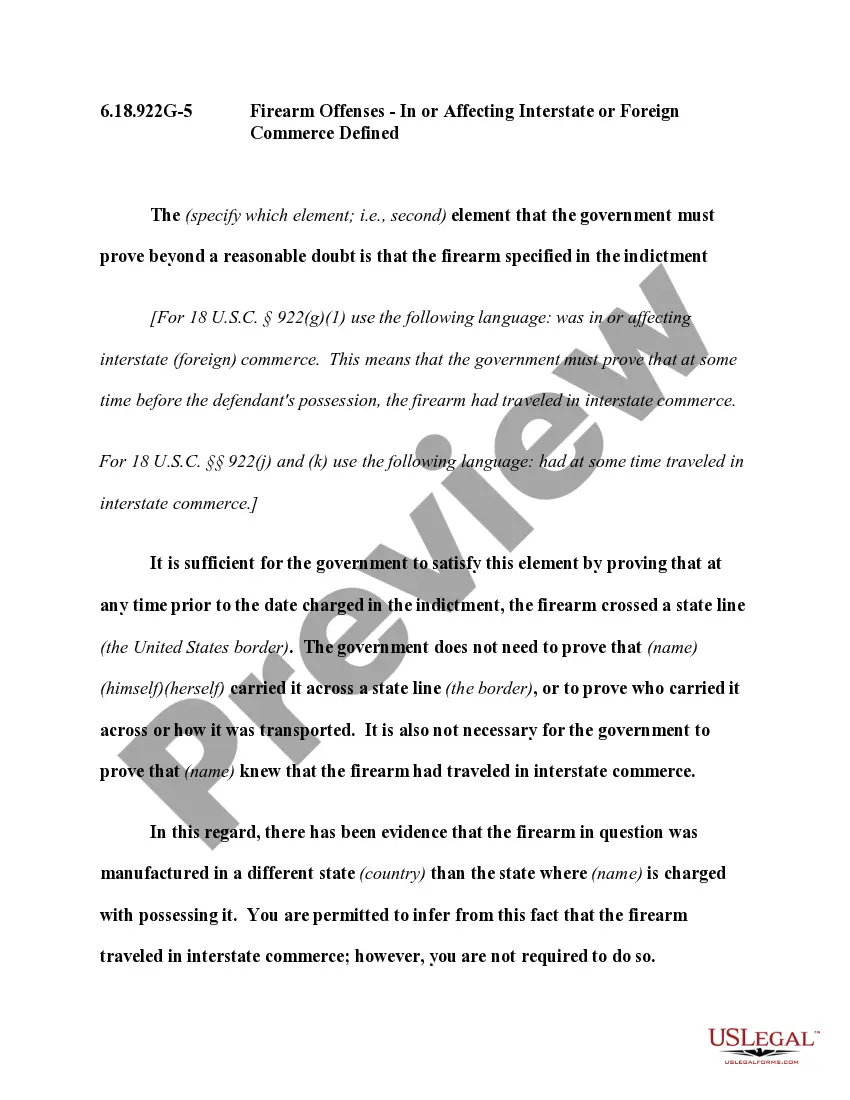
To obtain a conviction under Section 922(g), the government must prove beyond a reasonable doubt that (1) the defendant had previously been convicted of a crime punishable by imprisonment for a term exceeding one year; (2) the defendant knowingly possessed a firearm; and (3) the firearm had previously passed in
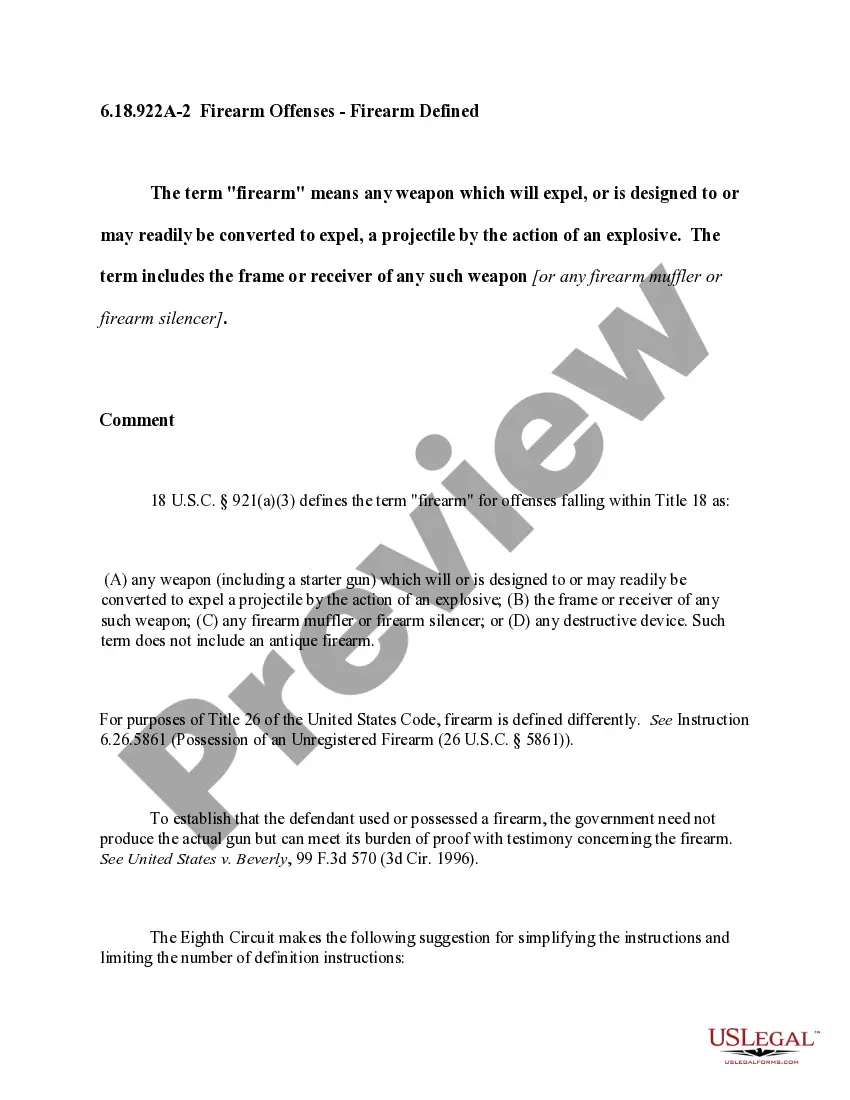
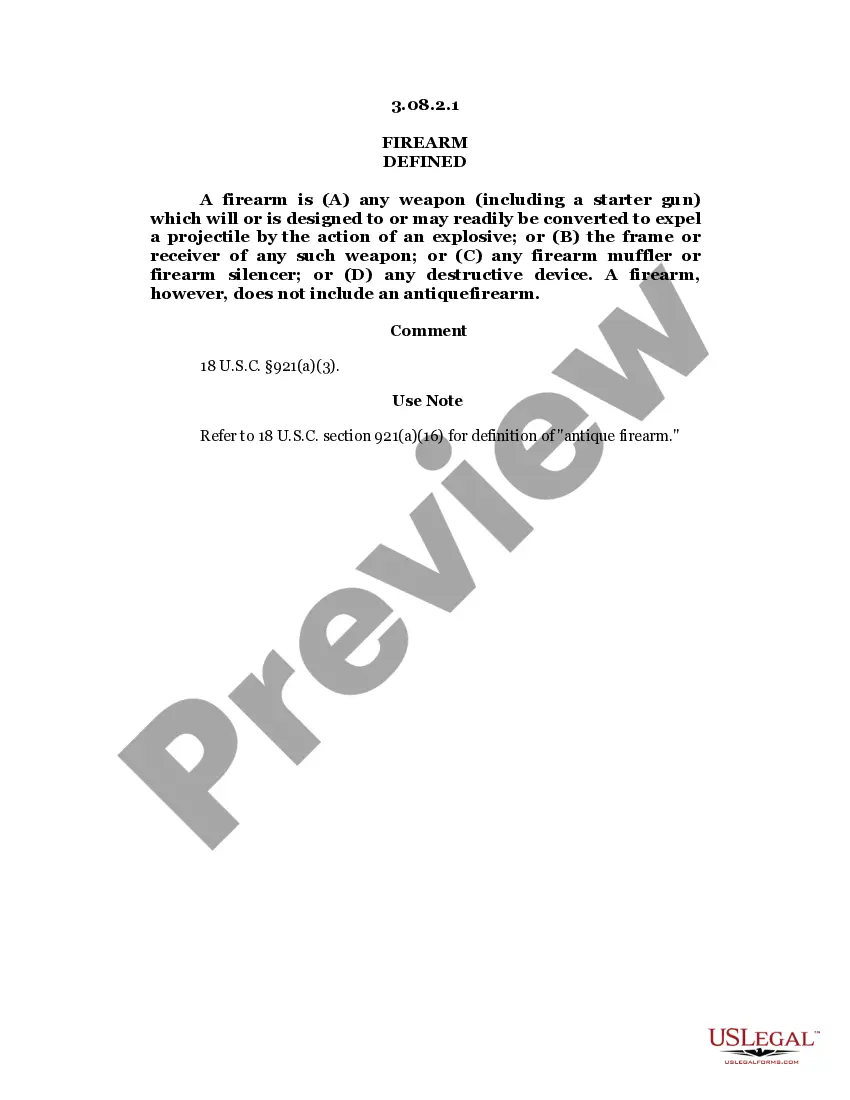
(3) The term "firearm" means (A) any weapon (including a starter gun) which will or is designed to or may readily be converted to expel a projectile by the action of an explosive; (B) the frame or receiver of any such weapon; (C) any firearm muffler or firearm silencer; or (D) any destructive device.
Title 18, United States Code, Section 922(g) makes it unlawful for certain classes of individuals to ship, transport, possess or receive any firearm or ammunition with the required interstate commerce nexus.
Further, the GCA at 18 U.S.C. § 922(d) makes it unlawful to sell or otherwise dispose of firearms or ammunition to any person who is prohibited from shipping, transporting, receiving, or possessing firearms or ammunition.
POSSESSION OF A FIREARM OR AMMUNITION BY A PROHIBITED PERSON: 18 USC § 922(g) & (n). Punishable by up to 10 years imprisonment.
Any person who has been ?adjudicated as a mental defective? or ?committed to a mental institution? is prohibited under Federal law from shipping, transporting, receiving, or possessing any firearm or ammunition.
§ 922(g) prohibits certain persons from shipping, transporting, possessing, or receiving a firearm or ammunition while subject to a prohibition from doing so, most commonly because of a prior conviction for a felony offense. 2 18 U.S.C. § 924(e) requires a 15-year mandatory minimum penalty be.