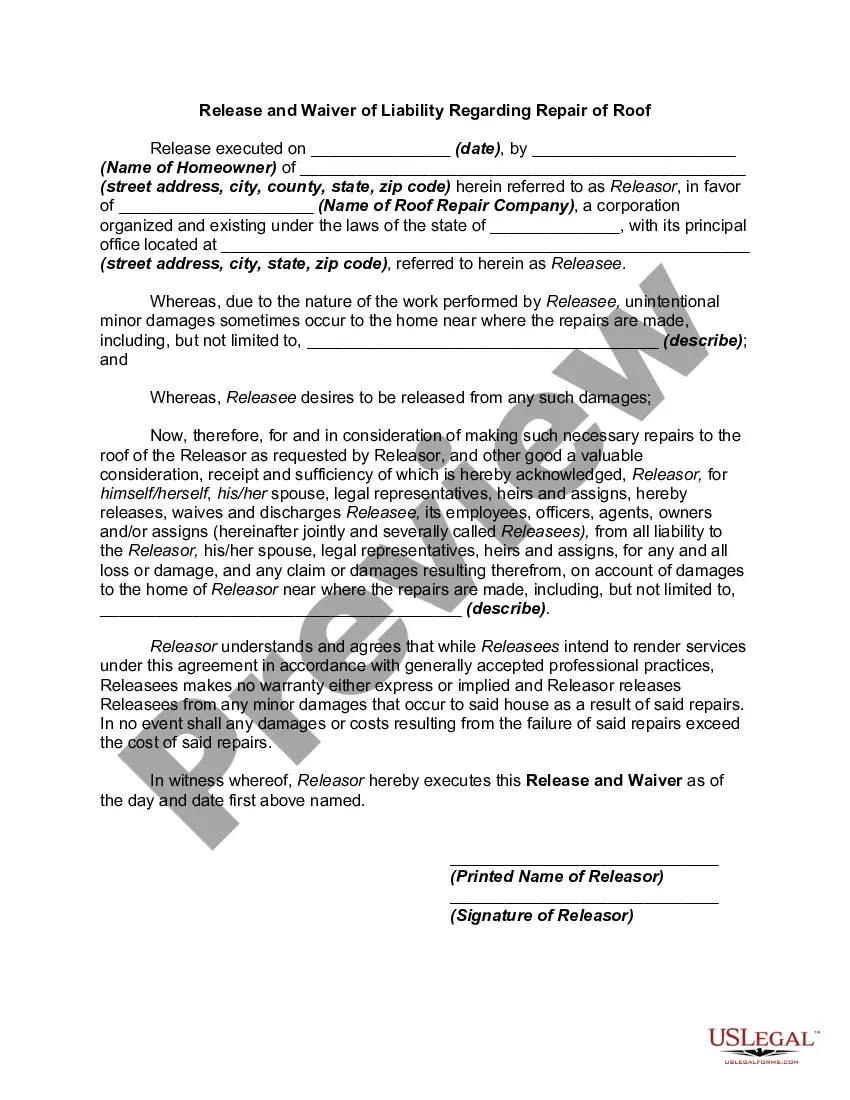
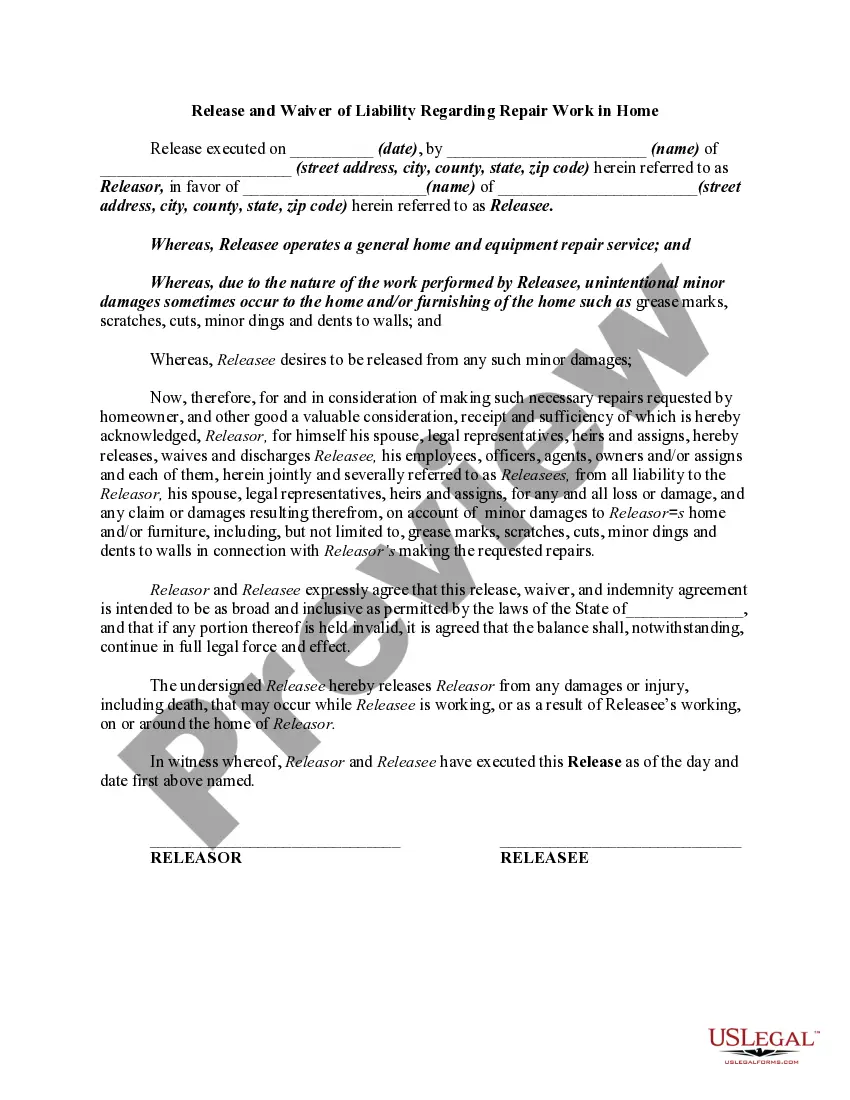
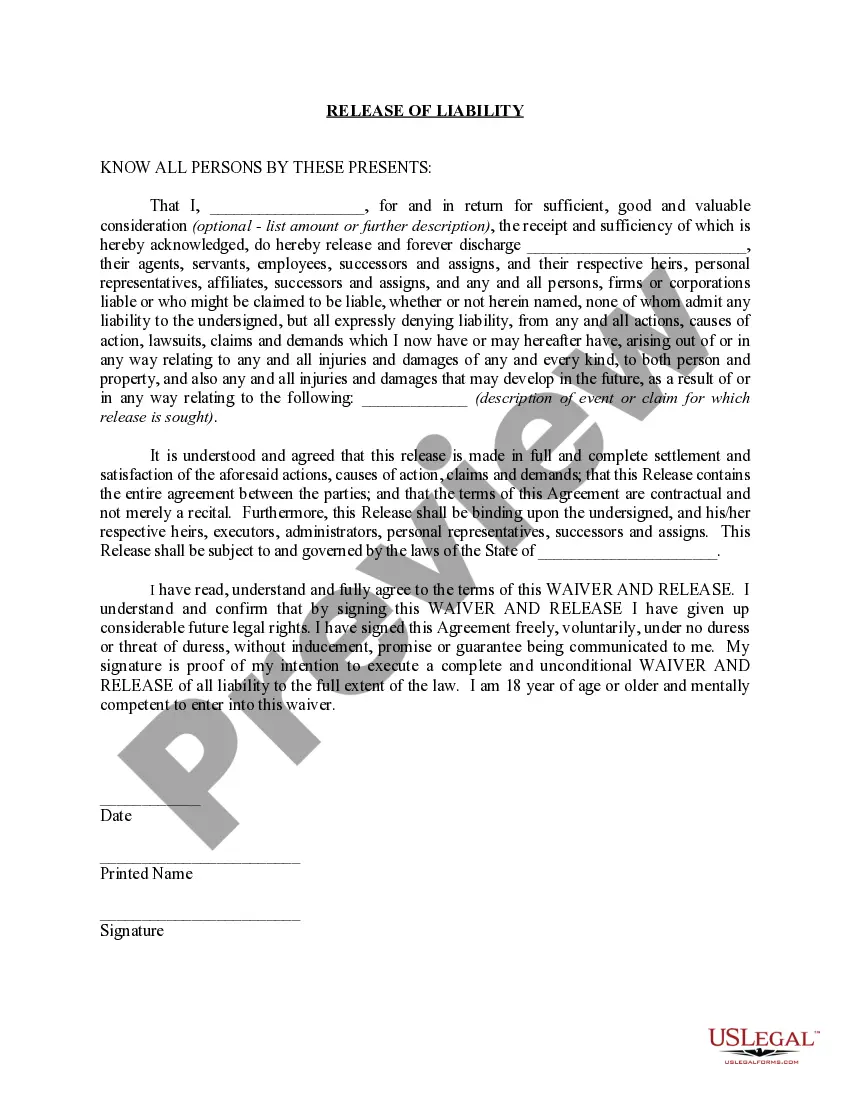
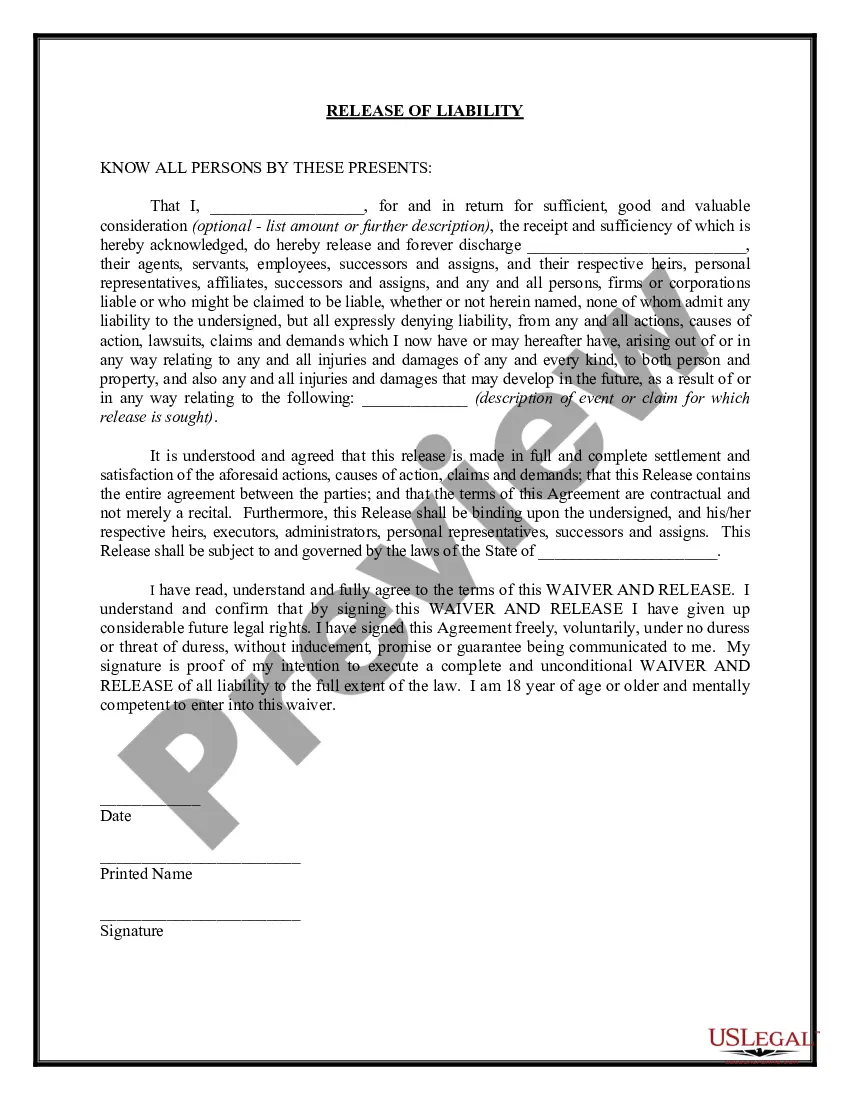
Roof Waiver Form For Construction
Description
Get your form ready online
Our built-in tools help you complete, sign, share, and store your documents in one place.
Make edits, fill in missing information, and update formatting in US Legal Forms—just like you would in MS Word.
Download a copy, print it, send it by email, or mail it via USPS—whatever works best for your next step.
Sign and collect signatures with our SignNow integration. Send to multiple recipients, set reminders, and more. Go Premium to unlock E-Sign.
If this form requires notarization, complete it online through a secure video call—no need to meet a notary in person or wait for an appointment.
We protect your documents and personal data by following strict security and privacy standards.

Make edits, fill in missing information, and update formatting in US Legal Forms—just like you would in MS Word.

Download a copy, print it, send it by email, or mail it via USPS—whatever works best for your next step.

Sign and collect signatures with our SignNow integration. Send to multiple recipients, set reminders, and more. Go Premium to unlock E-Sign.

If this form requires notarization, complete it online through a secure video call—no need to meet a notary in person or wait for an appointment.

We protect your documents and personal data by following strict security and privacy standards.
Looking for another form?
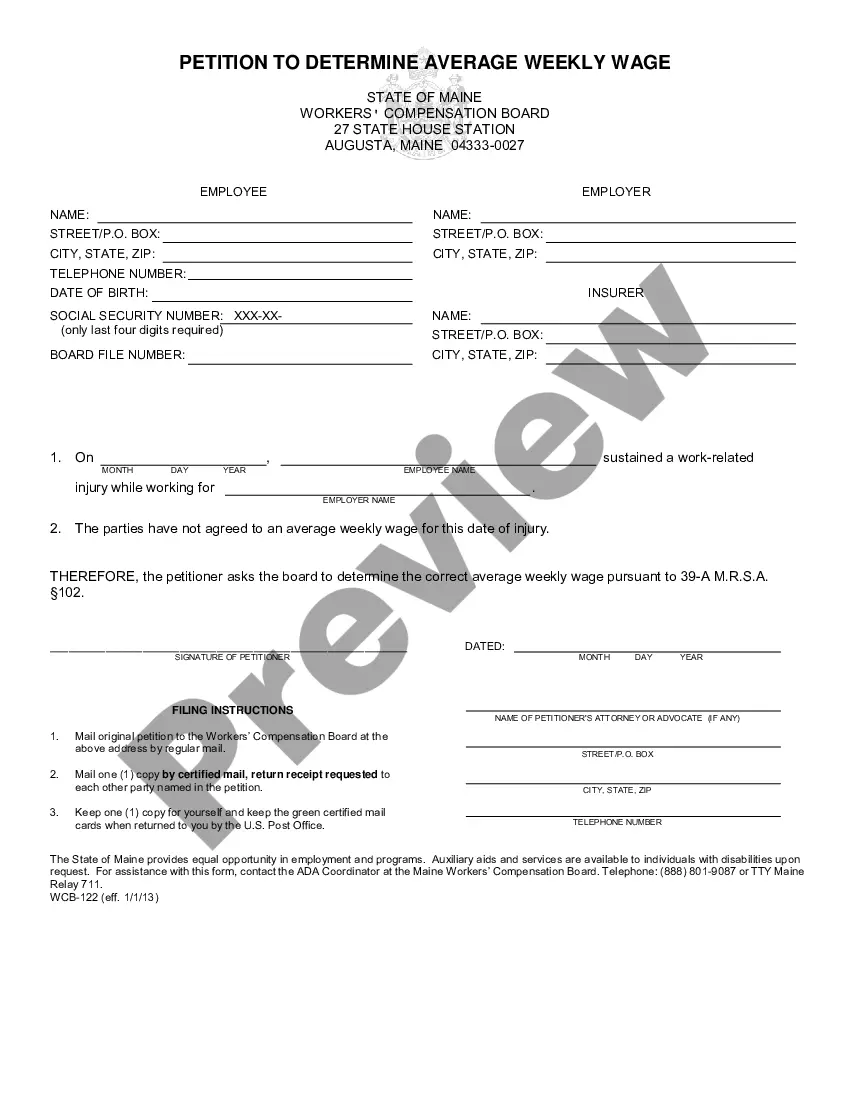


How to fill out Release And Waiver Of Liability Regarding Repair Of Roof?
Regardless of whether it's for corporate objectives or personal matters, everyone must confront legal issues at some stage in their life.
Completing legal paperwork demands meticulous focus, starting with choosing the right form template.
With an extensive US Legal Forms catalog available, you will never waste time searching for the right template online. Utilize the library’s user-friendly navigation to find the perfect template for any circumstance.
- For instance, if you select an incorrect version of the Roof Waiver Form For Construction, it will be rejected upon submission.
- Thus, it's crucial to identify a trustworthy source of legal documents like US Legal Forms.
- If you need to acquire a Roof Waiver Form For Construction template, adhere to these straightforward steps.
- 1. Obtain the sample you require by utilizing the search bar or catalog navigation.
- 2. Review the form’s details to confirm it is appropriate for your circumstances, state, and locality.
- 3. Click on the form’s preview to examine it.
- 4. If it is the wrong form, return to the search feature to locate the Roof Waiver Form For Construction template you need.
- 5. Download the file if it aligns with your requirements.
- 6. If you possess a US Legal Forms account, click Log in to access previously saved documents in My documents.
- 7. Should you not have an account yet, you can acquire the form by clicking Buy now.
- 8. Choose the suitable pricing plan.
- 9. Complete the profile registration form.
- 10. Select your payment method: either use a credit card or a PayPal account.
- 11. Choose the document format you desire and download the Roof Waiver Form For Construction.
- 12. After downloading, you can fill out the form using editing software or print it and finish it manually.
Form popularity
FAQ
Creating a roof waiver form for construction requires a clear understanding of the specific terms you want to include. Start by detailing the parties involved, the project description, and the rights you intend to waive. Utilizing platforms like US Legal Forms can streamline this process, offering templates and guidance to ensure your waiver form is legally sound. By following these steps, you can produce a comprehensive document that meets your needs.
A roofing agreement outlines the terms and conditions between a property owner and a roofing contractor. This document details the scope of work, payment terms, and responsibilities of both parties. Specifically, it may reference the roof waiver form for construction, which protects contractors from potential liabilities during the project. Understanding this agreement ensures clarity and protects everyone's interests.
Filling out a construction lien waiver involves providing specific information about the project and parties involved. Start by using the roof waiver form for construction available on the US Legal Forms platform, which offers clear guidelines. Ensure you include relevant details such as contract numbers, payment amounts, and signatures to make it legally binding.
An example of a waiver is a document signed by a property owner stating they will not pursue legal action against a contractor after a project is completed. In roofing, a roof waiver form for construction serves this purpose. It highlights the agreement between the owner and contractor, ensuring all parties understand their roles and responsibilities.
No, a roofing company cannot simply waive your insurance deductible. However, they can work with you to explain the costs involved, including how the roof waiver form for construction impacts your financial responsibilities. Understanding your deductible ensures transparency throughout the roofing project.
A property waiver is a legal document that relinquishes certain rights related to a property. In construction, the roof waiver form for construction allows contractors to confirm that they will not file a lien against your property after receiving payment. This protects the property owner from potential legal disputes.
A contractor liability waiver form is designed to release one party from potential legal claims. In the context of the roof waiver form for construction, it helps define responsibilities and liabilities related to your roofing project. This waiver clarifies what is covered and sets limits on financial and legal responsibility.
You need a lien waiver to protect yourself from future claims against your property. When you complete a roof waiver form for construction, it ensures that all parties involved receive payment for completed work. Additionally, this helps to streamline the payment process and provides peace of mind for both contractors and property owners.
In Nebraska, construction liens typically last for a period of two years from the date of filing. After this time, if no legal action has been taken to enforce the lien, it may automatically expire. It's important to monitor lien timelines carefully to avoid complications. Utilizing a roof waiver form for construction can help mitigate the risk of liens affecting your project.
Disputing a claim of lien involves formally responding to the lien claim with evidence that counters the claim. Collect all relevant documents, including payment records and contracts, to substantiate your position. File your dispute with the appropriate court or authority to ensure it is acknowledged legally. Consider using a roof waiver form for construction as a preventive measure for future claims.