Eap For Mental Health
Description
Get your form ready online
Our built-in tools help you complete, sign, share, and store your documents in one place.
Make edits, fill in missing information, and update formatting in US Legal Forms—just like you would in MS Word.
Download a copy, print it, send it by email, or mail it via USPS—whatever works best for your next step.
Sign and collect signatures with our SignNow integration. Send to multiple recipients, set reminders, and more. Go Premium to unlock E-Sign.
If this form requires notarization, complete it online through a secure video call—no need to meet a notary in person or wait for an appointment.
We protect your documents and personal data by following strict security and privacy standards.

Make edits, fill in missing information, and update formatting in US Legal Forms—just like you would in MS Word.

Download a copy, print it, send it by email, or mail it via USPS—whatever works best for your next step.

Sign and collect signatures with our SignNow integration. Send to multiple recipients, set reminders, and more. Go Premium to unlock E-Sign.

If this form requires notarization, complete it online through a secure video call—no need to meet a notary in person or wait for an appointment.

We protect your documents and personal data by following strict security and privacy standards.
Looking for another form?






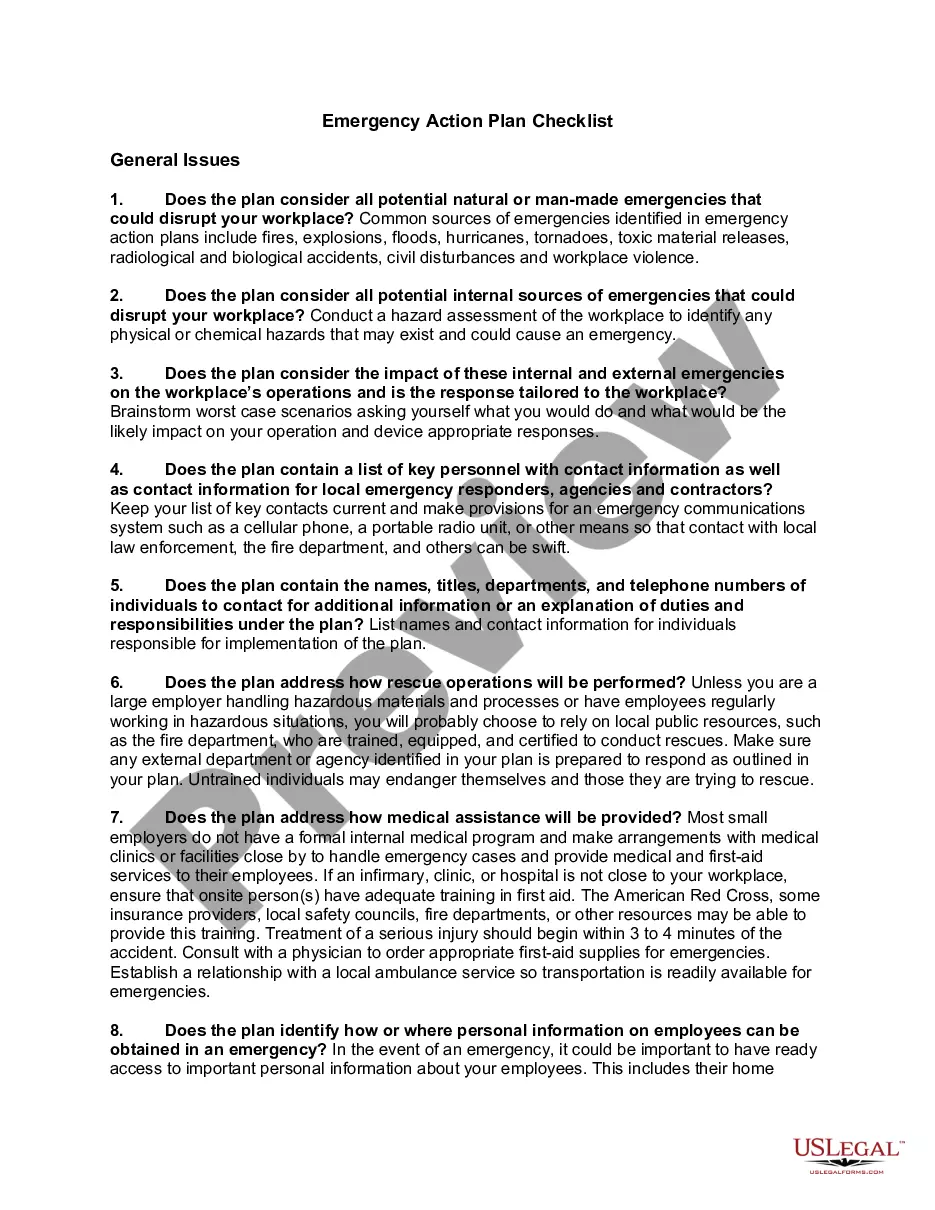
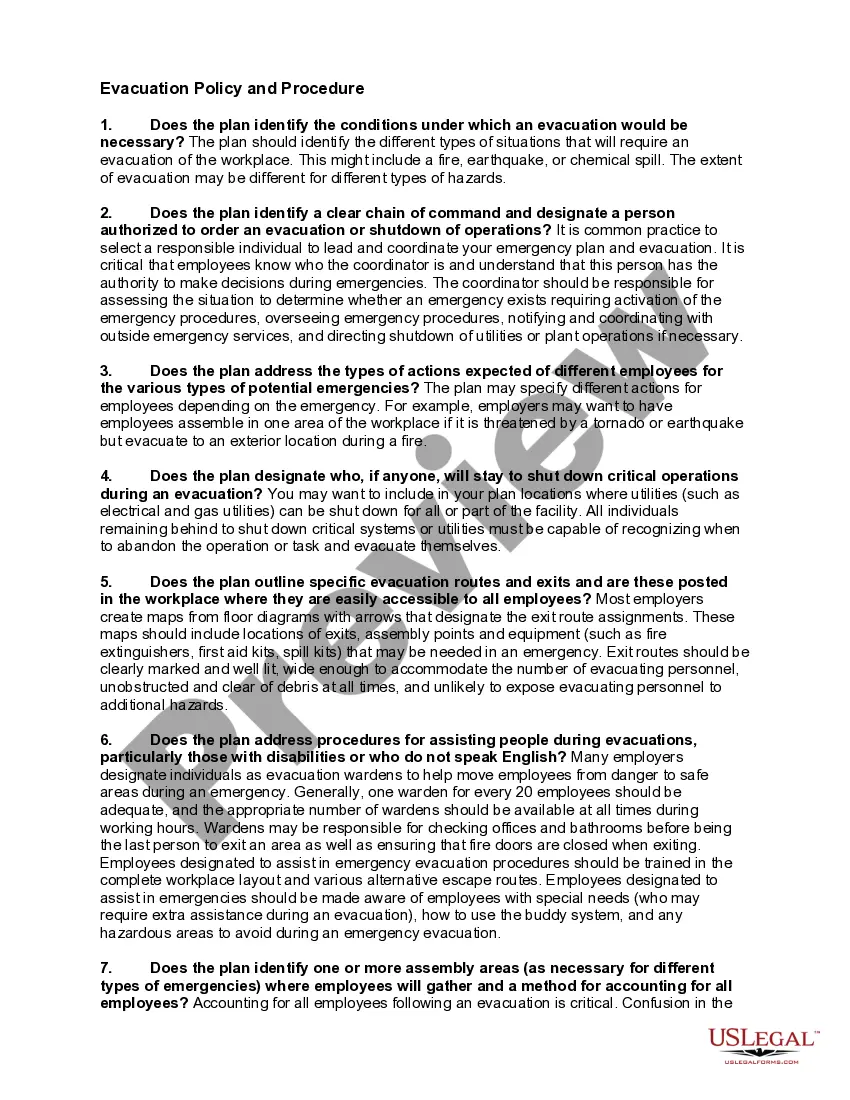
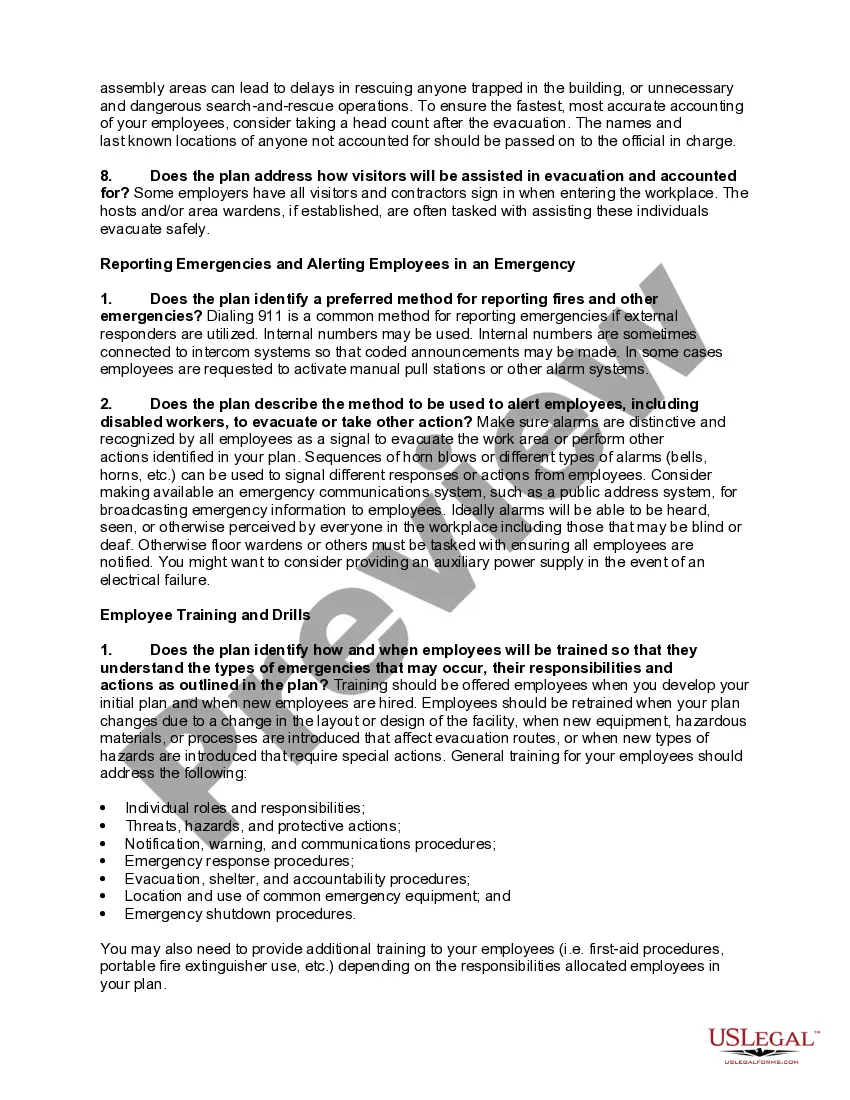
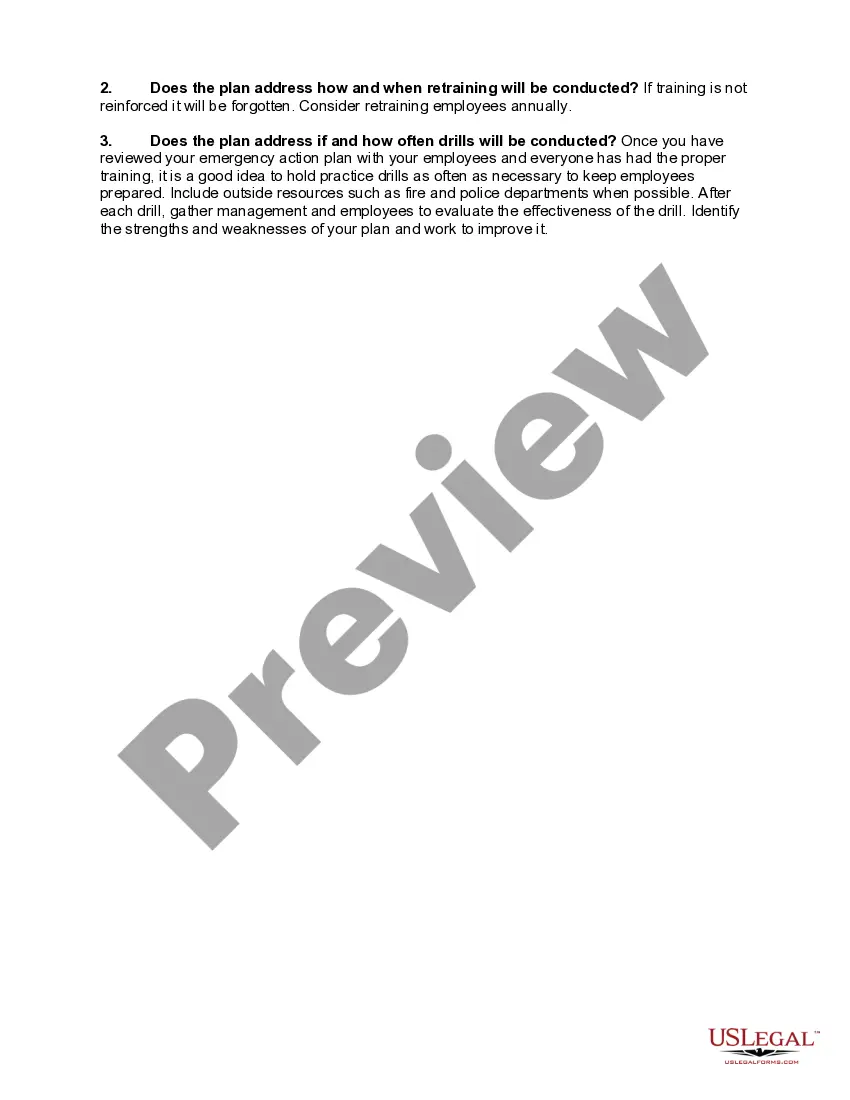
How to fill out Emergency Action Plan Checklist - EAP?
- Log into your existing US Legal Forms account and verify your subscription status. If necessary, renew it to ensure seamless access.
- Explore the Preview mode for detailed descriptions of your required forms to ensure compliance with local jurisdiction.
- Utilize the Search tab if your initial selection does not meet your needs, aiding in finding the correct document.
- Select the desired form and click 'Buy Now' to choose a subscription plan that best suits your requirements.
- Complete the payment process using your credit card or PayPal account to finalize your purchase.
- Download the document to your device. You can later access it through the 'My Forms' section in your profile.
By following these steps, you can quickly access a diverse library of legal documents that empower you to address your mental health needs efficiently. US Legal Forms stands out with its extensive collection and expert support.
Start your journey today by visiting US Legal Forms and securing the documents vital for your well-being!
Form popularity
FAQ
To prove mental health discrimination, document incidents where you believe your mental health needs were not accommodated. Gather evidence, such as emails, witness statements, and any relevant medical documentation. Engaging an EAP for mental health can provide guidance on navigating this process and help you address discrimination effectively.
Some examples of reasonable adjustments include flexible work hours, adjustments to break times, providing a quiet workspace, and modifying job duties. These adjustments create a supportive environment that enhances the employee's ability to perform their job effectively. When in doubt, consider an EAP for mental health as a resource to facilitate these adjustments.
While both EAP and counseling address mental health issues, they are not the same. EAP offers a broader range of services, including short-term counseling, resources, and referrals for employees facing personal or work-related challenges. Counseling, on the other hand, usually involves ongoing sessions with a therapist. An EAP for mental health can provide valuable support and access to professional counselors.
Five strategies to improve mental health include maintaining a balanced diet, engaging in regular exercise, establishing a support network, practicing mindfulness or meditation, and seeking professional help when necessary. Each of these strategies promotes positive mental health and resilience. Incorporating an EAP for mental health can provide further resources like counseling and workshops to support employees on this journey.
A reasonable accommodation letter for mental health should clearly outline the specific adjustments an employee needs, such as flexible scheduling or a quieter workspace. This letter should include the condition affecting the employee and how the requested adjustments will help them perform their job effectively. When navigating this process, an EAP for mental health can assist in crafting a well-structured letter.
A reasonable adjustment for mental health could include modifying work hours to accommodate therapy sessions. This adjustment helps individuals manage their mental health challenges more effectively. Employers often implement such changes to create a supportive work environment. Utilizing an EAP for mental health can also provide additional resources and support for employees.
While EAP for mental health offers valuable services, it may have limitations. For instance, you might encounter restrictions on the number of sessions or types of services available. Additionally, the confidentiality of these programs can sometimes raise concerns about stigma in the workplace. It’s important to weigh these disadvantages against the benefits when considering your mental health options.
To submit an EAP claim, you generally need to follow your employer’s specific guidelines. Most EAP for mental health claims can be initiated by discussing your situation with the EAP provider, who will assist you with the necessary paperwork. Documentation may include your treatment sessions or services used, so keep thorough records. This streamlined process ensures you receive the support you need with minimal hassle.
When you call an EAP for mental health support, you will speak to a trained counselor who understands your needs. They will listen to your concerns and guide you through available options. It's a confidential service designed to provide immediate assistance and direct you to additional resources if needed. This initial call establishes a foundation for your mental health journey.
Access to EAPs should ideally extend to all employees, including part-time and contract workers. Providing EAP for mental health to everyone fosters a supportive workplace culture, reducing stigma around seeking help. Every employee deserves the opportunity to address mental health needs.