About Parents
Description
Get your form ready online
Our built-in tools help you complete, sign, share, and store your documents in one place.
Make edits, fill in missing information, and update formatting in US Legal Forms—just like you would in MS Word.
Download a copy, print it, send it by email, or mail it via USPS—whatever works best for your next step.
Sign and collect signatures with our SignNow integration. Send to multiple recipients, set reminders, and more. Go Premium to unlock E-Sign.
If this form requires notarization, complete it online through a secure video call—no need to meet a notary in person or wait for an appointment.
We protect your documents and personal data by following strict security and privacy standards.

Make edits, fill in missing information, and update formatting in US Legal Forms—just like you would in MS Word.

Download a copy, print it, send it by email, or mail it via USPS—whatever works best for your next step.

Sign and collect signatures with our SignNow integration. Send to multiple recipients, set reminders, and more. Go Premium to unlock E-Sign.

If this form requires notarization, complete it online through a secure video call—no need to meet a notary in person or wait for an appointment.

We protect your documents and personal data by following strict security and privacy standards.
Looking for another form?


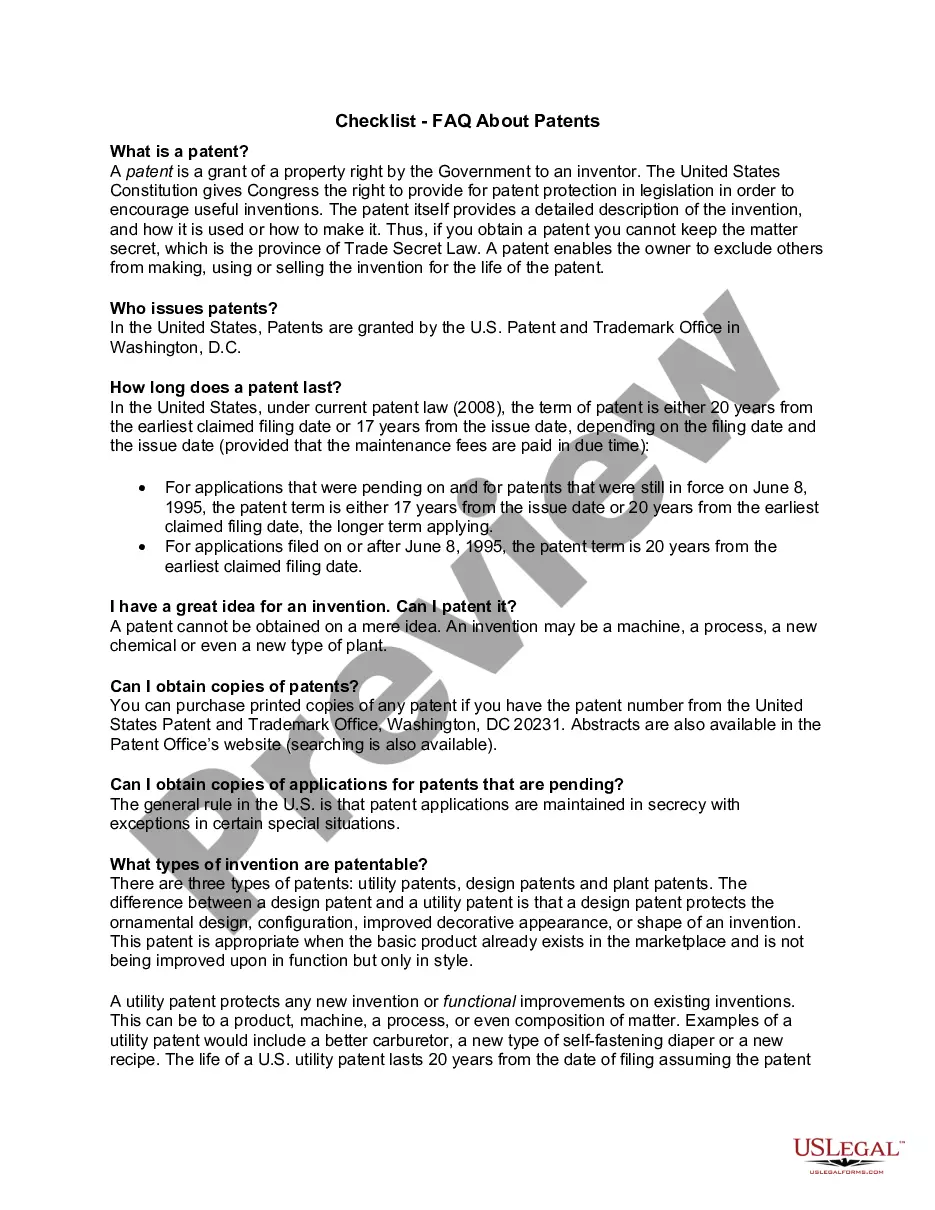
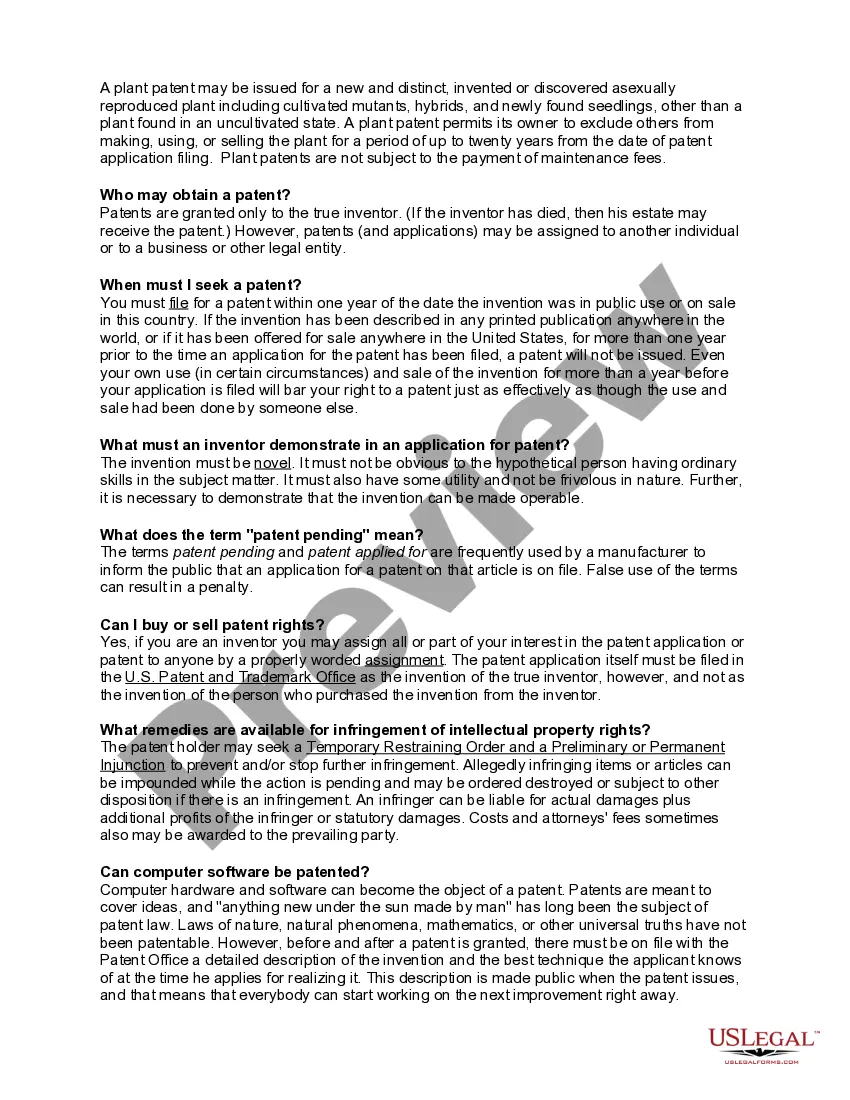
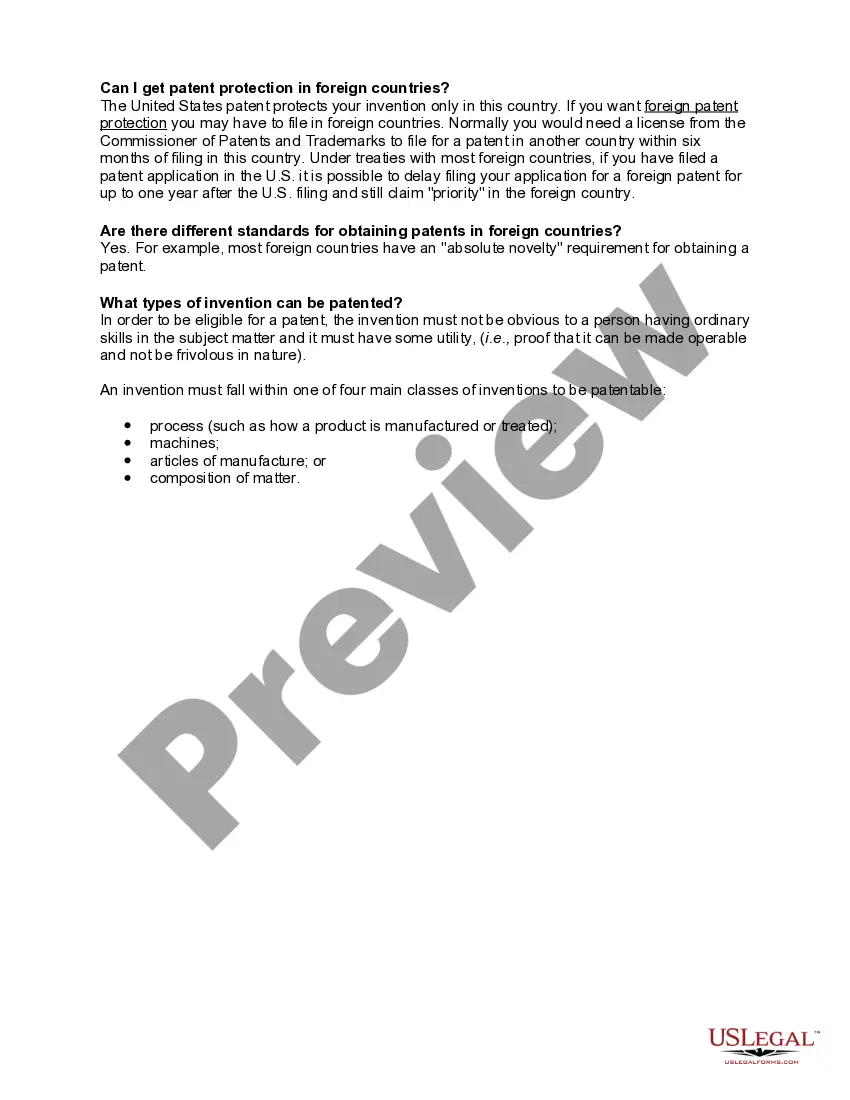
How to fill out Checklist - FAQ About Patents?
- If you're a returning user, start by logging in to your account. Confirm that your subscription is active, and conveniently download your desired form by clicking the 'Download' button.
- For first-time users, first check the Preview mode and read the description of the form. Make sure it aligns with your specific requirements and adheres to local regulations.
- If you can't find the exact form you need, utilize the Search tab at the top to locate a more suitable template. This will help you find the right match for your situation.
- Once you've identified the appropriate document, proceed to purchase by clicking the 'Buy Now' button. Select a subscription plan that fits your needs, and remember to create an account for comprehensive access.
- Complete your purchase using your credit card or PayPal. After payment, you can immediately download your document.
- Finally, save your form on your device. You can access it anytime from the My Forms section in your profile.
With US Legal Forms, you not only gain access to an extensive library of over 85,000 legal forms but also enjoy the advantage of premium expert support to assist you in form completion.
Start simplifying your legal documentation today. Explore US Legal Forms and ensure your legal documents are not just filled but are accurate and compliant.
Form popularity
FAQ
If you find yourself in a difficult relationship with your parents, take time to reflect on the situation. Open communication can often clarify misunderstandings, so consider expressing your feelings calmly. If things don’t improve, seeking professional help can guide you towards healthier interactions. Ultimately, recognizing and addressing your emotions about parents is a crucial step towards change.
Dealing with toxic parents involves setting clear boundaries and prioritizing your mental health. You might consider limiting interactions that are particularly harmful or seeking support from friends or a therapist. Additionally, practicing self-care can help you build resilience against their negative influence. Remember, you are not alone; many share your experiences and seek healthier relationships with their parents.
Identifying a toxic parent often involves recognizing patterns of behavior that harm your well-being. Traits such as constant criticism, manipulation, or emotional neglect are key indicators. Trust your instincts: if you consistently feel drained or conflicted around a parent, it may be time to evaluate the relationship. Understanding about parents can empower you to set the necessary boundaries.
Dealing with a challenging relationship with your parents requires patience and effort. Begin by identifying the specific issues causing strain and communicate your feelings openly. Seeking external support, like counseling, can provide valuable insights and strategies for improvement. Remember, understanding about parents can make a significant difference in resolving conflicts and fostering reconciliation.
Feeling angry with your parents can stem from various emotions, including frustration and unmet expectations. Often, this anger indicates deeper issues related to communication and understanding within the family. Recognizing your feelings is the first step to improving these dynamics and fostering a healthier relationship. Reflecting on what triggers your anger can help you express your needs more constructively.
When talking to your child about an absent parent, it's important to be honest yet gentle. Start by acknowledging their feelings and asking open-ended questions to understand their perspective. You can share simple facts about why the parent is not present, focusing on the love and support you can provide together. This way, you help your child navigate their feelings while emphasizing that their emotions about parents are valid.
A meaningful line about parents could be, 'The heart of a family lies in the love of its parents.' This line captures the essence of parental love as a central force within the family unit. It serves as a powerful reminder of the warmth and stability parents provide.
Parents are special because they provide a sense of belonging and security. They invest time and energy into nurturing their children, fostering personal development and emotional well-being. Their unwavering support creates a foundation from which children can thrive.
You can write about parents by exploring their roles as teachers, caretakers, and role models. Discussing their challenges and triumphs can illustrate their resilience and love. Sharing anecdotes can bring your writing to life and highlight the significance of parents.
Writing about your parents involves reflecting on your experiences with them. Consider highlighting their unique qualities, the lessons they taught you, and special moments you shared. This personal touch can create a heartfelt tribute to their influence in your life.