Employee
Description
Get your form ready online
Our built-in tools help you complete, sign, share, and store your documents in one place.
Make edits, fill in missing information, and update formatting in US Legal Forms—just like you would in MS Word.
Download a copy, print it, send it by email, or mail it via USPS—whatever works best for your next step.
Sign and collect signatures with our SignNow integration. Send to multiple recipients, set reminders, and more. Go Premium to unlock E-Sign.
If this form requires notarization, complete it online through a secure video call—no need to meet a notary in person or wait for an appointment.
We protect your documents and personal data by following strict security and privacy standards.

Make edits, fill in missing information, and update formatting in US Legal Forms—just like you would in MS Word.

Download a copy, print it, send it by email, or mail it via USPS—whatever works best for your next step.

Sign and collect signatures with our SignNow integration. Send to multiple recipients, set reminders, and more. Go Premium to unlock E-Sign.

If this form requires notarization, complete it online through a secure video call—no need to meet a notary in person or wait for an appointment.

We protect your documents and personal data by following strict security and privacy standards.
Looking for another form?
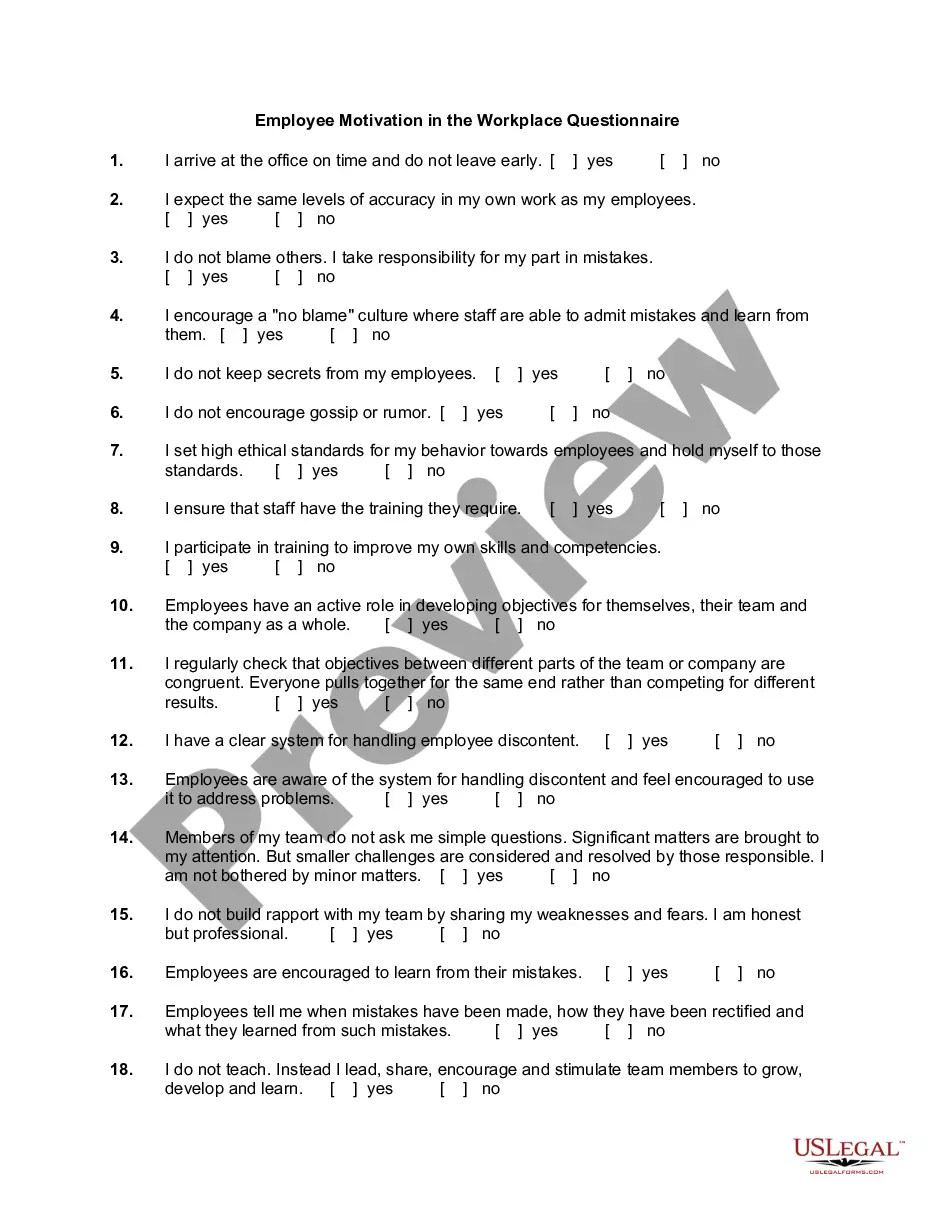
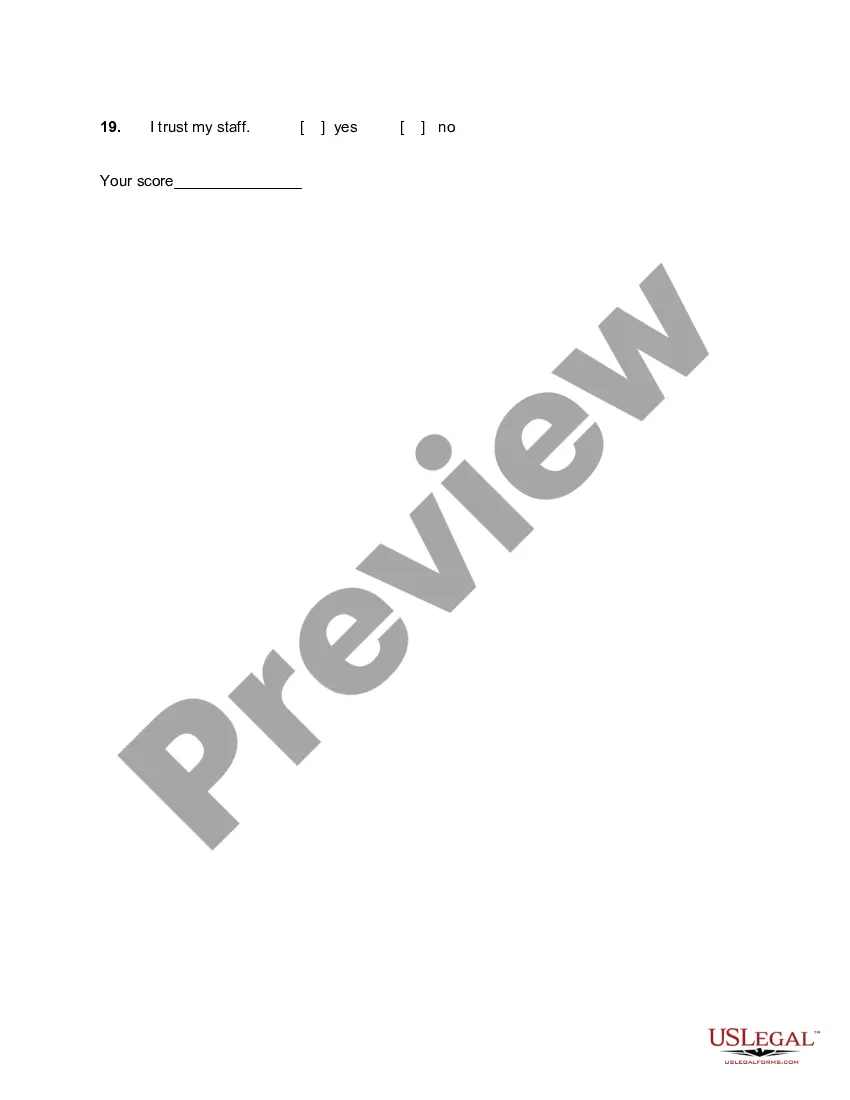
How to fill out Employee Motivation In The Workplace Questionnaire?
- Log into your US Legal Forms account if you're a returning user to access your previous downloads. Ensure your subscription is active; renew if necessary.
- Explore the Preview mode and read form descriptions to ensure you've selected the correct document for your needs.
- If you require a different template, utilize the Search feature to find the right one tailored to your requirements.
- Purchase the selected document by clicking on the Buy Now button and selecting your preferred subscription plan. Registration may be required for full access.
- Complete your transaction by entering your payment details, whether through credit card or PayPal.
- Download the finalized form to your device for immediate use, and find it later through the My Forms section of your profile.
By following these simple steps, you can efficiently access the necessary legal forms that empower you as an employee.
Take charge of your legal document needs today with US Legal Forms—start your free trial or renew your subscription now!
Form popularity
FAQ
Deciding between being a 1099 contractor or a W-2 employee depends on your work situation and preferences. A W-2 employee typically receives benefits and has taxes withheld by their employer. On the other hand, a 1099 contractor enjoys more independence but is responsible for managing their own taxes. Weigh these options carefully to determine what aligns best with your career goals.
The best number of deductions to claim on a W-4 varies based on your personal circumstances. Generally, fewer deductions mean more tax is withheld, while more deductions can reduce withholdings. Review your financial situation and consider consulting a tax advisor for personalized guidance. This can help you optimize your withholding as an employee.
When deciding whether to claim 0 or 1 on your W-4, consider your personal financial situation. Claiming 0 means that more taxes are withheld, which might lead to a larger refund. Conversely, claiming 1 could result in less withholding and potentially a smaller refund. Think carefully about your financial goals for the year.
As an employee, the primary form you need to fill out is the W-4. This form allows your employer to determine the amount of federal income tax to withhold from your paycheck. Understanding the W-4 is crucial for ensuring accurate withholding. Always consult with a tax professional if you have specific questions or concerns.
To fill out a W-4 form as an employee, start by entering your personal information, such as your name and address. Next, indicate your filing status and the number of dependents. It’s also important to consider any additional amounts you wish to withhold. Once completed, submit the W-4 form to your employer.
The best way to organize employee files is through a consistent and structured filing system. Start with a folder for each employee that includes subfolders for various categories, such as onboarding documents, benefits information, and performance reviews. Regularly update and review these files to ensure they remain current and compliant. Consider using USLegalForms for templates and tools that can enhance your organizing efforts.
Employee records should be maintained securely and confidentially, adhering to compliance regulations that protect employee privacy. Opt for a systematic approach, whether digital or paper-based, ensuring that sensitive information is inaccessible to unauthorized personnel. Regular audits of these records can help maintain accuracy and compliance. USLegalForms offers secure options to assist in managing these records effectively.
Filing employee records involves systematically organizing each employee's documentation to ensure easy access and compliance with legal standards. Start by categorizing documents into segments like hiring paperwork, performance evaluations, and disciplinary actions. Regular reviews of these files are advisable to maintain accuracy and up-to-date information. Platforms like USLegalForms offer organized filing systems and templates to support this process.
Recording employees starts with documenting their personal information, job title, and employment history. It's also essential to maintain records of any forms they complete, like W-4s and I-9s. Ensure that all records are updated regularly to reflect any changes in employment status or personal details. Utilizing services from USLegalForms can further streamline and simplify this important task.
Filing employee files efficiently requires organizing and categorizing documents related to each employee. Start by creating folders for various types of documents, such as payroll records, performance reviews, and correspondence. Ensure each file is accessible, labeled clearly, and stored securely, either digitally or physically. Consider using USLegalForms for templates to create and manage these essential files.