Mediation In Arbitration And Conciliation Act 1996
Description



Get your form ready online
Our built-in tools help you complete, sign, share, and store your documents in one place.
Make edits, fill in missing information, and update formatting in US Legal Forms—just like you would in MS Word.
Download a copy, print it, send it by email, or mail it via USPS—whatever works best for your next step.
Sign and collect signatures with our SignNow integration. Send to multiple recipients, set reminders, and more. Go Premium to unlock E-Sign.
If this form requires notarization, complete it online through a secure video call—no need to meet a notary in person or wait for an appointment.
We protect your documents and personal data by following strict security and privacy standards.

Make edits, fill in missing information, and update formatting in US Legal Forms—just like you would in MS Word.

Download a copy, print it, send it by email, or mail it via USPS—whatever works best for your next step.

Sign and collect signatures with our SignNow integration. Send to multiple recipients, set reminders, and more. Go Premium to unlock E-Sign.

If this form requires notarization, complete it online through a secure video call—no need to meet a notary in person or wait for an appointment.

We protect your documents and personal data by following strict security and privacy standards.
Looking for another form?




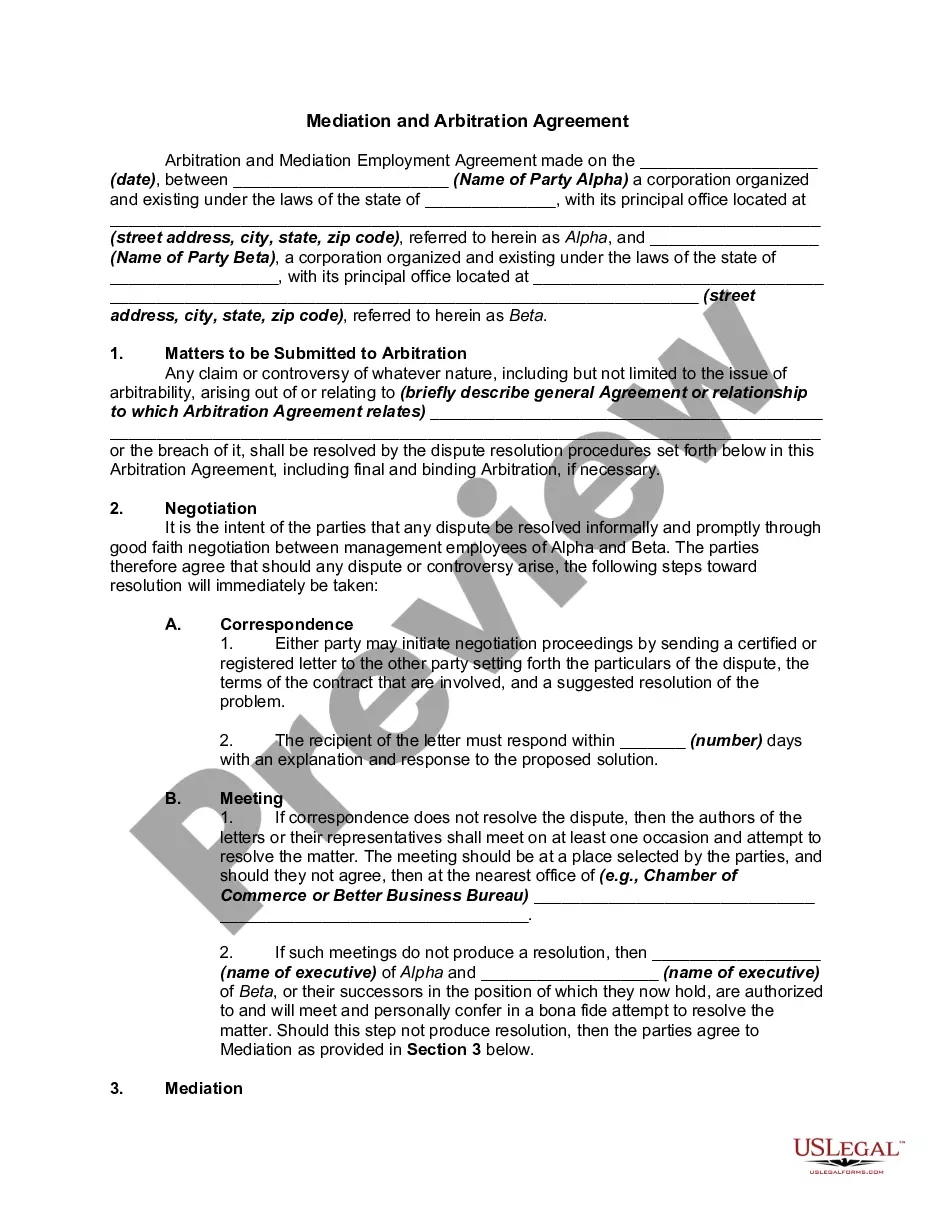
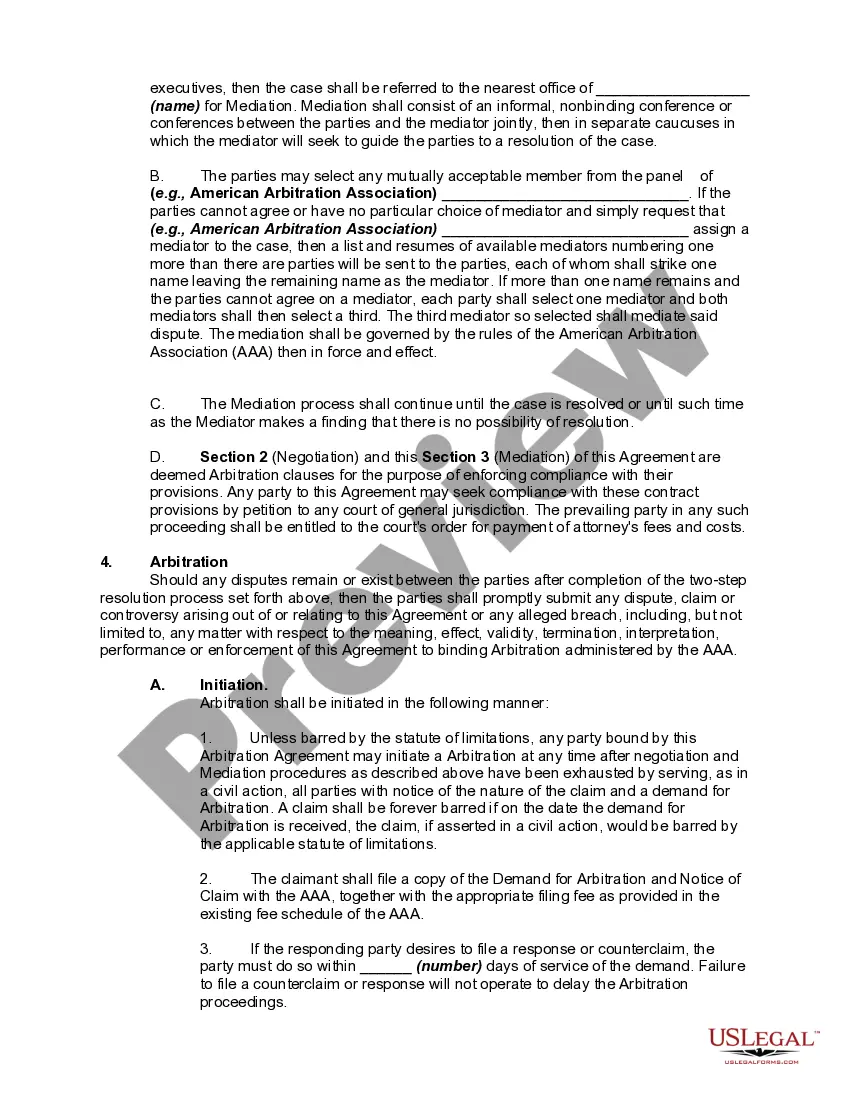
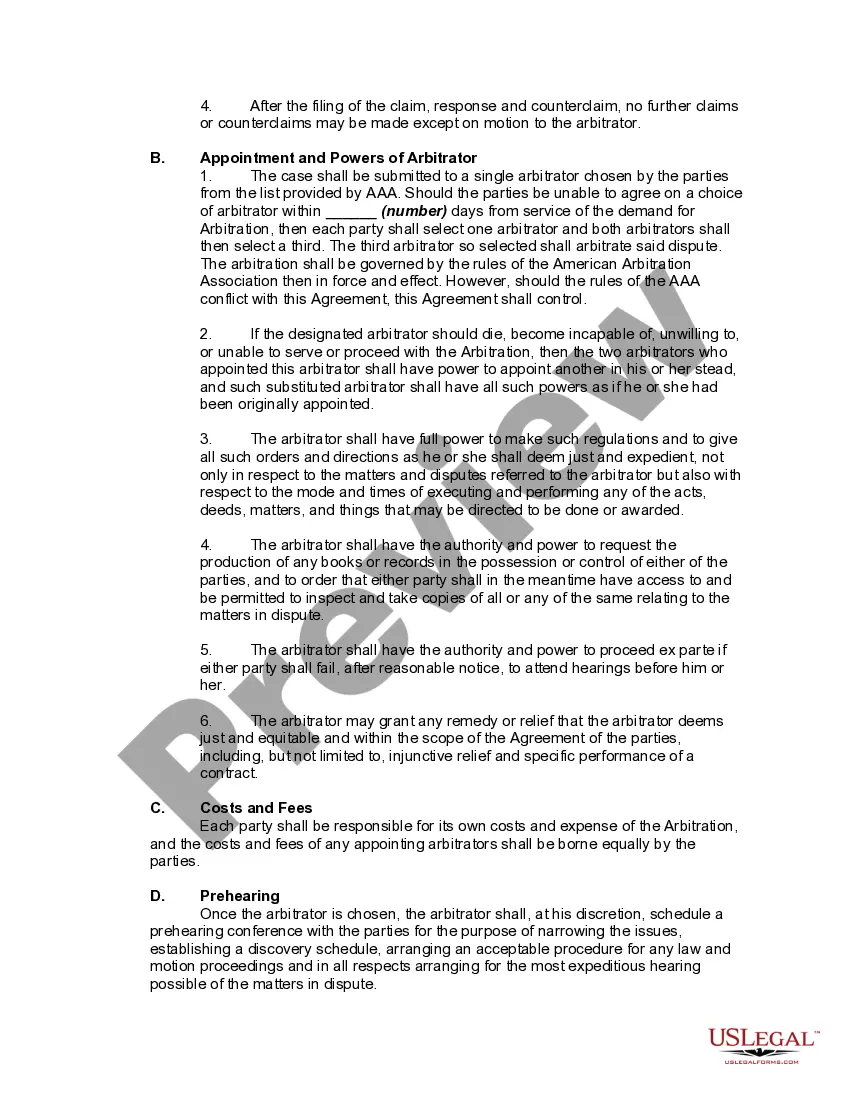
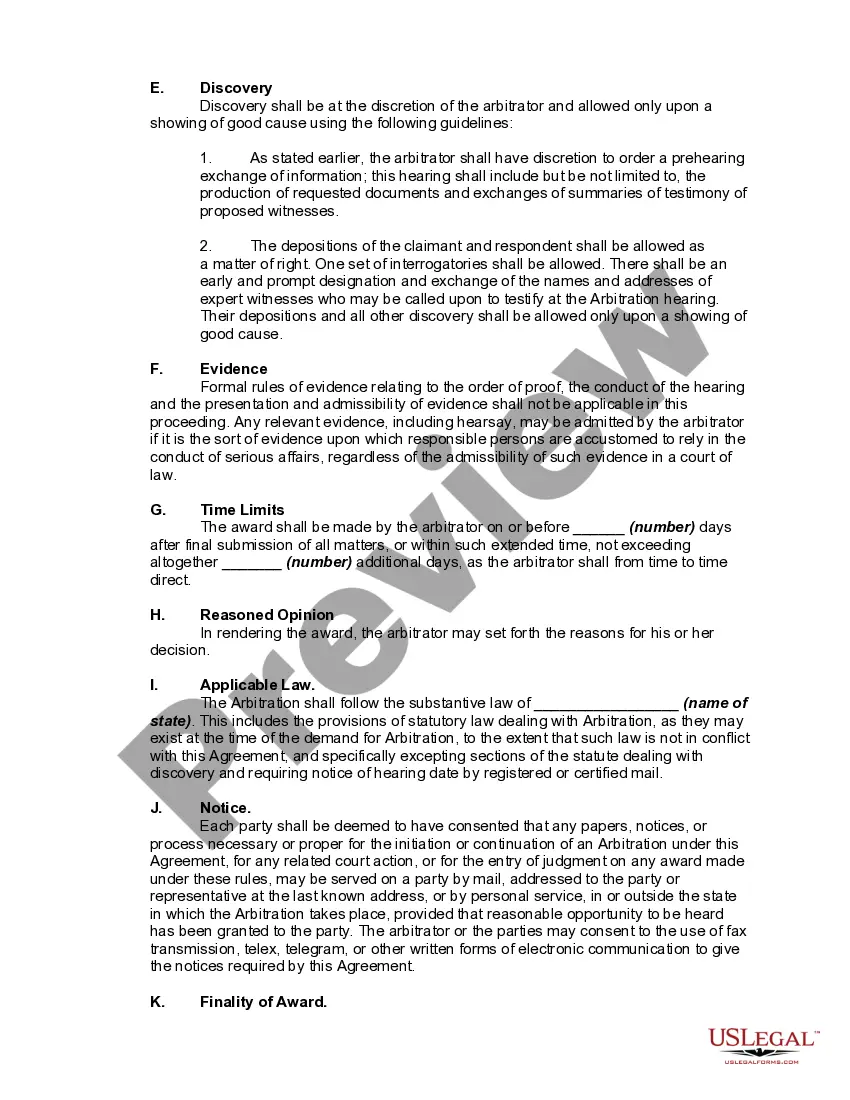
How to fill out Mediation And Arbitration Agreement?
Managing legal documents can be exasperating, even for seasoned professionals.
When you are looking for a Mediation In Arbitration And Conciliation Act 1996 and don’t have the opportunity to invest time in finding the correct and up-to-date version, the processes can be challenging.
US Legal Forms accommodates any requirements you may have, ranging from personal to commercial paperwork, all in one location.
Utilize advanced tools to complete and manage your Mediation In Arbitration And Conciliation Act 1996.
Here are the actions to follow after obtaining the form you require: Confirm it is the correct document by previewing it and reviewing its details. Ensure that the template is accepted in your state or county. Click Buy Now when you are prepared. Choose a subscription plan. Locate the format you require, and Download, fill out, sign, print, and send your document. Take advantage of the US Legal Forms online repository, supported by 25 years of experience and dependability. Streamline your daily document management into a straightforward and user-friendly process today.
- Access a valuable resource library of articles, guides, and materials pertinent to your situation and requirements.
- Save time and effort in locating the documents you need, and utilize US Legal Forms’ advanced search and Preview feature to find and download the Mediation In Arbitration And Conciliation Act 1996.
- If you have a subscription, Log In to your US Legal Forms account, search for the form, and download it.
- Check your My documents section to see the documents you have previously downloaded and manage your files as needed.
- If it is your initial visit to US Legal Forms, create an account and gain unlimited access to all the platform's features.
- A robust online form repository can be a game changer for those who wish to navigate these situations effectively.
- US Legal Forms is a frontrunner in digital legal documents, with over 85,000 state-specific legal forms available to you at any time.
- With US Legal Forms, you can access various state or county-specific legal and business documents.
Form popularity
FAQ
Mediation under the Arbitration Act refers to the process where parties can resolve disputes amicably, often before or alongside arbitration. This approach is encouraged within the framework of the Arbitration and Conciliation Act 1996, as it allows for a more collaborative resolution method. By opting for mediation, parties can avoid the complexities and costs of arbitration, and potentially achieve a mutually agreeable outcome. For those seeking guidance in this area, US Legal Forms offers resources and documents to support effective mediation practices.
The four types of mediation include facilitative mediation, evaluative mediation, transformative mediation, and narrative mediation. Facilitative mediation focuses on helping parties communicate and reach their own agreement, while evaluative mediation involves the mediator providing opinions on the merits of the case. Transformative mediation aims to empower parties and improve their relationship, whereas narrative mediation explores the stories and experiences of the parties involved. Understanding these types can help you choose the right approach for your situation under the Mediation in Arbitration and Conciliation Act 1996.
Mediation under the Arbitration and Conciliation Act 1996 refers to a process where a neutral third party assists disputing parties in reaching a voluntary agreement. This process emphasizes communication and collaboration between the parties, allowing them to explore solutions that meet their needs. Mediation is often less formal and more flexible than traditional litigation, promoting a quicker resolution. By using mediation, parties can maintain their relationships and save time and costs associated with lengthy legal proceedings.
Writing a mediation opening statement requires clarity and focus, especially under the guidelines of the Mediation in Arbitration and Conciliation Act 1996. Start by clearly stating your position and the desired outcome. Then, emphasize the importance of collaboration and understanding, as mediation aims to reach a resolution that satisfies both parties. This statement sets the tone for a constructive dialogue, so make it concise and engaging.
Completing mediation involves several structured steps outlined in the Mediation in Arbitration and Conciliation Act 1996. First, both parties should agree on a mediator who is impartial and knowledgeable. Next, the mediator facilitates discussions to help both sides reach a mutually acceptable resolution. It's essential to communicate openly and be willing to compromise to finalize the mediation process effectively.
To become a mediator in the context of the Mediation in Arbitration and Conciliation Act 1996, individuals typically need specialized training in mediation techniques and conflict resolution. Many mediators hold degrees in law, psychology, or social work, which equip them with essential skills. Additionally, practical experience in mediation or related fields enhances their effectiveness. Platforms like US Legal Forms provide resources and templates that can assist aspiring mediators in understanding the qualifications and requirements for this role.
The four C's of mediation are Communication, Cooperation, Creativity, and Commitment. These principles are essential for a successful mediation process under the Mediation in Arbitration and Conciliation Act 1996. Effective communication helps clarify issues, while cooperation fosters a collaborative environment. Creativity allows parties to explore innovative solutions, and commitment ensures that all stakeholders are dedicated to reaching an agreement.
The five steps in mediation include: 1) Preparation, where parties gather information; 2) Opening statements, where each party shares their perspective; 3) Exploration, where the mediator facilitates discussion; 4) Negotiation, where parties work towards a resolution; and 5) Closure, where an agreement is finalized. Understanding these steps is crucial for effective participation in mediation under the Mediation in Arbitration and Conciliation Act 1996. Each step is designed to promote collaboration and problem-solving.
To initiate mediation proceedings under the Mediation in Arbitration and Conciliation Act 1996, you must first agree with the other party to engage in mediation. Next, you can select a mediator, who should be impartial and experienced. After selecting a mediator, both parties should sign a mediation agreement outlining the process and expectations. Platforms like USLegalForms can assist you in drafting the necessary documents to ensure a smooth start to your mediation.
Mediation is a voluntary process where a neutral third party helps disputing parties reach a mutually acceptable resolution. In contrast, arbitration involves a neutral party who makes a binding decision after hearing both sides. Under the Mediation in Arbitration and Conciliation Act 1996, these processes can coexist, offering flexibility to parties seeking resolution. By understanding these two methods, you can choose the approach that best suits your needs.