Forbearance For Student Loans Meaning
Description
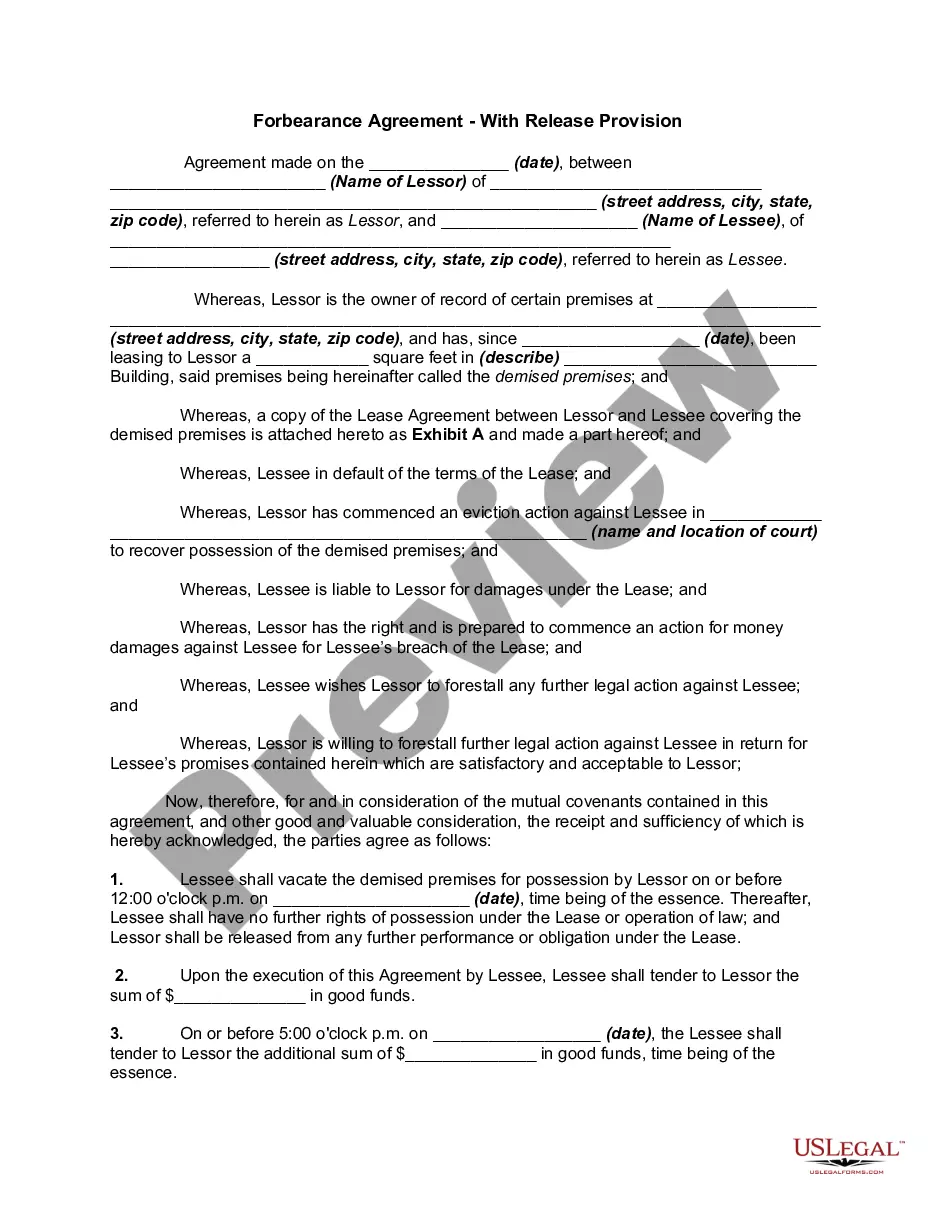
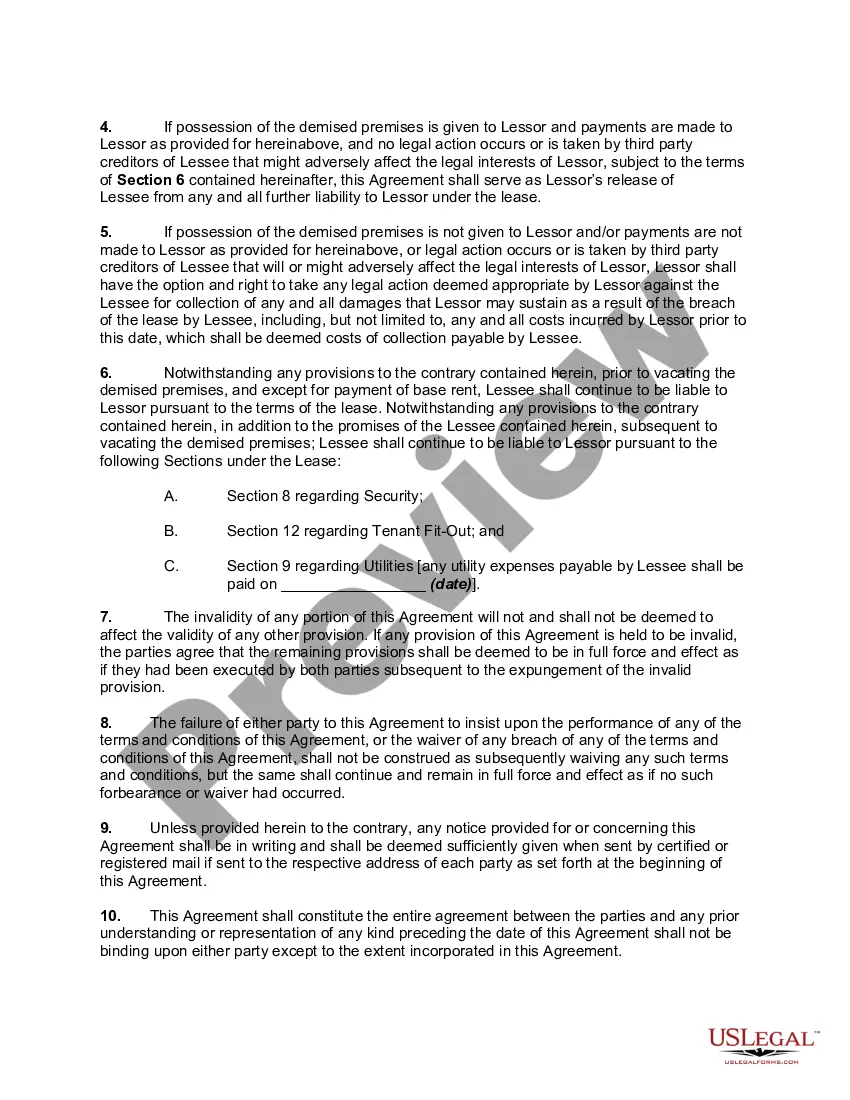
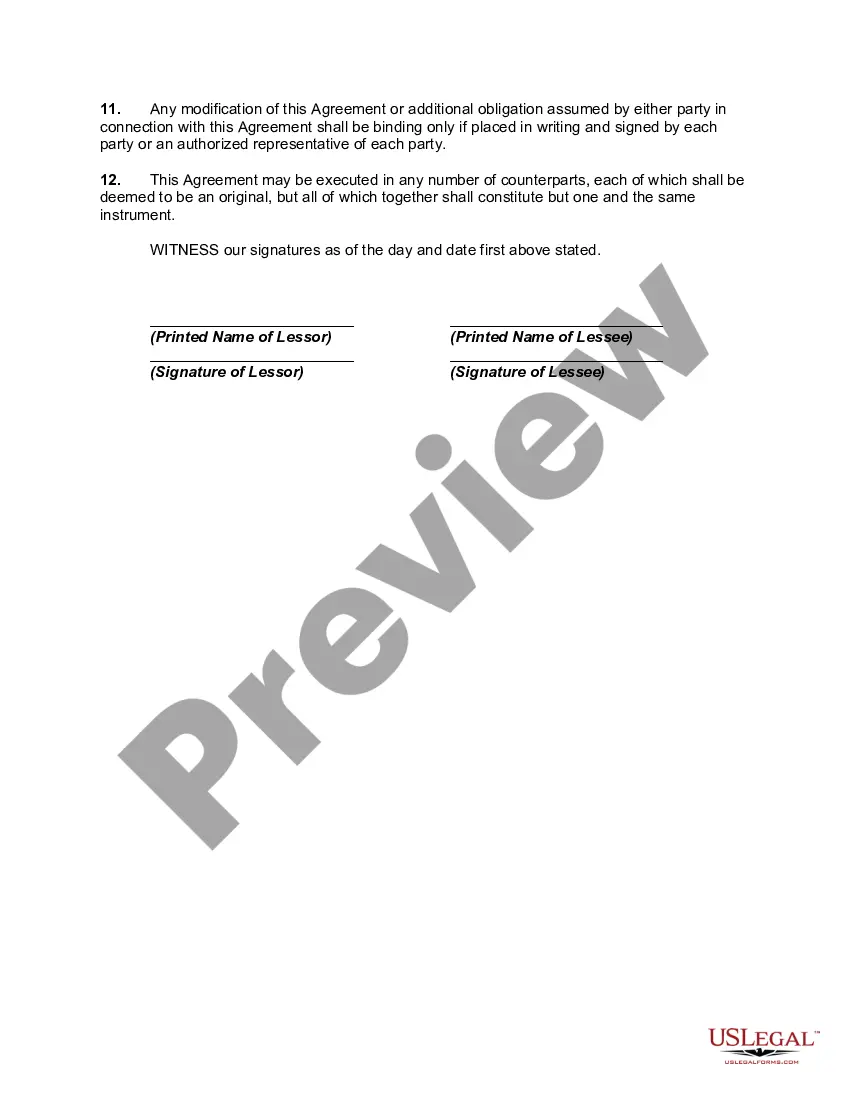
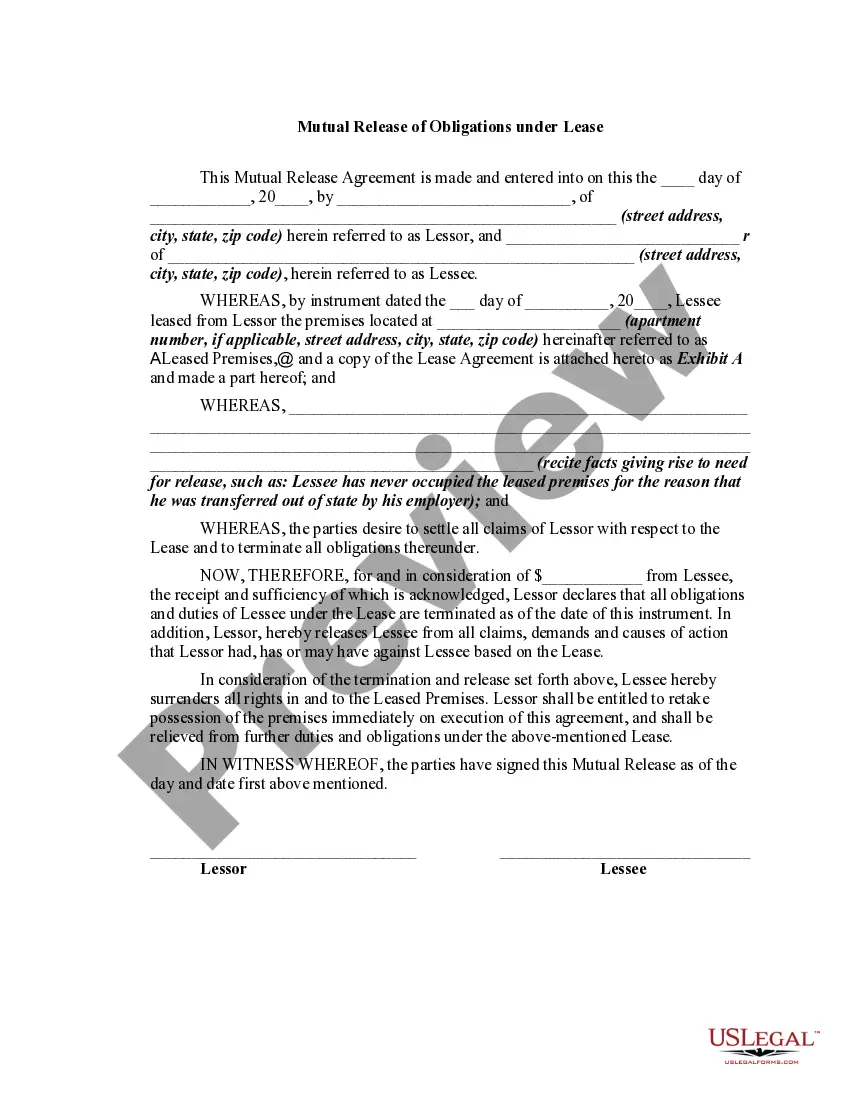




How to fill out Forbearance Agreement - With Release Provision?
- Start by logging into your US Legal Forms account. If this is your first visit, create a new account before proceeding.
- Browse the extensive collection of forms and check the preview mode for details. Ensure the selected form meets your requirements and complies with your state regulations.
- If the initial form is not suitable, utilize the search feature to explore additional templates that meet your needs.
- Select the form you wish to purchase by clicking the 'Buy Now' button. Choose the subscription plan that best fits your needs and register for an account if you haven't already.
- Complete the purchase by entering your payment details through a credit card or PayPal.
- Once payment is confirmed, download your form directly to your device for completion. You can easily find it again in the 'My Forms' section of your account.
By using US Legal Forms, individuals and attorneys can promptly create legally sound documents. Our extensive library of over 85,000 forms is tailored to ensure that you find what you need without hassle.
Take control of your legal documentation today. Explore our platform and discover how US Legal Forms can simplify your process.
Form popularity
FAQ
Considering forbearance for student loans can be beneficial in certain situations. It provides temporary relief when you face financial difficulties, allowing you to pause or reduce your payments. However, understand that interest may continue to accrue during this period. Thus, weigh your options carefully to ensure it aligns with your long-term financial goals.
Yes, there are downsides to forbearance. While it provides immediate financial relief, interest often continues to build, which can increase the total amount you owe. Moreover, prolonged forbearance might extend your repayment timeline, making it more challenging to achieve long-term financial goals. Evaluating these risks is vital when considering forbearance for student loans.
The answer to whether forbearance is good or bad depends on your financial situation. Forbearance can provide immediate relief by suspending your payments and offering some breathing room. However, it can also lead to a larger balance over time due to accruing interest. Weighing these factors is crucial in deciding if forbearance for student loans is the right choice for you.
Choosing between deferment and forbearance for student loans meaning depends on your financial situation. Deferment typically allows for a temporary pause in payments without accruing interest on certain types of loans, which can be beneficial. In contrast, forbearance may be necessary if you don't qualify for deferment but often comes with accumulating interest. Evaluating your specific circumstances and options can help you make the best decision.
Using forbearance for student loans meaning can be a smart choice during financial hardship, but it does not impact your credit score negatively. The important thing to understand is that while your account status remains current during forbearance, missed payments beforehand can affect your credit. Therefore, ensure to communicate with your lender and stay informed about your payment status.
Forbearance for student loans meaning itself does not directly hurt your credit score. However, if you have missed payments prior to entering forbearance, that could reflect negatively on your credit history. It's important to keep your payments up to date before applying for forbearance to maintain a positive credit profile.
Forbearance for student loans meaning involves temporary relief from payments, but it has downsides. During forbearance, interest continues to accrue on your loans, which can increase your total debt. This means you may end up paying more in the long run. Additionally, prolonged forbearance may lead to difficulty in managing future payments once the forbearance period ends.
Choosing between deferment and forbearance can be daunting, especially when understanding forbearance for student loans meaning. If you qualify for deferment based on financial need, it may be the better route, as you avoid accumulating extra interest on your subsidized loans. However, if you find yourself in urgent financial distress and need immediate relief, forbearance can offer a temporary solution. Always consider your long-term repayment strategy before making a decision.
One main disadvantage of forbearance for student loans meaning is that interest continues to accrue, increasing the total amount you owe. Unlike deferment, even subsidized loans will accumulate interest, which can lead to a higher repayment balance later. This can surprise many borrowers when they resume payments. Evaluating your financial situation and understanding the long-term impact of forbearance is essential.
When considering forbearance for student loans meaning, many borrowers wonder whether to choose deferment or forbearance. Deferment typically offers the benefit of interest not accumulating on subsidized loans, while forbearance may lead to interest increasing on all loans during that time. If you can meet the requirements for deferment, it may be a better option. However, if you face immediate financial hardship, forbearance may provide a quicker relief.