Non Profit
Description
Get your form ready online
Our built-in tools help you complete, sign, share, and store your documents in one place.
Make edits, fill in missing information, and update formatting in US Legal Forms—just like you would in MS Word.
Download a copy, print it, send it by email, or mail it via USPS—whatever works best for your next step.
Sign and collect signatures with our SignNow integration. Send to multiple recipients, set reminders, and more. Go Premium to unlock E-Sign.
If this form requires notarization, complete it online through a secure video call—no need to meet a notary in person or wait for an appointment.
We protect your documents and personal data by following strict security and privacy standards.

Make edits, fill in missing information, and update formatting in US Legal Forms—just like you would in MS Word.

Download a copy, print it, send it by email, or mail it via USPS—whatever works best for your next step.

Sign and collect signatures with our SignNow integration. Send to multiple recipients, set reminders, and more. Go Premium to unlock E-Sign.

If this form requires notarization, complete it online through a secure video call—no need to meet a notary in person or wait for an appointment.

We protect your documents and personal data by following strict security and privacy standards.
Looking for another form?




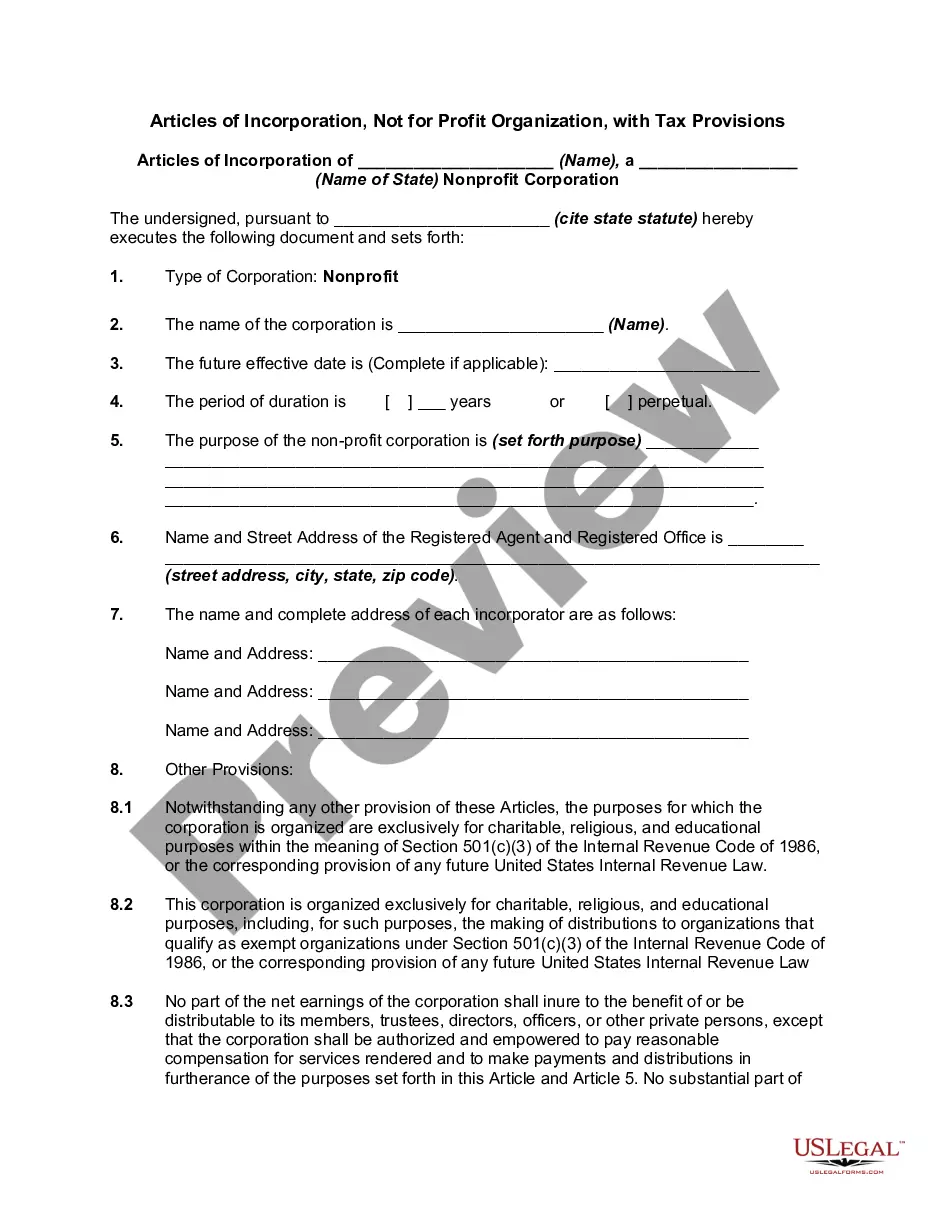
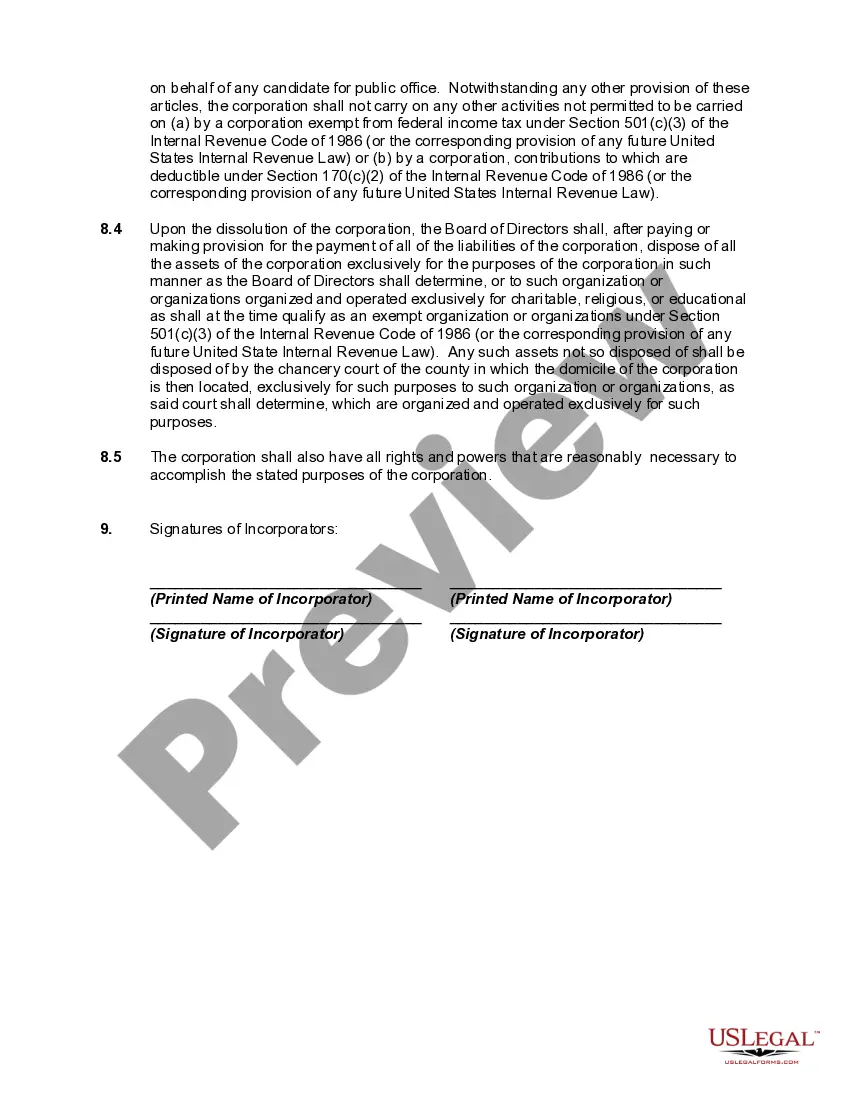
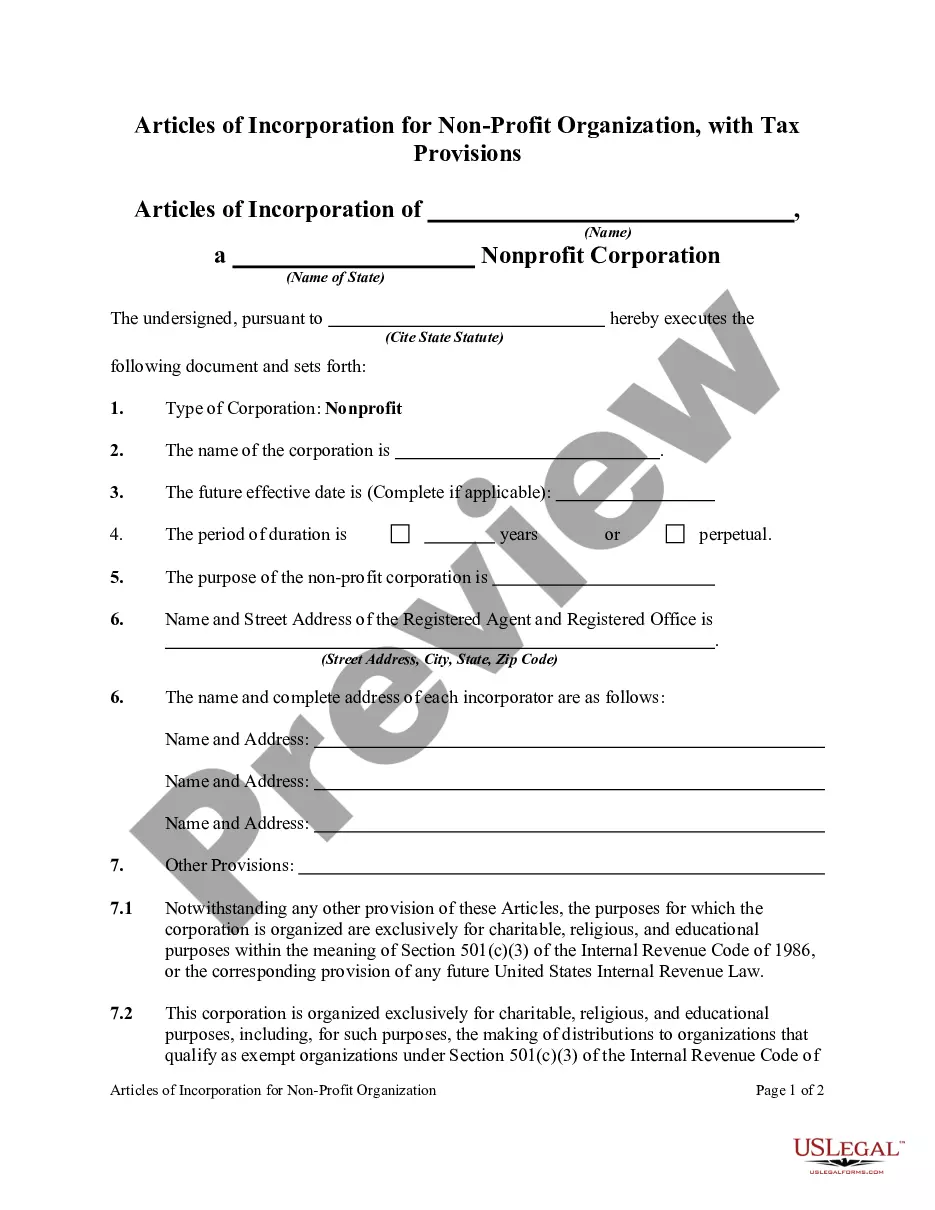
How to fill out Articles Of Incorporation, Not For Profit Organization, With Tax Provisions?
- If you're an existing user, log in to your account and select the form template you need. Confirm your subscription is active, and renew if required.
- For new users, start by reviewing the form preview to ensure it meets your requirements and complies with your local jurisdiction.
- If you need a different form, utilize the Search tab above to find the proper template that addresses your legal needs.
- Once you locate the desired document, click the Buy Now button and choose from the available subscription plans. You will need to create an account to access the forms.
- Finalize your purchase by entering your payment information through credit card or PayPal.
- After the purchase is complete, download your form to your device, and access it anytime via the My Forms section of your profile.
US Legal Forms makes it effortless to get precise and legally sound documents tailored for non profits. With comprehensive resources and access to expert assistance, users can be confident in their form completion and legal compliance.
Start leveraging US Legal Forms today to ensure your non profit operates smoothly and effectively!
Form popularity
FAQ
Even if a nonprofit made no profit, it is generally required to file a tax return, typically IRS Form 990-N, also known as the e-Postcard. This filing confirms that the organization is operating and honors IRS regulations. Staying compliant, despite generating no profit, is crucial for maintaining tax-exempt status. Using US Legal Forms can help you stay organized in these reporting requirements.
Yes, nonprofits often need to file state tax returns, depending on state requirements. While many states recognize the federal tax-exempt status, they may have their own filing guidelines. It's essential to check with your state’s tax authority to ensure compliance and maintain your nonprofit’s good standing. US Legal Forms offers resources to navigate these filings efficiently.
To file for a not-for-profit organization, start by choosing a unique name and drafting your articles of incorporation. Afterward, submit these documents along with IRS Form 1023, which applies for tax-exempt status. You'll need to provide details about your organization's mission, activities, and finances. Using resources from US Legal Forms can streamline this paperwork, making the process easier.
Filing taxes as a nonprofit involves gathering financial documents and completing IRS Form 990 or its variants. This form reports your nonprofit's revenue, expenses, and activities to the IRS. Depending on your nonprofit's size and income, there are different versions of Form 990 available. Organizations should diligently keep records to ensure accuracy during the filing process.
To report a nonprofit to the IRS, you need to submit a complaint outlining your concerns, such as potential misuse of funds or failing to follow nonprofit regulations. You can do this by creating a Form 13909, which helps the IRS evaluate the nonprofit's activities. Properly reporting concerns helps maintain the integrity of the nonprofit sector.
Nonprofits file taxes by completing IRS Form 990. This form provides the IRS with detailed information about the organization's financial status, operations, and compliance with tax regulations. It is essential for maintaining tax-exempt status and must be submitted annually. Using a platform like US Legal Forms can simplify the process of filing taxes for your nonprofit.
To qualify as a non-profit, your organization must operate primarily for a charitable purpose, rather than for profit. You need to apply for and obtain tax-exempt status from the IRS, which includes submitting the required documents and demonstrating your commitment to public benefit. Compliance with state regulations regarding non-profit corporations is also crucial. Utilizing US Legal Forms can assist you in meeting these requirements, streamlining your path to becoming a recognized non-profit.
Many consider starting a non-profit focused on community service or advocacy to be among the easiest options. These types of organizations often require fewer initial resources or infrastructure. For example, establishing a non-profit to support local food banks or animal shelters can be a great starting point. Using templates and resources from US Legal Forms can make the setup process even smoother, allowing you to focus on your cause.
Starting a non-profit typically involves a few key steps. First, you should define your mission and vision, making sure it addresses a specific need or cause in the community. Next, you must form a board of directors and draft your organizational bylaws. Finally, file for tax-exempt status with IRS, ensuring that you have the right documentation. Tools from US Legal Forms can simplify this process, guiding you through the necessary paperwork.
To secure funding for your non-profit, explore multiple sources such as grants, donations, and fundraising events. Research foundations that align with your mission, as they often offer grants to new non-profits. Additionally, crowdfunding platforms can provide an excellent way to reach potential supporters. Utilizing resources like US Legal Forms can help streamline your application process, making it easier to access the funding you need.