Defendant Court Plaintiff Foreign Language
Description
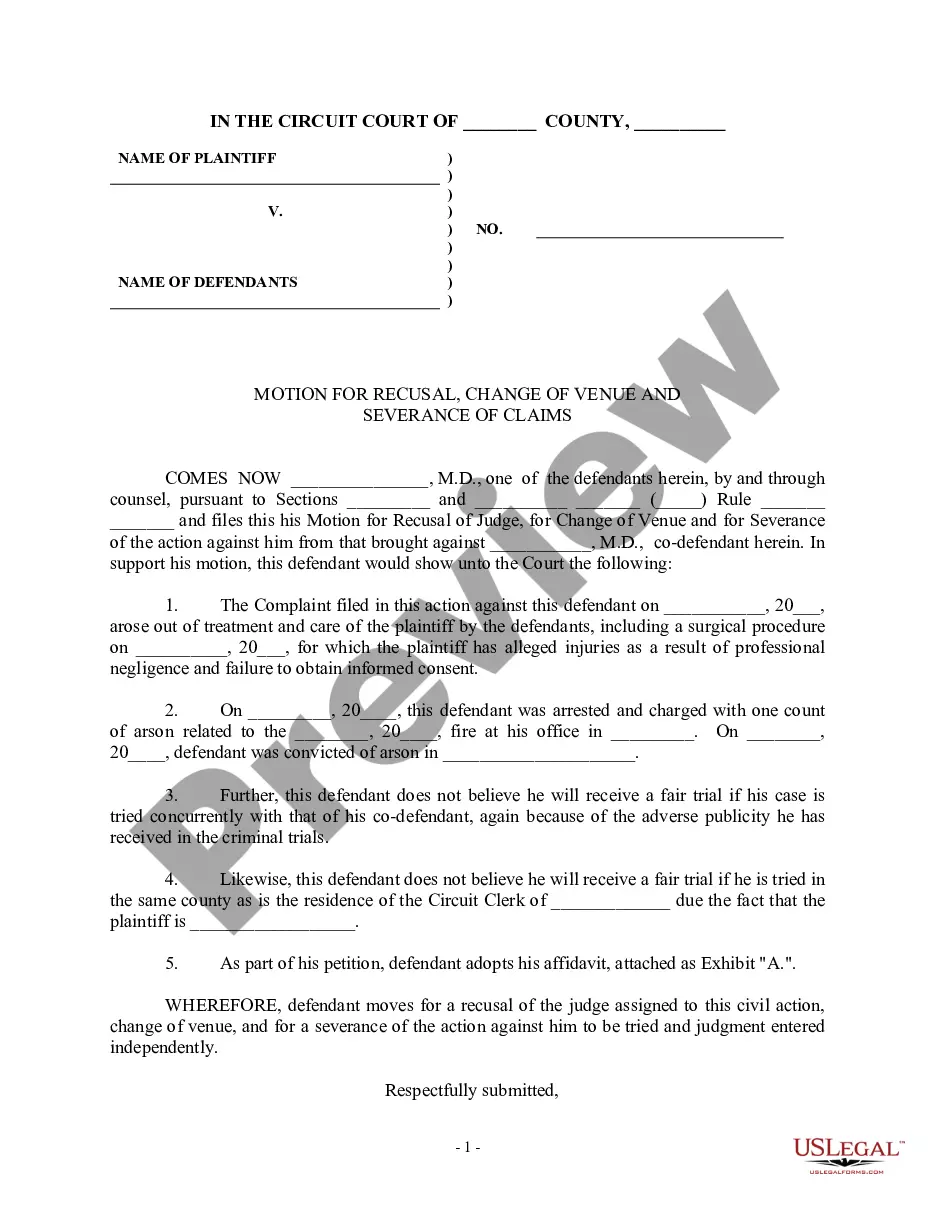
Get your form ready online
Our built-in tools help you complete, sign, share, and store your documents in one place.
Make edits, fill in missing information, and update formatting in US Legal Forms—just like you would in MS Word.
Download a copy, print it, send it by email, or mail it via USPS—whatever works best for your next step.
Sign and collect signatures with our SignNow integration. Send to multiple recipients, set reminders, and more. Go Premium to unlock E-Sign.
If this form requires notarization, complete it online through a secure video call—no need to meet a notary in person or wait for an appointment.
We protect your documents and personal data by following strict security and privacy standards.

Make edits, fill in missing information, and update formatting in US Legal Forms—just like you would in MS Word.

Download a copy, print it, send it by email, or mail it via USPS—whatever works best for your next step.

Sign and collect signatures with our SignNow integration. Send to multiple recipients, set reminders, and more. Go Premium to unlock E-Sign.

If this form requires notarization, complete it online through a secure video call—no need to meet a notary in person or wait for an appointment.

We protect your documents and personal data by following strict security and privacy standards.
Looking for another form?


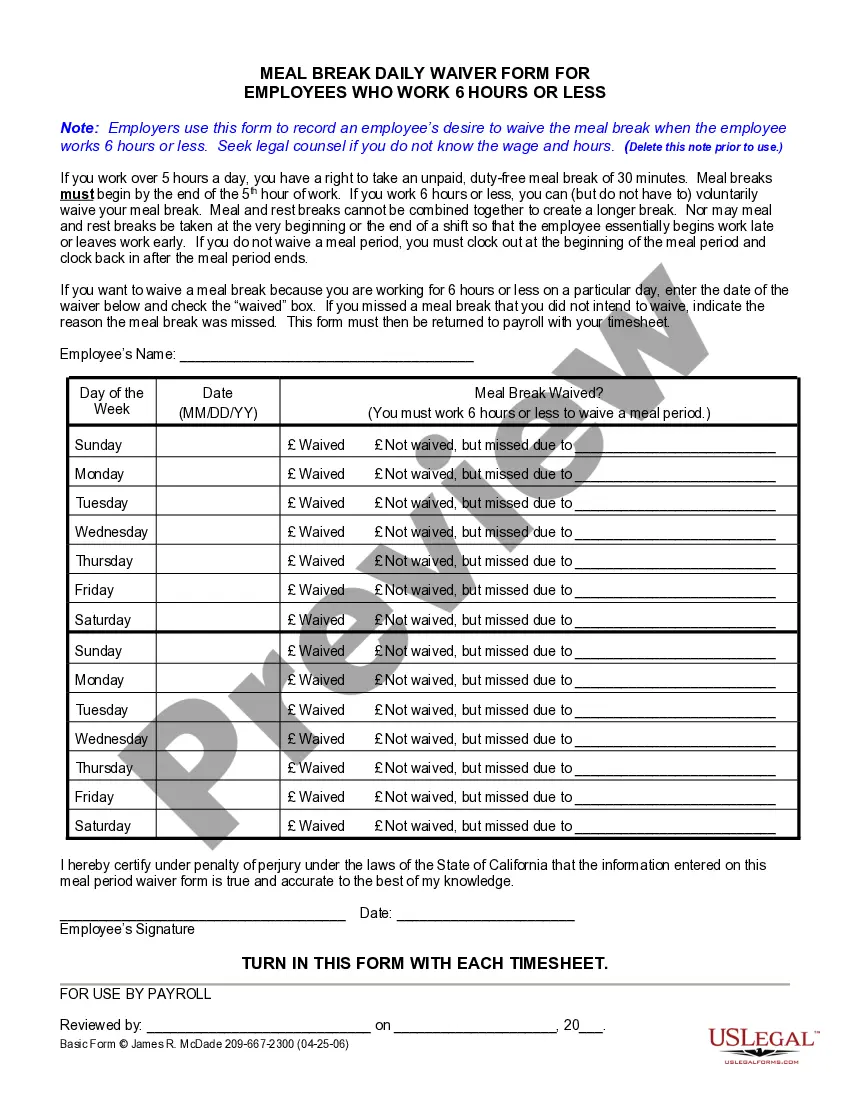
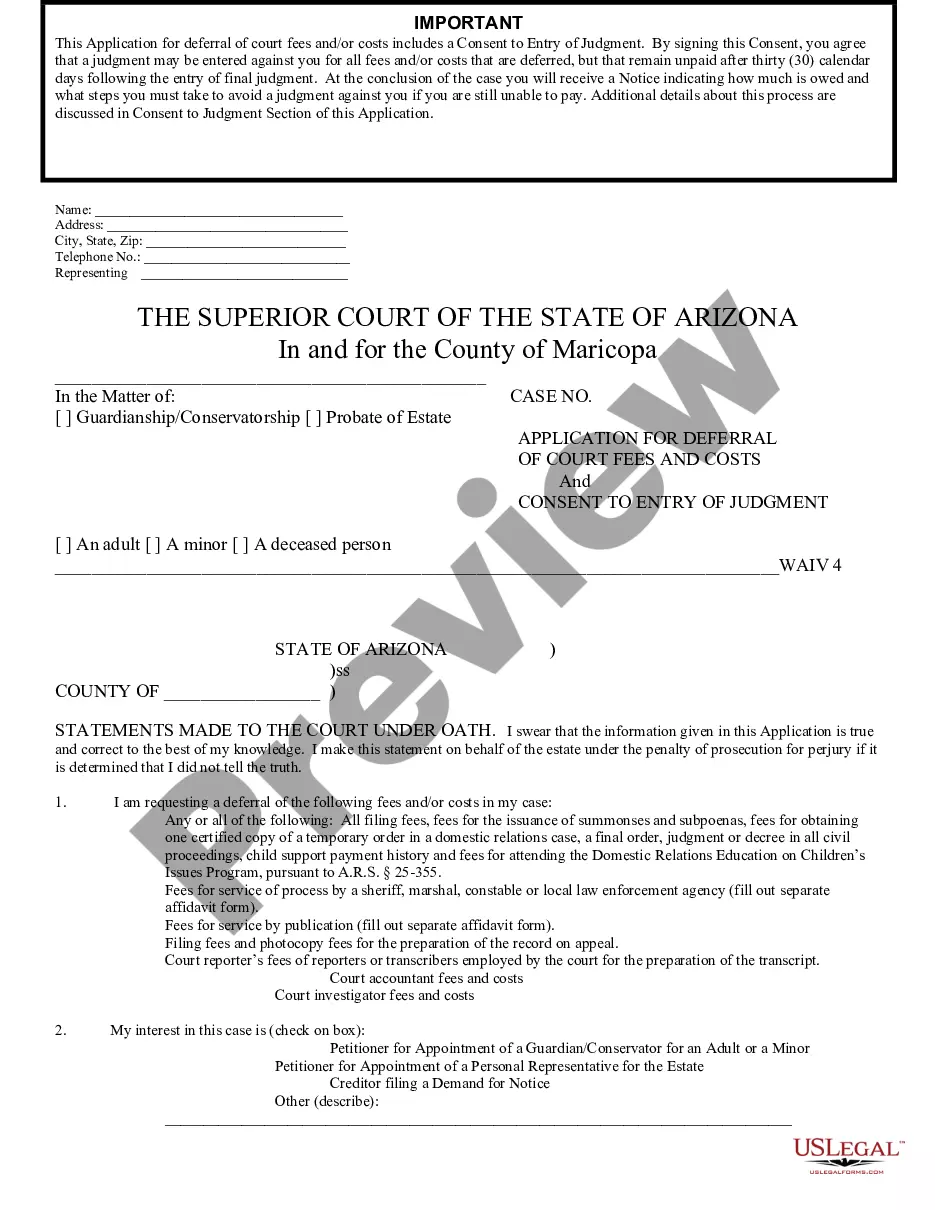

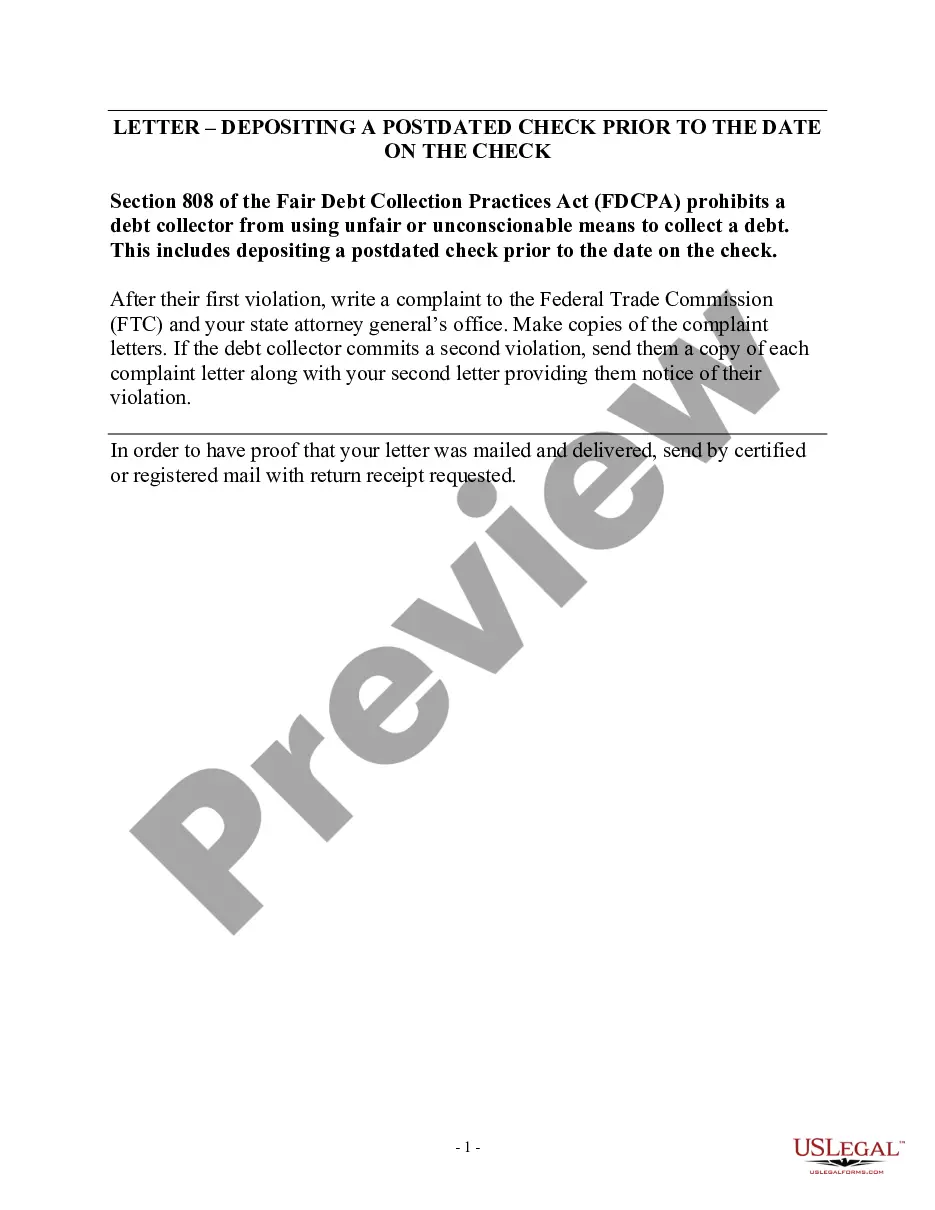
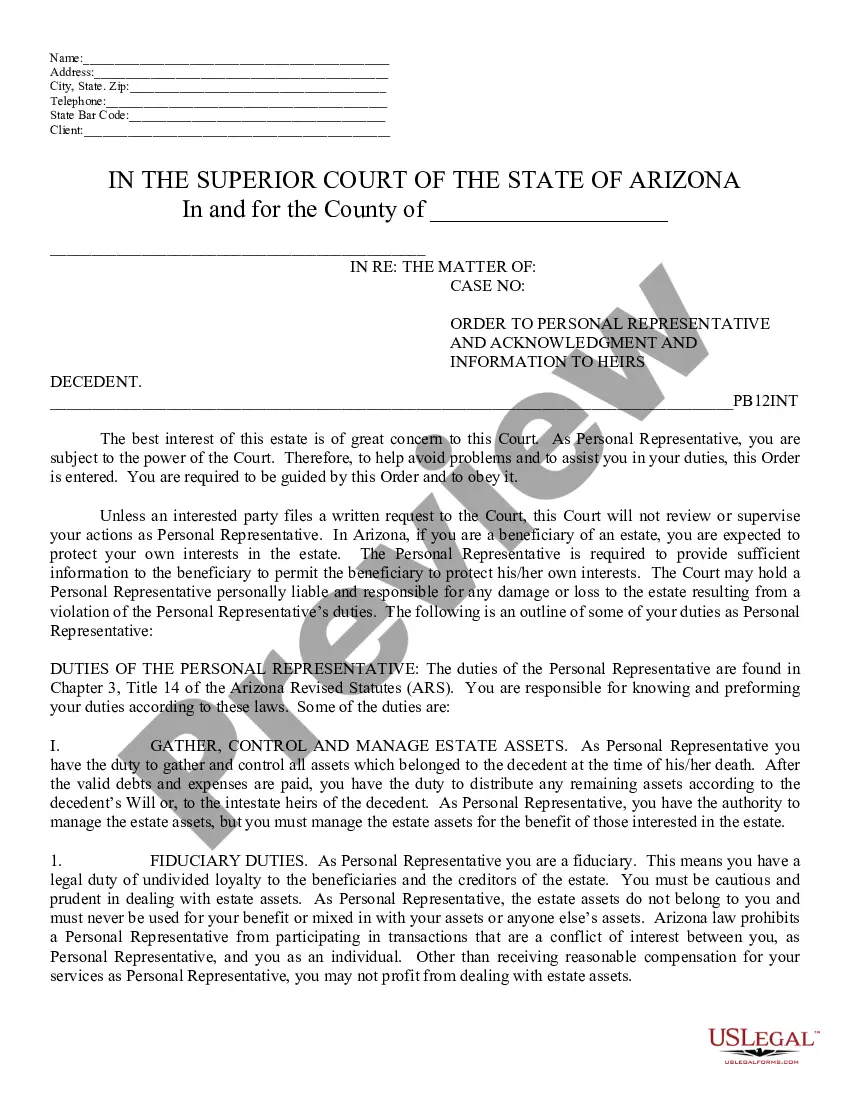

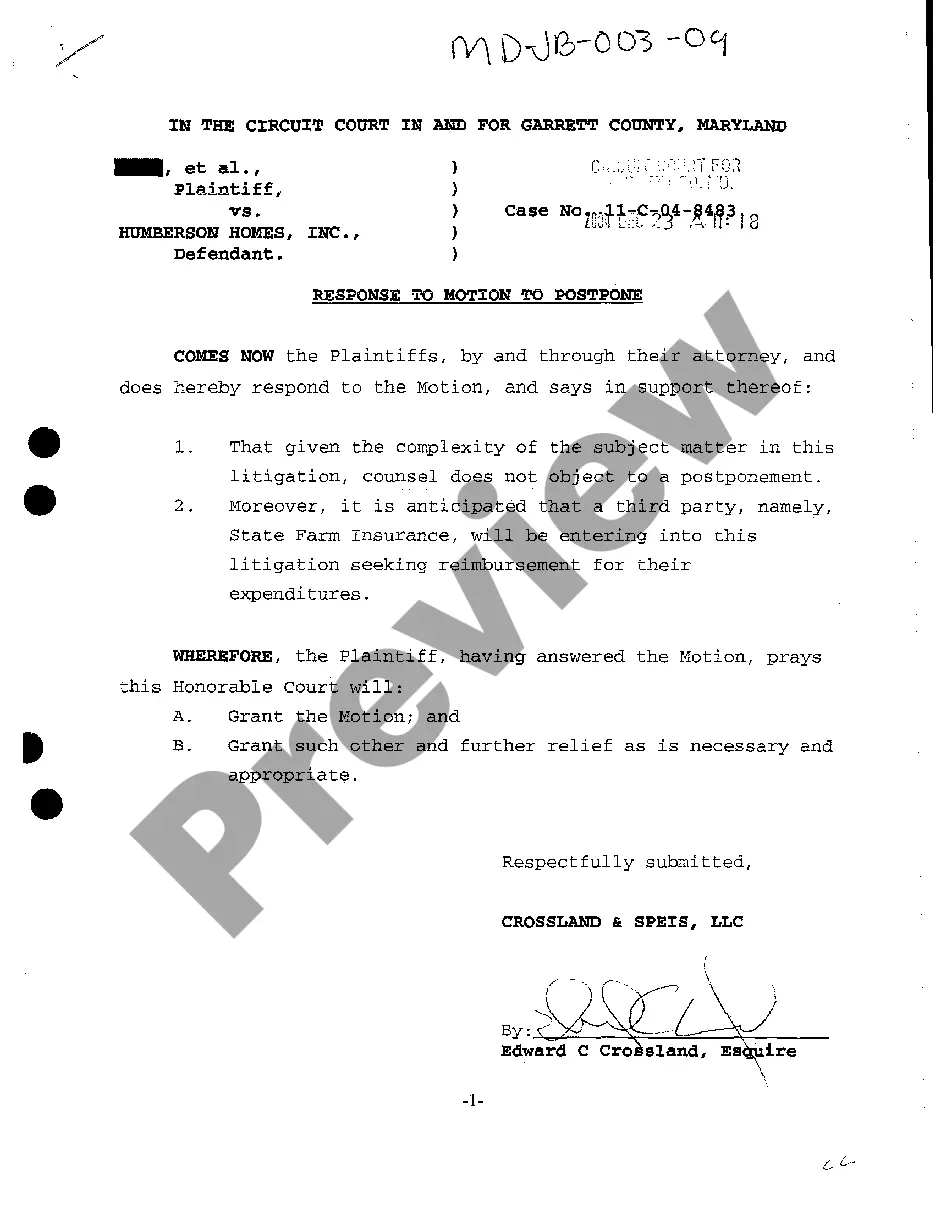
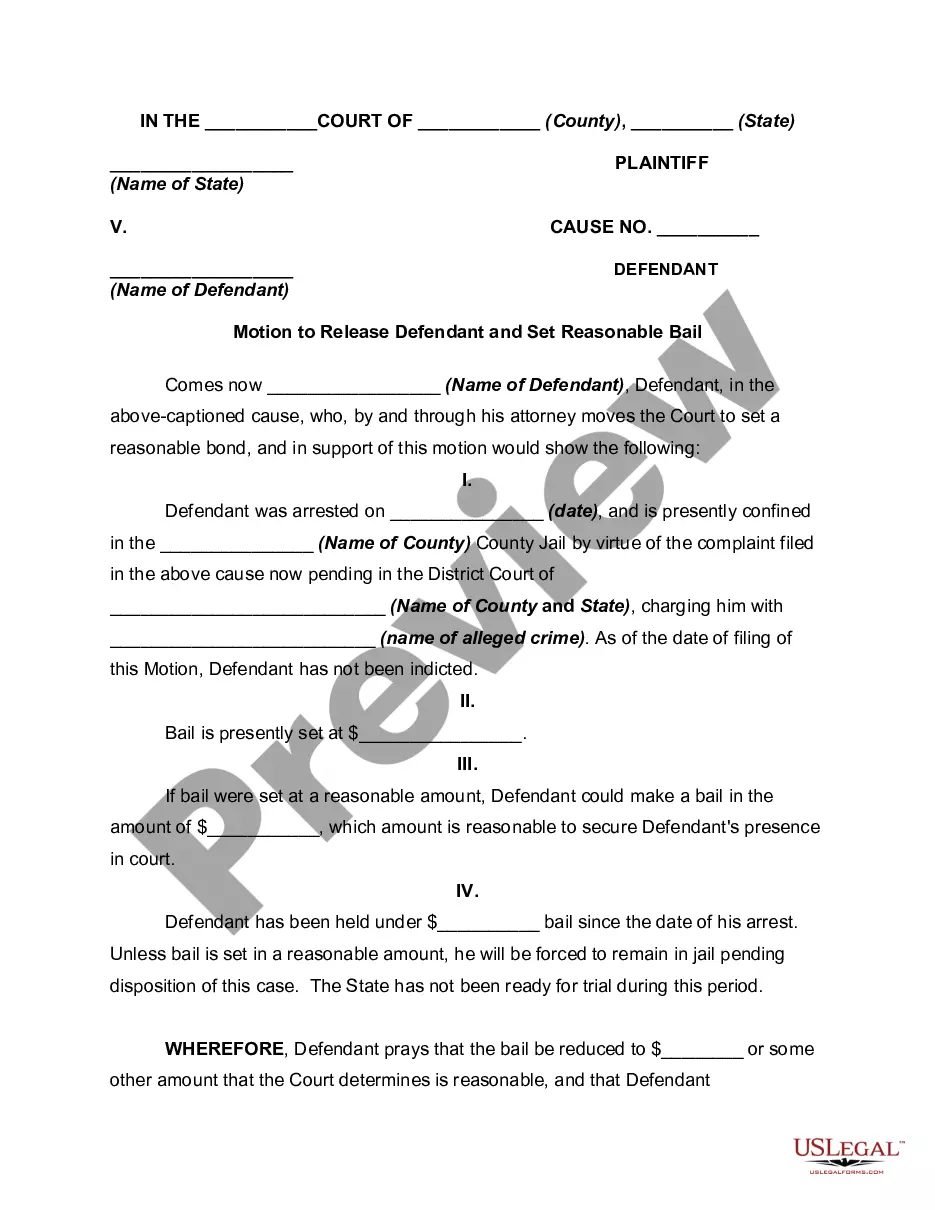
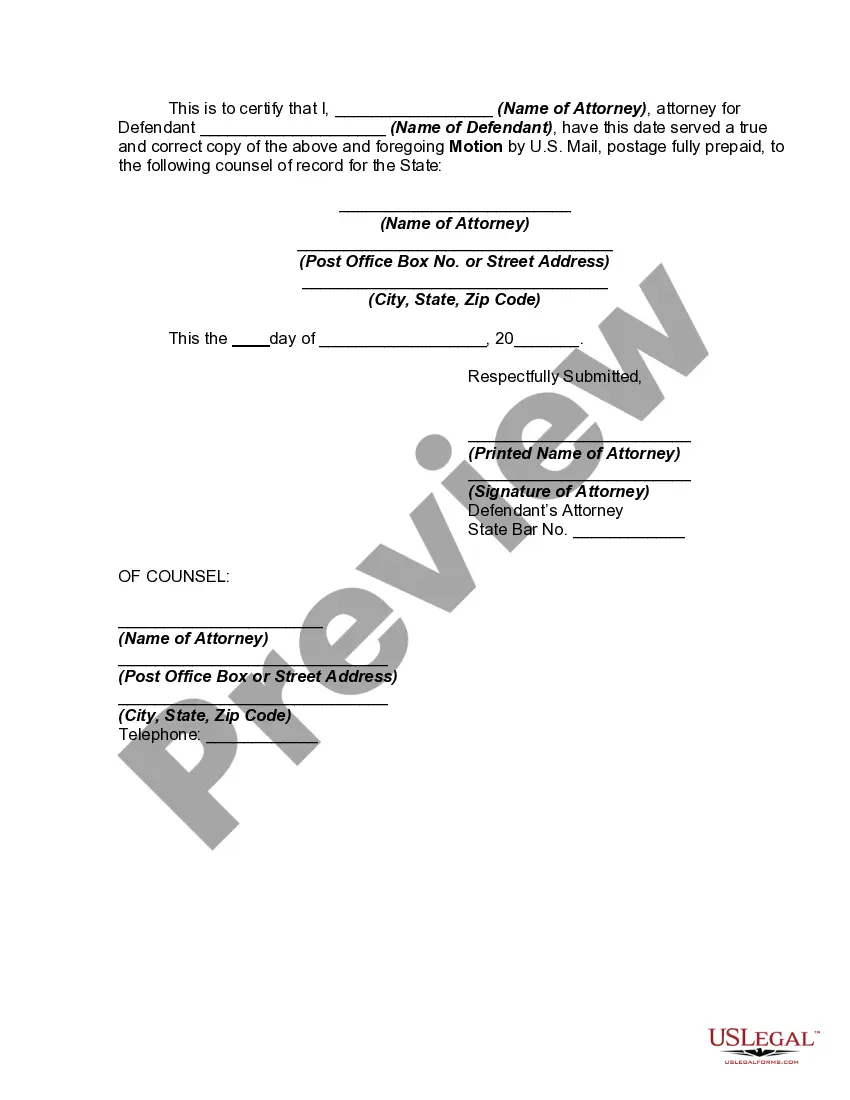
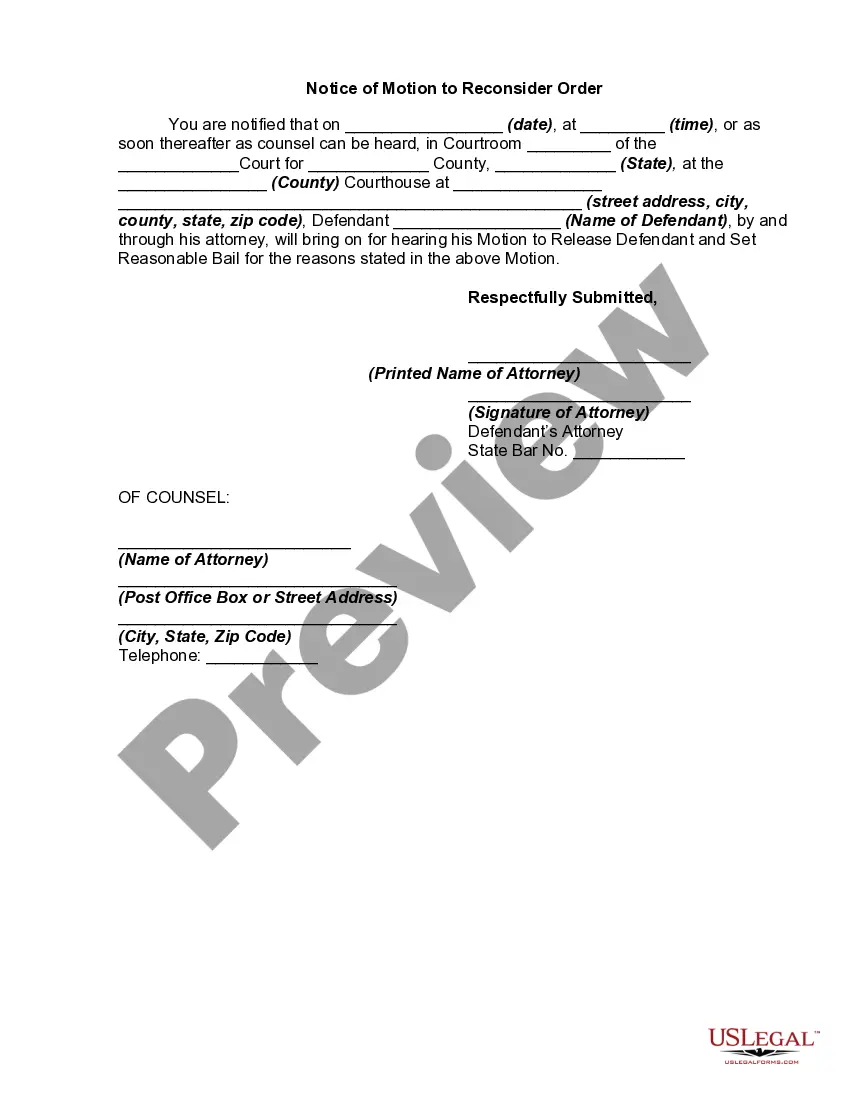
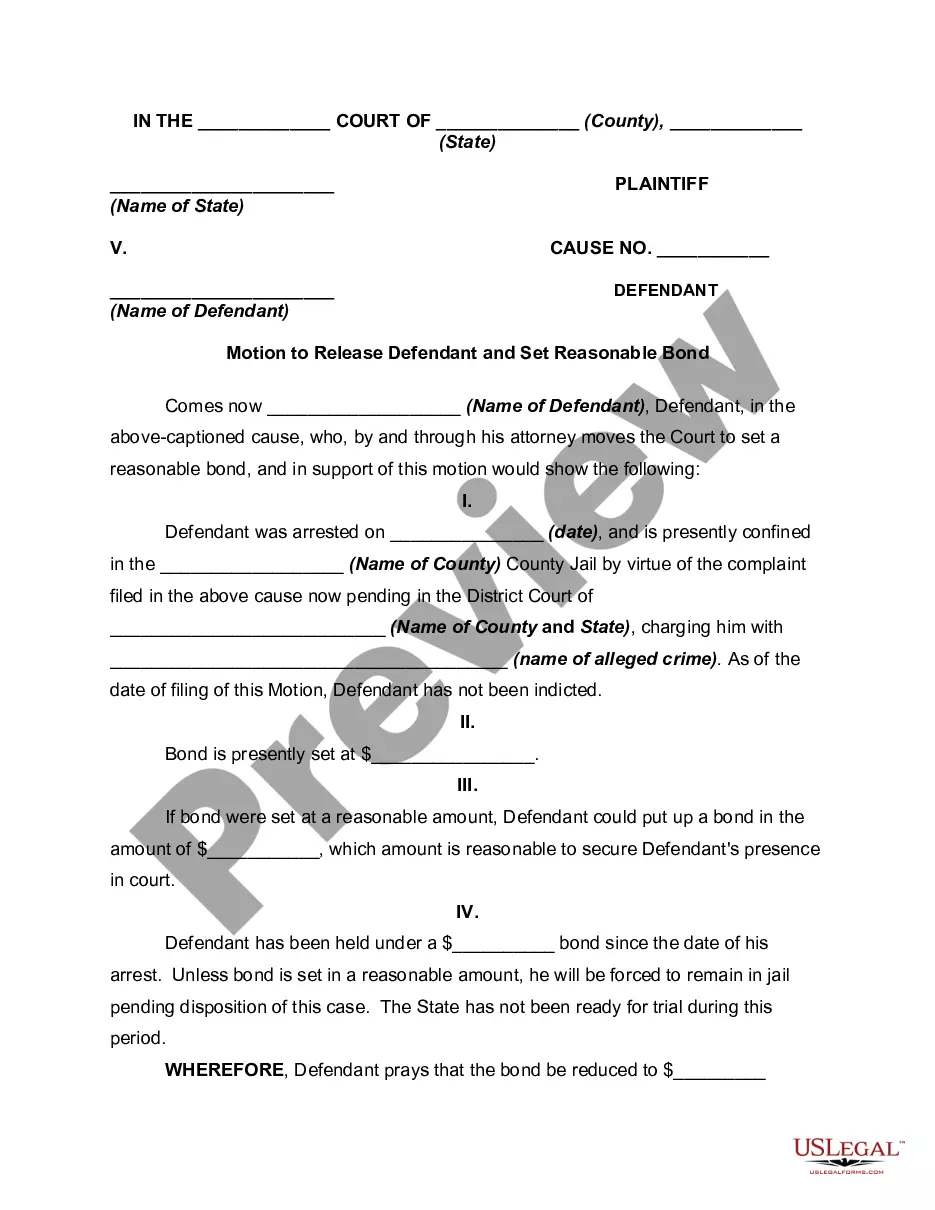
How to fill out Motion To Release Defendant And Set Reasonable Bail?
Legal management can be exasperating, even for seasoned professionals.
When you are interested in a Defendant Court Plaintiff Foreign Language and do not get the opportunity to dedicate time searching for the correct and updated version, the procedures can become overwhelming.
US Legal Forms manages any needs you may have, from personal to business documentation, all in one place.
Utilize sophisticated tools to complete and manage your Defendant Court Plaintiff Foreign Language.
Here are the actions to take after locating the form you need: Validate it is the correct form by previewing it and reading its description. Ensure the sample is accepted in your state or county. Click Buy Now when you are ready. Select a monthly subscription plan. Choose the format you prefer, and Download, complete, eSign, print, and send your documents. Take advantage of the US Legal Forms online catalog, backed by 25 years of experience and trustworthiness. Transform your everyday document management into a seamless and user-friendly process today.
- Gain access to a valuable resource library of articles, guides, and manuals pertinent to your situation and requirements.
- Save time and effort searching for the documents you need, and use US Legal Forms’ advanced search and Preview feature to find Defendant Court Plaintiff Foreign Language and obtain it.
- If you have a subscription, Log In to your US Legal Forms account, search for the form, and retrieve it.
- Check the My documents tab to view the documents you previously downloaded and manage your folders as you wish.
- If it is your first time with US Legal Forms, create an account and gain unlimited access to all the benefits of the platform.
- A robust online form catalog could be transformative for anyone looking to handle these matters effectively.
- US Legal Forms is a frontrunner in online legal forms, offering more than 85,000 state-specific legal forms available to you at any moment.
- With US Legal Forms, you can access state- or county-specific legal and business documents.
Form popularity
FAQ
John is seriously injured and he files a car accident lawsuit against Linda to recover additional damages that aren't covered by insurance. In this example, John is the plaintiff and Linda is the defendant. Because the plaintiff files the lawsuit, the plaintiff is responsible for drafting the complaint.
Civil cases also are tried in district court. They begin when a plaintiff ? the party seeking relief from an alleged wrong ? files a complaint. The plaintiff can be an individual, organization, business, or governmental body. Allegations involve violations of civil laws and the Constitution, not criminal laws.
Parties include plaintiff (person filing suit), defendant (person sued or charged with a crime), petitioner (files a petition asking for a court ruling), respondent (usually in opposition to a petition or an appeal), cross-complainant (a defendant who sues someone else in the same lawsuit), or cross-defendant (a person ...
The word plaintiff can be traced to the year 1278, and stems from the Anglo-French word pleintif meaning "complaining". It was identical to "plaintive" at first and receded into legal usage with the -iff spelling in the 15th century.
In a courtroom, the plaintiff is the person or group who is accusing another person or group of some wrongdoing. If you're the plaintiff, you are claiming that a law was broken, and you're in court to present your case. The plaintiff accuses, the defendant tries to prove that accusation wrong.