Adverse Possessor With A Title
Description
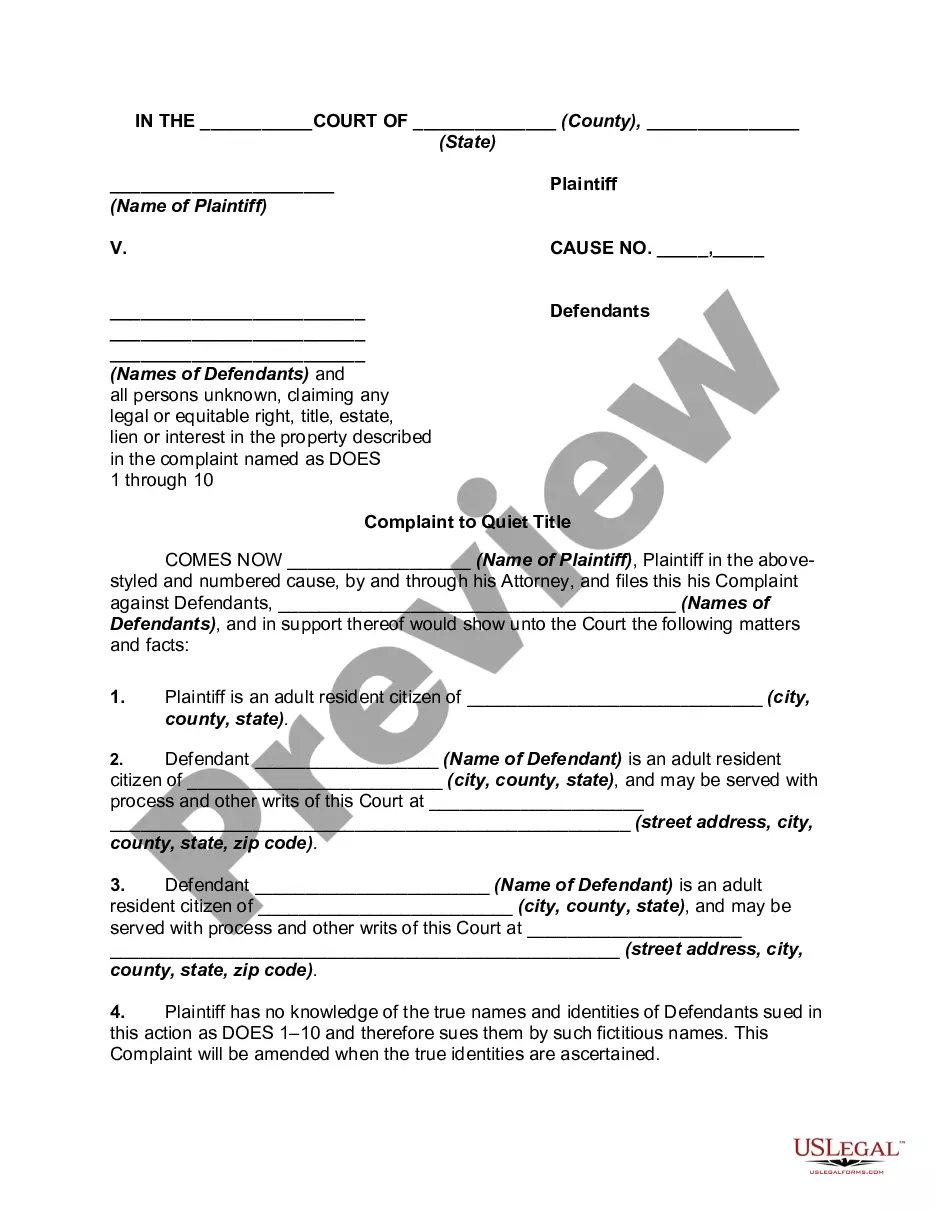
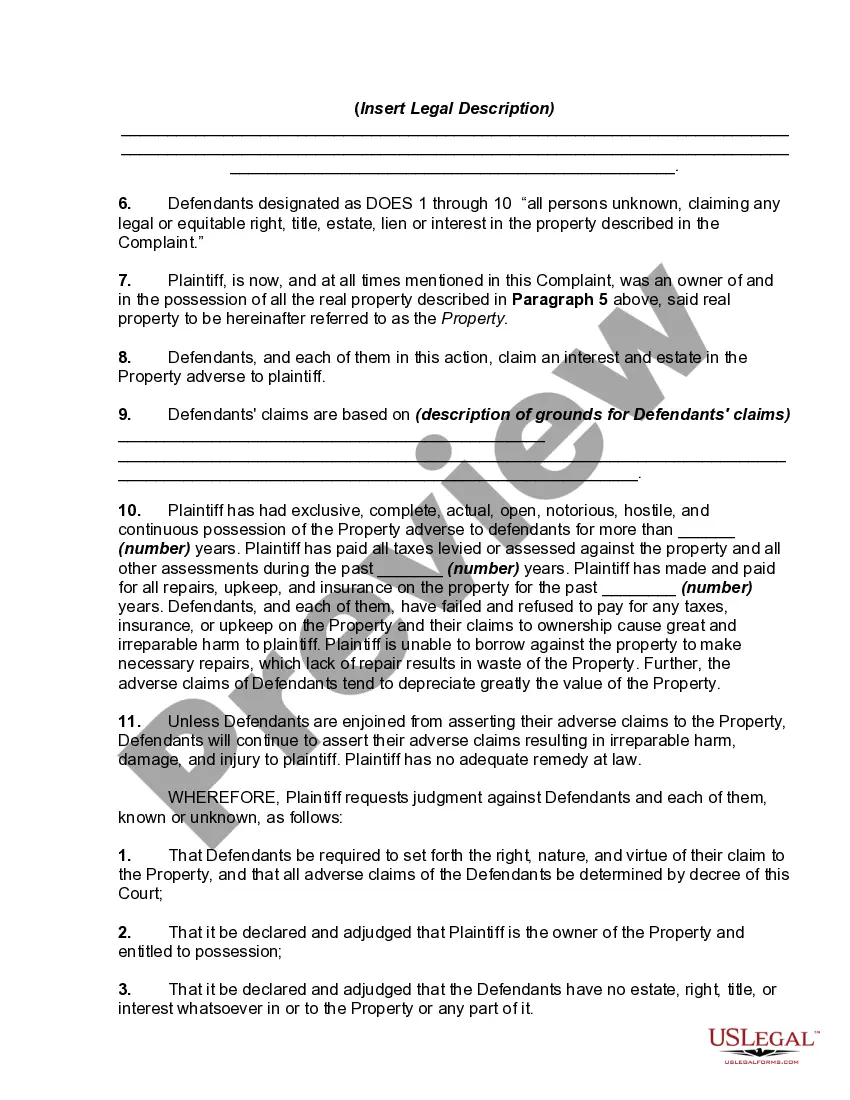
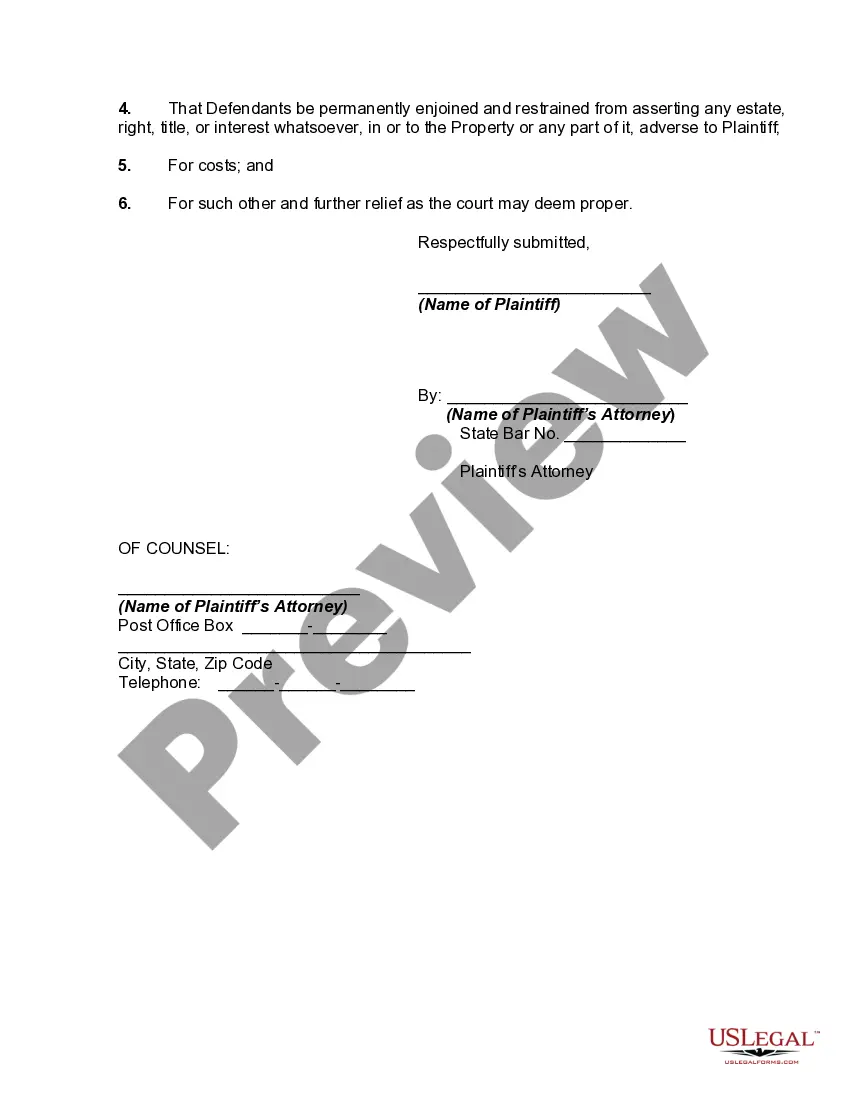
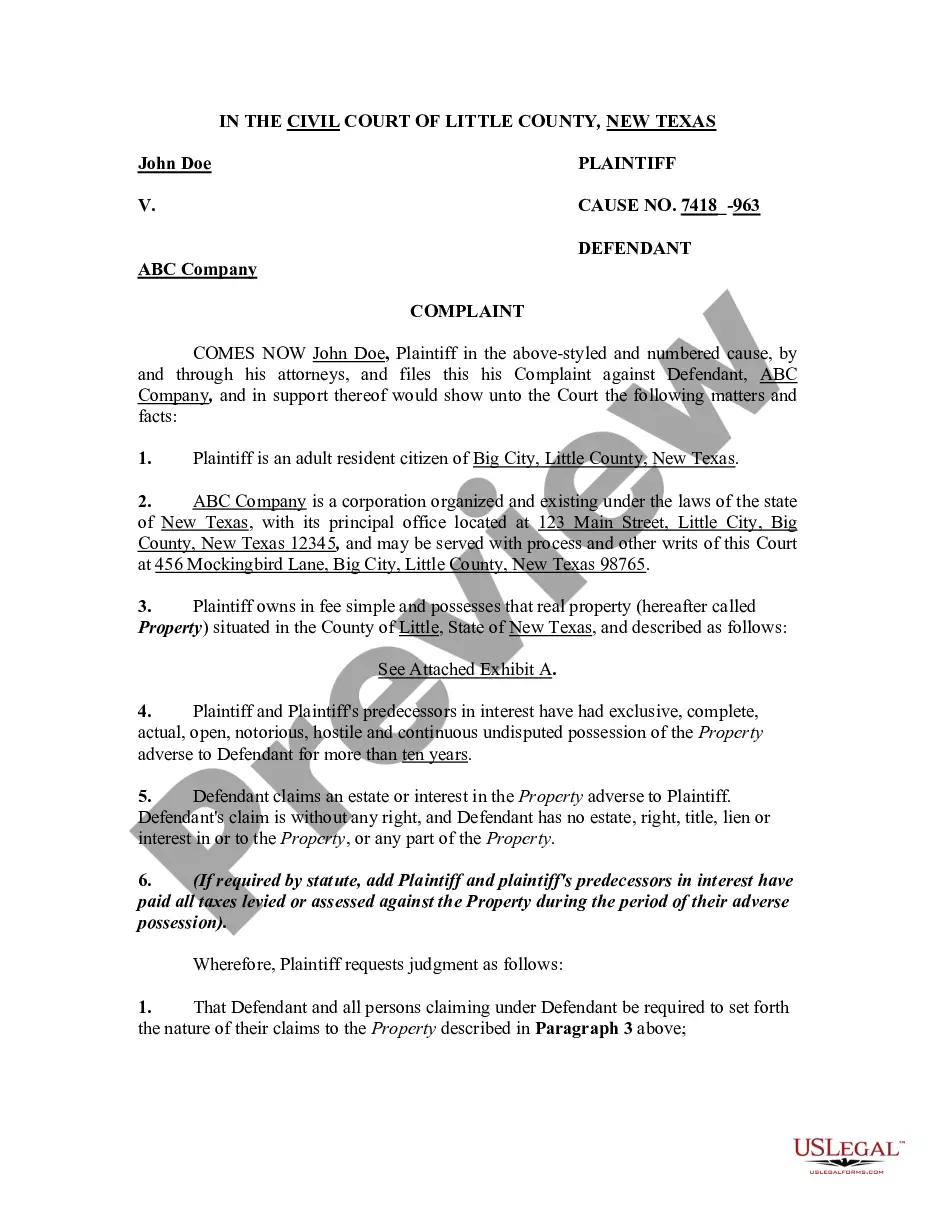
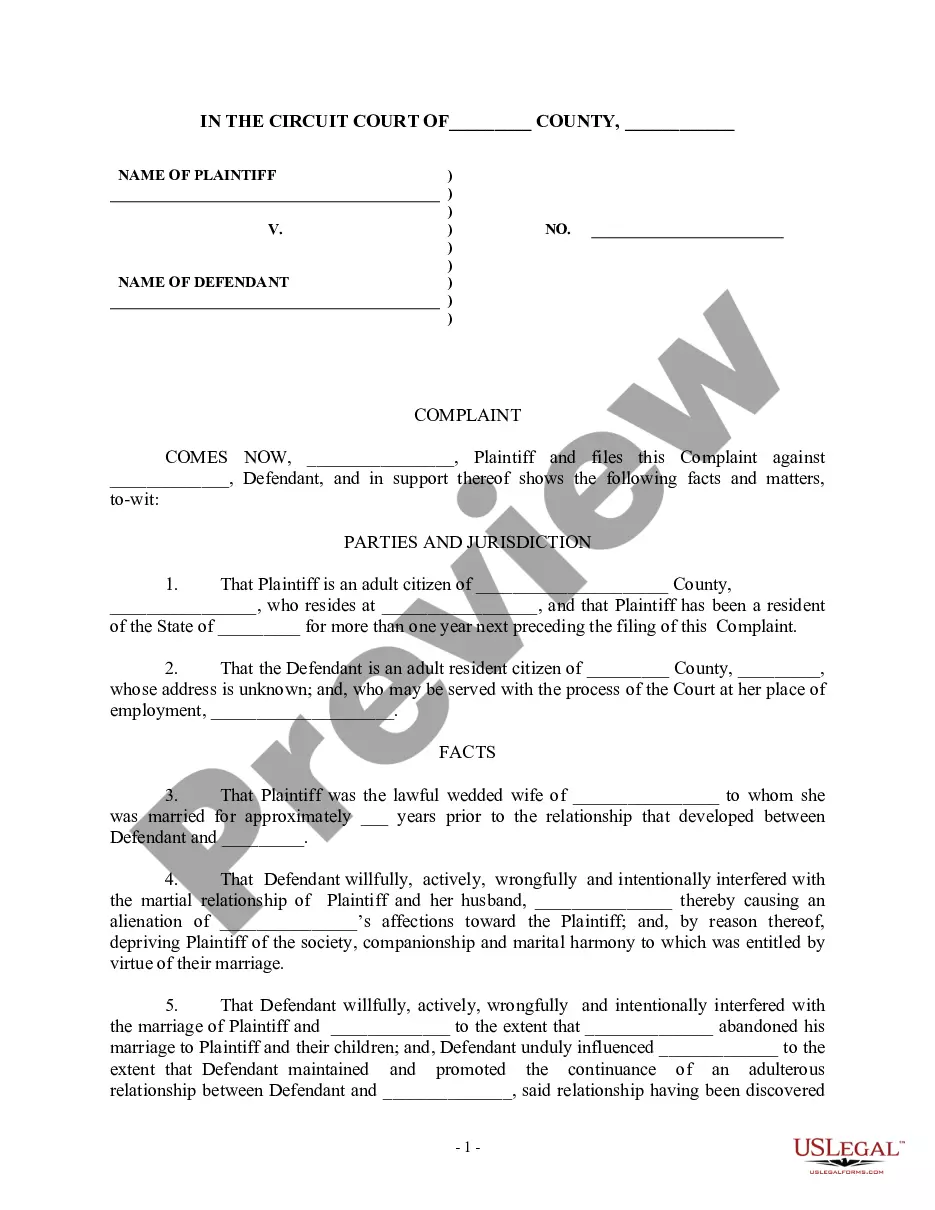
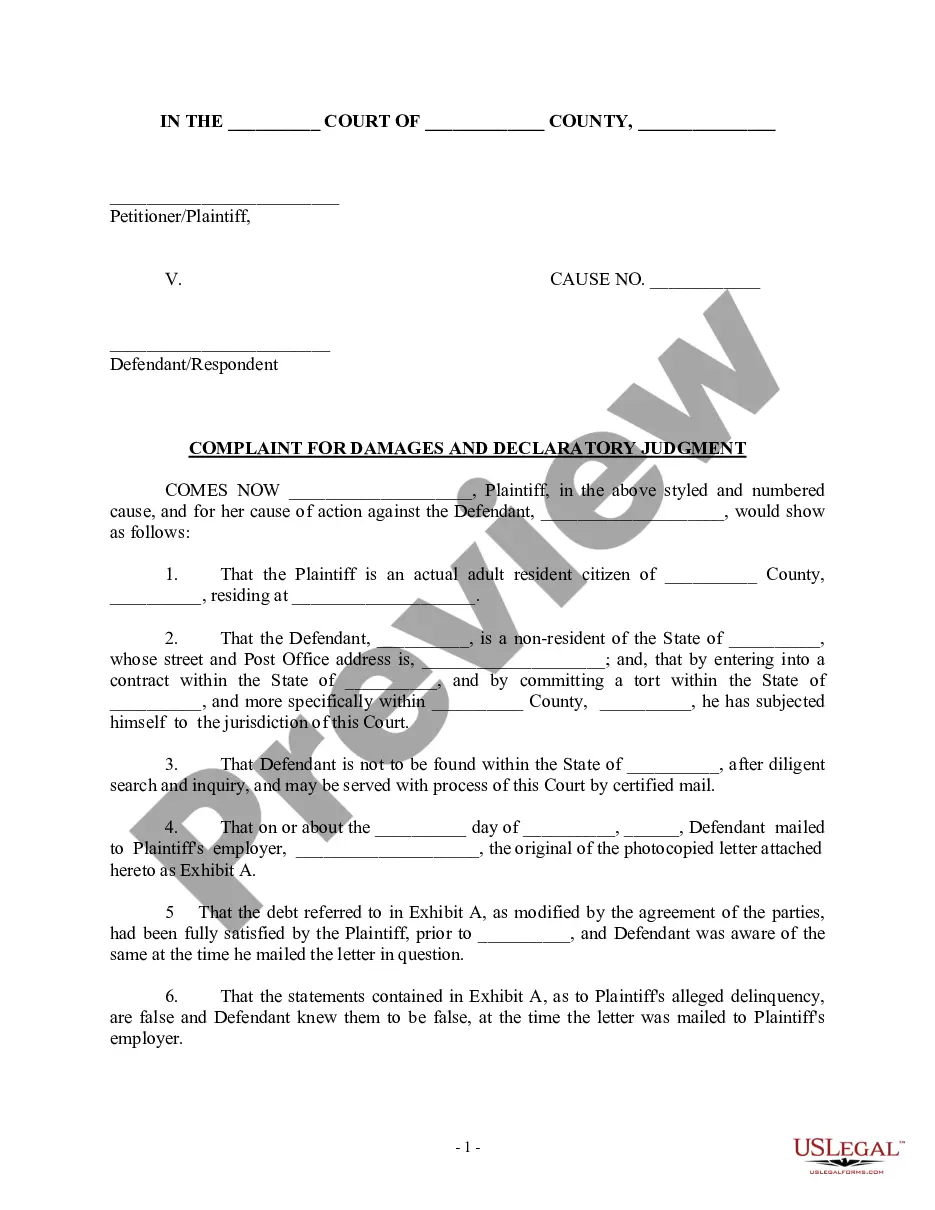
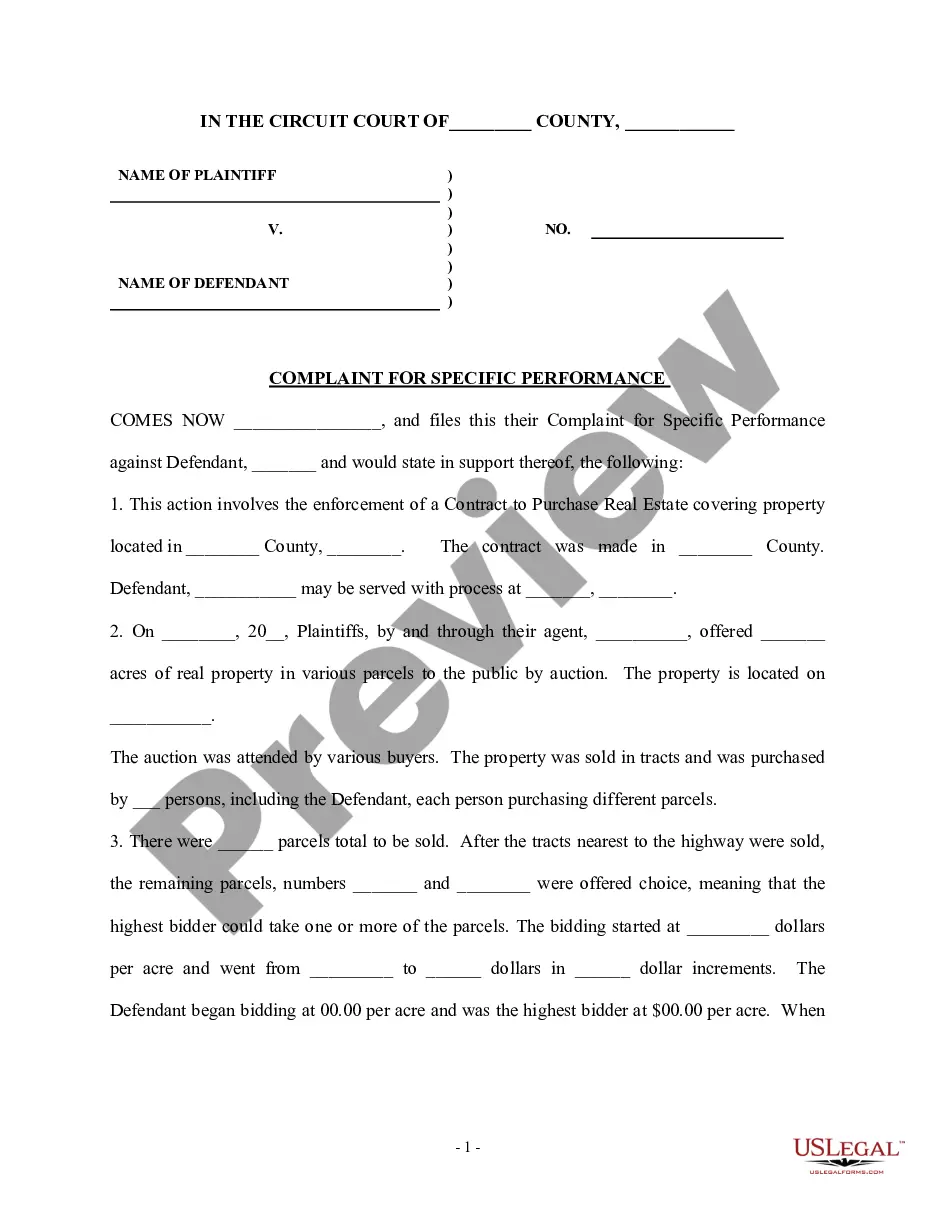
Get your form ready online
Our built-in tools help you complete, sign, share, and store your documents in one place.
Make edits, fill in missing information, and update formatting in US Legal Forms—just like you would in MS Word.
Download a copy, print it, send it by email, or mail it via USPS—whatever works best for your next step.
Sign and collect signatures with our SignNow integration. Send to multiple recipients, set reminders, and more. Go Premium to unlock E-Sign.
If this form requires notarization, complete it online through a secure video call—no need to meet a notary in person or wait for an appointment.
We protect your documents and personal data by following strict security and privacy standards.

Make edits, fill in missing information, and update formatting in US Legal Forms—just like you would in MS Word.

Download a copy, print it, send it by email, or mail it via USPS—whatever works best for your next step.

Sign and collect signatures with our SignNow integration. Send to multiple recipients, set reminders, and more. Go Premium to unlock E-Sign.

If this form requires notarization, complete it online through a secure video call—no need to meet a notary in person or wait for an appointment.

We protect your documents and personal data by following strict security and privacy standards.
Looking for another form?
How to fill out Complaint To Quiet Title By Adverse Possessor With Unknown Defendants?
- Log into your existing US Legal Forms account. Ensure that your subscription is active. If it's not, renew it based on your payment plan.
- Explore the Preview mode to review the form description, confirming that it meets your specific needs and adheres to local jurisdiction requirements.
- If you don’t find the right form or notice any inconsistencies, utilize the Search tab to locate another related template that fits your requirements.
- Purchase the document by clicking on the Buy Now button. Select the subscription plan that suits you best; you will need to register for an account to gain access.
- Complete the transaction by entering your payment details, either through a credit card or PayPal.
- Download your selected form to your device. You can access it later through the My Forms menu in your profile, making it easy to retrieve whenever necessary.
With US Legal Forms, you gain access to an extensive library housing over 85,000 editable legal forms, ensuring you have the necessary tools at your fingertips. Plus, if you need assistance, premium experts are available to help you complete your forms accurately.
Start today by signing up for US Legal Forms to ensure your legal documents are handled with care and precision. Don't hesitate; empower your legal journey now!
Form popularity
FAQ
When a property changes ownership, the concept of adverse possession remains unaffected. The new owner cannot simply terminate the adverse possession claim by taking title to the property. Instead, if someone has been an adverse possessor with a title for the legally required time, that claim continues. At USLegalForms, we provide helpful resources to clarify adverse possession laws in your state, ensuring you understand your rights.
Several defects could make a title unmarketable, including unresolved liens, faulty deeds, or conflicting claims. A title with adverse possession rights can also face challenges if there's ambiguity about ownership. It is essential to address these issues proactively. By utilizing resources like US Legal Forms, you can prepare to rectify defects and affirm your position as an adverse possessor.
A title acquired by adverse possession can be marketable, but it may come with complications. Potential buyers may hesitate due to uncertainties regarding ownership disputes or previous claims. To strengthen your title as an adverse possessor, clear any doubts by providing solid evidence of your claim. Using tools from US Legal Forms can assist in clearing up these uncertainties and facilitating a smoother transaction.
A title becomes unmarketable when it has defects that prevent a buyer from obtaining clear ownership. Common issues include outstanding liens, unresolved disputes, or claims of adverse possession by another party. As an adverse possessor, understanding these factors is crucial when asserting your rights. You can leverage US Legal Forms to address these concerns and ensure your title is marketable.
To record adverse possession, the adverse possessor must file a claim with the local county recorder’s office. This process typically includes submitting evidence that supports their continuous and exclusive use of the property, along with the required legal documents. Using a platform like US Legal Forms can help you prepare and file the necessary paperwork efficiently. Ultimately, documenting the process accurately establishes your claim as an adverse possessor.
An example of an adverse possession claim could involve a person who has openly occupied and used a piece of land for more than the statutory period, without the actual owner’s consent. They might demonstrate their claim by showing evidence of improvements made to the property. Real estate disputes can arise over such claims, so understanding them fully helps in managing risks. Resources from US Legal Forms can guide you through similar claims and help safeguard your property rights.
To defeat an adverse possession claim, it's essential to prove that the possession was not continuous or was not open and notorious. Gathering strong documentation, such as ownership records or evidence of your usage, is vital. Moreover, timely legal intervention can help protect your rights. Platforms like US Legal Forms offer resources that guide you on the best practices to challenge an adverse possessor.
A common example of adverse possession occurs when someone maintains a vacant plot of land for many years without the owner's permission. For instance, if a neighbor builds a fence and cultivates a garden on this land, they could eventually claim it as their own. Real-life cases can be complex and often require thorough legal validation. Learning more about adverse possession can help you assess similar situations.
Legal requirements for adverse possession generally include continuous use, open possession, and exclusive possession. However, paying taxes on the property is not always required in every jurisdiction. Knowing which conditions apply to your situation is crucial. Consult with legal resources to better understand the specific requirements around adverse possessors.
Whether adverse possession is good or bad often depends on the perspective of the parties involved. For an adverse possessor, it can be a way to claim ownership of property they have used and maintained. On the other hand, property owners may view it negatively, as it can undermine their rights. Understanding these dynamics can help you navigate any legal disputes involving an adverse possessor.