Adverse Possession Section With Section
Description
Get your form ready online
Our built-in tools help you complete, sign, share, and store your documents in one place.
Make edits, fill in missing information, and update formatting in US Legal Forms—just like you would in MS Word.
Download a copy, print it, send it by email, or mail it via USPS—whatever works best for your next step.
Sign and collect signatures with our SignNow integration. Send to multiple recipients, set reminders, and more. Go Premium to unlock E-Sign.
If this form requires notarization, complete it online through a secure video call—no need to meet a notary in person or wait for an appointment.
We protect your documents and personal data by following strict security and privacy standards.
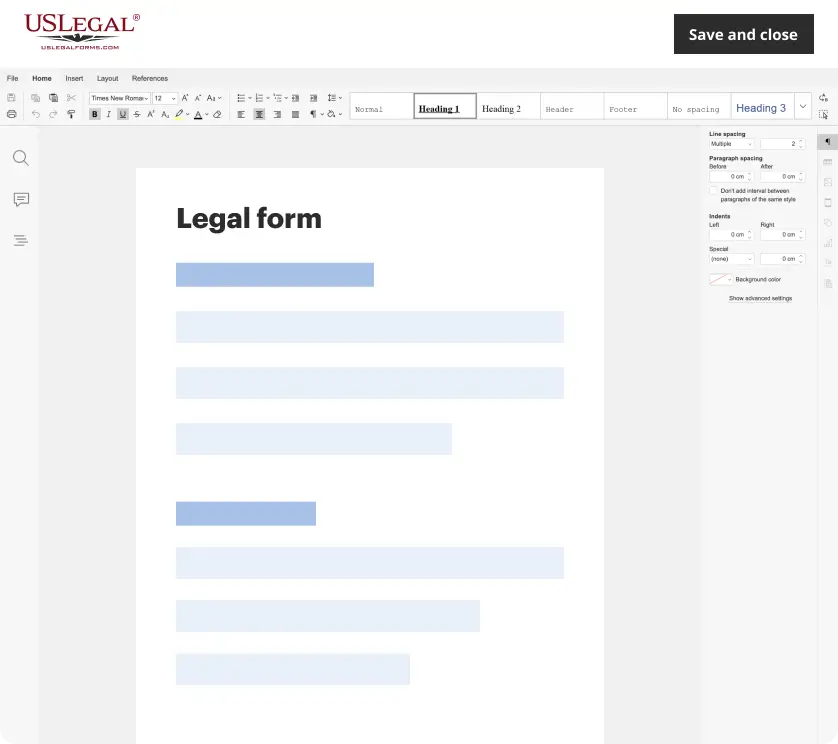
Make edits, fill in missing information, and update formatting in US Legal Forms—just like you would in MS Word.
Download a copy, print it, send it by email, or mail it via USPS—whatever works best for your next step.
Sign and collect signatures with our SignNow integration. Send to multiple recipients, set reminders, and more. Go Premium to unlock E-Sign.

If this form requires notarization, complete it online through a secure video call—no need to meet a notary in person or wait for an appointment.
We protect your documents and personal data by following strict security and privacy standards.
Looking for another form?



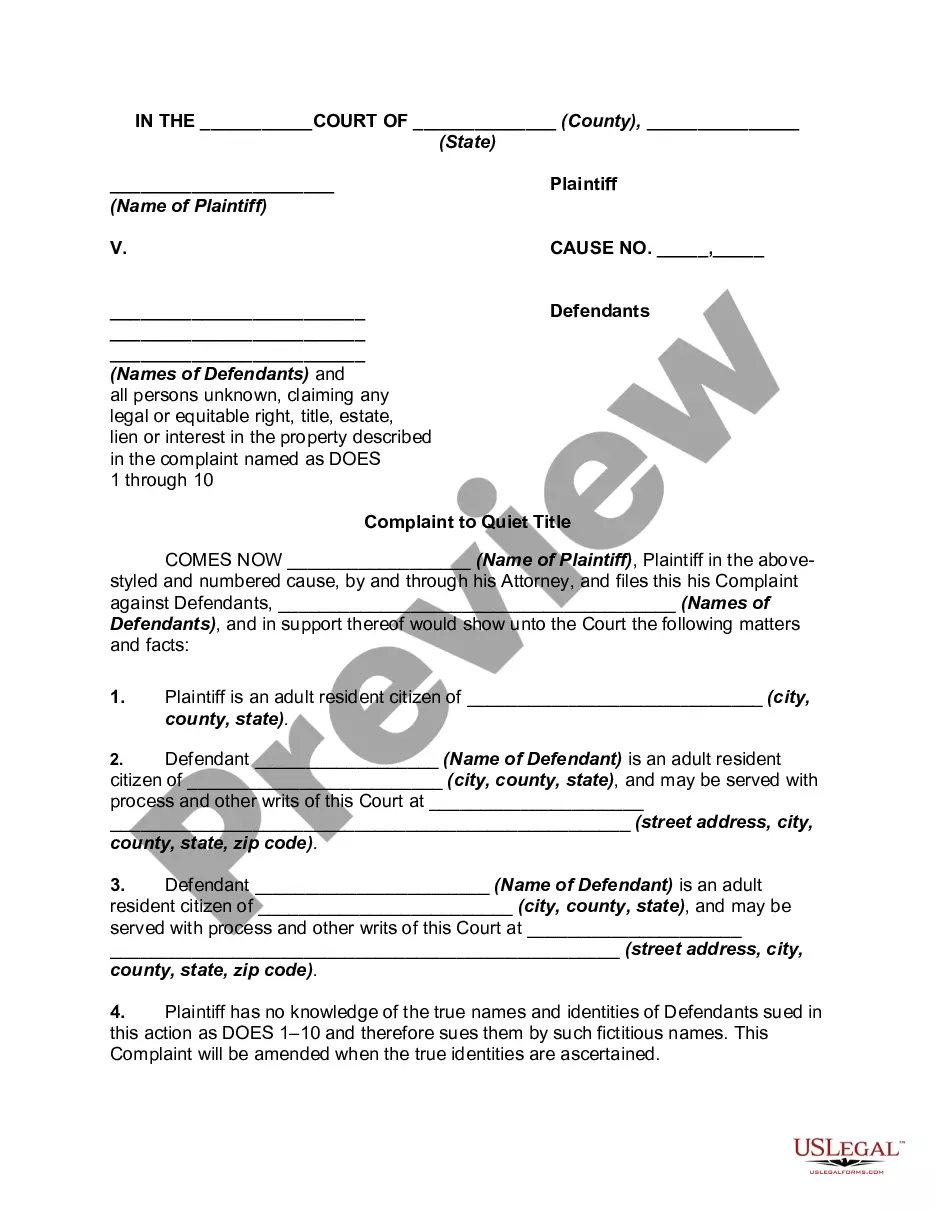
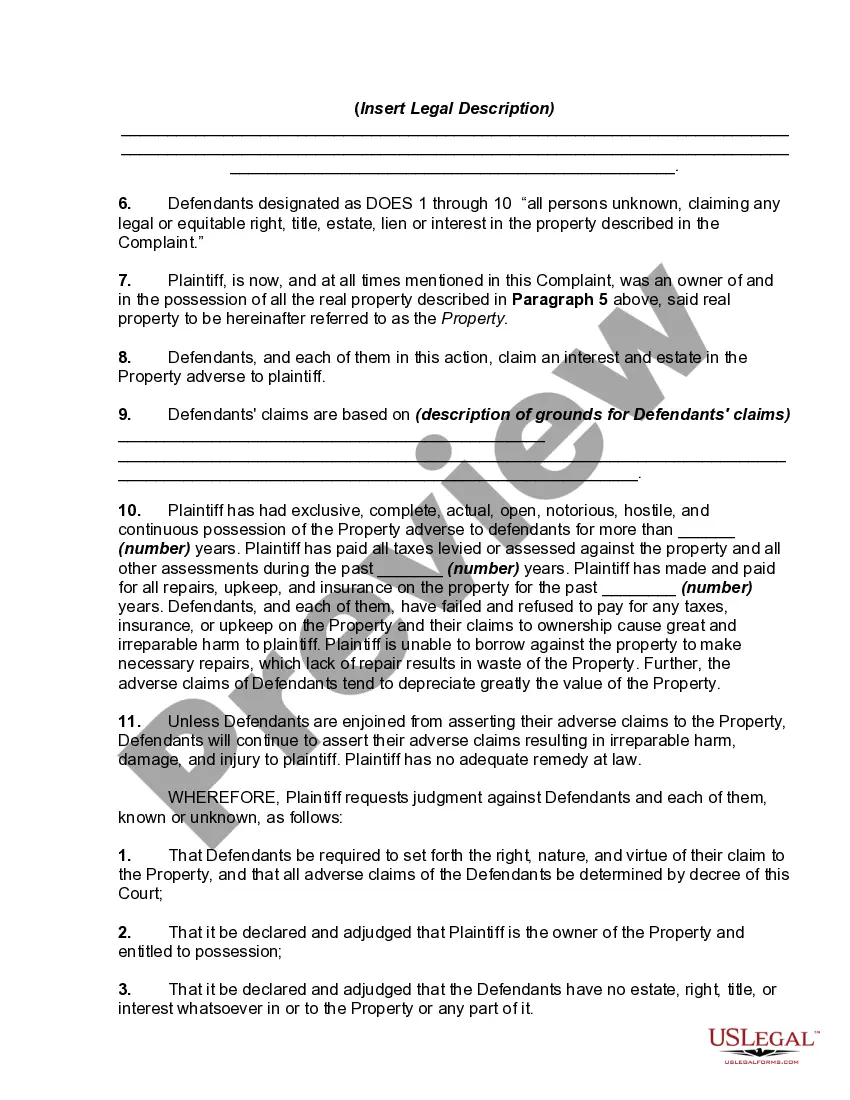
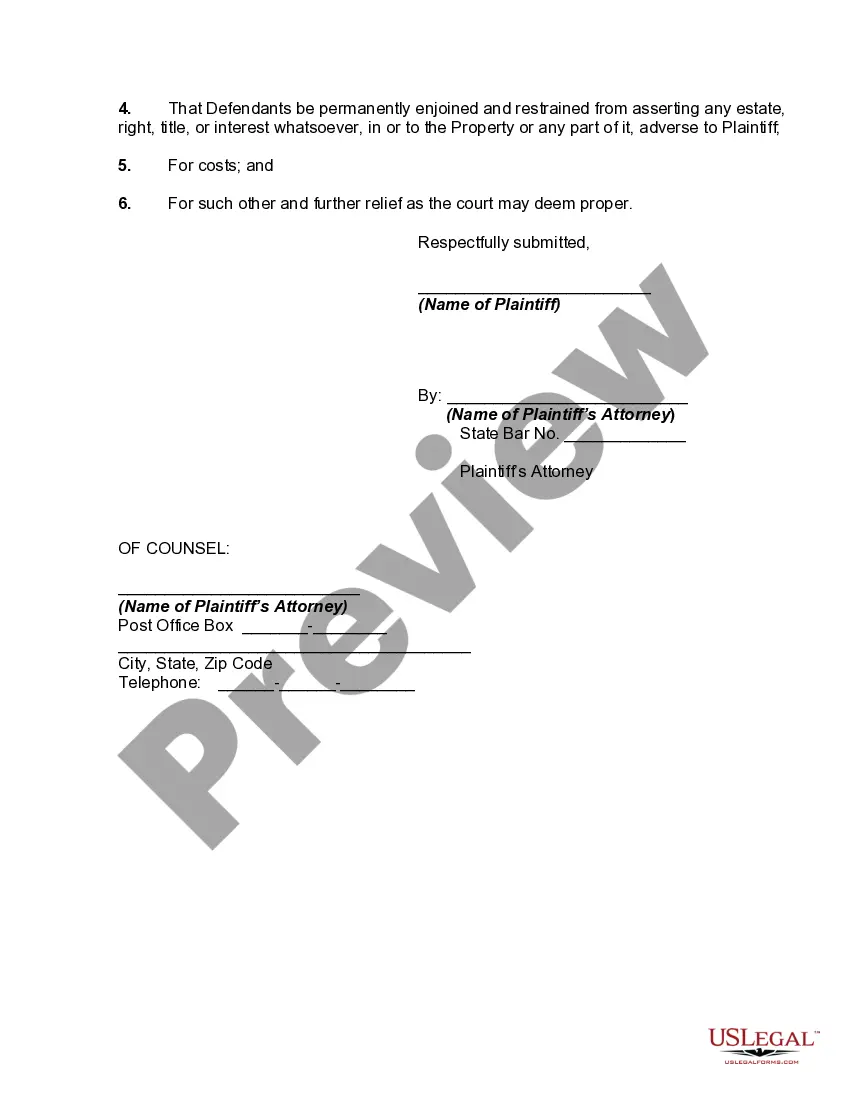
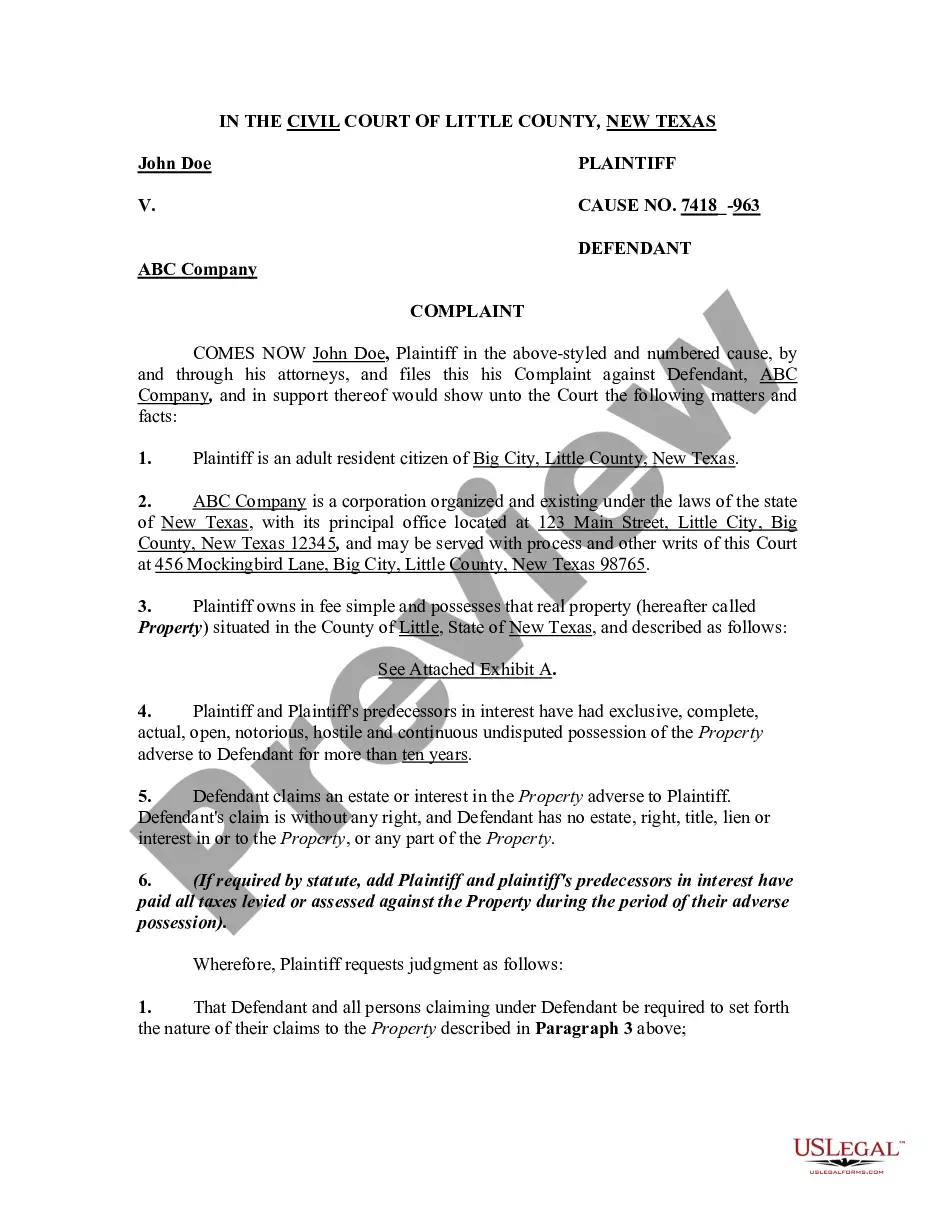
How to fill out Complaint To Quiet Title By Adverse Possessor With Unknown Defendants?
- Log in to your US Legal Forms account if you're an existing user. Ensure your subscription is active, or renew it as needed.
- For new users, start by previewing the available forms in the library. Confirm the document matches your requirements and is compliant with your local laws.
- If you don’t find the suitable form, utilize the Search function to discover the correct template. Ensure it fits your needs before proceeding.
- Purchase the selected document by clicking the Buy Now button and select your preferred subscription plan. You will need to create an account to access the full resources.
- Complete your order by entering your payment details via credit card or PayPal.
- Finally, download the form to your device. You can always access it later through the My Forms section in your profile.
US Legal Forms simplifies legal document preparation, benefiting individuals and attorneys alike. Their extensive library of over 85,000 forms ensures you have access to everything needed for your legal matters.
Start your legal journey today with US Legal Forms—experience the convenience of fast and precise document access!
Form popularity
FAQ
You might say, 'The new building caused adverse effects on the neighborhood's landscape and local wildlife.' This sentence highlights how certain actions can lead to negative consequences, akin to discussions about the adverse possession section with section, where the impact of land ownership can be significant. Using clear language helps convey the intended message effectively.
An example of an adverse possession claim involves a person who has used a neighbor's vacant lot as a garden for over ten years without permission. If this use is continuous, visible, and exclusive, the individual may file a claim under the adverse possession section with section to gain legal ownership. Such claims underline the importance of understanding property rights and responsibilities.
In the context of adverse possession, 'actual' refers to the physical use of the property. A claimant must demonstrate they have used the land in a way that is visible and obvious, which aligns with the adverse possession section with section. This use needs to be uninterrupted for a certain duration, establishing the claimant's presence and intention to possess the land legally.
Yes, adverse possession is legal in the US, though the specific laws can vary by state. The adverse possession section with section outlines how a person can claim ownership of land after meeting certain criteria. These requirements usually include continuous, open, and hostile use of the property for a specified period. Always check local laws to understand how these rules apply in your area.
You can say, 'The property sat abandoned for years, leading to an adverse possession claim by the neighboring landowner.' This sentence illustrates how ownership can shift from one party to another through the adverse possession section with section of property law. Understanding how to use the term in context helps clarify its legal implications.
In New York, the five requirements for adverse possession include open and notorious use, exclusive possession, actual possession, continuous use for at least 10 years, and the possession must be hostile to the true owner's interests. Understanding these criteria can help property owners protect their rights. By knowing the adverse possession section with section, you can better navigate ownership disputes.
To defeat an adverse possession claim, it is crucial to act swiftly. You should gather evidence of your ownership and take legal action against any unauthorized use of your property. Regular maintenance and clearly marking your property boundaries can also help prevent potential claims. The adverse possession section with section may help you understand your legal options more thoroughly.
Adverse possession is a legal doctrine that allows a person to claim ownership of land after openly and continuously occupying it for a specific period. This concept is grounded in the idea that long-term possession should grant legal rights if the true owner neglects their responsibilities. For more detailed information, the adverse possession section with section can provide context on specific legal criteria.
An example of adverse possession involves a person who has lived on an abandoned house and maintained it for years. If the property owner fails to take action against this occupancy, the person may be able to claim legal title to the property. Understanding the implications outlined in the adverse possession section with section can clarify how such situations unfold.
An example of adverse possession in real life could be when a neighbor uses a portion of your yard to park their car for several years without your consent. If they openly maintain that area and you do not object, they might eventually claim ownership under adverse possession laws. This scenario highlights the importance of knowing your property rights and how the adverse possession section with section could affect them.