Adverse Possession Section In Cpc
Description
Get your form ready online
Our built-in tools help you complete, sign, share, and store your documents in one place.
Make edits, fill in missing information, and update formatting in US Legal Forms—just like you would in MS Word.
Download a copy, print it, send it by email, or mail it via USPS—whatever works best for your next step.
Sign and collect signatures with our SignNow integration. Send to multiple recipients, set reminders, and more. Go Premium to unlock E-Sign.
If this form requires notarization, complete it online through a secure video call—no need to meet a notary in person or wait for an appointment.
We protect your documents and personal data by following strict security and privacy standards.
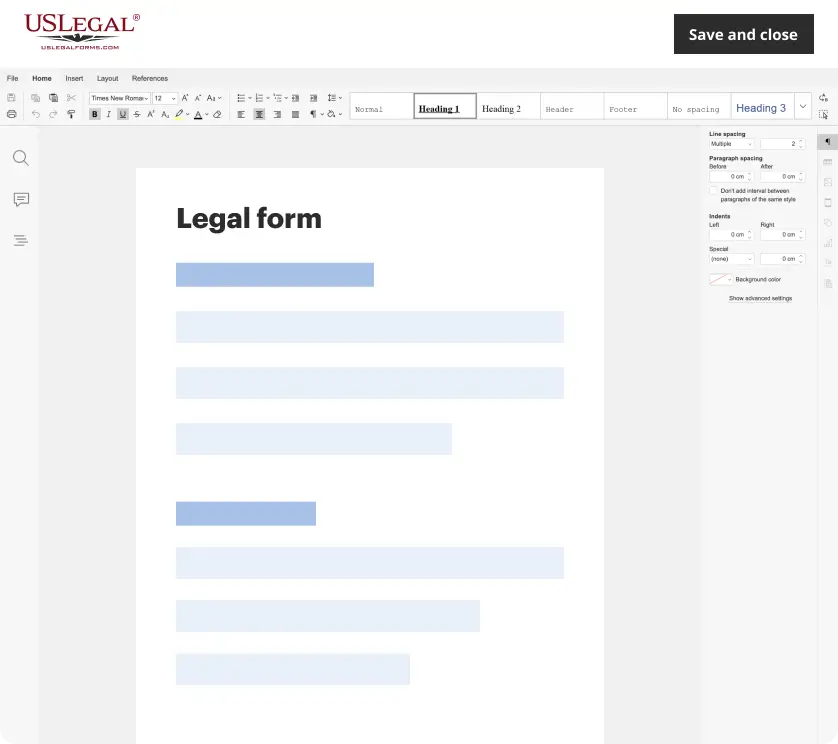
Make edits, fill in missing information, and update formatting in US Legal Forms—just like you would in MS Word.
Download a copy, print it, send it by email, or mail it via USPS—whatever works best for your next step.
Sign and collect signatures with our SignNow integration. Send to multiple recipients, set reminders, and more. Go Premium to unlock E-Sign.
If this form requires notarization, complete it online through a secure video call—no need to meet a notary in person or wait for an appointment.
We protect your documents and personal data by following strict security and privacy standards.
Looking for another form?



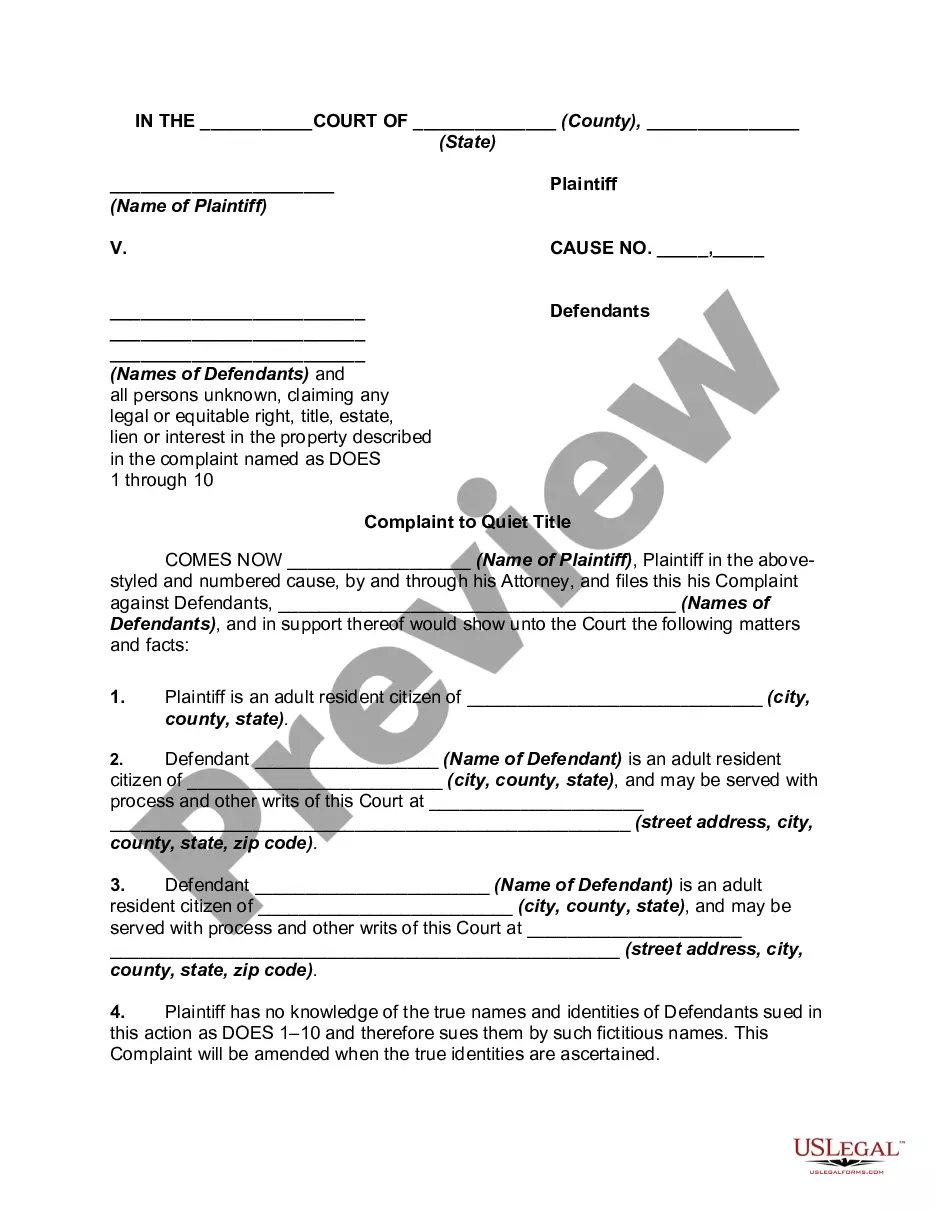
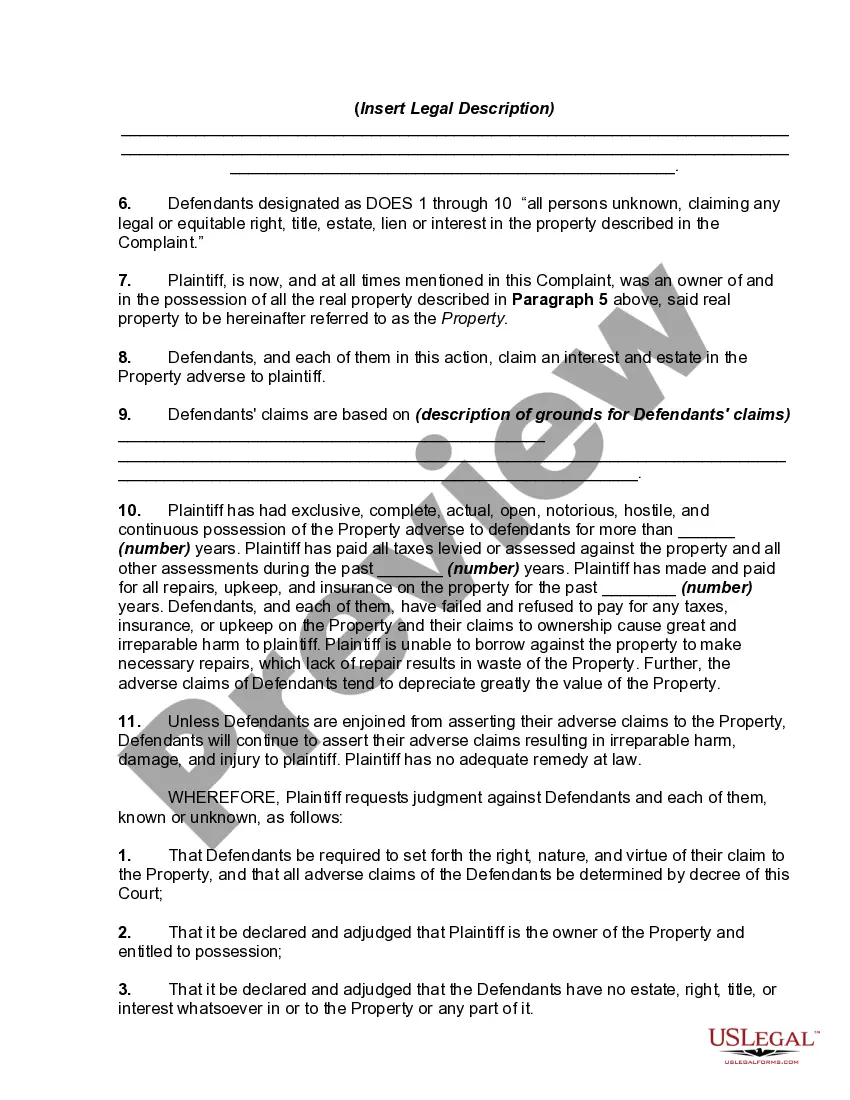
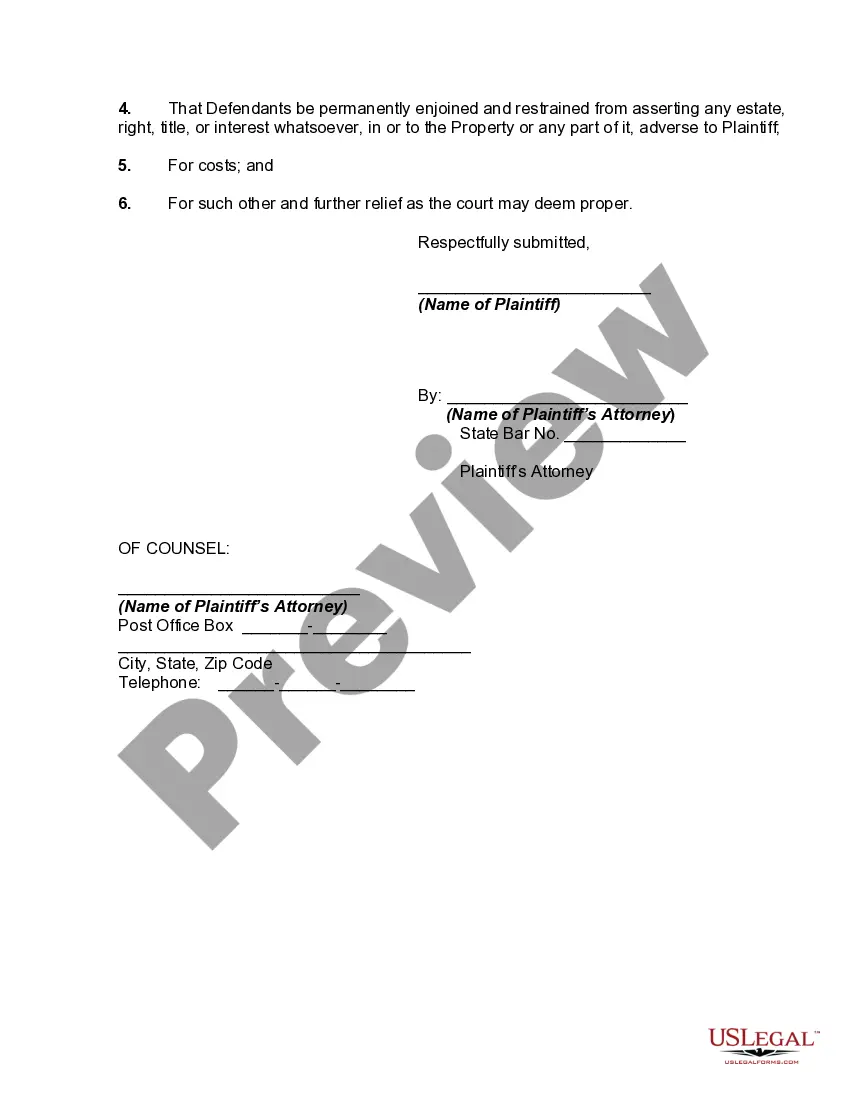
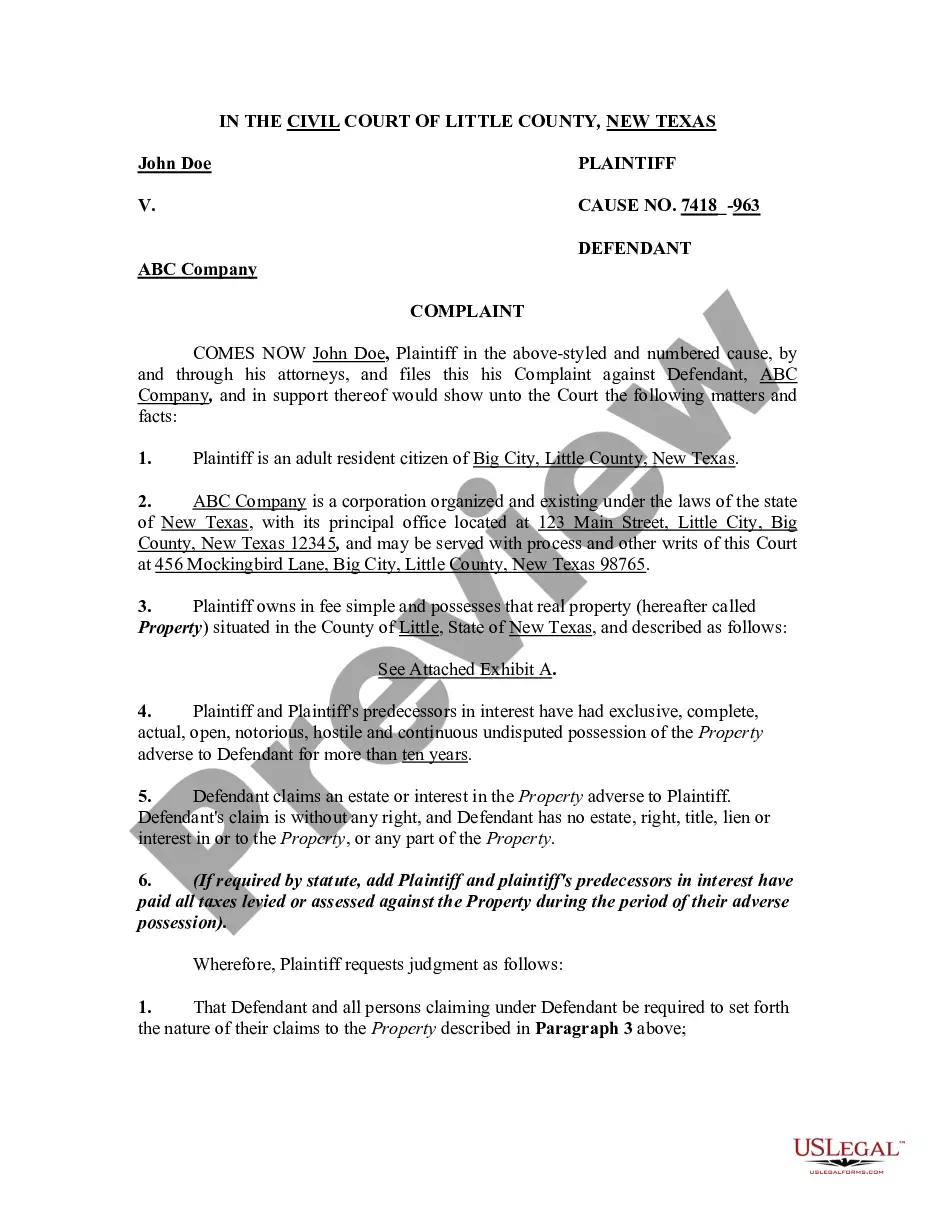
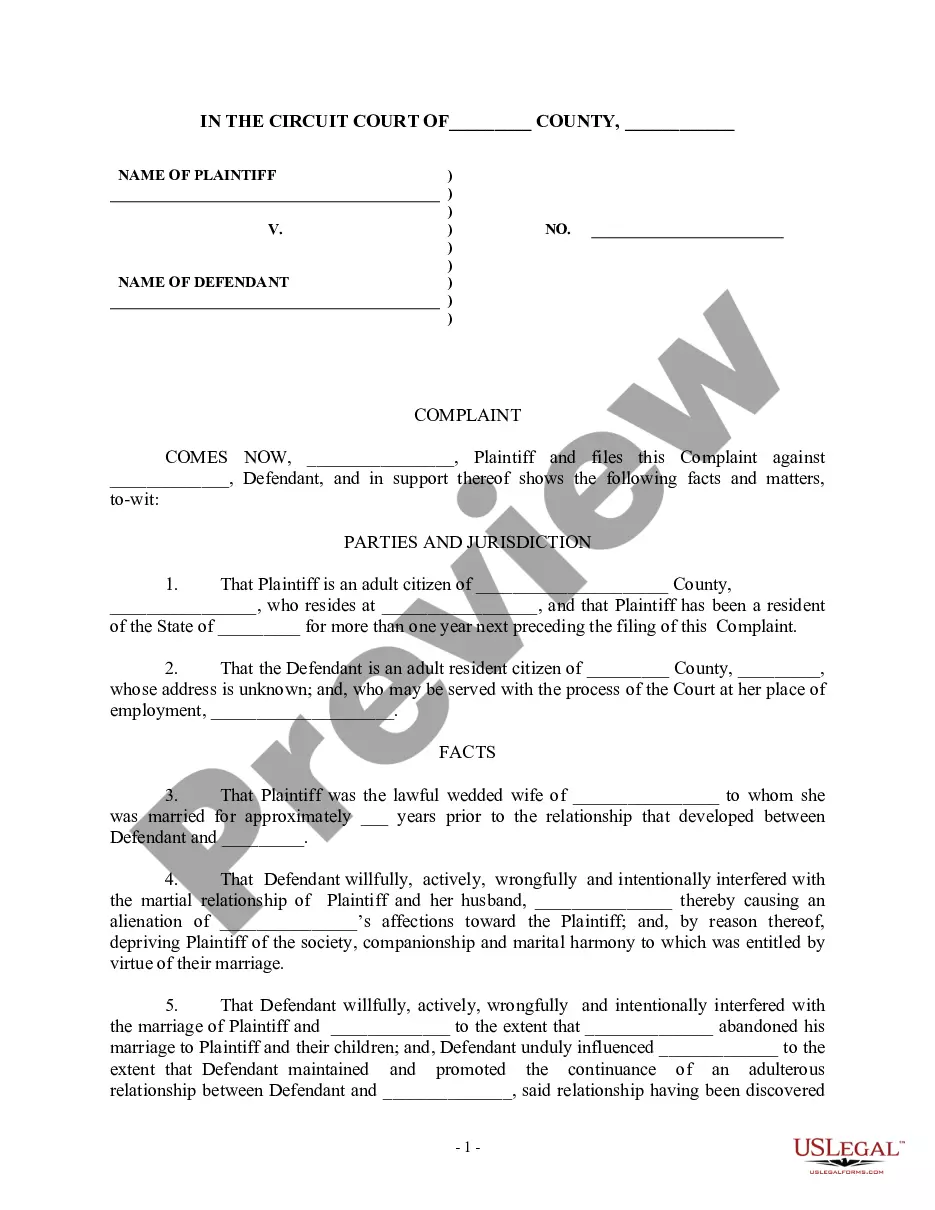
How to fill out Complaint To Quiet Title By Adverse Possessor With Unknown Defendants?
Acquiring legal document examples that adhere to national and local regulations is essential, and the web presents numerous choices to select from.
However, what’s the benefit of squandering time hunting for the suitable Adverse Possession Section In Cpc template online if the US Legal Forms digital library already consolidates such documents in one location.
US Legal Forms is the largest online legal repository with more than 85,000 fillable documents crafted by attorneys for various professional and personal scenarios.
Review the template using the Preview function or through the textual description to confirm it fulfills your needs.
- They are easy to navigate with all documents categorized by state and intended use.
- Our professionals keep pace with legal updates, ensuring your paperwork is always current and compliant when acquiring an Adverse Possession Section In Cpc from our site.
- Obtaining an Adverse Possession Section In Cpc is quick and straightforward for both existing and new clients.
- If you already possess an account with an active subscription, Log In and save the document sample you need in the preferred format.
- If you are unfamiliar with our website, follow the steps below.
Form popularity
FAQ
To effectively defeat a claim of adverse possession, you should demonstrate that the claimant's possession lacks one or more key elements required by law. For instance, proving that possession was not continuous, or that it was not exclusive can undermine their case. Additionally, presenting evidence that you had made improvements or documented your intention to possess the property can support your defense against such claims. Utilizing resources from platforms like US Legal Forms can assist you in gathering the necessary documentation and guidance to navigate this legal terrain.
The primary elements of adverse possession include actual possession, open and notorious use, exclusive control, and continuous possession for a statutory period. Each of these requirements plays a crucial role in establishing a successful claim under the adverse possession section in CPC. By ensuring that your possession meets all these criteria, you can strengthen your legal position. It's essential to consult with legal experts familiar with adverse possession cases to understand your rights better.
Adverse possession within the context of the Limitation Act 1963, specifically Article 65, refers to the legal process that allows a person to claim ownership of land under certain conditions. This section mandates that the claimant must possess the land openly, without permission, for a specified period. The adverse possession section in CPC aligns with these principles, ensuring clarity in property rights and the importance of possession over time. Therefore, understanding this can help you navigate potential land disputes.
The latest Supreme Court decision regarding the adverse possession section in CPC focuses on the specific requirements for invoking adverse possession claims. The Court clarified that possession must be continuous, exclusive, and open for a defined statutory period. Additionally, the ruling emphasized the importance of understanding property rights in the context of adverse possession claims. This decision further refines the legal landscape surrounding adverse possession in the United States.
Mowing a piece of land does not automatically grant the neighbor a claim under adverse possession in Michigan. To establish a claim under the adverse possession section in cpc, the use must be open, notorious, continuous, and exclusive for a specific period. Simply maintaining the land may not fulfill these requirements, but if done for the necessary duration and under the right conditions, it could lead to a claim. To address any concerns, consider documenting your property boundaries and consulting an attorney for legal advice.
A quiet title action in Michigan is a legal procedure used to establish clear ownership of property when ownership is disputed. If you're considering a claim under the adverse possession section in cpc, pursuing a quiet title can clarify your rights. This process involves filing a lawsuit where you ask the court to recognize your ownership of the property, effectively 'quieting' any claims from others. Tools like those offered at USLegalForms can assist you in navigating this legal procedure.
In Pennsylvania, the adverse possession rules differ from Michigan but share common elements defined in the adverse possession section in cpc. You need to possess the land for a minimum of 21 years, openly and notoriously, indicating that your use is visible and apparent. This possession should also be continuous, exclusive, and hostile to the true owner's claim. Understanding these elements can help you establish a successful claim.
Adverse possession is allowed to encourage the productive use of land and resolve disputes over property rights. The rationale behind the adverse possession section in cpc is to promote clarity and finality in property ownership, ensuring that land does not remain unused or abandoned. By rewarding individuals who actively use a property, the law seeks to prevent land from falling into disrepair and fosters responsibility among landowners.
To claim adverse possession in Michigan, start by occupying the property openly and notoriously for the required 15 years. You should establish your possession without the permission of the true owner, which illustrates your intent to claim rights over the land. After meeting all requirements outlined in the adverse possession section in cpc, you may need to file a lawsuit to obtain a court order affirming your ownership. Additionally, using resources like USLegalForms can guide you through the necessary legal documentation.
Understanding the requirements of adverse possession is crucial. One common misconception is that payment of property taxes is necessary; however, that is not always a requirement for adverse possession under the adverse possession section in cpc. Instead, possession needs to be open, notorious, continuous, exclusive, and hostile. By focusing on these valid requirements, you can better evaluate your situation.