Motion To Dismiss Without Prejudice Meaning
Description
Get your form ready online
Our built-in tools help you complete, sign, share, and store your documents in one place.
Make edits, fill in missing information, and update formatting in US Legal Forms—just like you would in MS Word.
Download a copy, print it, send it by email, or mail it via USPS—whatever works best for your next step.
Sign and collect signatures with our SignNow integration. Send to multiple recipients, set reminders, and more. Go Premium to unlock E-Sign.
If this form requires notarization, complete it online through a secure video call—no need to meet a notary in person or wait for an appointment.
We protect your documents and personal data by following strict security and privacy standards.

Make edits, fill in missing information, and update formatting in US Legal Forms—just like you would in MS Word.

Download a copy, print it, send it by email, or mail it via USPS—whatever works best for your next step.

Sign and collect signatures with our SignNow integration. Send to multiple recipients, set reminders, and more. Go Premium to unlock E-Sign.

If this form requires notarization, complete it online through a secure video call—no need to meet a notary in person or wait for an appointment.

We protect your documents and personal data by following strict security and privacy standards.
Looking for another form?



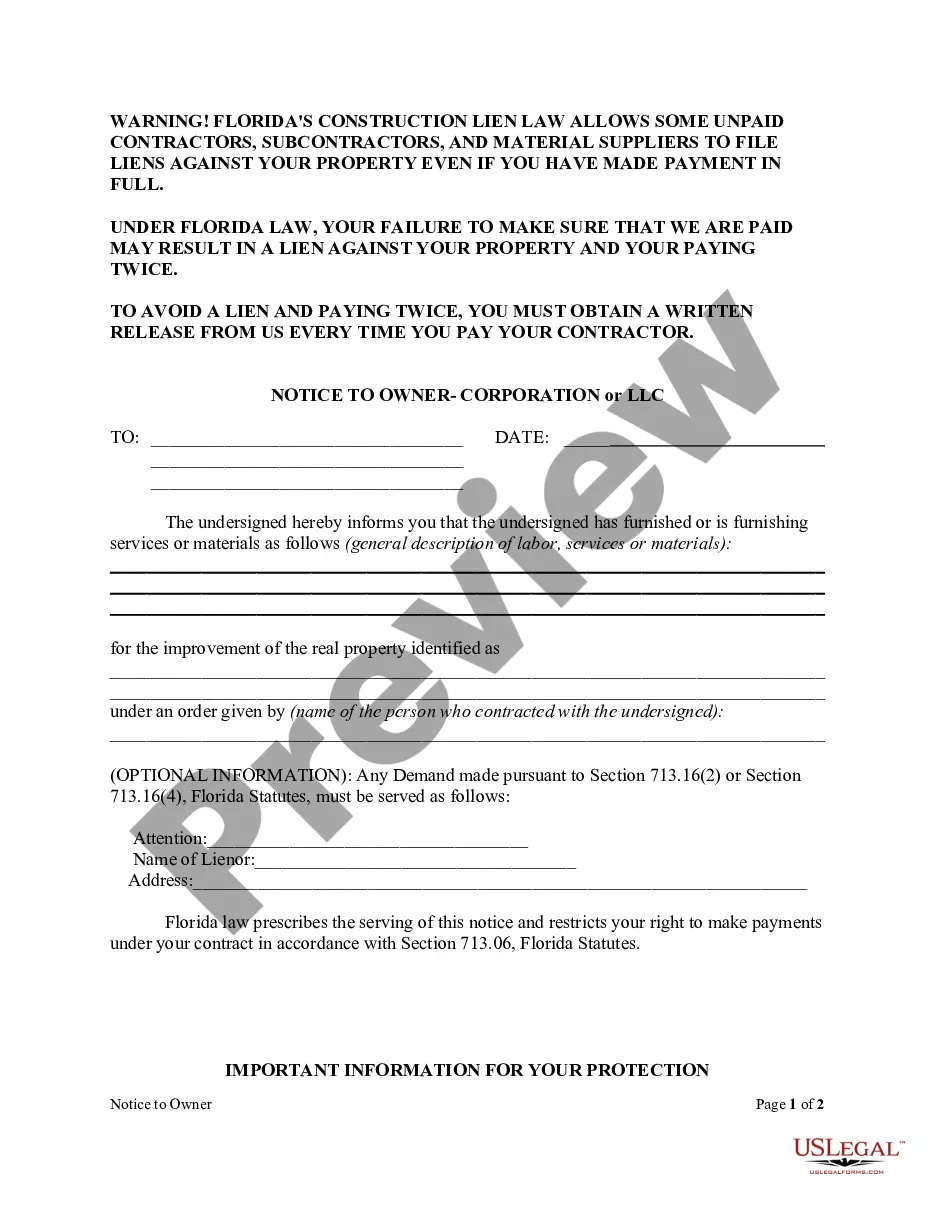

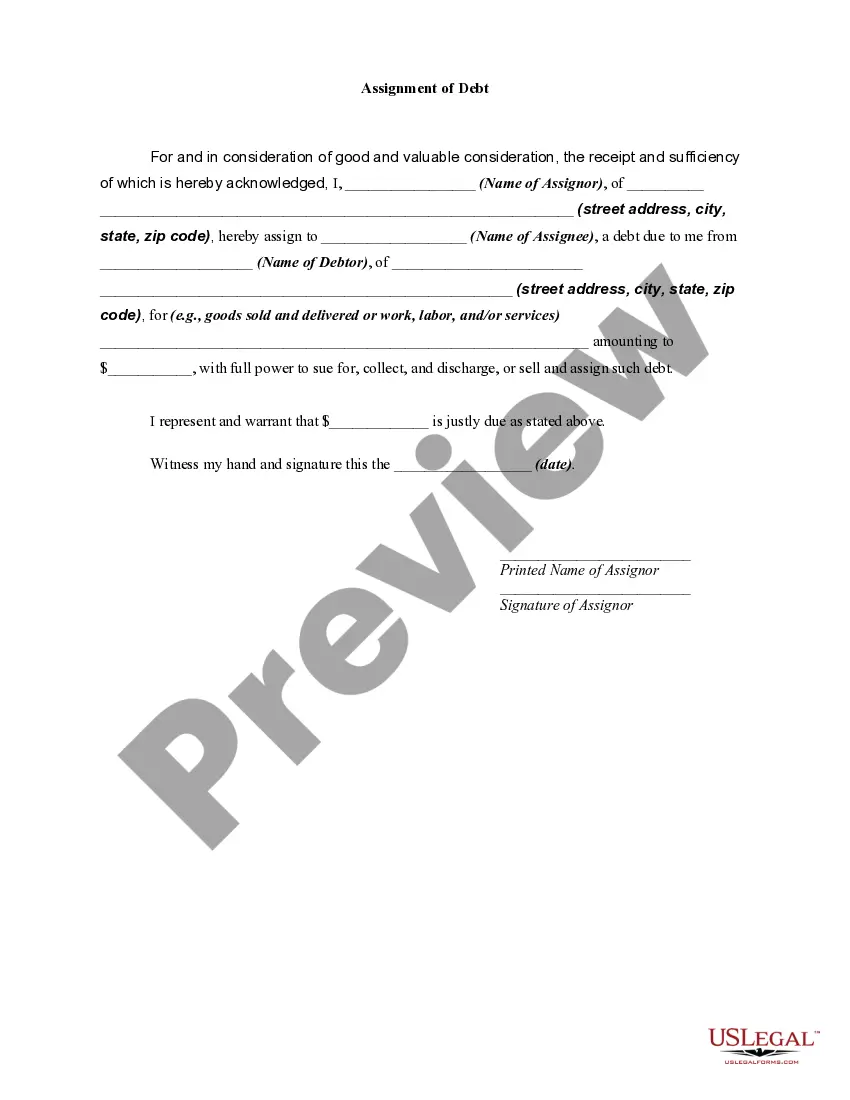



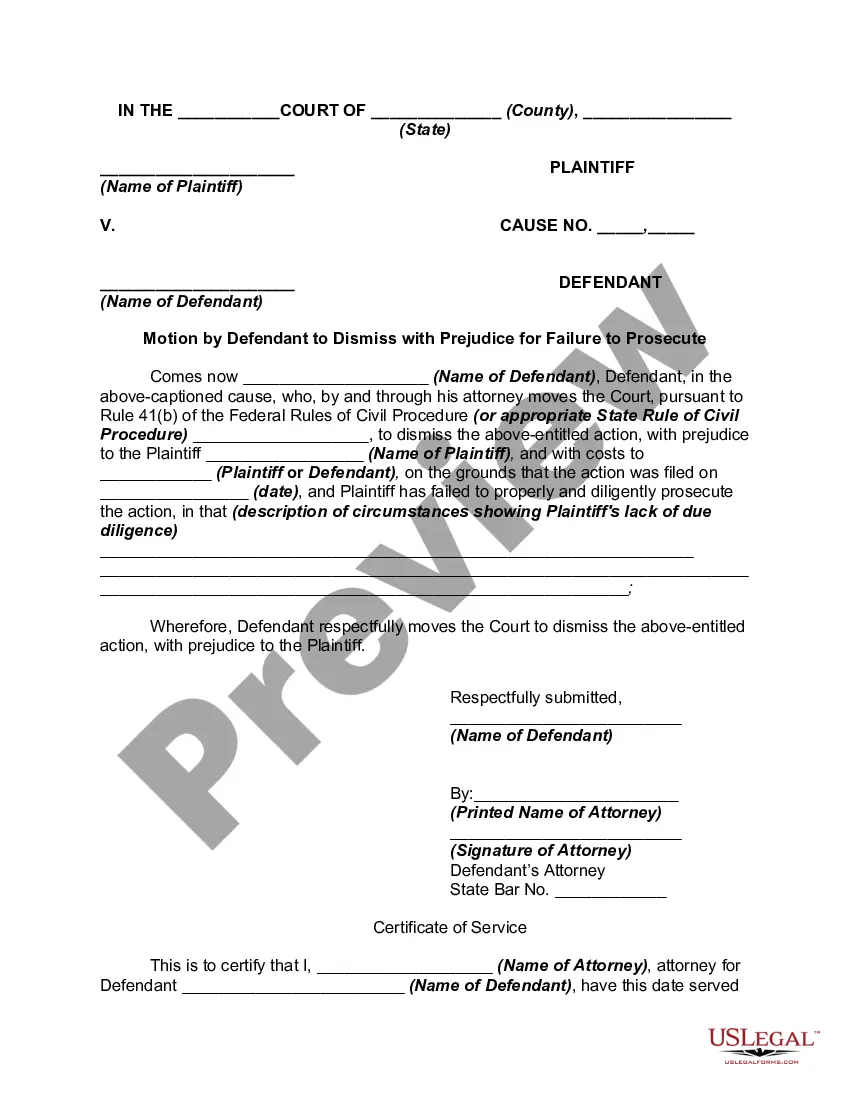
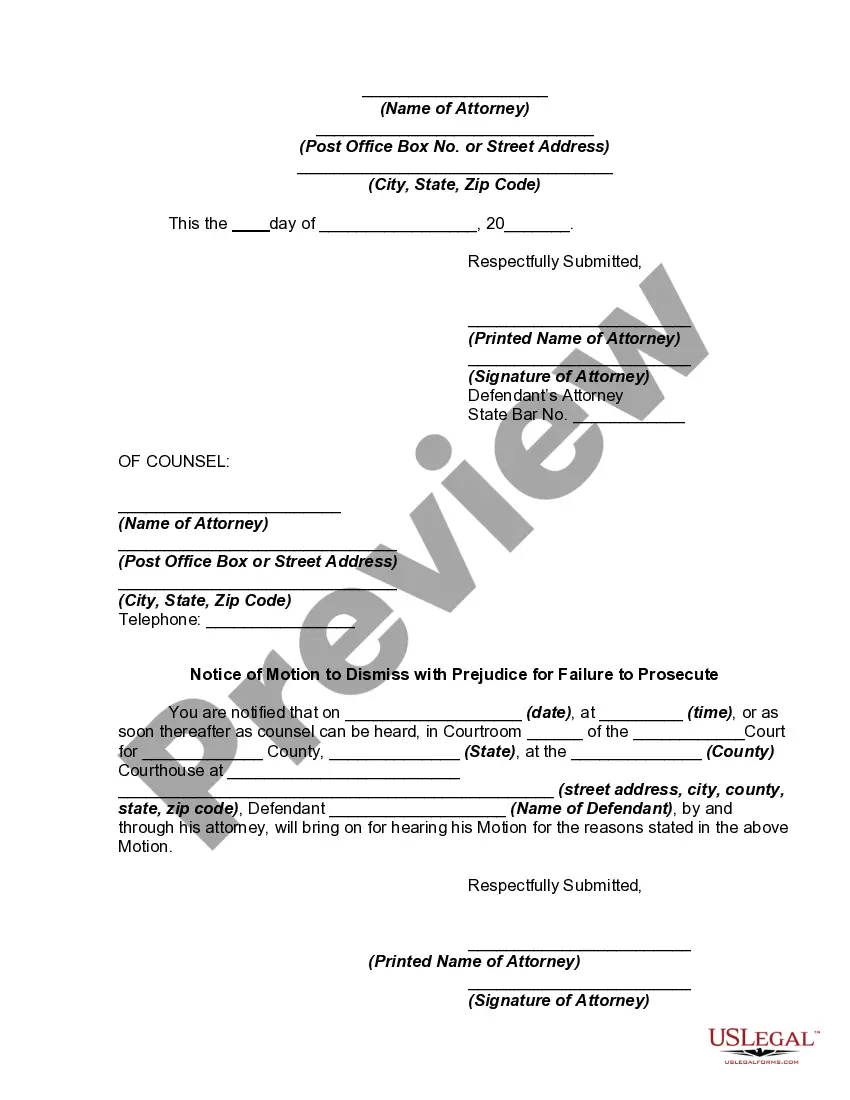
How to fill out Motion By Defendant To Dismiss With Prejudice For Failure To Prosecute?
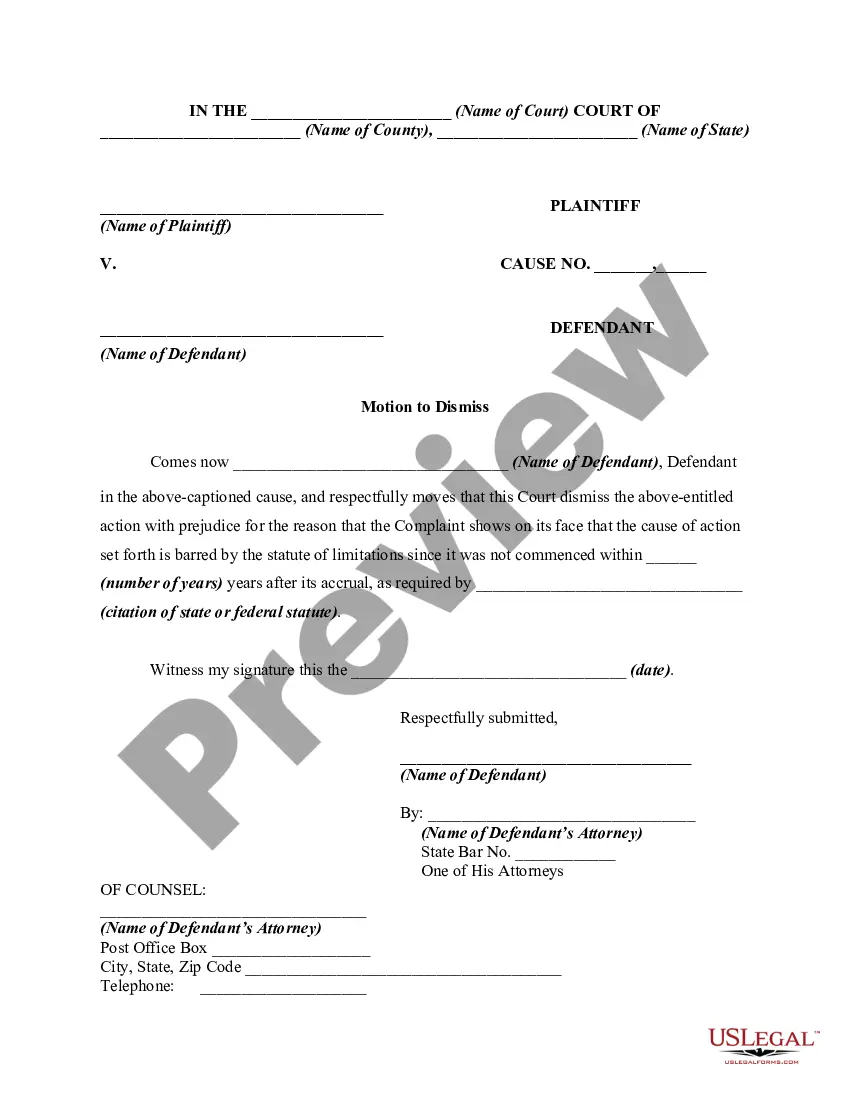
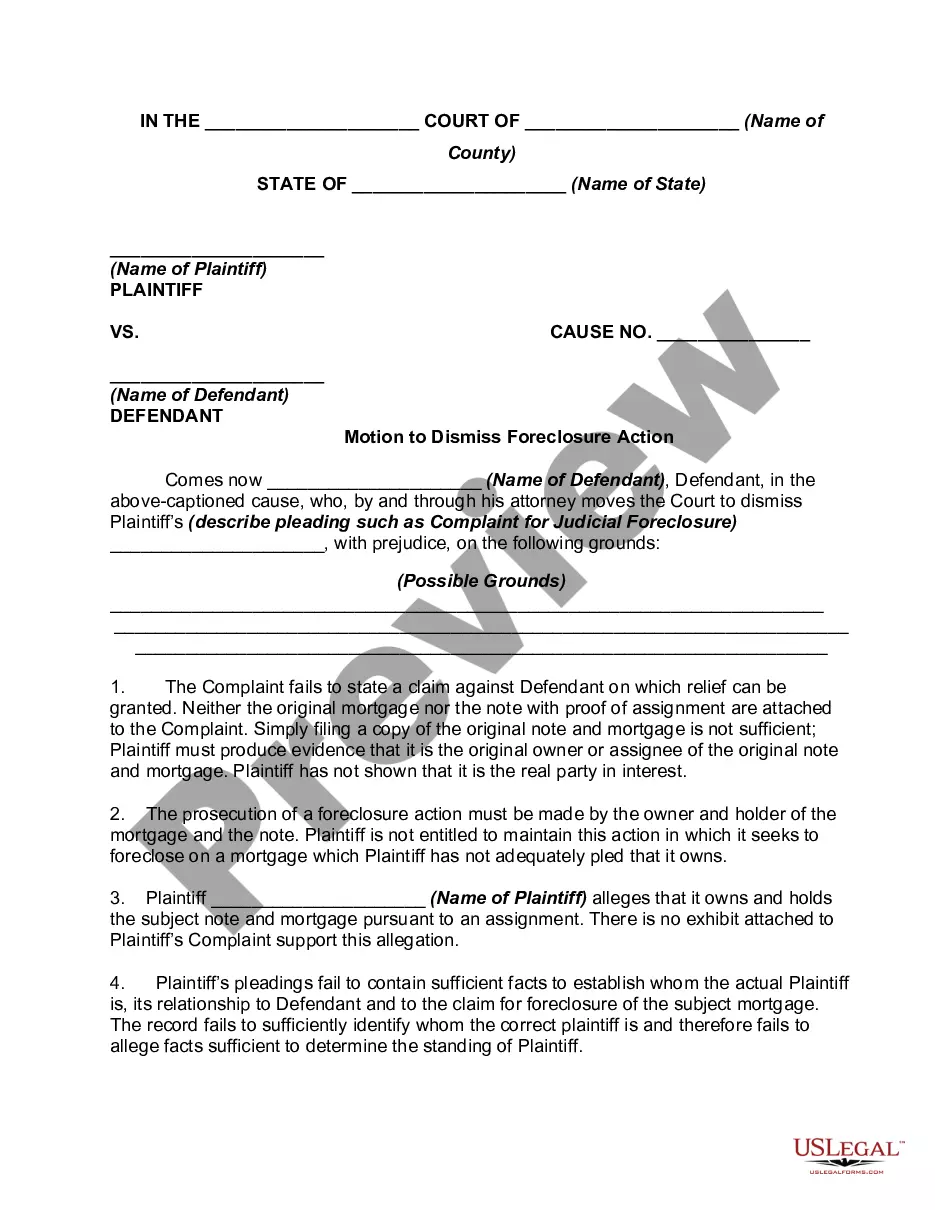
Locating a reliable source for the latest and suitable legal templates is a significant part of navigating bureaucracy. Sourcing the correct legal paperwork demands accuracy and meticulousness, which is why it is essential to obtain Motion To Dismiss Without Prejudice Meaning samples exclusively from trustworthy providers, such as US Legal Forms. An incorrect template could squander your time and hinder your progress.
With US Legal Forms, you have minimal concerns. You can access and review all the information regarding the document’s applicability and significance for your situation within your state or county.
Once the form is on your device, you can alter it using the editor or print it out and fill it in by hand. Remove the burden associated with your legal documentation. Explore the vast collection of US Legal Forms to discover legal samples, evaluate their suitability for your situation, and download them instantly.
- Utilize the library navigation or search bar to find your sample.
- Examine the form’s description to determine if it meets your state and local prerequisites.
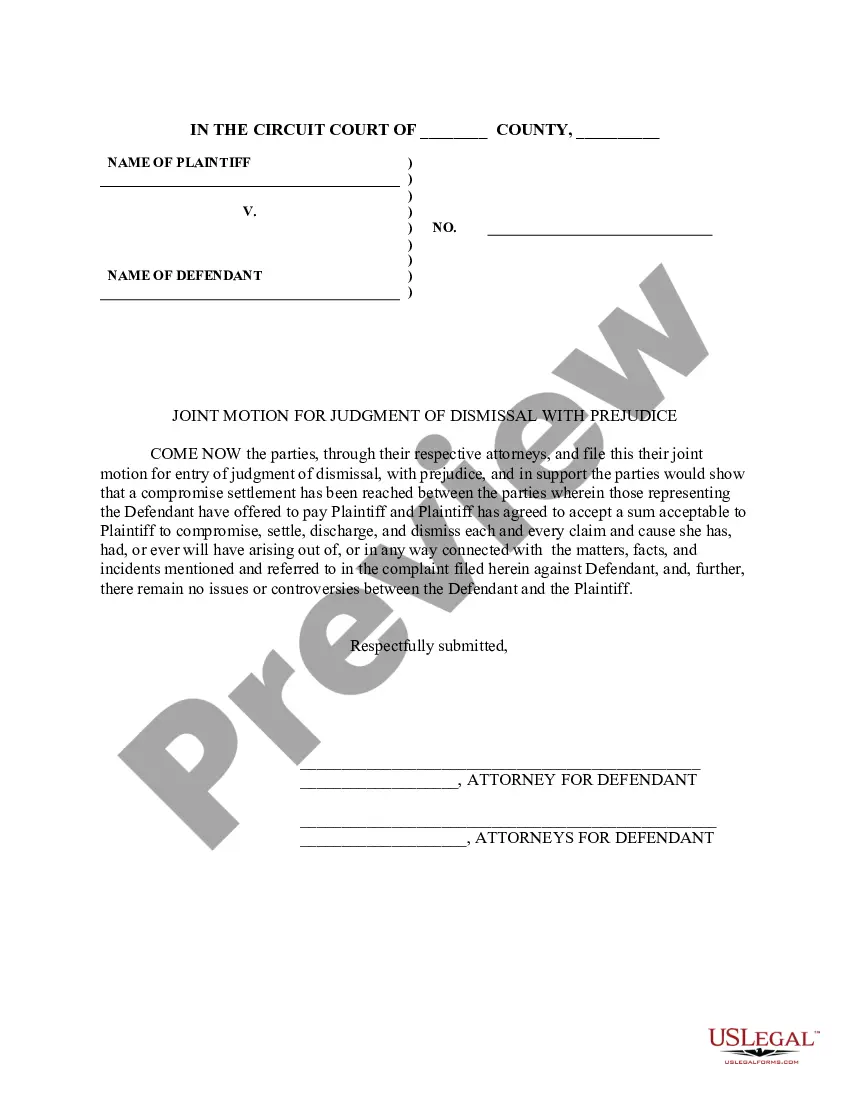
- If available, open the form preview to ensure that the template is the one you need.
- If the Motion To Dismiss Without Prejudice Meaning does not satisfy your needs, return to search for the correct document.
- If you are confident about the form’s applicability, proceed to download it.
- If you are a registered user, click Log in to verify your identity and access your chosen templates in My documents.
- If you do not yet have an account, click Buy now to purchase the form.
- Choose the pricing plan that meets your requirements.
- Go through the registration process to complete your purchase.
- Complete your purchase by selecting a payment option (credit card or PayPal).
- Select the file format for downloading the Motion To Dismiss Without Prejudice Meaning.
Form popularity
FAQ
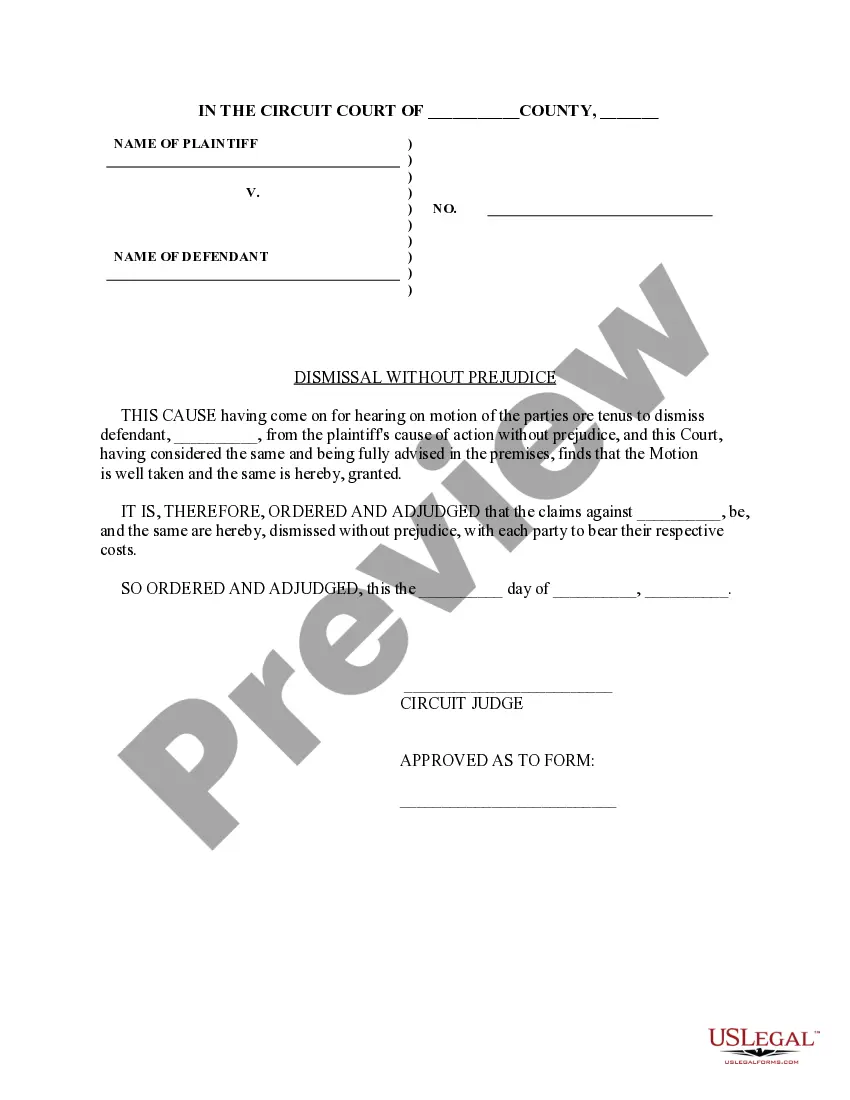
A case may be dismissed without prejudice for several reasons, such as the plaintiff needing additional time to gather evidence or reconsider legal strategies. The court may agree that dismissing the case allows for a fair chance to resolve the issue at a later date. Understanding the motion to dismiss without prejudice meaning can help you determine when this option is advantageous for your situation.
To get a case dismissed without prejudice, you can file a motion in court, requesting the dismissal while specifying that you wish to retain the right to re-file. This process typically involves providing a valid reason for the request, such as insufficient evidence or a change in circumstances. Utilizing resources like USLegalForms can help ensure you understand the motion to dismiss without prejudice meaning and navigate the legal process smoothly.
The 'without prejudice' designation does not impose a specific time limit, but rather allows the party the option to re-file their claim indefinitely. However, statutes of limitations related to the original claim may apply, meaning the plaintiff must act within a certain time frame. Therefore, understanding the motion to dismiss without prejudice meaning can guide you on the necessary timing when considering future actions.
The stipulation to dismiss without prejudice allows a case to be dropped without affecting the plaintiff's ability to re-file. This means the plaintiff can return to court if new evidence arises or if they wish to pursue the claim again. Knowing the motion to dismiss without prejudice meaning helps clarify its importance in litigation, as it provides flexibility for the party seeking dismissal.
A motion to dismiss with prejudice prevents a party from re-filing the same claim in the future. For instance, if a court dismisses a lawsuit saying it lacks merit, this dismissal with prejudice means the plaintiff cannot start the same case again. Understanding the motion to dismiss without prejudice meaning is crucial because a dismissal without prejudice allows the plaintiff to re-file the lawsuit later.
When a case is dismissed without prejudice, it means that the plaintiff has the right to refile the case in the future. This dismissal indicates that the case is not permanently closed, allowing for further legal action. It often occurs when there are procedural issues or a need for more evidence. Recognizing the motion to dismiss without prejudice meaning is crucial for anyone looking to understand their legal standing and options.
A dismissal with prejudice means the case cannot be refiled. This can be seen as negative because it permanently ends the case, often leaving the plaintiff without recourse. In contrast, if a case is dismissed without prejudice, it means the plaintiff can potentially bring it back in the future, which provides hope for resolution. Understanding the motion to dismiss without prejudice meaning helps you navigate your legal options.
There are several reasons for opting for a dismissal without prejudice, including insufficient evidence, discovering new evidence, or a desire to resolve the case outside of court. This motion allows the party to reassess their options without forgoing their rights to future legal actions. By grasping the motion to dismiss without prejudice meaning, you can make informed decisions about your legal strategy. Platforms like uslegalforms can assist in navigating these processes smoothly.
No, a dismissal with prejudice does not equate to a not guilty verdict. It simply means the court will not allow this particular case to be tried again. It’s crucial to differentiate this from a motion to dismiss without prejudice meaning, which keeps the possibility of a future trial open. Understanding these terms helps in navigating the legal landscape effectively.
When a motion is dismissed with prejudice, it indicates that the case is closed and cannot be brought back to court. This resolution marks a final decision on the matter, leaving no option to refile. Understanding the motion to dismiss without prejudice meaning highlights the importance of choosing the right dismissal route for your circumstances.