License For Tattoo
Description
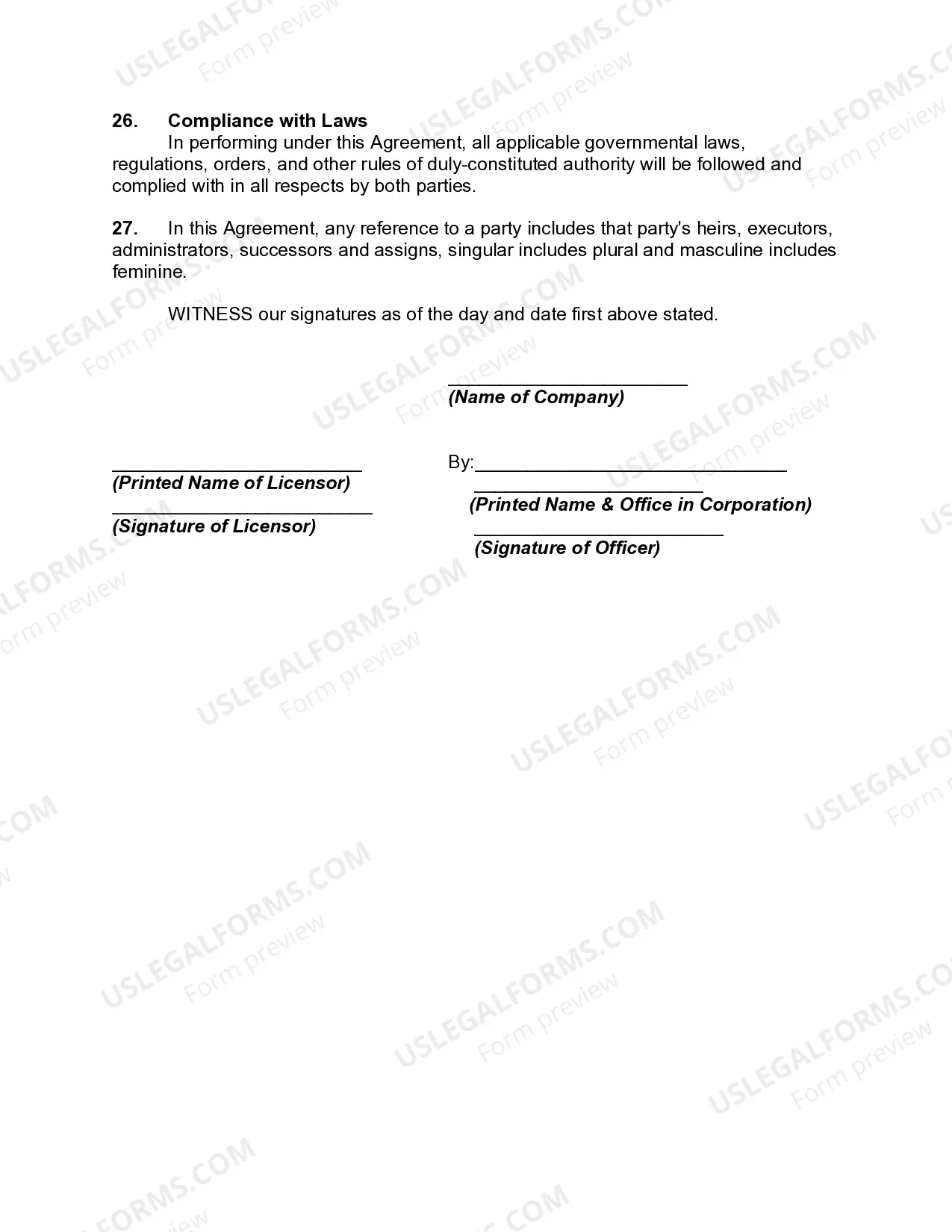
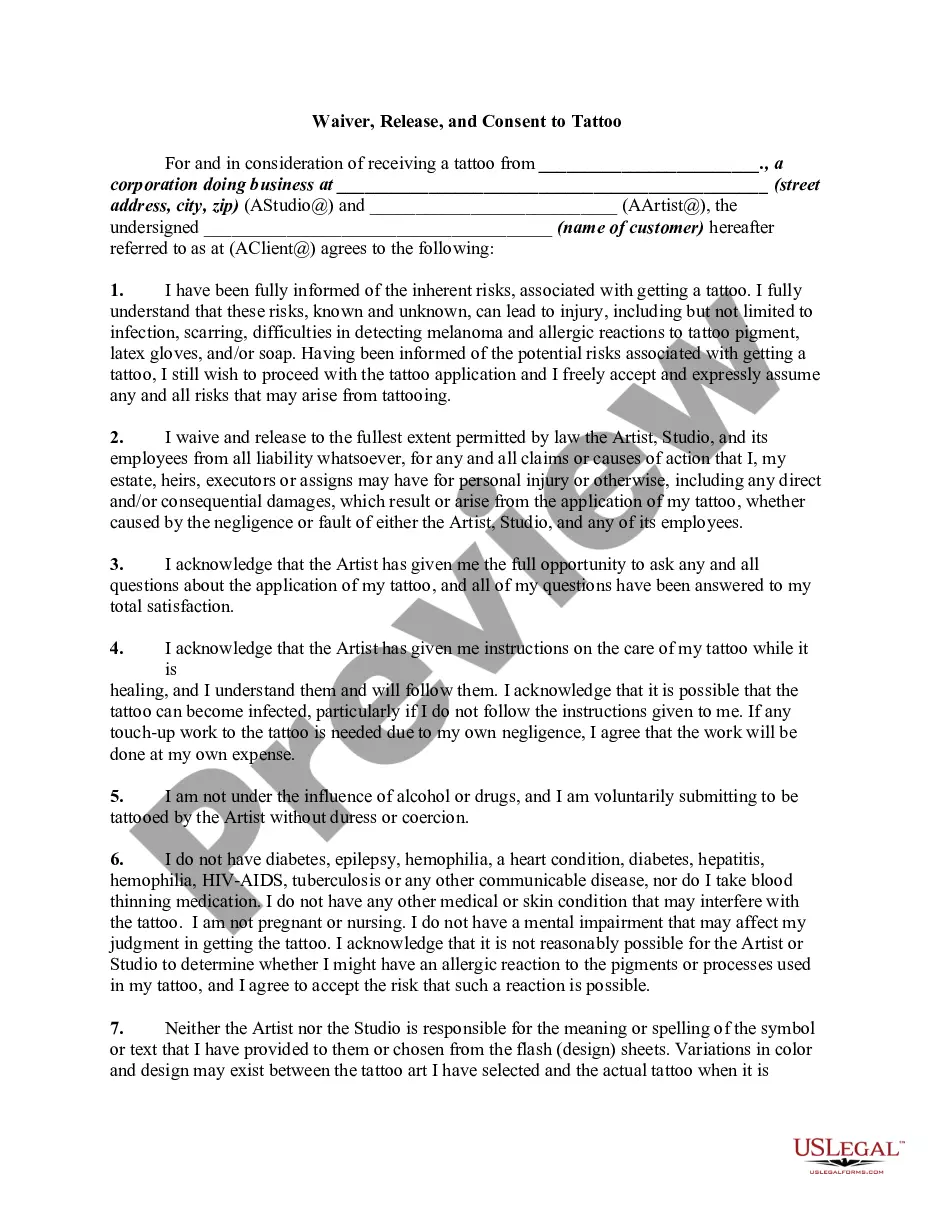
Get your form ready online
Our built-in tools help you complete, sign, share, and store your documents in one place.
Make edits, fill in missing information, and update formatting in US Legal Forms—just like you would in MS Word.
Download a copy, print it, send it by email, or mail it via USPS—whatever works best for your next step.
Sign and collect signatures with our SignNow integration. Send to multiple recipients, set reminders, and more. Go Premium to unlock E-Sign.
If this form requires notarization, complete it online through a secure video call—no need to meet a notary in person or wait for an appointment.
We protect your documents and personal data by following strict security and privacy standards.

Make edits, fill in missing information, and update formatting in US Legal Forms—just like you would in MS Word.

Download a copy, print it, send it by email, or mail it via USPS—whatever works best for your next step.

Sign and collect signatures with our SignNow integration. Send to multiple recipients, set reminders, and more. Go Premium to unlock E-Sign.

If this form requires notarization, complete it online through a secure video call—no need to meet a notary in person or wait for an appointment.

We protect your documents and personal data by following strict security and privacy standards.
Looking for another form?








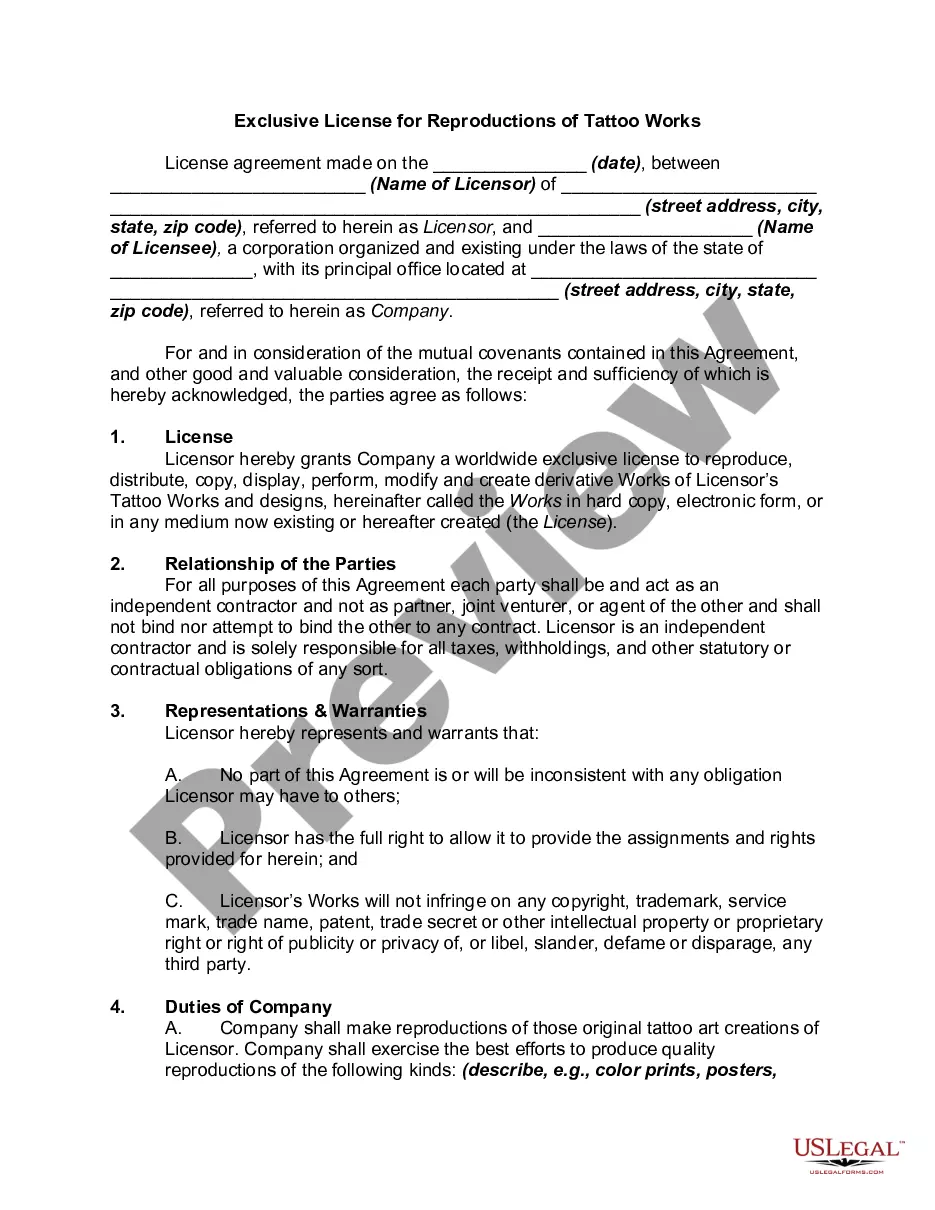
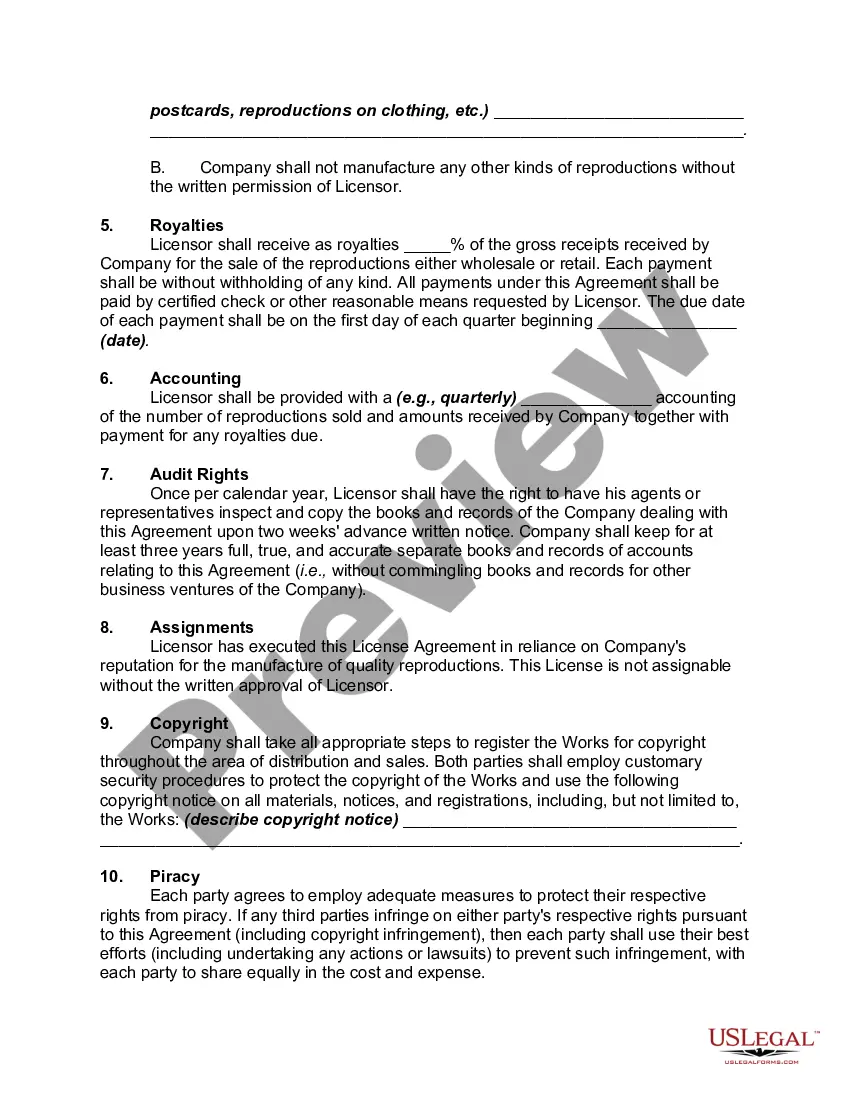
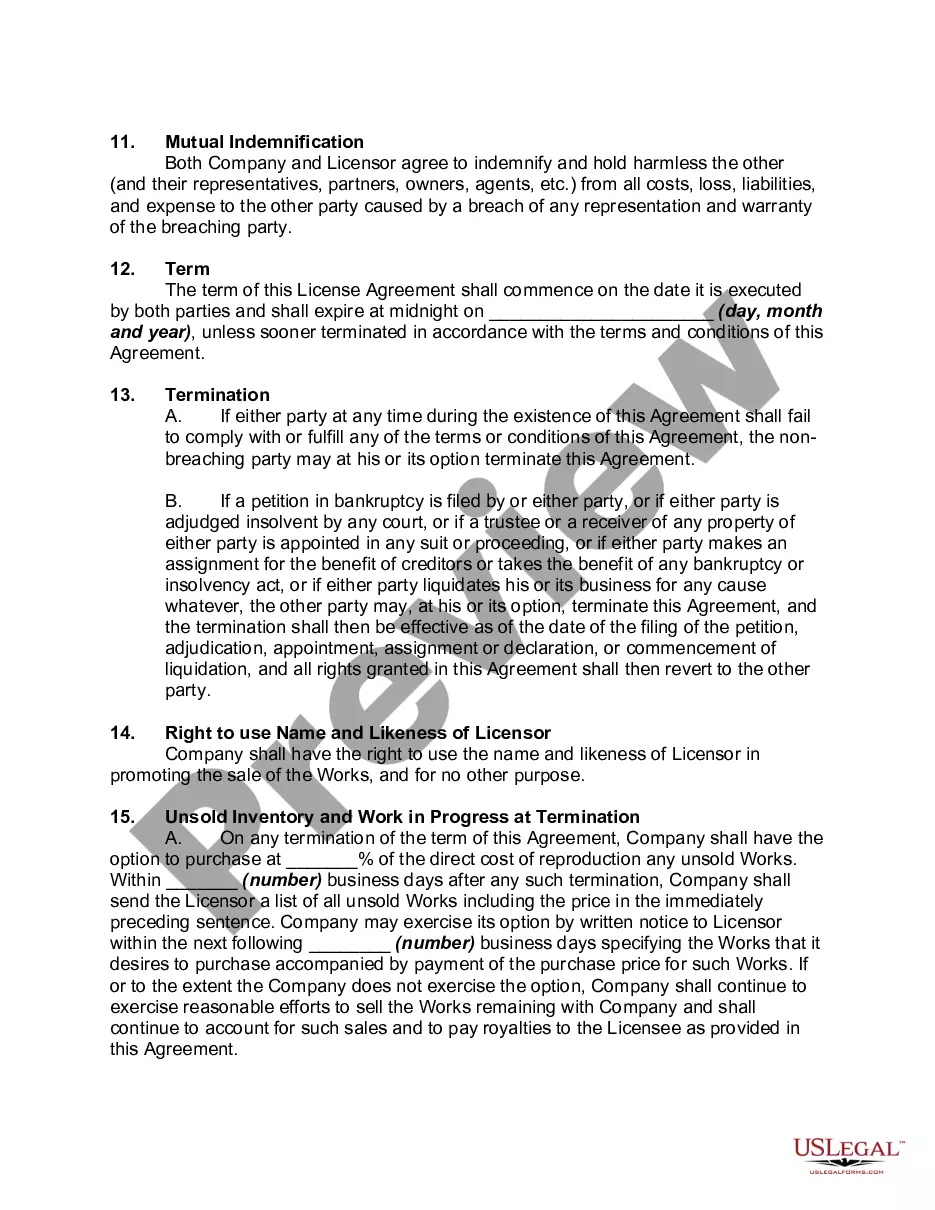
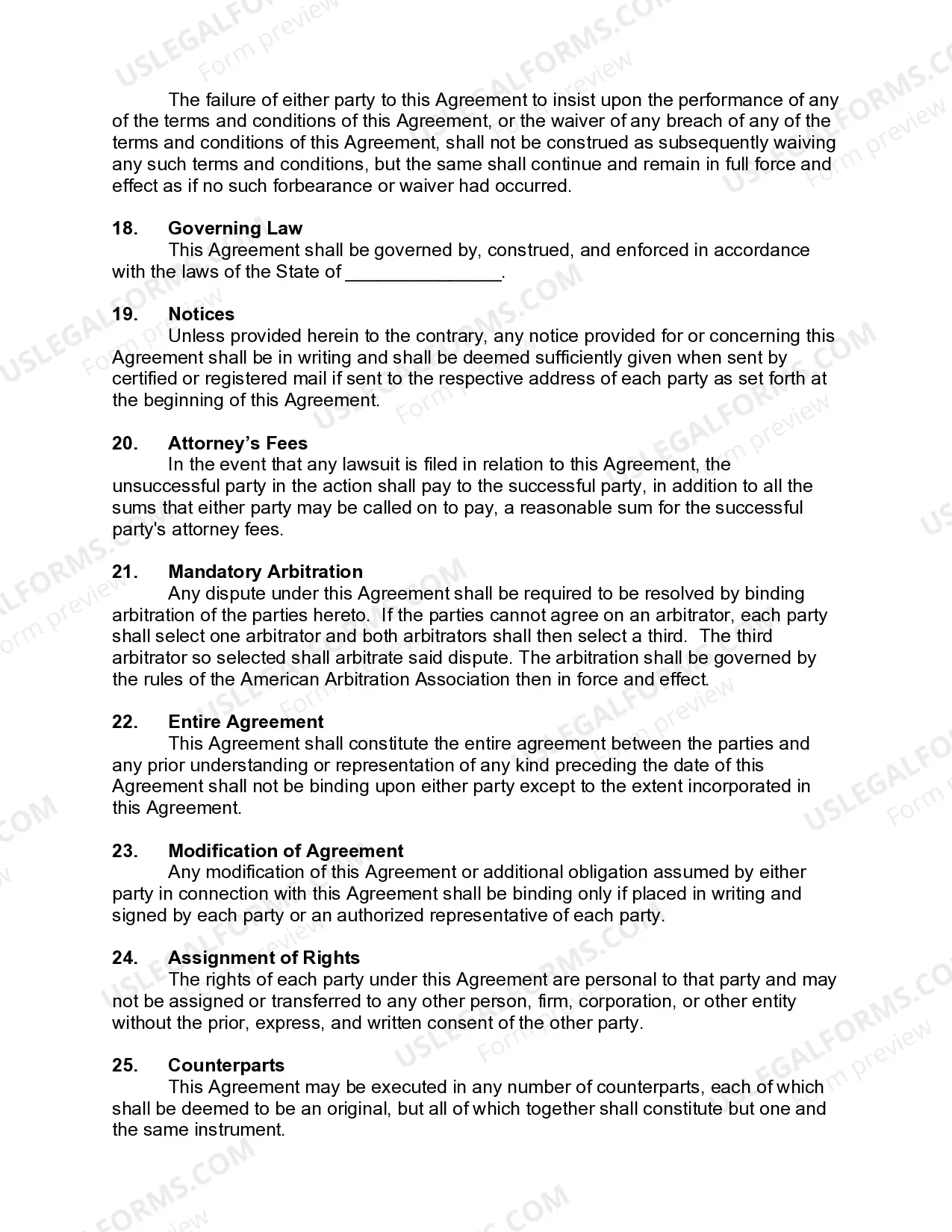
How to fill out Exclusive License For Reproductions Of Tattoo Works?
Individuals frequently link legal documentation with complexity that only an expert can handle.
In some respect, it's accurate, as creating a License For Tattoo requires significant knowledge of subject criteria, including state and local laws.
Nevertheless, with the US Legal Forms, everything has become more straightforward: pre-made legal templates for various life and business scenarios specific to state regulations are compiled in one online directory and are now accessible to all.
All templates in our catalog are reusable: once acquired, they remain saved in your profile. You can access them whenever required via the My documents tab. Explore all advantages of utilizing the US Legal Forms platform. Enroll today!
- Verify the page content thoroughly to ensure it meets your requirements.
- Examine the form description or confirm it via the Preview option.
- Find another sample using the Search field above if the prior one doesn't fit your needs.
- Press Buy Now when you identify the correct License For Tattoo.
- Select a pricing plan that aligns with your requirements and budget.
- Establish an account or Log In to move to the payment page.
- Complete your subscription payment through PayPal or with your credit card.
- Select the format for your sample and click Download.
- Print your document or upload it to an online editor for easier completion.
Form popularity
FAQ
Typically, you fill out a consent form, which collects your personal information, health details, and preferences regarding the tattoo. Some studios might also request a waiver or release form that outlines the risks involved. It’s essential to ensure that all paperwork is completed accurately to ensure a smooth tattooing process.
A tattoo consent form should include details such as the client’s full name, contact information, and medical history, especially concerning skin conditions or allergies. It should also outline the specific tattoo design, placement, and any aftercare instructions. Having a well-structured consent form not only establishes clear communication but also protects both the client and the artist.
A tip of $20 on a $100 tattoo amounts to a 20% tip, which is generally considered a fair and standard practice in the tattoo industry. Tipping is a great way to show appreciation for the artist's skill and effort, especially if you are delighted with your tattoo. If you're particularly impressed with the work or service, consider tipping more to express your satisfaction.
To obtain a license for tattooing in the US, you usually need to complete an approved training program that covers hygiene and safety. After that, you must apply through your state or local health department, providing proof of your training. Some states may have additional requirements, such as completing an apprenticeship, so be sure to research the regulations specific to your area.
Before getting a tattoo, you typically need to fill out a consent form that details your personal information, health history, and any allergies. Additionally, some states require a license for tattoo artists that includes proof of bloodborne pathogen training. It’s important to check with your local regulations to ensure you have all the necessary paperwork in place.
No, you cannot legally tattoo without a license in most areas. Operating without a license for tattoo can lead to serious legal consequences, including fines and potential criminal charges. It's crucial to ensure that you are licensed to protect both yourself and your clients, and platforms like USLegalForms can help you understand the licensing process in your state.
While specific degrees are not mandatory for tattooing, having a high school diploma or equivalent can be helpful. A license for tattoo may require you to complete an apprenticeship instead, where you gain practical experience. Many artists also benefit from taking courses in art or design to improve their skills, but hands-on experience is paramount.
Yes, you need a license for tattoo in New York. The state requires tattoo artists to be licensed by the New York State Department of Health. This ensures that artists adhere to health and safety standards, minimizing risks for clients and maintaining hygiene in tattoo studios.
To tattoo legally, you typically need a license for tattoo. Requirements may vary by state, but many areas require you to complete a tattooing apprenticeship and undergo health and safety training. Completing these steps ensures that you have the necessary skills and knowledge to safely perform tattoos. It's also essential to check local regulations to stay compliant.
To tattoo legally, you need to obtain a state-issued license for tattoo, which often requires completion of a bloodborne pathogens training course. Additionally, consider certifications that may enhance your skills, such as courses in advanced tattoo techniques or color theory. Resources like USLegalForms can help you understand the certification process and the necessary steps to ensure compliance with state laws.
