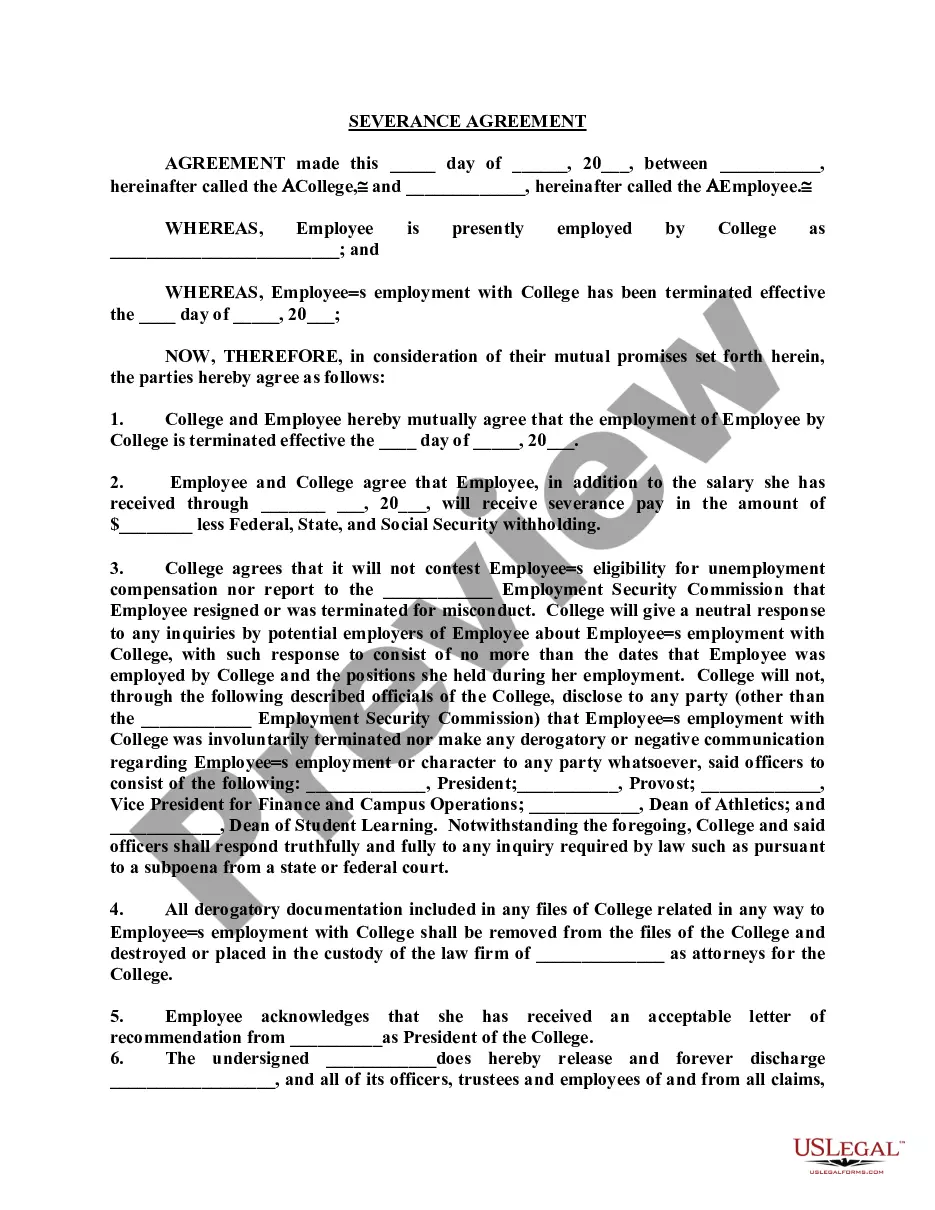
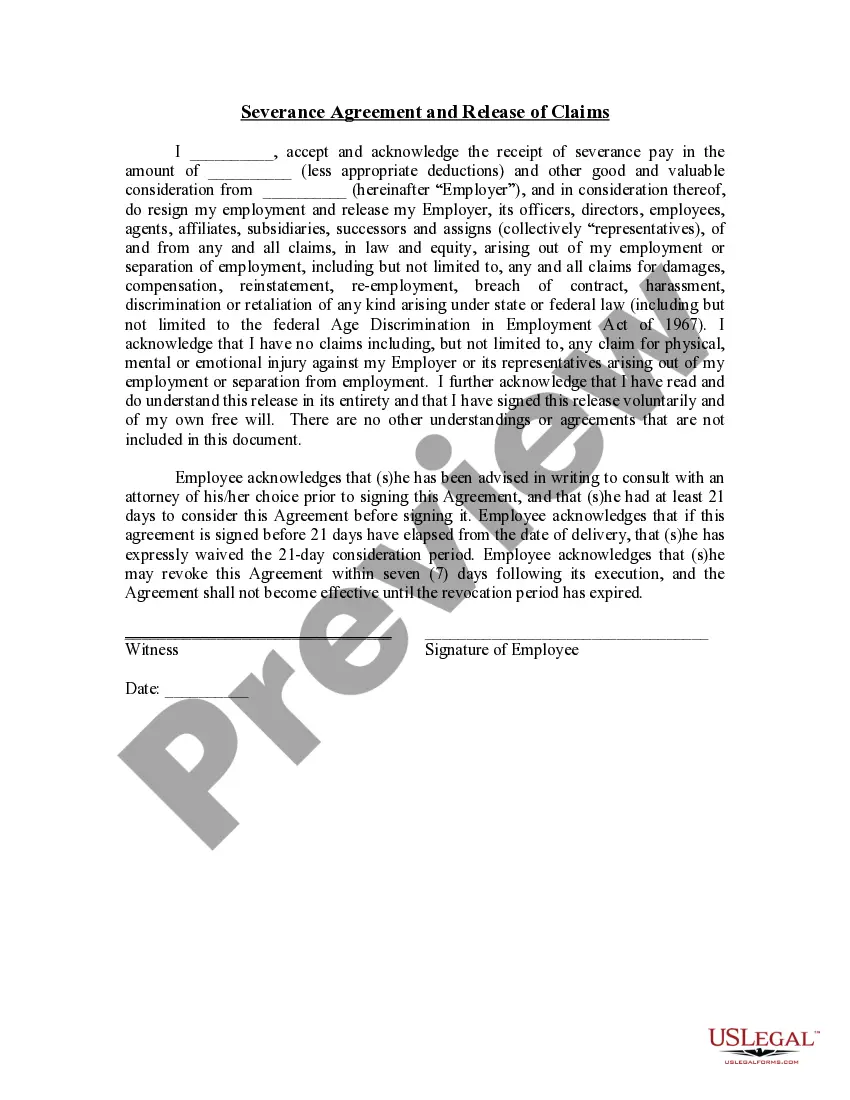
Severance Definition In History
Description
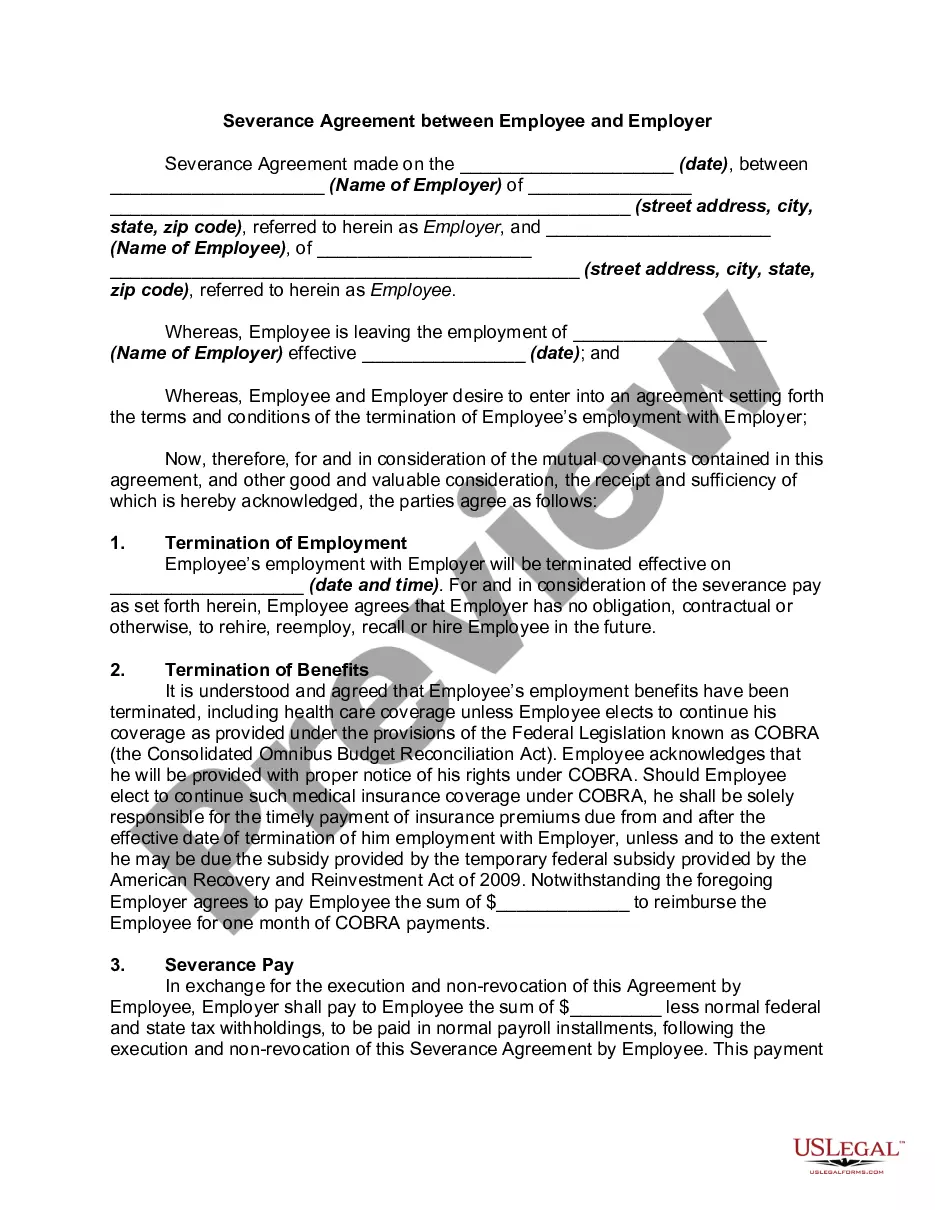
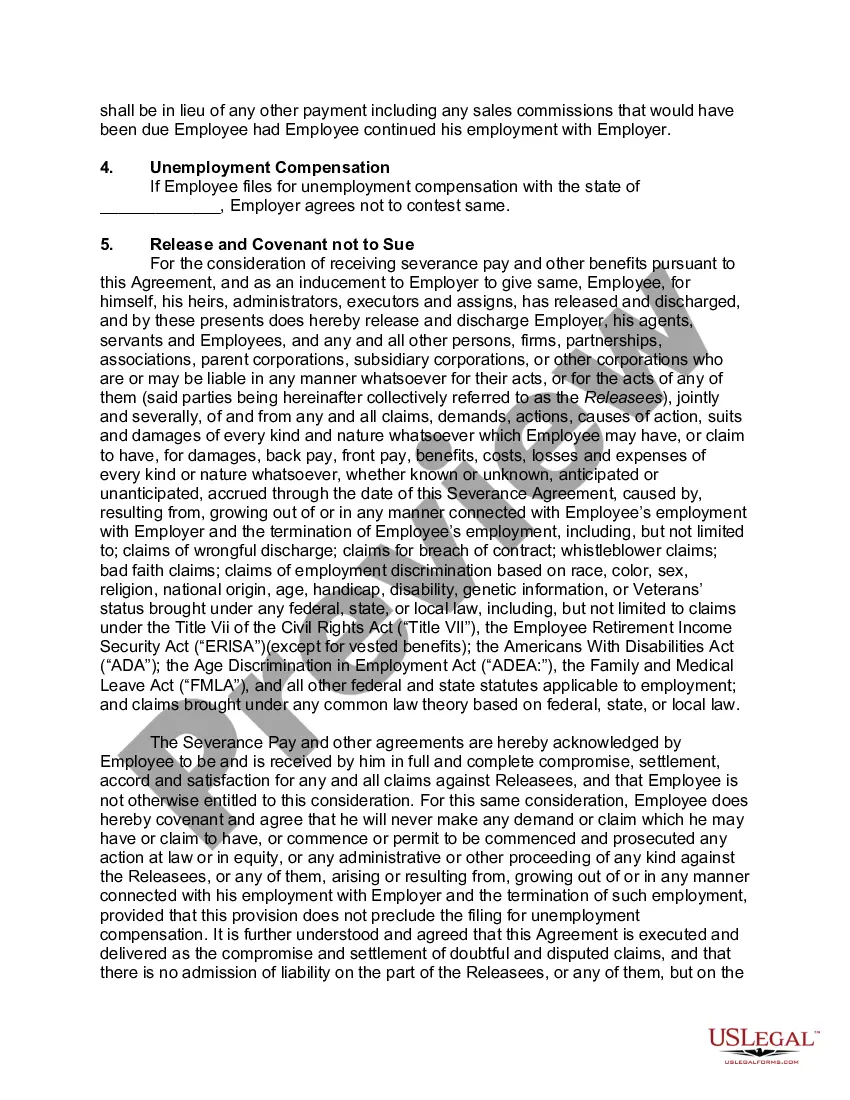
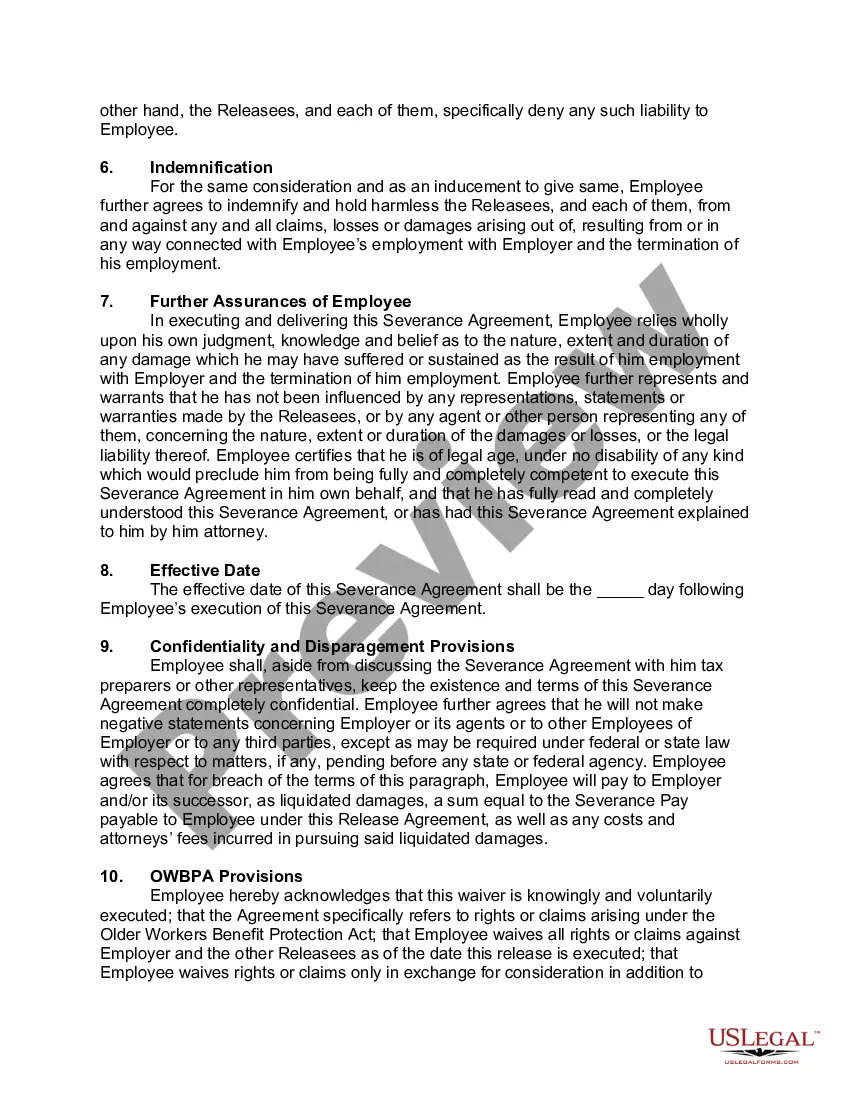
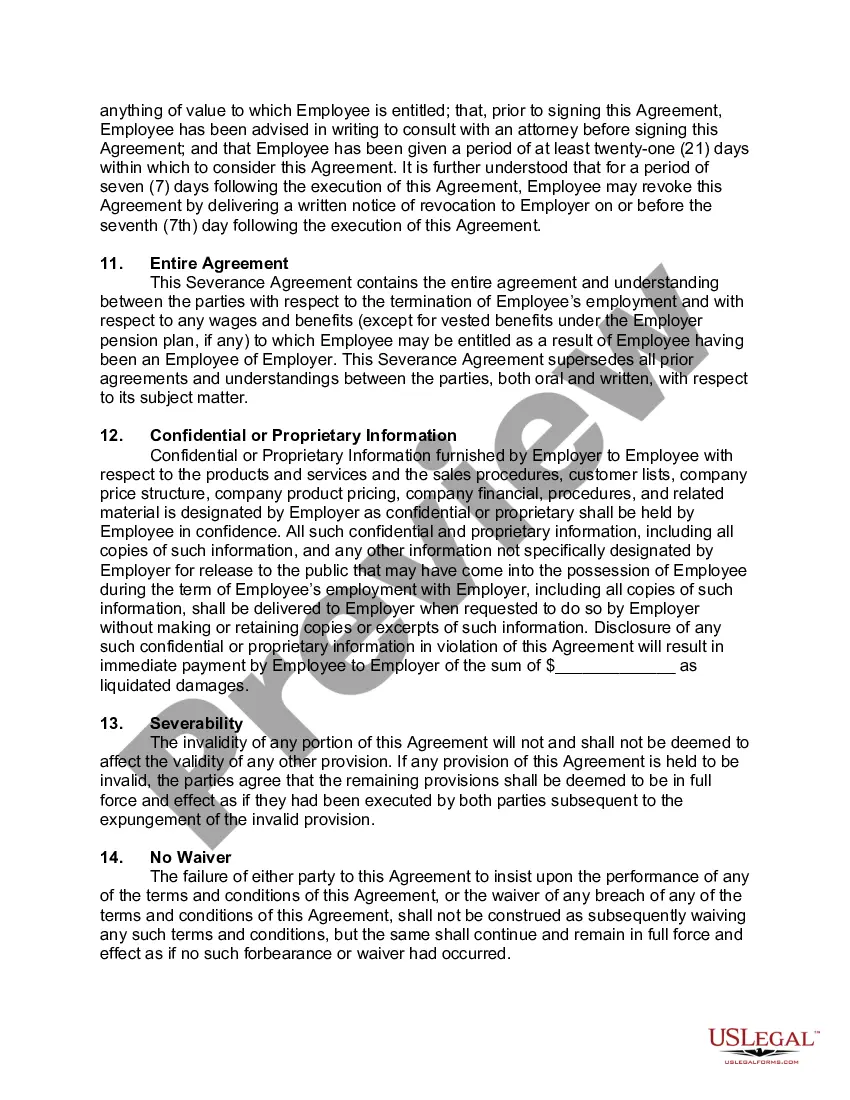
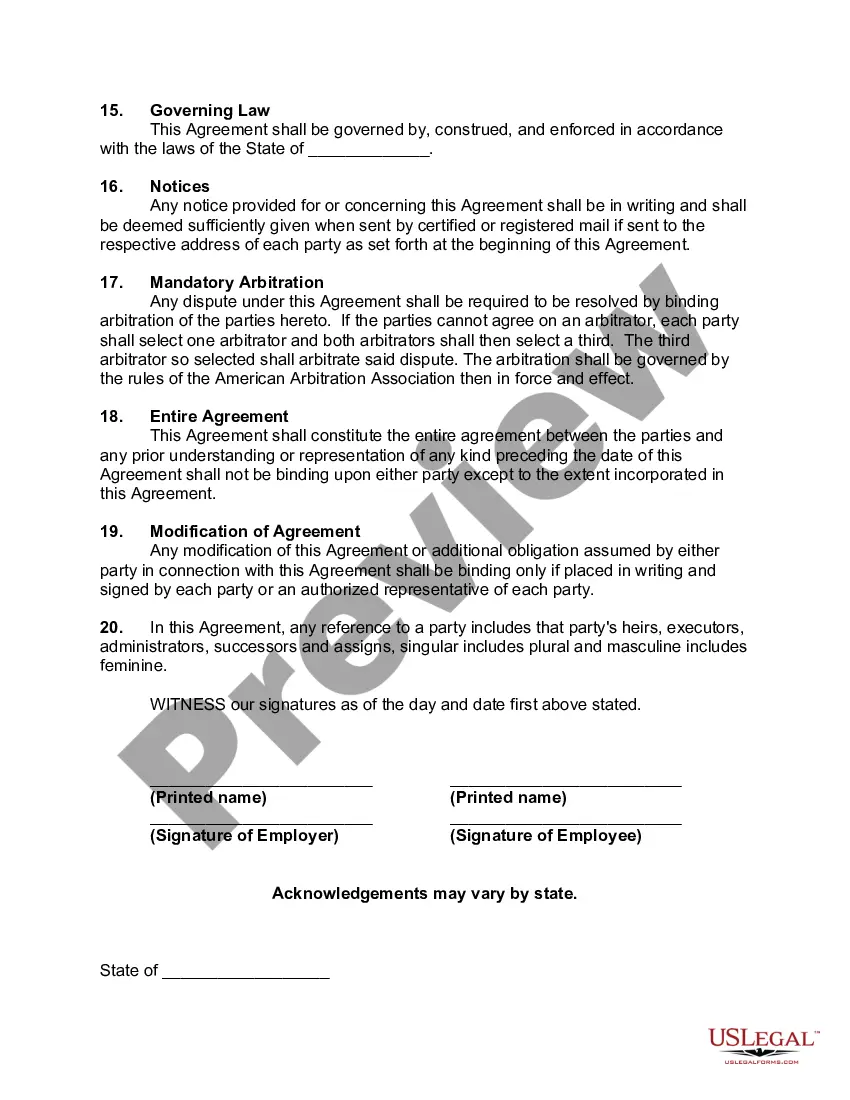
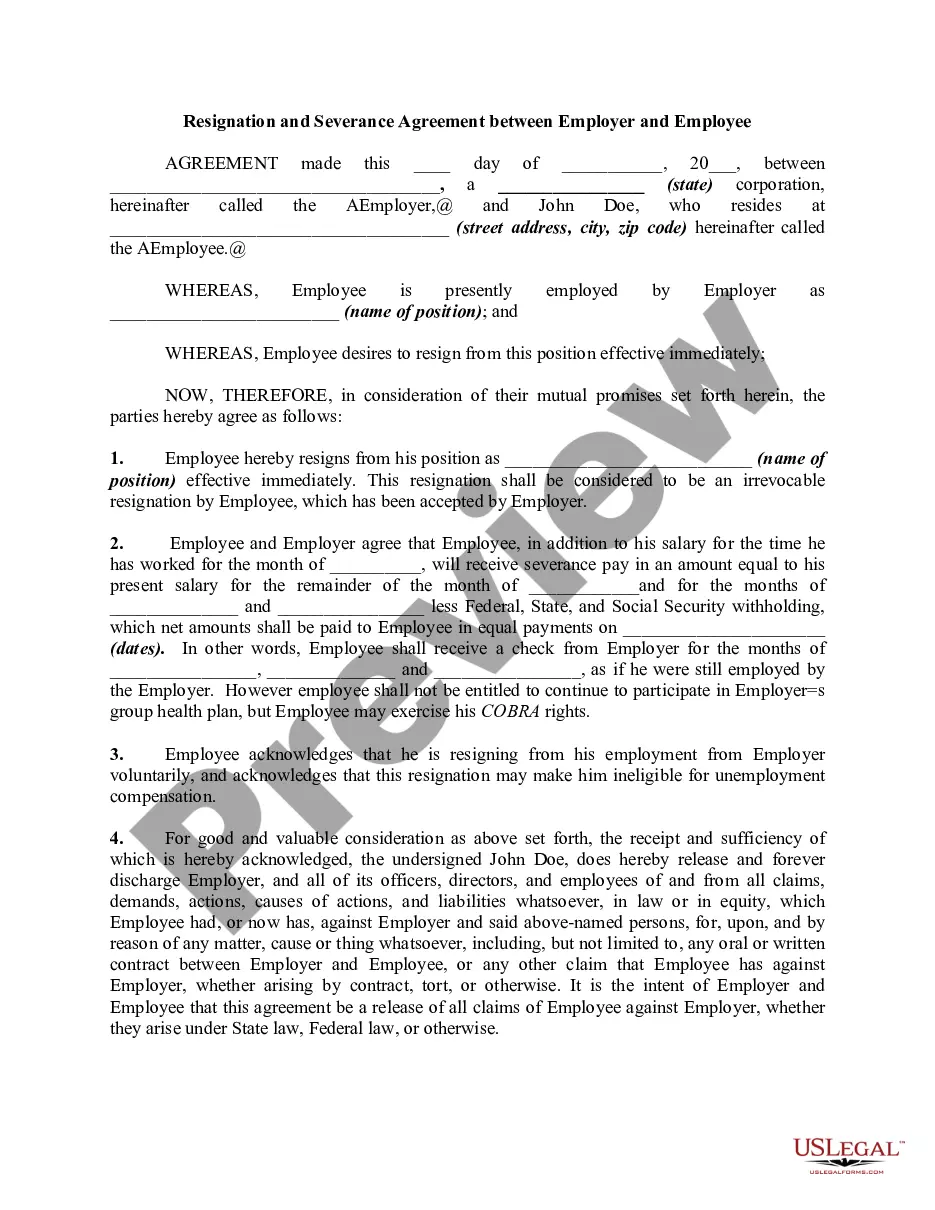
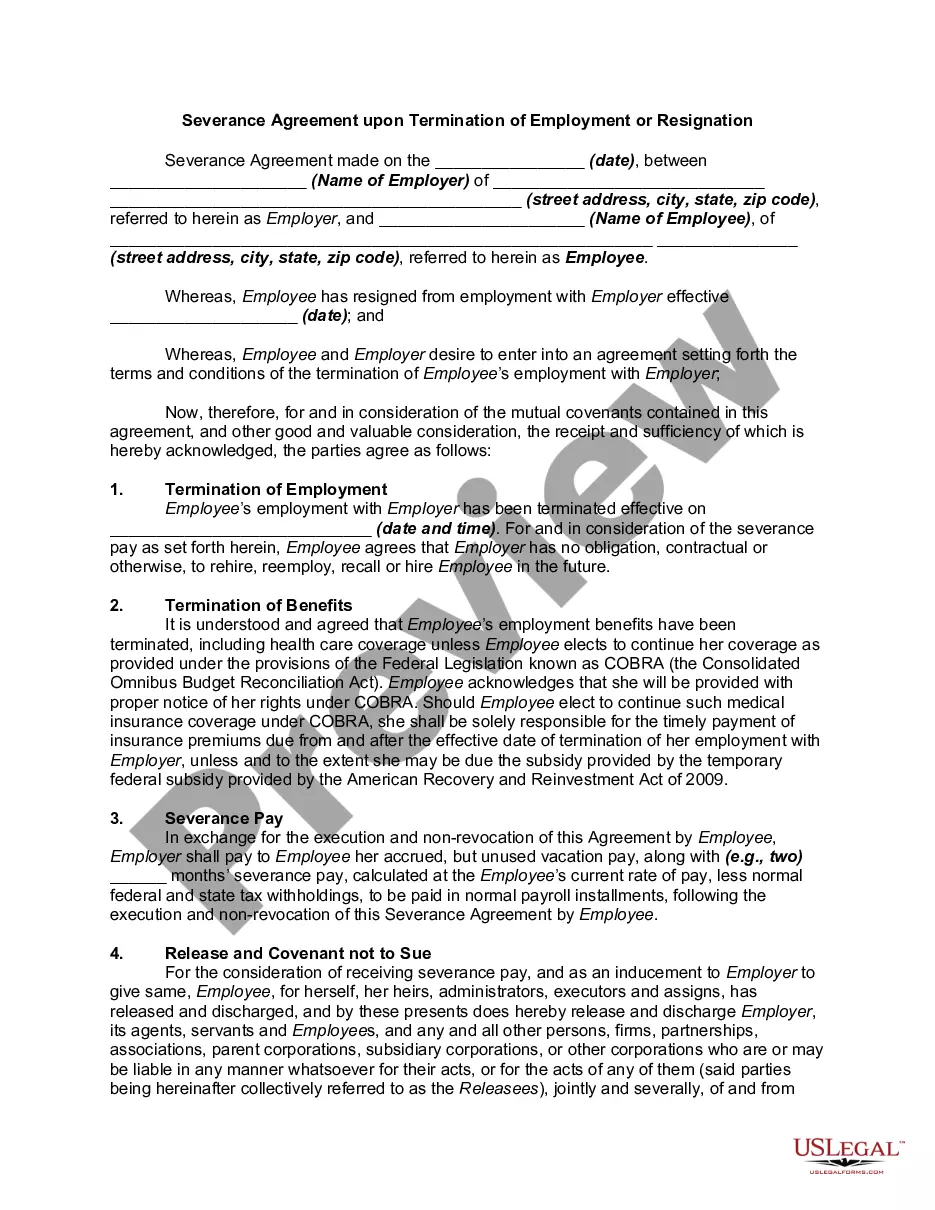
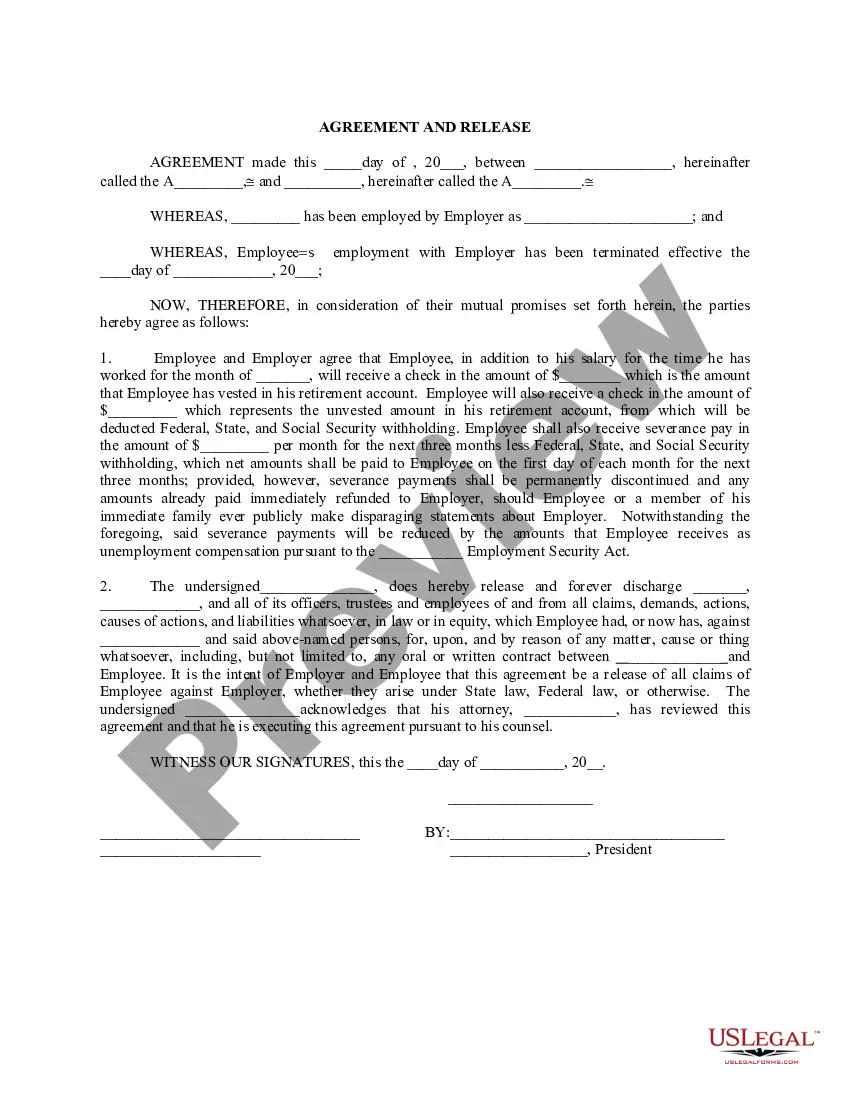
Get your form ready online
Our built-in tools help you complete, sign, share, and store your documents in one place.
Make edits, fill in missing information, and update formatting in US Legal Forms—just like you would in MS Word.
Download a copy, print it, send it by email, or mail it via USPS—whatever works best for your next step.
Sign and collect signatures with our SignNow integration. Send to multiple recipients, set reminders, and more. Go Premium to unlock E-Sign.
If this form requires notarization, complete it online through a secure video call—no need to meet a notary in person or wait for an appointment.
We protect your documents and personal data by following strict security and privacy standards.

Make edits, fill in missing information, and update formatting in US Legal Forms—just like you would in MS Word.

Download a copy, print it, send it by email, or mail it via USPS—whatever works best for your next step.

Sign and collect signatures with our SignNow integration. Send to multiple recipients, set reminders, and more. Go Premium to unlock E-Sign.

If this form requires notarization, complete it online through a secure video call—no need to meet a notary in person or wait for an appointment.

We protect your documents and personal data by following strict security and privacy standards.
Looking for another form?







How to fill out Severance Agreement Between Employee And Employer?
Managing legal documents and processes can be an arduous addition to the day.
Severance Definition In History and similar forms typically require you to look for them and find your way to complete them accurately.
Consequently, if you are addressing financial, legal, or personal issues, having a comprehensive and user-friendly online collection of forms readily available will be immensely beneficial.
US Legal Forms is the premier online service for legal templates, providing over 85,000 state-specific documents and a variety of tools to assist you in efficiently completing your paperwork.
Is it your first time using US Legal Forms? Sign up and create your account in just a few minutes, granting you access to the form library and Severance Definition In History. Then, follow the steps listed below to fill out your form.
- Browse the collection of relevant documents accessible with a single click.
- US Legal Forms offers state- and county-specific documents ready for download at any moment.
- Protect your document processing tasks using a top-notch service that enables you to create any form within minutes without any extra or hidden fees.
- Simply sign in to your account, locate Severance Definition In History, and obtain it immediately from the My documents section.
- You can also review previously saved documents.
Form popularity
FAQ
While legal counsel is always recommended, you may navigate the process on your own as long as you follow the directions closely. Choose Your NDA Template. ... Select a Type of NDA: Unilateral or Mutual. ... Define ?Confidential Information? ... Enter the Consequences of a Breach. ... Sign the Non-Disclosure Agreement.
To create a Non-Disclosure Agreement, include the following information: The parties' names and contact information. The length of the non-disclosure period. The scope and definition of the confidential information. The obligations of the Non-Disclosure Agreement. The ownership and return information.
You do not need a lawyer to create and sign a non-disclosure agreement. However, if the information you are trying to protect is important enough to warrant an NDA, you may want to have the document reviewed by someone with legal expertise.
How to Write an NDA (6 steps) Choose Your NDA Template. Select a Type of NDA: Unilateral or Mutual. Define ?Confidential Information? Enter the Consequences of a Breach. Sign the Non-Disclosure Agreement. Disclose the Information.
You do not need a lawyer to create and sign a non-disclosure agreement. However, if the information you are trying to protect is important enough to warrant an NDA, you may want to have the document reviewed by someone with legal expertise.
To be valid, a Non-Disclosure Agreement only needs two signatures ? the disclosing party and the receiving party. It doesn't need to be notarized or filed with any state or local administrative office.
Typically, a legal professional writing the NDA will complete these steps: Step 1 - Describe the scope. Which information is considered confidential? ... Step 2 - Detail party obligations. ... Step 3 - Note potential exclusions. ... Step 4 - Set the term. ... Step 5 - Spell out consequences.
To be valid, a Non-Disclosure Agreement only needs two signatures ? the disclosing party and the receiving party. It doesn't need to be notarized or filed with any state or local administrative office.