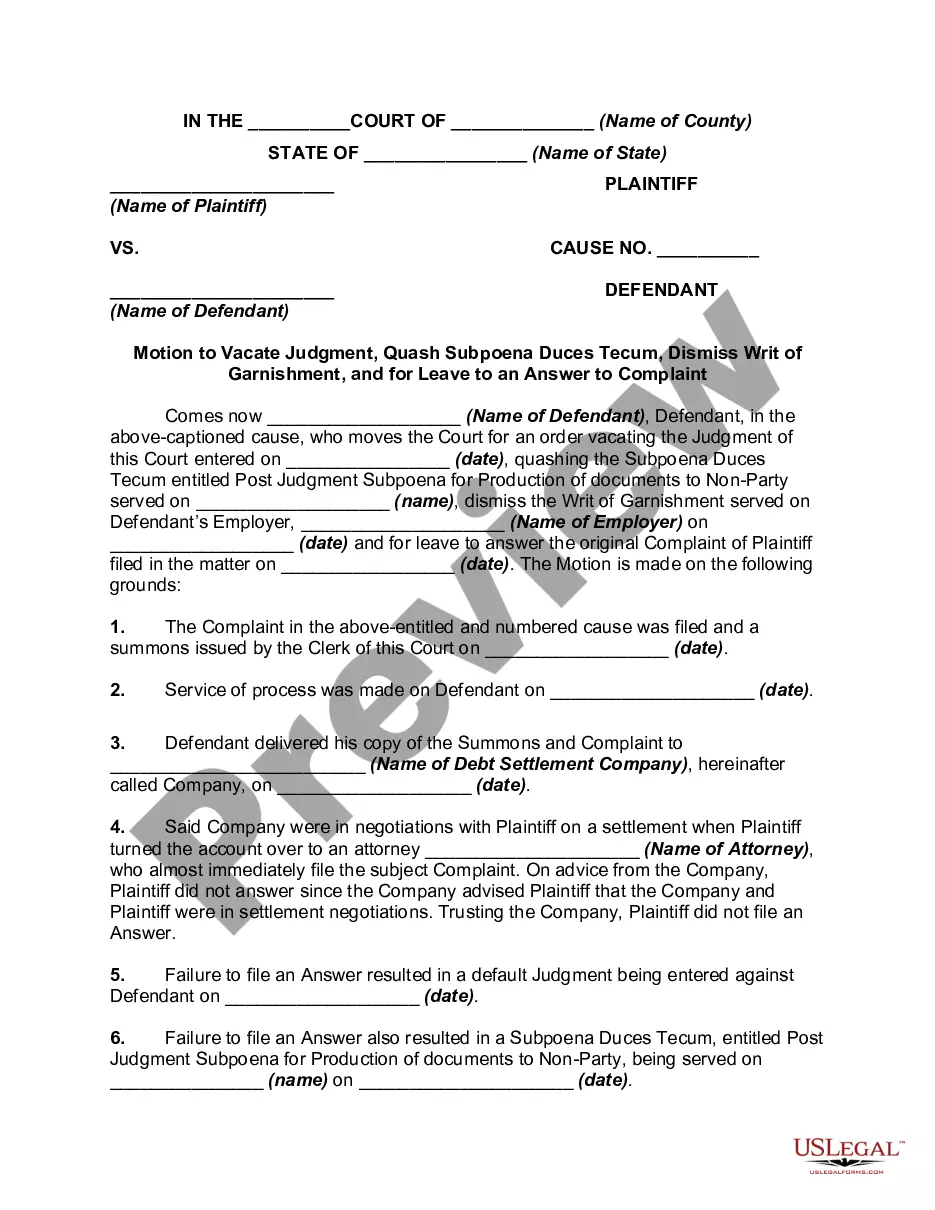
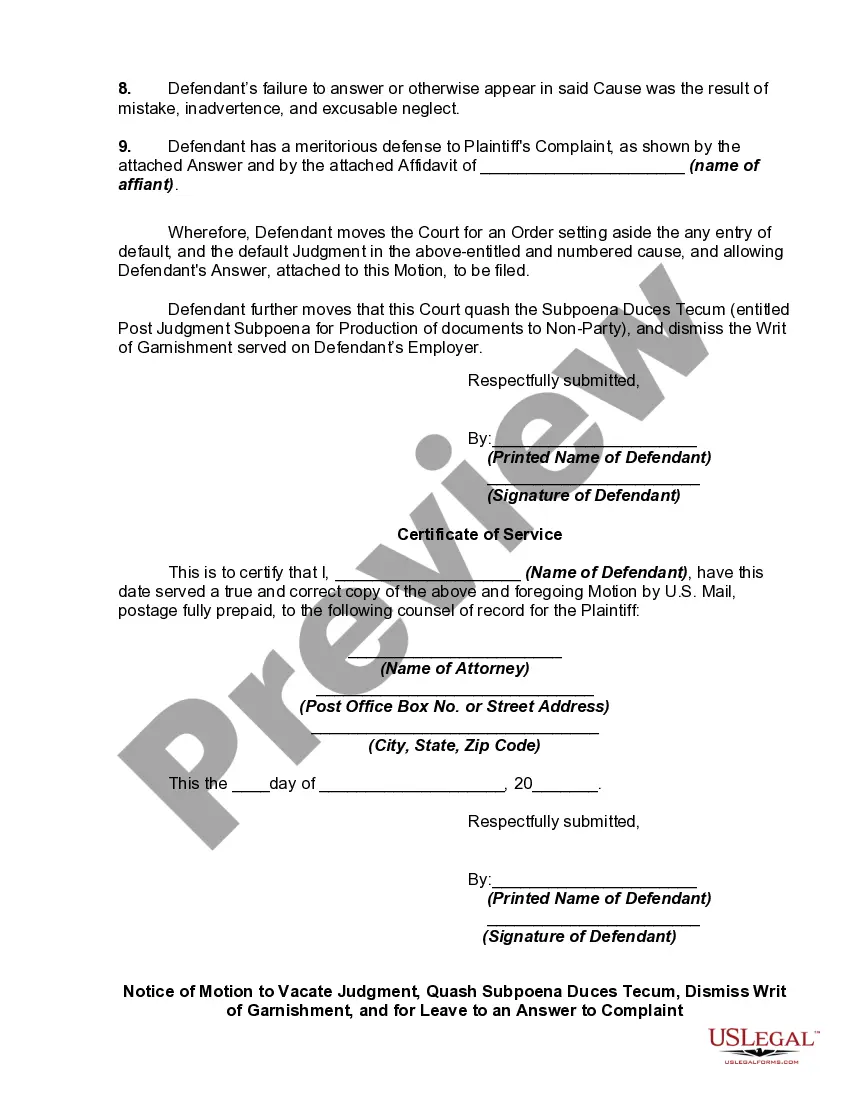
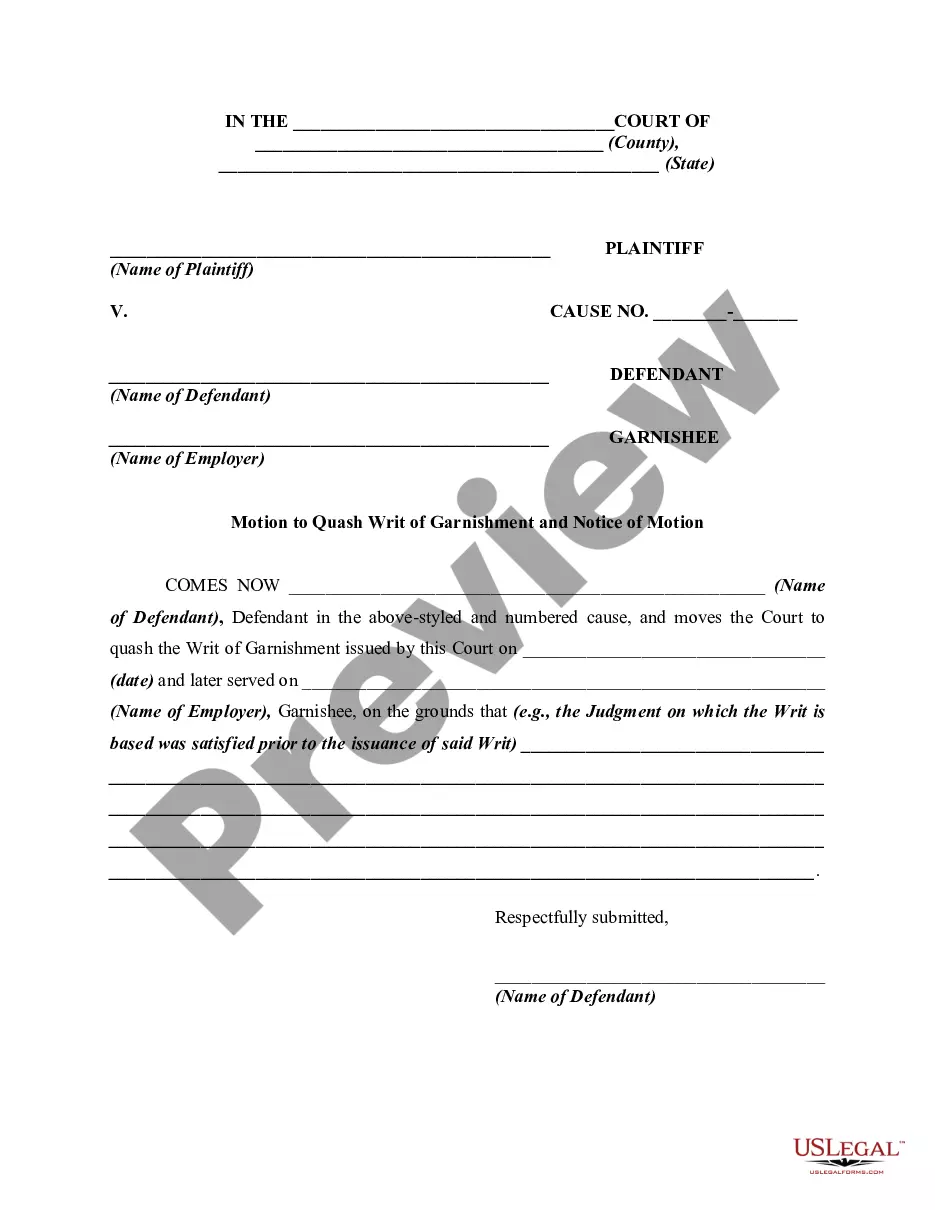
Motion To Quash Subpoena To Testify
Description
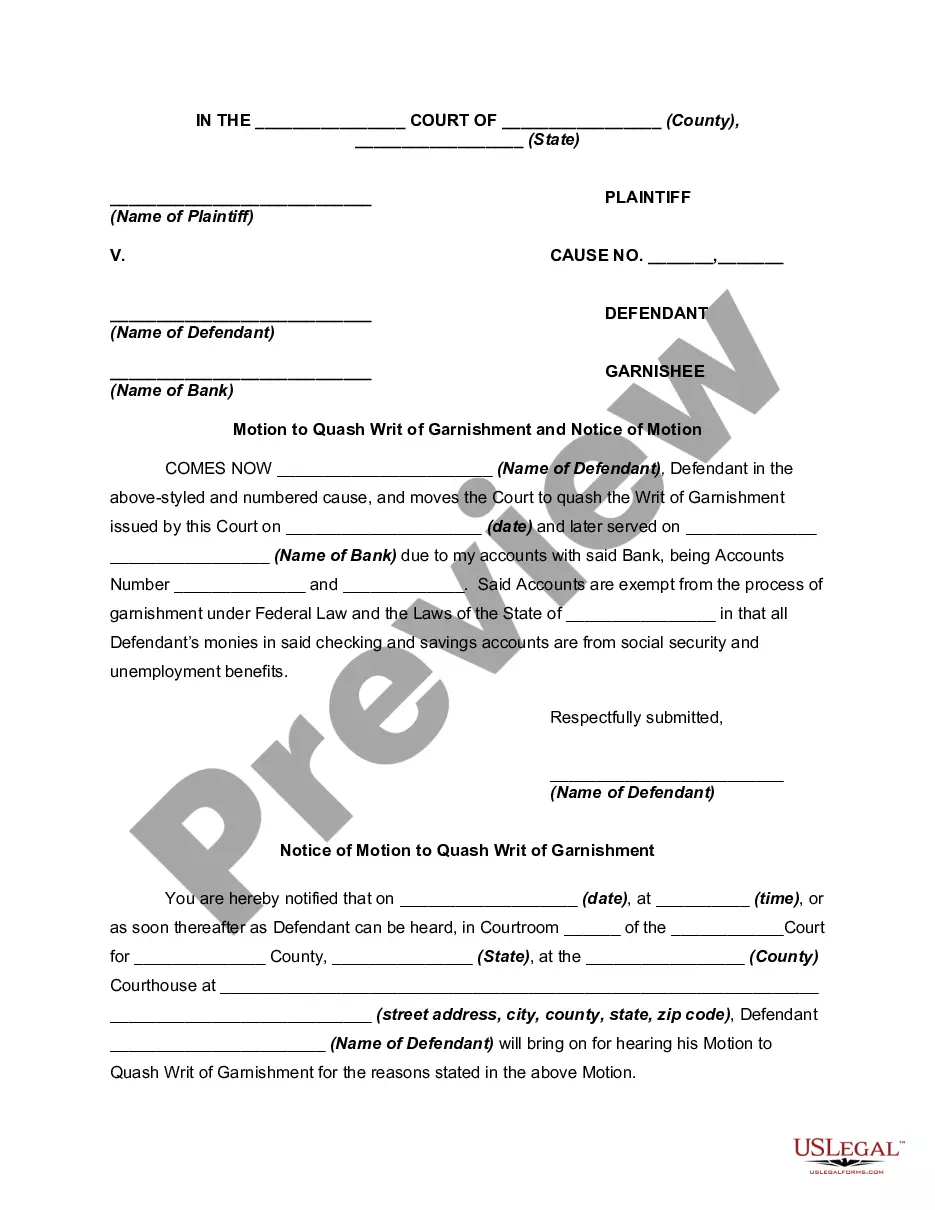
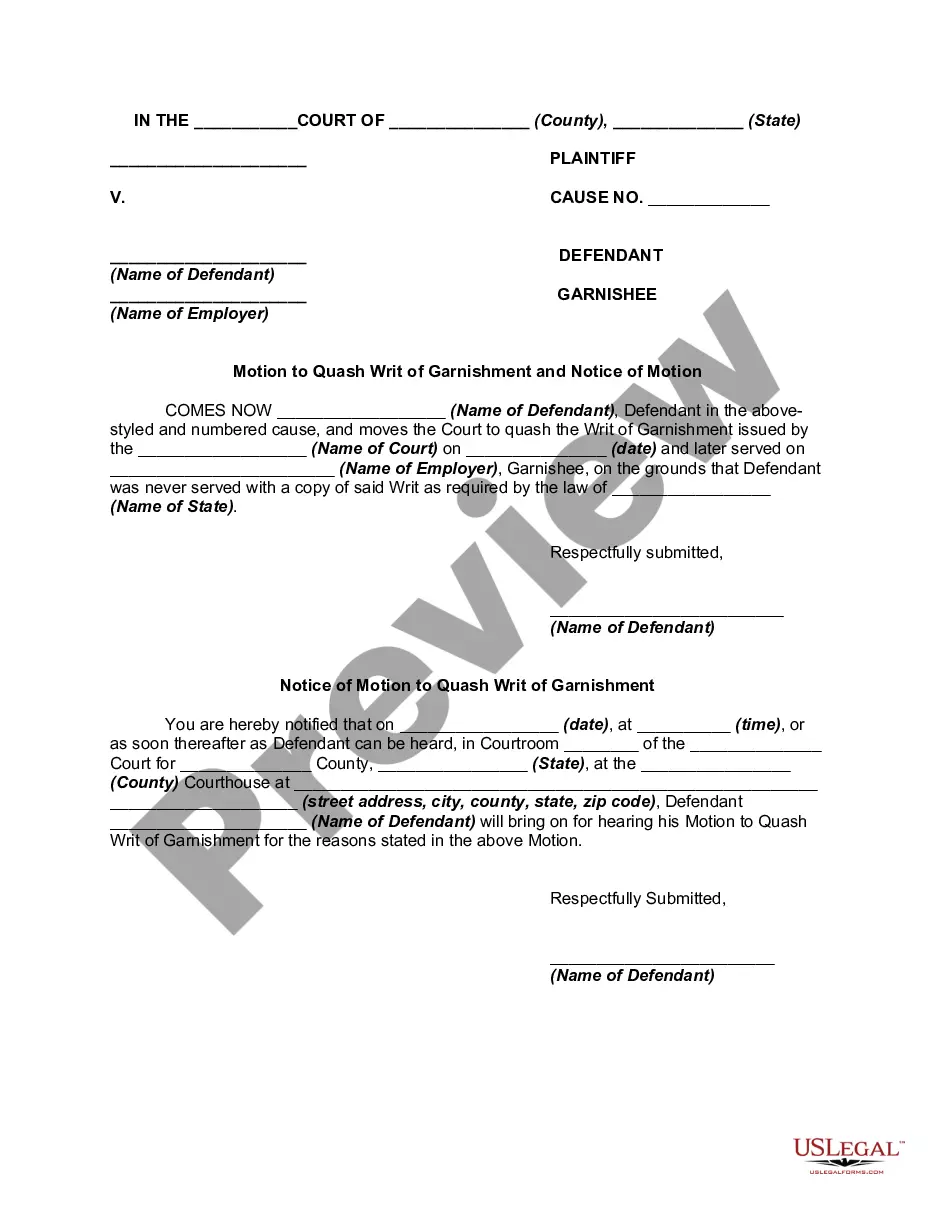
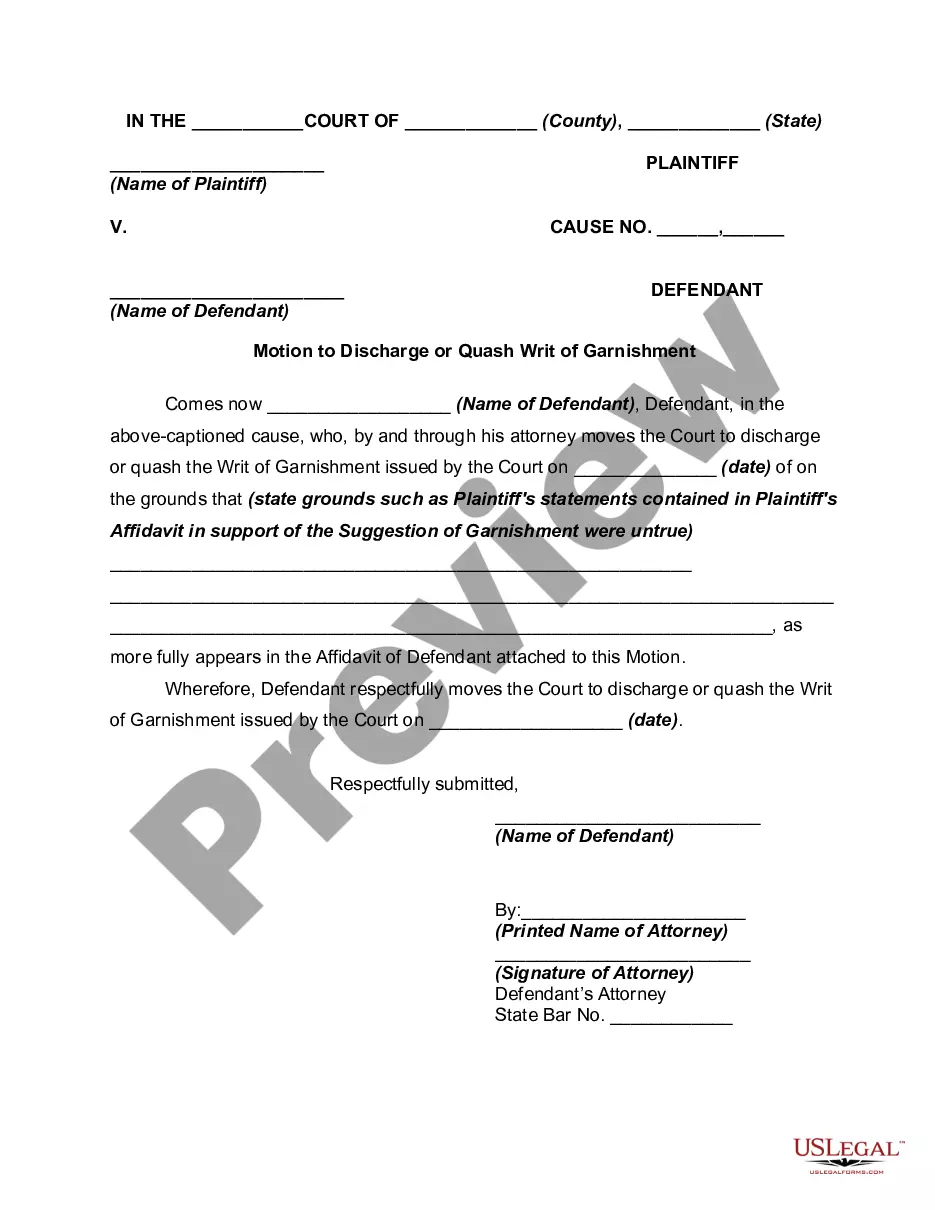
Get your form ready online
Our built-in tools help you complete, sign, share, and store your documents in one place.
Make edits, fill in missing information, and update formatting in US Legal Forms—just like you would in MS Word.
Download a copy, print it, send it by email, or mail it via USPS—whatever works best for your next step.
Sign and collect signatures with our SignNow integration. Send to multiple recipients, set reminders, and more. Go Premium to unlock E-Sign.
If this form requires notarization, complete it online through a secure video call—no need to meet a notary in person or wait for an appointment.
We protect your documents and personal data by following strict security and privacy standards.

Make edits, fill in missing information, and update formatting in US Legal Forms—just like you would in MS Word.

Download a copy, print it, send it by email, or mail it via USPS—whatever works best for your next step.

Sign and collect signatures with our SignNow integration. Send to multiple recipients, set reminders, and more. Go Premium to unlock E-Sign.

If this form requires notarization, complete it online through a secure video call—no need to meet a notary in person or wait for an appointment.

We protect your documents and personal data by following strict security and privacy standards.
Looking for another form?









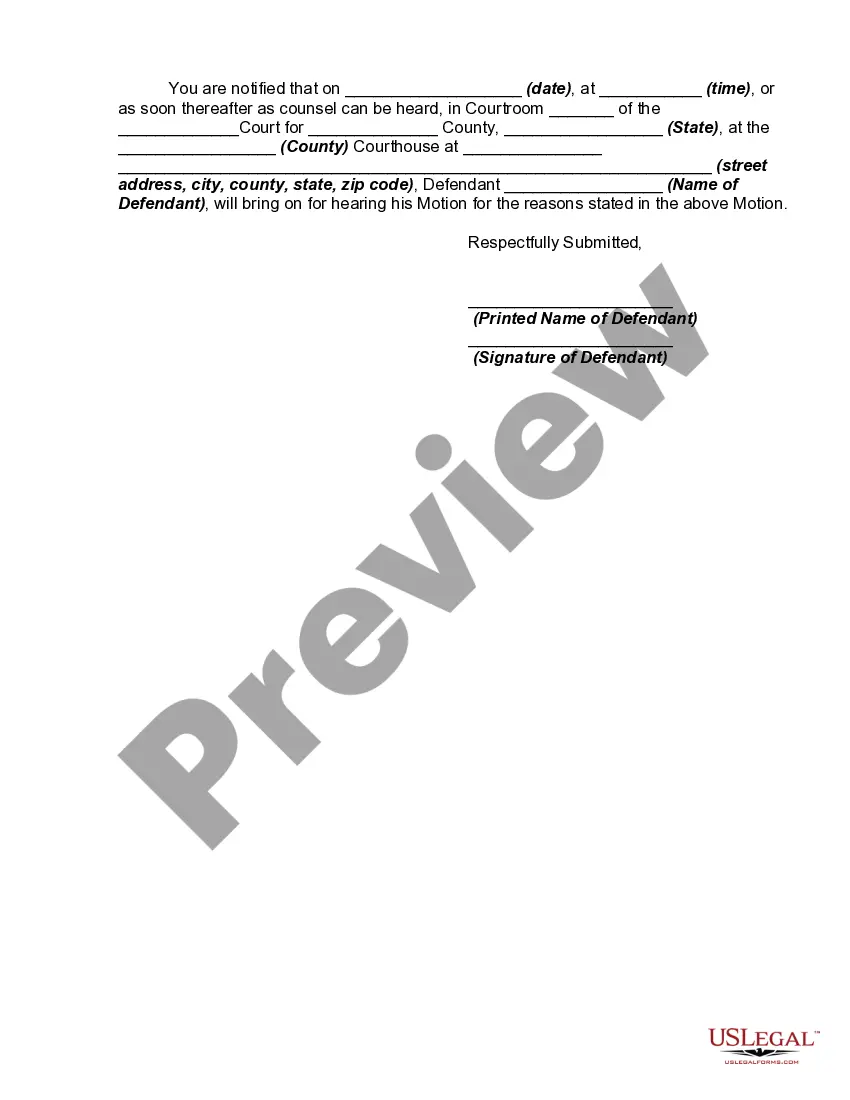
How to fill out Motion To Vacate Judgment, Quash Subpoena Duces Tecum, Dismiss Writ Of Garnishment, And For Leave To File An Answer To Complaint?
Managing legal paperwork and procedures can be a lengthy undertaking throughout your day.
Motion To Quash Subpoena To Testify and similar forms often require you to research them and understand how to fill them out correctly.
Consequently, whether you are dealing with financial, legal, or personal issues, utilizing a comprehensive and user-friendly online directory of forms readily available will greatly assist you.
US Legal Forms is the leading online source of legal templates, featuring over 85,000 state-specific forms and numerous resources to help you complete your documents with ease.
Is it your first time using US Legal Forms? Sign up and create a free account in just a few minutes and you will gain access to the form catalog and Motion To Quash Subpoena To Testify. Then, follow the steps below to finish your form: Ensure you've located the correct form using the Review function and examining the form description. Click Buy Now when you are ready, and choose the subscription plan that meets your requirements. Click Download then fill out, sign, and print the document. US Legal Forms has over twenty-five years of experience assisting users in managing their legal paperwork. Find the form you require today and simplify any process without stress.
- Explore the directory of relevant documents with just one click.
- US Legal Forms provides state- and county-specific forms available at any time for download.
- Protect your document management processes using a reliable service that enables you to prepare any form in minutes without extra or hidden fees.
- Simply Log In to your account, search for Motion To Quash Subpoena To Testify and retrieve it right away from the My documents section.
- You can also view previously downloaded forms.
Form popularity
FAQ
Enforcement cannot be accomplished by means of letters rogatory in the United States. Under U.S. law, an individual seeking to enforce a foreign judgment, decree or order in this country must file suit before a competent court. The court will determine whether to recognize and enforce the foreign judgment.
New York Judgment Statute of Limitations A judgment creditor can't try to collect from you forever. The statute of limitations for collecting on a New York judgment is 20 years, which starts the day the judgment creditor is first able to collect on the judgment. This timeline can sometimes be restarted.
If you do not pay in the face of these notices, the creditor may take further action. These include suing you; Under Section 5250 of the New York Civil Practice Law and Rules, creditors can ask the court to send you to jail for failure to pay debts; For this to happen, the creditor must prove a few things.
To register this type of judgment in New York, a creditor must submit a certified or exemplified copy of the out-of-state judgment and an affidavit stating that the judgment was not obtained by default or by a confession of judgment, that it is unsatisfied in whole or in part, the unpaid balance, that enforcement has ...
Judgments are valid for 20 years and may be extended once for an additional period of 10 years. To extend a judgment for an extra ten (10) years, the Judgment Creditor must make written application to the court that issued the original judgment. For more info see .nycourts.gov/courthelp/goingtocourt/judgments.shtml.
We can register another state's judgment in New York under Article 54 of the CPLR (?Uniform Enforcement of Foreign Judgments Act?). The judgment creditor needs to execute a short affidavit, file it with the county clerk (CPLR 5402), and give notice to the debtor (CPLR 5403).
The easiest procedure is to file a motion for summary judgment in lieu of complaint. That sets up a summary procedure that is designed to determine whether defendant received proper service of legal papers in the out-of-state case and that granting recognition to the judgment doesn't violate NY public policy.