Court Judgment File For Divorce
Description
Get your form ready online
Our built-in tools help you complete, sign, share, and store your documents in one place.
Make edits, fill in missing information, and update formatting in US Legal Forms—just like you would in MS Word.
Download a copy, print it, send it by email, or mail it via USPS—whatever works best for your next step.
Sign and collect signatures with our SignNow integration. Send to multiple recipients, set reminders, and more. Go Premium to unlock E-Sign.
If this form requires notarization, complete it online through a secure video call—no need to meet a notary in person or wait for an appointment.
We protect your documents and personal data by following strict security and privacy standards.

Make edits, fill in missing information, and update formatting in US Legal Forms—just like you would in MS Word.

Download a copy, print it, send it by email, or mail it via USPS—whatever works best for your next step.

Sign and collect signatures with our SignNow integration. Send to multiple recipients, set reminders, and more. Go Premium to unlock E-Sign.

If this form requires notarization, complete it online through a secure video call—no need to meet a notary in person or wait for an appointment.

We protect your documents and personal data by following strict security and privacy standards.
Looking for another form?

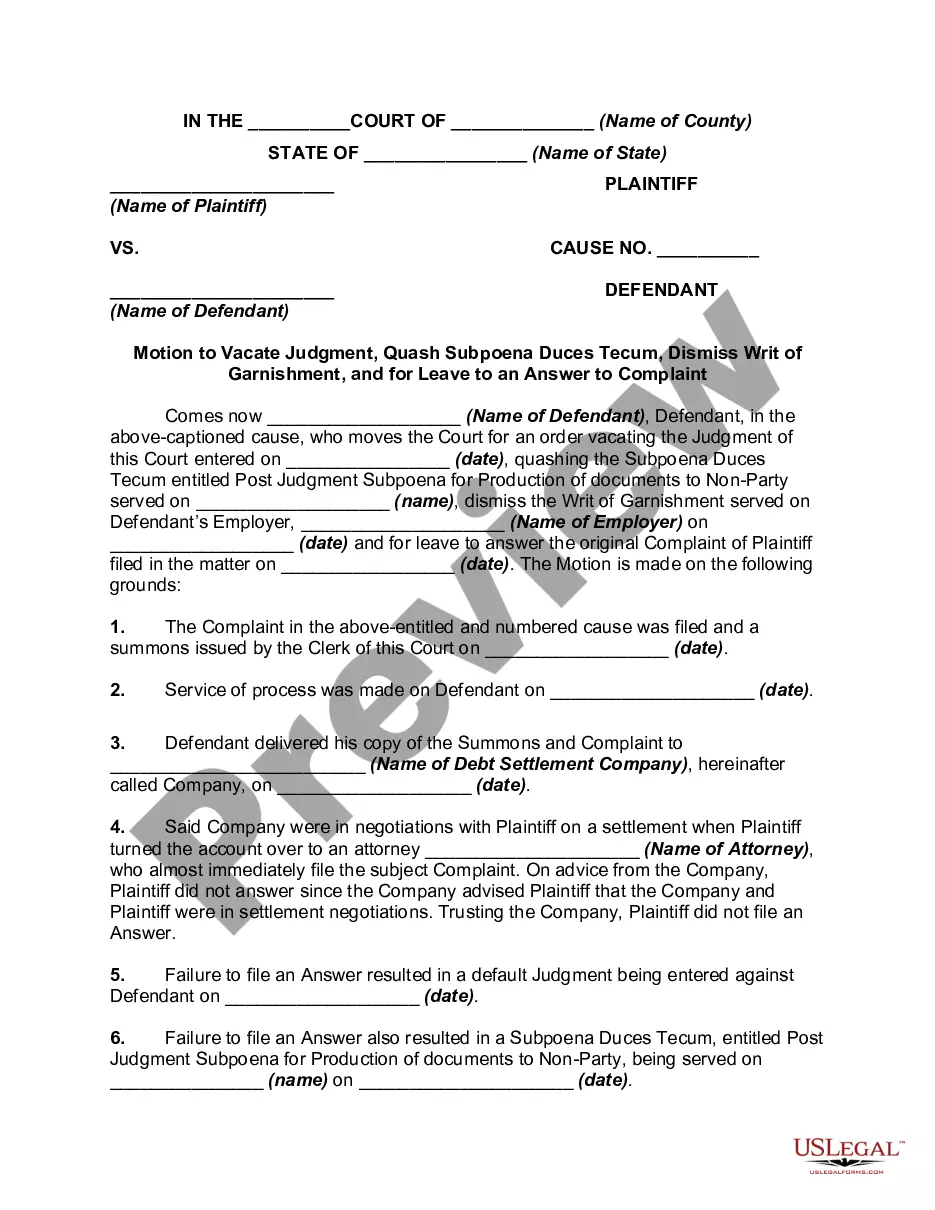
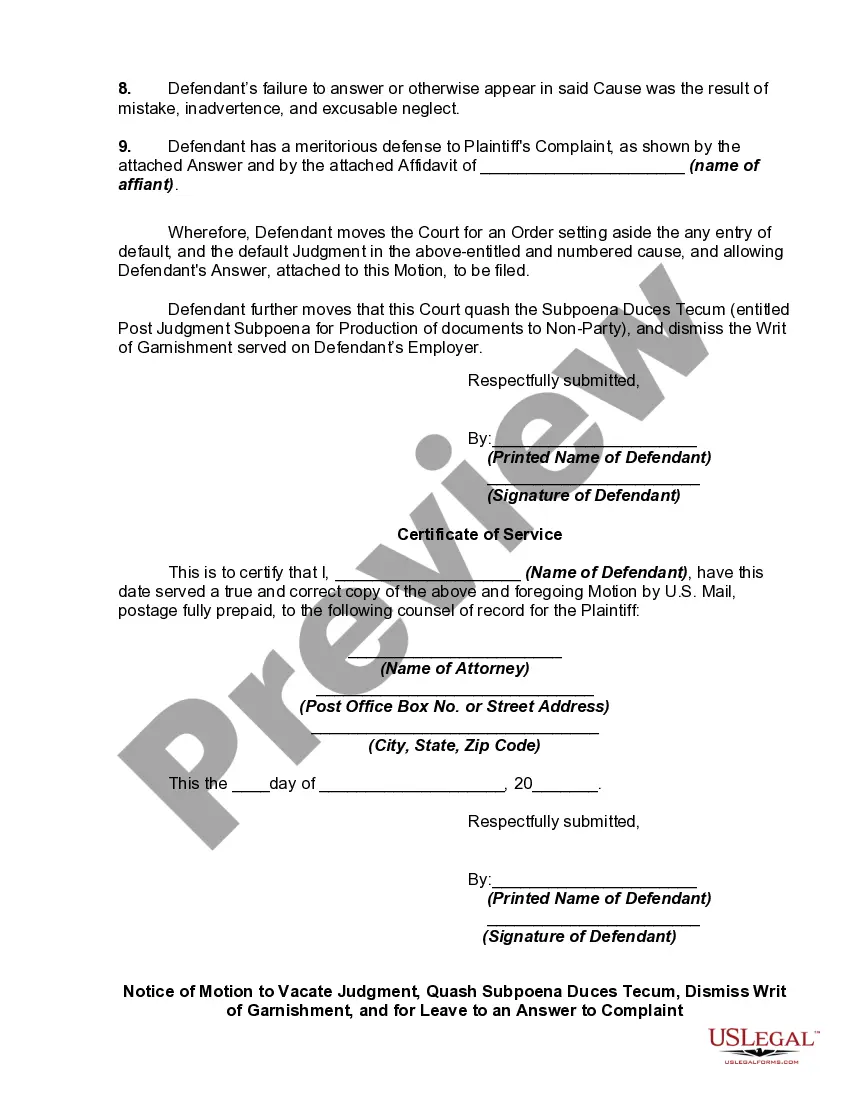
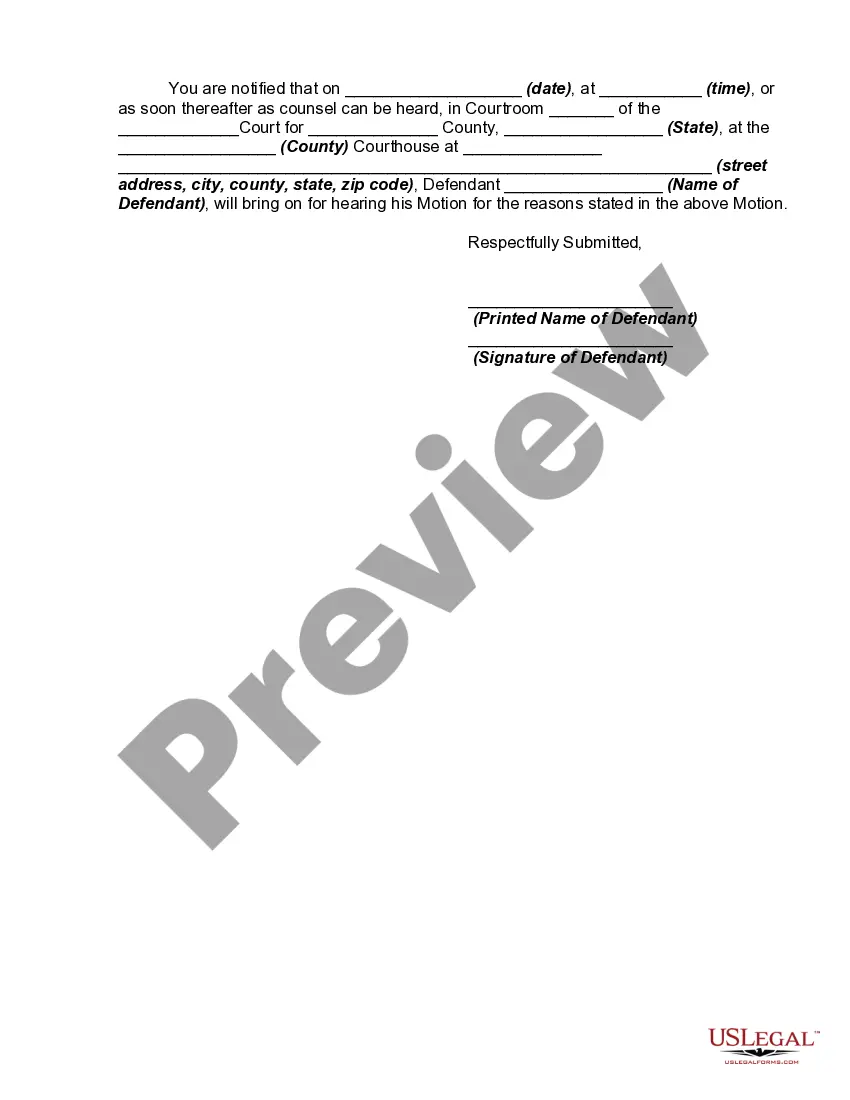
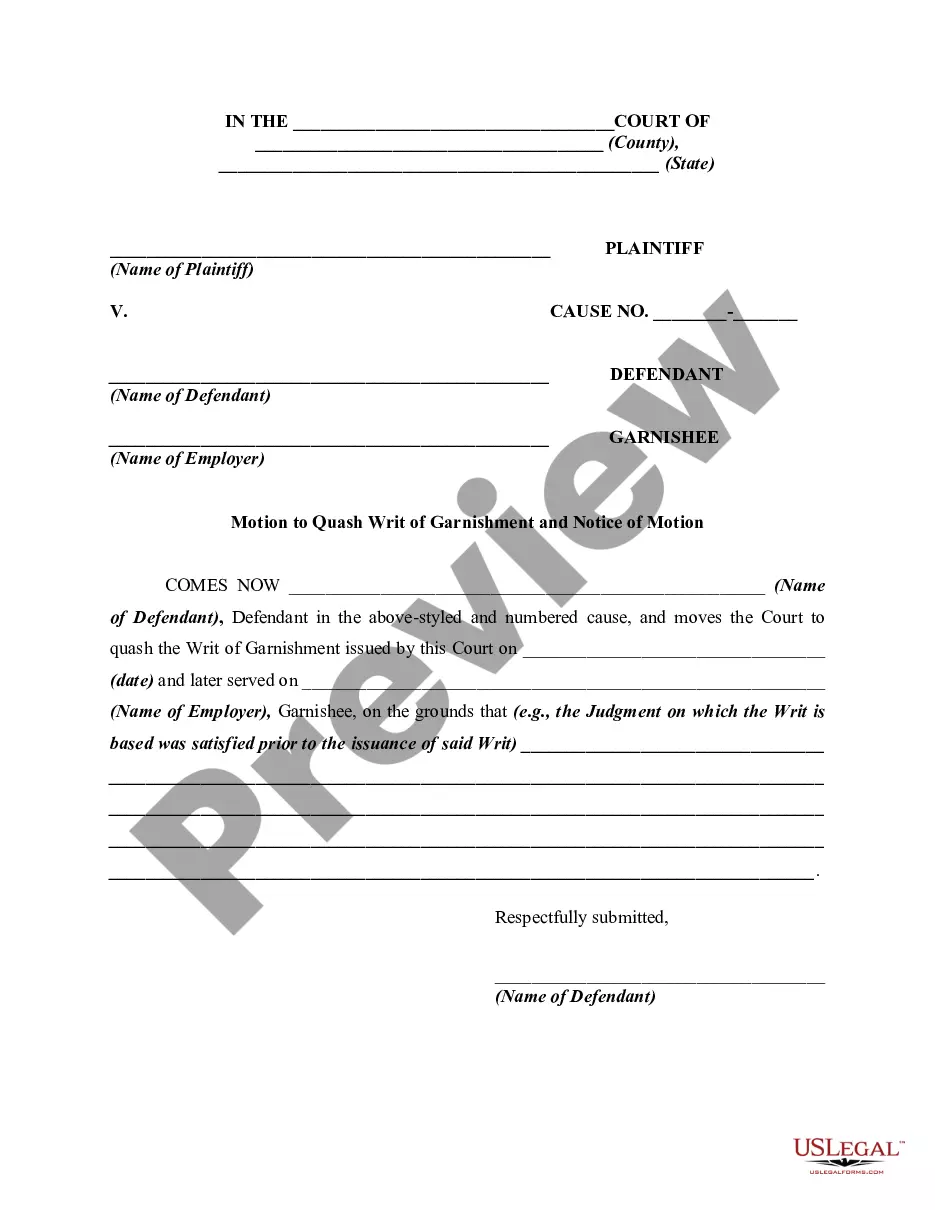
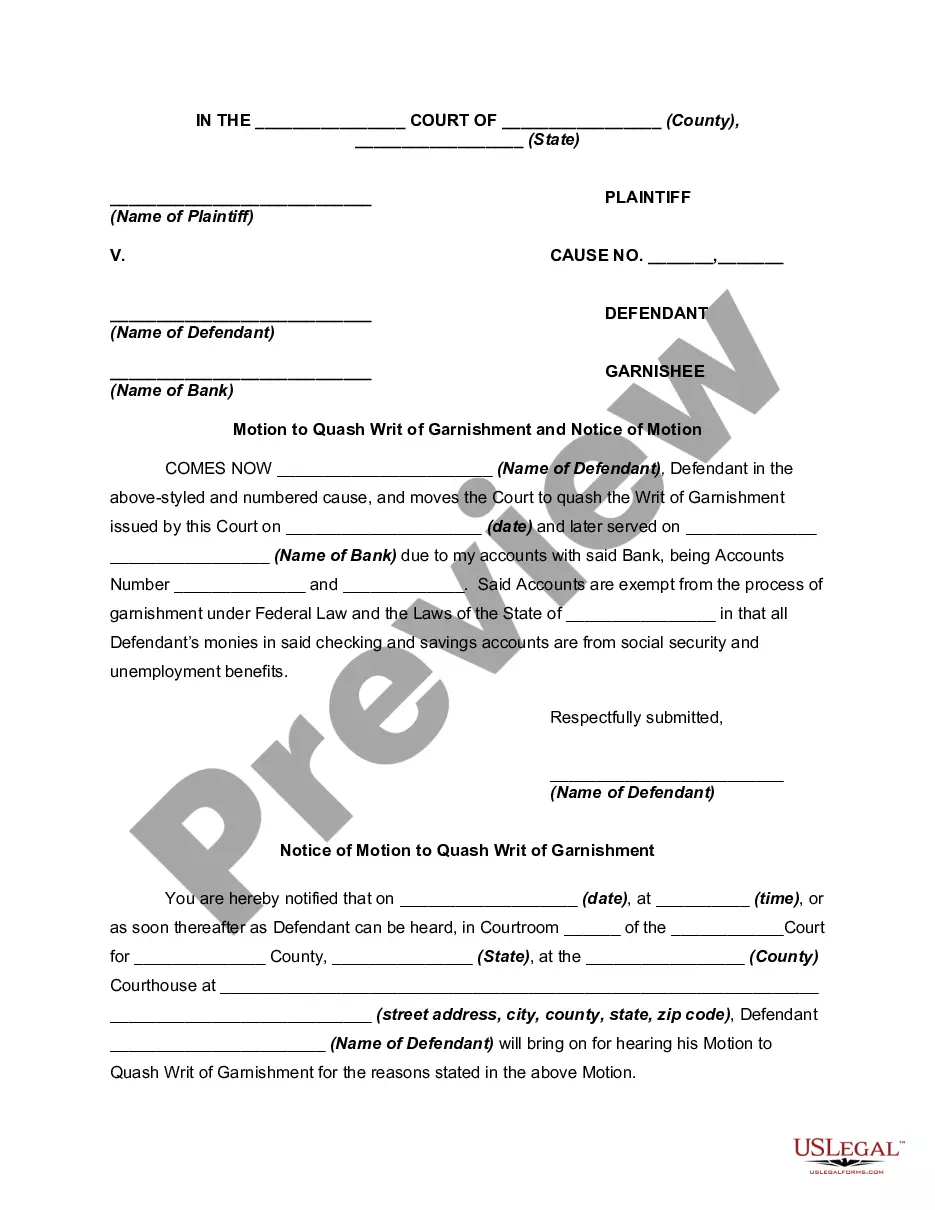
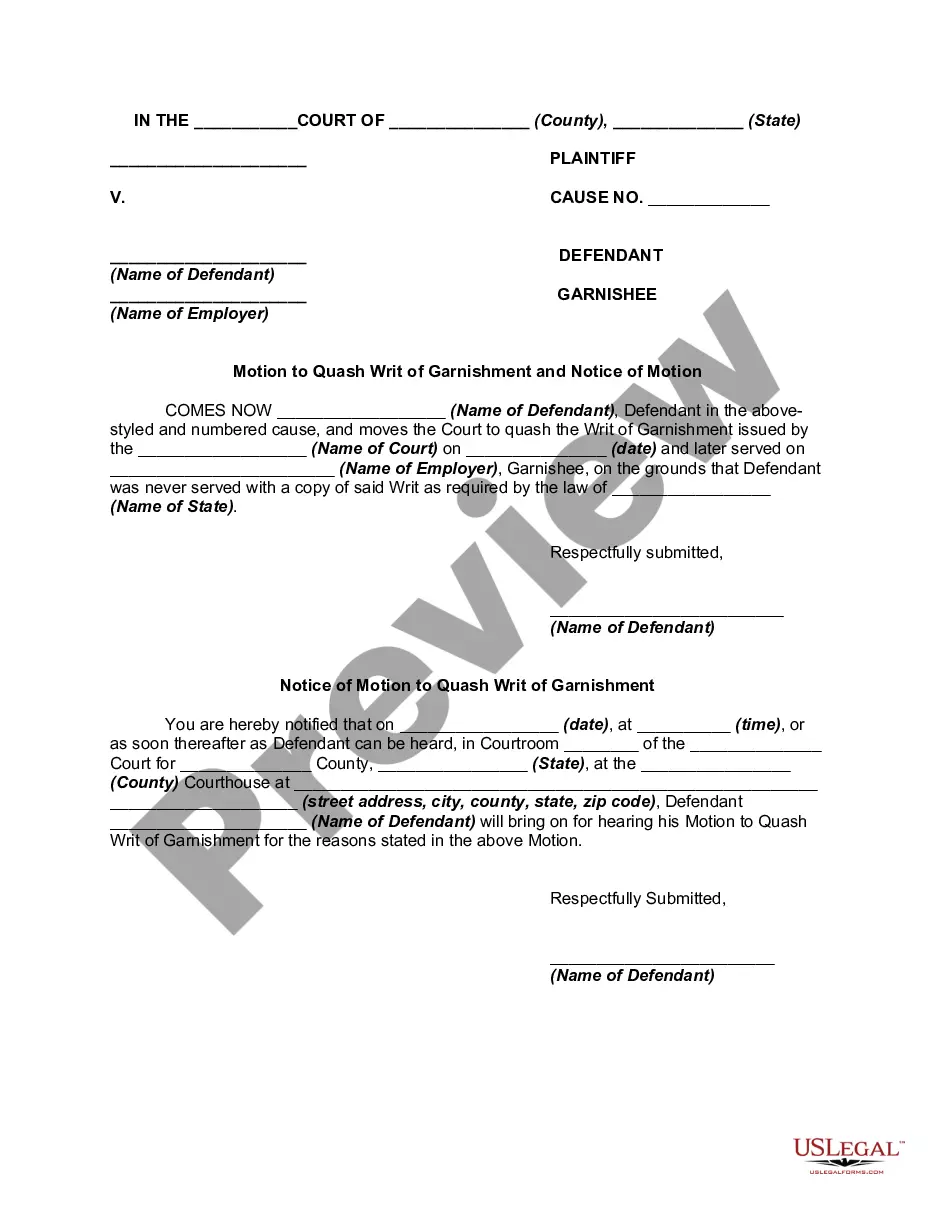
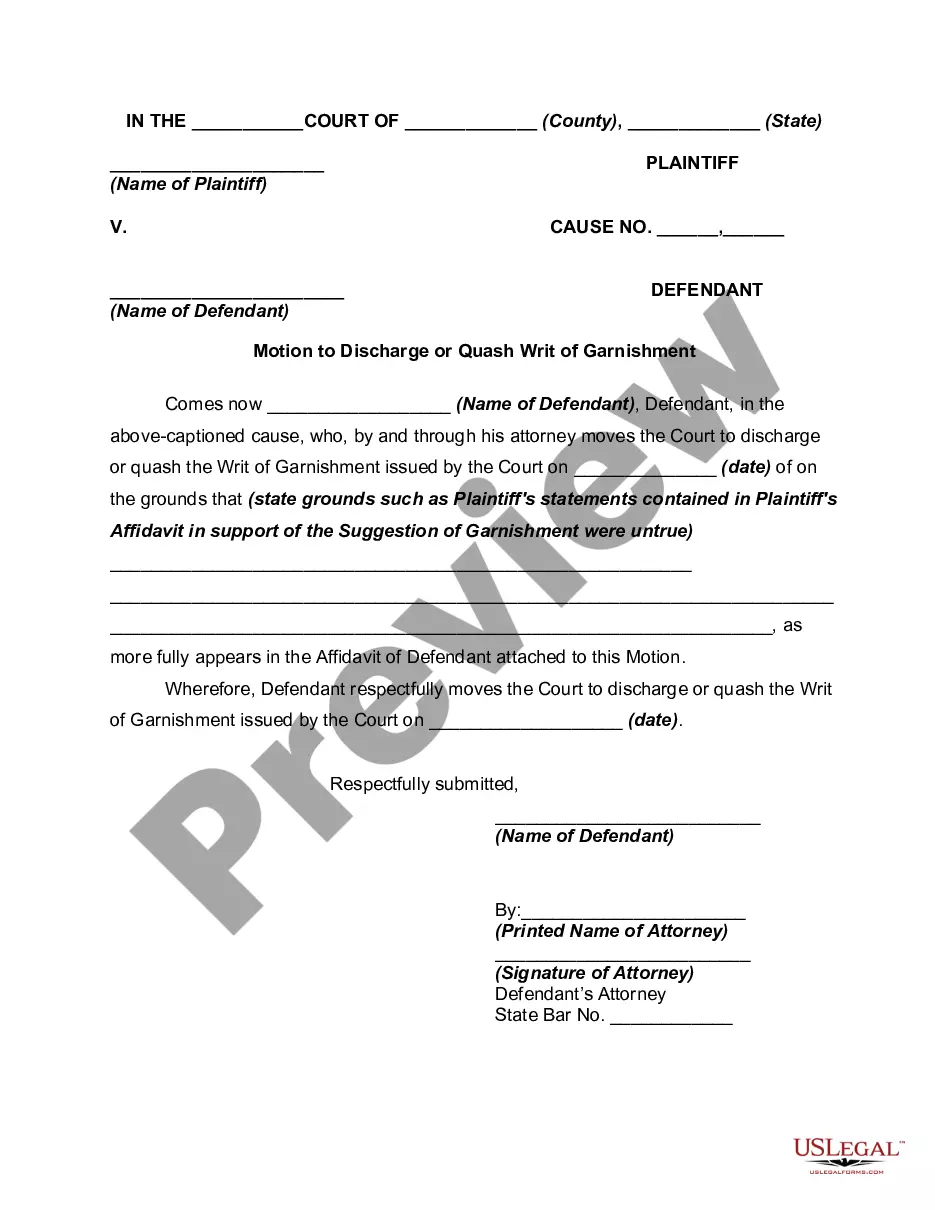
How to fill out Motion To Vacate Judgment, Quash Subpoena Duces Tecum, Dismiss Writ Of Garnishment, And For Leave To File An Answer To Complaint?
It’s common knowledge that you cannot instantly become a legal expert, nor can you swiftly figure out how to prepare the Court Judgment Document For Divorce without possessing specialized knowledge.
Assembling legal paperwork is a lengthy process necessitating particular education and expertise. So why not entrust the drafting of the Court Judgment Document For Divorce to qualified experts.
With US Legal Forms, which boasts one of the most extensive legal template collections, you can locate anything from judicial documents to templates for internal business communication.
You can regain access to your documents from the My documents section at any time. If you’re an existing customer, you can simply Log In and locate and download the template from the same section.
Regardless of the purpose of your documents—whether financial and legal, or personal—our platform has everything you need. Give US Legal Forms a try now!
- Find the document you require by utilizing the search bar at the top of the page.
- Preview it (if this option is available) and review the accompanying description to verify if Court Judgment Document For Divorce is what you’re looking for.
- Restart your search if you need any other template.
- Create a free account and select a subscription plan to acquire the form.
- Select Buy now. Once the transaction is finalized, you can download the Court Judgment Document For Divorce, complete it, print it, and send or mail it to the appropriate individuals or organizations.
Form popularity
FAQ
Typically, you will receive your divorce decree shortly after the court issues the judgment, although the exact timing may vary. The court often processes these documents within a few weeks, depending on their workload. To ensure timely access to your court judgment file for divorce and avoid delays, consider utilizing a service like uslegalforms to assist you with the necessary legal steps.
While they are often used interchangeably, a divorce decree and a judgment can refer to slightly different aspects of the divorce process. A judgment is the court's decision, while the decree is the formal written document that details the court's orders. Both documents are essential, so ensuring you have the correct court judgment file for divorce is key to understanding your legal status.
In the context of divorce, a judgment reflects the court's determination regarding the terms of the divorce. It encompasses various aspects, including asset division, support payments, and any custody agreements for children. Recognizing the implications of this court judgment file for divorce can help you navigate your post-divorce responsibilities effectively.
After the judge signs an Order or Judgment, it is entered on the court docket and served on required parties. The Order or Judgment begins a timeline for filing appeals or filing motions to change the ruling.
Judgment (form FL-180) This is the final court order to get a divorce. Attach the judge's decisions from your trial to this form. Notice of Entry of Judgment (form FL-190) The court will mail this form back to you after the judge has signed the judgment.
The court will issue a judgment of dissolution of marriage outlining the terms of your divorce. The marital settlement agreement attached to the judgment will detail all the terms of the divorce including the division of assets and debts, child support, child custody, visitation, and spousal support.
You or your attorney complete the first page and use attachments for other final orders, like child custody and visitation, child support, spousal or domestic partner support, property division, attorneys fees, and other orders.
So, if a couple split after say, 9.5 years, but their divorce didn't finalize until the 10-year mark, the judge may order that spousal support be paid for 5 years (half the length of the marriage, which is common), instead of having it last indefinitely as in the case of a marriage that lasted at least 10 years.