Garnishment Form Virginia
Description
Get your form ready online
Our built-in tools help you complete, sign, share, and store your documents in one place.
Make edits, fill in missing information, and update formatting in US Legal Forms—just like you would in MS Word.
Download a copy, print it, send it by email, or mail it via USPS—whatever works best for your next step.
Sign and collect signatures with our SignNow integration. Send to multiple recipients, set reminders, and more. Go Premium to unlock E-Sign.
If this form requires notarization, complete it online through a secure video call—no need to meet a notary in person or wait for an appointment.
We protect your documents and personal data by following strict security and privacy standards.

Make edits, fill in missing information, and update formatting in US Legal Forms—just like you would in MS Word.

Download a copy, print it, send it by email, or mail it via USPS—whatever works best for your next step.

Sign and collect signatures with our SignNow integration. Send to multiple recipients, set reminders, and more. Go Premium to unlock E-Sign.

If this form requires notarization, complete it online through a secure video call—no need to meet a notary in person or wait for an appointment.

We protect your documents and personal data by following strict security and privacy standards.
Looking for another form?





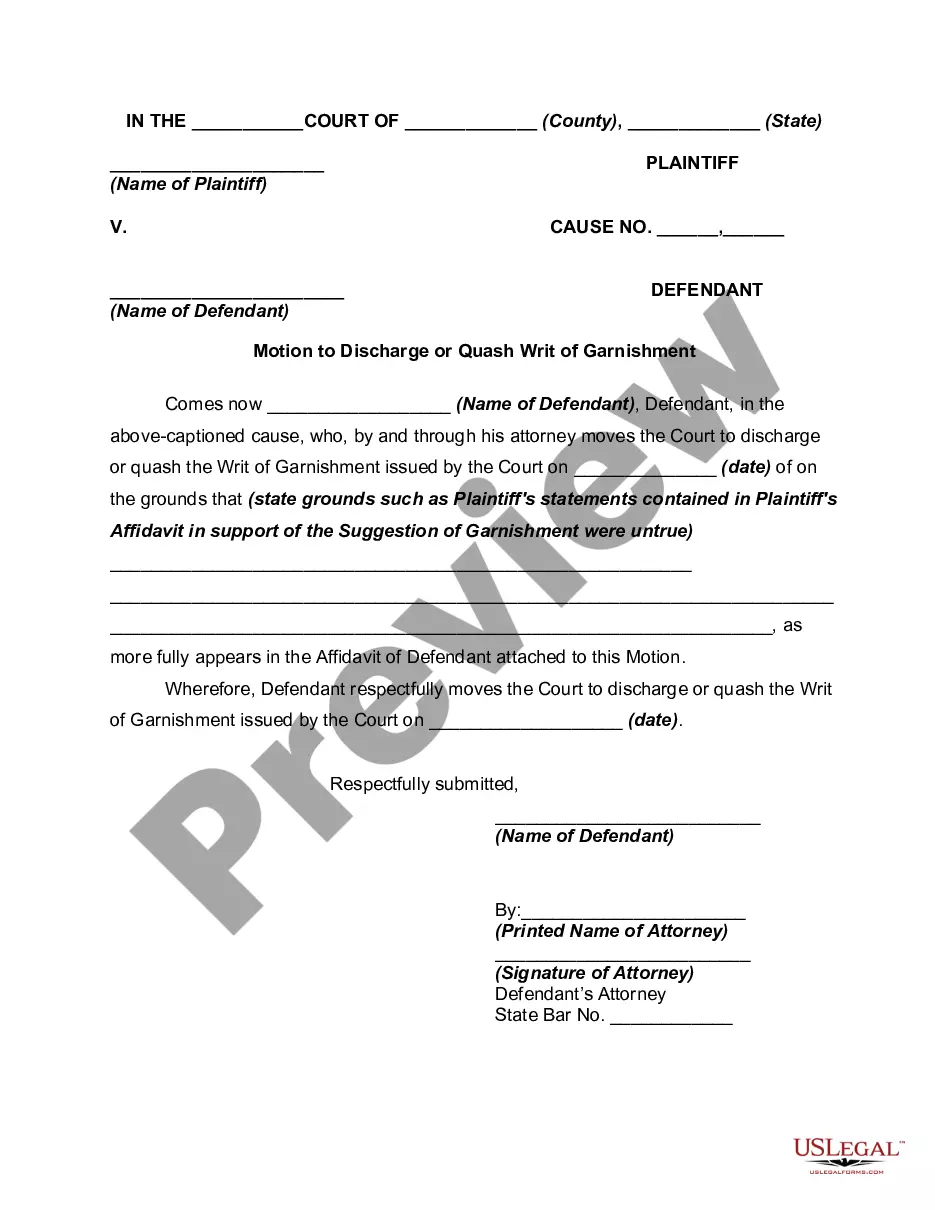
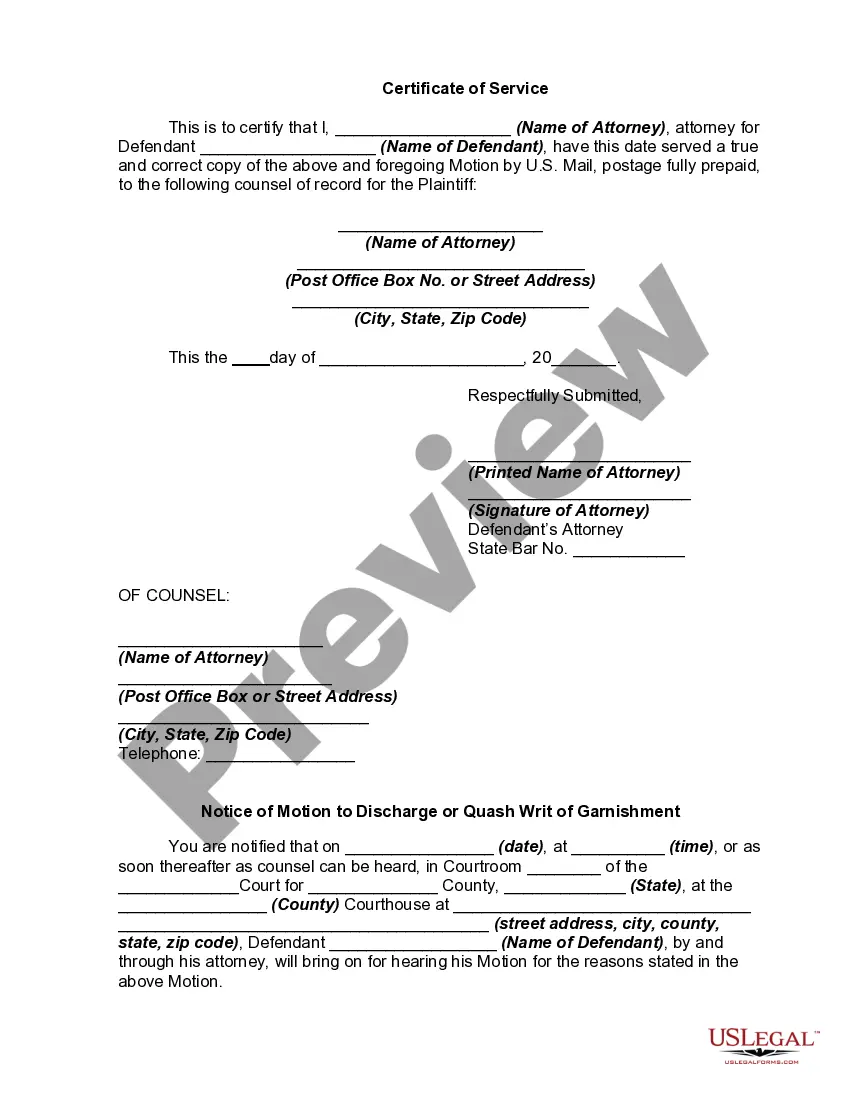
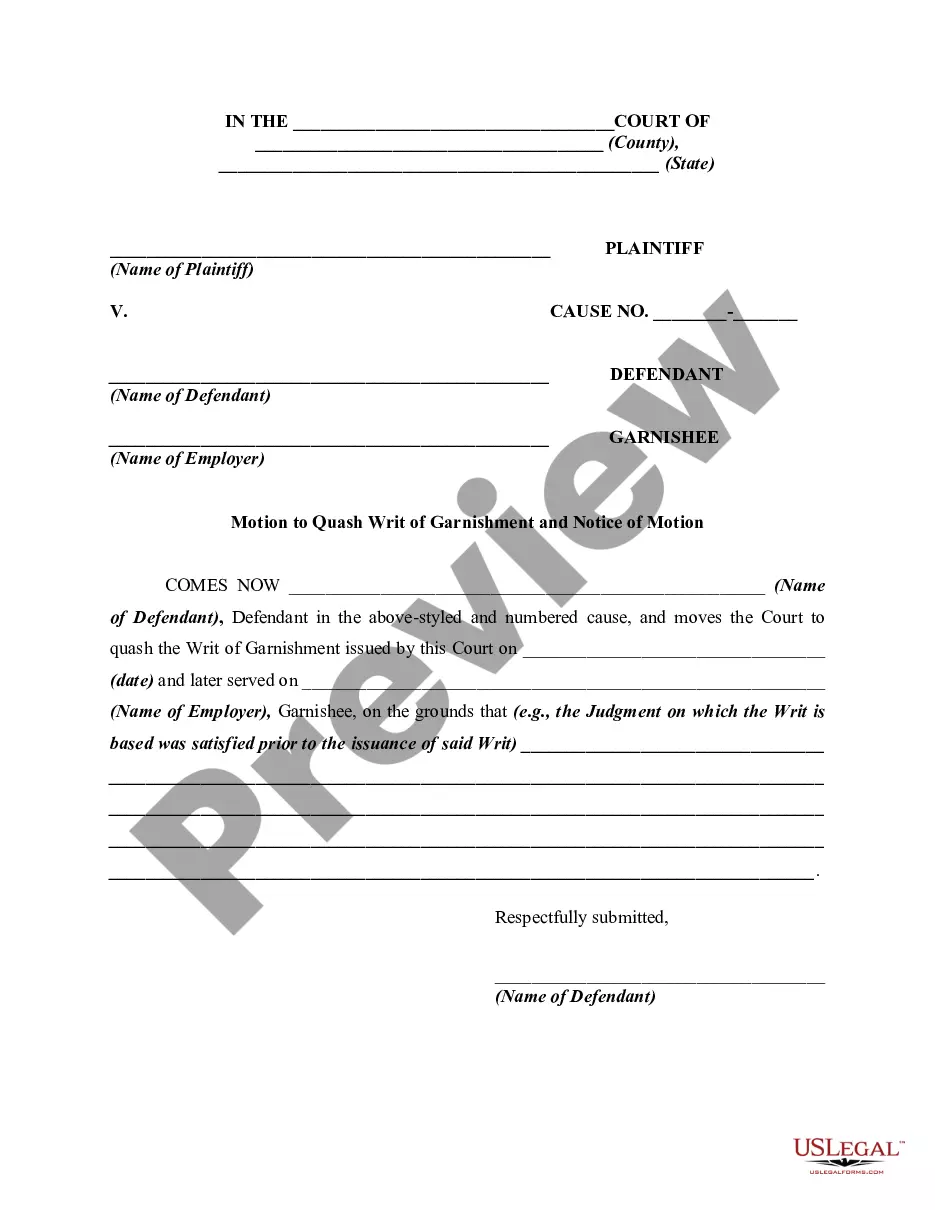
How to fill out Motion To Discharge Or Quash Writ Of Garnishment?
Regardless of whether for corporate reasons or personal affairs, everyone must handle legal issues at some stage in their life.
Filling out legal forms requires meticulous care, starting from selecting the appropriate form template.
With a vast catalog from US Legal Forms available, you will never have to waste time searching for the right template online. Utilize the library's user-friendly navigation to discover the suitable form for any circumstance.
- Locate the template you require by using the search box or browsing the catalog.
- Examine the document's description to ensure it aligns with your circumstances, state, and county.
- Click on the preview of the form to inspect it.
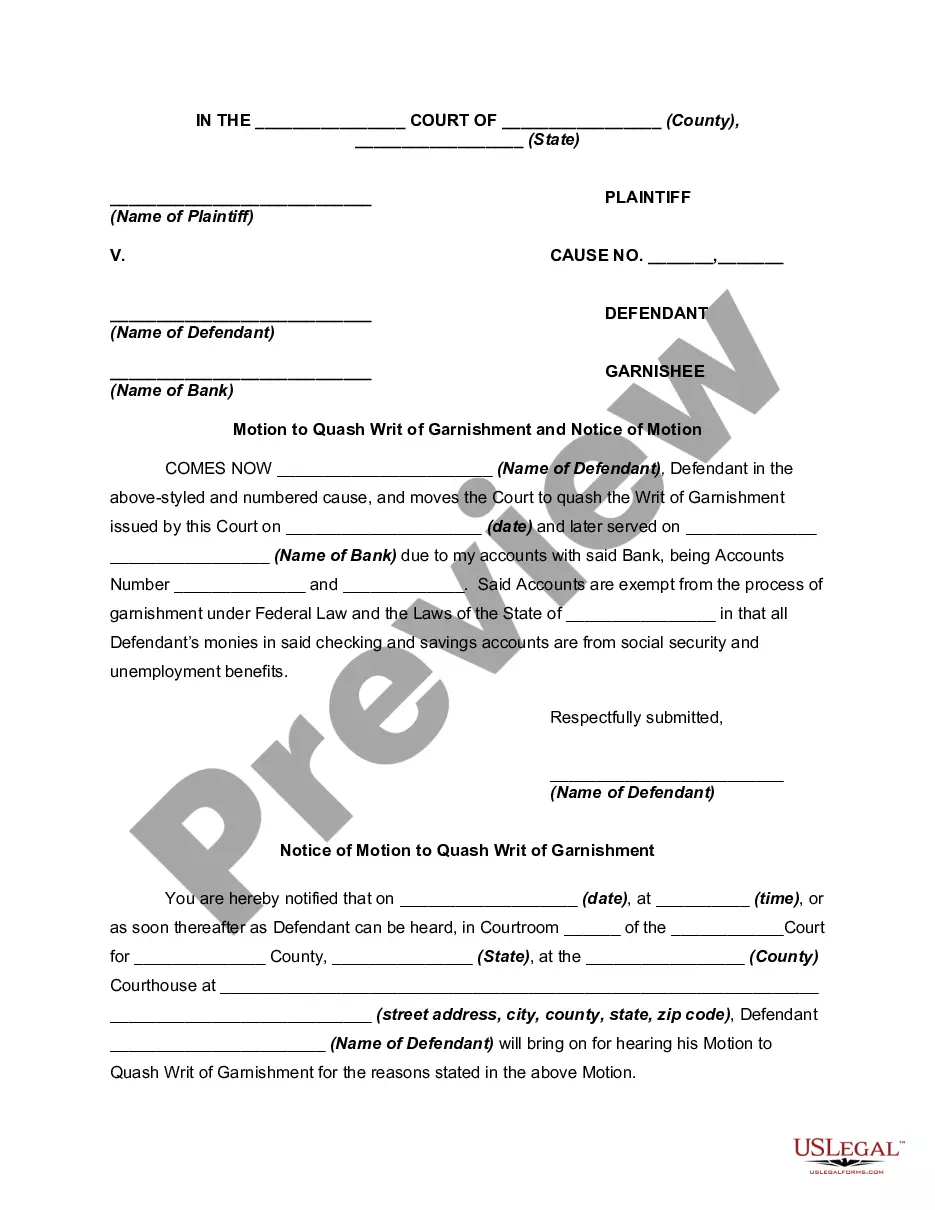
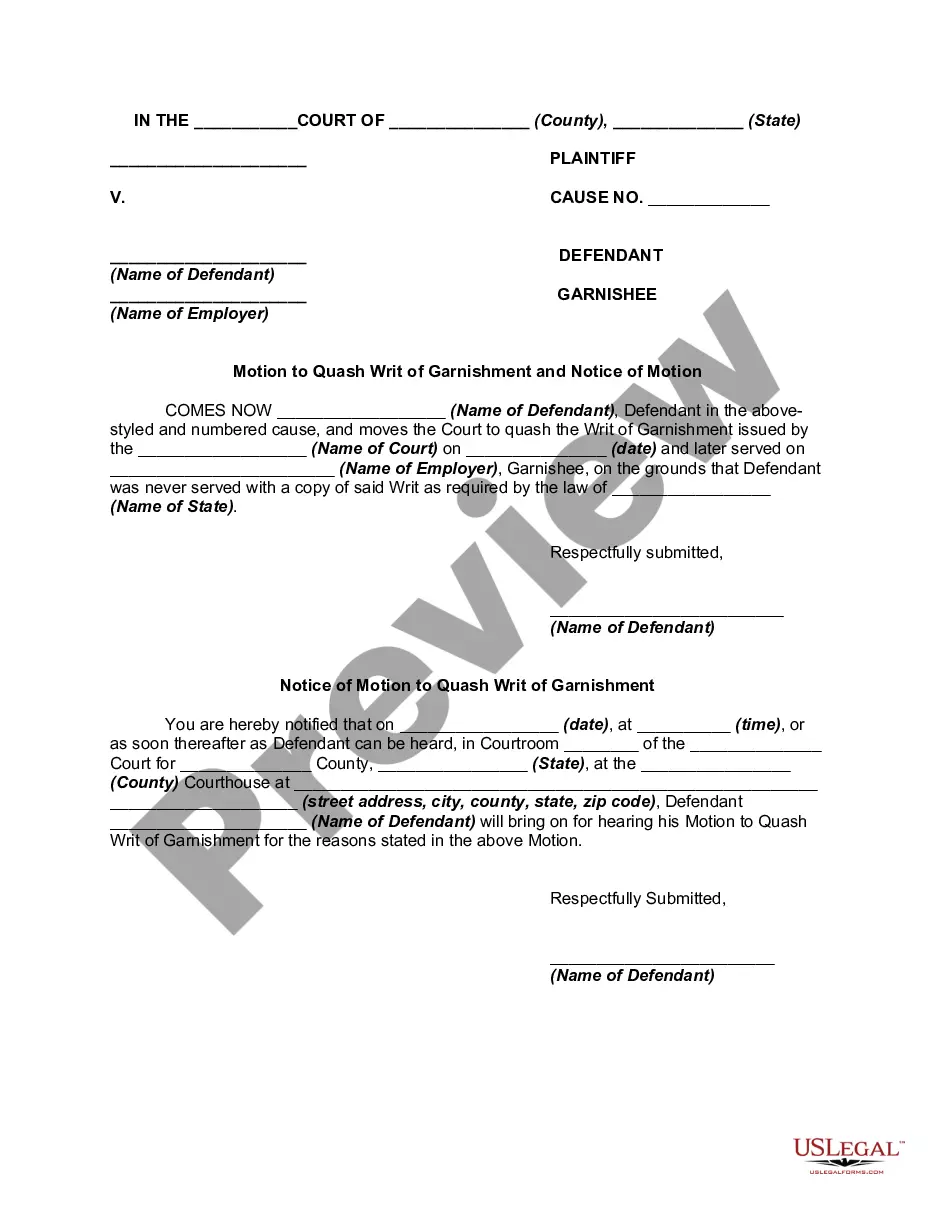
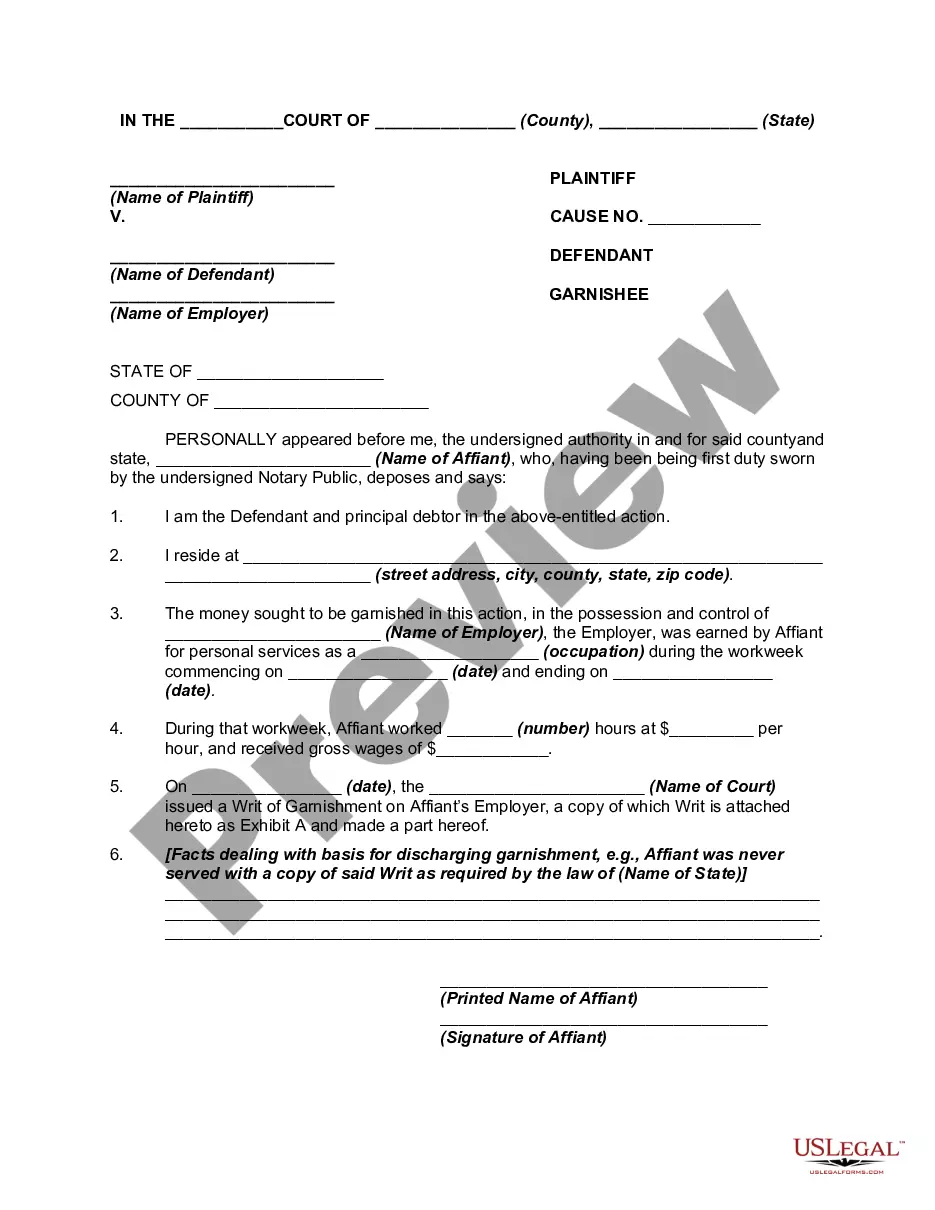
- If it is not the correct document, return to the search option to find the Garnishment Form Virginia template you need.
- Acquire the template if it fulfills your criteria.
- If you already possess a US Legal Forms account, simply click Log in to access previously stored templates in My documents.
- In case you do not have an account yet, you can obtain the form by clicking Buy now.
- Select the appropriate pricing option.
- Complete the profile registration form.
- Choose your payment method: either use a credit card or a PayPal account.
- Select the desired document format and download the Garnishment Form Virginia.
- After saving it, you can fill the form using editing software or print it out and fill it out manually.
Form popularity
FAQ
The most that can be garnished from your paycheck in Virginia is typically 25% of your disposable earnings. However, if your disposable income is low, the amount may be adjusted. Courts consider your financial situation and basic living needs before determining the garnishment rate. Familiarizing yourself with the garnishment form Virginia will help ensure that you understand your rights and the limits of garnishment.
To write a letter of garnishment for wages, start by including the creditor's information and the garnishee’s details. Clearly state the amount owed and reference the court's decision supporting the garnishment. Provide instructions on where to send the deducted funds and any deadlines for compliance. Utilizing the garnishment form Virginia ensures that you follow local legal requirements in this process.
In Virginia, garnishment laws limit the amount that can be taken from an employee's wages. Generally, the maximum is 25% of disposable earnings or the amount by which weekly wages exceed 30 times the federal minimum wage. Employees must be notified before garnishment begins, allowing them to respond appropriately. For specific forms and procedures, the garnishment form Virginia serves as a crucial resource.
Notifying an employee of wage garnishment involves providing them with a copy of the garnishment order. Include information about the garnishment's purpose, the amount, and how it will affect their paychecks. It's important to handle this communication sensitively and professionally. Additionally, mention that they can utilize the garnishment form Virginia for any related documentation.
To write a hardship letter for wage garnishment, you should clearly explain your financial situation. Detail your income, essential expenses, and any challenging circumstances you face. Ensure you request a reconsideration of the garnishment and include relevant personal information. You may also want to include a reference to the garnishment form Virginia to highlight your compliance with local regulations.
Filing a garnishment in Virginia starts with completing the necessary paperwork, including the garnishment form Virginia, which outlines the debt owed and the individuals involved. You will need to submit this form to the appropriate court along with any required fees. Once filed, a court summons will notify the debtor. Proper guidance and tools can make this process straightforward, ensuring all legal requirements are met.
To effectively stop a garnishment, consider addressing the issue with the creditor directly and negotiating a repayment plan. Additionally, you may need to file a motion to contest the garnishment if you believe it's unjust. Using resources like the garnishment form Virginia can simplify the process and aid in formally requesting a halt. Understanding your rights can empower you to take the necessary steps towards financial relief.
The formula for calculating garnishment generally considers your disposable income and specific legal limits. Disposable income is what remains after mandatory deductions like taxes and social security are removed from your earnings. In Virginia, the garnishment form Virginia outlines these calculations, ensuring that creditors do not take more than the law allows, protecting your standard of living.
Writing an objection letter for wage garnishment involves clearly stating your reasons for the objection. Begin by addressing the court and providing your case number, then detail why the garnishment should not proceed, such as financial hardship or inaccuracies in the garnishment form Virginia. Be sure to include supporting documents and requests for a hearing if applicable, ensuring that all points are presented professionally.
To file a garnishment in Virginia, you need to prepare the necessary documents and submit them to the appropriate court. You'll typically require a completed garnishment form Virginia, specific case details, and any related fees. Using our platform can simplify the filing process and ensure you provide the required information effectively.