Trust Child
Description






Get your form ready online
Our built-in tools help you complete, sign, share, and store your documents in one place.
Make edits, fill in missing information, and update formatting in US Legal Forms—just like you would in MS Word.
Download a copy, print it, send it by email, or mail it via USPS—whatever works best for your next step.
Sign and collect signatures with our SignNow integration. Send to multiple recipients, set reminders, and more. Go Premium to unlock E-Sign.
If this form requires notarization, complete it online through a secure video call—no need to meet a notary in person or wait for an appointment.
We protect your documents and personal data by following strict security and privacy standards.

Make edits, fill in missing information, and update formatting in US Legal Forms—just like you would in MS Word.

Download a copy, print it, send it by email, or mail it via USPS—whatever works best for your next step.

Sign and collect signatures with our SignNow integration. Send to multiple recipients, set reminders, and more. Go Premium to unlock E-Sign.

If this form requires notarization, complete it online through a secure video call—no need to meet a notary in person or wait for an appointment.

We protect your documents and personal data by following strict security and privacy standards.
Looking for another form?









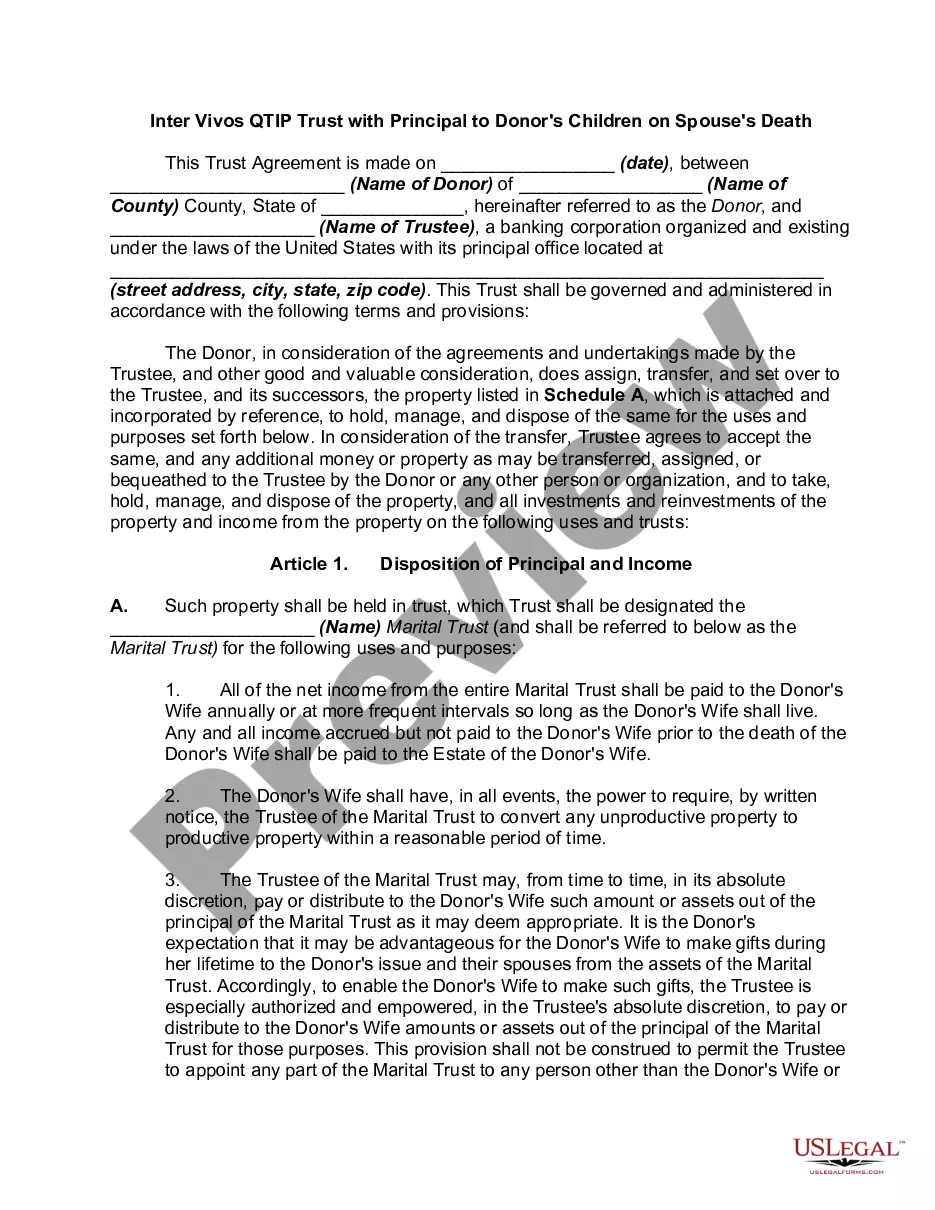
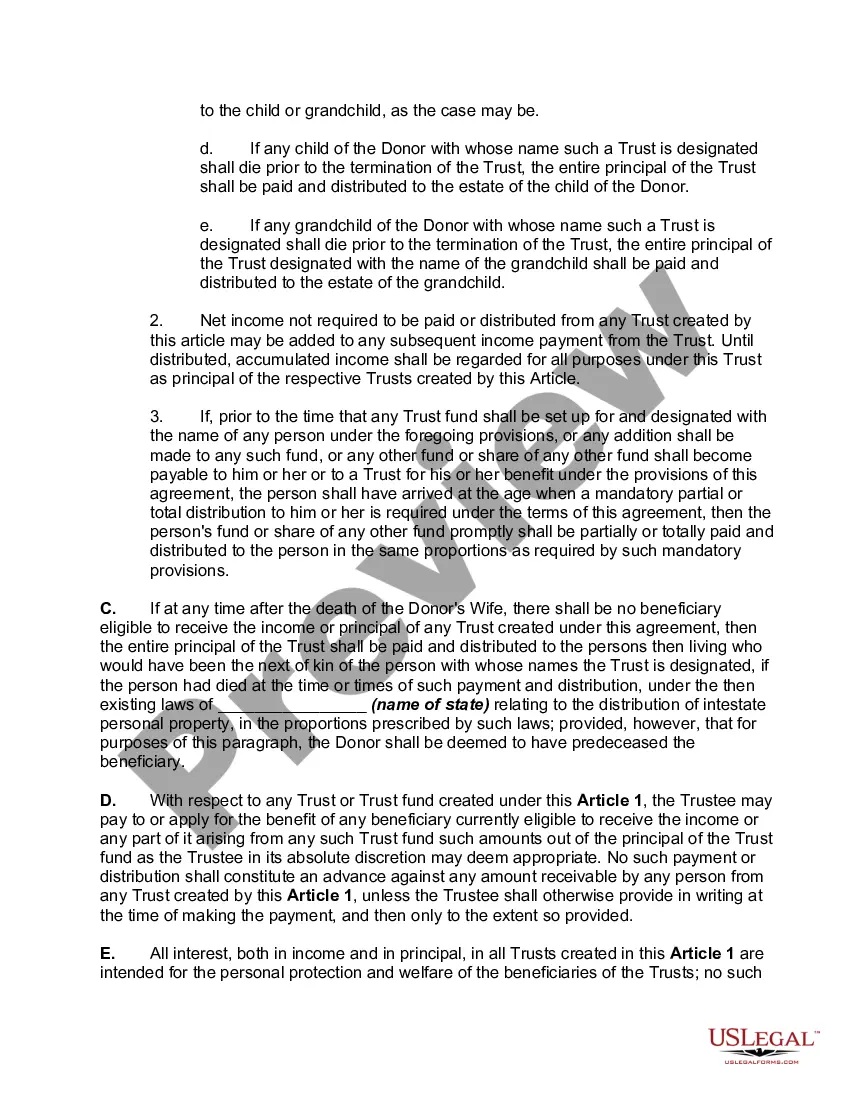
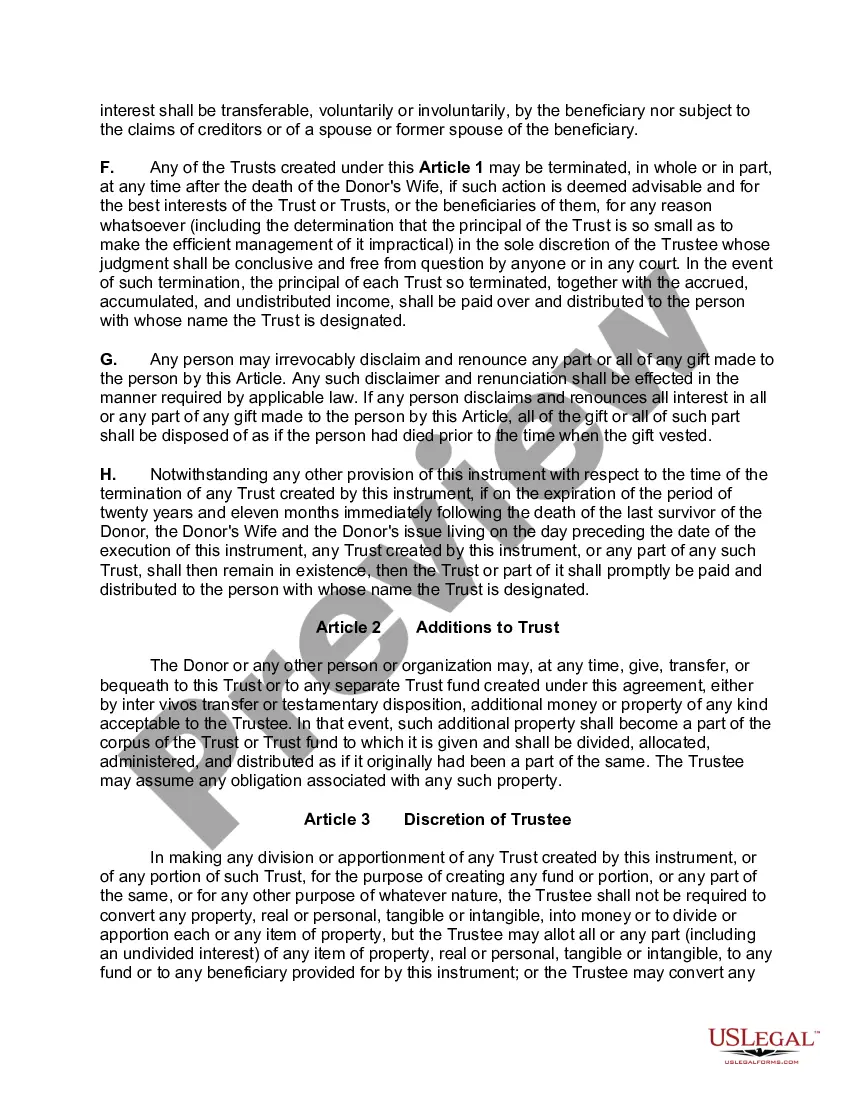
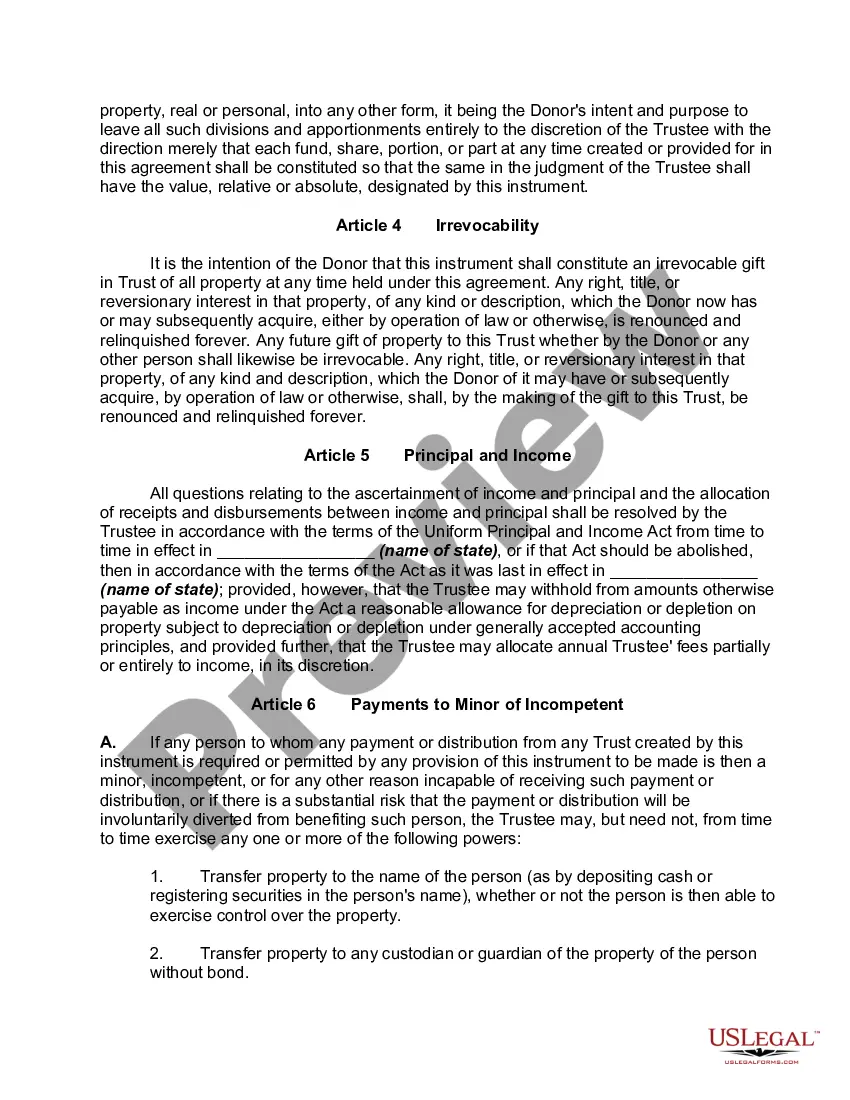
How to fill out Inter Vivos QTIP Trust With Principal To Donor's Children On Spouse's Death?
- If you're a returning user, log into your account and ensure your subscription is up to date before downloading your selected form.
- For first-time users, begin by previewing the form descriptions to ensure you select one that aligns with your requirements and legal jurisdiction.
- If you need to adjust your selection, utilize the Search feature above to locate the most suitable template.
- Once you find the correct document, click the Buy Now button and select your preferred subscription plan, which requires account registration for access.
- Proceed with your purchase by inputting your payment information via credit card or PayPal.
- After the transaction, download and save your form to your device. You can always access it later in the My Forms section of your profile.
By using US Legal Forms, you empower yourself with access to more legal documents than competitors offer, giving you flexibility and confidence in your legal matters.
Start today and experience the simplicity of obtaining legal forms with US Legal Forms. Your legal document needs deserve the best!
Form popularity
FAQ
A trust kid is essentially a child whose upbringing focuses on building trust and autonomy within safe boundaries. This approach encourages children to develop confidence and decision-making skills. By nurturing trust in your child, you empower them to navigate life's challenges positively and independently.
Taking a child with behavioral problems to the right place can make a significant difference. Options include therapy sessions with licensed counselors, family support programs, or even residential treatment facilities. Choosing the right path for your trust child depends on their specific challenges and your goals for their development.
For a child exhibiting behavior problems, options vary widely depending on the severity of the issues. Specialized programs, including behavior modification schools, can provide a structured environment. It’s essential to evaluate each option carefully to find the best fit for your trust child and their individual needs.
If you are considering options for a child with bad behavior, there are several programs and facilities designed to help. Look for behavioral therapy centers or supportive schools that focus on emotional and social development. Additionally, discussing your situation with child behavioral specialists can lead to resources tailored for your trust child.
Addressing bad behavior in a child can be challenging. One effective approach is to establish clear expectations and consistent consequences. It is also important to communicate openly with your trust child, ensuring they understand their actions and the impact on others. Seeking professional guidance can provide additional strategies to foster better behavior.
Establishing a trust for a child is a vital step in securing their financial future. Begin by determining the purpose of the trust and the assets you wish to include. Hiring a legal expert can simplify the process and ensure that your trust serves your child's best interests. Platforms like US Legal Forms offer valuable resources to help navigate this important task.
Disciplining a difficult child should focus on teaching rather than punishment. Set clear boundaries and expectations, and consistently enforce consequences when those limits are crossed. Use positive reinforcement to encourage good behavior, while also explaining the reasons behind your disciplinary measures. A balanced approach fosters trust child dynamics in your relationship.
Building trust with a child requires patience and consistency. Spend quality time together doing activities they enjoy, and always be available to listen. Show them that you understand and respect their feelings by being honest and reliable. Over time, these efforts create a foundation of trust that strengthens your relationship.
When a child doesn't trust you, it is important to listen without judgment. Encourage honest conversations that allow your child to express their feelings. Share your thoughts and emotions, creating a safe space where trust can rebuild. Taking small, consistent actions to show your reliability will help them learn to trust you again.
Many parents mistakenly underestimate the importance of regular updates to their trust child arrangements. A trust that reflects outdated wishes may not serve its intended purpose. It is crucial to stay informed about your family's circumstances and the children's needs, ensuring that the trust fund is relevant and beneficial as time goes on. Consulting with a legal expert can also prevent costly mistakes.