Inter Vivos Trust Form Withdrawal
Description

Get your form ready online
Our built-in tools help you complete, sign, share, and store your documents in one place.
Make edits, fill in missing information, and update formatting in US Legal Forms—just like you would in MS Word.
Download a copy, print it, send it by email, or mail it via USPS—whatever works best for your next step.
Sign and collect signatures with our SignNow integration. Send to multiple recipients, set reminders, and more. Go Premium to unlock E-Sign.
If this form requires notarization, complete it online through a secure video call—no need to meet a notary in person or wait for an appointment.
We protect your documents and personal data by following strict security and privacy standards.

Make edits, fill in missing information, and update formatting in US Legal Forms—just like you would in MS Word.

Download a copy, print it, send it by email, or mail it via USPS—whatever works best for your next step.

Sign and collect signatures with our SignNow integration. Send to multiple recipients, set reminders, and more. Go Premium to unlock E-Sign.

If this form requires notarization, complete it online through a secure video call—no need to meet a notary in person or wait for an appointment.

We protect your documents and personal data by following strict security and privacy standards.
Looking for another form?








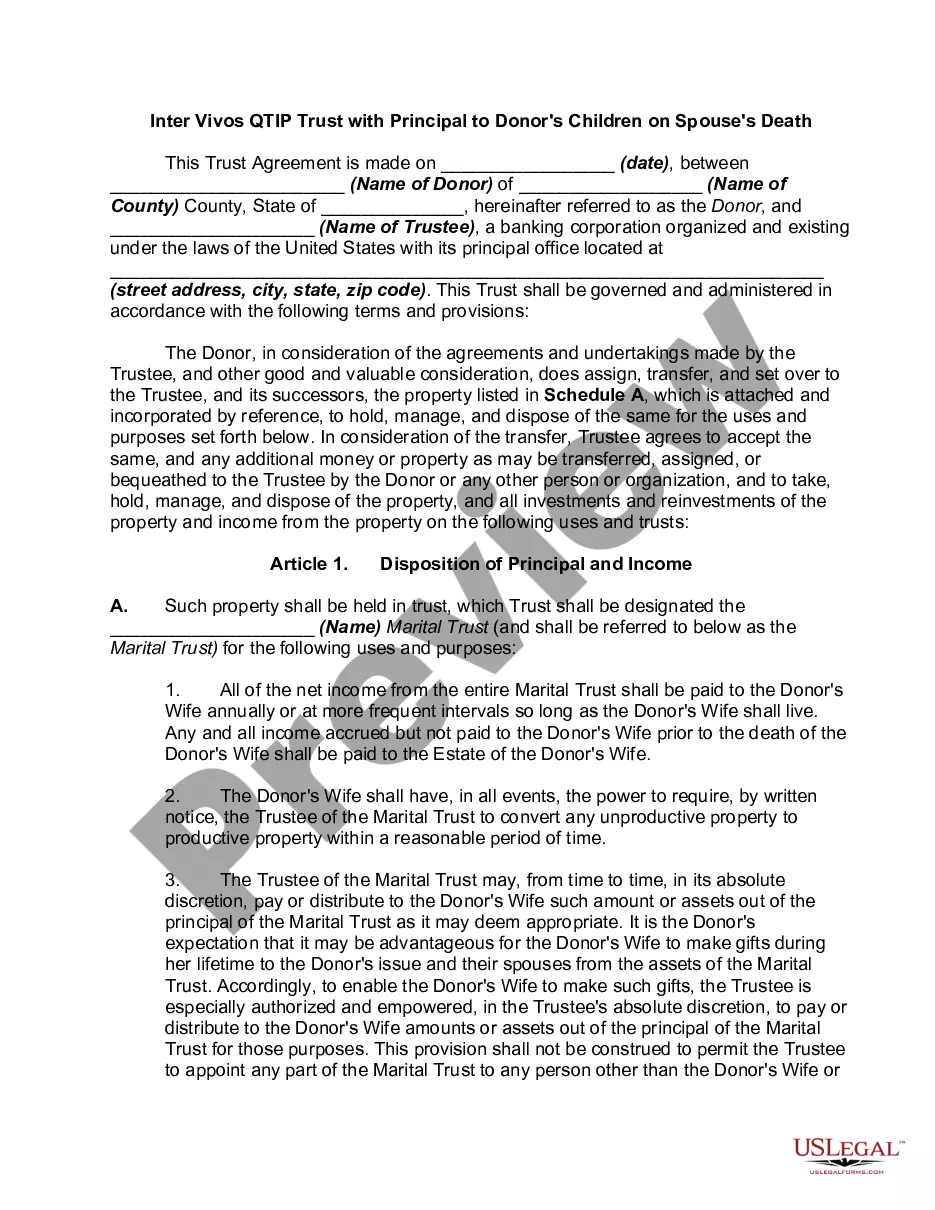
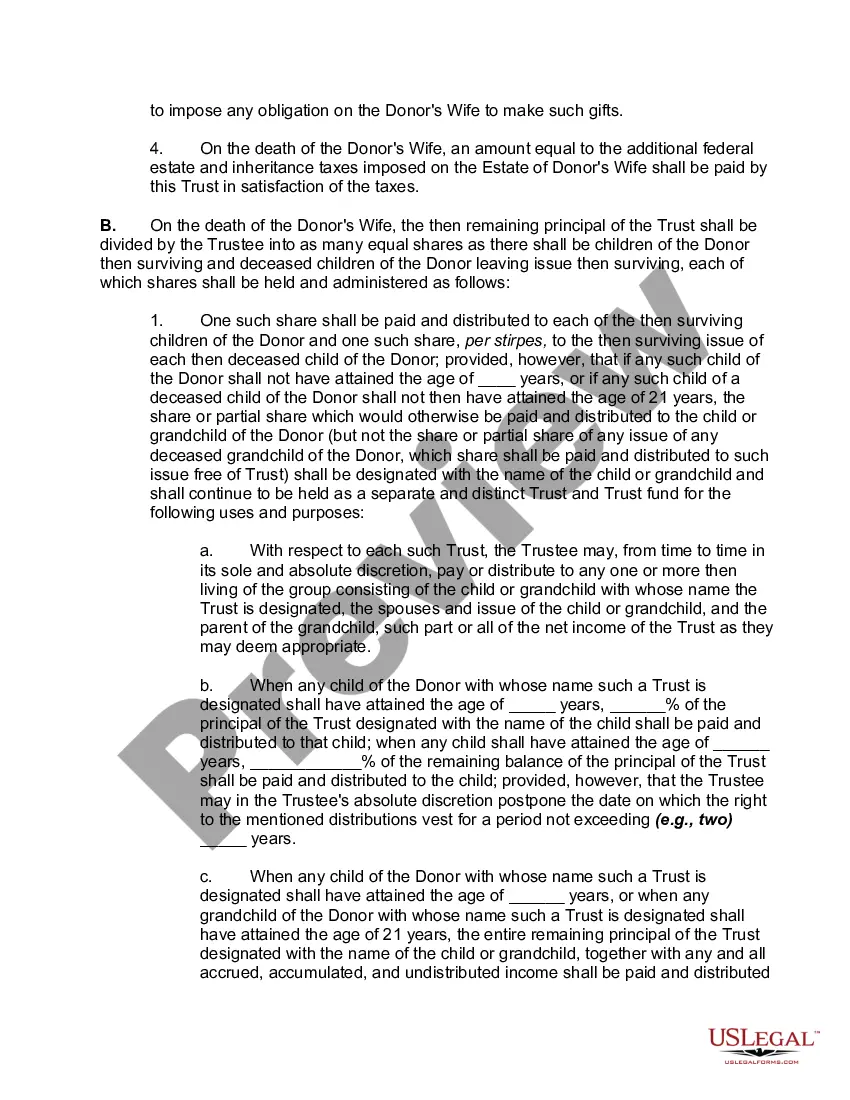
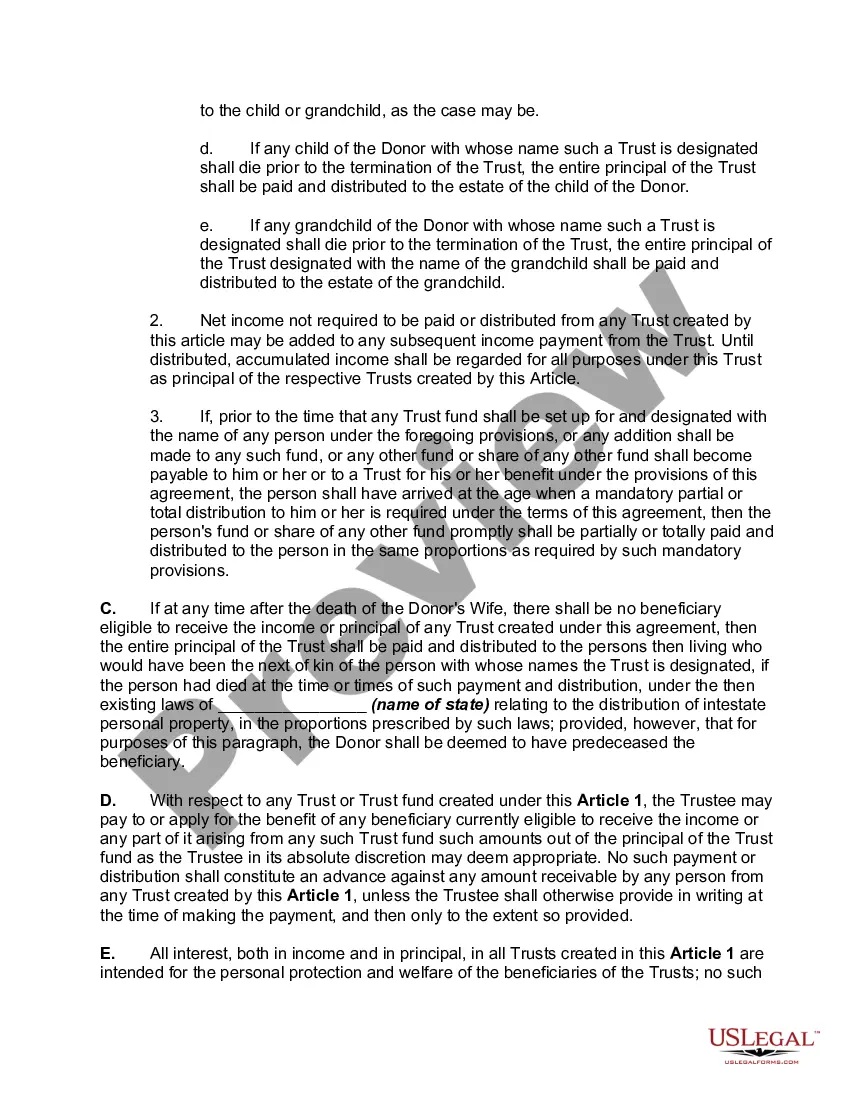
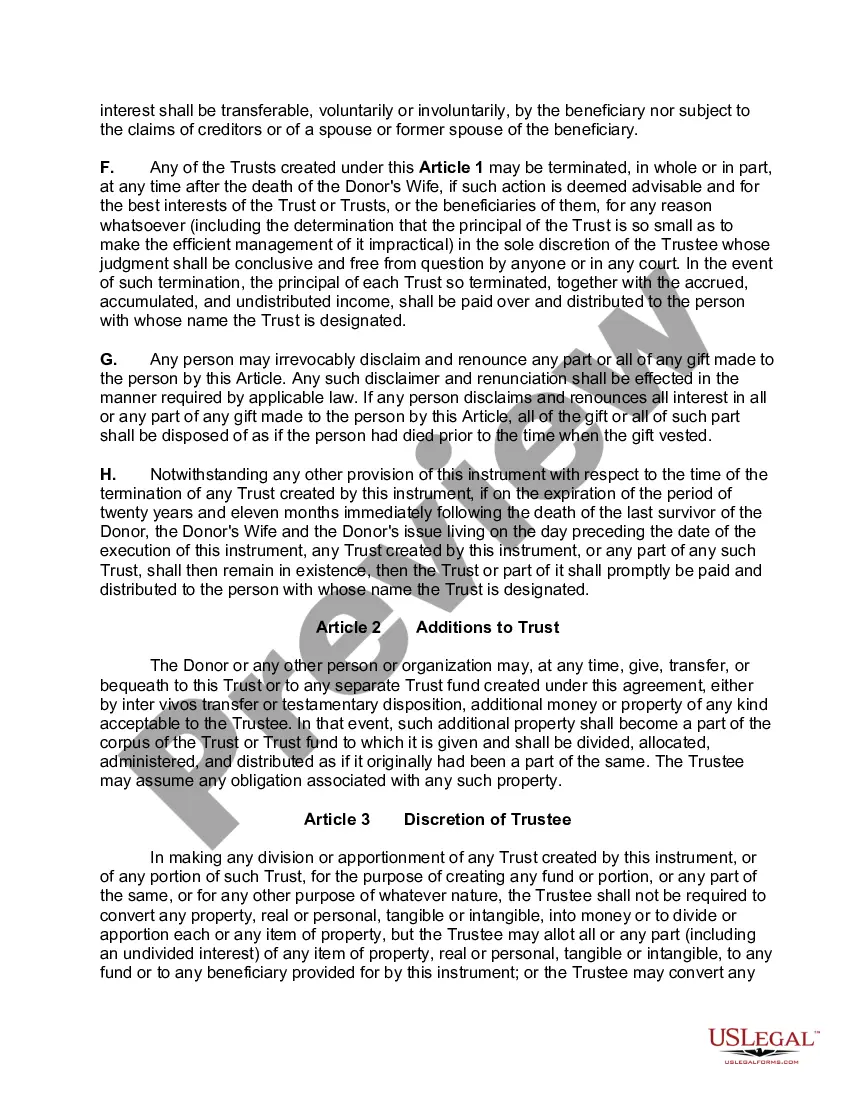
How to fill out Inter Vivos QTIP Trust With Principal To Donor's Children On Spouse's Death?
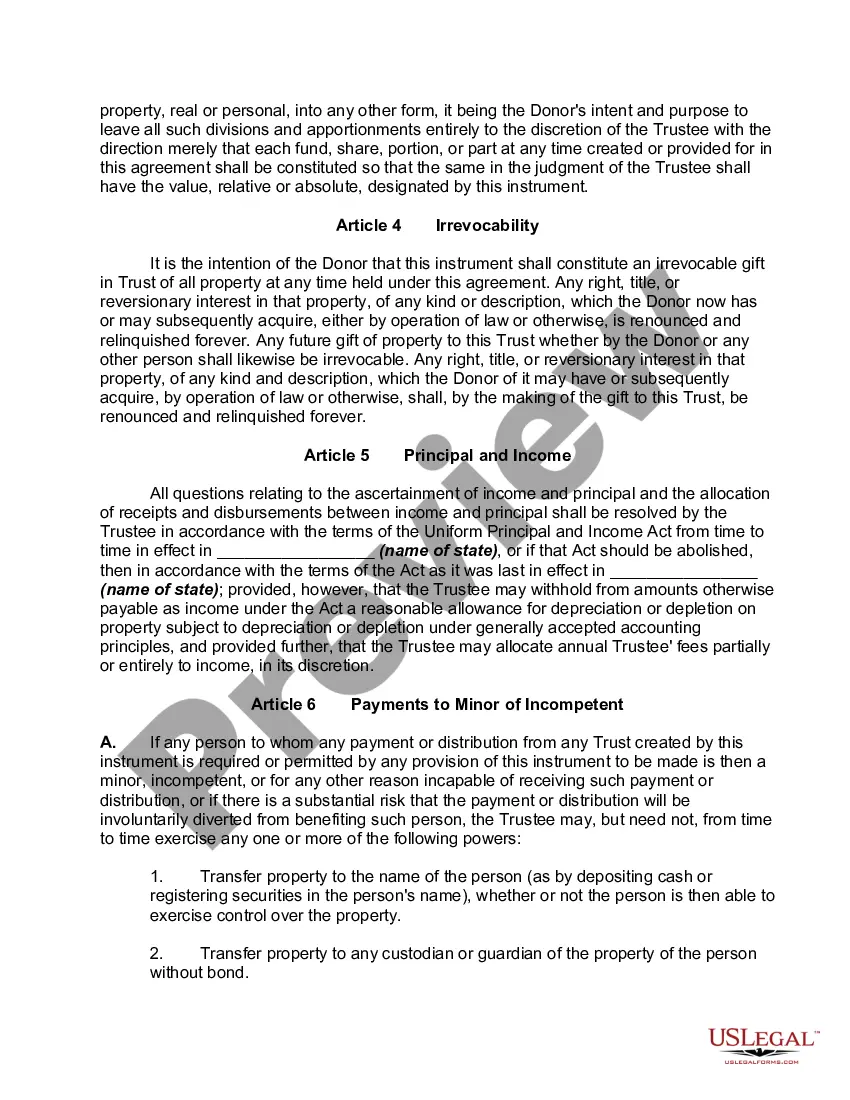
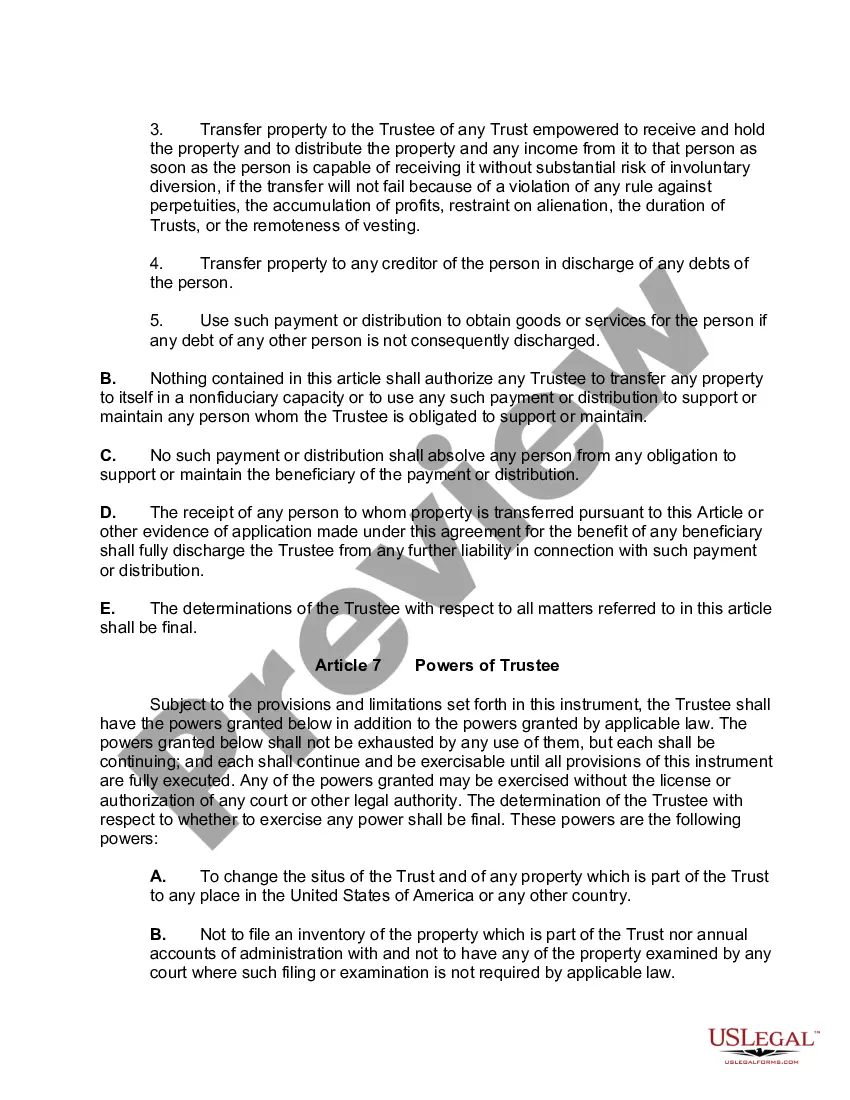
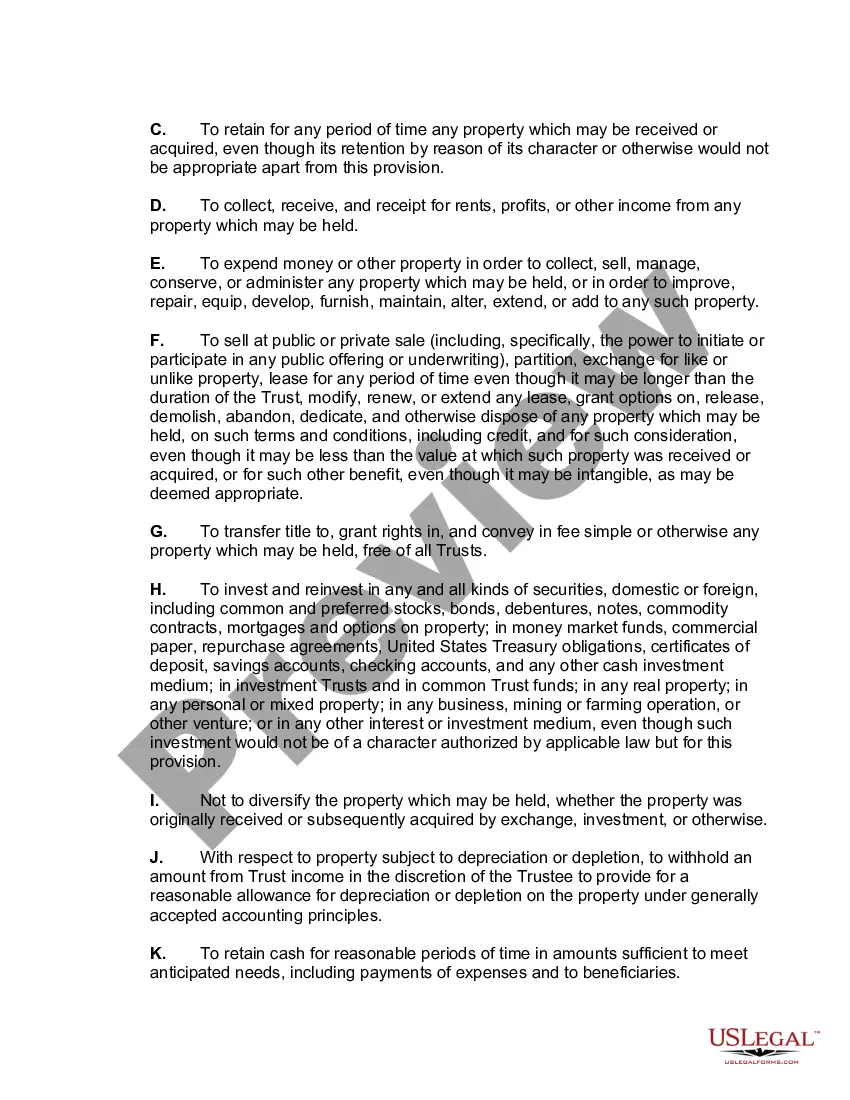
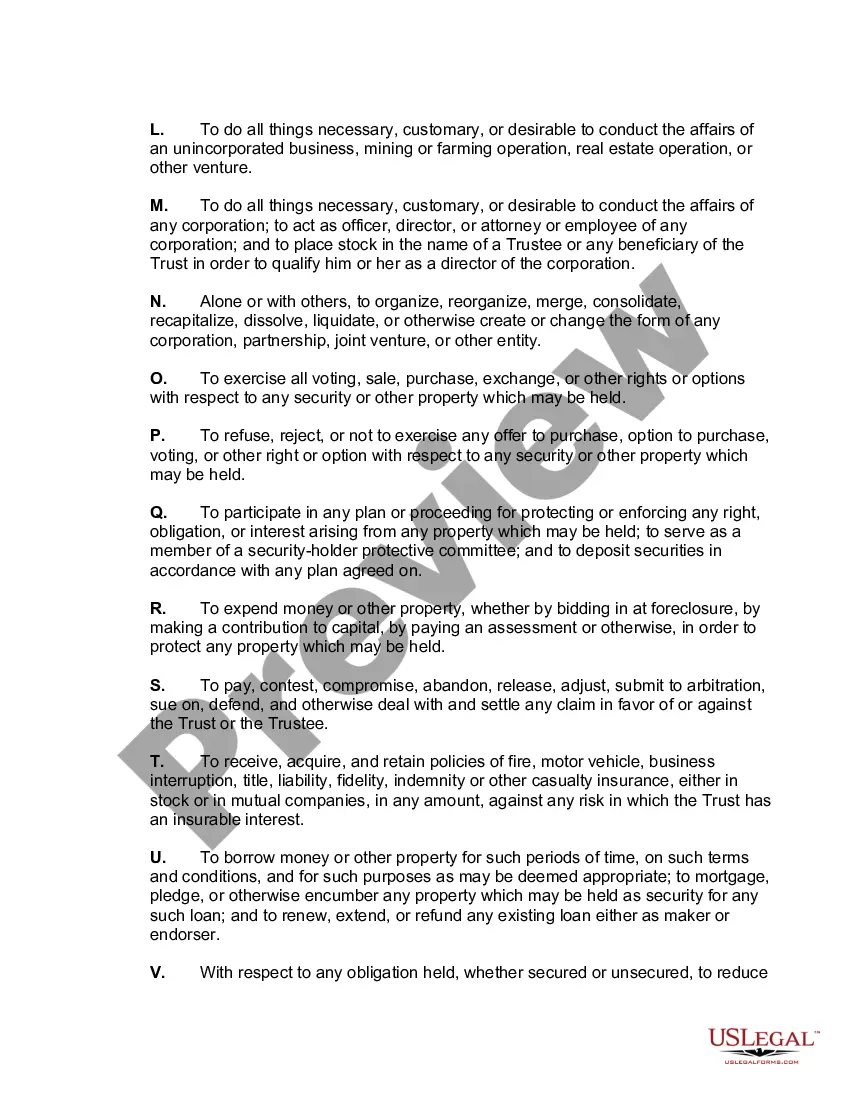
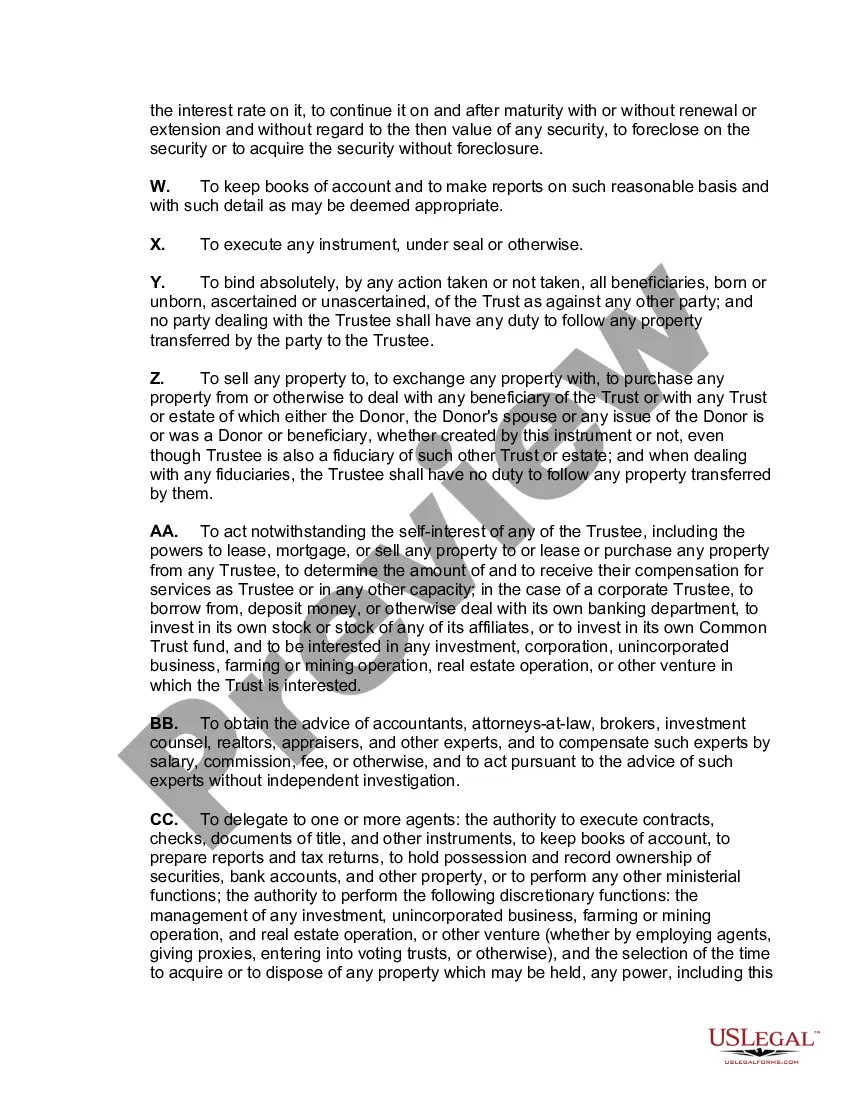
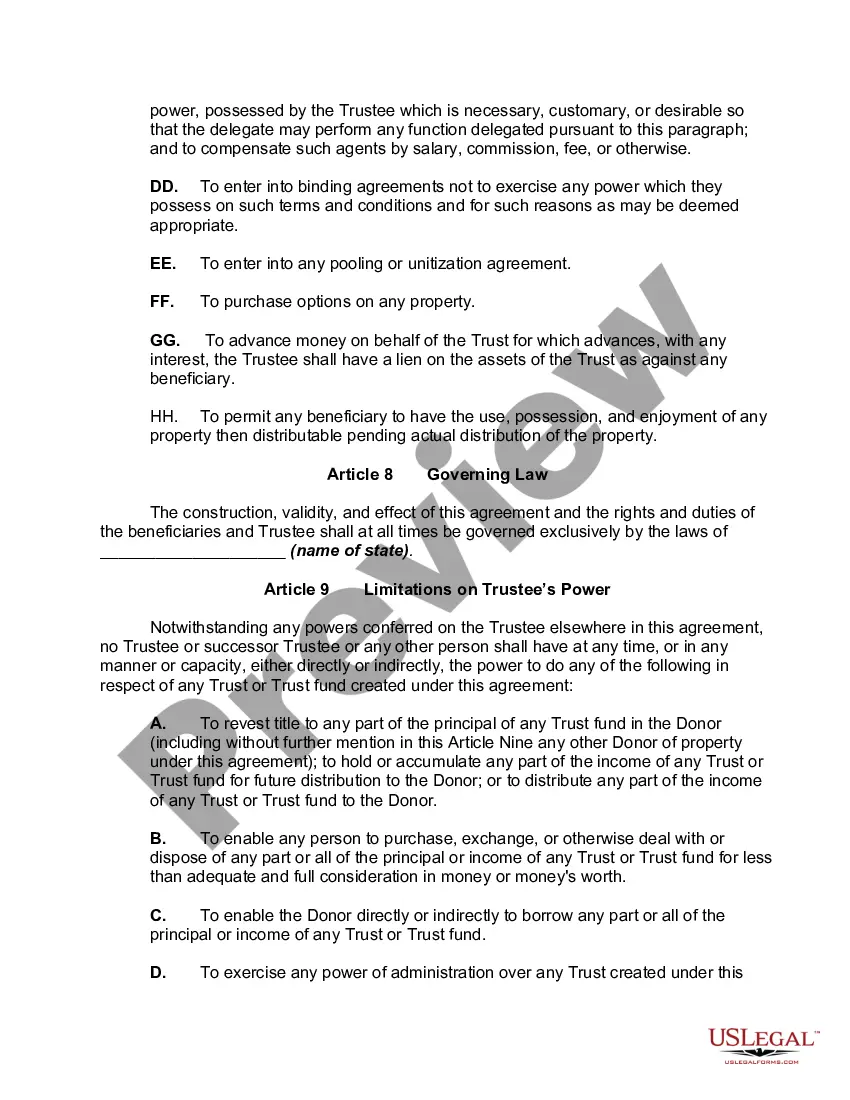
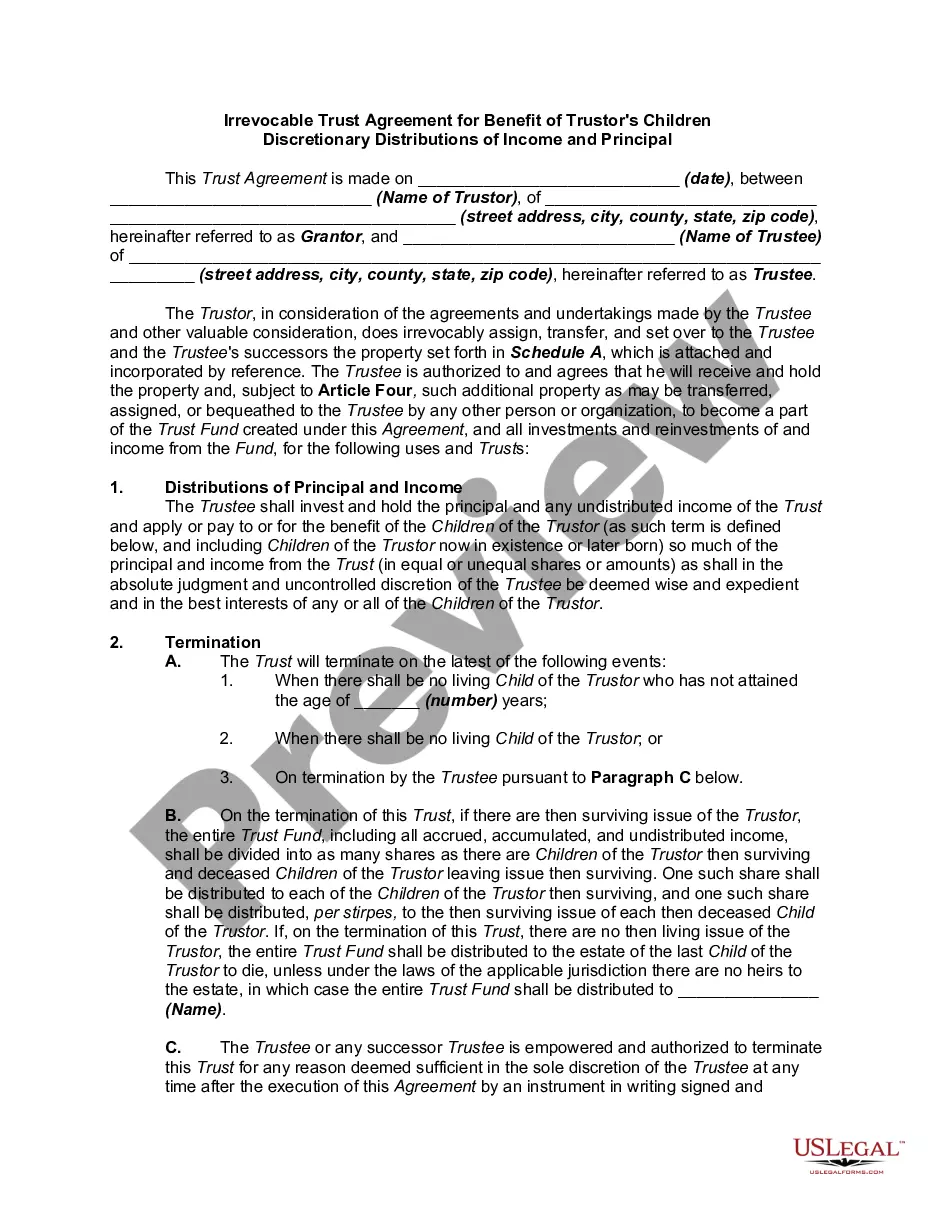
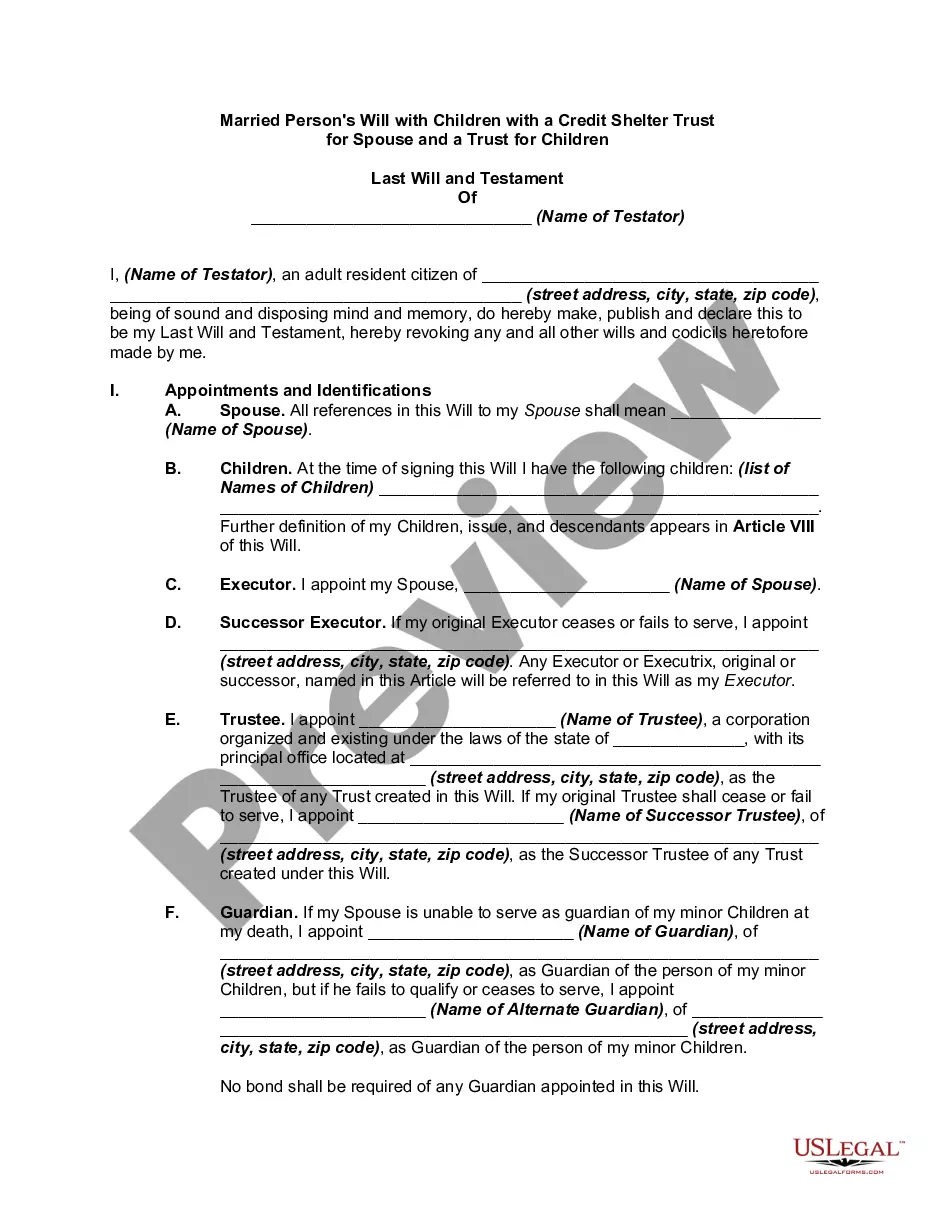
The Inter Vivos Trust Form Withdrawal that you find on this page is a versatile legal template crafted by experienced attorneys in accordance with federal and state regulations.
For over 25 years, US Legal Forms has offered individuals, companies, and lawyers a collection of over 85,000 authenticated, state-specific documents for any business and personal situation. It’s the quickest, simplest, and most reliable way to acquire the documentation you require, as the service ensures bank-level data security and anti-malware safeguards.
Subscribe to US Legal Forms to have confirmed legal templates available for all of life’s scenarios.
- Search for the document you require and examine it.
- Browse through the file you searched and preview it or review the form description to confirm it meets your needs. If it does not, utilize the search function to locate the appropriate one. Click Buy Now when you have identified the template you need.
- Register and Log In.
- Choose the pricing option that works for you and create an account. Use PayPal or a credit card for a swift transaction. If you already have an account, Log In and verify your subscription to proceed.
- Acquire the editable template.
- Choose the format you prefer for your Inter Vivos Trust Form Withdrawal (PDF, Word, RTF) and download the document to your device.
- Complete and sign the documents.
- Print the template to fill it out manually. Alternatively, use an online multi-functional PDF editor to quickly and accurately fill out and sign your form digitally.
- Download your documents again.
- Re-access the same document whenever necessary. Open the My documents tab in your account to redownload any previously purchased forms.
Form popularity
FAQ
One significant disadvantage of an inter vivos trust is the potential for higher initial costs due to legal fees for setting it up. Additionally, once you create this trust and execute an inter vivos trust form withdrawal, you may lose control over the assets placed in the trust. Moreover, if not managed properly, the trust can lead to complications during tax time. Utilizing platforms like US Legal Forms can help simplify the process, ensuring that you understand these disadvantages and make informed decisions.
You can find a trust amendment form through various online resources, but using a trusted platform like US Legal Forms ensures you receive a reliable and compliant document. The process of inter vivos trust form withdrawal may require specific legal language that our forms provide. Additionally, you can easily navigate through our selection to find the amendment form that suits your needs. Accessing these forms online makes it convenient for you to manage your trust documents effectively.
Filling out a beneficiary form for a trust involves several steps. First, identify the trust and its terms, as these outline how assets are to be distributed. Next, clearly list the beneficiaries, including their names, relationships to the grantor, and their share of the trust. It is essential to ensure that you follow the guidelines for an inter vivos trust form withdrawal, as this will help prevent potential disputes and ensure that the trust operates smoothly.
Yes, you can withdraw funds from a trust, but it depends on the type of trust and its specific terms. For example, in an inter vivos trust, the grantor may have set conditions for how funds can be accessed. To ensure compliance and proper handling of your withdrawal, utilizing an Inter vivos trust form withdrawal is crucial. US Legal Forms provides a variety of resources to assist you in the process.
Withdrawing funds from a trust account involves a few essential steps. First, you need to review the terms outlined in the trust agreement, as these details specify how and when withdrawals can be made. Once you understand the requirements, you can complete a formal request or withdrawal form. If you need assistance or a proper Inter vivos trust form withdrawal, consider using US Legal Forms, which offers accurate and user-friendly templates.
Just choose your preferred account on the ATM screen. If you use the credit card function on your Trust card at an ATM, this means you are taking a cash advance. Note that supplementary cardholders cannot take out a cash advance. If you use the debit card function, you are withdrawing cash from your savings account.
' The five or five power is the power of the beneficiary of a trust to withdraw annually $5,000 or five percent of the assets of the trust.
Key Takeaways. Funds received from a trust are subject to different taxation than funds from ordinary investment accounts. Trust beneficiaries must pay taxes on income and other distributions from a trust. Trust beneficiaries don't have to pay taxes on returned principal from the trust's assets.
The grantor can opt to have the beneficiaries receive trust property directly without any restrictions. The trustee can write the beneficiary a check, give them cash, and transfer real estate by drawing up a new deed or selling the house and giving them the proceeds.
A 5 by 5 Power in Trust is a clause that lets the beneficiary make withdrawals from the trust on a yearly basis. The beneficiary can cash out $5,000 or 5% of the trust's fair market value each year, whichever is a higher amount.