Trespass Property Own For The Future
Description
Get your form ready online
Our built-in tools help you complete, sign, share, and store your documents in one place.
Make edits, fill in missing information, and update formatting in US Legal Forms—just like you would in MS Word.
Download a copy, print it, send it by email, or mail it via USPS—whatever works best for your next step.
Sign and collect signatures with our SignNow integration. Send to multiple recipients, set reminders, and more. Go Premium to unlock E-Sign.
If this form requires notarization, complete it online through a secure video call—no need to meet a notary in person or wait for an appointment.
We protect your documents and personal data by following strict security and privacy standards.

Make edits, fill in missing information, and update formatting in US Legal Forms—just like you would in MS Word.

Download a copy, print it, send it by email, or mail it via USPS—whatever works best for your next step.

Sign and collect signatures with our SignNow integration. Send to multiple recipients, set reminders, and more. Go Premium to unlock E-Sign.

If this form requires notarization, complete it online through a secure video call—no need to meet a notary in person or wait for an appointment.

We protect your documents and personal data by following strict security and privacy standards.
Looking for another form?

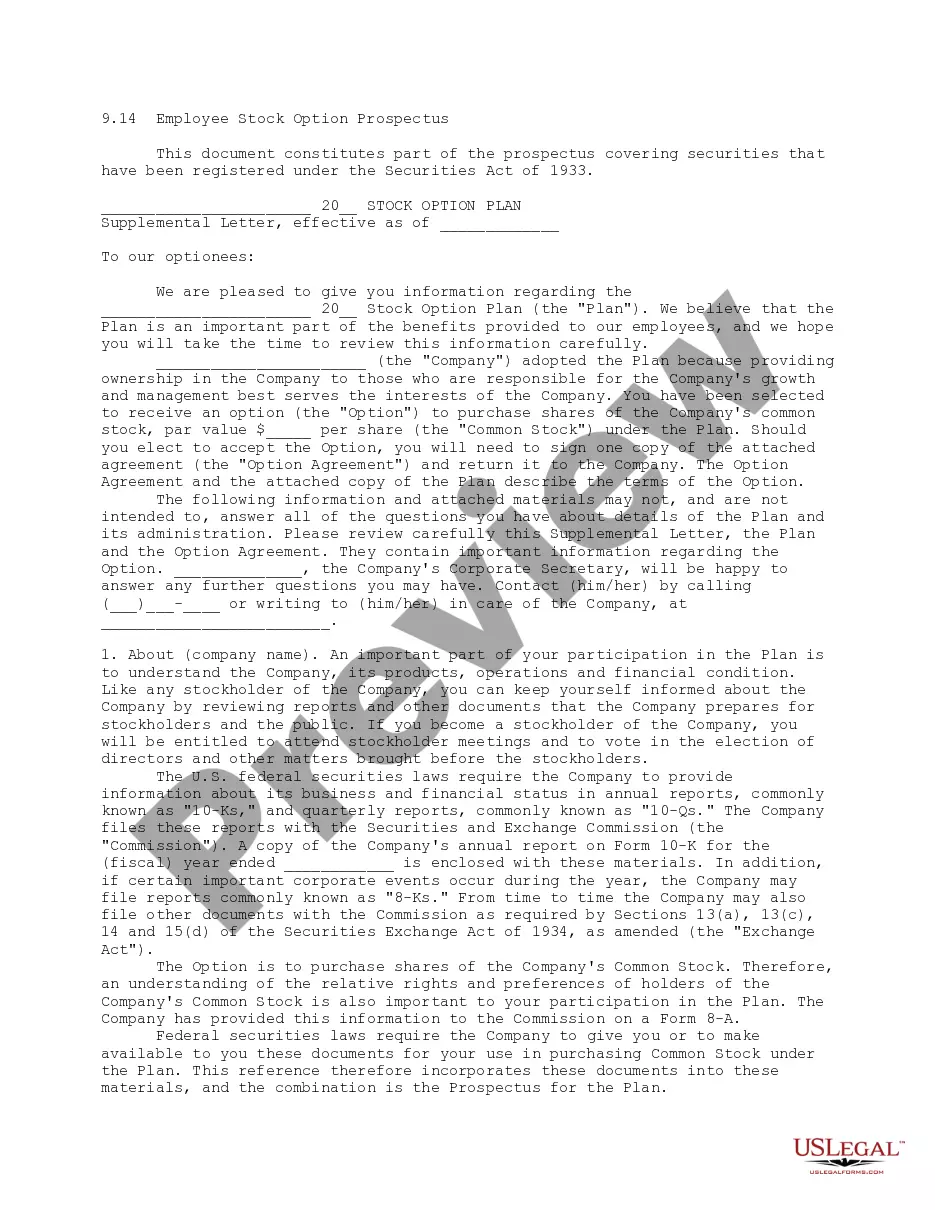
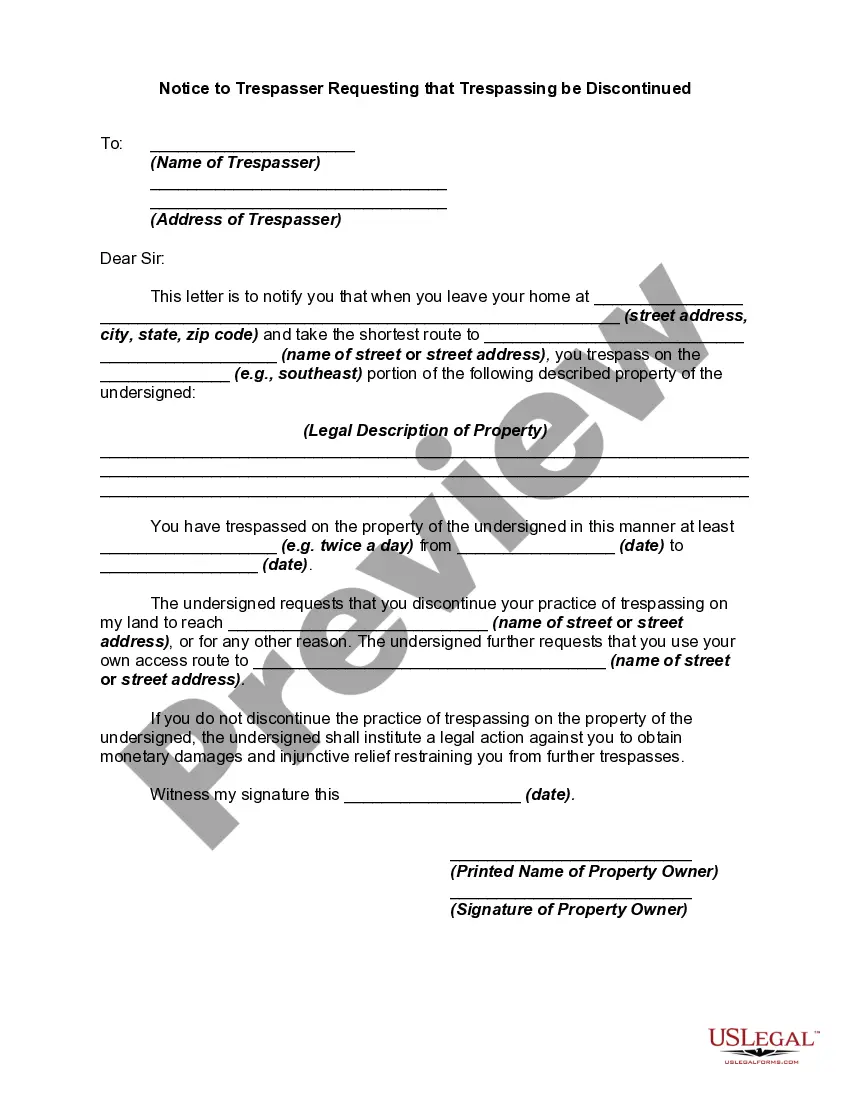
How to fill out Notice To Trespasser Requesting That Trespassing Be Discontinued?
- If you're a returning user, log in to your account to access your previously downloaded documents.
- Confirm that your subscription is active. If needed, renew it as per your existing payment plan.
- If you're a new user, start by browsing the extensive collection of over 85,000 templates in the US Legal Forms library.
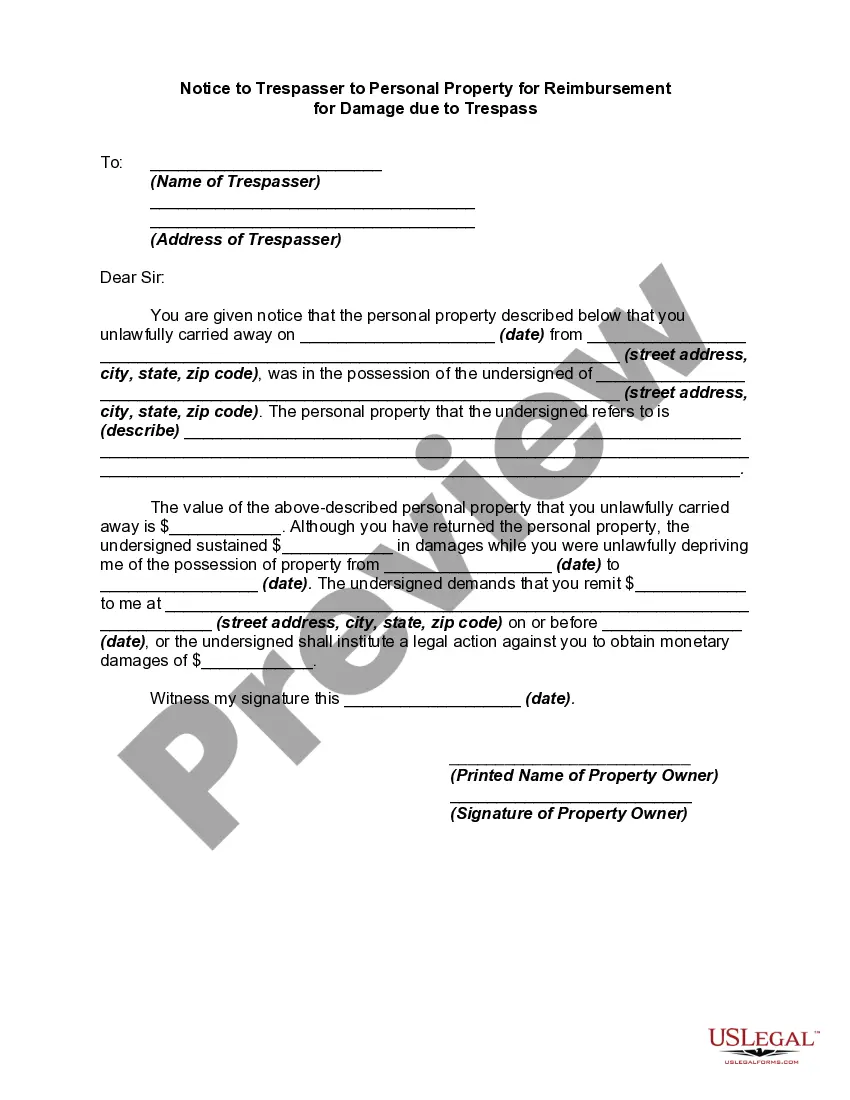
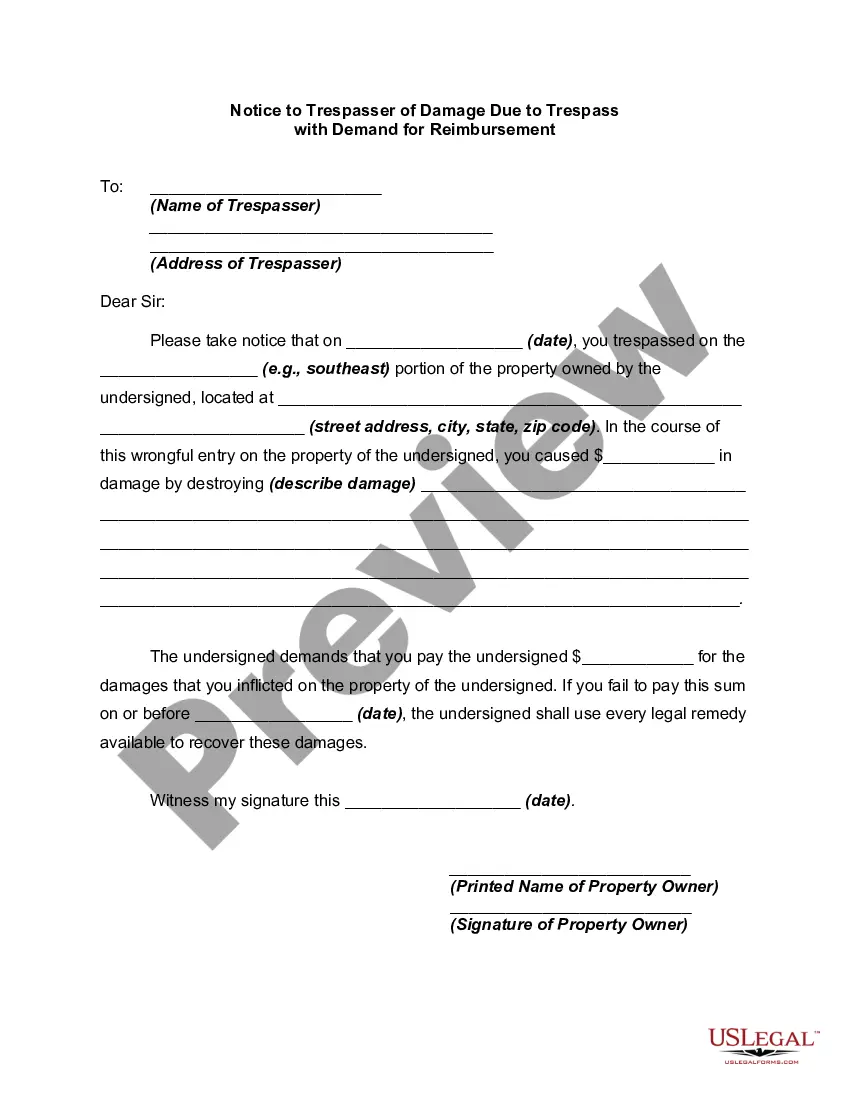
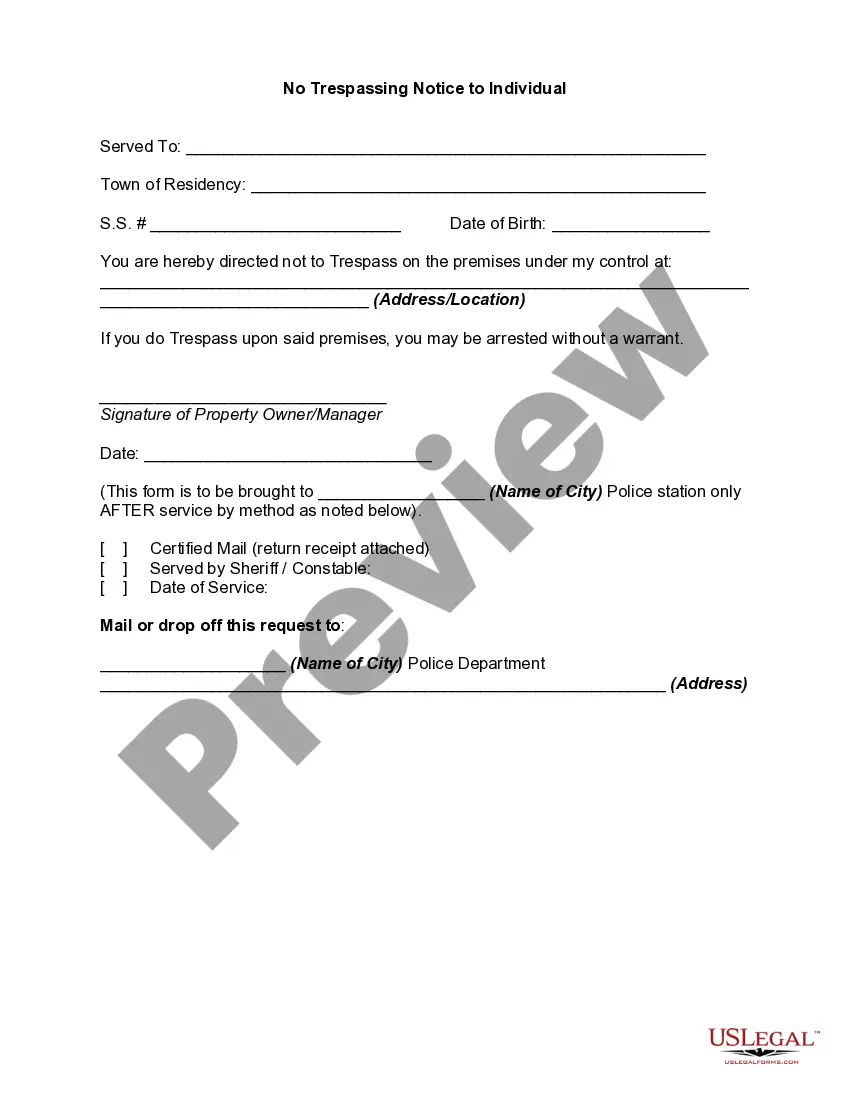
- Preview the document and review its description to ensure it aligns with your legal requirements.
- If you find discrepancies, utilize the Search tab to locate the correct form that suits your needs.
- Click on the Buy Now button to choose your desired subscription plan and create your account.
- Enter your payment details, either through a credit card or PayPal, to finalize your purchase.
- Once your transaction is confirmed, download the form to save it on your device and access it anytime via the My Forms section.
US Legal Forms stands out by providing a robust collection of forms and expert assistance, ensuring you create legally sound documents with ease.
Don’t wait—empower yourself today by visiting US Legal Forms and take the first step towards securing your property rights for the future!
Form popularity
FAQ
The best deterrent for trespassing often includes a combination of physical barriers and surveillance measures. Installing a fence, complemented by motion-activated lights and security cameras, can significantly increase your property’s security. Additionally, being proactive in litigation when necessary can deter repeat offenders. Utilizing services like uslegalforms can provide you with the right documentation to manage and prevent trespass property own for the future.
The two primary types of trespass are trespass to the land and trespass to the person. Trespass to land focuses on unauthorized entry onto someone else’s property, while trespass to the person involves causing injury to an individual. Both types can lead to significant legal implications, so understanding these can aid in protecting your rights regarding trespass property own for the future.
To stop unwanted people on your property, begin by making it known you value your space. Utilize physical barriers such as fences, gates, or landscaping that limits access to your property. Inform local authorities if trespassing becomes frequent, as they can provide guidance tailored to your situation. This approach combined with proper signage will strengthen your stance against trespassing property own for the future.
Protecting your private property from trespassers involves taking proactive steps like regularly inspecting your property. Use security cameras to monitor activity and create a recorded history of any incidents. You should also engage with local law enforcement to understand your rights regarding trespassers. By staying vigilant, you can effectively manage trespass property own for the future.
To keep people off your property legally, first post clear 'No Trespassing' signs around your boundaries. This builds awareness and communicates your wishes to others. Additionally, consider installing a fence to establish a physical barrier, which deters unwanted visitors. Understanding your rights related to trespassing property will also empower you to take necessary action if needed.
To succeed in a claim for trespass, the plaintiff generally must prove that they own or have a legal right to the property, that the defendant entered the property without permission, and that this entry caused harm or was intentional. Understanding these elements is vital for anyone considering a trespass claim. Consulting resources like US Legal Forms can provide guidance on gathering necessary evidence and understanding legal standards. This preparation will support your efforts in claims related to trespass property own for the future.
If someone refuses to leave your property after you have asked them to do so, it is crucial to remain calm and document the situation. You can contact local law enforcement to intervene and resolve the issue. It's important to prioritize your safety and avoid confrontation. Knowing how to address these scenarios effectively helps protect your rights regarding trespass property own for the future.
Yes, you can seek a court order, known as a restraining order or injunction, to keep someone off your property if they repeatedly trespass or threaten your peace. This legal measure establishes clear boundaries and expectations regarding their presence. Consulting with a legal professional can help you navigate the process efficiently. This knowledge will empower you in matters involving trespass property own for the future.
The length of a trespass can vary depending on the circumstances and local laws. Generally, a trespass starts the moment someone enters your property without permission and continues until they leave. It's vital to document the duration and nature of the trespass if legal action becomes necessary. Understanding the nuances of your situation will help you address issues of trespass property own for the future effectively.
To keep unwanted people off your property, you can implement various measures, such as installing security cameras or motion lights to deter trespassers. Additionally, having clear no-trespassing signs can send a strong message about your property rights. If you still encounter issues, consider consulting legal resources, like US Legal Forms, to understand your options further. Taking proactive steps enhances your ability to protect your property regarding trespass property own for the future.