Retail Installment
Description

Get your form ready online
Our built-in tools help you complete, sign, share, and store your documents in one place.
Make edits, fill in missing information, and update formatting in US Legal Forms—just like you would in MS Word.
Download a copy, print it, send it by email, or mail it via USPS—whatever works best for your next step.
Sign and collect signatures with our SignNow integration. Send to multiple recipients, set reminders, and more. Go Premium to unlock E-Sign.
If this form requires notarization, complete it online through a secure video call—no need to meet a notary in person or wait for an appointment.
We protect your documents and personal data by following strict security and privacy standards.

Make edits, fill in missing information, and update formatting in US Legal Forms—just like you would in MS Word.

Download a copy, print it, send it by email, or mail it via USPS—whatever works best for your next step.

Sign and collect signatures with our SignNow integration. Send to multiple recipients, set reminders, and more. Go Premium to unlock E-Sign.

If this form requires notarization, complete it online through a secure video call—no need to meet a notary in person or wait for an appointment.

We protect your documents and personal data by following strict security and privacy standards.
Looking for another form?


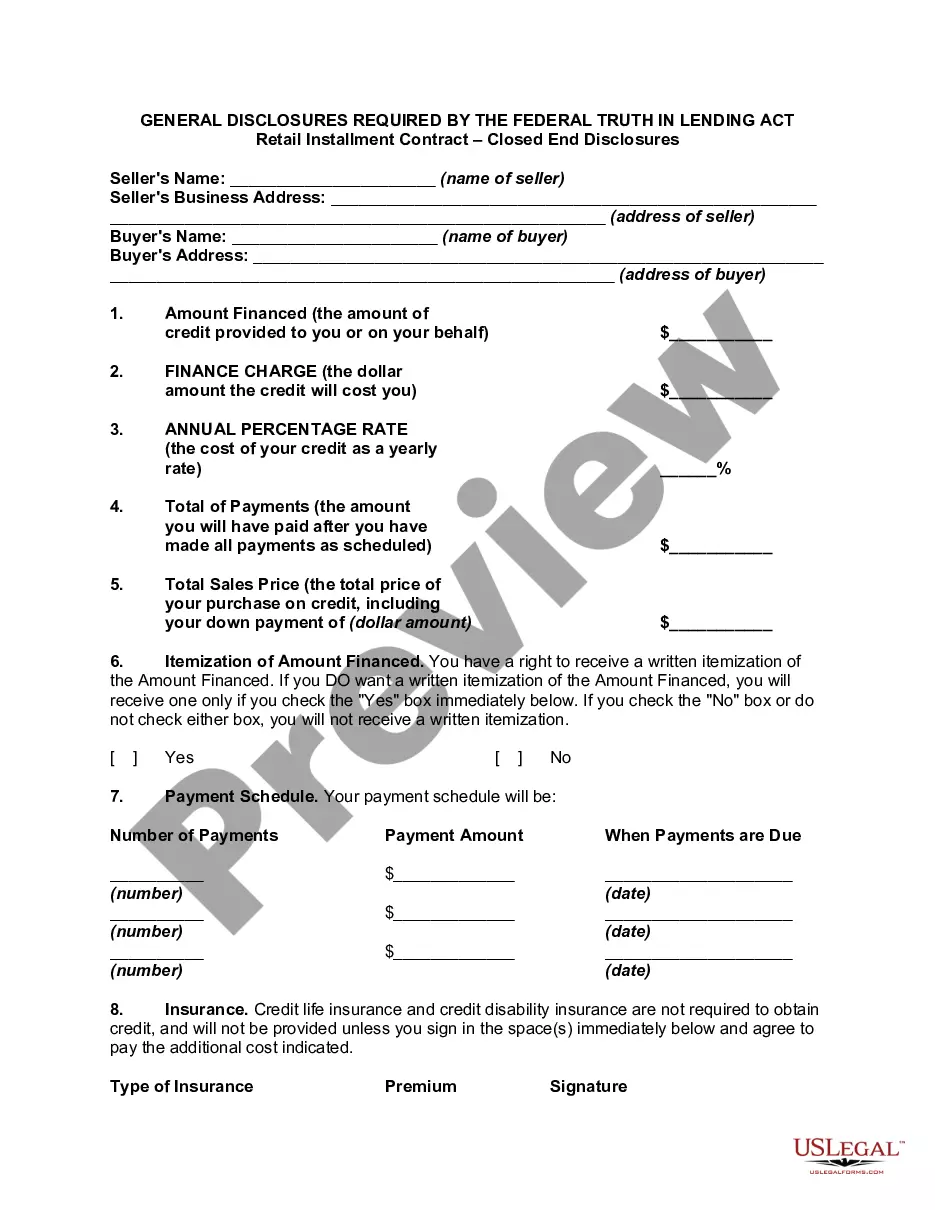
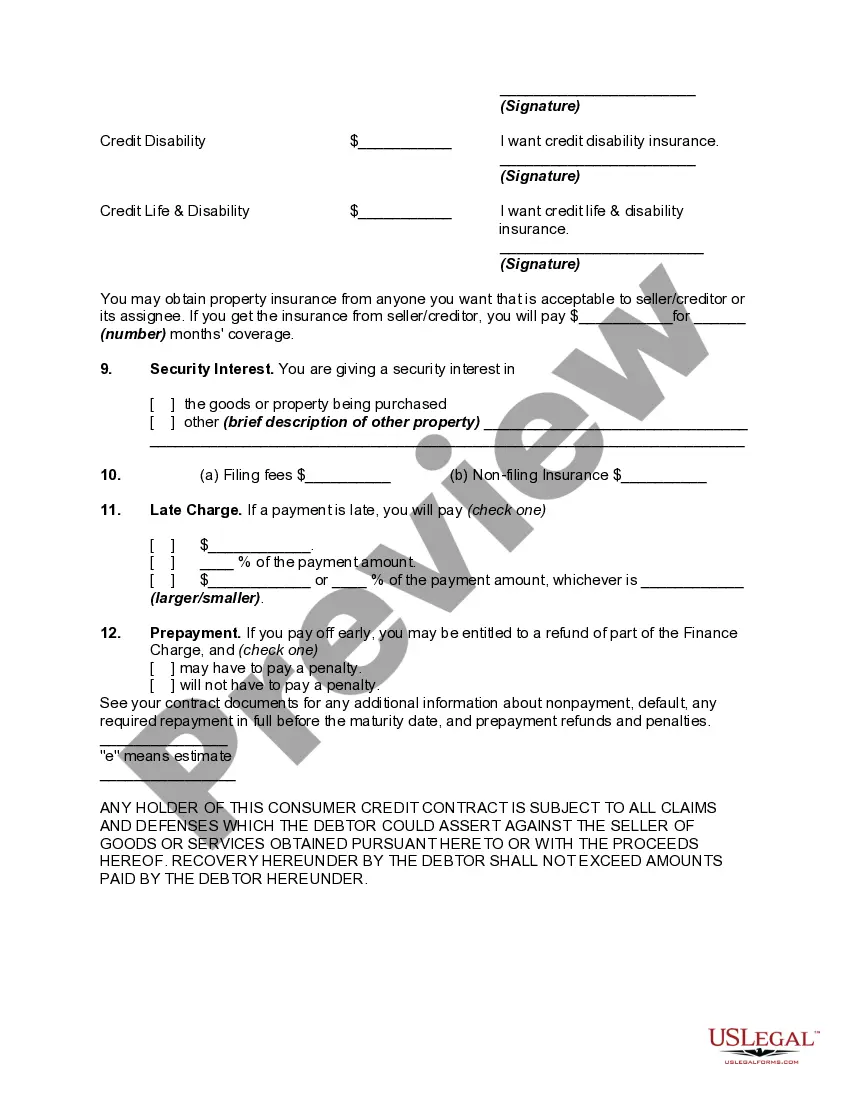
How to fill out General Disclosures Required By The Federal Truth In Lending Act - Retail Installment Contract - Closed End Disclosures?
- Log in to your US Legal Forms account if you are a returning customer and check your subscription status before downloading a form template.
- Review the preview and description of the form to ensure it meets your specific requirements and adheres to local jurisdiction standards.
- If the selected form is not suitable, utilize the search feature to locate alternative templates that better fit your needs.
- Once you find the appropriate document, select a subscription plan and click 'Buy Now' to purchase access to the form.
- Complete your purchase by entering your payment information, either through credit card or PayPal.
- Download the selected form to your device for immediate use, and remember you can access this document later through the 'My documents' menu in your profile.
US Legal Forms provides an extensive collection of over 85,000 fillable and editable legal forms, making it a top choice for both individuals and attorneys. With expert assistance available, users can ensure their documents are legally sound and tailored to their needs.
Begin your journey with US Legal Forms today and make the process of managing retail installment agreements simpler than ever!
Form popularity
FAQ
The assignee on a retail installment contract is typically the financial institution or lender that purchases the contract from the seller. In this arrangement, the assignee takes over the rights to receive payments from the buyer. This transfer of rights can make financing options more flexible for sellers and buyers alike. Recognizing this role helps clarify the flow of payment obligations.
An example of installment buying is purchasing a car through a retail installment contract. In this situation, a buyer makes a down payment and then pays the remaining balance in scheduled installments over a set period. This method allows individuals to acquire expensive items without needing the full payment upfront. A retail installment approach makes such purchases more accessible.
The four main types of contracts include express, implied, unilateral, and bilateral contracts. Express contracts contain clearly defined and stated terms, while implied contracts arise from actions or behaviors. A unilateral contract involves one party making a promise, and a bilateral contract consists of mutual promises between two parties. Each type plays a role in various financial processes, including retail installment agreements.
Yes, you can opt out of an installment sale if it does not meet your financial needs. However, keep in mind that opting out may mean losing the benefits of payment flexibility. Before making such decisions, it’s wise to assess how this may impact your financial goals and consider tools like the US Legal Forms platform for help with legal documentation.
For installment sale treatment, you typically need a sale of property where payments are made in installments rather than all at once. This also applies when you sell stocks, business assets, or real estate under certain conditions. It's important to consult with a tax professional to ensure your specific sale qualifies under federal guidelines.
To claim installment sales on your taxes, you must report income based on the payments you receive during the tax year. Use Form 6252 to report the sale and calculate the taxable portion of your income. This process allows you to manage your tax implications effectively over the duration of your retail installment agreement.
Sellers often agree to an installment sale because it expands their customer base. By offering retail installment options, sellers attract buyers who may not have the full payment readily available. This approach can increase sales and help sellers move inventory more quickly.
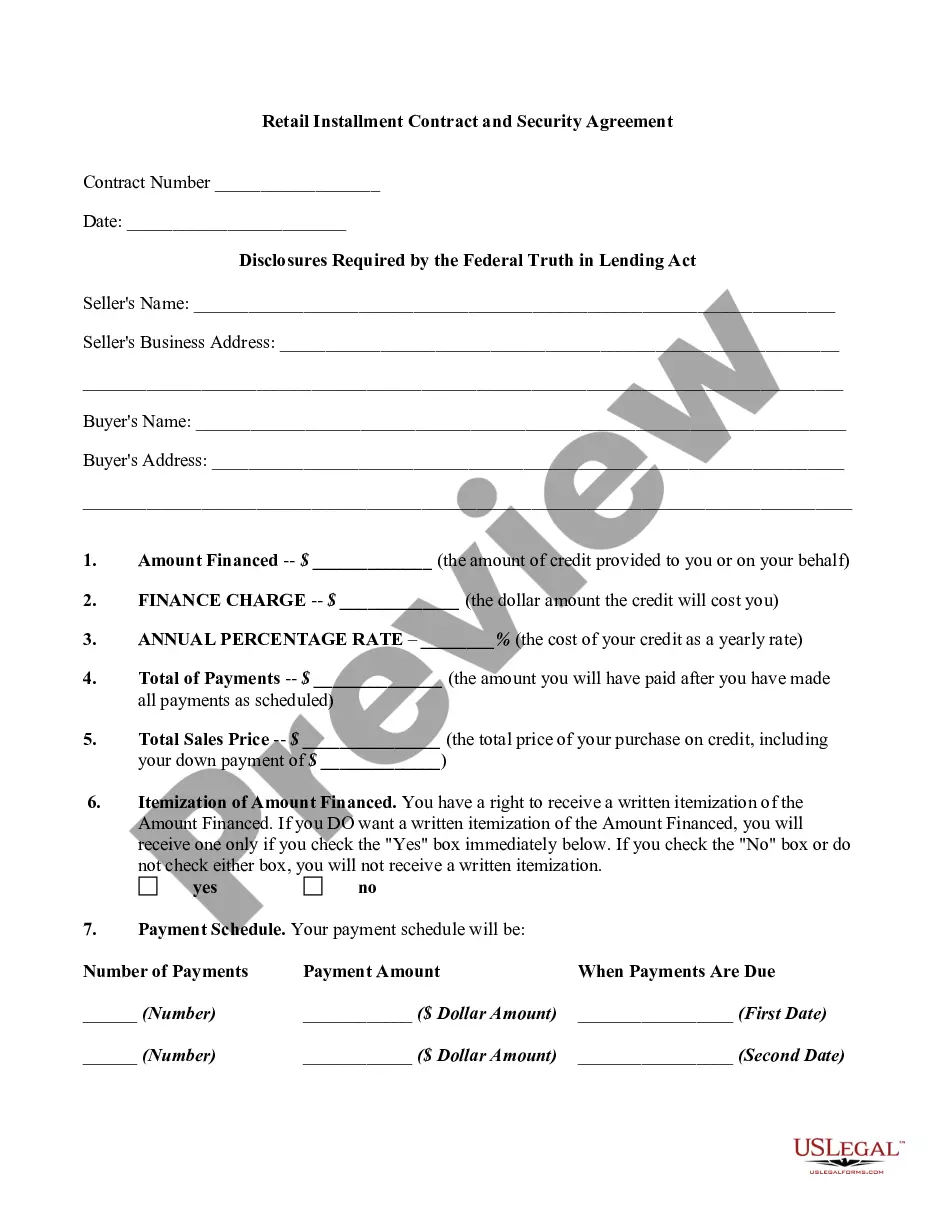
To obtain your retail installment contract, you typically need to complete the sales agreement process with the seller. Once you agree on the terms, the seller will provide you with a written contract outlining the payment plan. Make sure to review the contract carefully to understand your obligations and rights under the retail installment agreement.
A retail installment is a method of purchasing goods where the buyer pays for an item over a specified period in multiple payments. This financing option is common for large purchases, allowing consumers to manage their budgets effectively. Each installment typically includes a portion of the principal and may also include interest, depending on the agreement. For a smooth experience, you can utilize US Legal Forms to understand the terms and conditions associated with retail installment agreements.
Typically, a retail installment contract is not considered a security. It serves primarily as a sales contract where the buyer repays the seller over time. Securities, on the other hand, involve investment assets like stocks and bonds.