Blind Trust For Children
Description
Get your form ready online
Our built-in tools help you complete, sign, share, and store your documents in one place.
Make edits, fill in missing information, and update formatting in US Legal Forms—just like you would in MS Word.
Download a copy, print it, send it by email, or mail it via USPS—whatever works best for your next step.
Sign and collect signatures with our SignNow integration. Send to multiple recipients, set reminders, and more. Go Premium to unlock E-Sign.
If this form requires notarization, complete it online through a secure video call—no need to meet a notary in person or wait for an appointment.
We protect your documents and personal data by following strict security and privacy standards.

Make edits, fill in missing information, and update formatting in US Legal Forms—just like you would in MS Word.

Download a copy, print it, send it by email, or mail it via USPS—whatever works best for your next step.

Sign and collect signatures with our SignNow integration. Send to multiple recipients, set reminders, and more. Go Premium to unlock E-Sign.

If this form requires notarization, complete it online through a secure video call—no need to meet a notary in person or wait for an appointment.

We protect your documents and personal data by following strict security and privacy standards.
Looking for another form?









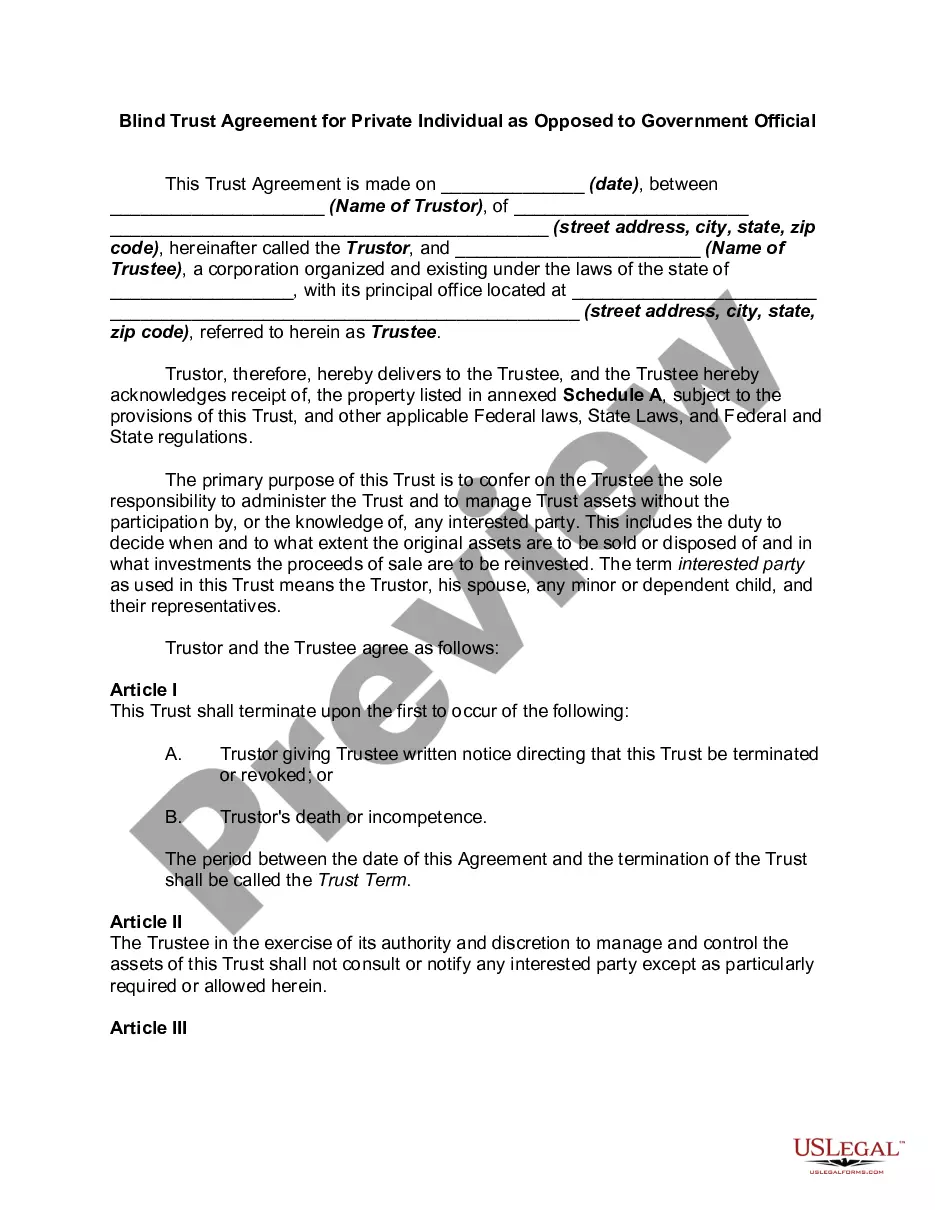
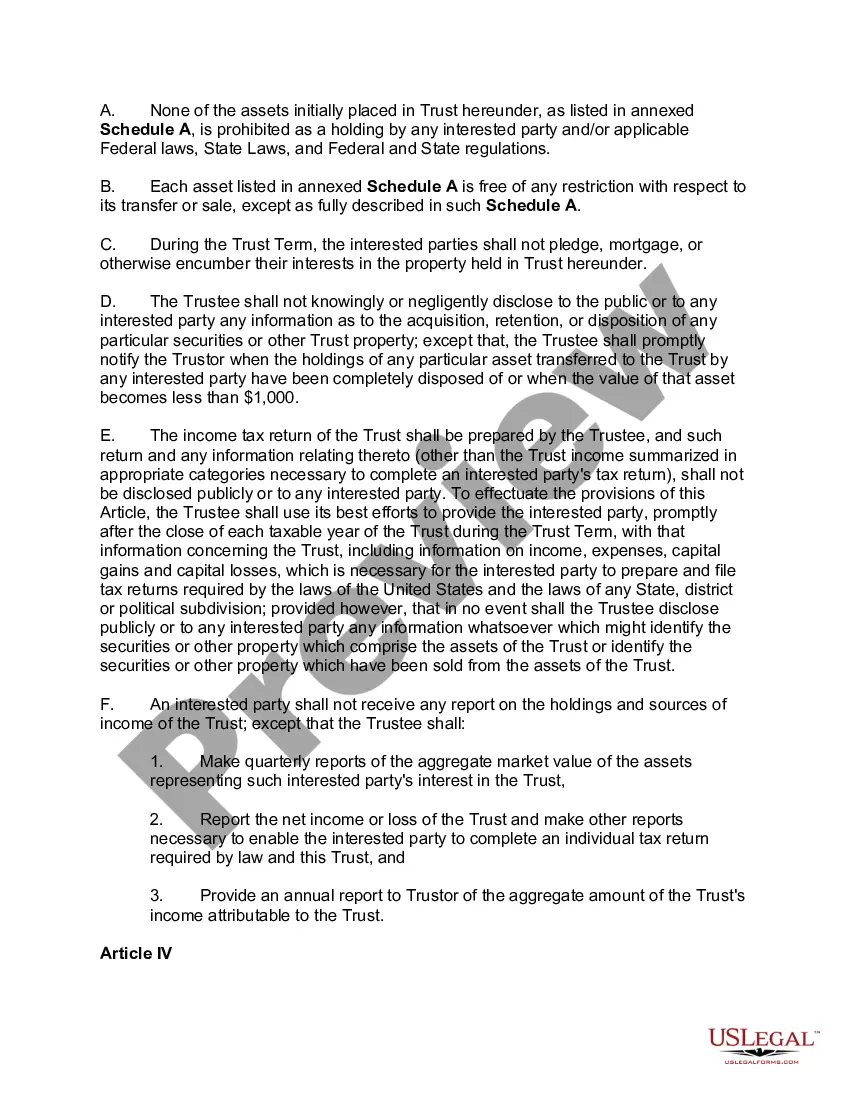
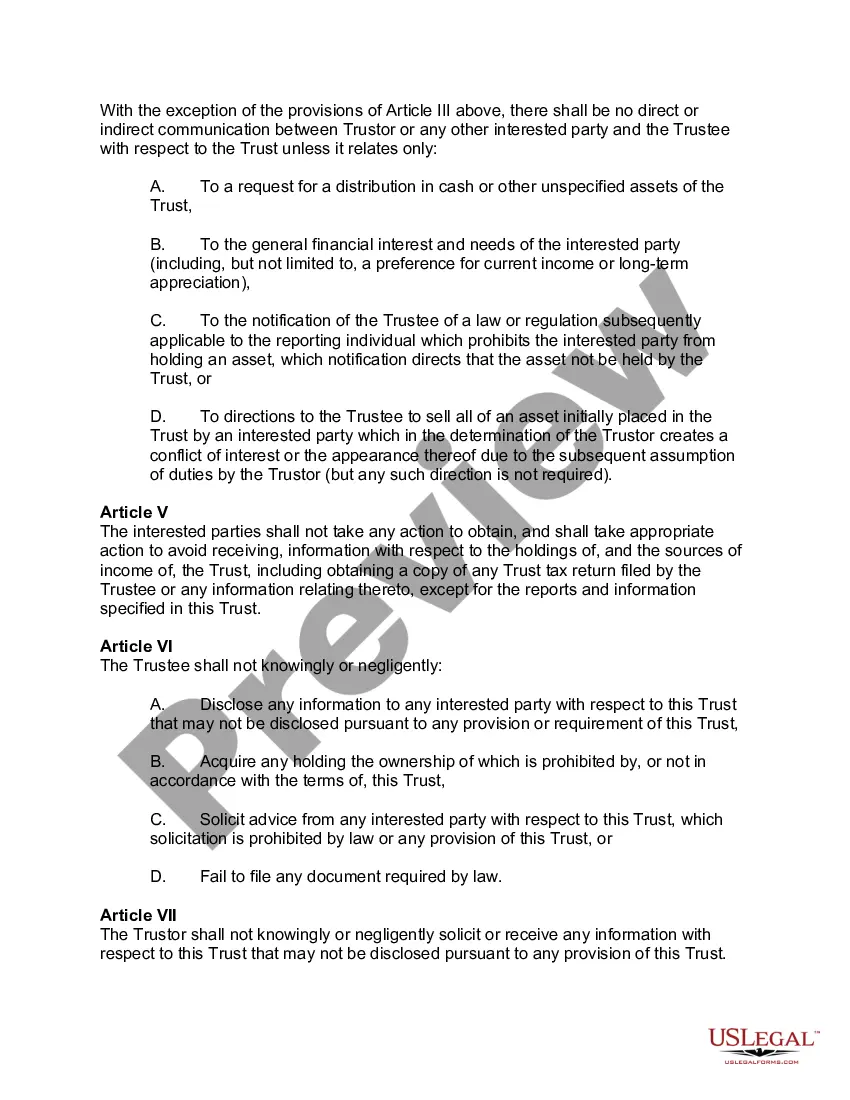
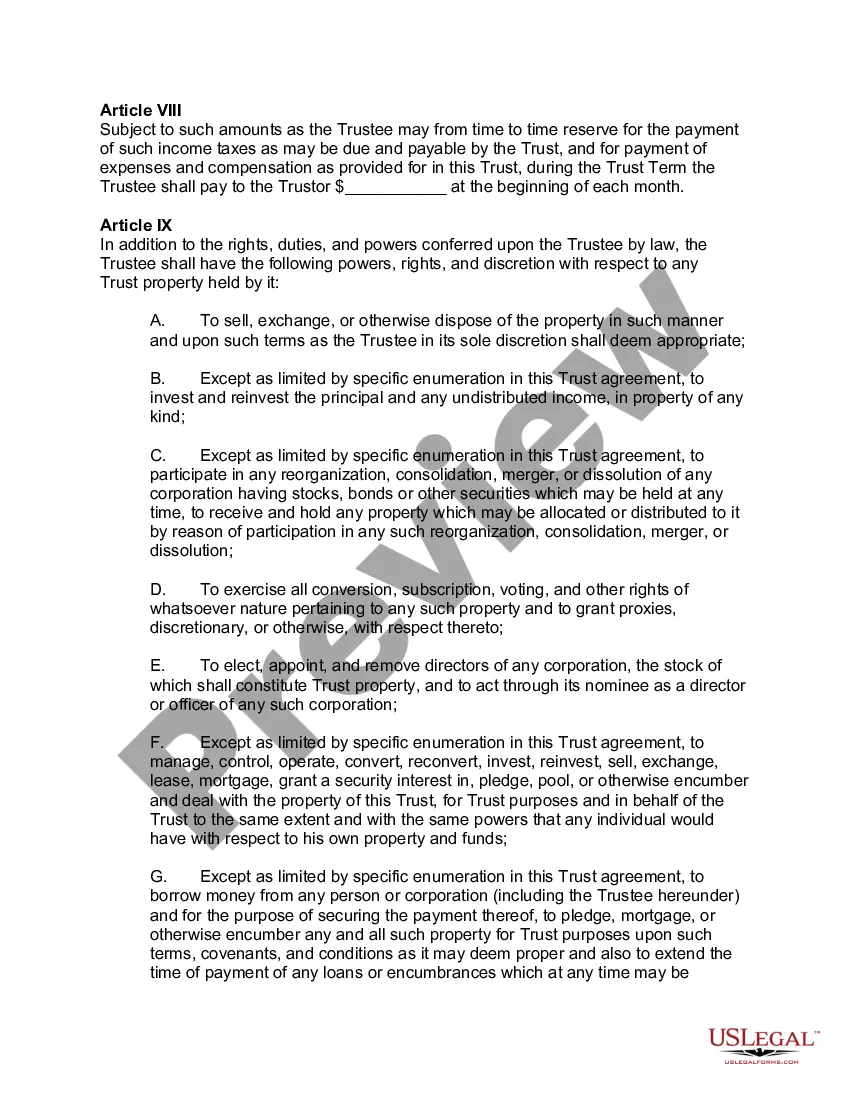
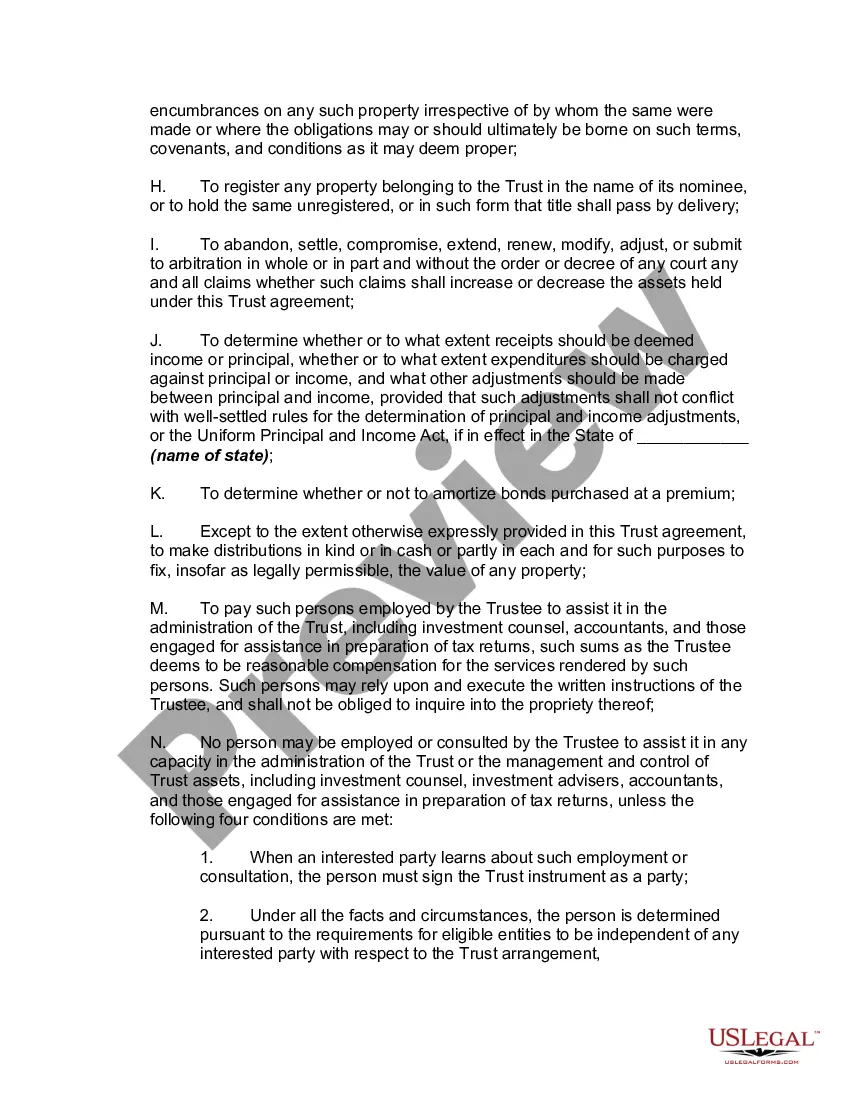
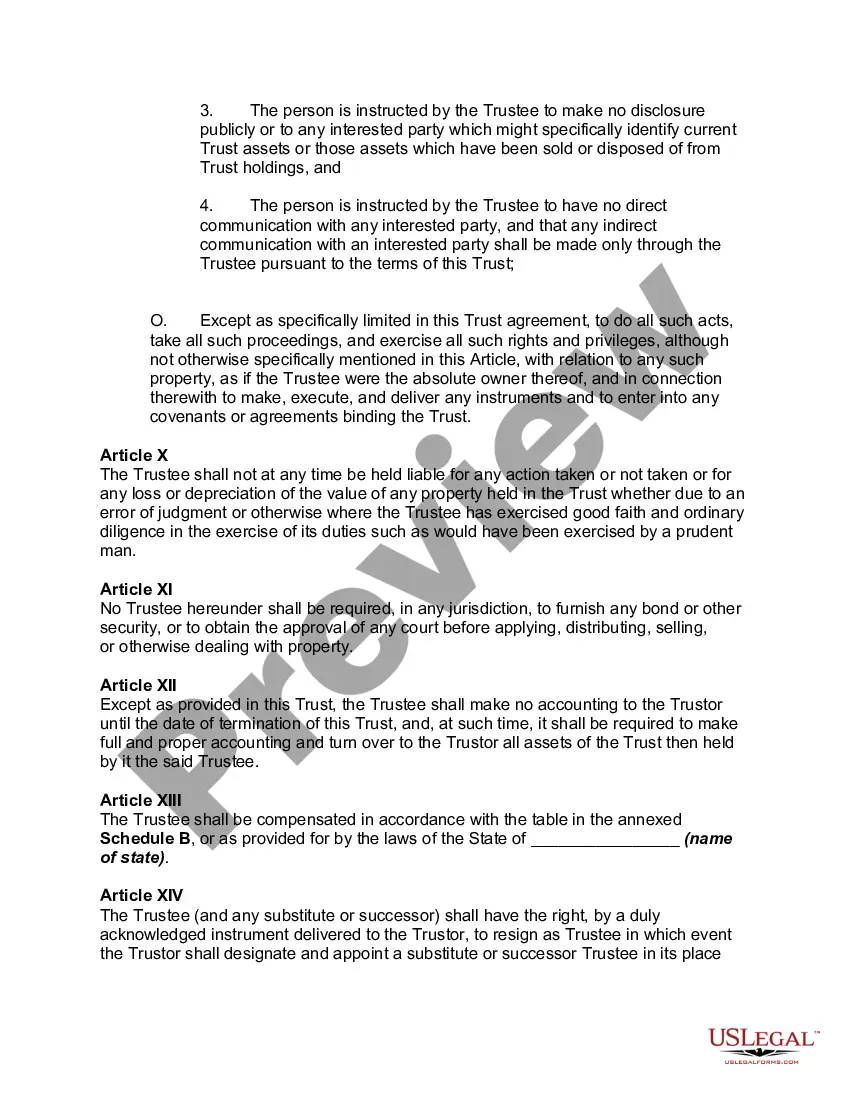
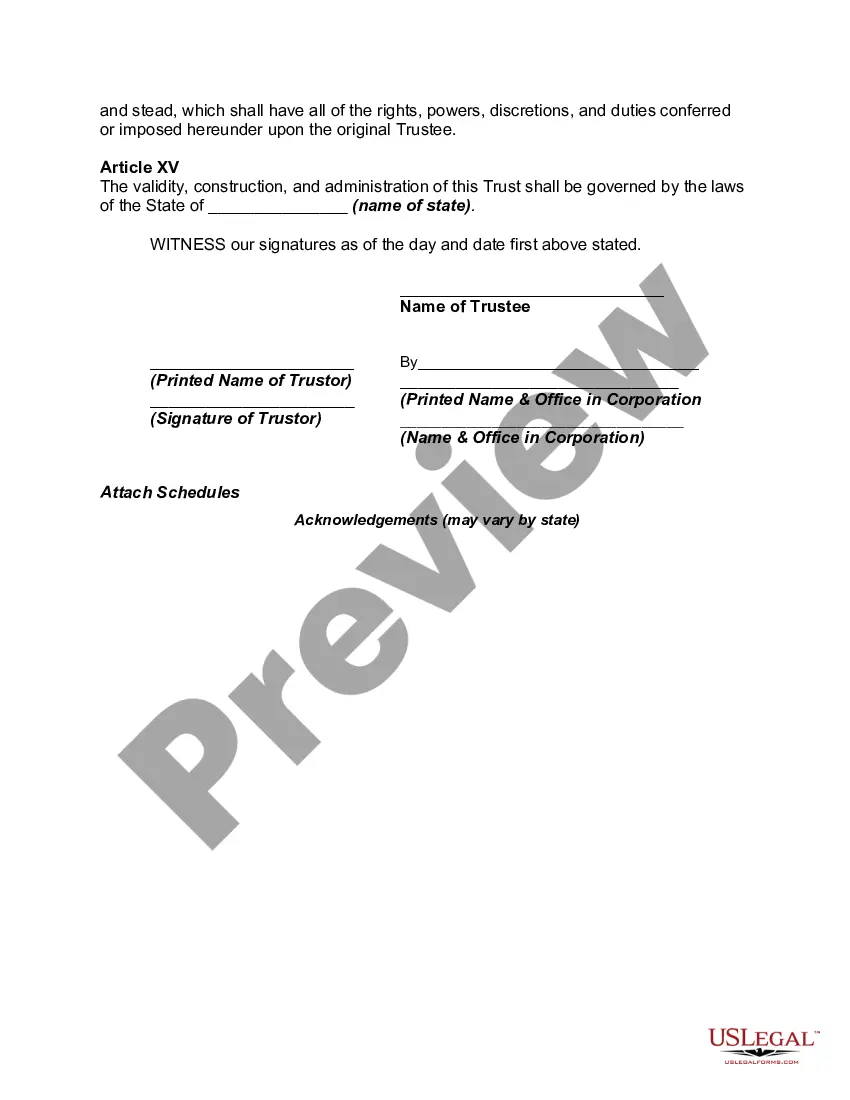
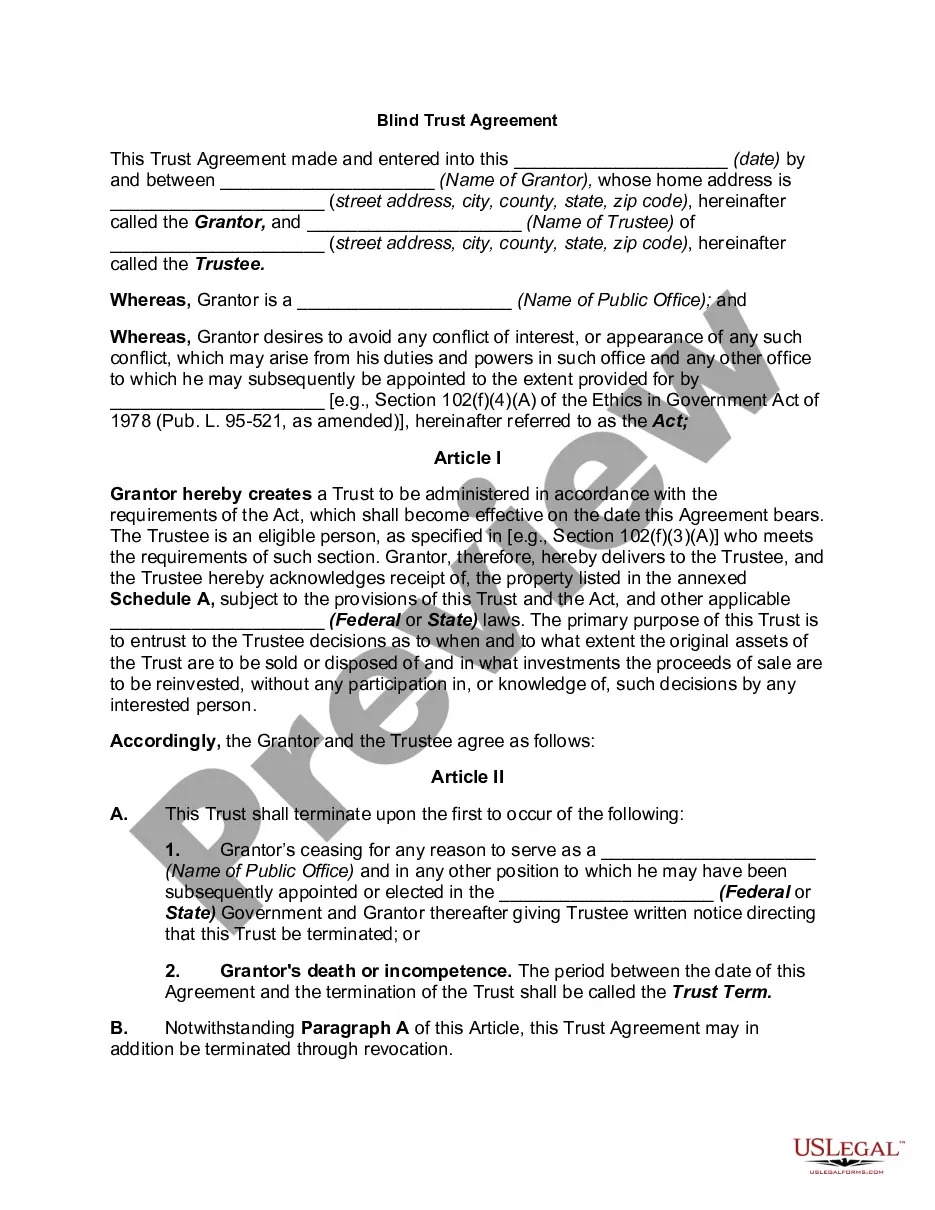
How to fill out Blind Trust Agreement For Private Individual As Opposed To Government?
- Begin by logging into your US Legal Forms account if you're a returning user. Ensure your subscription remains valid to avoid interruptions.
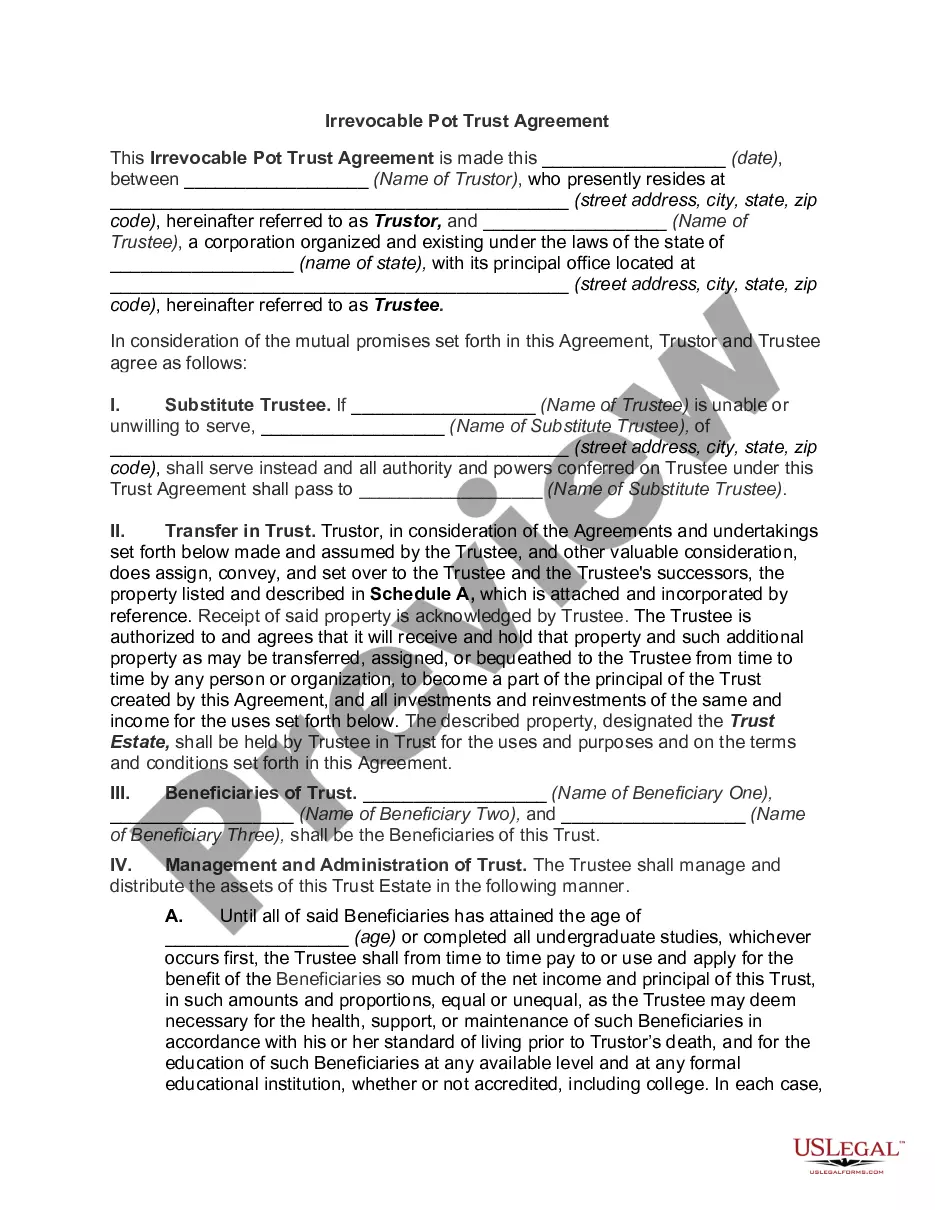
- If you're new to the service, start by reviewing the available templates in Preview mode. Confirm that the blind trust fits your requirements and adheres to local law.
- Utilize the Search feature if you need to explore other templates. Ensure you select the right form that aligns with your objectives.
- Proceed to purchase the document. Click 'Buy Now' and choose a suitable subscription plan. Registration is necessary for access.
- Complete your payment using credit card or PayPal. Follow the screen instructions to finalize your purchase.
- Download the completed form to your device. You can access it whenever necessary from the 'My Forms' section of your profile.
By following these steps, you can successfully set up a blind trust for your children, ensuring their future is secure. US Legal Forms simplifies this process, providing a vast collection of templates and resources.
Get started today to create a safe financial foundation for your children with US Legal Forms!
Form popularity
FAQ
Starting a blind trust involves several steps that require careful planning and legal guidance. First, you need to select a reliable trustee who will manage the trust assets on behalf of your children without disclosing information about them. It is advisable to draft a trust document that outlines the terms and conditions, which you can create using resources from US Legal Forms. This platform helps you navigate the legal complexities of establishing a blind trust for children, making the process straightforward and efficient.
The best way to set up a trust for children is to choose the right type of trust that meets your family's needs. A blind trust for children allows you to manage assets without revealing specific details to the beneficiaries, ensuring their financial security. It is essential to involve a qualified attorney who specializes in trusts and estates to ensure that all legal requirements are met. Additionally, consider using platforms like US Legal Forms, which provide templates and resources to simplify the trust setup process.
The main difference between a blind trust and a regular trust lies in the level of control and information available to the trustor. In a blind trust for children, the trustor relinquishes knowledge and control over how assets are managed, while a regular trust allows for more oversight by the trustor. This distinction is crucial for maintaining objectivity and enhancing the management of the trust's assets for the benefit of your children.
A blind trust functions by separating the management of assets from the trustor's control, allowing an independent trustee to handle investments and distributions. This structure is beneficial for children, as it protects them from any undue influence from the trustor. The trustor remains unaware of the trust's activities, ensuring impartial management. This helps in securing assets for your children while minimizing conflicts of interest.
To form a blind trust for children, first, consult with an estate planning attorney. They will help you draft a trust agreement, which outlines how the assets will be managed and distributed. Next, transfer the assets into the trust, ensuring the trustee holds them for your children's benefit, without you directing their use. Using a platform like US Legal Forms can streamline the process and provide you with necessary legal documents.
To establish a blind trust for children, begin by outlining the assets you wish to place in the trust. Next, select a trustworthy trustee who will manage the assets impartially. It's crucial to draft a legal agreement that details the trust's terms and ensure proper documentation. Using platforms like uslegalforms can streamline this process, providing templates and legal guidance to properly set up a blind trust.
A common mistake parents make when setting up a trust fund for their children is not clearly defining their goals. Without specific objectives, the trust may not serve its intended purpose. Additionally, overlooking the selection of a qualified trustee can lead to mismanagement of the trust assets. Parents should take their time, plan adequately, and, if possible, consult a legal expert to prevent these issues.
One potential downside of a blind trust for children is the lack of control over the trust's management. Parents may feel distant from their assets and may worry about how the trustee manages these funds. Additionally, if not set up properly, the blind trust could create complications in financial planning. Understanding these aspects is essential for effective asset management.
Typically, the person creating the blind trust for children is a parent or guardian. They decide to create the trust to manage assets for the children's future without ongoing personal control. Often, legal professionals assist in this process to ensure the trust complies with laws and serves the children's best interests. A trusted attorney can make this process smoother and more reliable.
To establish a blind trust for children, you need a legal document outlining the trust's terms. This includes appointing a trustee to manage the assets without your input. It's also important to identify the beneficiaries, who will eventually receive the trust's assets. Furthermore, working with a legal expert can ensure that all requirements are met.