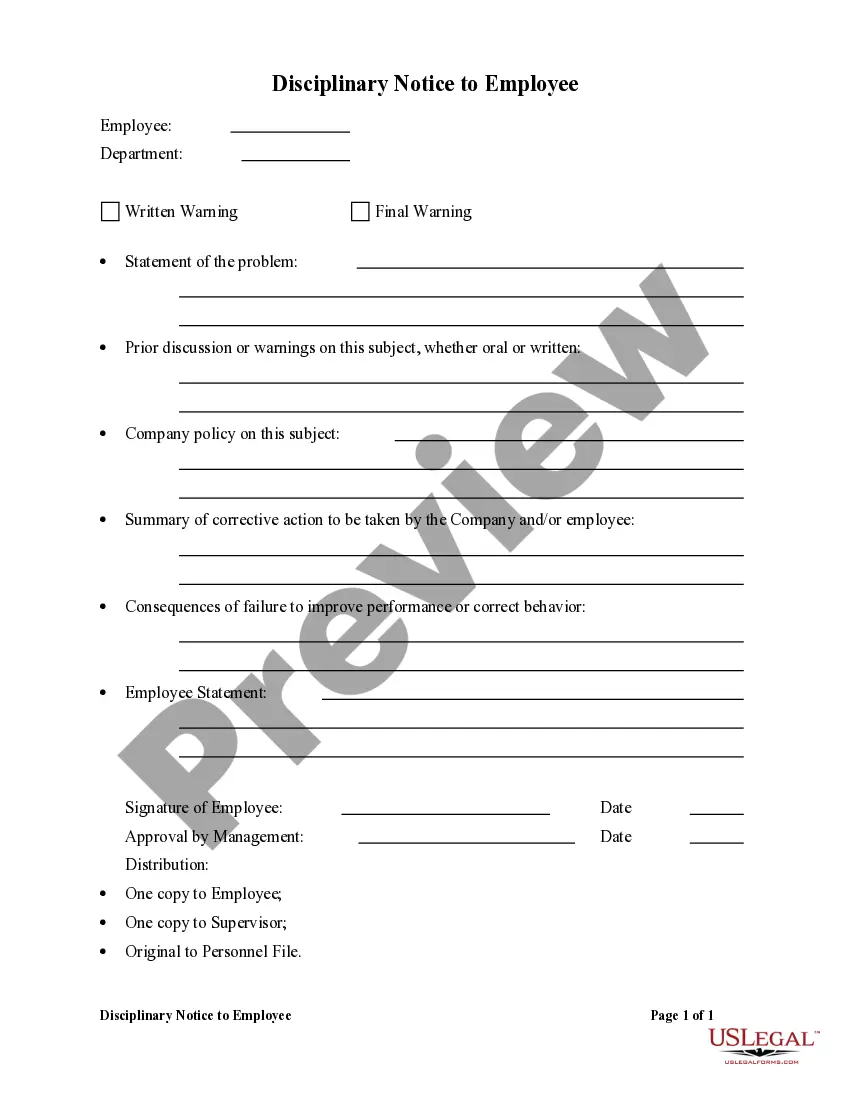
Corrective Action Form Sample For Attendance
Description
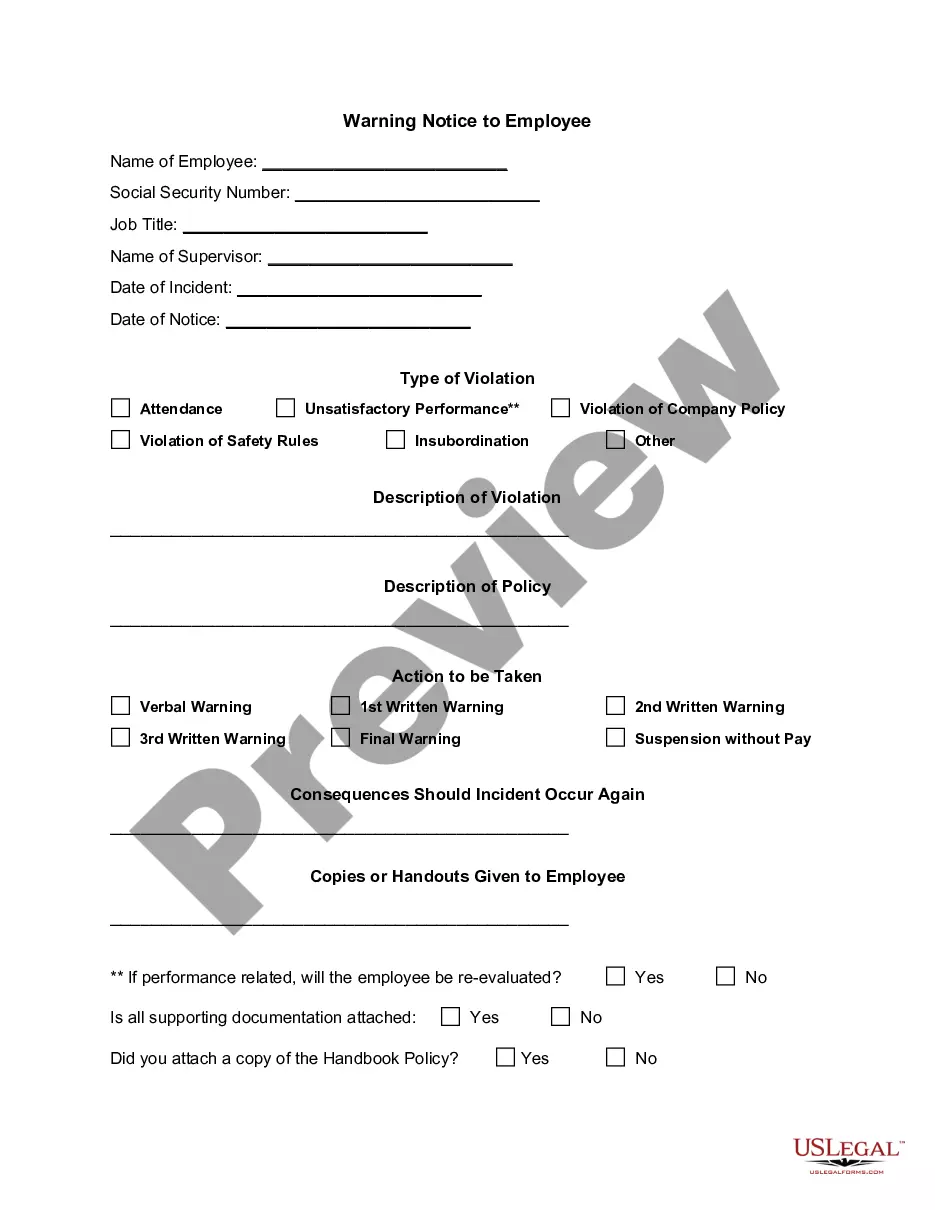
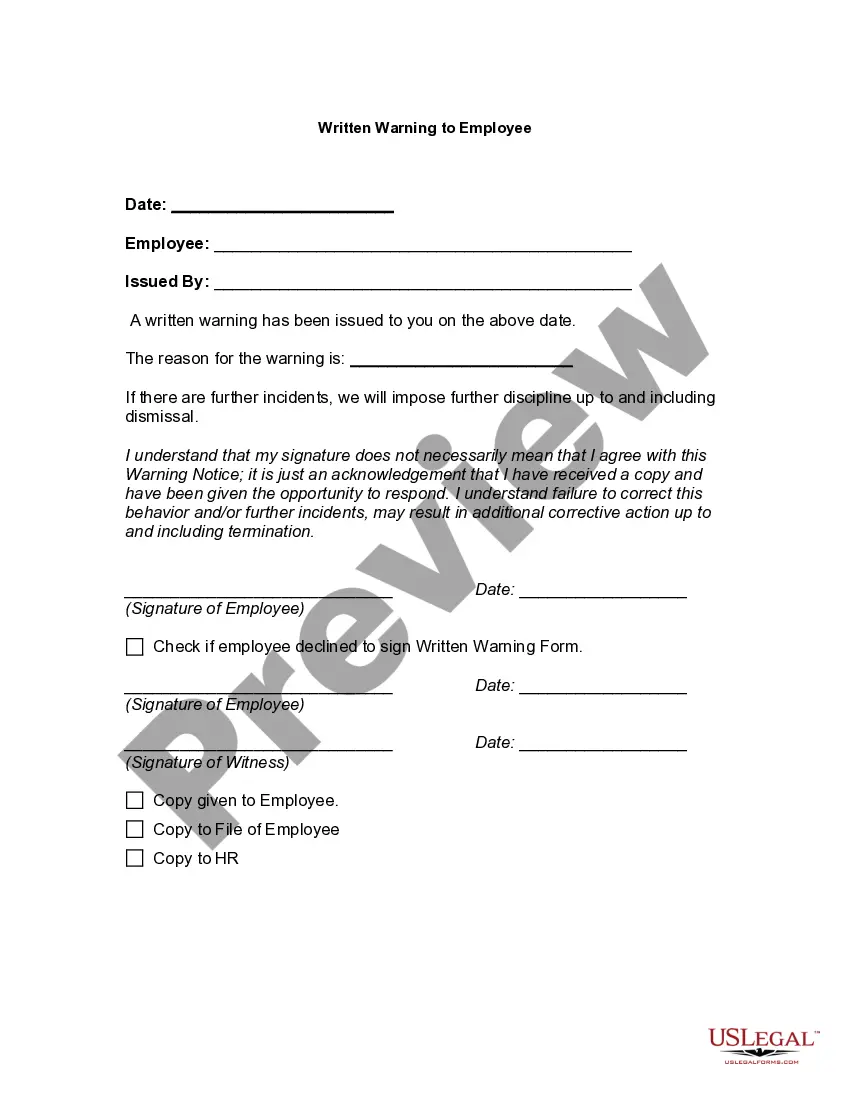
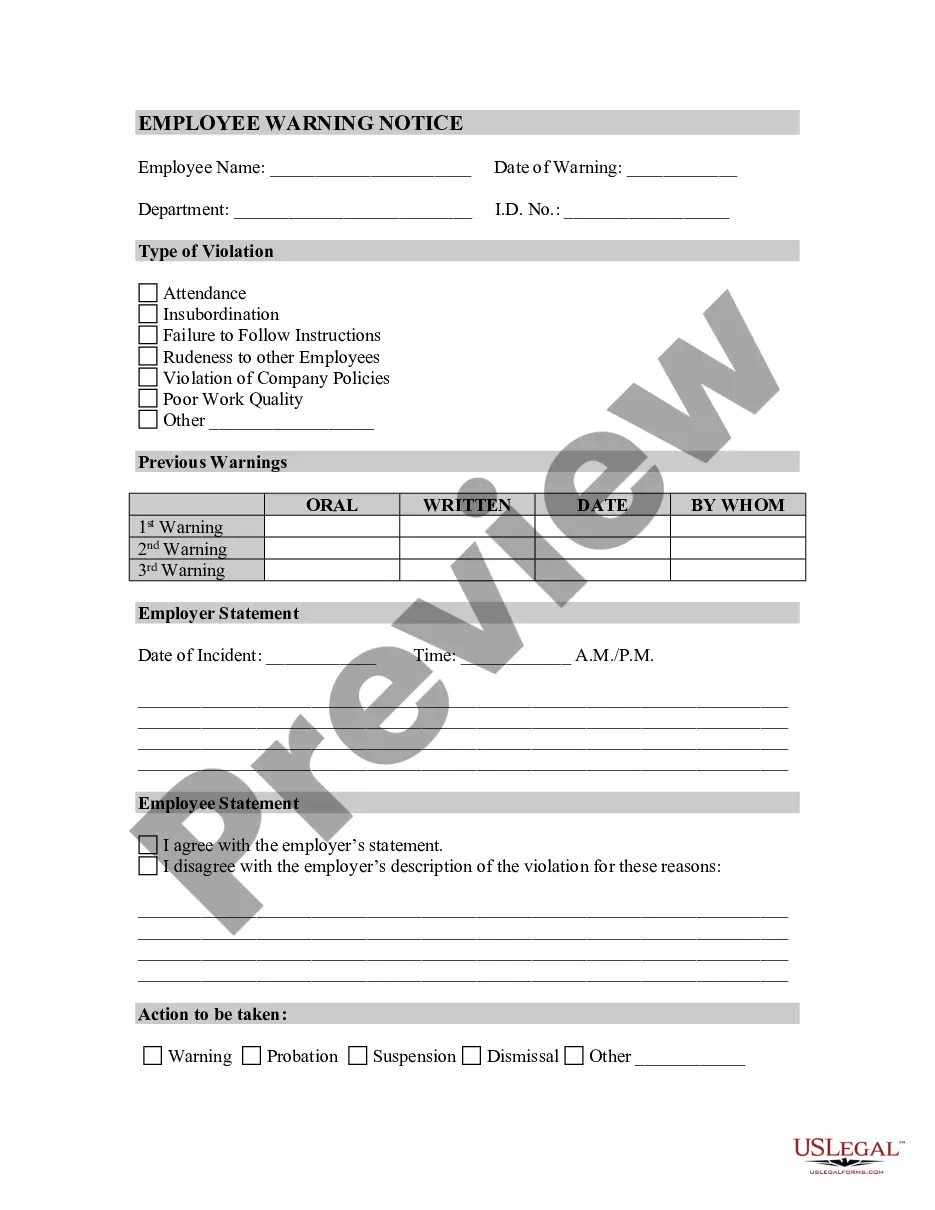
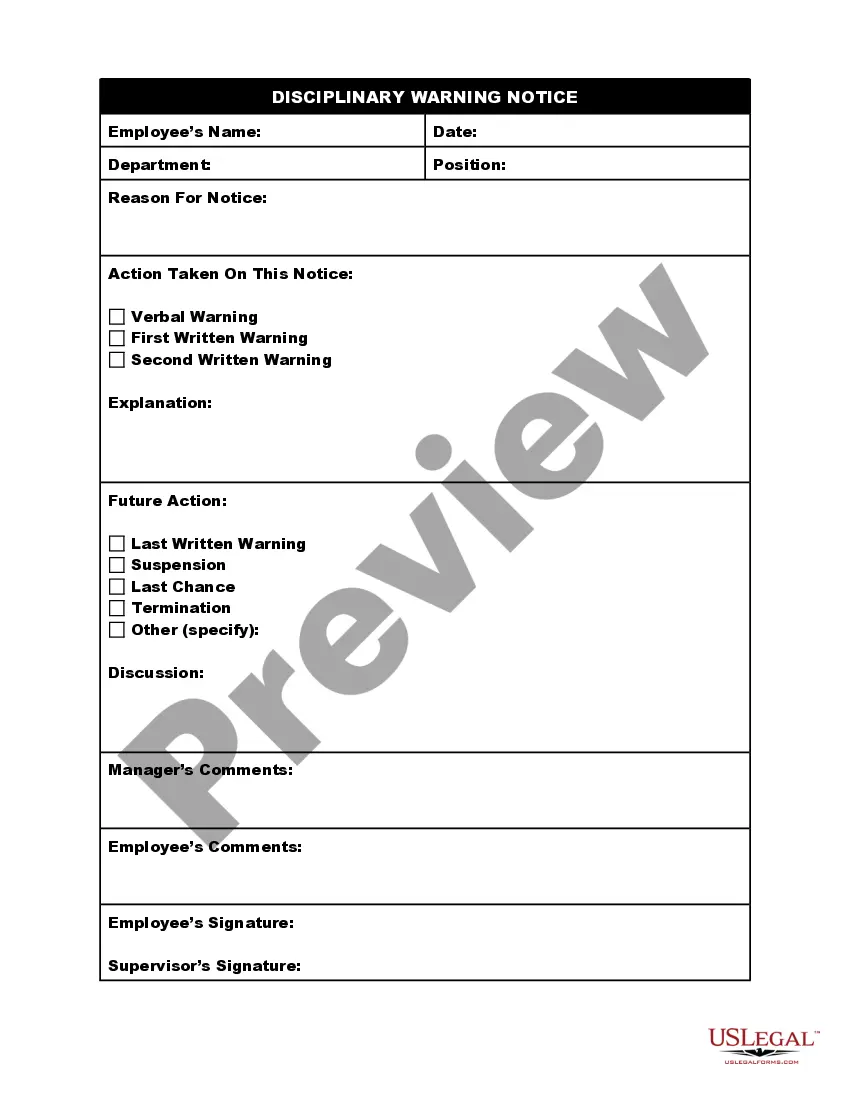
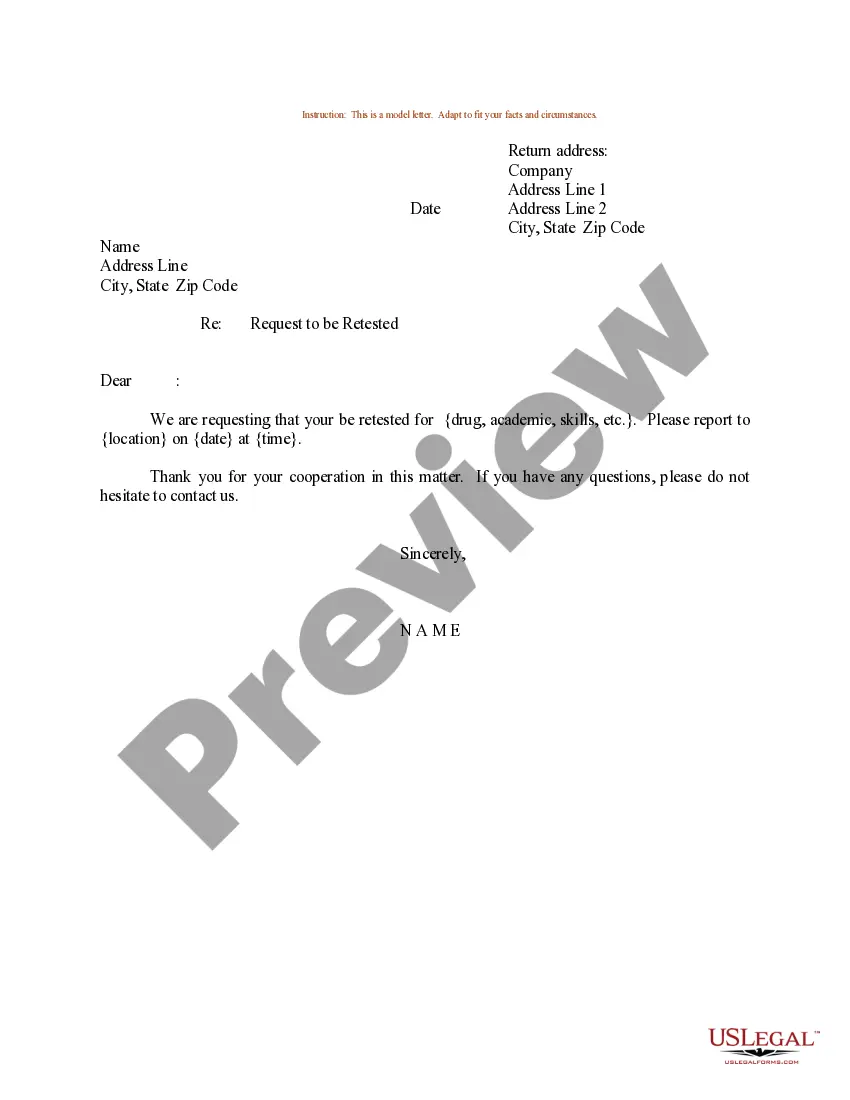
How to fill out Disciplinary Notice To Employee?
It’s no mystery that you can’t transform into a legal expert instantly, nor can you swiftly master how to prepare a Corrective Action Form Sample For Attendance without possessing a specialized skill set.
Crafting legal documents is an intricate task that necessitates specific education and expertise. So why not entrust the creation of the Corrective Action Form Sample For Attendance to the professionals.
With US Legal Forms, one of the most comprehensive libraries of legal documents, you can access everything from court documents to templates for internal corporate communication.
If you require a different template, you can start your search again.
Sign up for a free account and choose a subscription plan to purchase the form.
- We recognize how crucial compliance and adherence to federal and state regulations are.
- That’s why, on our platform, all templates are specific to locations and current.
- Here’s how you can begin with our platform and obtain the form you need in just minutes.
- Find the form you’re looking for using the search bar at the top of the page.
- Preview it (if this option is available) and read the accompanying description to see if the Corrective Action Form Sample For Attendance meets your needs.
Form popularity
FAQ
Here's how: Step 1: Document the Attendance Issue. Firstly, gather your facts. ... Step 2: Include Essential Information. ... Step 3: Describe the Impact. ... Step 4: Reference Company Policies. ... Step 5: Provide an Opportunity for Improvement. ... Step 6: Obtain Signatures.
Here are eight tips that can be your guide to creating an effective employee attendance improvement plan: Draft an employee attendance policy. ... Track attendance records. ... Identify the causes of absence. ... Explain the consequences. ... Train supervisors to deal with absenteeism. ... Boost employee morale. ... Allow a flexible work schedule.
An attendance write up is a disciplinary measure taken for employees who are consistently tardy or absent to work. It documents the steps taken to address the attendance issues and what the next disciplinary measures will be if the employee does not resolve the problem.
Dear: Please consider this a letter of warning concerning your continuing attendance problems. Your uneven attendance is beginning to affect other parts of your job, making improvement even more essential. Attendance records indicate that since ___________, you have used a total of ______ days on ______ occasions.
Good attendance Report consistently to work. Come to work at the scheduled shift start time. Leave work at the scheduled shift end time (except when paid overtime is required.) Remaining at work during working hours (excluding breaks.)