Claims Against Estate Form Texas
Description
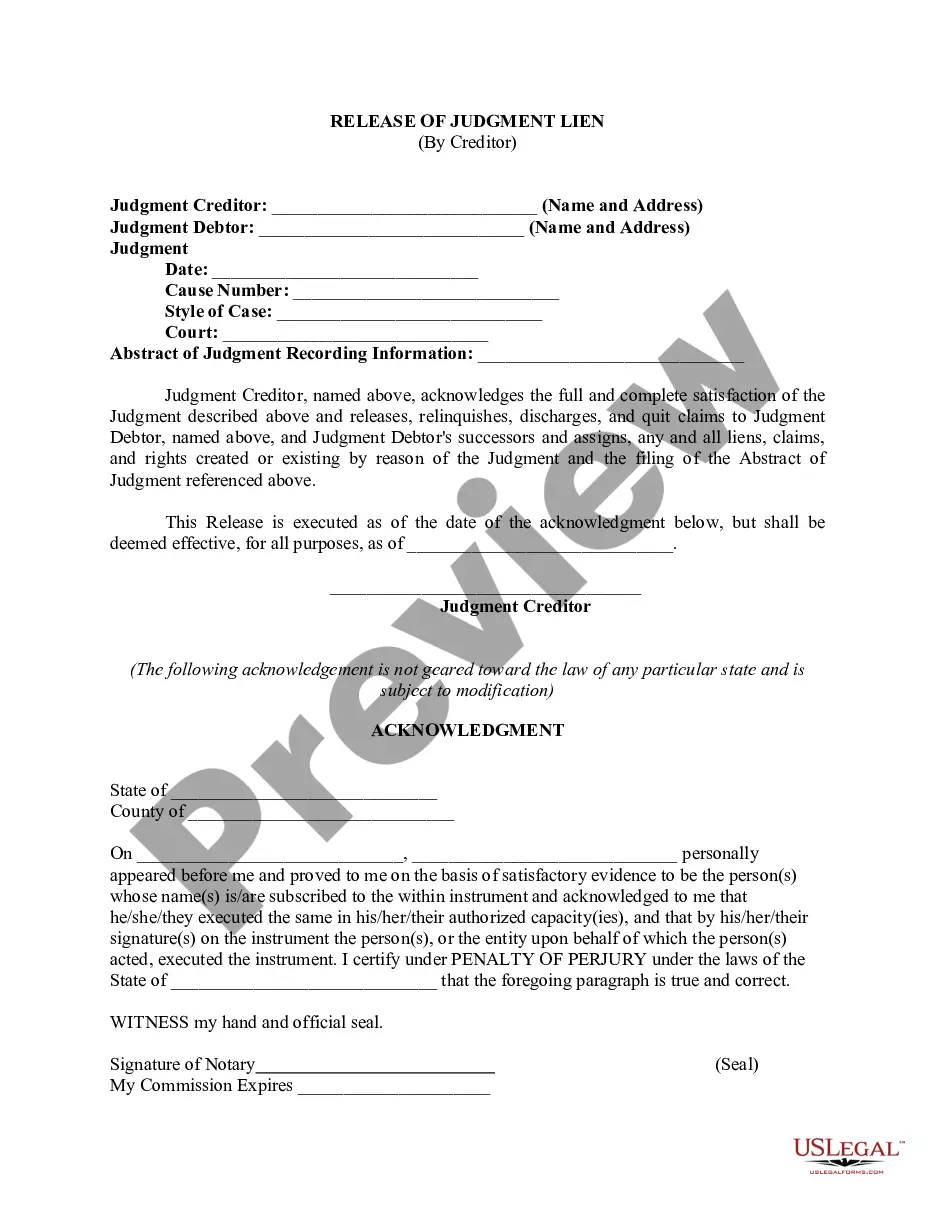

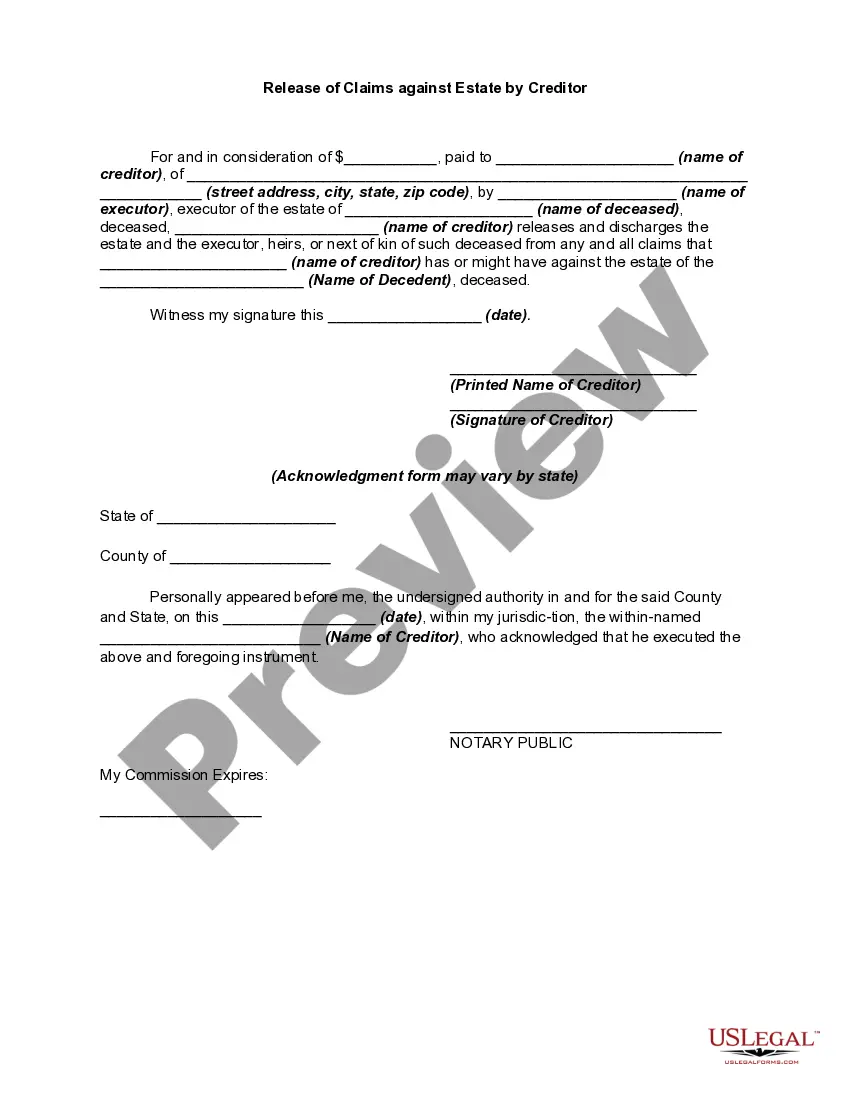
How to fill out Release Of Claims Against Estate By Creditor?
Whether for commercial reasons or personal matters, everyone must navigate legal circumstances at some point in their existence.
Filling out legal forms necessitates meticulous attention, beginning with selecting the correct template.
With an extensive US Legal Forms catalog available, you won’t need to waste time searching for the right template online. Take advantage of the library’s user-friendly navigation to discover the appropriate template for any situation.
- Identify the template you require using the search bar or catalog browsing.
- Review the form’s details to ensure it suits your circumstance, region, and state.
- Click on the form’s preview to view it.
- If it is the wrong document, return to the search option to find the necessary Claims Against Estate Form Texas sample.
- Obtain the template once it aligns with your needs.
- If you already possess a US Legal Forms account, click Log in to access earlier saved templates in My documents.
- If you do not yet have an account, you may download the form by clicking Buy now.
- Choose the correct pricing option.
- Complete the registration form for your profile.
- Select your payment method: either a credit card or PayPal account.
- Choose the document format you prefer and download the Claims Against Estate Form Texas.
- Once downloaded, you can fill in the form using editing software or print it out and complete it by hand.
Form popularity
FAQ
To file a claim against a deceased person's estate, you must prepare a formal claim that details your legal basis for the claim. Complete the Claims against estate form Texas to present a structured argument clearly. Submit this claim to the estate's representative or probate court to initiate the legal process of resolving your claim.
Making a claim against a deceased estate involves preparing a claim that outlines your connection to the deceased and the nature of your claims. Utilize the Claims against estate form Texas to ensure you include all essential information and evidence of your claim. File the claim with the estate's executor or the probate court to proceed with your request.
To file a claim against an estate in Texas, start by gathering necessary documentation to support your claim. Use the Claims against estate form Texas to offer a detailed description of your claim and the basis for it. After preparing your claim, submit it to the relevant probate court or estate representative within the four-month timeline.
You typically have four months to make a claim against a deceased estate in Texas, commencing from the notice of probate proceedings. If you miss this deadline, you may forfeit your ability to recover what you're owed. To avoid this risk, act promptly and consider the Claims against estate form Texas for efficiency.
Filing a claim against an estate in Texas begins with understanding your relationship to the deceased and the nature of your claim. Utilize the Claims against estate form Texas to clearly outline your claim, academic details, and supporting evidence. Submit the completed form to the probate court or the estate representative to initiate the process.
To file a claim against someone's estate, you must first prepare a documented claim using the Claims against estate form Texas. Then, submit this claim to the representative of the estate or the probate court managing the estate. Ensure you include all pertinent information and evidence to support your claim for a higher chance of approval.
In Texas, you generally have four months from the date you receive notice of the probate proceedings to file a claim against an estate. It is crucial to adhere to this timeline, as failing to file within this period may result in losing your right to make a claim. If you're unsure of the timeline, consider using the Claims against estate form Texas for clarity and guidance.
Filing a claim against someone's estate involves several steps. You need to prepare the Claims against estate form Texas, detailing your claim and the nature of your relationship to the deceased. After filling out the form, submit it to the appropriate probate court where the estate is being administered. US Legal Forms offers resources and templates to ensure you complete this process accurately and efficiently.
To make a claim against a deceased estate in Texas, you must first identify the assets of the estate and gather any necessary documentation. Next, you will complete the Claims against estate form Texas, which allows you to officially submit your claim. Make sure to file this form with the probate court within the required time frame. By utilizing US Legal Forms, you can easily access and fill out the correct forms to streamline your claim process.