Agreement between Adjoining Landowners Granting Perpetual Non-exclusive Easement for Use of and Access to Parking Area
What is this form?
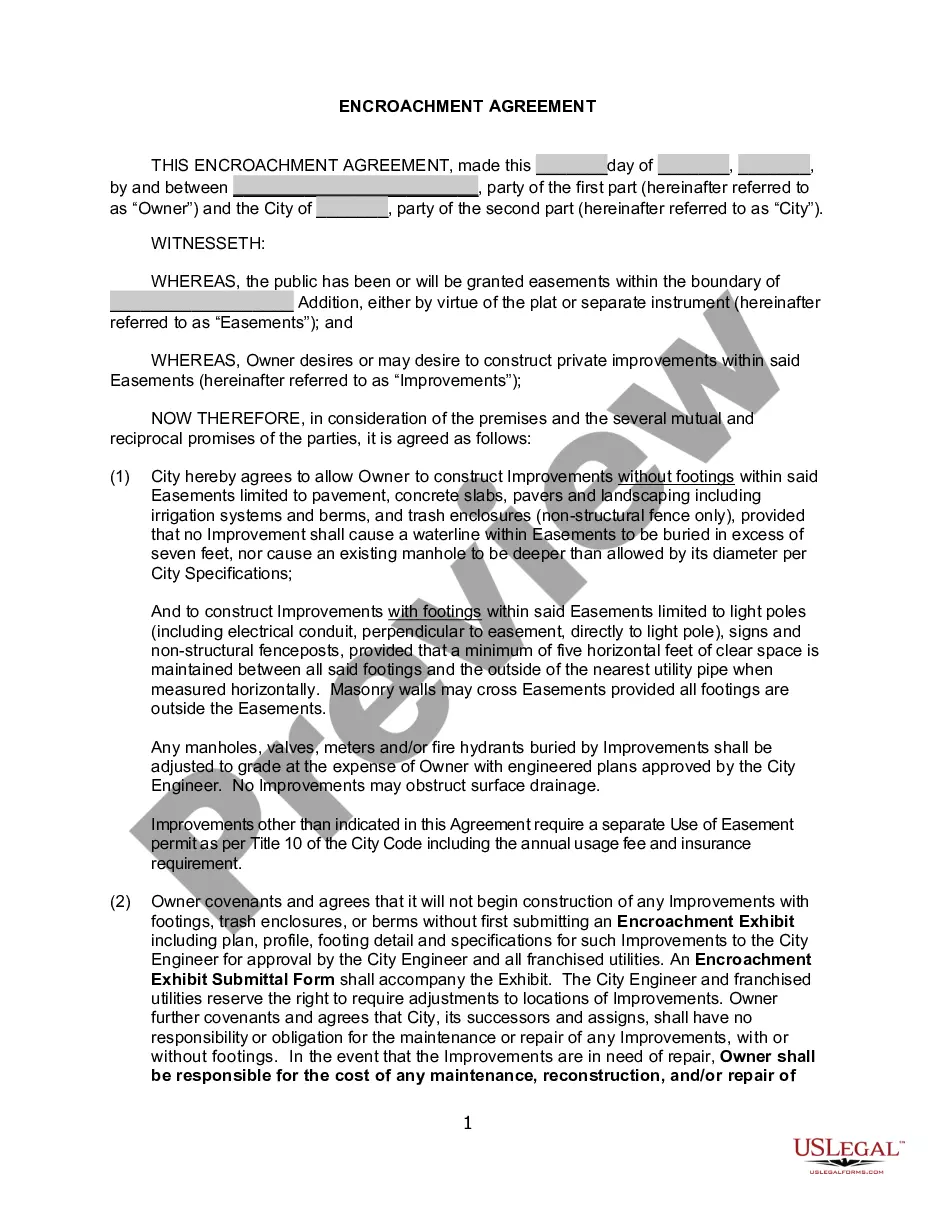
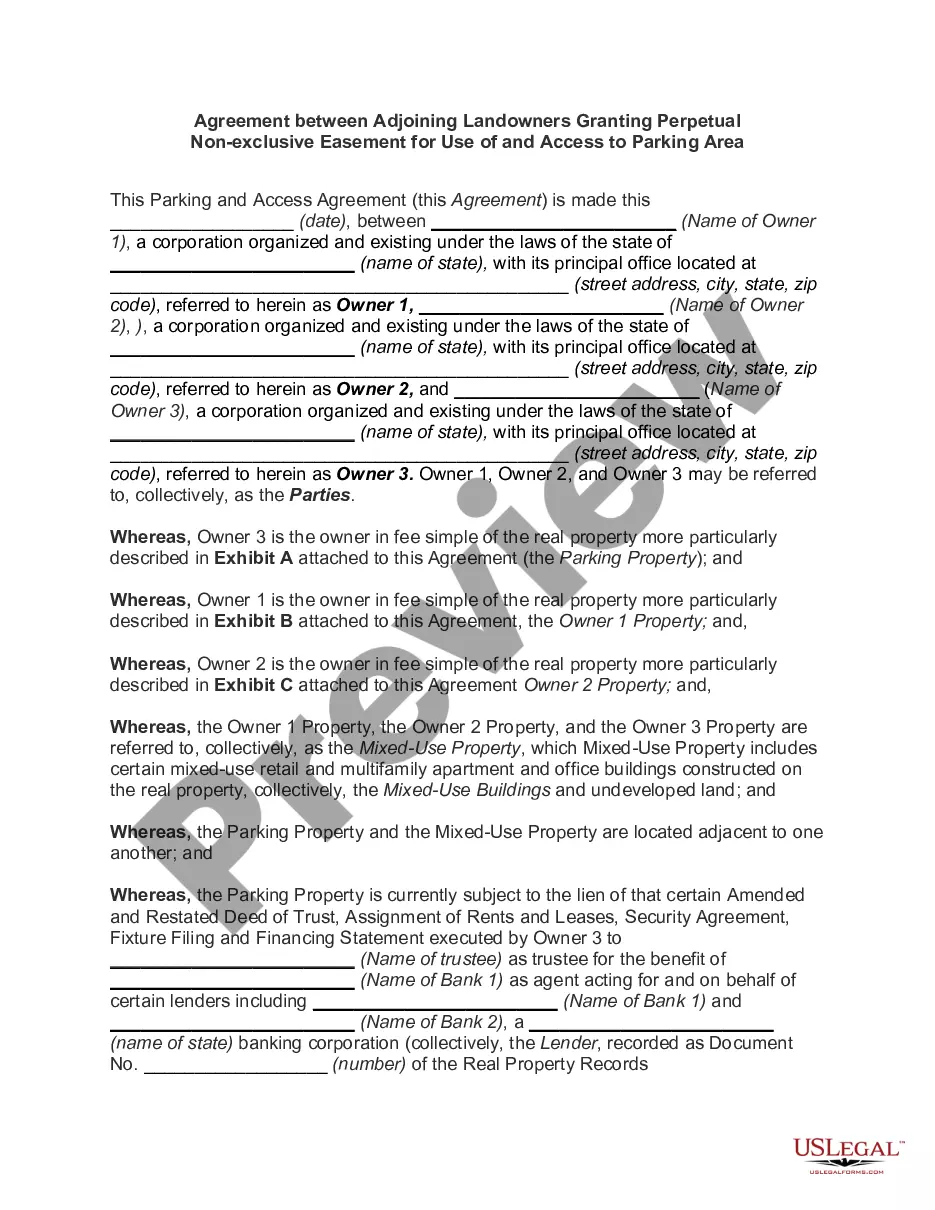
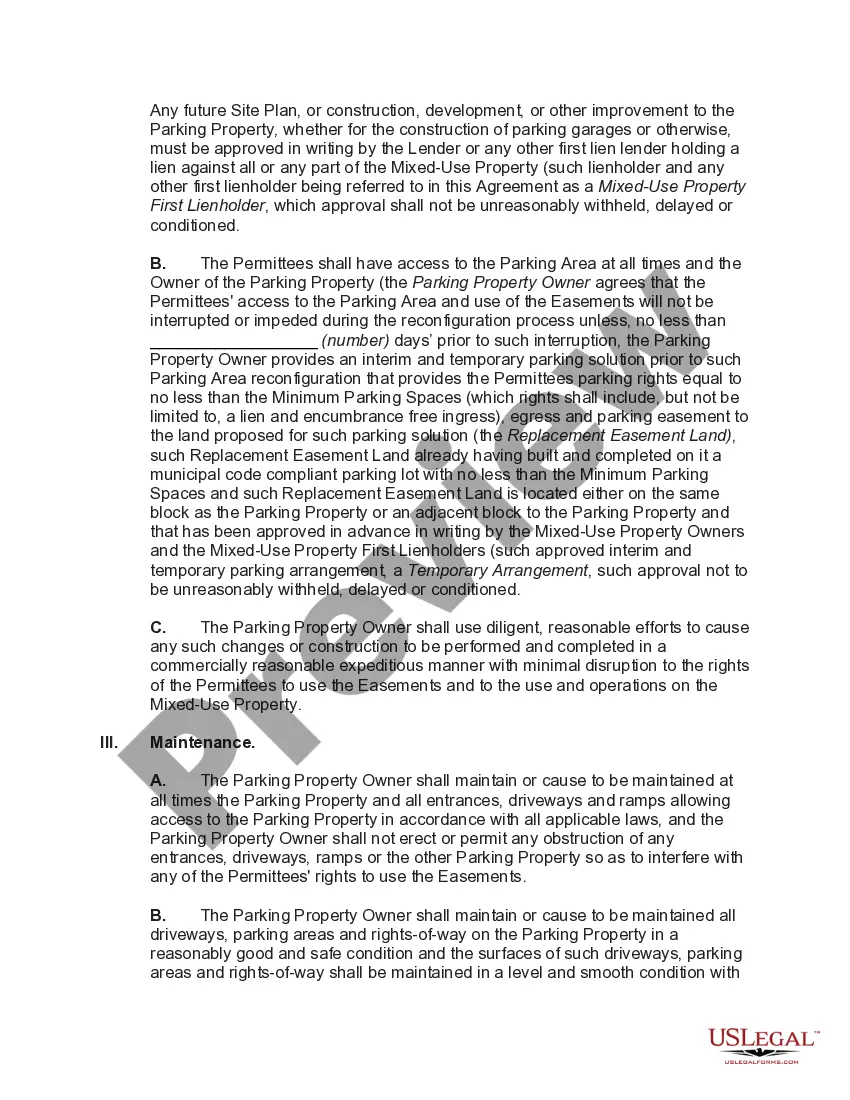
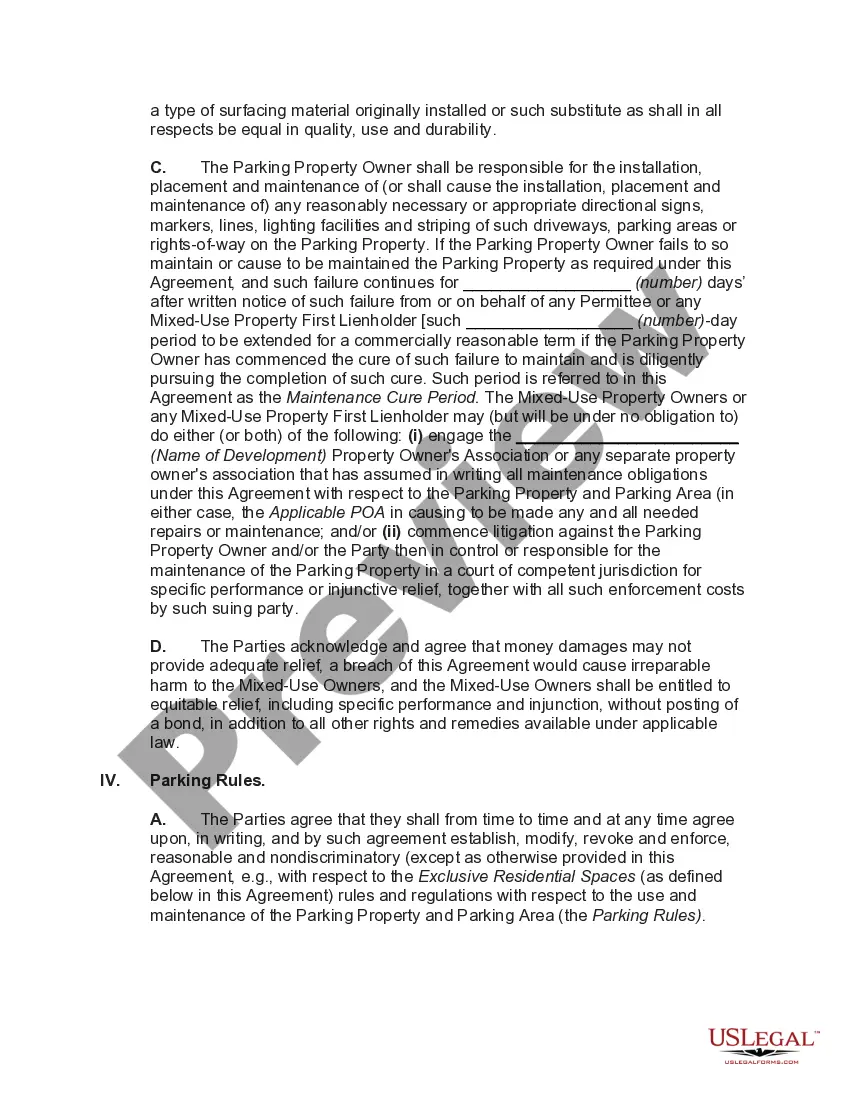
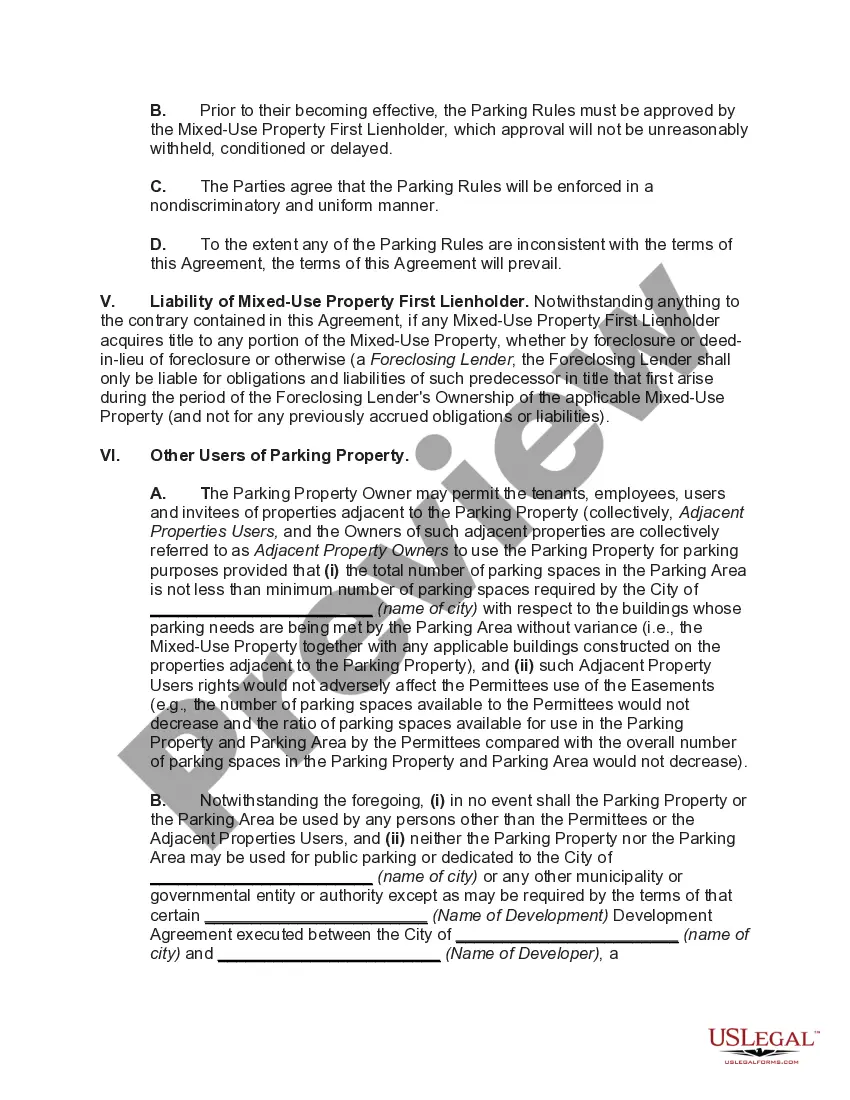
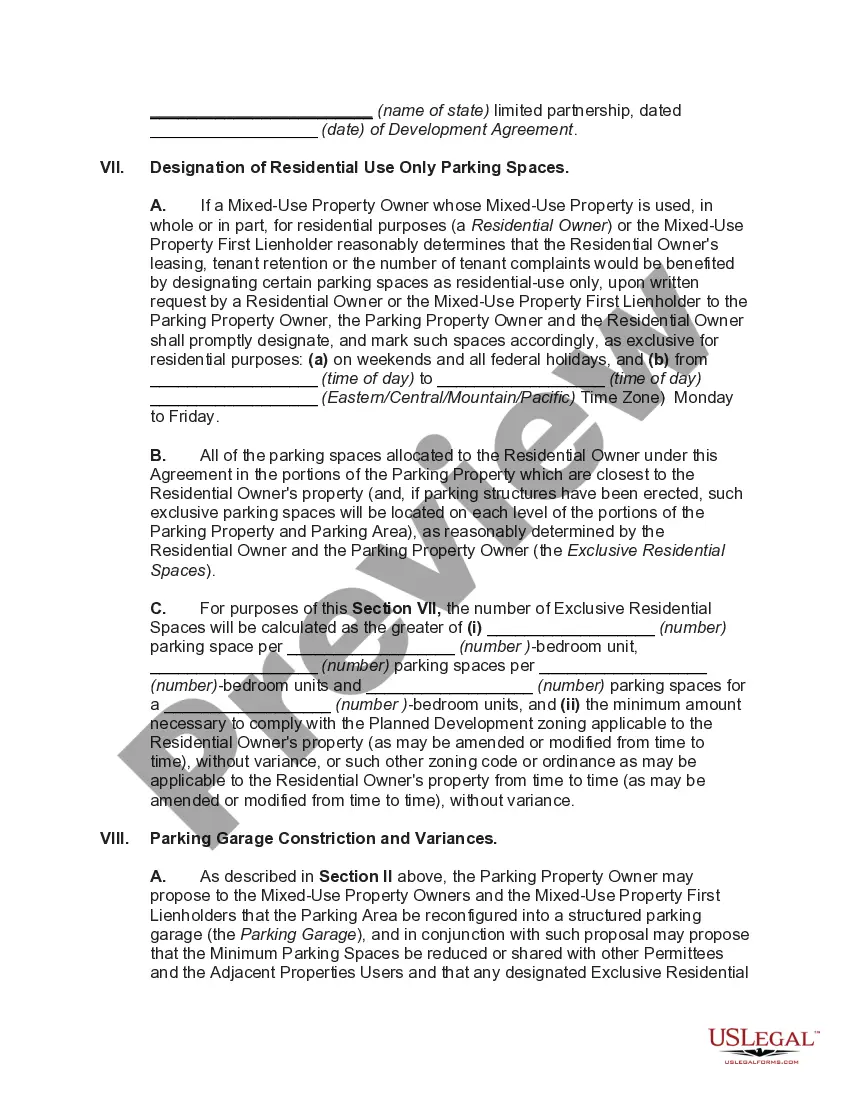
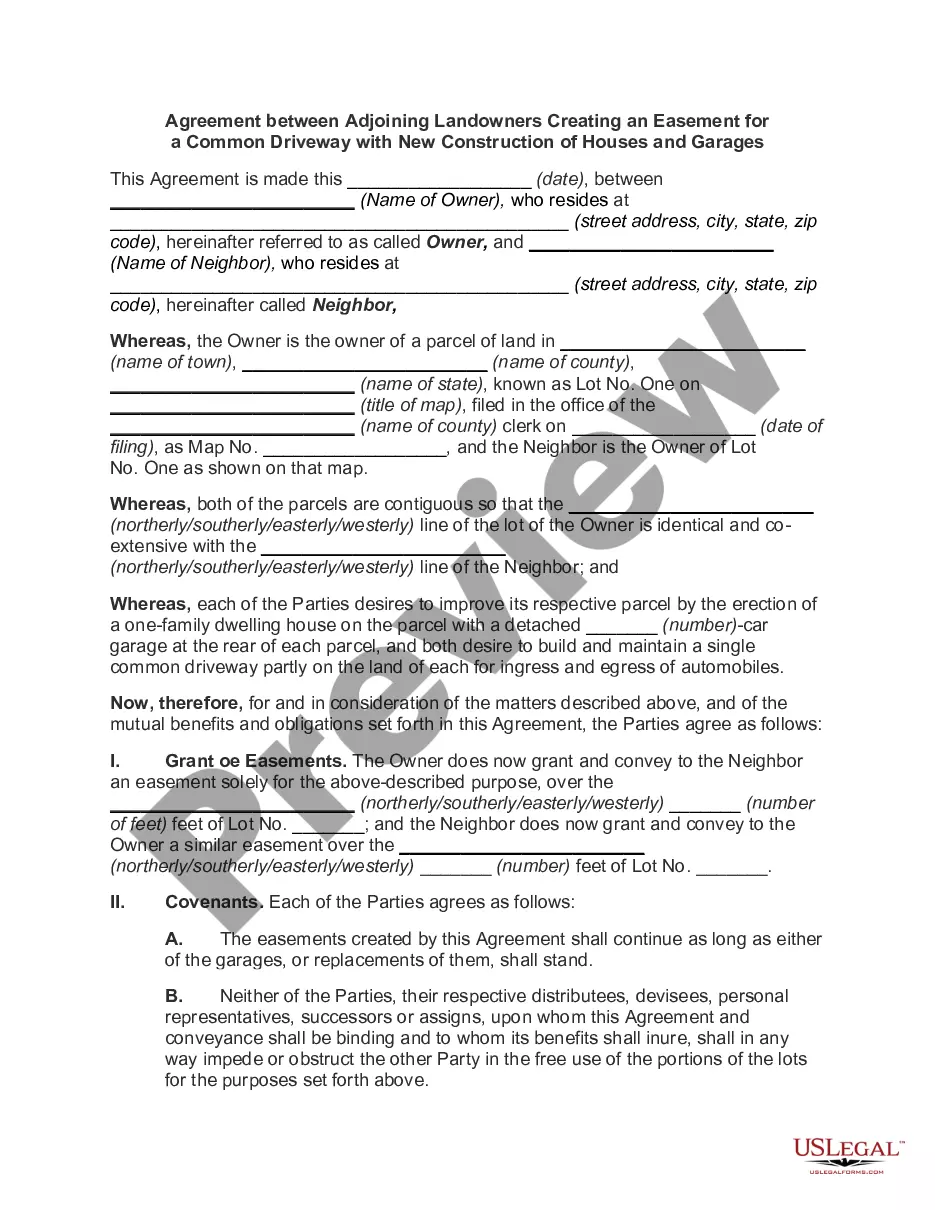
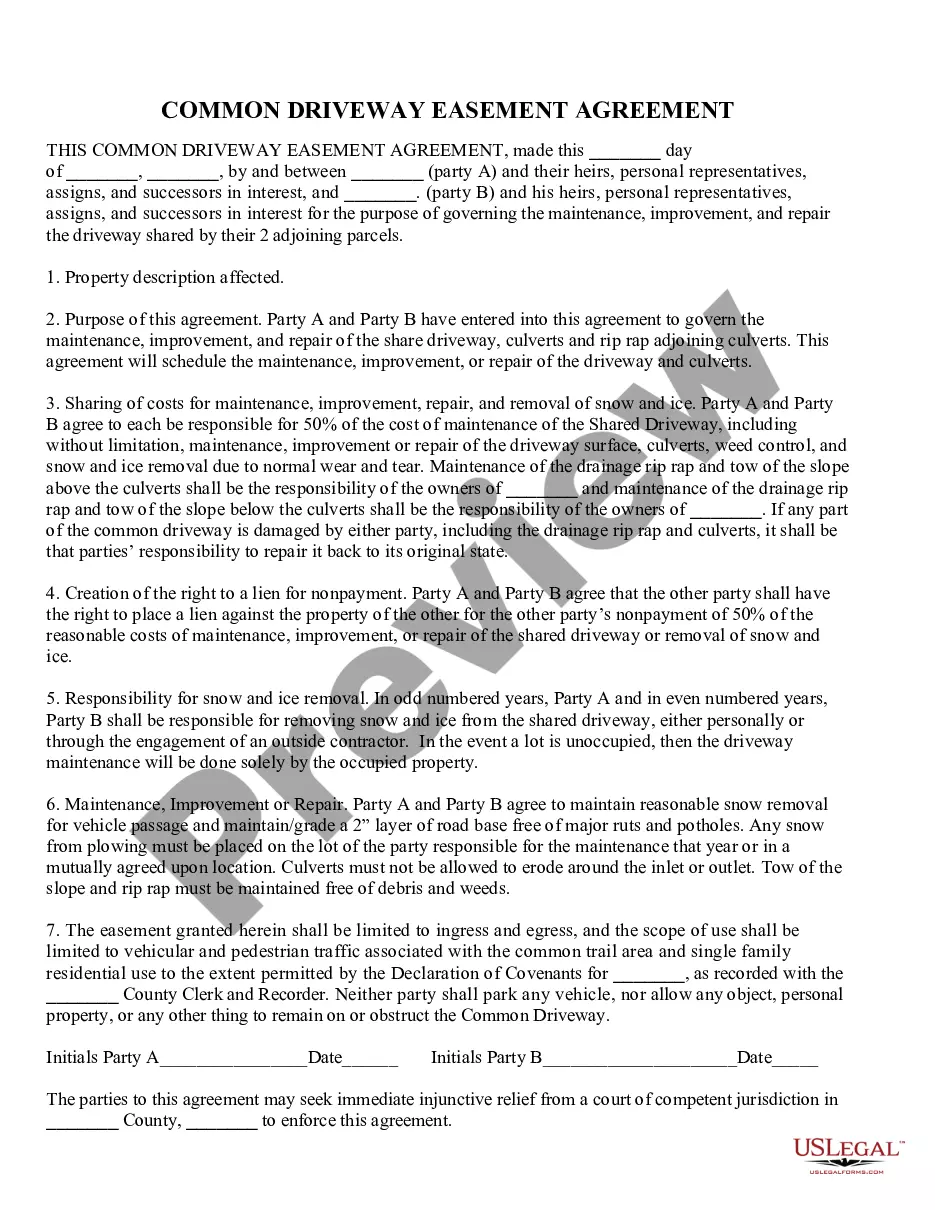
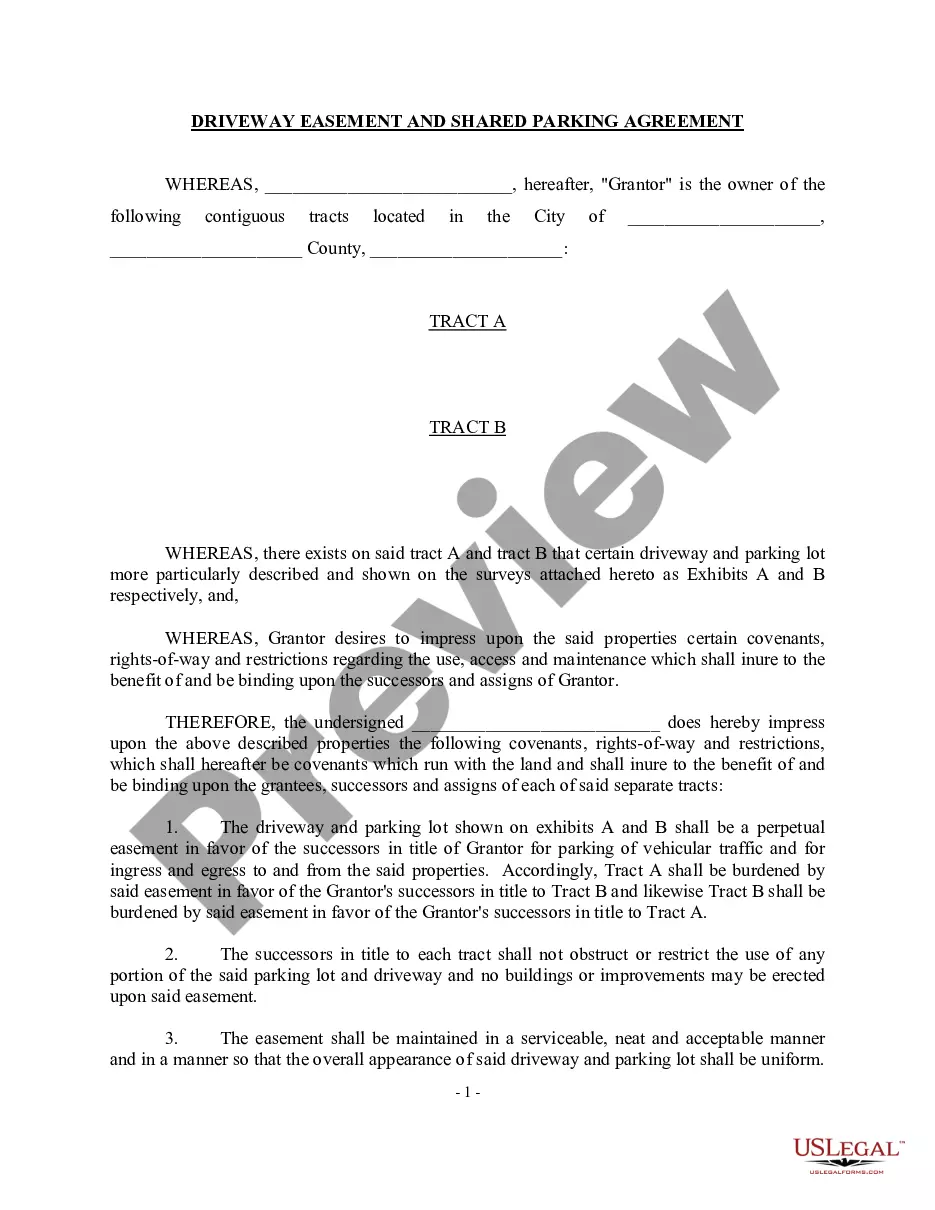
This Agreement between Adjoining Landowners Granting Perpetual Non-exclusive Easement for Use of and Access to Parking Area is a legal document that establishes easement rights between neighboring property owners. It allows designated users access to a parking area located on one party's property, ensuring that the neighboring properties benefit from the shared use of parking spaces. Unlike exclusive easement agreements, this form grants non-exclusive access, permitting multiple users to share the parking area without overriding each party's rights to their individual property.
Key components of this form
- Parties involved: States the legal names and addresses of the property owners involved in the agreement.
- Description of properties: Identifies and describes the properties affected by the easement.
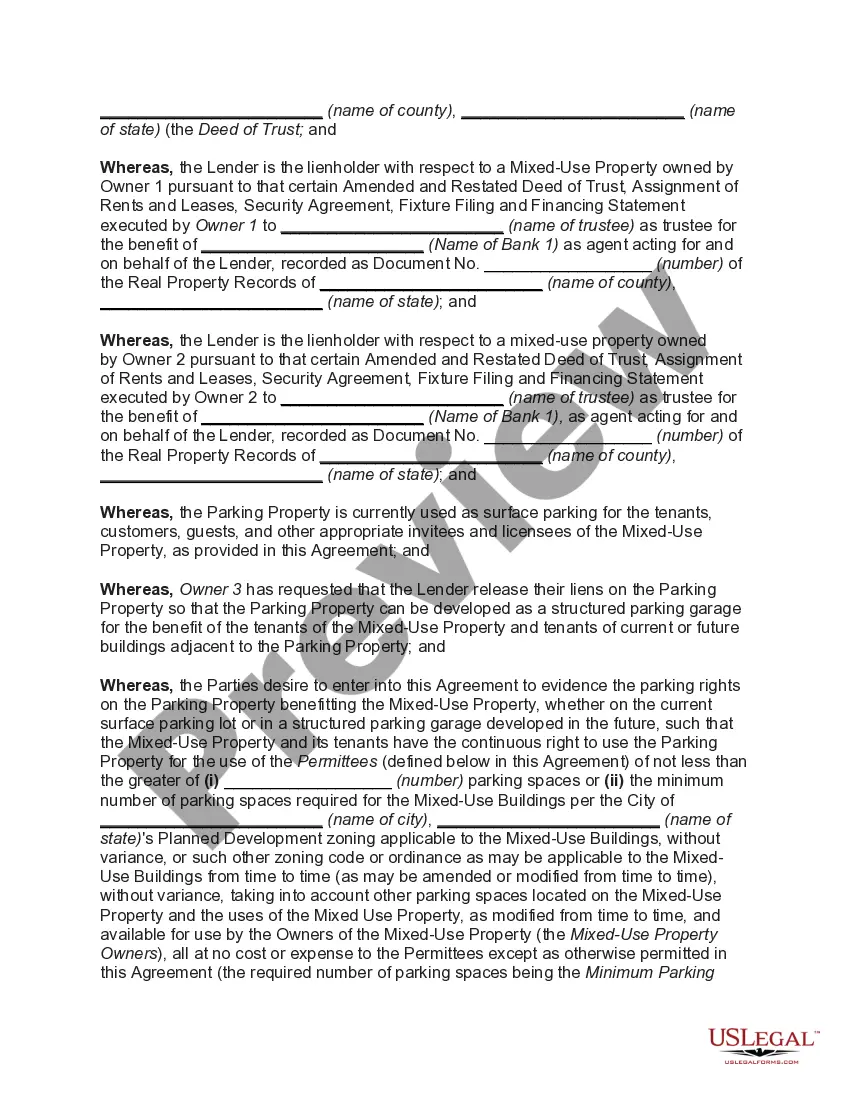
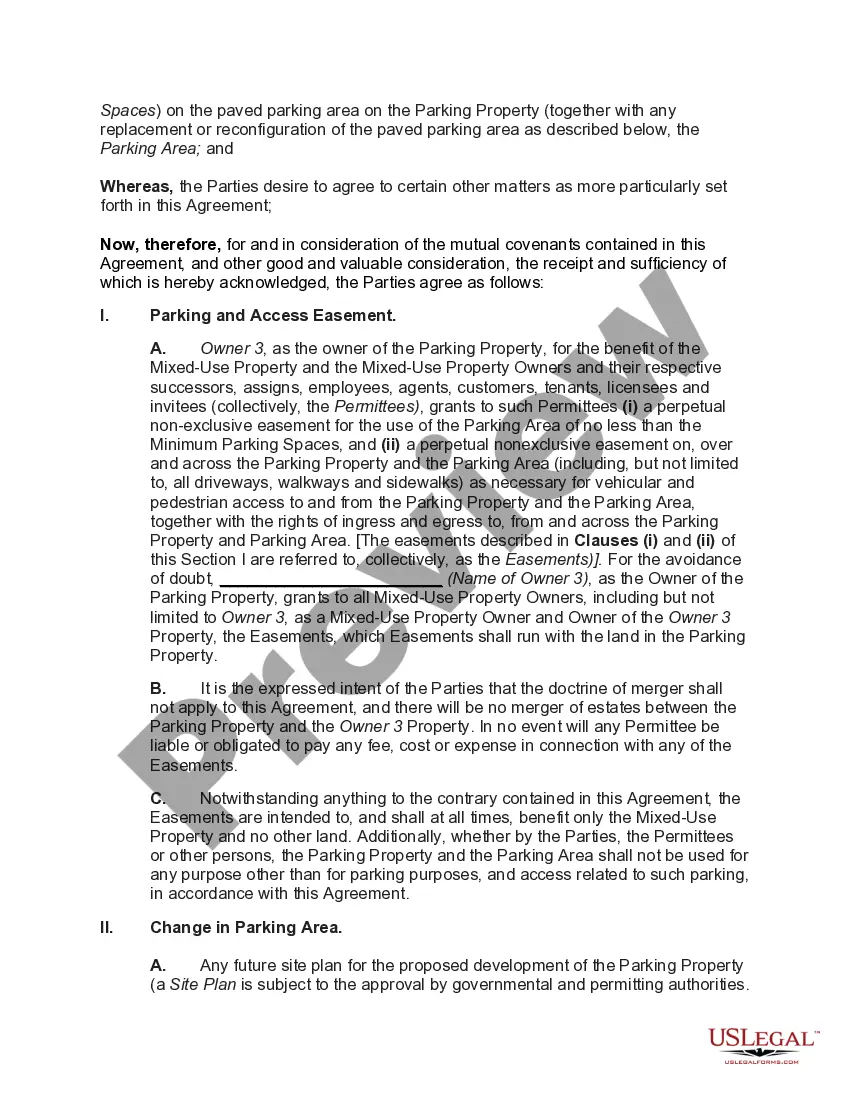
- Access rights: Specifies the non-exclusive easement rights to the parking area, including the number of parking spaces.
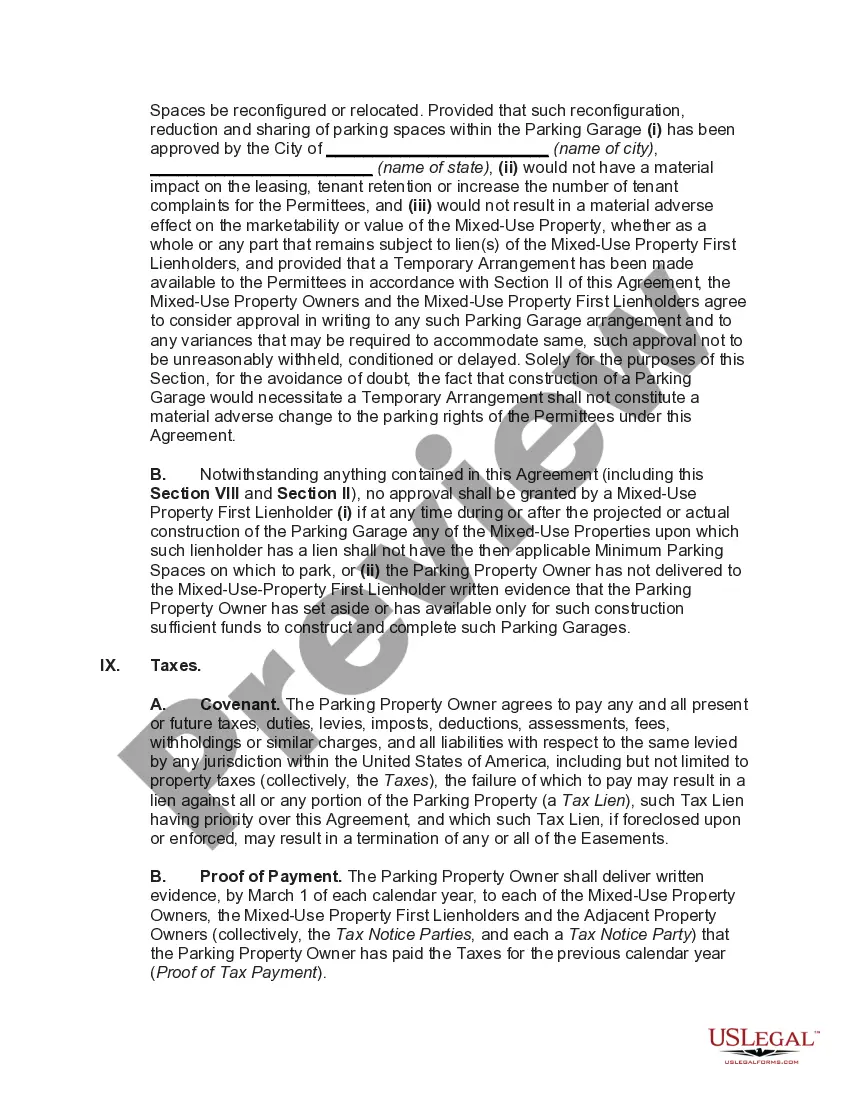
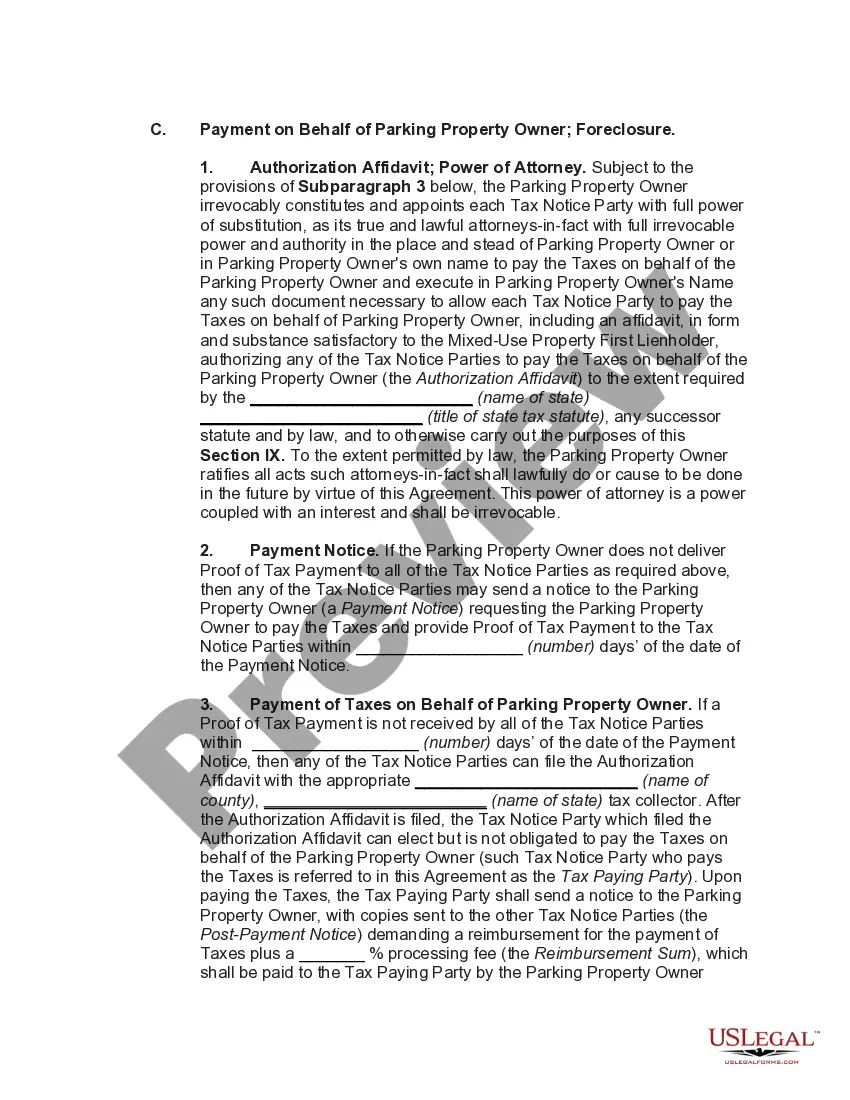
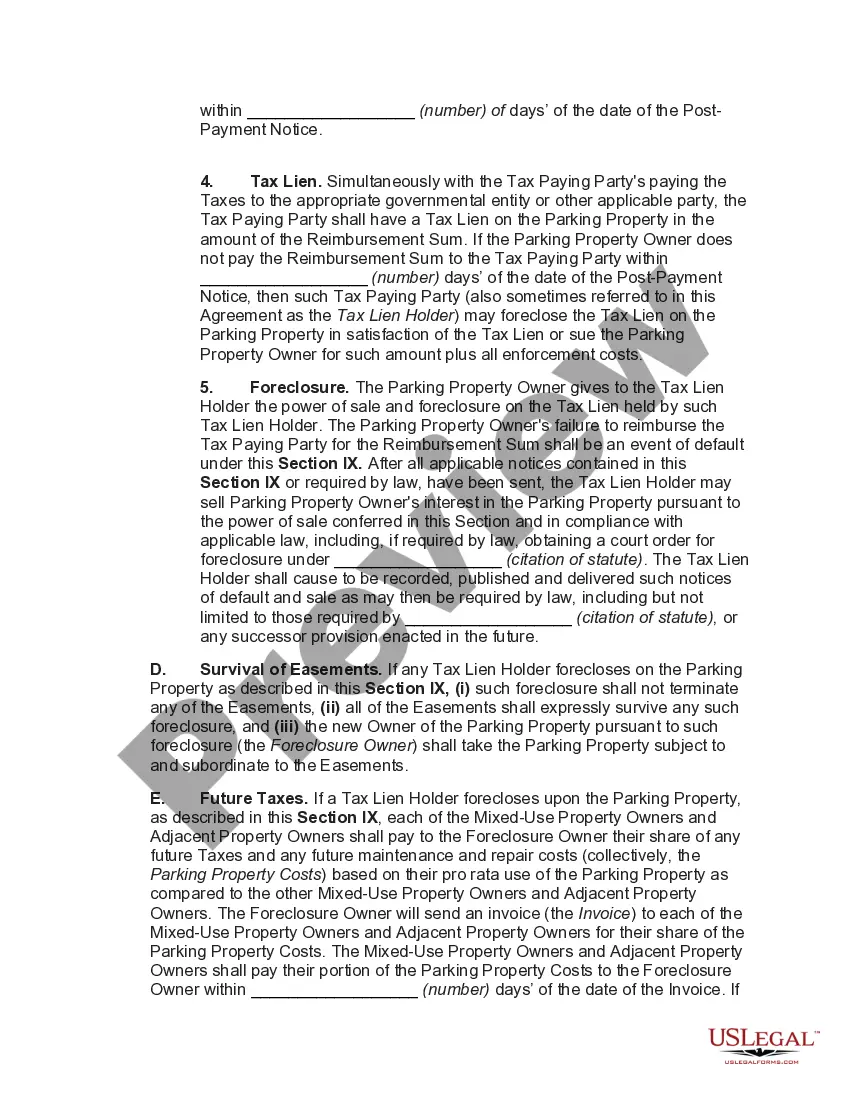
- Maintenance obligations: Outlines responsibilities for maintaining the parking area and access roads.
- Approval requirements: Details the conditions under which any changes can be made to the parking area configuration.

Common use cases
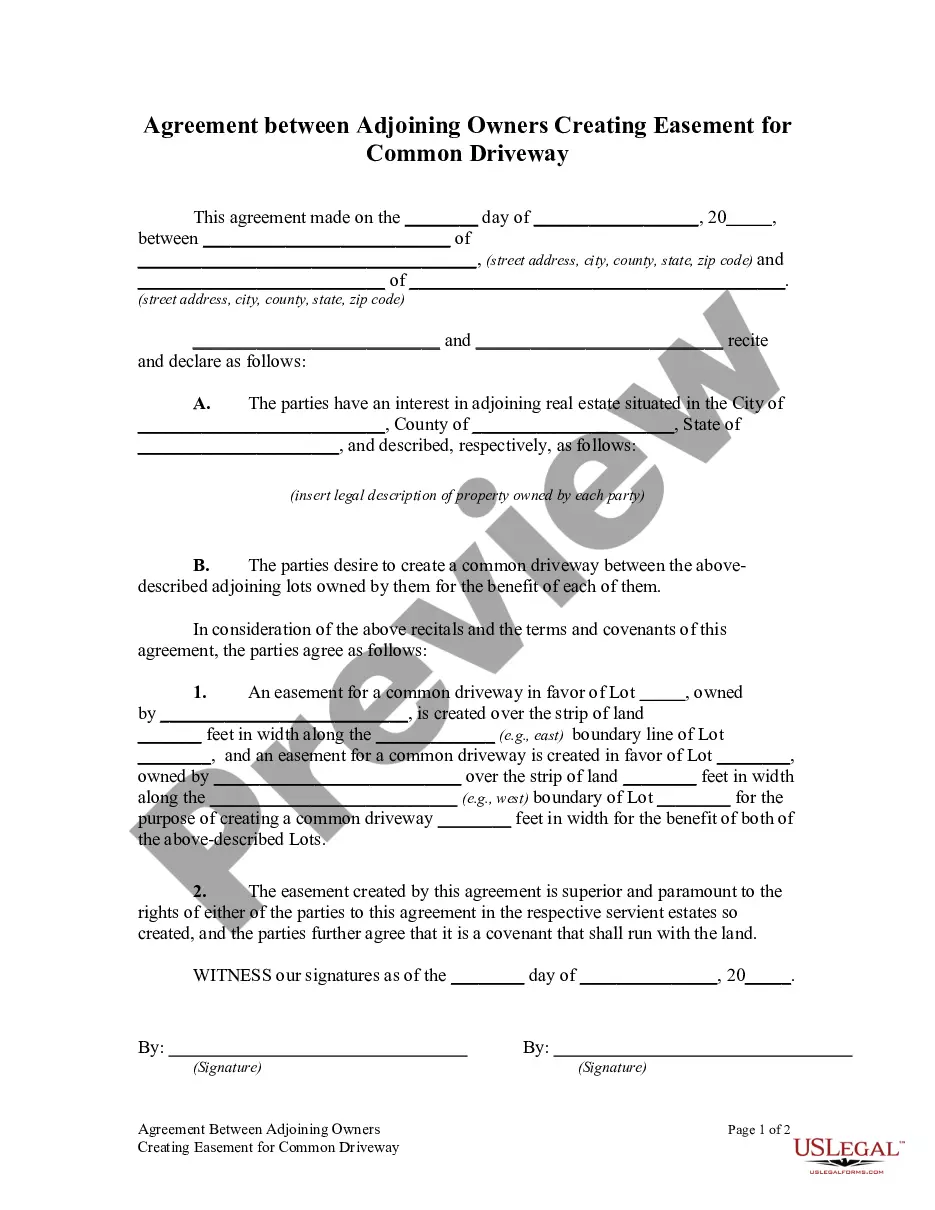
This form should be used when adjoining property owners want to establish easement rights that allow access to shared parking facilities. It is particularly relevant in scenarios where multiple properties require access to a common parking area, such as mixed-use developments, retail spaces, or residential complexes that benefit from shared parking solutions. The agreement ensures that all parties have a clear understanding of their rights and obligations regarding the shared parking facility.
Who can use this document
- Property owners in adjacent locations seeking shared parking arrangements.
- Developers of mixed-use properties who need to ensure access to parking for tenants and customers.
- Commercial and residential landlords wanting to formalize parking rights with neighboring property owners.
- Real estate professionals assisting clients in negotiating easements related to parking access.
Instructions for completing this form
- Identify the parties: Enter the legal names and addresses of all property owners involved in the agreement.
- Describe the properties: Attach Exhibit A, Exhibit B, and Exhibit C to specify details of the parking and adjoining properties.
- Define access rights: Specify the number of parking spaces being granted to each property and the access routes to the parking area.
- Outline maintenance responsibilities: Clearly define who will be responsible for maintaining the parking area and ensuring compliance with local codes.
- Sign and date the agreement: All parties must sign and date the document to make it legally binding.
Notarization requirements for this form
This form does not typically require notarization unless specified by local law. However, parties should check their respective state requirements to ensure compliance.
Get your form ready online
Our built-in tools help you complete, sign, share, and store your documents in one place.
Make edits, fill in missing information, and update formatting in US Legal Forms—just like you would in MS Word.
Download a copy, print it, send it by email, or mail it via USPS—whatever works best for your next step.
Sign and collect signatures with our SignNow integration. Send to multiple recipients, set reminders, and more. Go Premium to unlock E-Sign.
If this form requires notarization, complete it online through a secure video call—no need to meet a notary in person or wait for an appointment.
We protect your documents and personal data by following strict security and privacy standards.

Make edits, fill in missing information, and update formatting in US Legal Forms—just like you would in MS Word.

Download a copy, print it, send it by email, or mail it via USPS—whatever works best for your next step.

Sign and collect signatures with our SignNow integration. Send to multiple recipients, set reminders, and more. Go Premium to unlock E-Sign.

If this form requires notarization, complete it online through a secure video call—no need to meet a notary in person or wait for an appointment.

We protect your documents and personal data by following strict security and privacy standards.
Avoid these common issues
- Failing to properly identify all parties involved in the agreement.
- Not attaching the required exhibits that describe the properties and parking spaces.
- Omitting key details regarding maintenance responsibilities and access rights.
- Not having all parties sign the document before implementation.
Benefits of completing this form online
- Convenience: Download and complete the form at your own pace, avoiding trips to a lawyer.
- Editability: Easily fill in the required fields and customize details specific to your properties.
- Reliability: Access templates drafted by licensed attorneys, ensuring legal compliance and clarity.
Looking for another form?


Form popularity
FAQ
If the property is sold to a new owner, the easement is typically transferred with the property. The holder of the easement, however, has a personal right to the easement and is prohibited from transferring the easement to another person or company.
Generally, easements are created by express grant or reservation. Easements are perpetual unless they are expressly limited, or terminated by agreement, abandonment, implication (e.g. necessity ceases to exist), adverse possession, or another means of formal termination.
The party gaining the benefit of the easement is the dominant estate (or dominant tenement), while the party granting the benefit or suffering the burden is the servient estate (or servient tenement). For example, the owner of parcel A holds an easement to use a driveway on parcel B to gain access to A's house.
Property law allows for an easement owner to transfer his easement to another person. And as with other property interests, in some ways an easement owner can divide his easement rights and transfer some of them to another person. Similarly, a servient owner can transfer the servient land to another person.
This is similar to adverse possession, however, an easement does not convey ownership rights to the property like adverse possession does. Easements may also be granted out of necessity such as traveling across another's property to gain access to a property that is landlocked.
Perpetual easement is that type of easement which is to last without any limitation of time. It is a right which a person has on the property of another person which to an extent is permanent.
A perpetual non-exclusive easement renders the land permanently accessible to all those who benefit from the easement. Alternatively, a temporary non-exclusive easement is granted for a specific period of time. Non-exclusive easements are generally perpetual in nature and attach to the land.