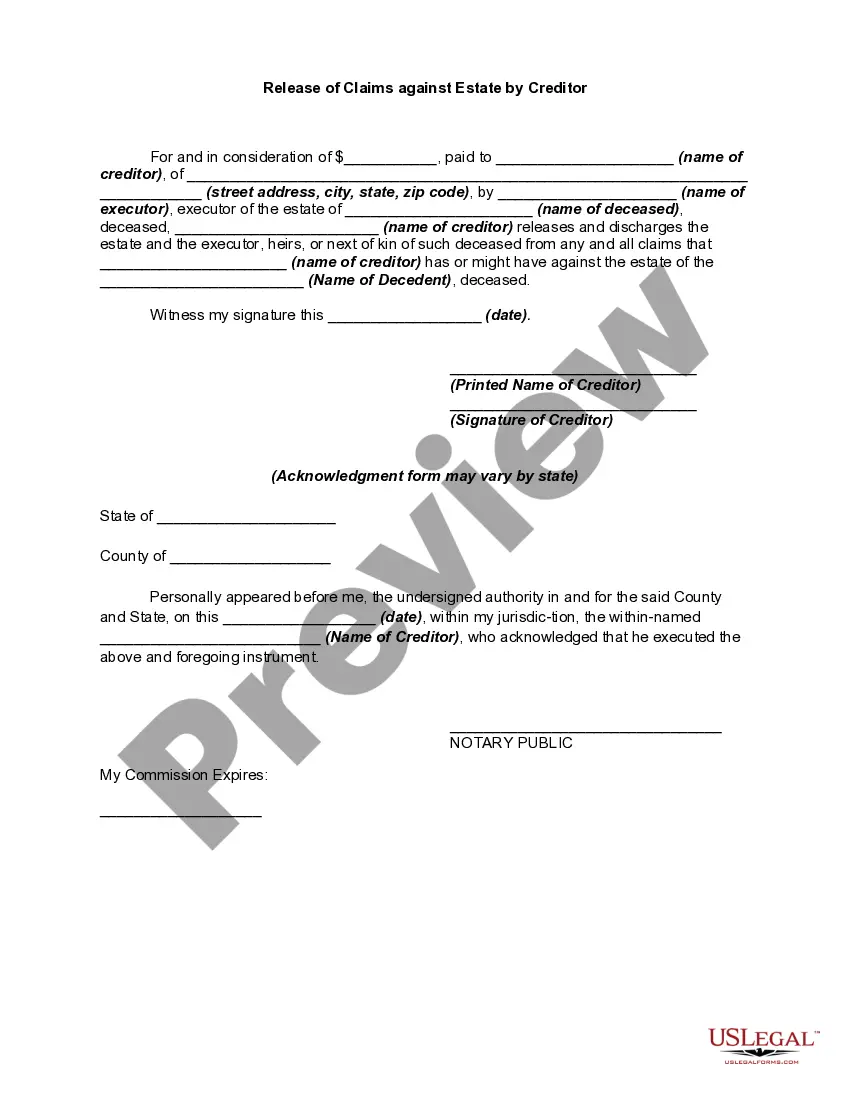
Claims Against Estate
Description
Get your form ready online
Our built-in tools help you complete, sign, share, and store your documents in one place.
Make edits, fill in missing information, and update formatting in US Legal Forms—just like you would in MS Word.
Download a copy, print it, send it by email, or mail it via USPS—whatever works best for your next step.
Sign and collect signatures with our SignNow integration. Send to multiple recipients, set reminders, and more. Go Premium to unlock E-Sign.
If this form requires notarization, complete it online through a secure video call—no need to meet a notary in person or wait for an appointment.
We protect your documents and personal data by following strict security and privacy standards.

Make edits, fill in missing information, and update formatting in US Legal Forms—just like you would in MS Word.

Download a copy, print it, send it by email, or mail it via USPS—whatever works best for your next step.

Sign and collect signatures with our SignNow integration. Send to multiple recipients, set reminders, and more. Go Premium to unlock E-Sign.

If this form requires notarization, complete it online through a secure video call—no need to meet a notary in person or wait for an appointment.

We protect your documents and personal data by following strict security and privacy standards.
Looking for another form?
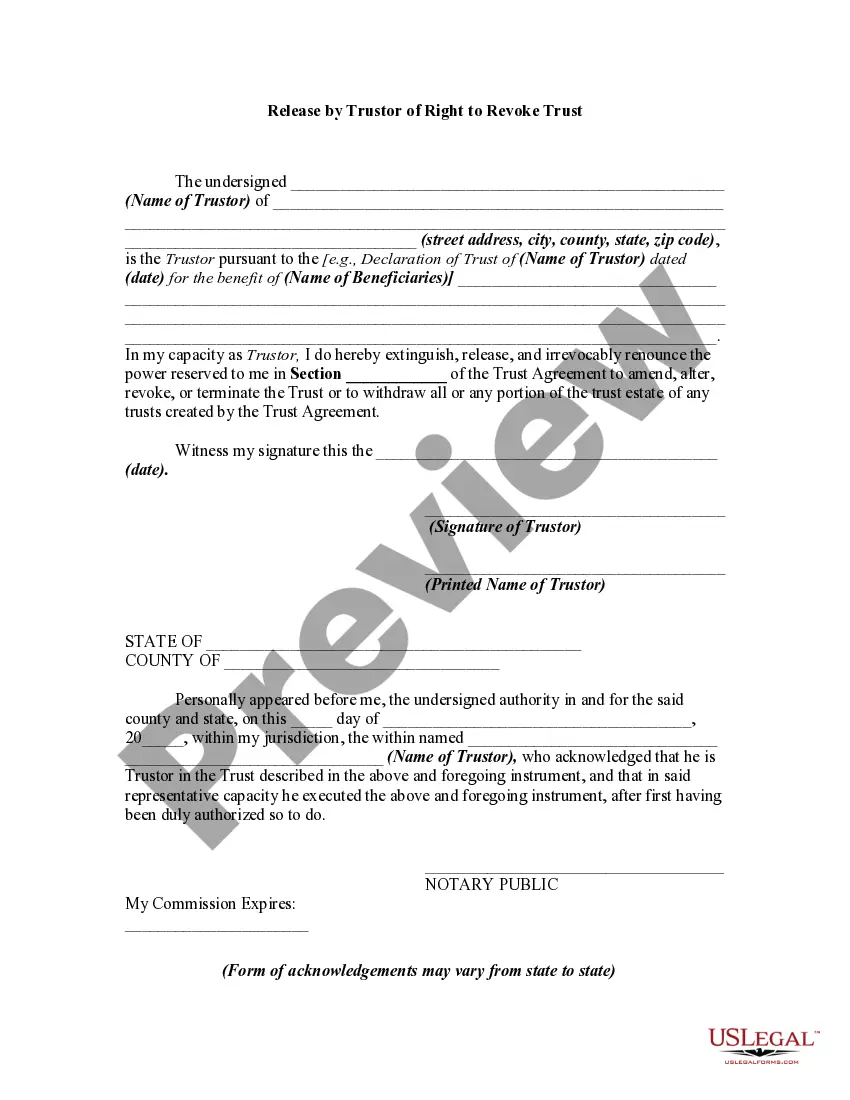
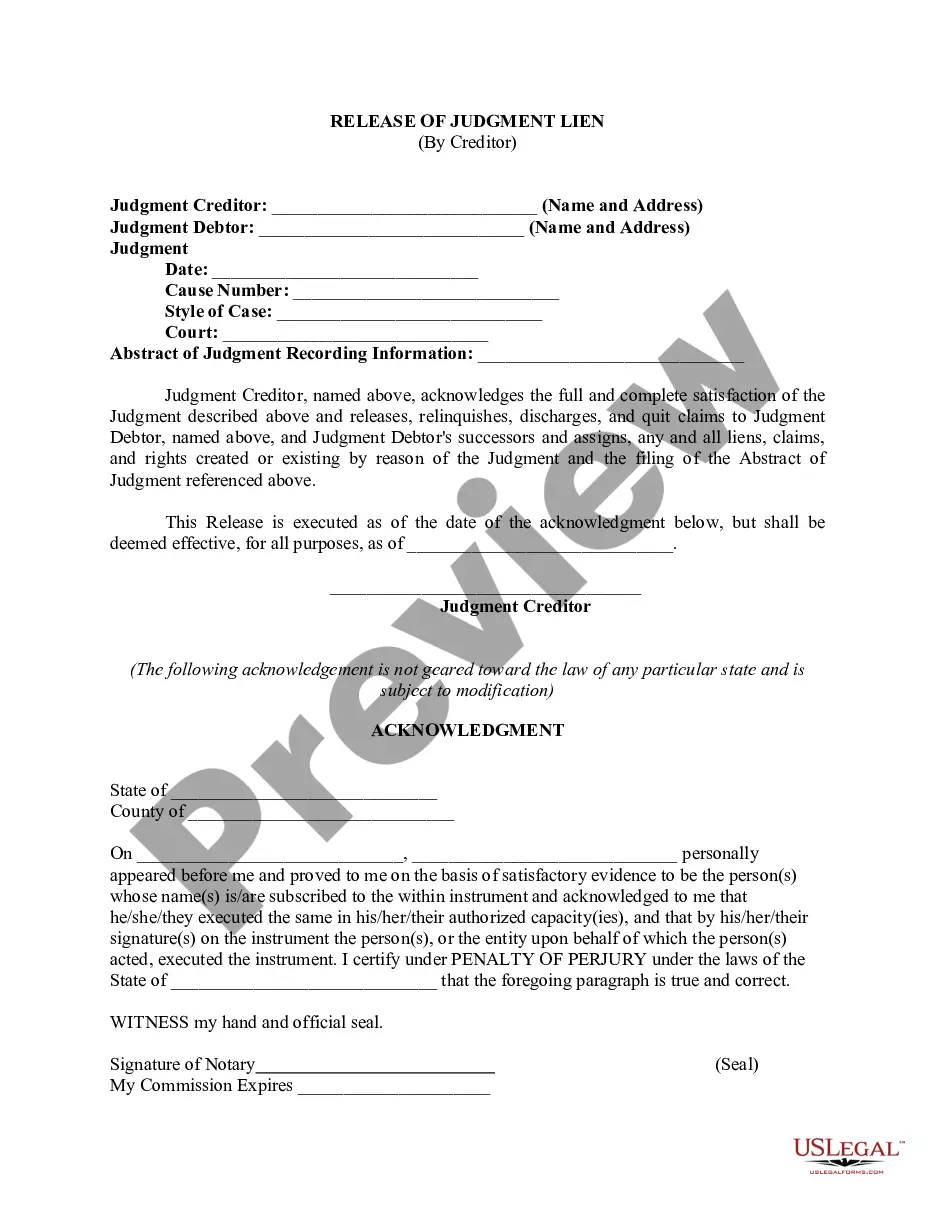
How to fill out Release Of Claims Against Estate By Creditor?
- If you are a returning user, log into your account and locate the necessary form template. Click the Download button to save it to your device, ensuring your subscription is current.
- If you are a first-time user, begin by checking the Preview mode and descriptions of available forms. Confirm that the chosen document aligns with your needs and meets local jurisdiction rules.
- If the desired form is not suitable, utilize the Search tab to find an alternative that matches your requirements.
- Proceed to purchase the document by clicking the Buy Now button. Select the subscription plan that best fits your needs and create an account for full access.
- Complete your purchase by entering your payment details via credit card or PayPal.
- Once your payment is confirmed, download your form to save it on your device. You can also find it later in the My Forms section of your profile.
In conclusion, US Legal Forms offers a robust library with over 85,000 legal documents that can simplify your experience with claims against estate matters. By following these straightforward steps, you ensure your documentation is accurate and compliant with legal standards.
Start your journey towards hassle-free legal documentation today by browsing US Legal Forms!
Form popularity
FAQ
The time limit to file a lawsuit against an estate varies by state; however, many places require you to act within a certain timeframe after the estate enters probate. Generally, this period can be anywhere from a few months to several years, depending on local laws. Always check the specific regulations for claims against the estate, as missing deadlines could jeopardize your claim.
To make a claim against an estate, you need to identify and follow the legal process established by the probate court. This often includes submitting your claim in writing, detailing the basis of your claim, and providing necessary documentation. Utilizing a trusted legal service like US Legal Forms can guide you through this process effectively.
Yes, you can file a lawsuit against an estate if you have a valid claim. This typically involves filing in the probate court where the estate is being administered. It's important to understand that claims against the estate must follow specific legal procedures, and seeking legal advice can significantly help smooth the process.
You can sue an estate for various reasons, including unpaid debts, breach of contract, or negligence that led to the deceased’s death. Claims against the estate can also involve disputes over the validity of a will. If you believe you have a legitimate claim, it's wise to gather your evidence and consult with an attorney specializing in estate law.
To make a claim against someone's estate, you typically need to submit a written request that outlines the nature of your claim along with any supporting documentation. It's often advisable to consult with a legal professional to ensure your claim aligns with the laws governing claims against estate. Understanding the process can maximize your chances of a successful resolution.
The 3-year rule for a deceased estate dictates that certain claims against the estate must be filed within three years of the deceased's death. This rule helps to ensure that estates are settled in a timely manner. It's vital to be aware of this timeline for claims against the estate; missing it may prevent you from recovering what you are owed.
A claim against the estate refers to a formal request for payment from the assets of a deceased person's estate. These claims can arise from debts, unpaid bills, or any potential compensation owed to creditors. Understanding claims against the estate is crucial for both executors and beneficiaries, as they affect the distribution of the estate.
A funeral home can put a lien on property if the deceased left unpaid funeral bills. To establish a lien, the funeral home must follow legal procedures, including proper notice to the estate. This guarantee allows them to recover costs associated with the services provided. If you're dealing with claims involving a funeral home, consider using US Legal Forms for assistance in managing these matters efficiently.
Yes, you can file a lien against an estate, especially if you have an outstanding debt owed by the deceased. Filing a lien serves as a legal claim to secure your interest in the estate's assets. This process usually involves following specific legal steps in the jurisdiction that oversees the estate. US Legal Forms can assist you in understanding how to properly file a lien against an estate.
You can sue an estate after probate, but there are specific time limits for doing so. Typically, claims against an estate must be submitted within the timeframe established by the probate court. This often depends on state law, so it's important to consult local regulations. Keep in mind that US Legal Forms can provide valuable resources to navigate lawsuits involving claims against an estate.