Unincorporated Nonprofit Association
Description


Get your form ready online
Our built-in tools help you complete, sign, share, and store your documents in one place.
Make edits, fill in missing information, and update formatting in US Legal Forms—just like you would in MS Word.
Download a copy, print it, send it by email, or mail it via USPS—whatever works best for your next step.
Sign and collect signatures with our SignNow integration. Send to multiple recipients, set reminders, and more. Go Premium to unlock E-Sign.
If this form requires notarization, complete it online through a secure video call—no need to meet a notary in person or wait for an appointment.
We protect your documents and personal data by following strict security and privacy standards.

Make edits, fill in missing information, and update formatting in US Legal Forms—just like you would in MS Word.

Download a copy, print it, send it by email, or mail it via USPS—whatever works best for your next step.

Sign and collect signatures with our SignNow integration. Send to multiple recipients, set reminders, and more. Go Premium to unlock E-Sign.

If this form requires notarization, complete it online through a secure video call—no need to meet a notary in person or wait for an appointment.

We protect your documents and personal data by following strict security and privacy standards.
Looking for another form?






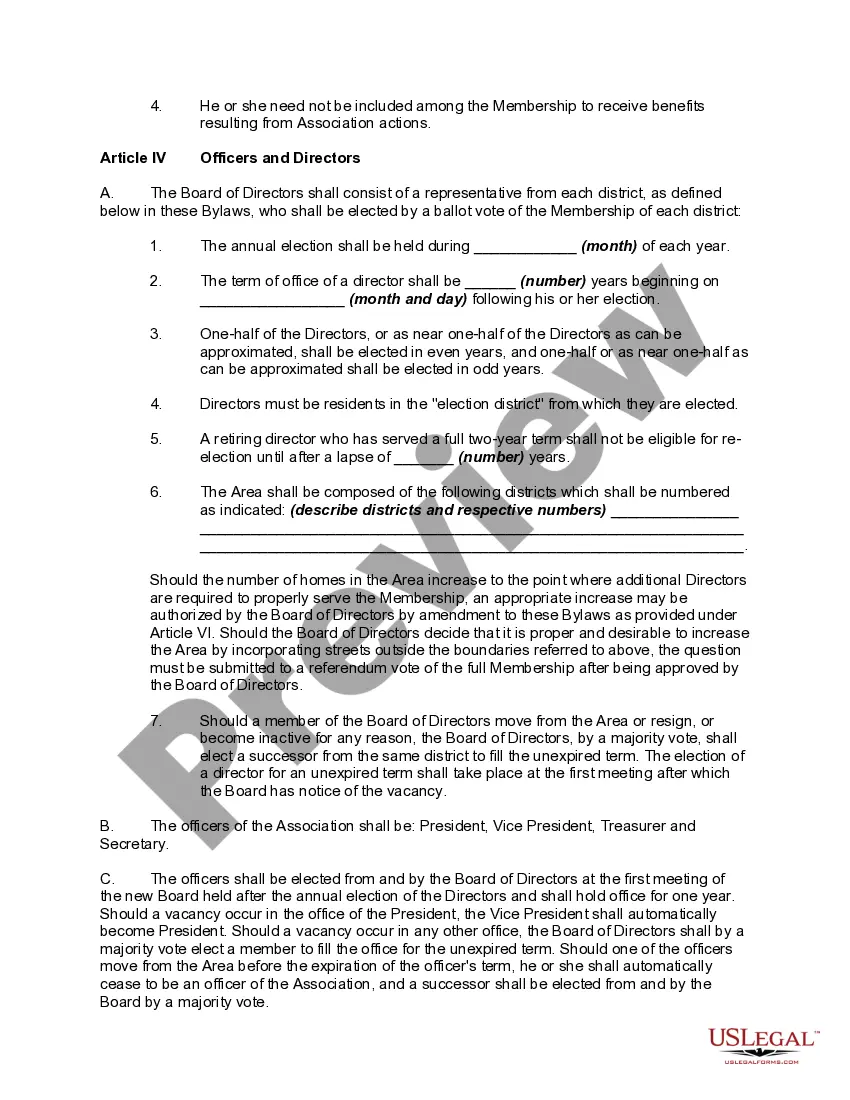
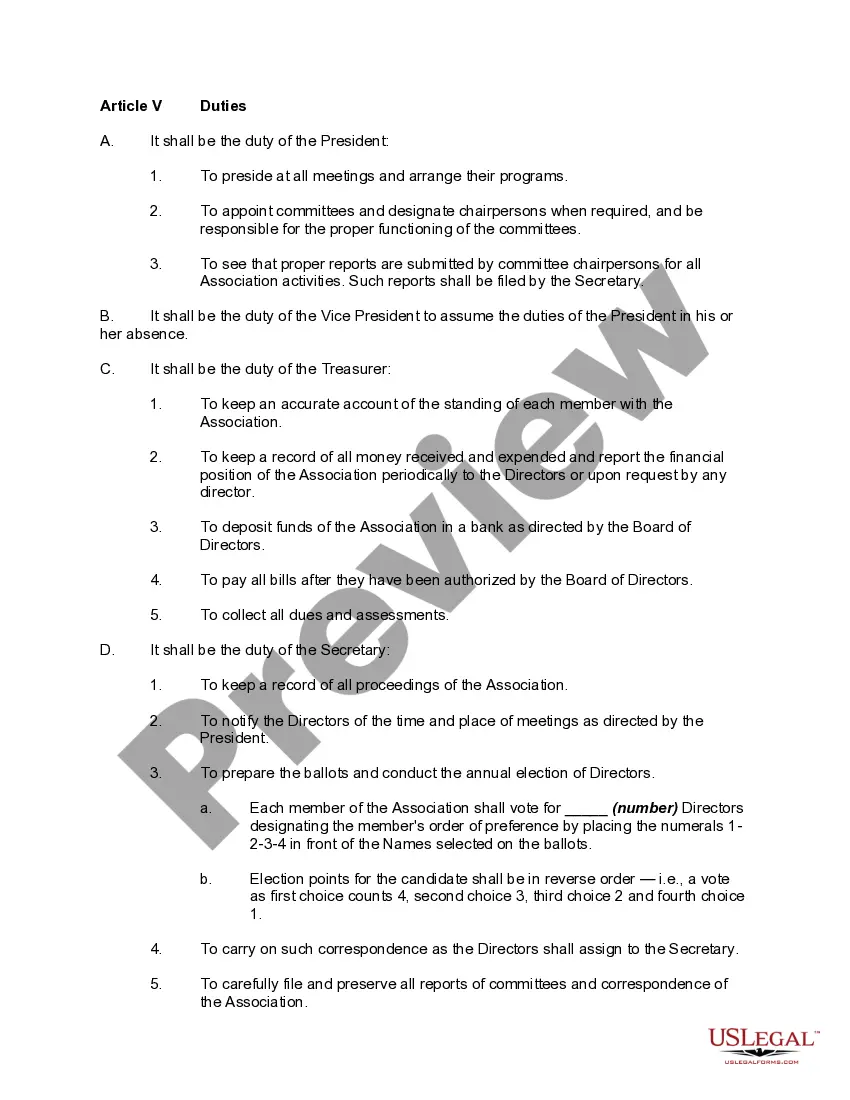
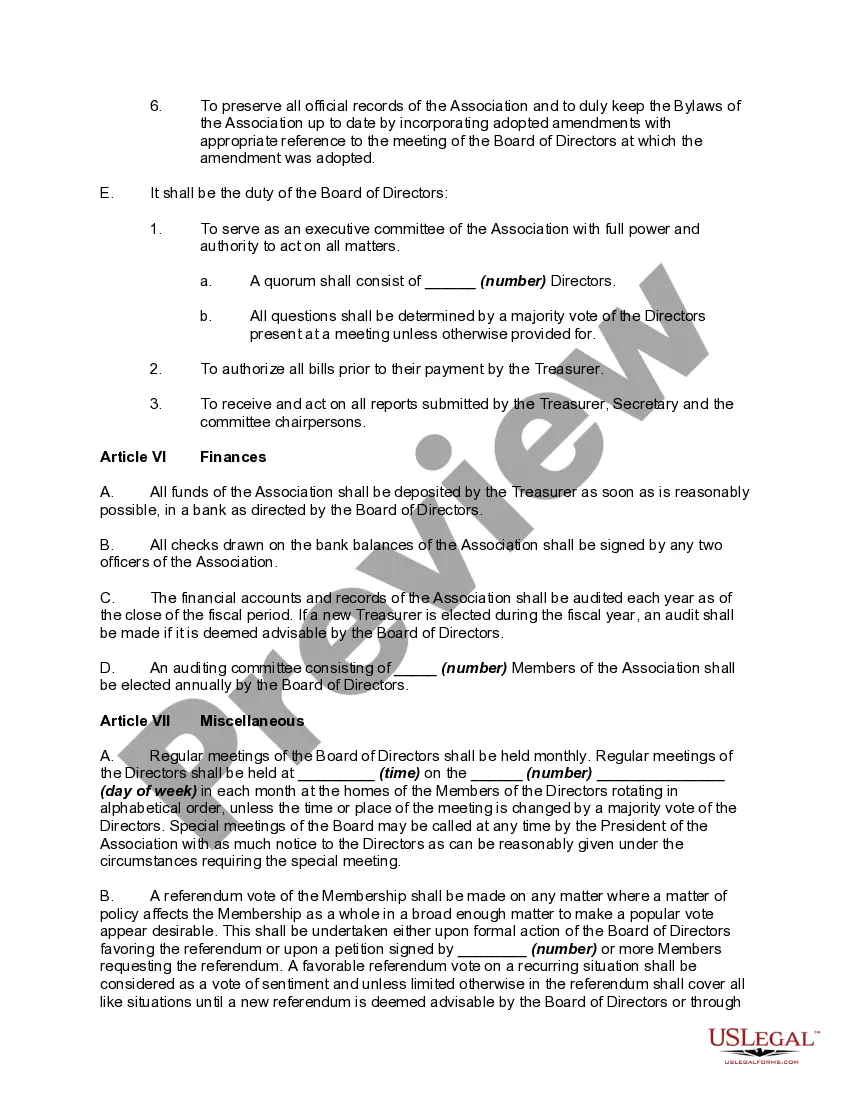
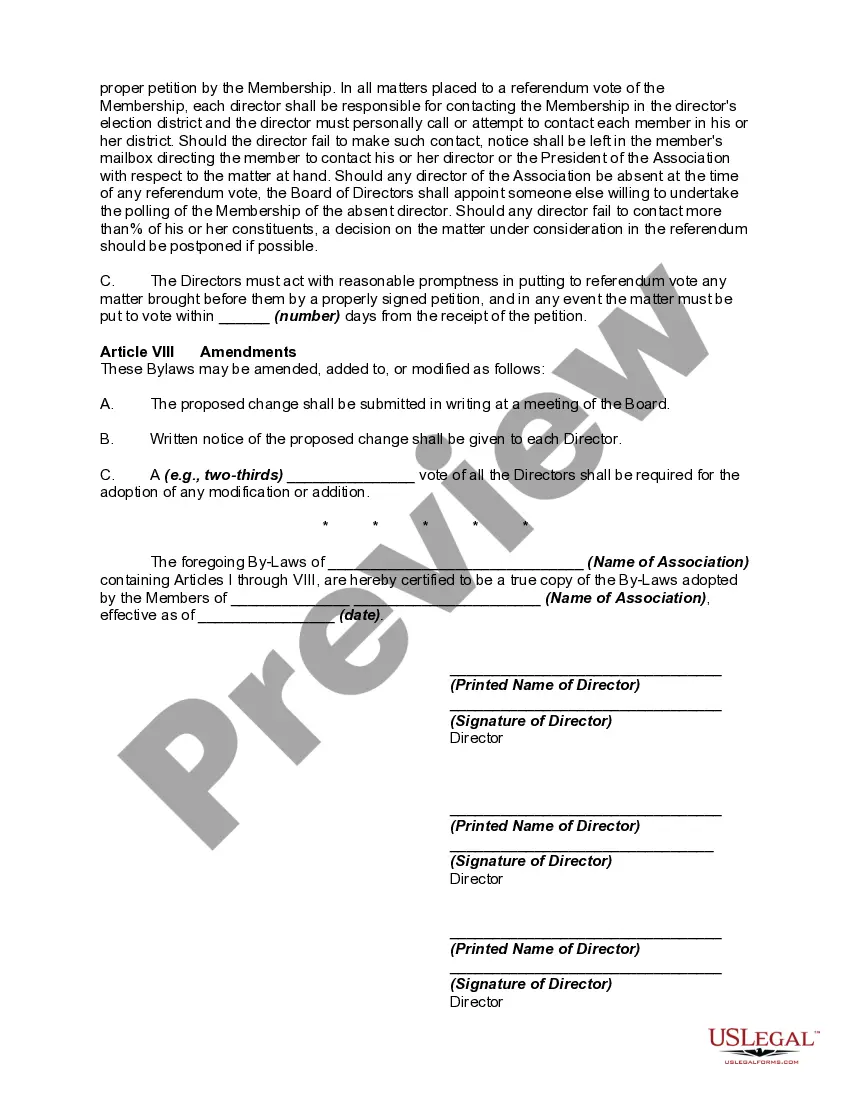
How to fill out Bylaws Of Unincorporated Association Of Subdivision Residents?
- Log in to your US Legal Forms account if you're a returning user and ensure your subscription is active. If expired, renew it promptly.
- For first-time users, explore the preview mode to review form descriptions and confirm you've selected a suitable option that meets local legal requirements.
- If necessary, utilize the Search tab to find additional templates until you find one that meets your needs.
- Proceed to purchase your chosen document by clicking 'Buy Now' and selecting a subscription plan while registering for an account.
- Complete your purchase with your payment information, ensuring your transaction is secure.
- Once payment is confirmed, download your form directly to your device for easy access and completion in your 'My Forms' section.
Using US Legal Forms elevates the ease of accessing legal documents. With a vast collection of over 85,000 forms, you are well-equipped to find exactly what you need, regardless of your legal situation.
Start leveraging these benefits today and streamline your nonprofit association's documentation process. Visit US Legal Forms to get started!
Form popularity
FAQ
Unincorporated nonprofit associations do not have owners in the traditional sense, as they operate based on mutual agreement among members rather than ownership stakes. Instead, members participate collaboratively to achieve shared goals. This collective model encourages teamwork and shared responsibility, which can be very empowering and beneficial. When establishing your nonprofit, consider how this structure aligns with your mission.
Choosing an unincorporated nonprofit association can offer simplicity and flexibility for groups that desire fewer formal requirements. This structure allows members to operate without the complexities of incorporation, making it easier to form and dissolve. Additionally, this option can be an excellent fit for smaller groups or community initiatives that prioritize a collaborative approach over a formalized hierarchy. Understanding the needs of your organization can help you decide if this structure is right for you.
Yes, unincorporated associations must file taxes, but the process can vary compared to incorporated entities. Generally, an unincorporated nonprofit association needs to report its earnings and expenses to the IRS if it exceeds certain income thresholds. However, many may qualify for exemption status under specific regulations. It's advisable for such associations to consult a tax professional for tailored guidance.
An unincorporated nonprofit association may face several disadvantages, particularly regarding liability and funding. Members can potentially be held personally liable for the organization's debts and legal issues. Additionally, securing funding or grants can be more challenging without formal incorporation, as many organizations prefer to work with incorporated entities. This aspect may lead to operational hurdles for those relying on external support.
Nonprofits cannot be privately held in the same way for-profit businesses are. They operate for the public benefit and are typically required to maintain transparency and accountability. However, an unincorporated nonprofit association can have private members as long as it adheres to its mission and follows the relevant laws governing nonprofit operations.
Yes, nonprofits can certainly be unincorporated. Many small organizations and community groups choose this path due to its simplicity and lower costs. However, it’s crucial to understand the implications of being an unincorporated nonprofit association, especially regarding personal liability and fundraising capabilities.
Choosing between incorporated and unincorporated depends on your organization’s goals and needs. An incorporated nonprofit association offers substantial benefits like limited liability and potential tax exemptions, which can be advantageous for growth and sustainability. However, if you prioritize flexibility and lower startup costs, an unincorporated nonprofit association may be the right path for your vision.
If an organization is unincorporated, it means it has not completed the legal process to become a corporation. This status allows for a more flexible structure, enabling easier decision-making and less regulatory burden. However, this also means that the organization lacks certain legal protections that incorporated entities enjoy, particularly regarding liability and tax advantages.
The primary difference lies in their legal status. An incorporated nonprofit association has formal recognition by the state, which offers certain protections and benefits, such as limited liability for its members. On the other hand, an unincorporated nonprofit association operates without formal incorporation, making it simpler and often less expensive to start. However, as an unincorporated nonprofit association, members may face personal liability.
An unincorporated nonprofit association is a group formed for charitable, educational, or social purposes without formal incorporation. This type of organization allows members to collaborate without the administrative burdens associated with incorporation. Even without legal status, such entities can still operate effectively, raising funds and conducting activities that benefit their community. They serve as a flexible option for those pursuing a shared mission.