Real Property For Life
Description
Get your form ready online
Our built-in tools help you complete, sign, share, and store your documents in one place.
Make edits, fill in missing information, and update formatting in US Legal Forms—just like you would in MS Word.
Download a copy, print it, send it by email, or mail it via USPS—whatever works best for your next step.
Sign and collect signatures with our SignNow integration. Send to multiple recipients, set reminders, and more. Go Premium to unlock E-Sign.
If this form requires notarization, complete it online through a secure video call—no need to meet a notary in person or wait for an appointment.
We protect your documents and personal data by following strict security and privacy standards.

Make edits, fill in missing information, and update formatting in US Legal Forms—just like you would in MS Word.

Download a copy, print it, send it by email, or mail it via USPS—whatever works best for your next step.

Sign and collect signatures with our SignNow integration. Send to multiple recipients, set reminders, and more. Go Premium to unlock E-Sign.

If this form requires notarization, complete it online through a secure video call—no need to meet a notary in person or wait for an appointment.

We protect your documents and personal data by following strict security and privacy standards.
Looking for another form?
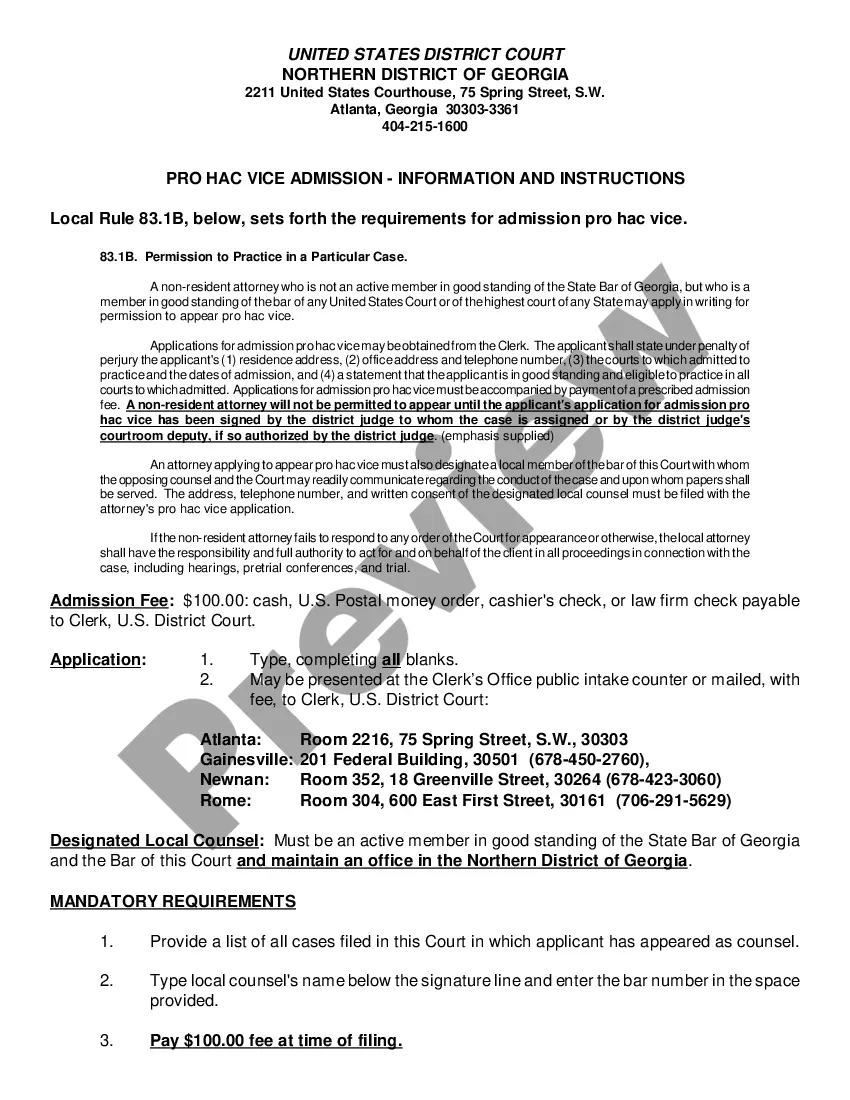




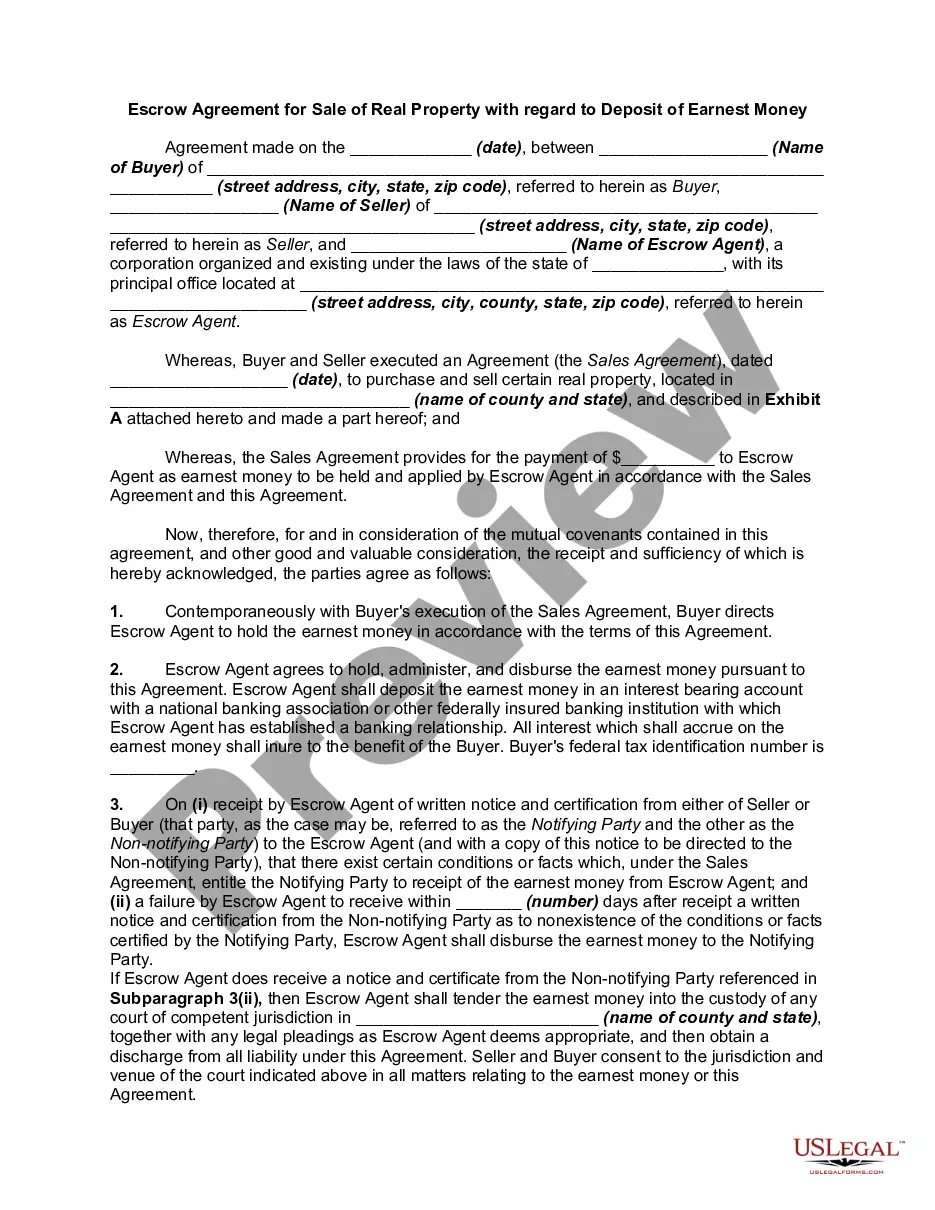
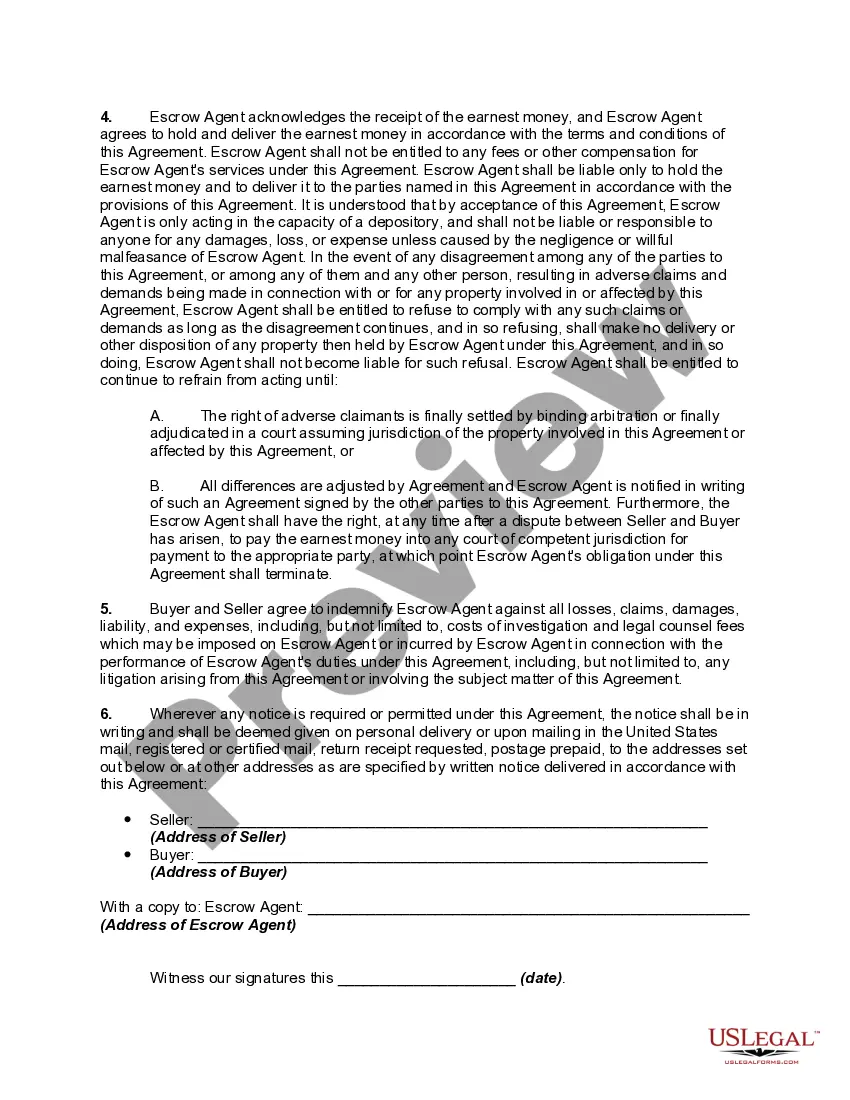
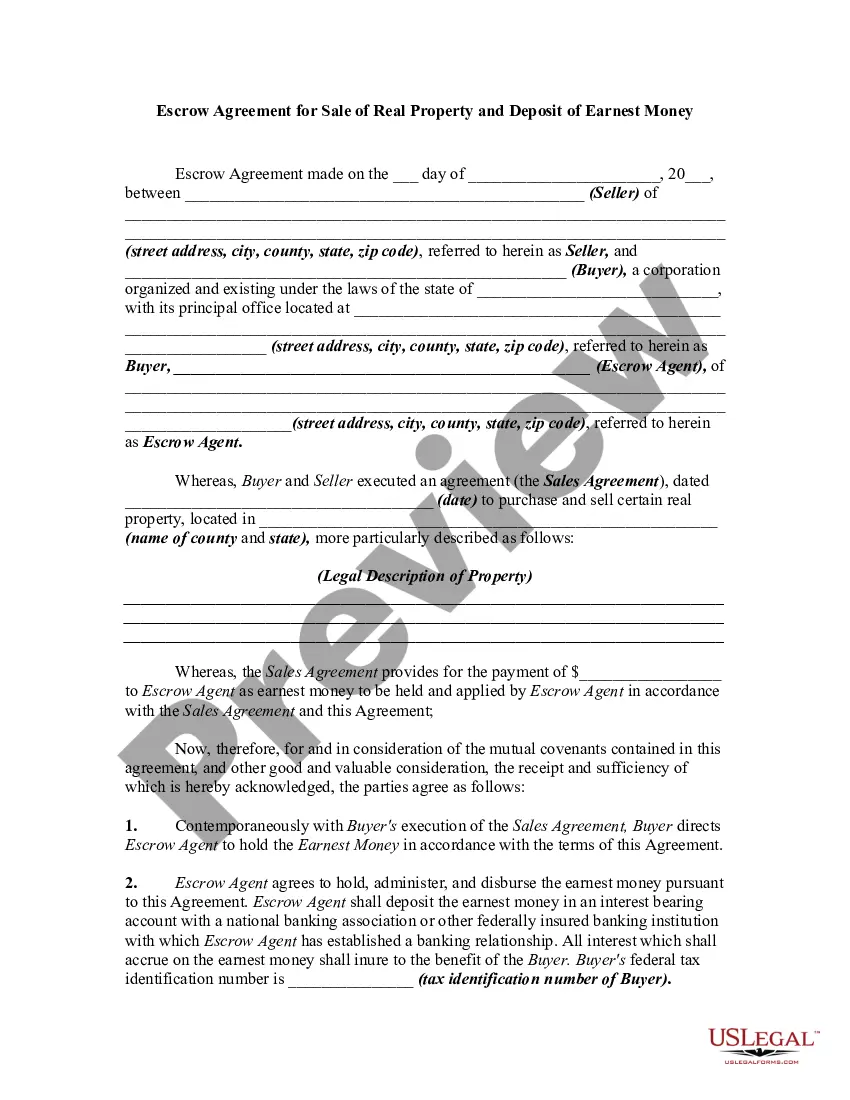
How to fill out Escrow Agreement For Sale Of Real Property With Regard To Deposit Of Earnest Money?
It’s well-known that you cannot become a legal authority instantly, nor can you learn to swiftly create Real Property For Life without a distinct set of expertise.
Drafting legal documents is a lengthy process that necessitates specific training and competencies. So why not entrust the preparation of the Real Property For Life to the experts.
With US Legal Forms, a leading legal template repository, you can discover everything from court filings to templates for internal communication.
You can regain access to your documents from the My documents section at any time. If you are an existing client, you can simply Log In, then locate and download the template from the same section.
No matter the purpose of your documents—whether they are financial, legal, or personal—our platform has you covered. Experience US Legal Forms today!
- Find the document you are looking for using the search bar at the top of the webpage.
- Preview it (if this option is available) and review the accompanying description to decide if Real Property For Life is what you seek.
- Begin your search anew if you require a different template.
- Create a complimentary account and choose a subscription plan to acquire the template.
- Select Buy now. After the transaction is finalized, you can obtain the Real Property For Life, fill it out, print it, and send or mail it to the appropriate individuals or organizations.
Form popularity
FAQ
Putting your property into a trust can be beneficial for a number of reasons. A trust often provides a clearer plan for the distribution of your real property for life, avoiding potential probate issues and ensuring that your wishes are honored. Additionally, a trust may offer privacy and some tax advantages, depending on your specific financial situation. UsLegalForms provides resources to help you understand the trust process and to create the necessary documents.
Filling out a life estate deed involves several key steps. First, you must clearly identify the property you wish to transfer as real property for life. Next, you will need to include the names of both the life tenant and the remainderman, who will receive the property after the life tenant's passing. It's advisable to use a trusted resource like US Legal Forms, which offers templates and guidance to ensure your life estate deed is completed accurately and legally.
In Washington state, life estate laws allow individuals to reserve the right to live in a property for their lifetime. This legal arrangement can provide clear guidelines for the transfer of ownership upon the life tenant's death. Understanding Washington's life estate laws can help you navigate issues related to real property for life more effectively. For nuanced guidance, uslegalforms can be an invaluable resource.
Beyond the negatives previously mentioned, a life estate can also limit your ability to sell or mortgage the property without the consent of the remainderman. This can restrict financial flexibility and complicate your estate plans. Therefore, it's essential to weigh the downsides of a life estate when considering the future of your real property for life.
Creating a life estate can be a strategic choice for several reasons. It allows individuals to retain the benefits of real property for life while ensuring a seamless transfer to heirs after their passing. Moreover, a life estate can simplify estate planning, providing peace of mind regarding the ownership and management of real property for life.
Choosing between a life estate and a will depends on your unique circumstances. A life estate provides immediate benefits and control over real property for life, while a will only takes effect after your death. Essentially, if you want your heirs to have access to real property for life without probate delays, a life estate might be a better option.
A life estate can impact tax obligations in several ways. Generally, the property remains subject to property taxes, which the life tenant typically pays. However, if the owner passes away, the property can step up in basis for capital gains tax purposes. Knowing how real property for life affects taxes can help you plan effectively.
While a life estate allows you to retain use of real property for life, it can have some drawbacks. One downside is that once created, a life estate cannot be easily undone without the consent of all parties involved. Additionally, the property may encounter complications regarding management and transfer, especially if the life tenant fails to maintain it. Understanding these negatives is crucial when considering real property for life.
When a remainderman dies, their share of the real property for life typically goes to their heirs or beneficiaries, according to their estate plan. This can create complexities if the property was intended for someone else or if there are disputes among heirs. It’s crucial to consider these outcomes when structuring ownership, and exploring options through platforms like USLegalForms can provide guidance in navigating these issues.
A life estate deed can limit your control over real property for life. When you create a life estate, you cannot freely sell or mortgage the property without the consent of the remainderman. Additionally, any debts or liens against the property can impact the financial standing of both the life tenant and the remainderman. Understanding these potential drawbacks is essential for making informed decisions.