Trust For Grandchildren Inheritance
Description


Get your form ready online
Our built-in tools help you complete, sign, share, and store your documents in one place.
Make edits, fill in missing information, and update formatting in US Legal Forms—just like you would in MS Word.
Download a copy, print it, send it by email, or mail it via USPS—whatever works best for your next step.
Sign and collect signatures with our SignNow integration. Send to multiple recipients, set reminders, and more. Go Premium to unlock E-Sign.
If this form requires notarization, complete it online through a secure video call—no need to meet a notary in person or wait for an appointment.
We protect your documents and personal data by following strict security and privacy standards.

Make edits, fill in missing information, and update formatting in US Legal Forms—just like you would in MS Word.

Download a copy, print it, send it by email, or mail it via USPS—whatever works best for your next step.

Sign and collect signatures with our SignNow integration. Send to multiple recipients, set reminders, and more. Go Premium to unlock E-Sign.

If this form requires notarization, complete it online through a secure video call—no need to meet a notary in person or wait for an appointment.

We protect your documents and personal data by following strict security and privacy standards.
Looking for another form?









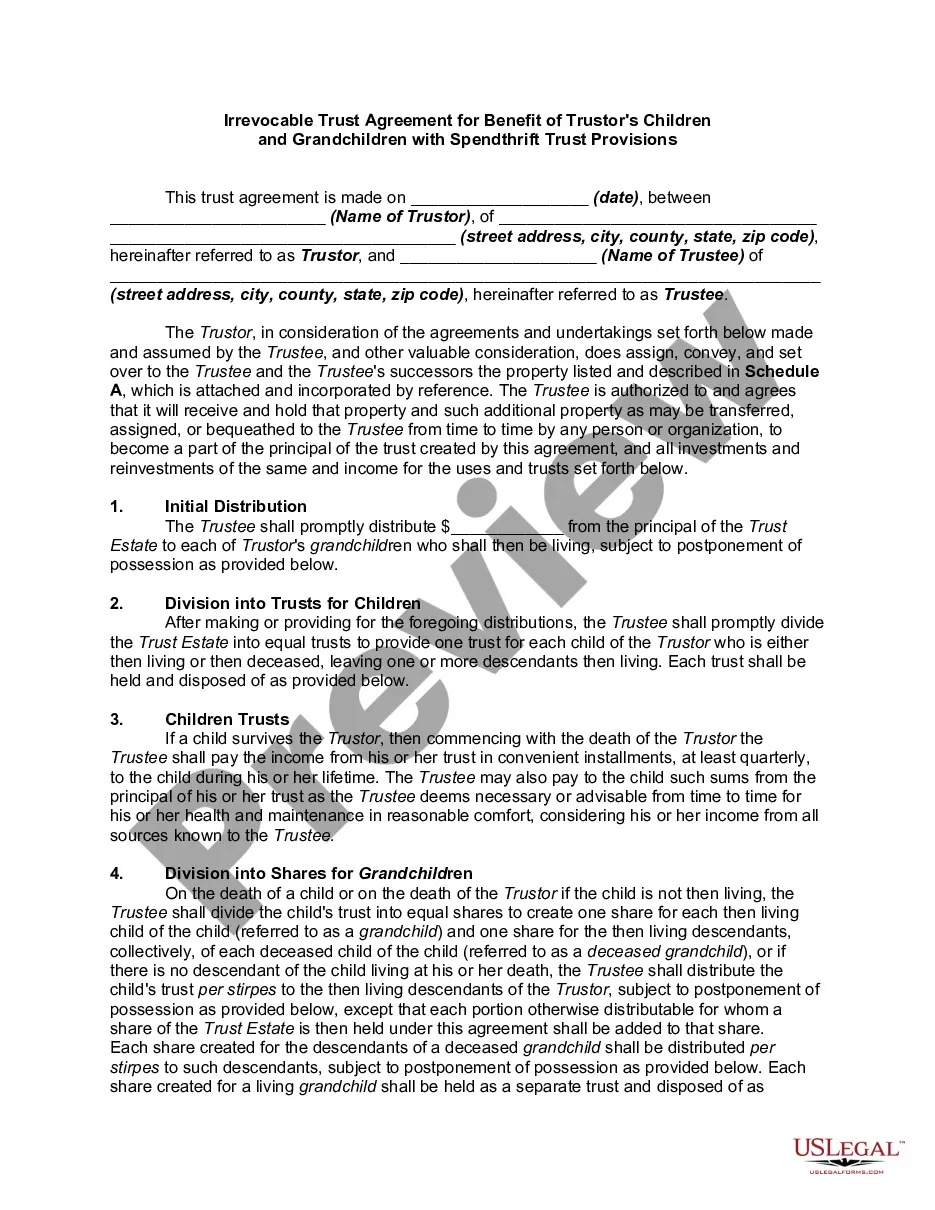
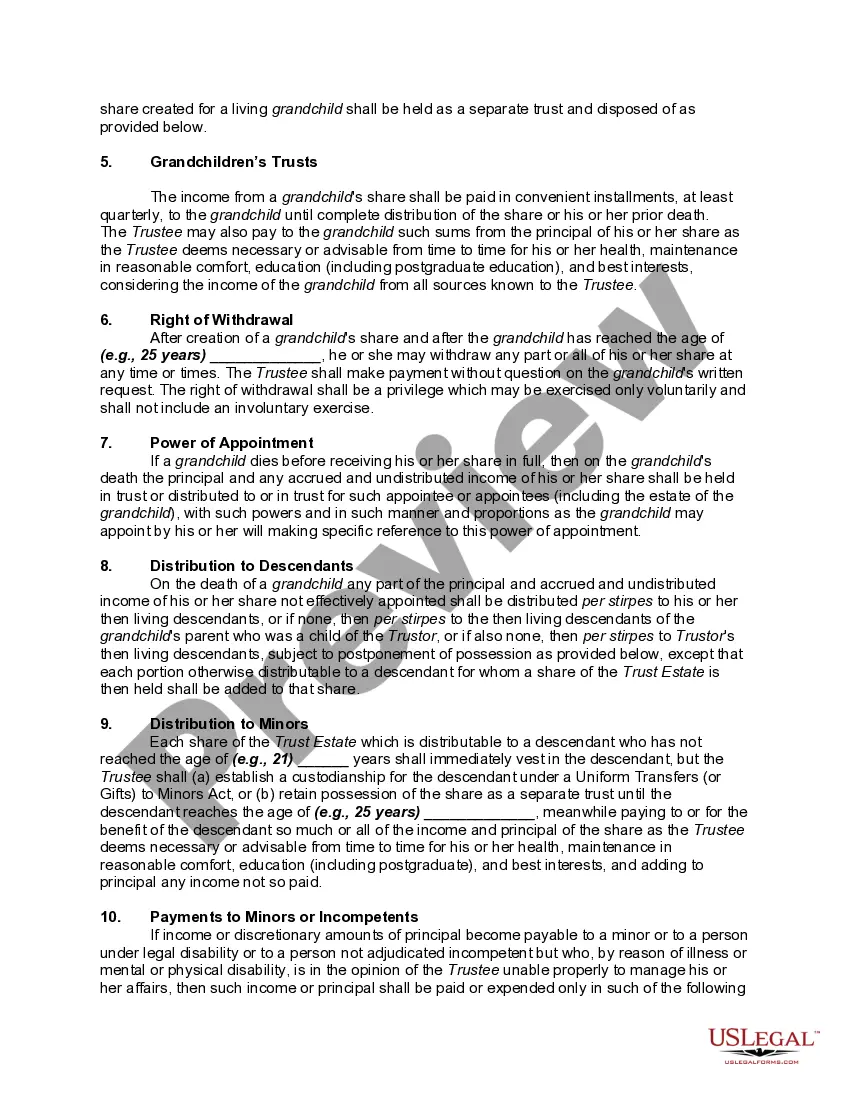
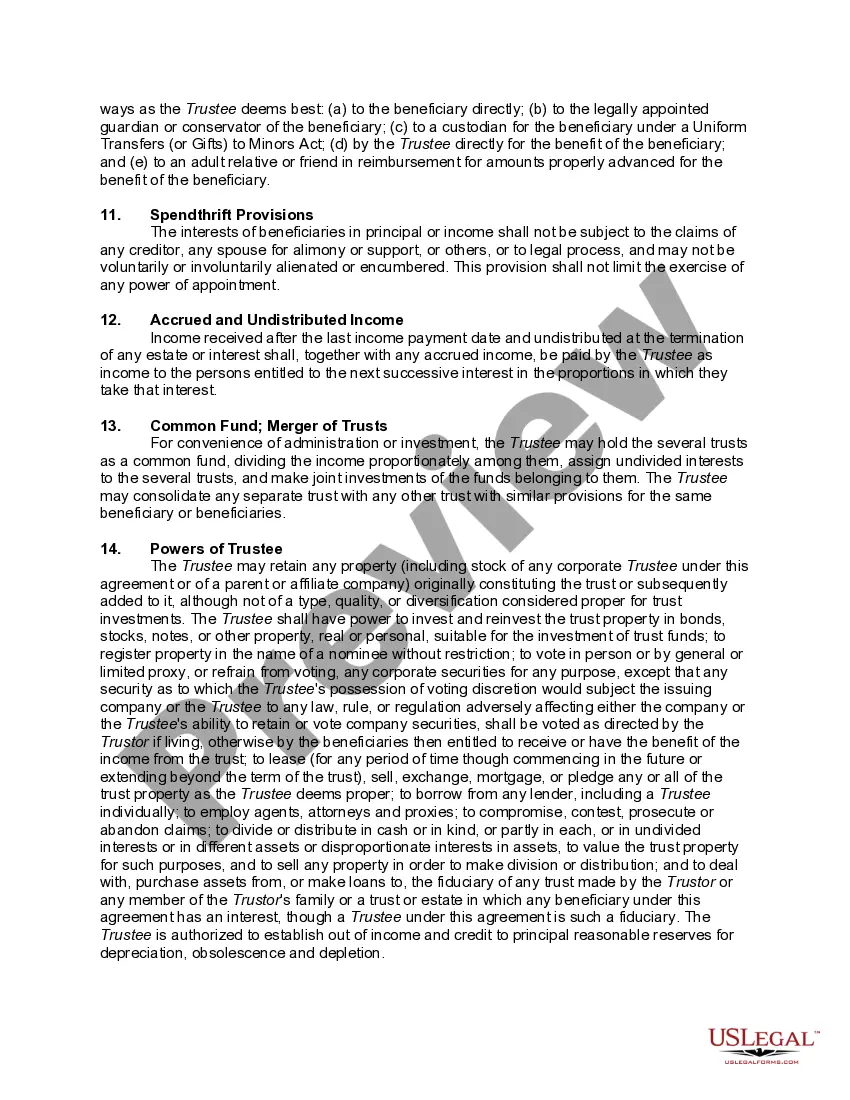
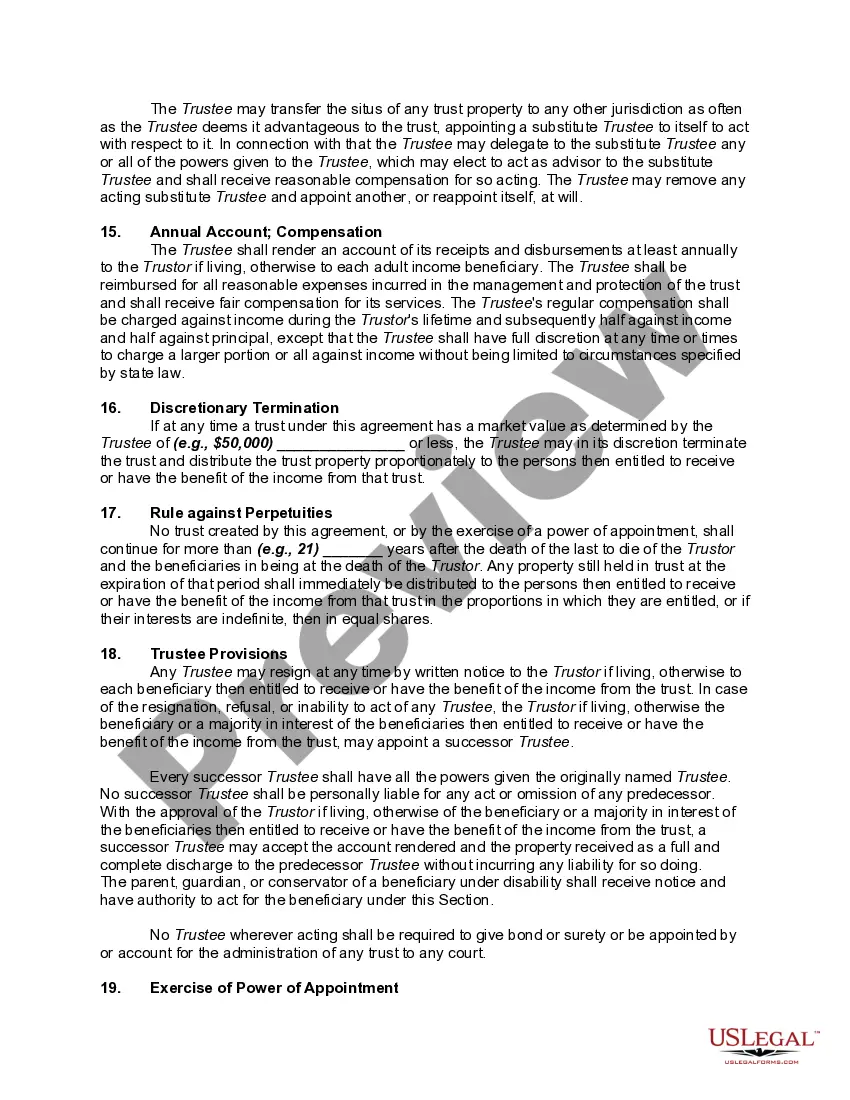
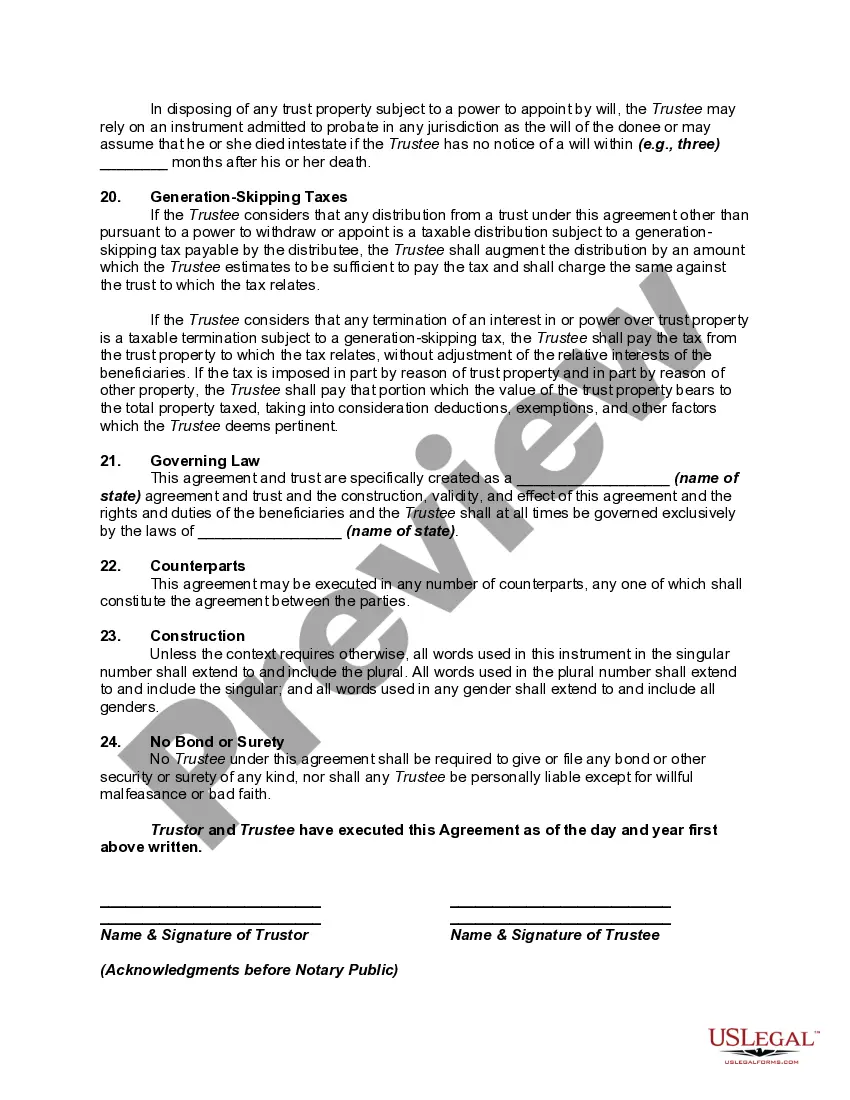
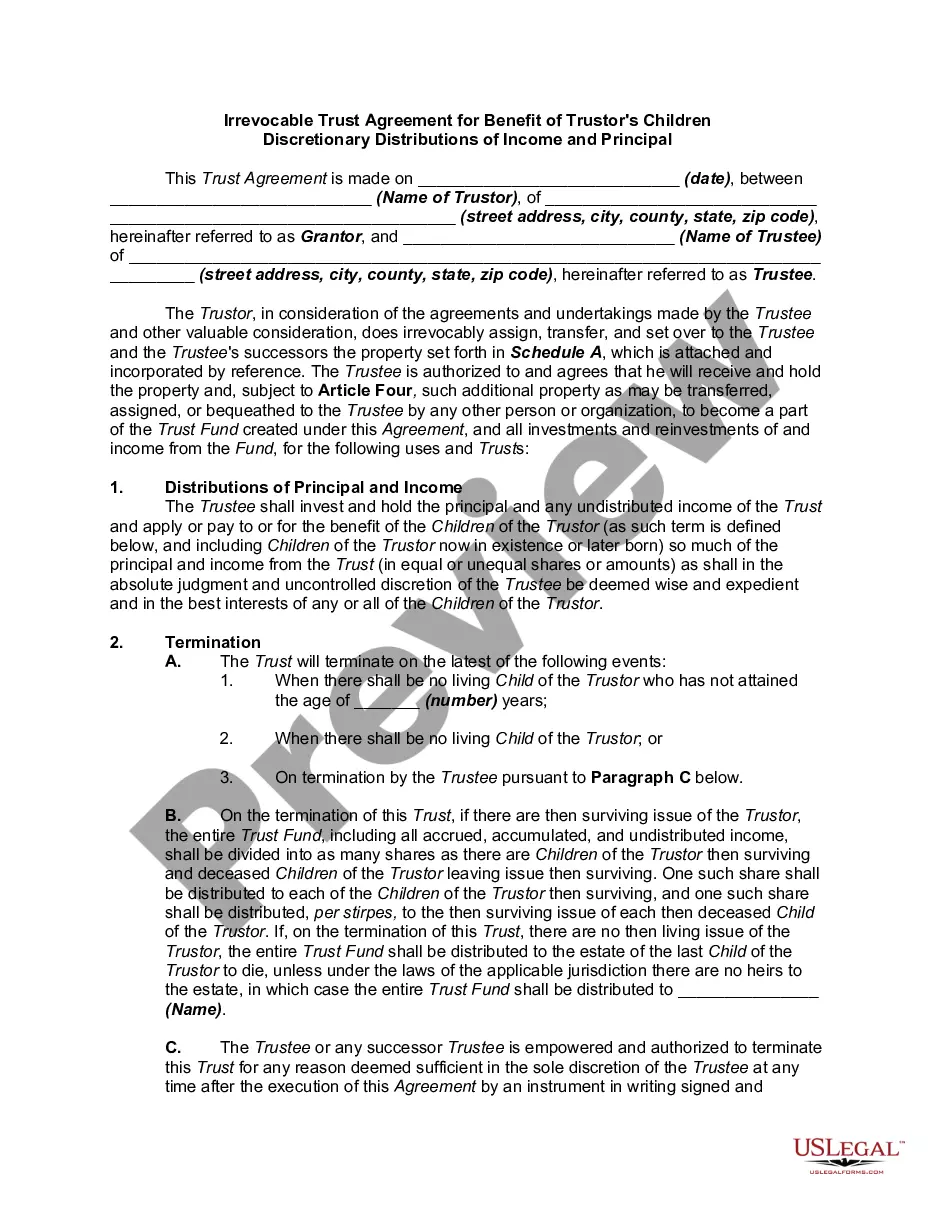
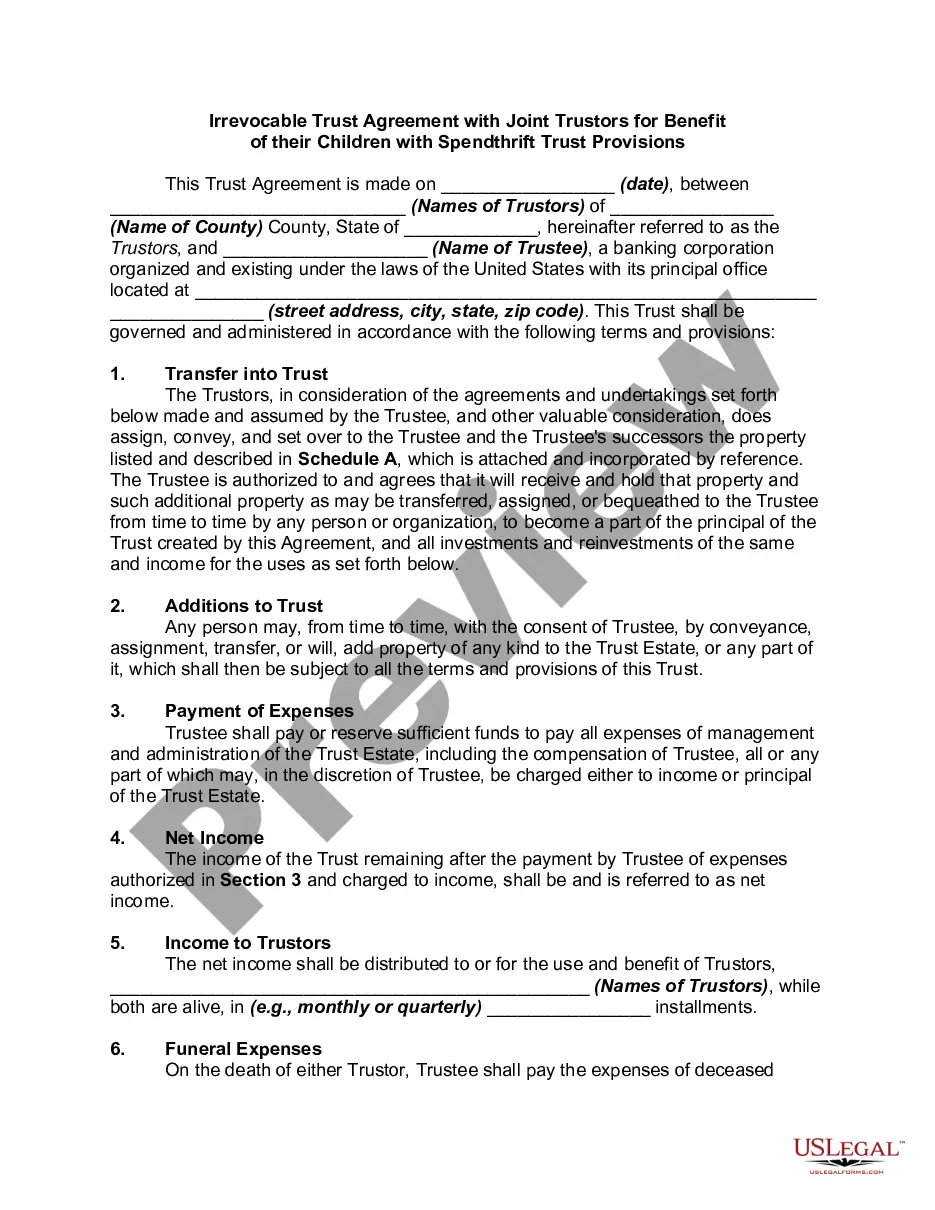
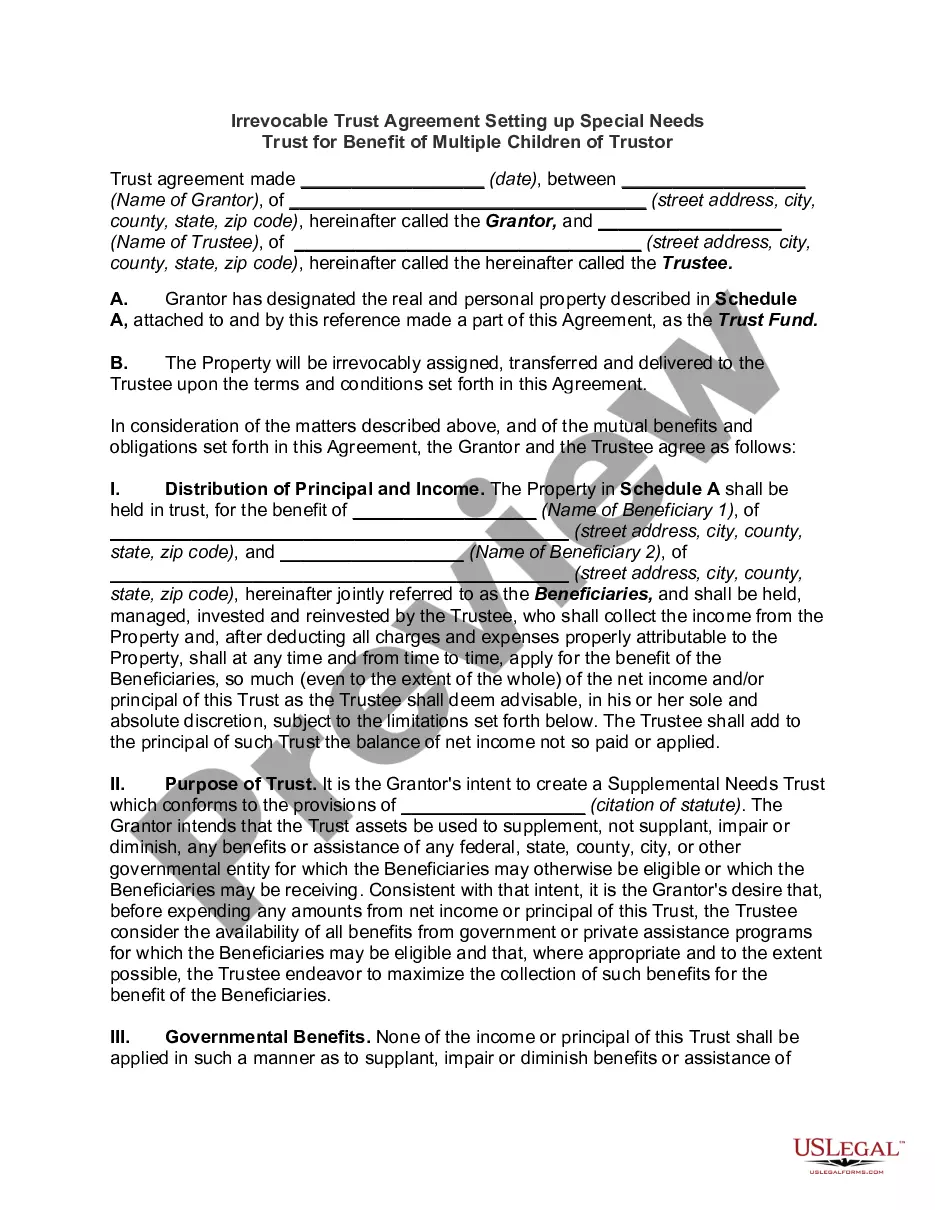
How to fill out Irrevocable Trust Agreement For Benefit Of Trustor's Children And Grandchildren With Spendthrift Trust Provisions?
Whether for commercial reasons or personal affairs, everyone must navigate legal scenarios at some point in their life.
Filling out legal paperwork requires meticulous attention, starting with the selection of the appropriate document template.
With a comprehensive US Legal Forms catalog available, you won’t need to waste time searching for the suitable sample online. Take advantage of the library’s simple navigation to find the right template for any occasion.
- For example, if you select an incorrect version of the Trust For Grandchildren Inheritance, it will be rejected upon submission.
- Thus, it is vital to have a reliable source for legal documents like US Legal Forms.
- If you need to acquire a Trust For Grandchildren Inheritance template, follow these straightforward steps.
- 1. Access the template you require using the search bar or catalog browsing.
- 2. Review the form’s description to confirm it aligns with your circumstances, state, and area.
- 3. Click on the form’s preview to view it.
- 4. If it is not the correct document, return to the search tool to find the Trust For Grandchildren Inheritance template you need.
- 5. Download the document once it suits your needs.
- 6. If you possess a US Legal Forms account, simply click Log in to access documents you have saved in My documents.
- 7. If you do not yet have an account, you can acquire the form by clicking Buy now.
- 8. Select the suitable pricing choice.
- 9. Fill out the account registration form.
- 10. Choose your payment option: you can use a credit card or your PayPal account.
- 11. Select the file format you desire and download the Trust For Grandchildren Inheritance.
- 12. After saving it, you can complete the document using editing software or print it and fill it out by hand.
Form popularity
FAQ
Debt collectors have a certain number of years they can sue you and win to collect a debt. It's called the statute of limitations and it usually begins when you fail to make a payment on a debt. In South Dakota, the statute of limitations is six years.
A debt collector must stop all collection activity on a debt if you send them a written dispute about the debt, generally within 30 days after your initial communication with them. Collection activities can restart, though, after the debt collector sends verification responding to the dispute.
If you choose not to verify your identity by providing information, like your Social Security number, the debt collector will generally ask you for another form of identification, including: Account number for the debt in question, if you know it. Other contact information, such as your current or previous address.
To take legal action to collect a debt, the creditor (the person or company owed money) files a lawsuit against the debtor (the person who owes the money). Once a debt collection lawsuit is filed with the court, the creditor must give the debtor notice of the lawsuit (service).
An effective debt collection letter should include all of the following: The total amount the client owes you. The original date the balance was due. Instructions detailing how to make the overdue payment.
It's generally easier for first-party creditors to prove you owe a debt. They simply produce the original credit agreement that shows your name and identifying information, like your address and Social Security number.
The FDCPA also provides, for example, that debt collectors may not harass or annoy debtors, may not threaten debtors with arrest, and may not threaten legal action unless litigation actually is being contemplated.
Evidence of debt means a writing that evidences a promise to pay or a right to the payment of a monetary obligation, such as a promissory note, bond, negotiable instrument, a loan, credit, or similar agreement, or a monetary judgment entered by a court of competent jurisdiction.