Sample Irrevocable Trust Withdrawal
Description


Get your form ready online
Our built-in tools help you complete, sign, share, and store your documents in one place.
Make edits, fill in missing information, and update formatting in US Legal Forms—just like you would in MS Word.
Download a copy, print it, send it by email, or mail it via USPS—whatever works best for your next step.
Sign and collect signatures with our SignNow integration. Send to multiple recipients, set reminders, and more. Go Premium to unlock E-Sign.
If this form requires notarization, complete it online through a secure video call—no need to meet a notary in person or wait for an appointment.
We protect your documents and personal data by following strict security and privacy standards.

Make edits, fill in missing information, and update formatting in US Legal Forms—just like you would in MS Word.

Download a copy, print it, send it by email, or mail it via USPS—whatever works best for your next step.

Sign and collect signatures with our SignNow integration. Send to multiple recipients, set reminders, and more. Go Premium to unlock E-Sign.

If this form requires notarization, complete it online through a secure video call—no need to meet a notary in person or wait for an appointment.

We protect your documents and personal data by following strict security and privacy standards.
Looking for another form?
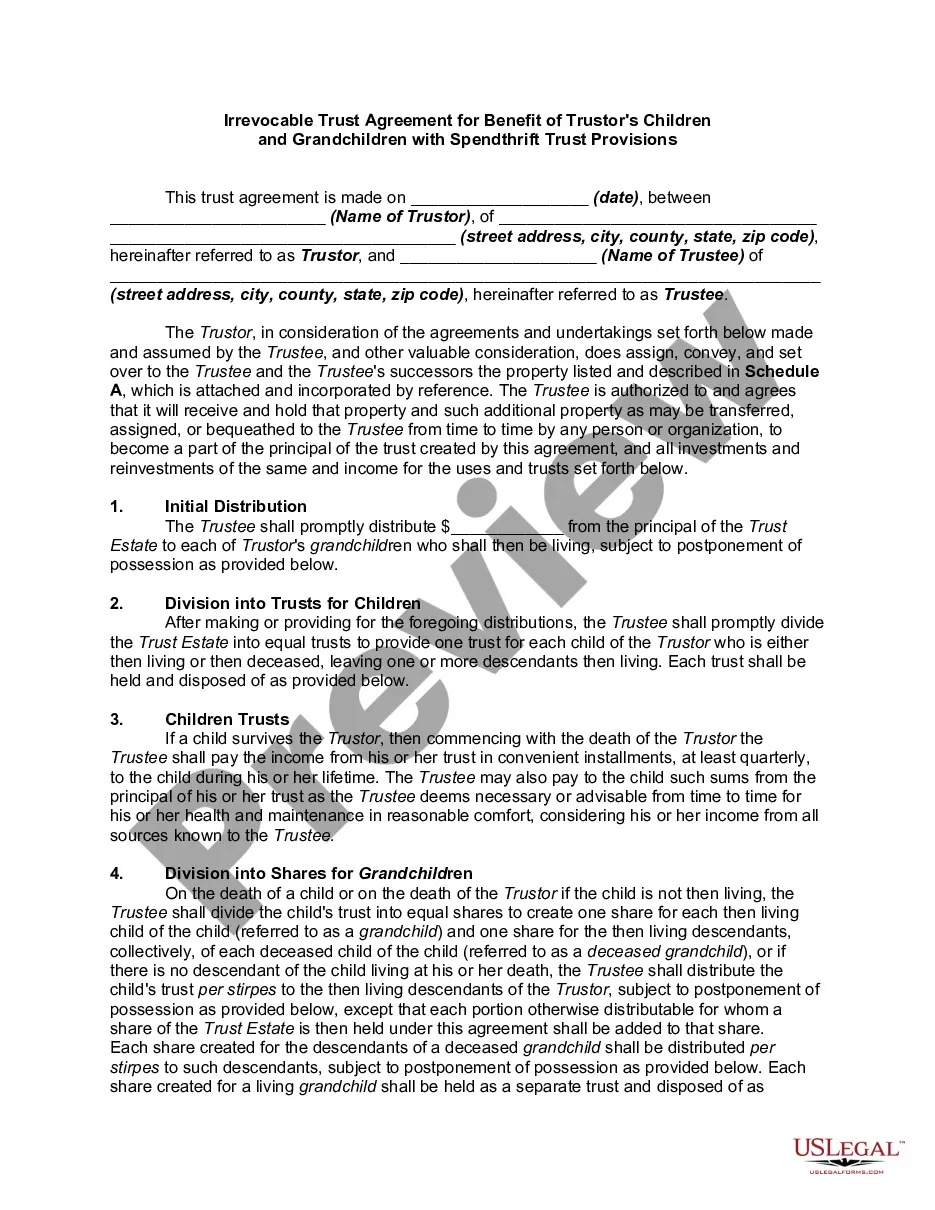
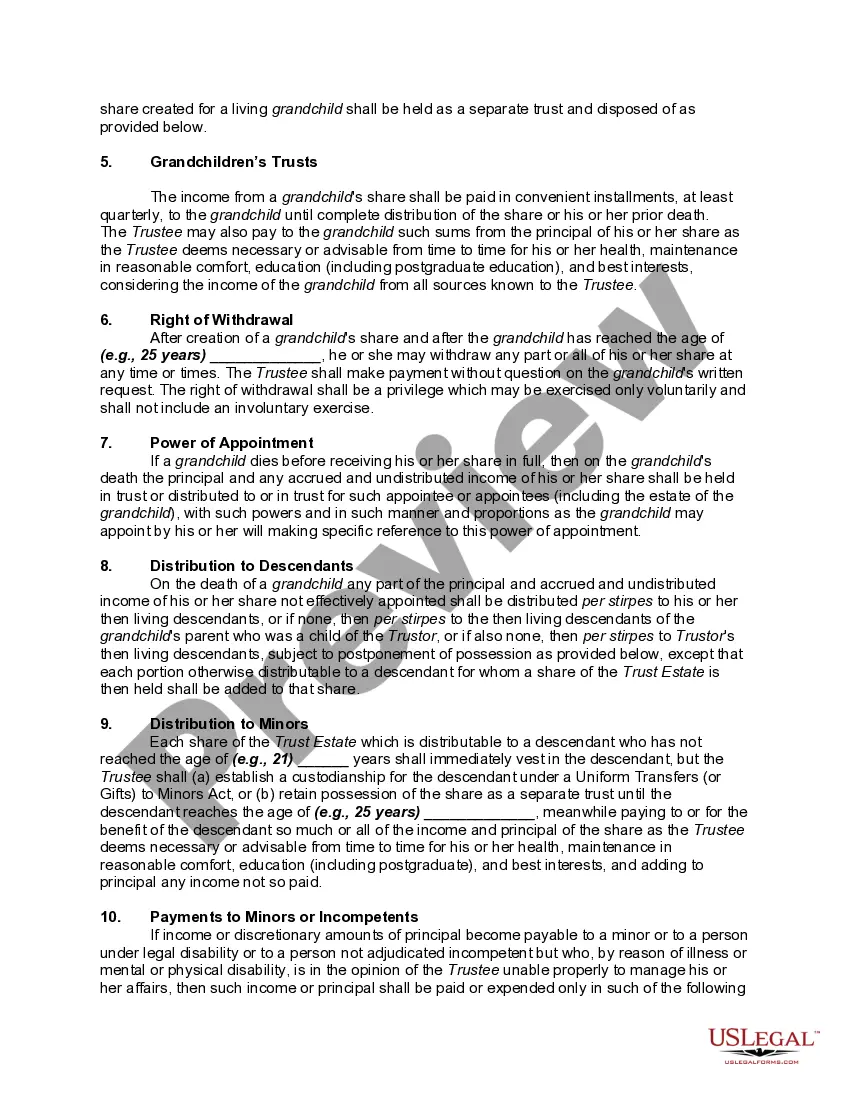
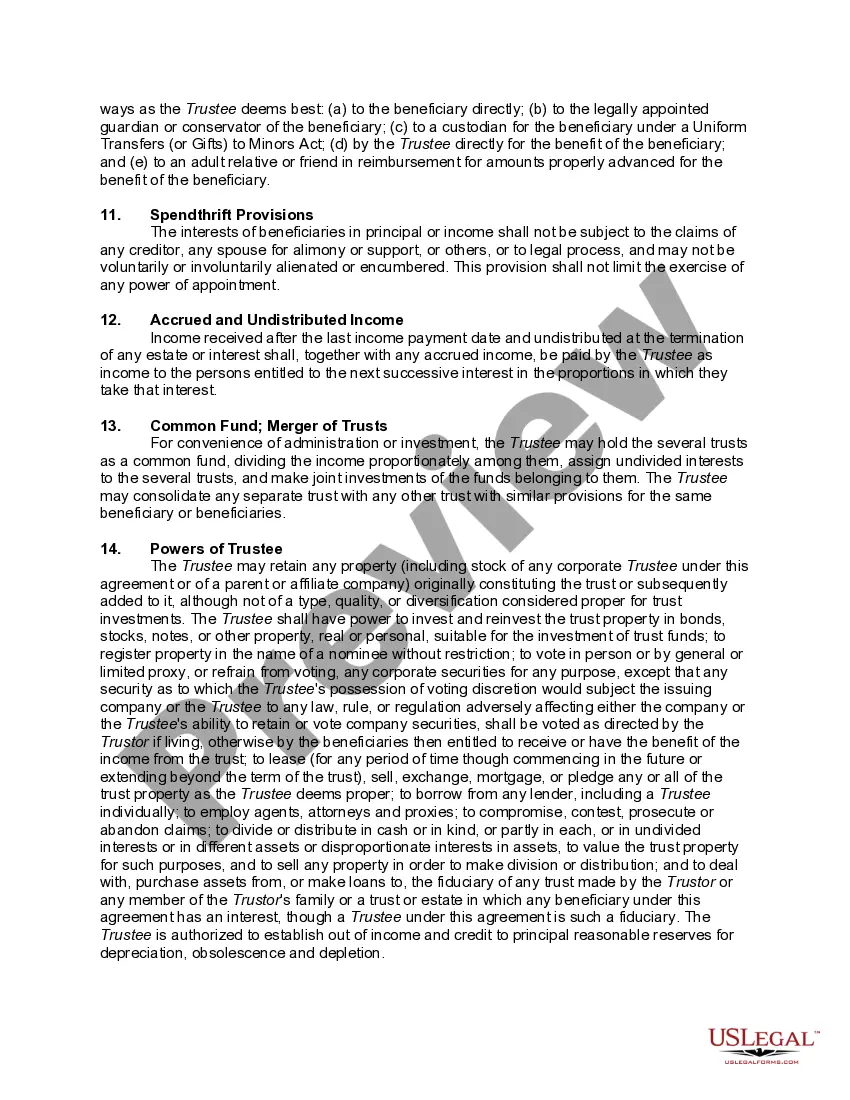
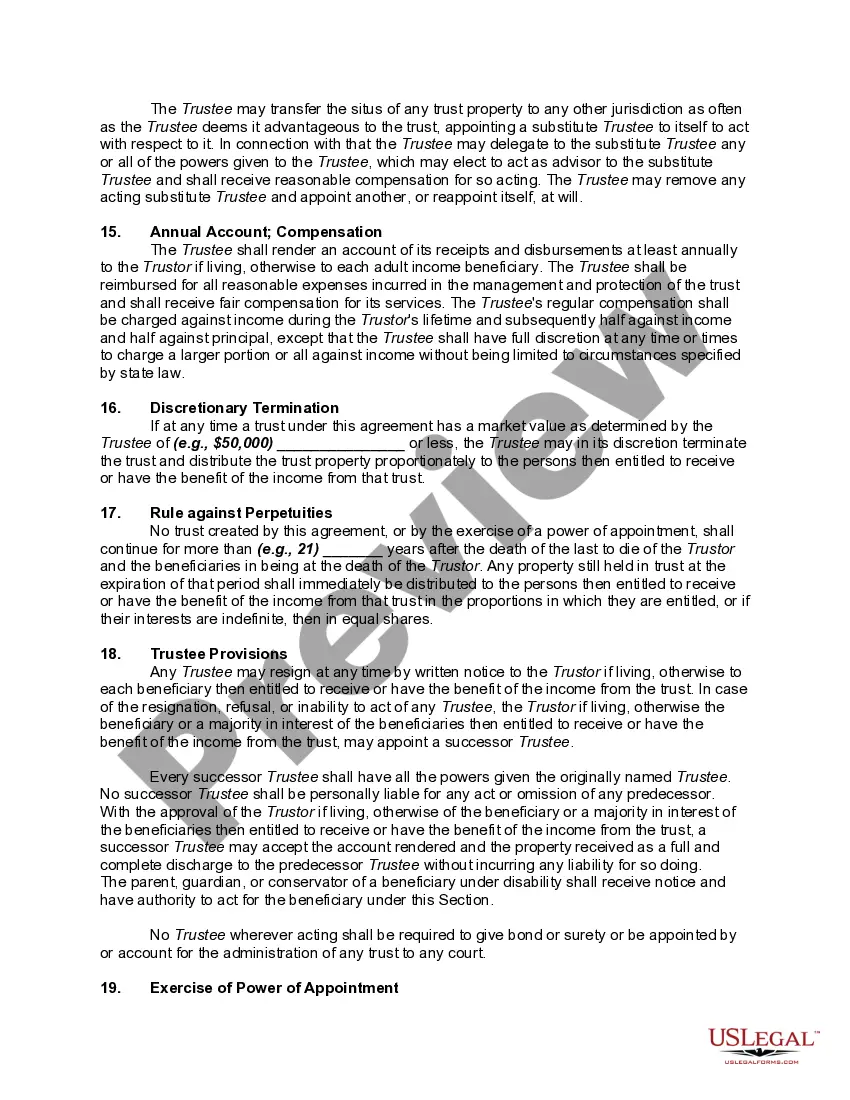
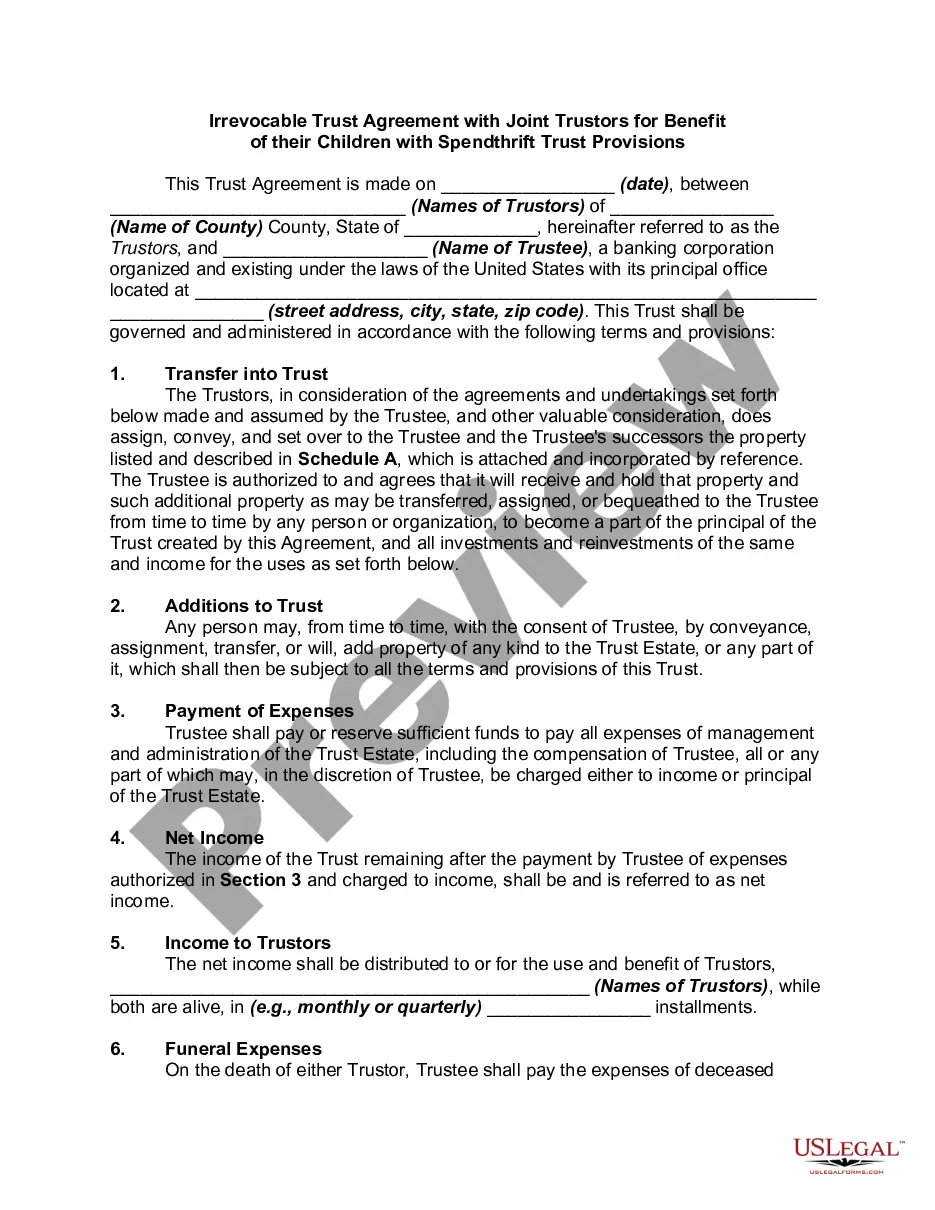
How to fill out Irrevocable Trust Agreement For Benefit Of Trustor's Children And Grandchildren With Spendthrift Trust Provisions?
Finding a reliable location to obtain the latest and most pertinent legal templates is a significant part of navigating bureaucracy. Selecting the appropriate legal documents requires accuracy and carefulness, which is why it's essential to obtain samples of Sample Irrevocable Trust Withdrawal exclusively from reputable sources, such as US Legal Forms. An incorrect template could lead to wasted time and hinder your current situation. With US Legal Forms, you are less likely to have concerns. You can access and verify all the details regarding the document’s applicability and relevance to your specific situation and in your state or county.
Consider the following steps to finalize your Sample Irrevocable Trust Withdrawal.
Once you have the document on your device, you may edit it using the editor or print it out and complete it manually. Eliminate the complications associated with your legal documentation. Explore the extensive US Legal Forms collection where you can find legal templates, evaluate their applicability to your requirements, and download them without delay.
- Utilize the library navigation or search option to locate your sample.
- Examine the form’s description to determine if it aligns with the requirements of your state and county.
- Check the form preview, if available, to confirm that the template is indeed the one you need.
- Return to the search to find the correct template if the Sample Irrevocable Trust Withdrawal does not meet your requirements.
- Once you are certain about the form’s applicability, download it.
- If you have authorized access, click Log in to validate and access your selected forms in My documents.
- If you haven't created an account yet, click Buy now to acquire the template.
- Select the subscription plan that best fits your needs.
- Continue with the registration process to finalize your purchase.
- Complete your transaction by selecting a payment method (credit card or PayPal).
- Choose the file format to download the Sample Irrevocable Trust Withdrawal.
Form popularity
FAQ
An example of an irrevocable trust is a Medicaid trust, which helps individuals protect their assets while meeting eligibility requirements for Medicaid benefits. This type of trust ensures that the assets cannot be withdrawn once placed in the trust, providing security for beneficiaries. A well-structured trust can include specific terms for a sample irrevocable trust withdrawal, offering clarity and direction on how and when assets may be accessed.
Just choose your preferred account on the ATM screen. If you use the credit card function on your Trust card at an ATM, this means you are taking a cash advance. Note that supplementary cardholders cannot take out a cash advance. If you use the debit card function, you are withdrawing cash from your savings account.
For example, if the trust owns real estate, the trustee could make a distribution in cash by selling the property and dividing the proceeds among the settlor's two children, or the trustee could make a distribution in kind by simply deeding the property equally to both children so that each owns an undivided 50% ...
With an irrevocable trust, the transfer of assets is permanent. So once the trust is created and assets are transferred, they generally can't be taken out again. You can still act as the trustee but you'd be limited to withdrawing money only on an as-needed basis to cover necessary expenses.
A withdrawal right is the right, given to the beneficiary of a trust, to withdraw all or a portion of each gift made to the trust. For example, if a $1,000 gift is made to a trust and a beneficiary of the trust has a withdrawal right over that gift, he or she can withdraw up to $1,000 from the trust.
So can a trustee withdraw money from a trust they own? Yes, you could withdraw money from your own trust if you're the trustee. Since you have an interest in the trust and its assets, you could withdraw money as you see fit or as needed. You can also move assets in or out of the trust.