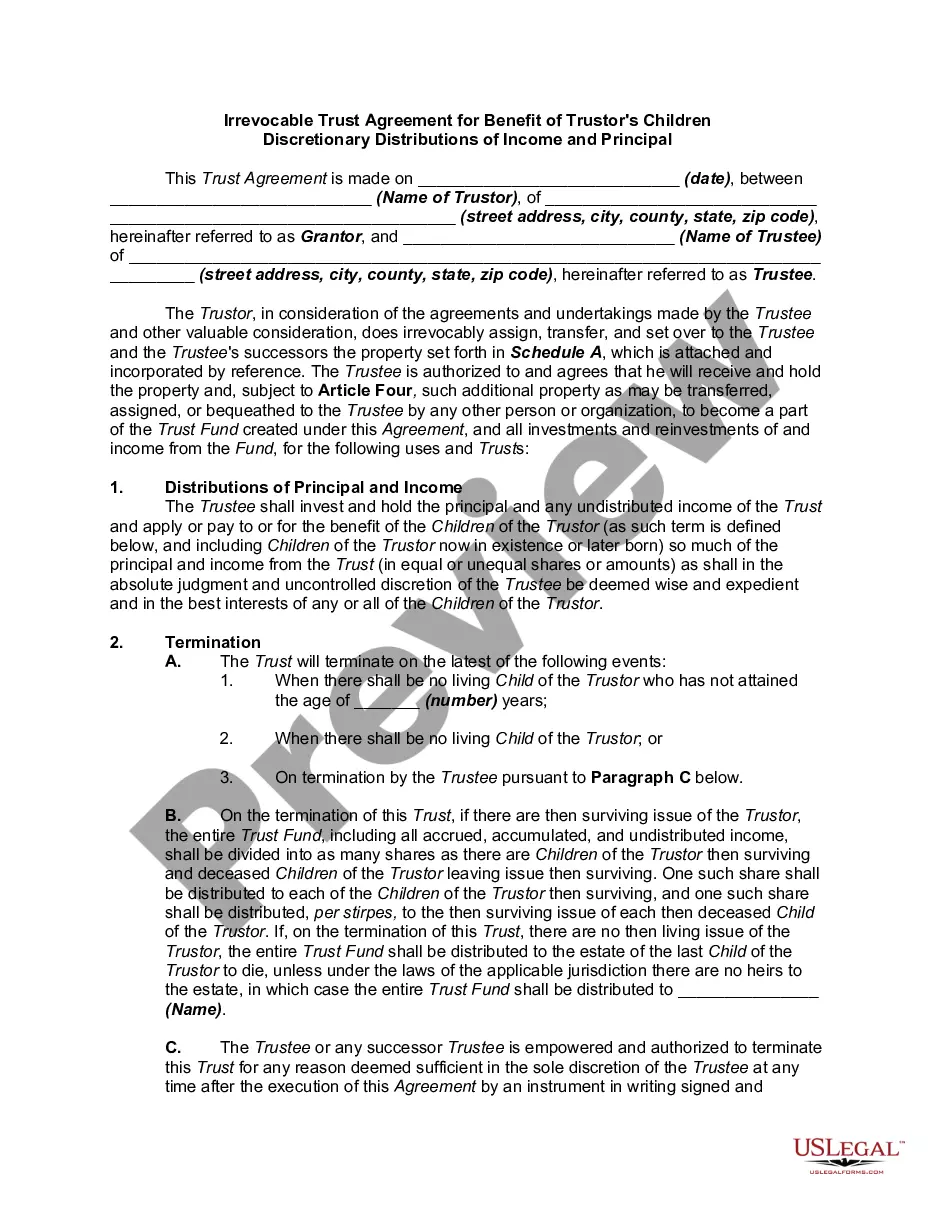
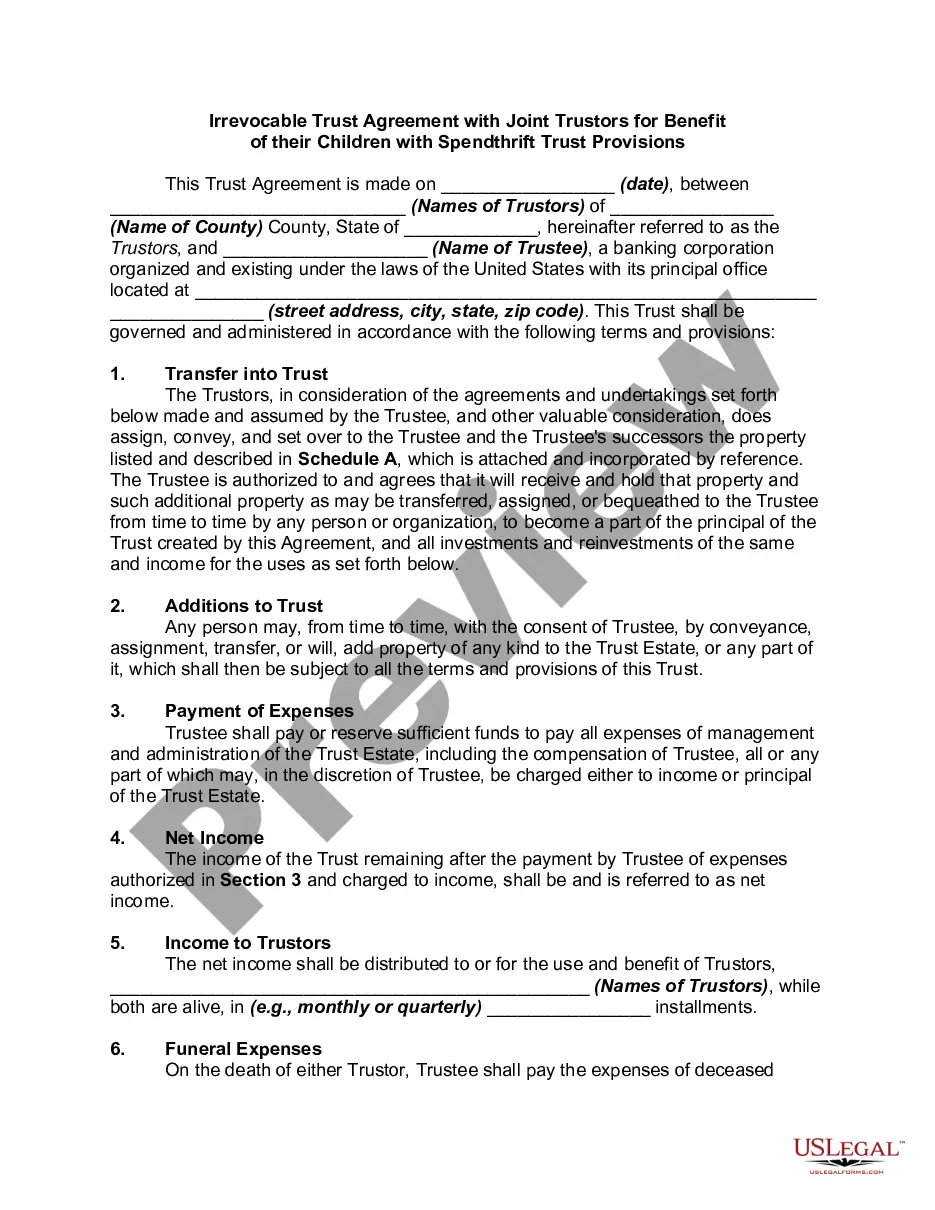
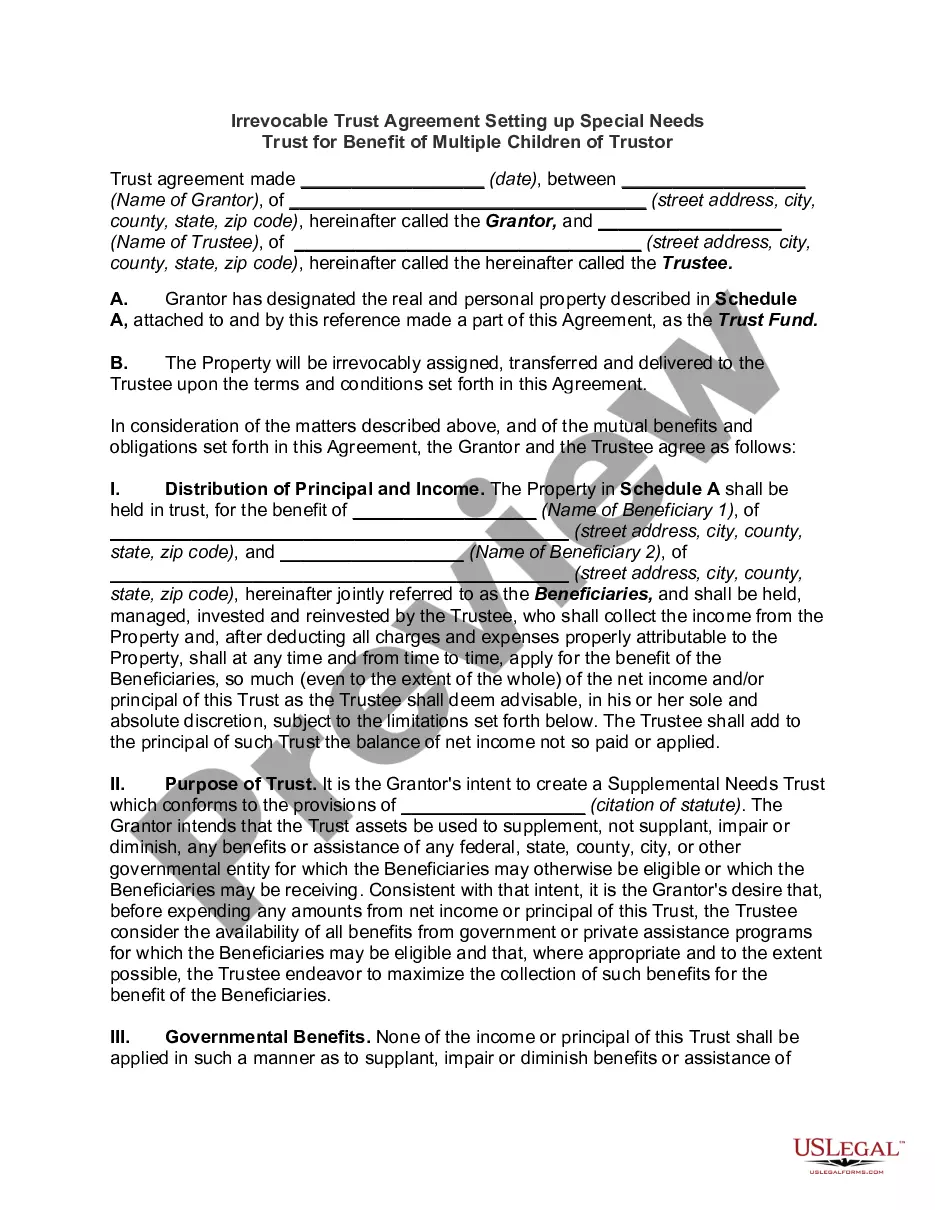
Sample Irrevocable Trust With A Beneficiary
Description



Get your form ready online
Our built-in tools help you complete, sign, share, and store your documents in one place.
Make edits, fill in missing information, and update formatting in US Legal Forms—just like you would in MS Word.
Download a copy, print it, send it by email, or mail it via USPS—whatever works best for your next step.
Sign and collect signatures with our SignNow integration. Send to multiple recipients, set reminders, and more. Go Premium to unlock E-Sign.
If this form requires notarization, complete it online through a secure video call—no need to meet a notary in person or wait for an appointment.
We protect your documents and personal data by following strict security and privacy standards.

Make edits, fill in missing information, and update formatting in US Legal Forms—just like you would in MS Word.

Download a copy, print it, send it by email, or mail it via USPS—whatever works best for your next step.

Sign and collect signatures with our SignNow integration. Send to multiple recipients, set reminders, and more. Go Premium to unlock E-Sign.

If this form requires notarization, complete it online through a secure video call—no need to meet a notary in person or wait for an appointment.

We protect your documents and personal data by following strict security and privacy standards.
Looking for another form?





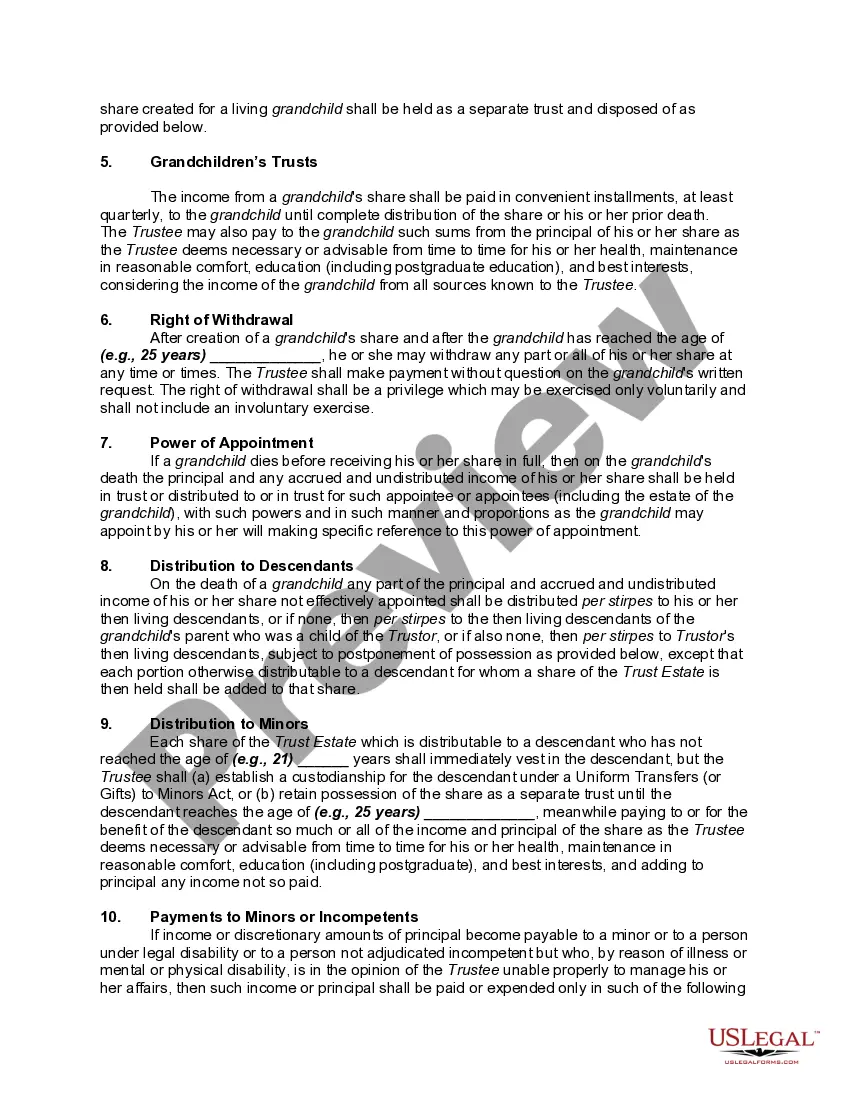
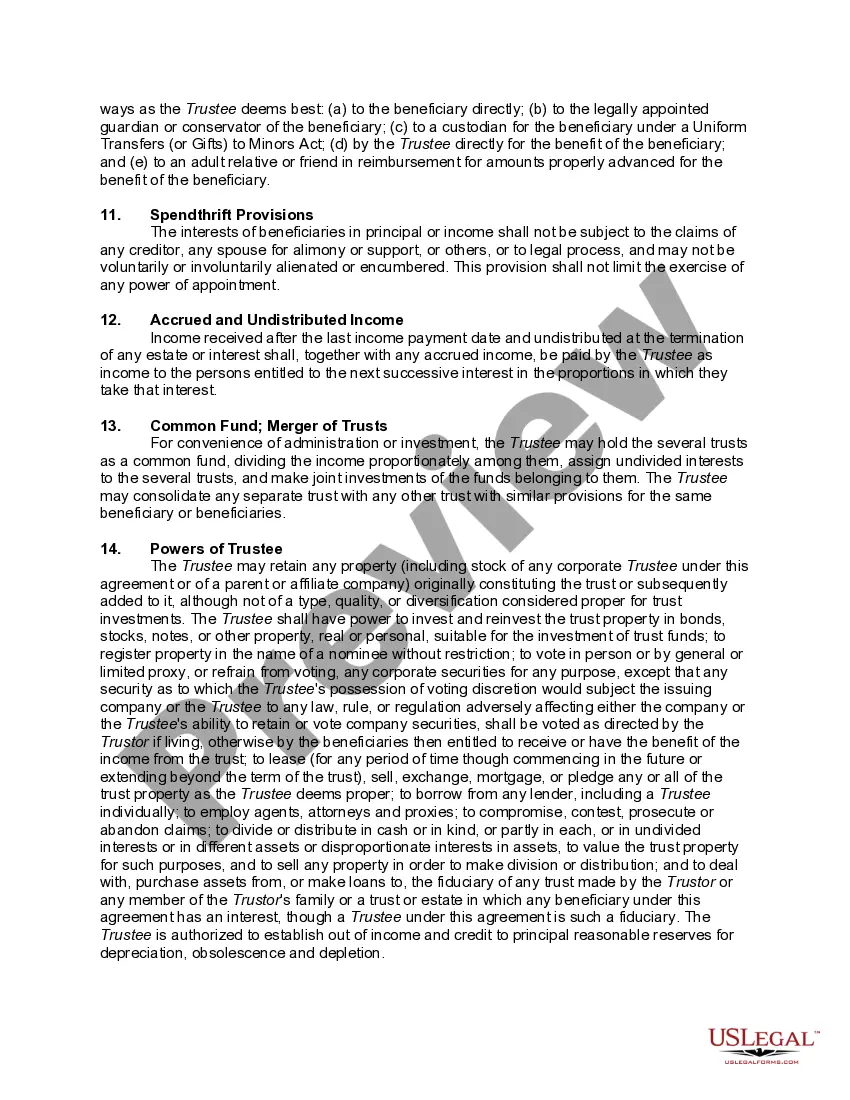
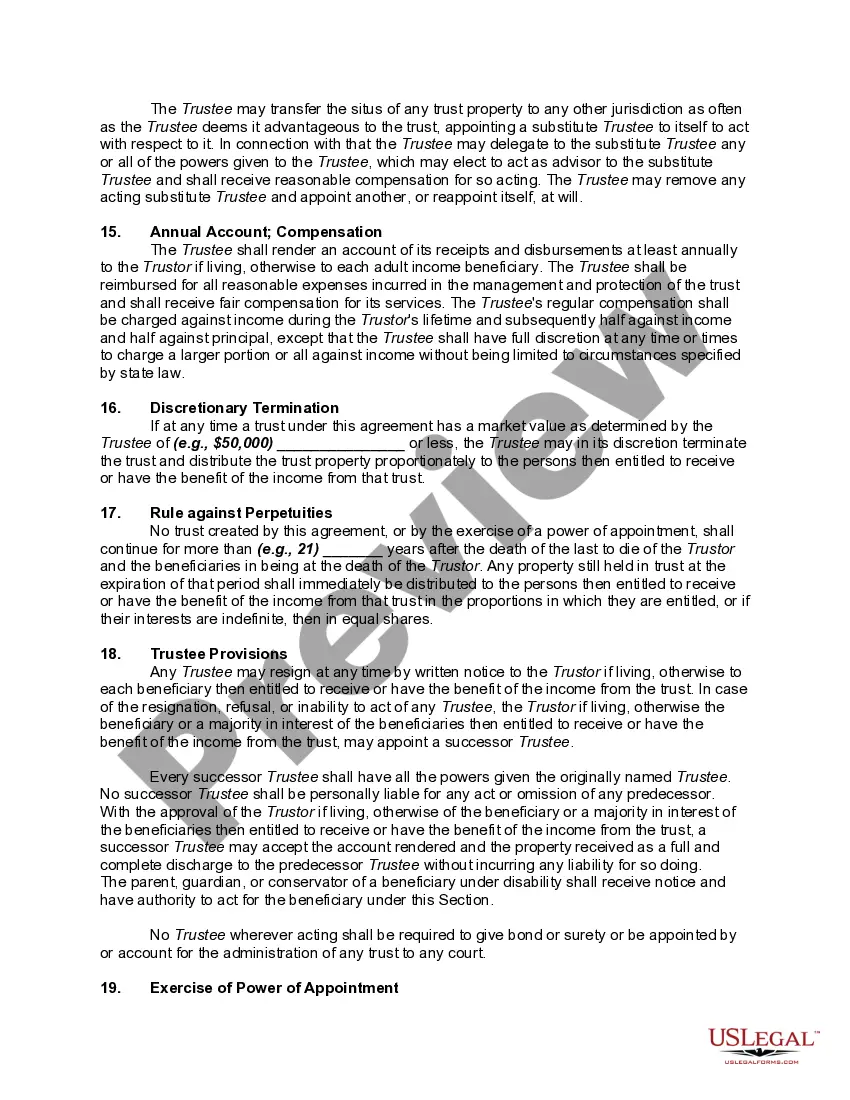
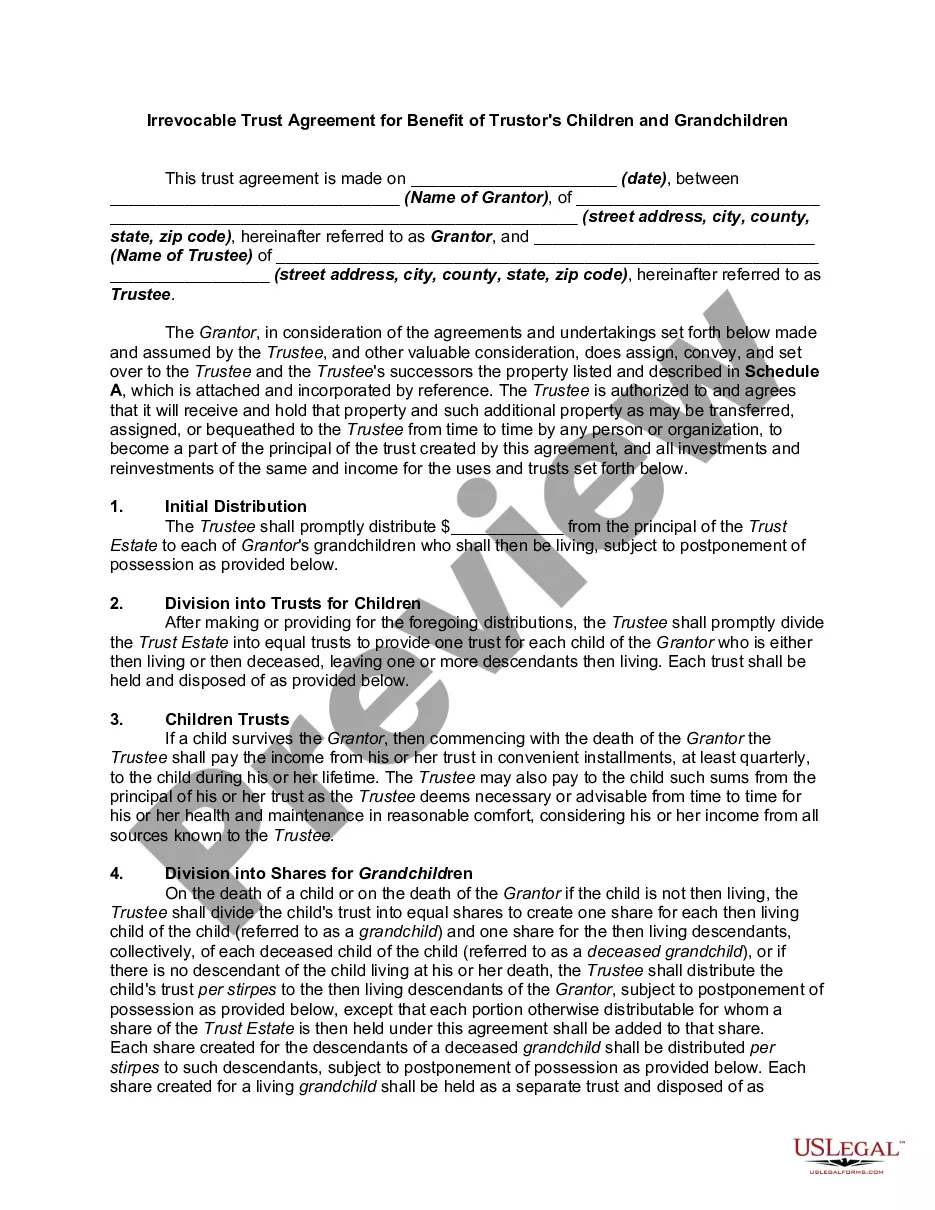
How to fill out Irrevocable Trust Agreement For Benefit Of Trustor's Children And Grandchildren With Spendthrift Trust Provisions?
- If you're a returning user, log in to your account on US Legal Forms and access the Download button for your form. Verify that your subscription is active; if it's not, simply renew it following your payment plan.
- For first-time users, begin by browsing the Preview mode and the form description to confirm it's the right match for your requirements and complies with your local jurisdiction's laws.
- If you need a different document, utilize the Search tab to find the correct form. Once you identify it, you can proceed to the purchase.
- Click the Buy Now button and select a subscription plan that fits your needs. You'll need to create an account to unlock the full resources of our library.
- Complete your transaction by entering your credit card details or using your PayPal account to finalize the subscription.
- Download your selected form and save it on your device, ensuring it's available in the My Forms section of your profile for future reference.
With US Legal Forms, you not only access a robust collection that surpasses competitors in quantity and quality, but you also benefit from expert assistance ensuring your documents are accurate and legally sound.
Start your journey towards securing your assets today by leveraging US Legal Forms to create your sample irrevocable trust with a beneficiary!
Form popularity
FAQ
Typically, you cannot add a beneficiary to a sample irrevocable trust with a beneficiary once it is established. This limitation is what makes an irrevocable trust different from a revocable trust. However, if the trust document allows for it or if certain conditions apply, modifications might be possible. Consulting with a legal professional can provide clarity and help you explore your options effectively.
When the person who created the irrevocable trust passes away, the assets within the trust generally do not go through probate. This is a major benefit as it allows for a smoother transfer of assets to the designated beneficiaries. The terms of the sample irrevocable trust with a beneficiary dictate how the assets will be distributed. It's important to review the specific provisions to understand the distribution process and obligations.
One of the biggest mistakes parents make when establishing a trust fund is failing to communicate their intentions clearly to their beneficiaries. When family members are not aware of the trust's purpose, it can lead to confusion and disputes. Additionally, neglecting to regularly review and update the trust can lead to misalignments with parents' wishes and changes in family circumstances.
Writing an irrevocable trust document involves outlining the trust's terms, naming the trustee, and specifying the beneficiaries clearly. It's essentially a legal agreement, so it is advisable to consult with a legal professional experienced in drafting trusts. Using templates, like those available on the US Legal Forms platform, can streamline the process and ensure you include all necessary elements.
The primary downfall of having a trust, such as a sample irrevocable trust with a beneficiary, is the inflexibility it presents. Once established, changing the trust's terms or beneficiaries can be legally complex and may not be possible. Additionally, some may feel that trusts create unnecessary complications in their estate planning process rather than simplifying it.
Considering a trust for your parents' assets can be beneficial in many circumstances, such as preserving wealth and ensuring organized distribution after their passing. However, it is essential to evaluate their specific situation and goals before making any decisions. A sample irrevocable trust with a beneficiary might provide peace of mind, yet it requires careful planning and understanding of the implications.
A family trust can sometimes complicate family dynamics because it requires clear communication about the trust's terms and the intended beneficiaries. Misunderstandings can arise, especially if the roles and benefits are not transparently outlined. Moreover, maintaining a family trust involves ongoing costs for management and legal compliance, which may be a concern.
One downside of placing assets in a trust is the potential loss of control over those assets. Once you place assets in a sample irrevocable trust with a beneficiary, you cannot easily remove them without following specific procedures. Additionally, setting up a trust may incur legal and administrative costs that some individuals may find burdensome.
It is possible to create an irrevocable trust without an attorney, especially if you are diligent and well-informed. However, legal nuances can be complex, and errors might have lasting implications. To make the process easier, consider using uslegalforms, which provides resources to help you draft a sample irrevocable trust with a beneficiary correctly.
The IRS regularly updates its rules regarding irrevocable trusts, particularly with respect to taxation and reporting requirements. A recent change emphasizes the importance of transparency and compliance for trust income and distributions. Staying informed about these rules is vital for anyone managing a sample irrevocable trust with a beneficiary, as improper handling could lead to tax issues.