Revocation Of Irrevocable Trust Form With Trust
Description
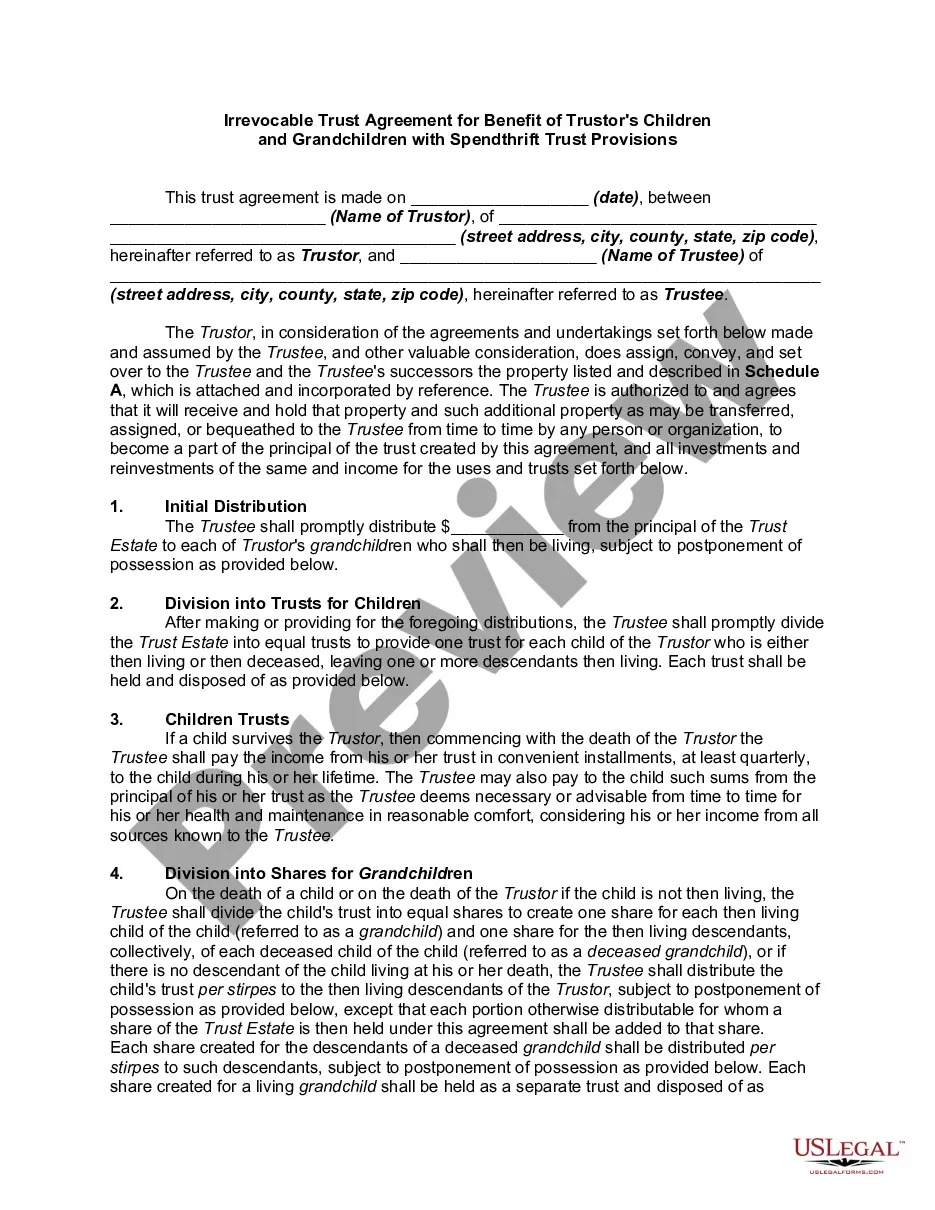
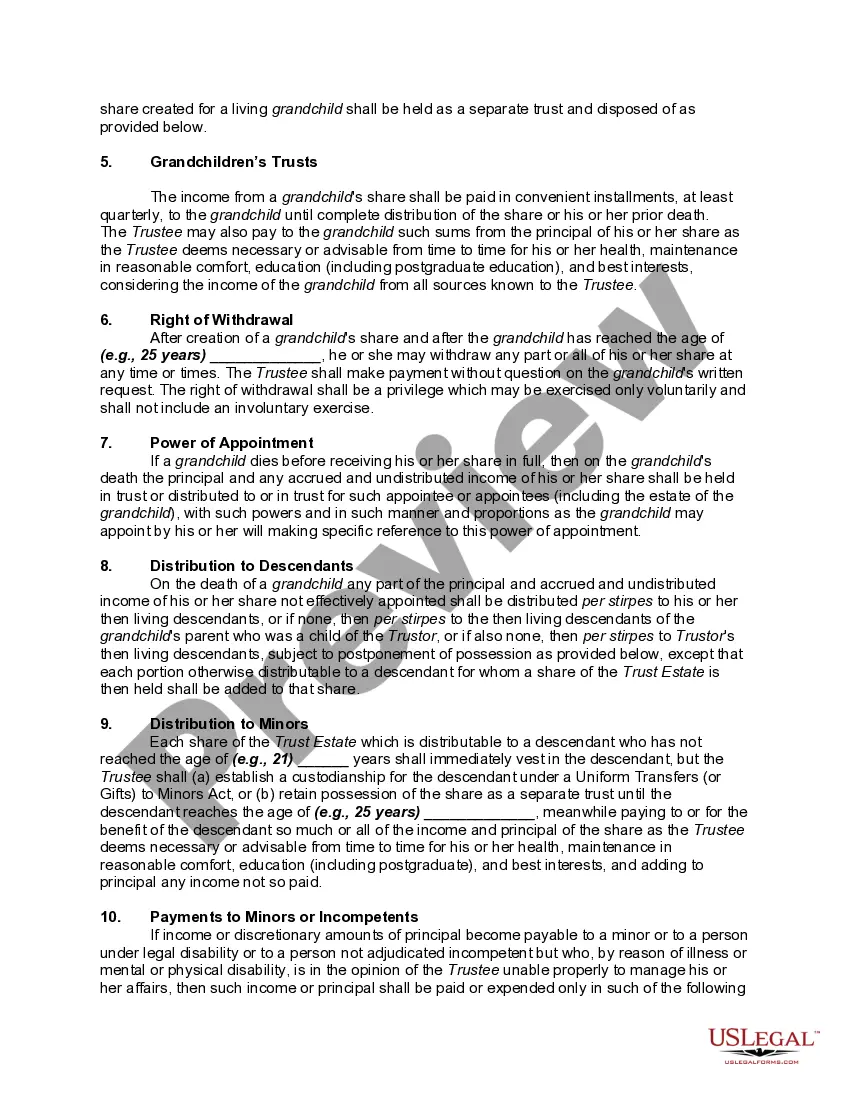
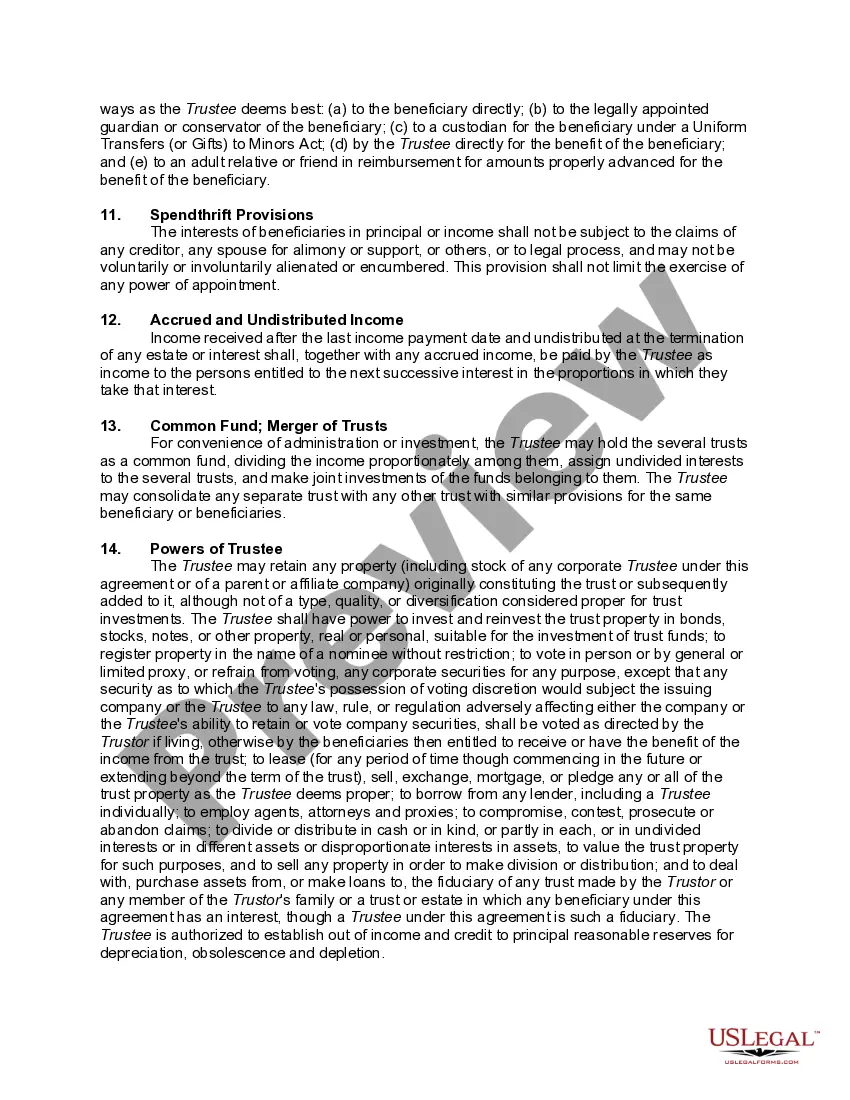
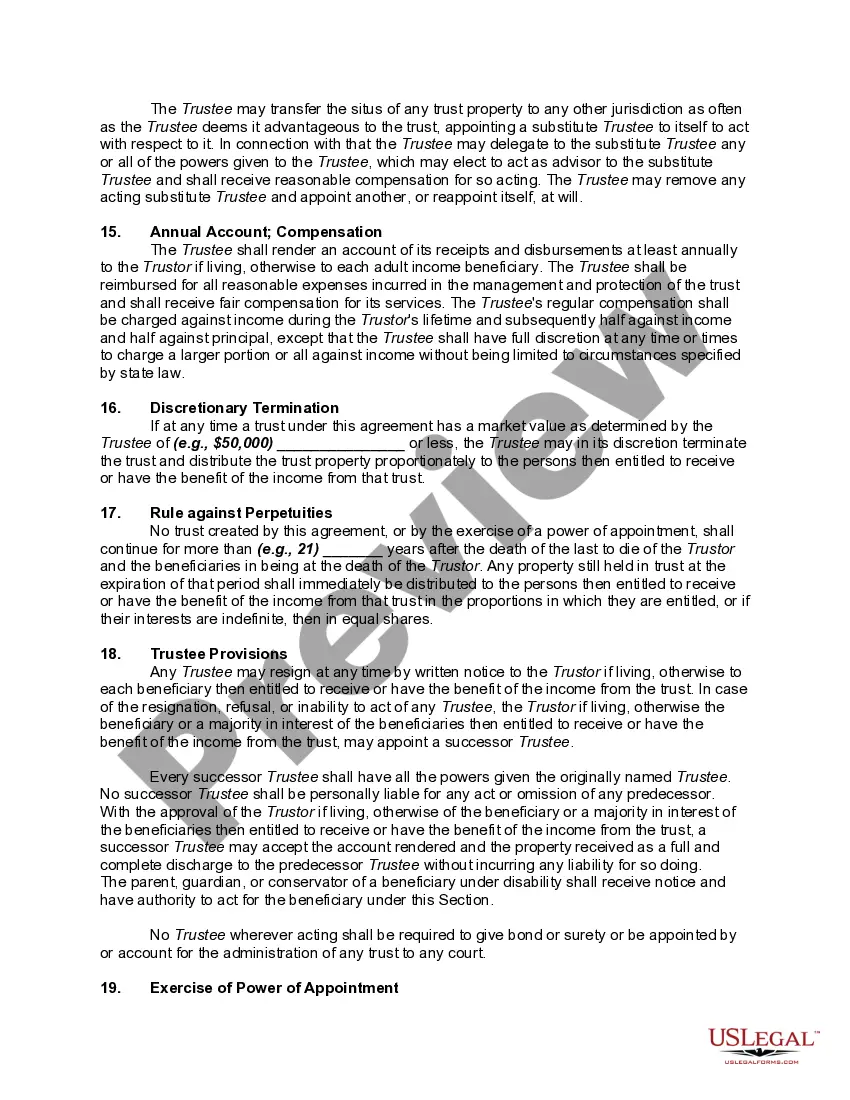


Get your form ready online
Our built-in tools help you complete, sign, share, and store your documents in one place.
Make edits, fill in missing information, and update formatting in US Legal Forms—just like you would in MS Word.
Download a copy, print it, send it by email, or mail it via USPS—whatever works best for your next step.
Sign and collect signatures with our SignNow integration. Send to multiple recipients, set reminders, and more. Go Premium to unlock E-Sign.
If this form requires notarization, complete it online through a secure video call—no need to meet a notary in person or wait for an appointment.
We protect your documents and personal data by following strict security and privacy standards.

Make edits, fill in missing information, and update formatting in US Legal Forms—just like you would in MS Word.

Download a copy, print it, send it by email, or mail it via USPS—whatever works best for your next step.

Sign and collect signatures with our SignNow integration. Send to multiple recipients, set reminders, and more. Go Premium to unlock E-Sign.

If this form requires notarization, complete it online through a secure video call—no need to meet a notary in person or wait for an appointment.

We protect your documents and personal data by following strict security and privacy standards.
Looking for another form?







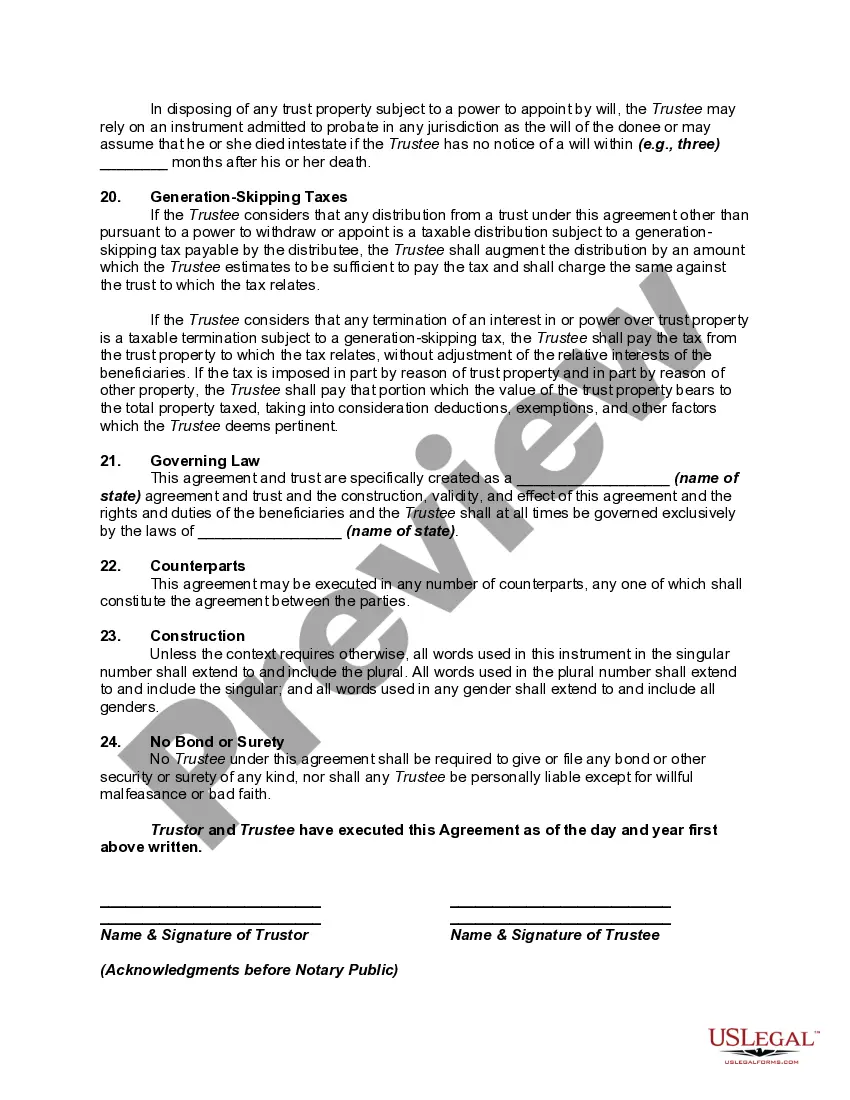
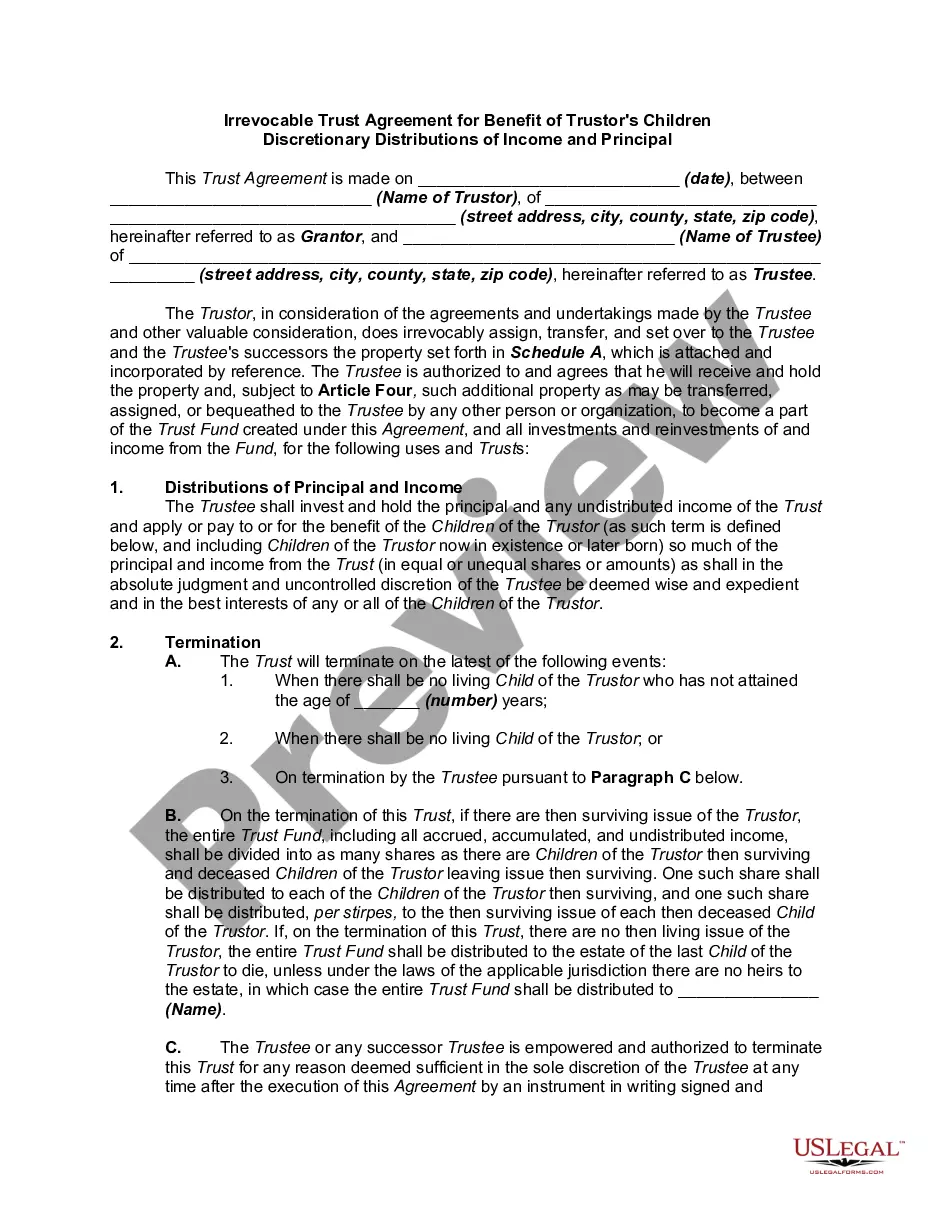
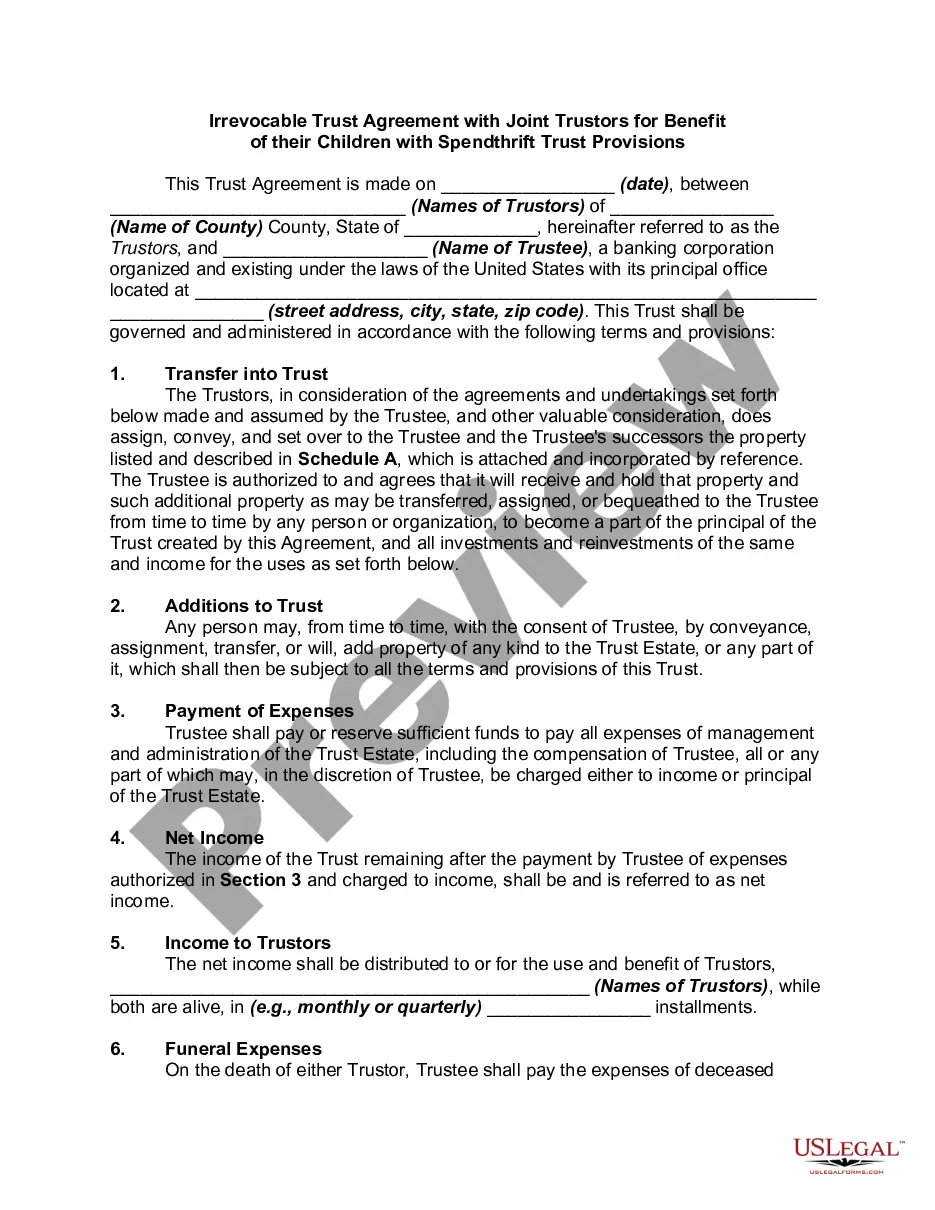
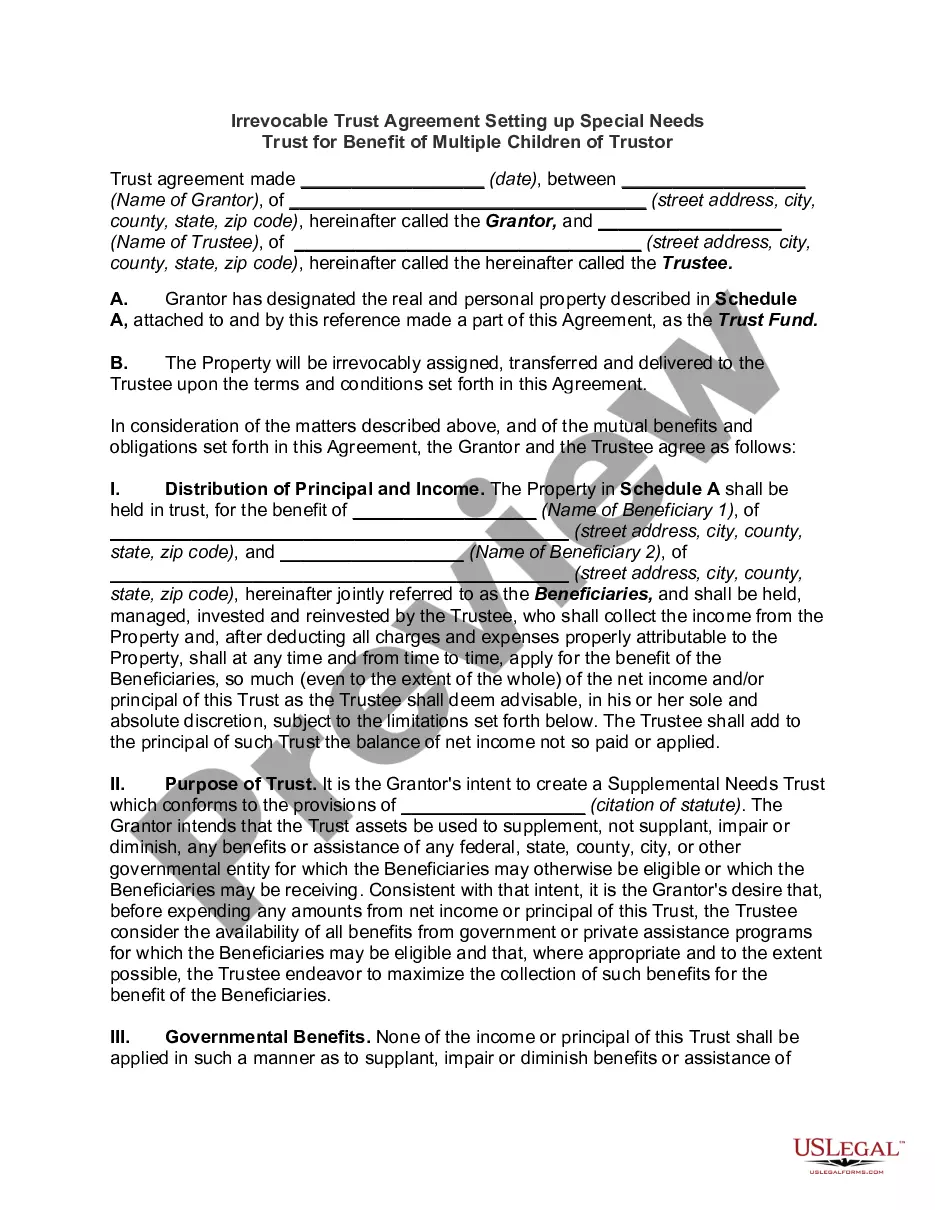
How to fill out Irrevocable Trust Agreement For Benefit Of Trustor's Children And Grandchildren With Spendthrift Trust Provisions?
It’s clear that you cannot transform into a legal specialist in a single night, nor can you immediately comprehend how to swiftly create the Revocation Of Irrevocable Trust Form With Trust without possessing a distinct set of expertise. Drafting legal documents is an extensive undertaking that demands specific training and abilities. Thus, why not delegate the drafting of the Revocation Of Irrevocable Trust Form With Trust to the experts.
With US Legal Forms, one of the most comprehensive legal template repositories, you can discover anything from judicial documents to templates for internal office communication. We recognize how crucial compliance and observance of federal and local regulations are. That’s why, on our platform, every form is tailored to specific locations and remains current.
Here’s how you can initiate your journey with our platform and acquire the document you require in just minutes.
You can regain access to your documents from the My documents tab at any moment. If you’re a current client, you can easily Log In, and find and download the template from the same section.
Regardless of the intent behind your documents—be it financial and legal, or personal—our platform has you covered. Experience US Legal Forms now!
- Locate the form you require by utilizing the search bar located at the top of the webpage.
- Review it (if this option is available) and read the accompanying description to ascertain if Revocation Of Irrevocable Trust Form With Trust is what you are looking for.
- If you need a different template, restart your search.
- Register for a complimentary account and select a subscription option to buy the template.
- Click Buy now. Once the transaction is completed, you can download the Revocation Of Irrevocable Trust Form With Trust, fill it out, print it, and send or mail it to the appropriate individuals or organizations.
Form popularity
FAQ
Dissolving an irrevocable trust is often a complicated process due to its fundamental design. Legal requirements typically involve obtaining unanimous consent from beneficiaries or approval from a judge if disagreements arise. It is beneficial to consult with an attorney who specializes in trusts to help guide you through the legal maze and assist you in using the revocation of irrevocable trust form with trust to achieve your goals.
To revoke an irrevocable beneficiary, you typically need to review the trust document for any specific provisions regarding changes. If allowed, you may need to file a petition with the court to finalize the revocation if all parties do not agree. Seeking professional legal advice can help ensure you're following the appropriate steps and using the correct revocation of irrevocable trust form with trust.
While an irrevocable trust is designed to be permanent, it can sometimes be revoked under specific circumstances with a court's intervention. If all beneficiaries agree or if the trust's terms allow for revocation, the process may become easier. Legal guidance is essential to navigate this complex area and ensure compliance with all regulations involved.
Breaking an irrevocable trust can be quite challenging due to its permanent nature. In most cases, it requires the consent of all beneficiaries and can involve court approval if the beneficiaries do not agree. Engaging legal help can simplify the process, ensuring that all necessary steps are completed accurately, especially if you are considering the revocation of irrevocable trust form with trust.
The 5 year rule refers to a specific time frame in which assets transferred into an irrevocable trust are considered for Medicaid eligibility purposes. According to this rule, any assets moved to an irrevocable trust less than five years before applying for Medicaid may count against eligibility. Understanding this rule is crucial for ensuring that your trust serves its intended purpose without impacting your healthcare options down the line.
Revocation of an irrevocable trust typically requires a court order, as these trusts are designed to be permanent. If the original trust document includes specific provisions for revocation, those should be followed closely. It's wise to consult with an attorney to navigate the complex legal requirements involved in this process, ensuring you have the correct revocation of irrevocable trust form with trust.
A trust can be terminated in various ways, such as through expiration, revocation, or by court order. First, a trust may expire when a specific term or event occurs as predefined in the trust document. Second, a grantor may choose to revoke the trust at any time, especially through the Revocation of irrevocable trust form with trust. Finally, a court may intervene and terminate a trust if it finds that continuing it would be against public policy or the interests of the beneficiaries.
When a trust is revoked, the assets that were once part of the trust are returned to the grantor or distributed according to the grantor's wishes. The Revocation of irrevocable trust form with trust serves as a formal method to facilitate this process, ensuring transparency and legal validity. It's important to follow the appropriate legal procedures to avoid complications. Upon revocation, the grantor regains full control over the assets that were previously held in trust.
An irrevocable trust can become invalid if it lacks essential elements such as clear intent, proper execution, or if it fails to comply with state laws. If the trust document does not clearly state the terms or the grantor does not sign it correctly, this can lead to invalidation. Additionally, if the trust is established under fraudulent circumstances, it may also be deemed invalid. You can consider using the Revocation of irrevocable trust form with trust to ensure accurate and compliant revisions to existing trusts.
An example of revocation of trust occurs when a trust grantor decides to remove a trustee or modify beneficiary designations within an irrevocable trust. In such cases, a Revocation of irrevocable trust form with trust can effectively document these changes. This form is crucial, as it provides clear guidance on what modifications are being made and how they impact the trust. Utilizing platforms like uslegalforms can simplify this process, ensuring you have the correct documentation.