Living Trust Taxes
Description


Get your form ready online
Our built-in tools help you complete, sign, share, and store your documents in one place.
Make edits, fill in missing information, and update formatting in US Legal Forms—just like you would in MS Word.
Download a copy, print it, send it by email, or mail it via USPS—whatever works best for your next step.
Sign and collect signatures with our SignNow integration. Send to multiple recipients, set reminders, and more. Go Premium to unlock E-Sign.
If this form requires notarization, complete it online through a secure video call—no need to meet a notary in person or wait for an appointment.
We protect your documents and personal data by following strict security and privacy standards.

Make edits, fill in missing information, and update formatting in US Legal Forms—just like you would in MS Word.

Download a copy, print it, send it by email, or mail it via USPS—whatever works best for your next step.

Sign and collect signatures with our SignNow integration. Send to multiple recipients, set reminders, and more. Go Premium to unlock E-Sign.

If this form requires notarization, complete it online through a secure video call—no need to meet a notary in person or wait for an appointment.

We protect your documents and personal data by following strict security and privacy standards.
Looking for another form?





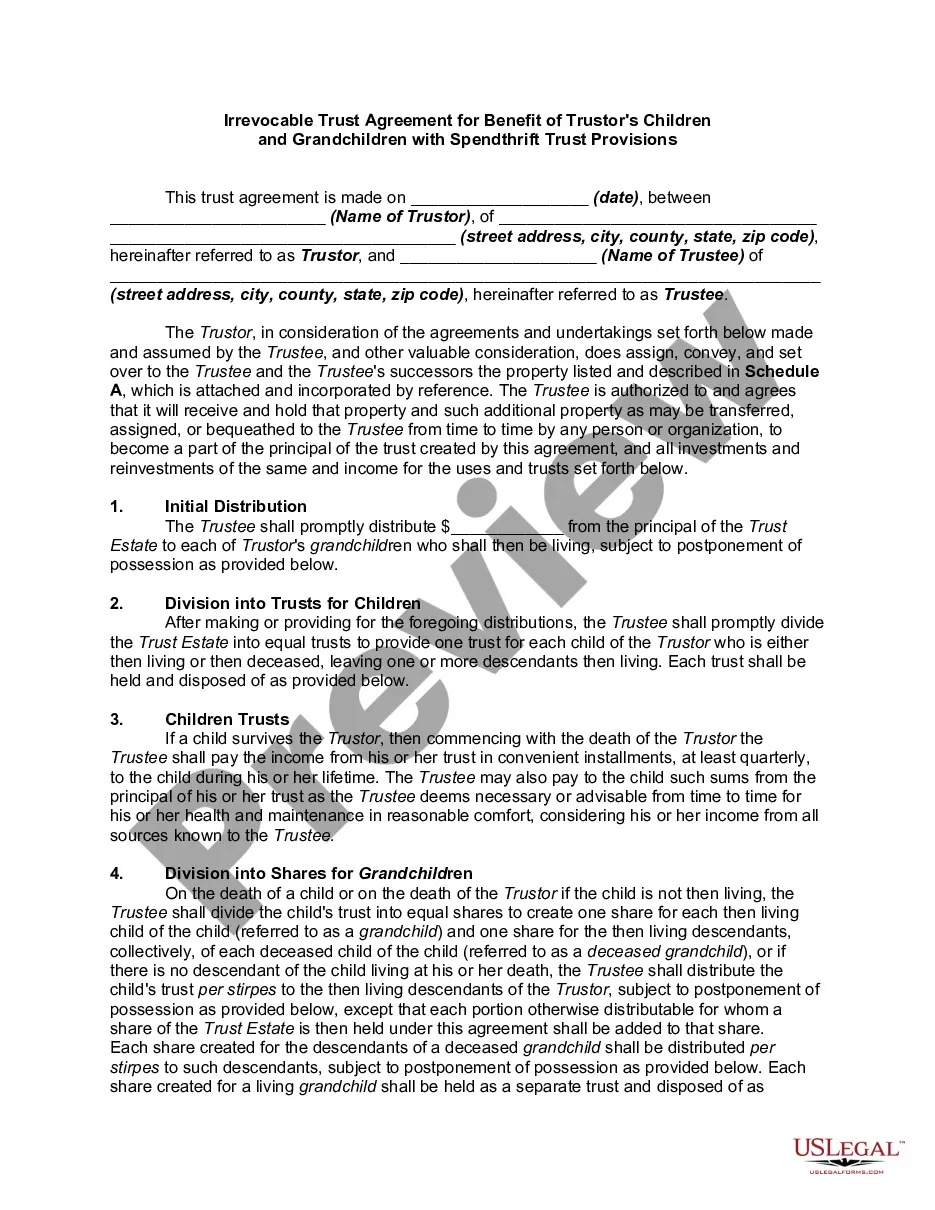
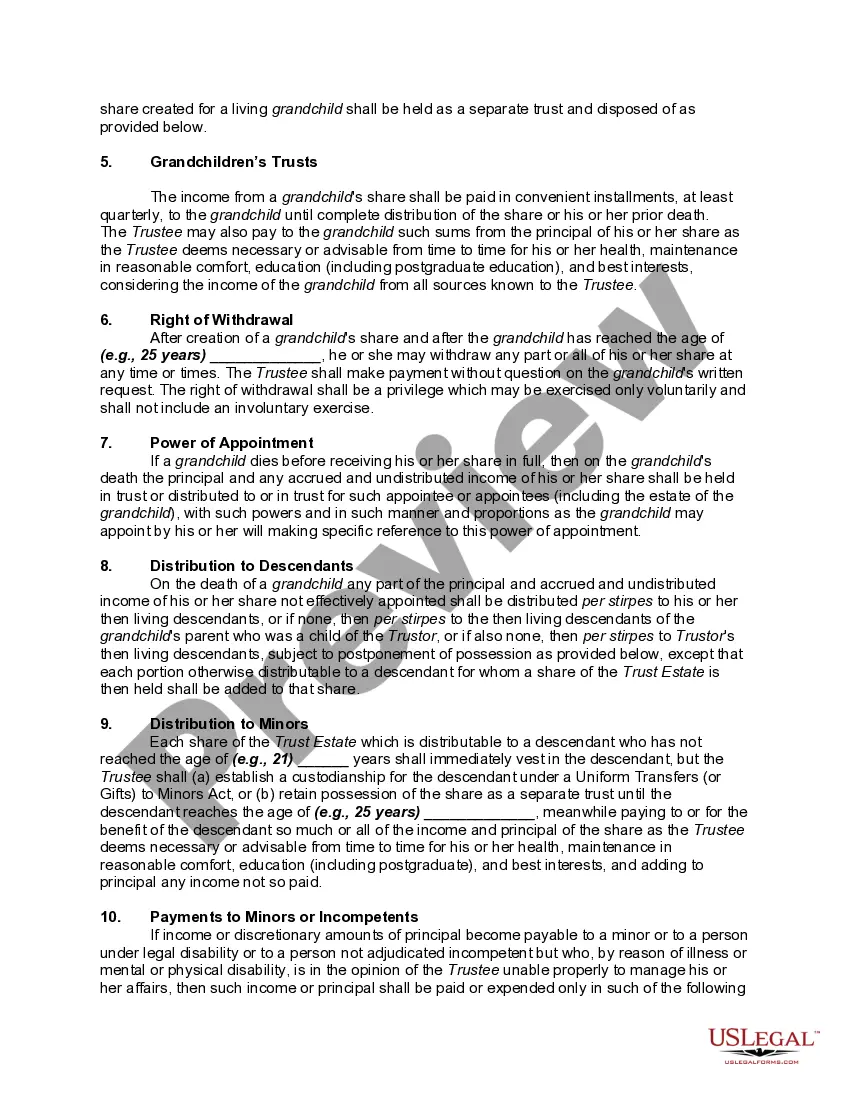
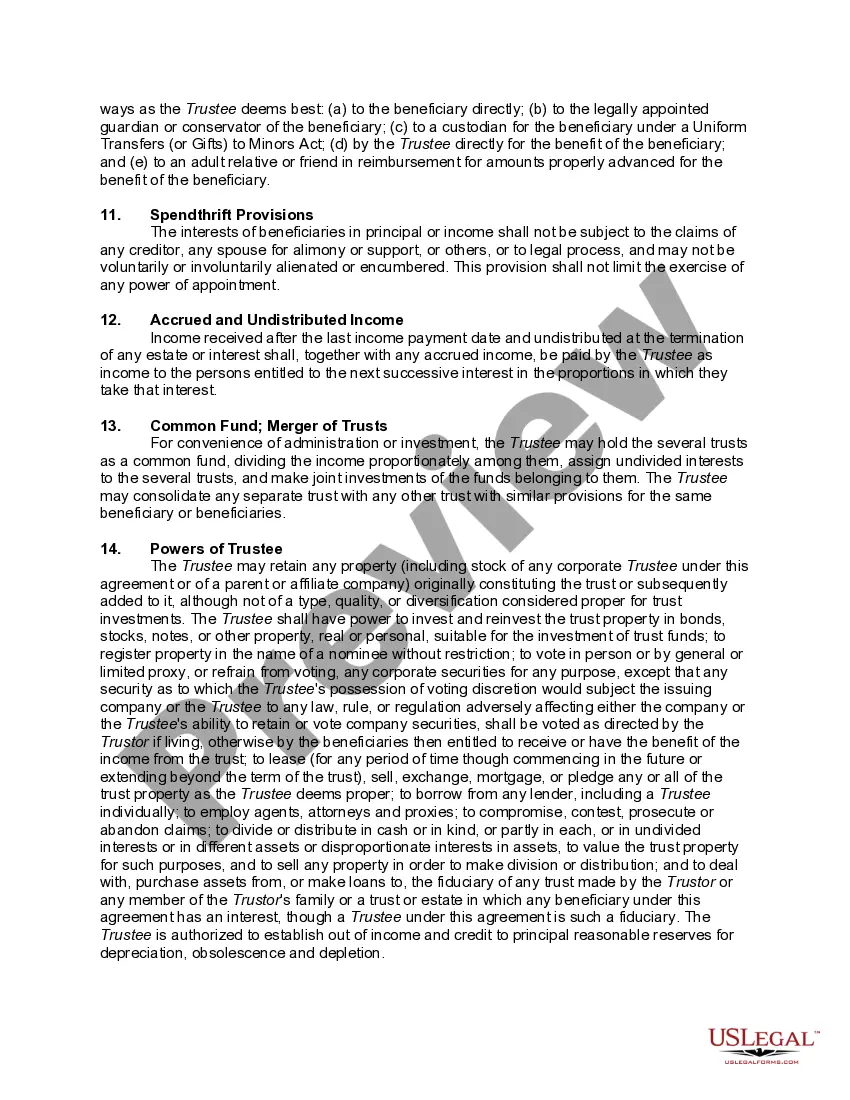
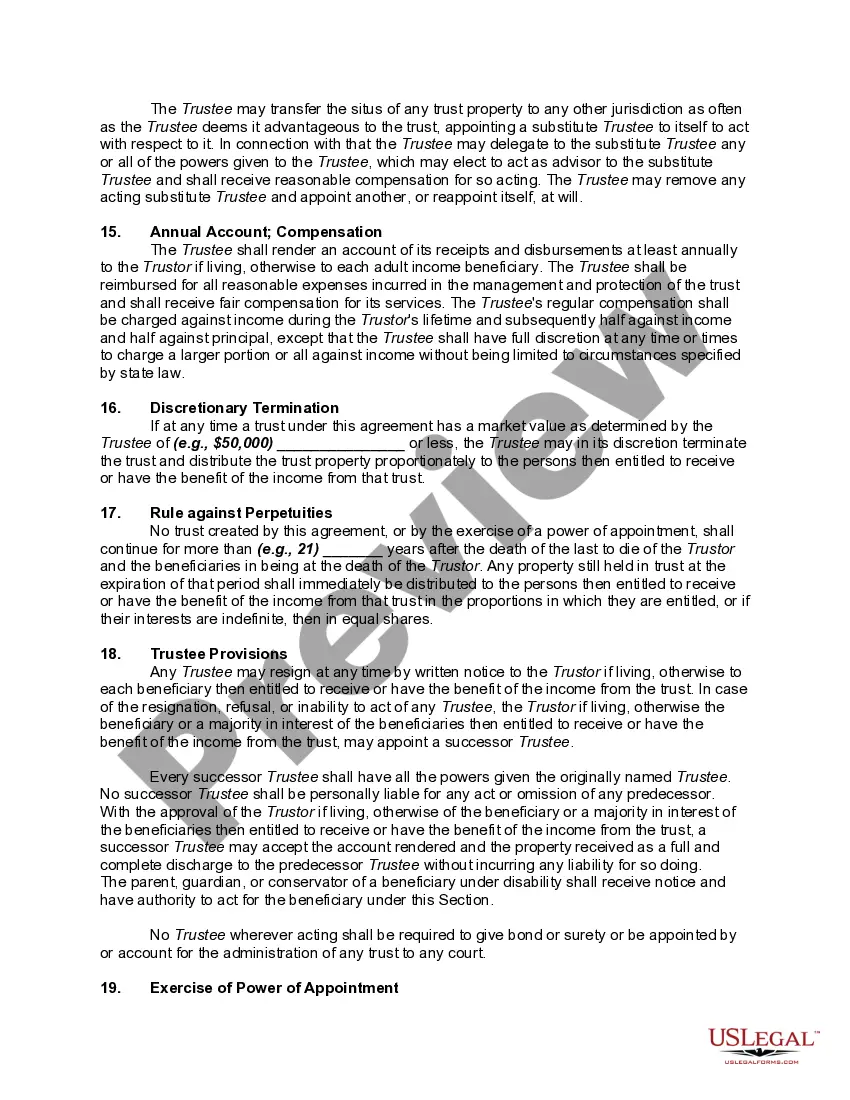
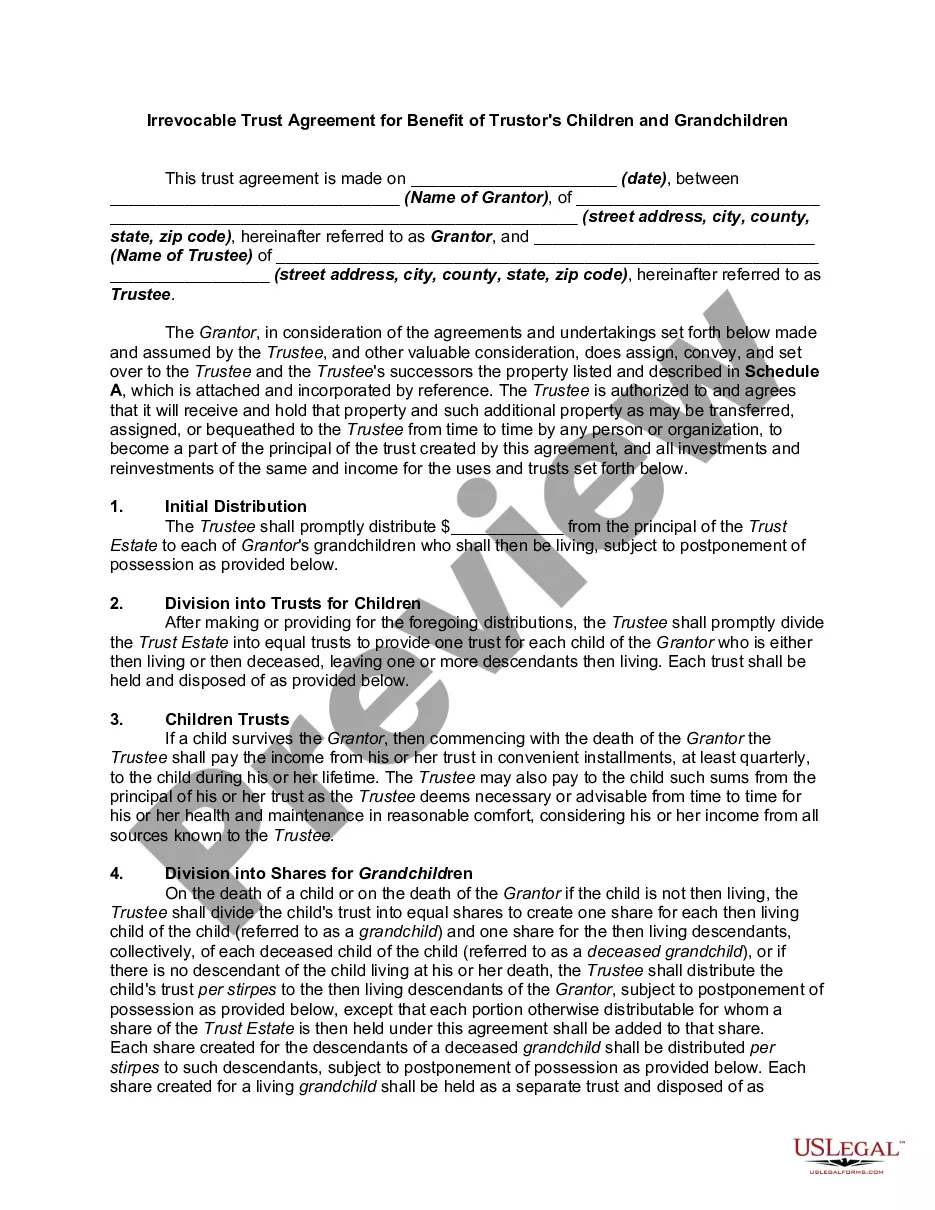
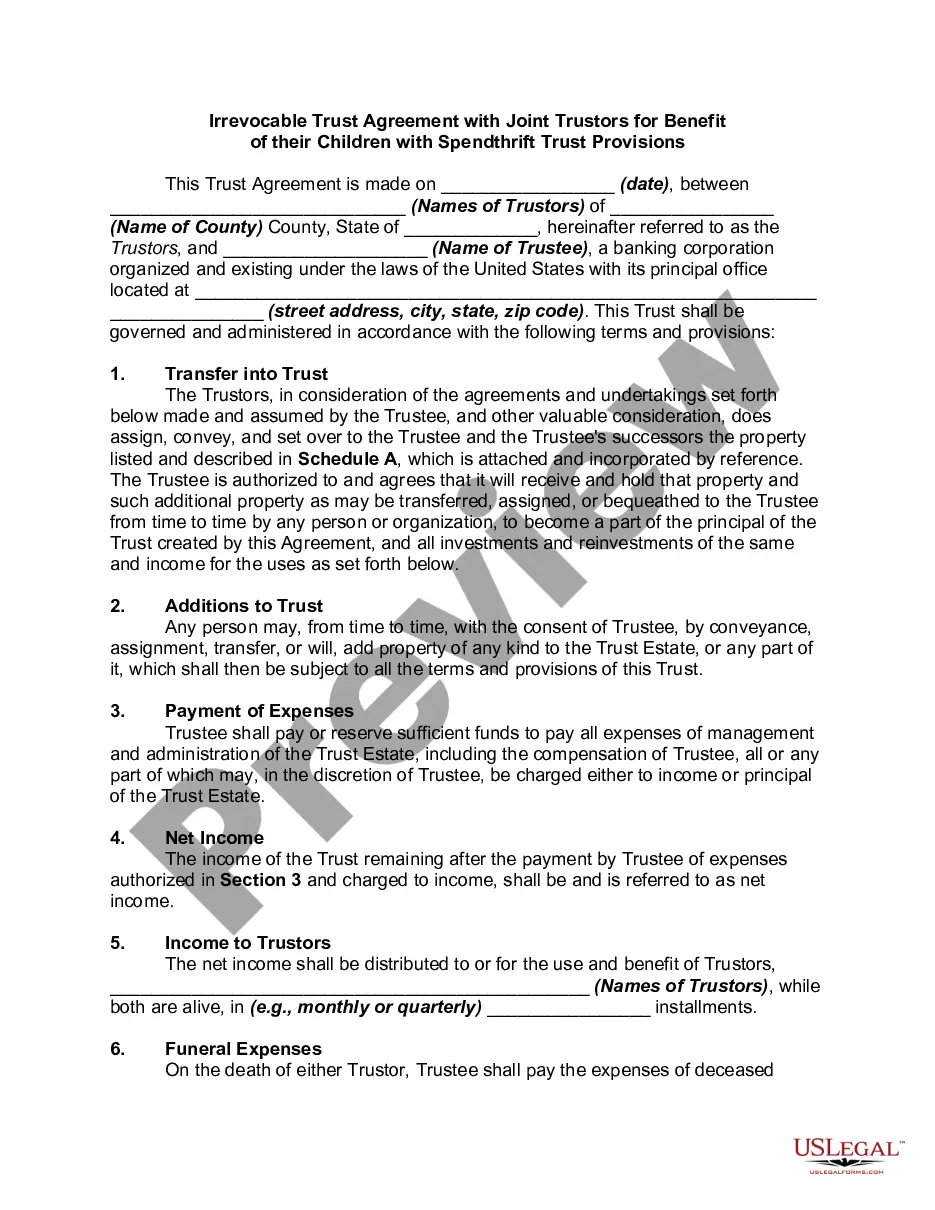
How to fill out Irrevocable Trust Agreement For Benefit Of Trustor's Children And Grandchildren With Spendthrift Trust Provisions?
- If you are an existing user, log in to your account and navigate to your forms library. Confirm that your subscription is active to download your needed template.
- For new users, start by exploring the Preview mode and read the form description carefully. Ensure the selected document aligns with your specific jurisdiction's requirements.
- If you need a different template, utilize the Search tab to find the correct form. Confirm it matches your needs before proceeding.
- Purchase the chosen document by clicking on the Buy Now button. Select a subscription plan and register for an account for full access.
- Complete your payment using your credit card or PayPal, then download the selected form directly to your device.
- Store your document securely. You can always access it later in the My Forms section of your profile.
Once you have your form, you can easily fill it out and ensure it complies with all legal requirements, thanks to the expert assistance available from US Legal Forms.
In conclusion, utilizing US Legal Forms simplifies the process of obtaining your living trust form while offering unmatched resources and support. Start your journey today and ensure your legal documents are handled professionally.
Form popularity
FAQ
Living trust taxes are often minimized because trusts can separate income from the individual. Income generated by assets in a living trust may not be subject to personal income tax during your lifetime. Instead, the trust itself may report income on its tax return, which can take advantage of different tax benefits. Utilizing the right structure with a living trust can help you manage your tax responsibilities effectively.
One significant mistake parents make is failing to fund the trust adequately. Setting up the trust is only the first step; ensuring assets are transferred into the trust is crucial for effective management and tax implications. Without proper funding, the trust cannot serve its intended purpose, potentially complicating living trust taxes in the future. Consulting with professionals and using platforms like US Legal Forms can help streamline this process.
After the grantor's death, a living trust may be treated as a separate tax entity, requiring its own tax return. In this case, the trust will have its own tax obligations, and trust taxes must be filed separately from the deceased grantor's personal taxes. Understanding when and how to file these returns ensures compliance and helps manage living trust taxes effectively. Using resources like US Legal Forms can assist in navigating these complexities.
Yes, it is necessary to report income generated from a trust. If you receive distributions, you typically must include these amounts on your tax return. Reporting this income accurately impacts your living trust taxes and helps maintain transparency with the IRS. Keeping diligent records can simplify this reporting process as well.
The IRS has introduced updates regarding trust tax classification, particularly on how income is reported for tax purposes. Trusts may now be required to disclose more information about their income sources and distributions. Understanding these rules is essential for efficiently managing living trust taxes and ensuring compliance with federal tax laws. Staying informed can help you navigate these changes effectively.
Generally, a living trust does not file a separate tax return while the grantor is alive. Instead, the income generated by the assets in the trust is reported on the grantor's personal tax return. This means that living trust taxes are typically handled on the individual level, simplifying the tax filing process for many. However, once the grantor passes away, the trust may form a tax entity that requires its own return.
Having a living trust can streamline the estate planning process and may have various implications for living trust taxes. While a living trust itself does not directly change your tax obligations, it can help avoid probate and ensure quicker asset distribution, which often simplifies tax filings. Additionally, assets in a living trust maintain their tax treatment, which means you won’t face higher taxes solely because they are held in a trust. Utilizing platforms like USLegalForms can assist you in understanding these nuances and preparing necessary documentation.
While living trusts offer many benefits, they can have tax disadvantages as well. For example, revocable trusts do not provide tax benefits, and any income is taxed at your personal rate. Additionally, administrative costs may arise, complicating your overall tax situation. It's wise to consult with a tax advisor to navigate these living trust taxes intricacies.
Ownership of a living trust in itself does not constitute income. However, income generated from the assets within the trust is subject to taxation. Hence, when managing living trust taxes, it's vital to distinguish between the trust's assets and any income derived from them.
A living trust may receive a 1099 form if it earns enough income to meet the reporting threshold. This would typically occur for irrevocable trusts that earn interest or dividends. Therefore, it's important to monitor your living trust taxes and ensure all income is properly documented.