Irrevocable Trust In Divorce Settlement
Description




Get your form ready online
Our built-in tools help you complete, sign, share, and store your documents in one place.
Make edits, fill in missing information, and update formatting in US Legal Forms—just like you would in MS Word.
Download a copy, print it, send it by email, or mail it via USPS—whatever works best for your next step.
Sign and collect signatures with our SignNow integration. Send to multiple recipients, set reminders, and more. Go Premium to unlock E-Sign.
If this form requires notarization, complete it online through a secure video call—no need to meet a notary in person or wait for an appointment.
We protect your documents and personal data by following strict security and privacy standards.

Make edits, fill in missing information, and update formatting in US Legal Forms—just like you would in MS Word.

Download a copy, print it, send it by email, or mail it via USPS—whatever works best for your next step.

Sign and collect signatures with our SignNow integration. Send to multiple recipients, set reminders, and more. Go Premium to unlock E-Sign.

If this form requires notarization, complete it online through a secure video call—no need to meet a notary in person or wait for an appointment.

We protect your documents and personal data by following strict security and privacy standards.
Looking for another form?






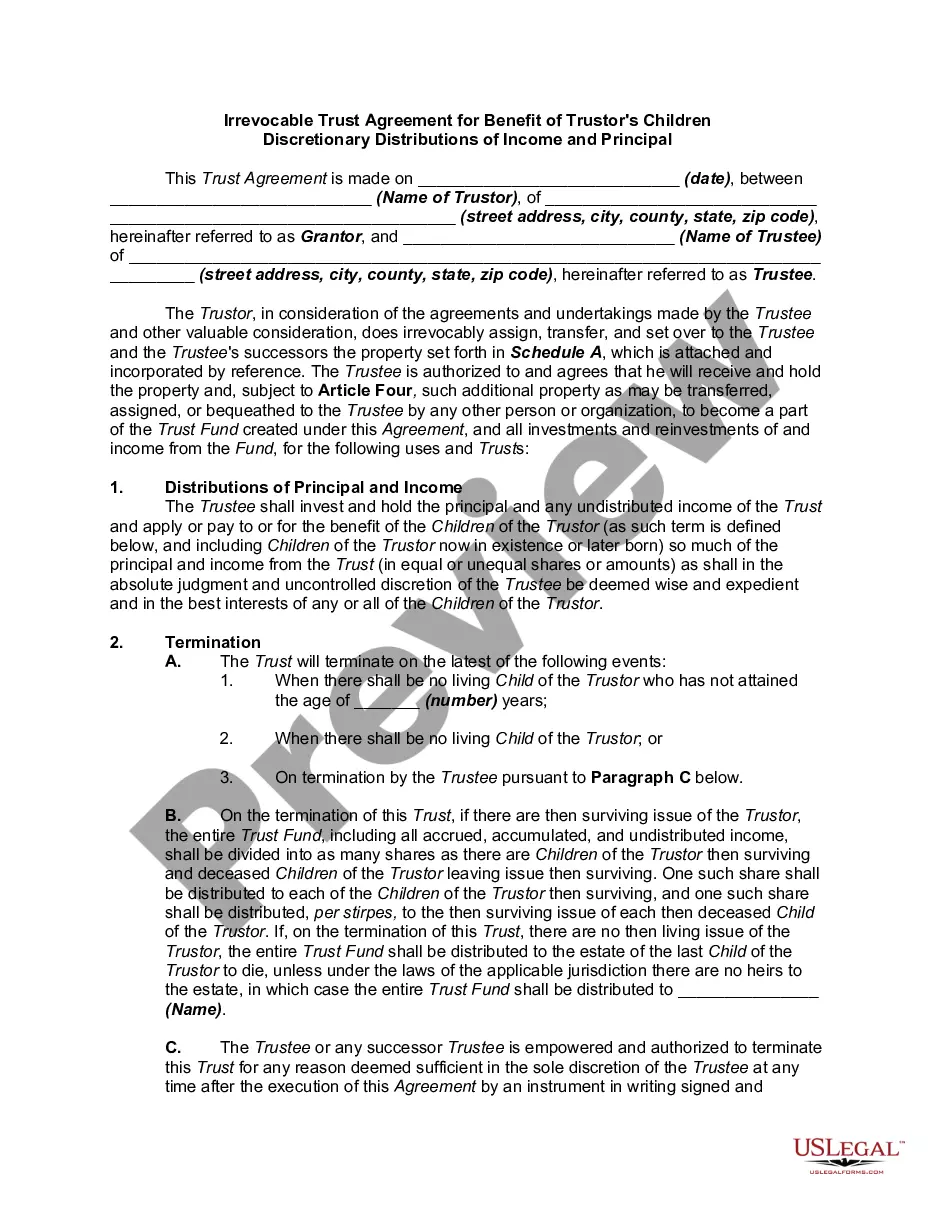
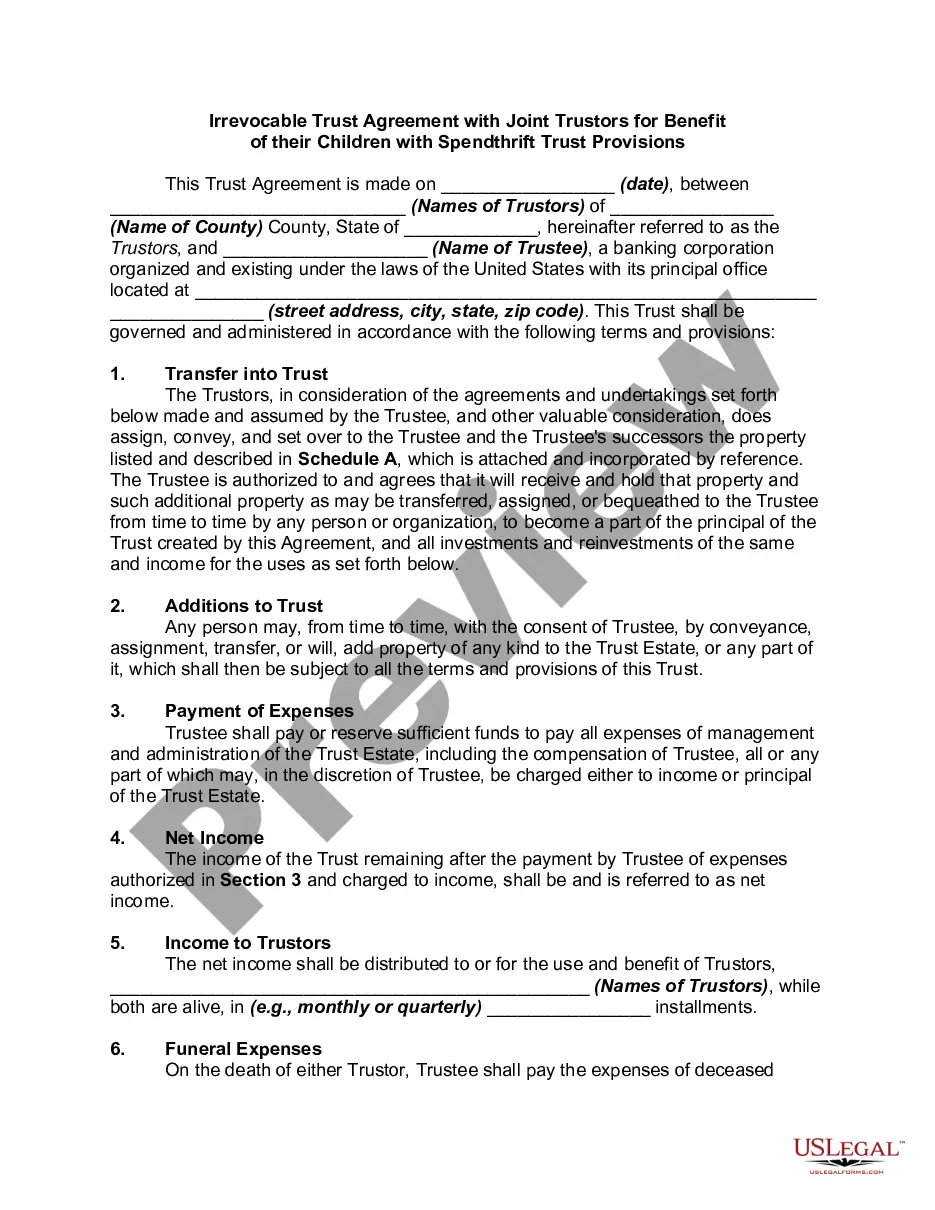
How to fill out Irrevocable Trust Agreement For Benefit Of Trustor's Children And Grandchildren With Spendthrift Trust Provisions?
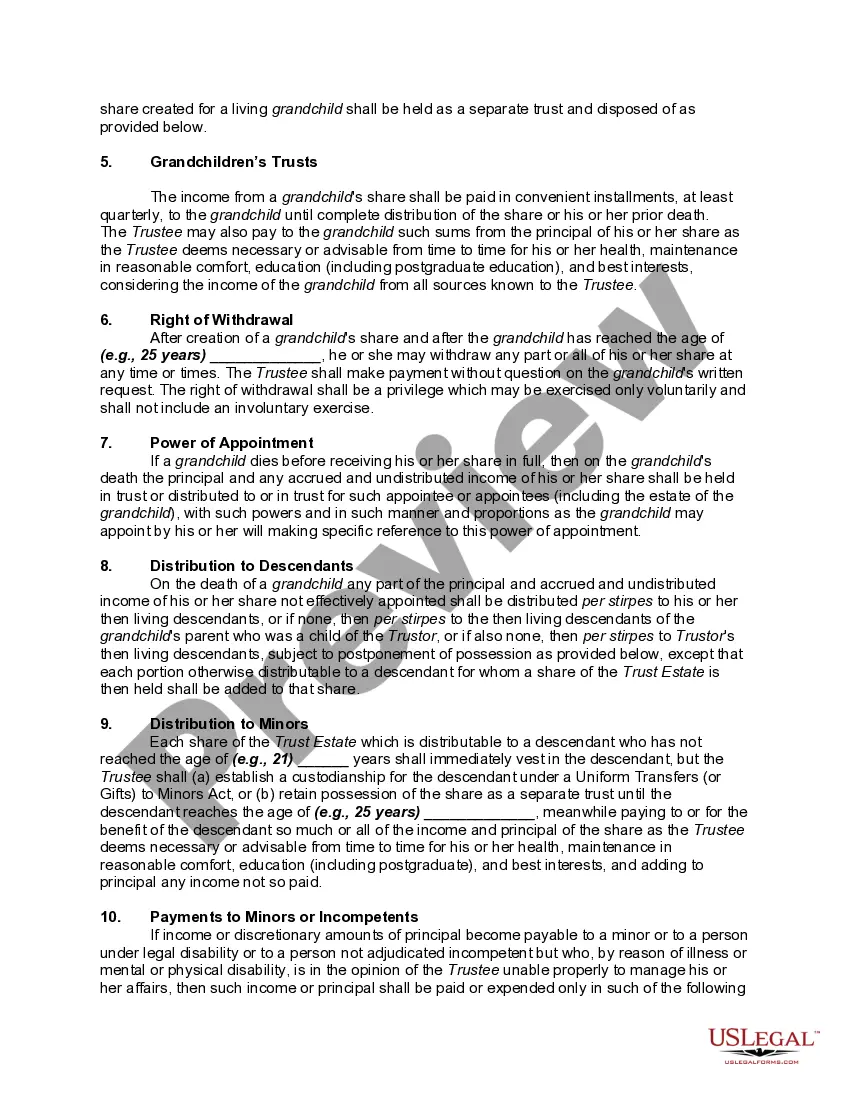
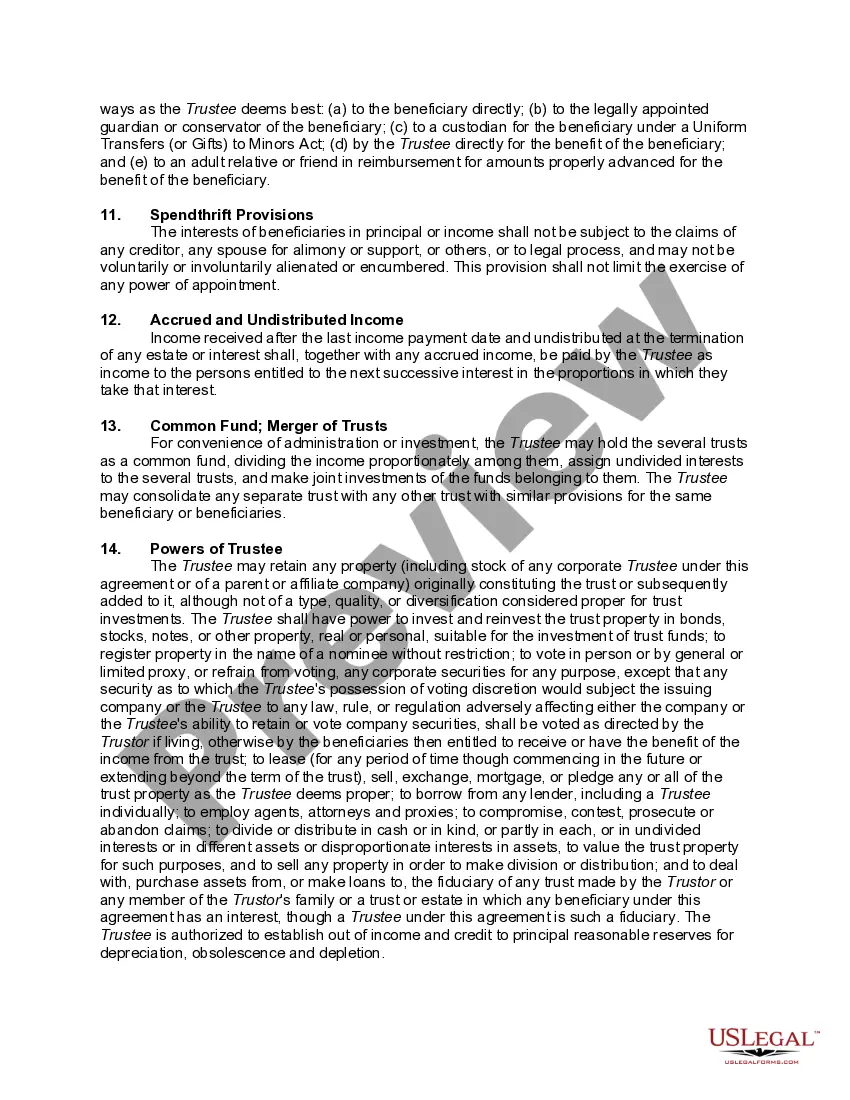
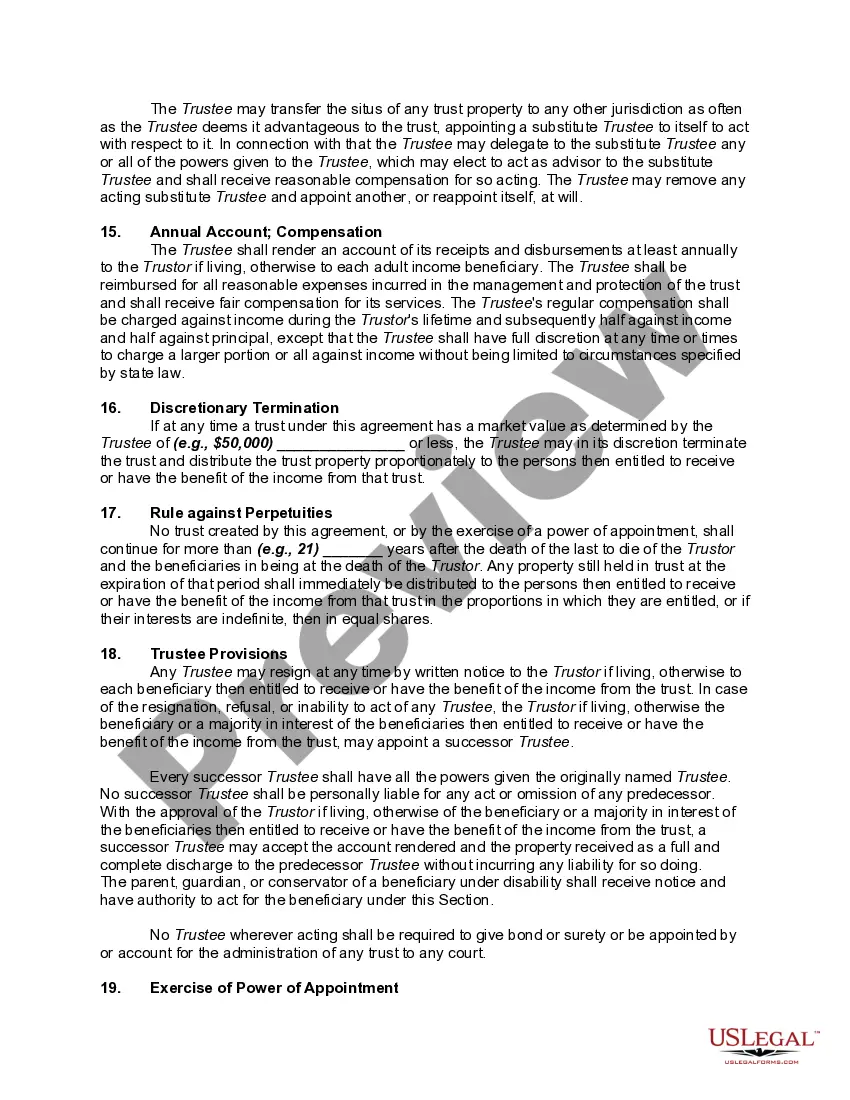
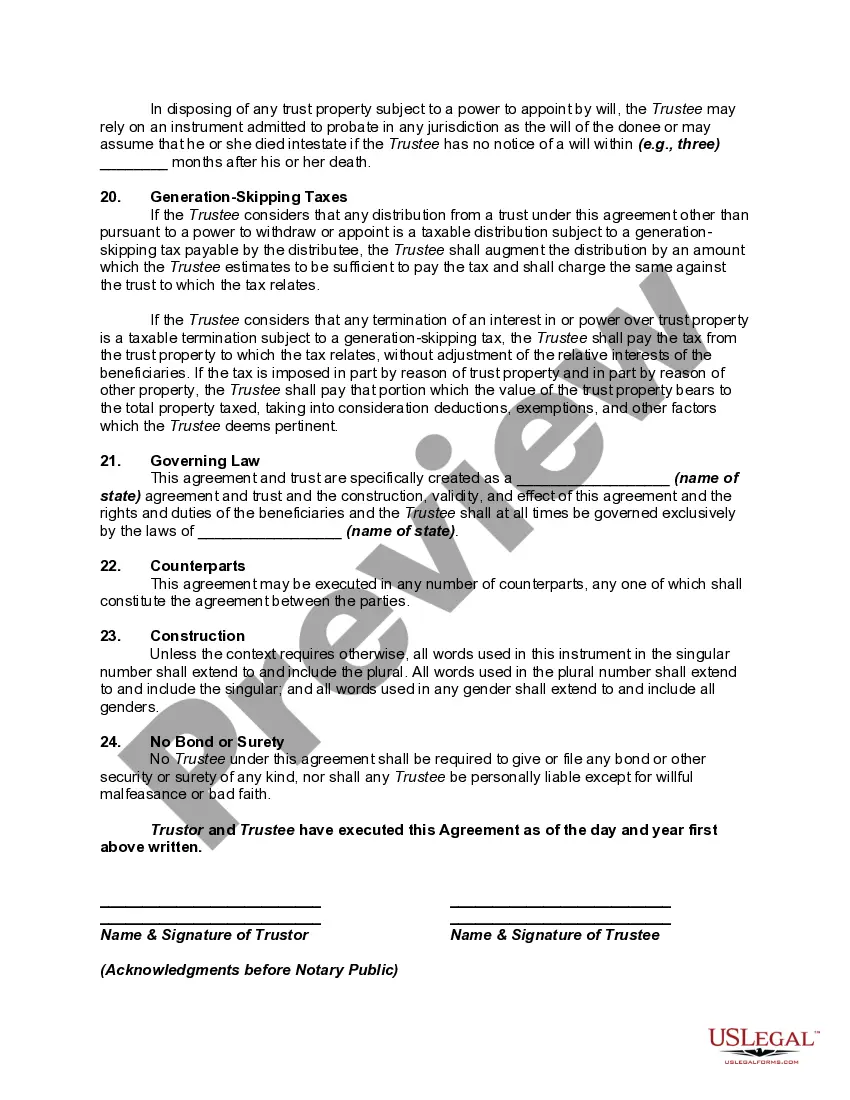
The Unchangeable Trust In Marriage Settlement you view on this page is a versatile formal blueprint prepared by skilled attorneys according to federal and state laws.
For over 25 years, US Legal Forms has been supplying individuals, companies, and lawyers with more than 85,000 verified, state-specific documents for any corporate and personal situation. It’s the fastest, easiest, and most dependable way to acquire the forms you require, as the service ensures banking-level data security and malware prevention.
Register with US Legal Forms to have verified legal templates for all of life's situations readily available.
- Search for the document you require and examine it.
- Browse the sample you found and view it or assess the form description to confirm it meets your requirements. If it does not, use the search tool to discover the suitable one. Click Buy Now once you have found the template you need.
- Subscribe and Log In.
- Choose the pricing plan that fits you best and set up an account. Make a swift payment via PayPal or a credit card. If you already have an account, Log In and check your subscription to move forward.
- Obtain the editable template.
- Select the format you desire for your Unchangeable Trust In Marriage Settlement (PDF, Word, RTF) and store the sample on your device.
- Fill out and sign the documents.
- Print the template to complete it manually. Alternatively, use an online multifunctional PDF editor to swiftly and accurately fill out and sign your form with an electronic signature.
- Re-download your documents as needed.
- Reuse the same document whenever necessary. Access the My documents section in your profile to re-download any previously saved forms.
Form popularity
FAQ
For lawsuit-proof wealth, you need an irrevocable trust or another protective entity. Since you cannot revoke or change an irrevocable trust, your creditors have no greater power to unwind your trust and reclaim its assets. But for an irrevocable trust to protect you, it must be presently funded.
Also, an irrevocable trust's terms cannot be changed, and the trust cannot be canceled without the approval of the grantor and the beneficiaries, or a court order. Because the assets within the trust are no longer the property of the trustor, a creditor cannot come after them to satisfy debts of the trustor.
Irrevocable trusts cannot be modified, amended, or terminated without permission from the grantor's beneficiaries or by court order. The grantor transfers all ownership of assets into the trust and legally removes all of their ownership rights to the assets and the trust.
With an irrevocable trust, the transfer of assets is permanent. So once the trust is created and assets are transferred, they generally can't be taken out again. You can still act as the trustee but you'd be limited to withdrawing money only on an as-needed basis to cover necessary expenses.
For revocable living trusts, it's possible to change or even undo them during your divorce. For an irrevocable living trust, it will probably stay unchanged. Since the assets don't legally belong to you or to your spouse, the assets will stay inside the trust for the benefit of your beneficiaries.