Irrevocable Grantor Trusts With A Trustee
Description







Get your form ready online
Our built-in tools help you complete, sign, share, and store your documents in one place.
Make edits, fill in missing information, and update formatting in US Legal Forms—just like you would in MS Word.
Download a copy, print it, send it by email, or mail it via USPS—whatever works best for your next step.
Sign and collect signatures with our SignNow integration. Send to multiple recipients, set reminders, and more. Go Premium to unlock E-Sign.
If this form requires notarization, complete it online through a secure video call—no need to meet a notary in person or wait for an appointment.
We protect your documents and personal data by following strict security and privacy standards.

Make edits, fill in missing information, and update formatting in US Legal Forms—just like you would in MS Word.

Download a copy, print it, send it by email, or mail it via USPS—whatever works best for your next step.

Sign and collect signatures with our SignNow integration. Send to multiple recipients, set reminders, and more. Go Premium to unlock E-Sign.

If this form requires notarization, complete it online through a secure video call—no need to meet a notary in person or wait for an appointment.

We protect your documents and personal data by following strict security and privacy standards.
Looking for another form?
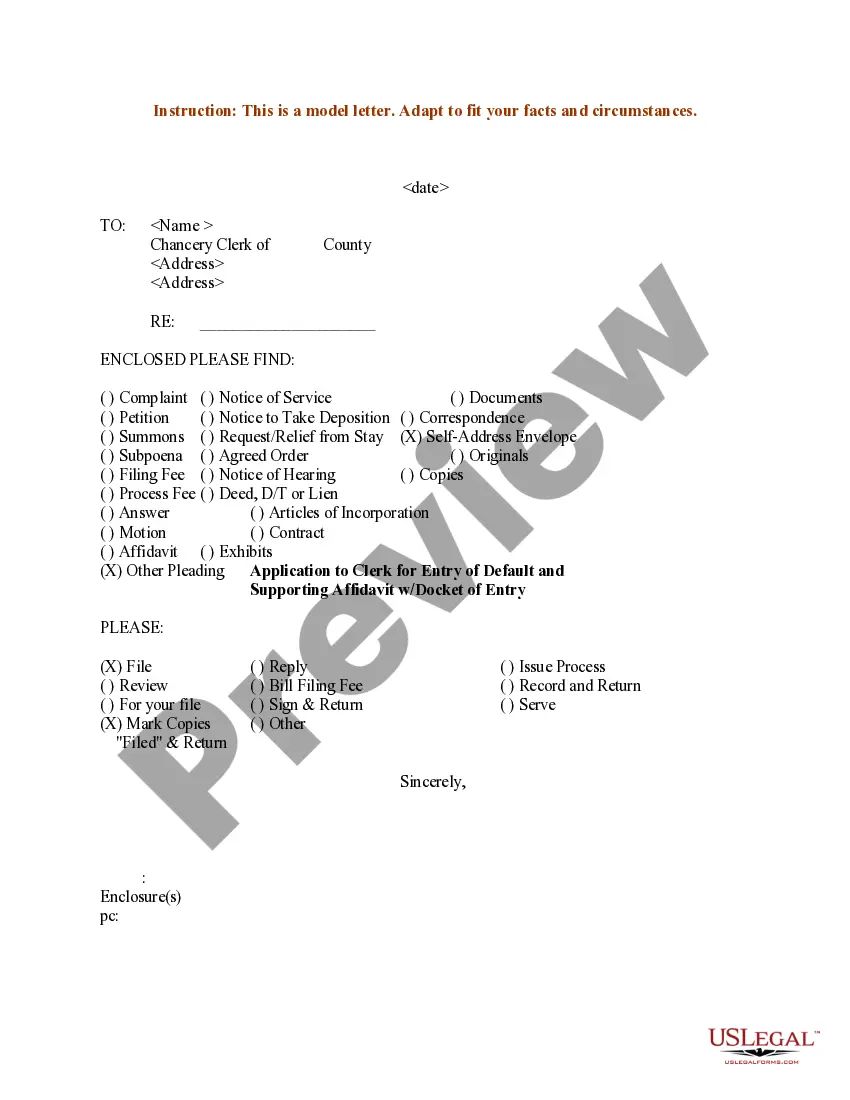









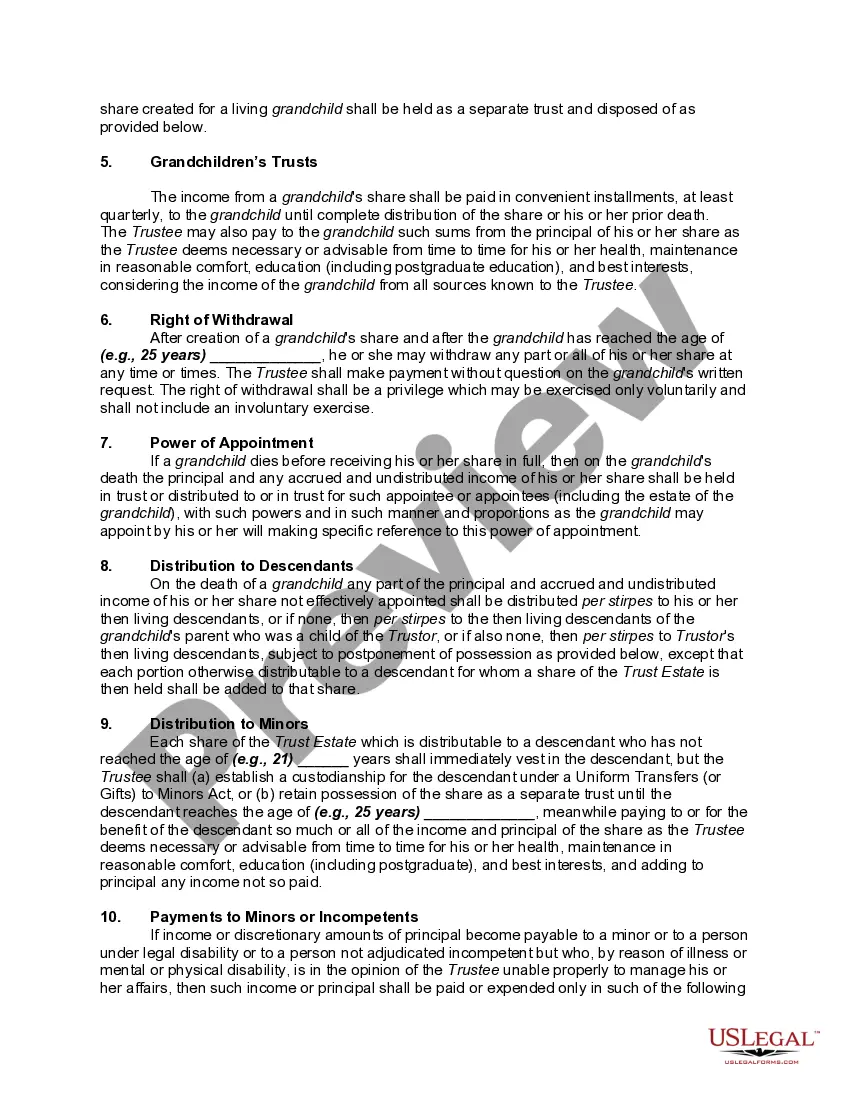
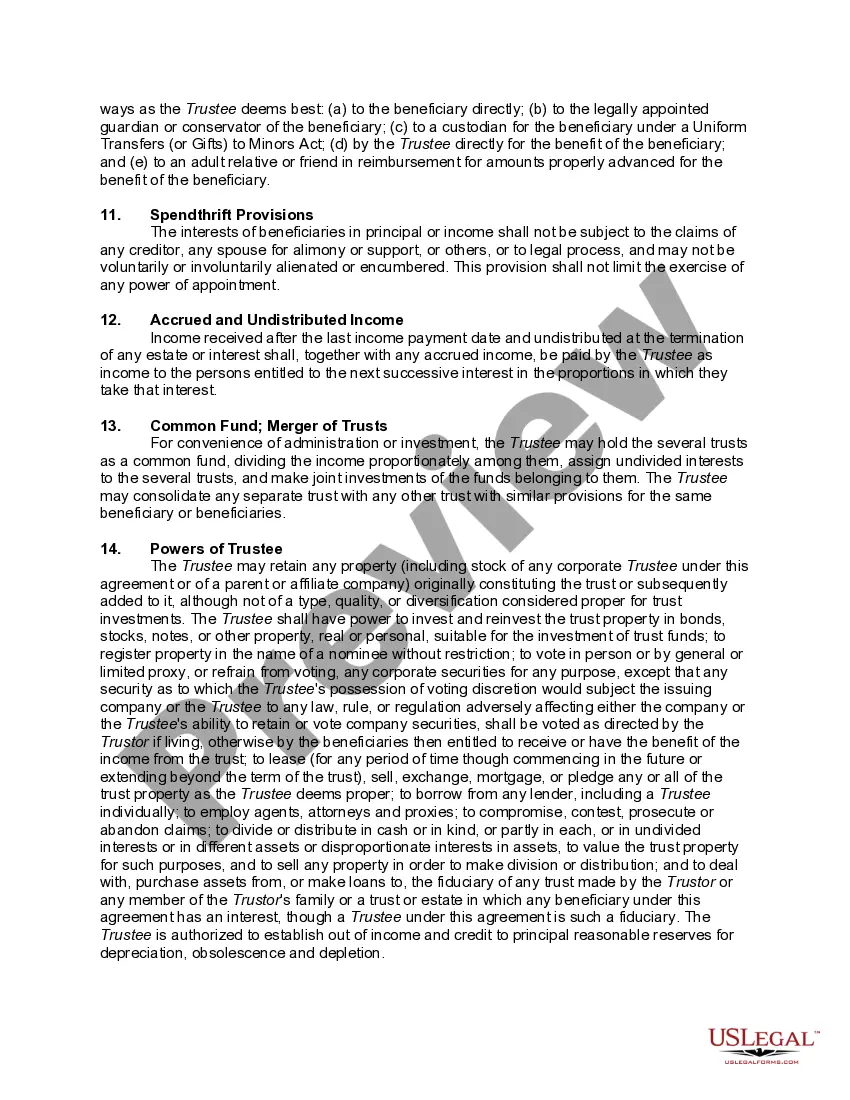
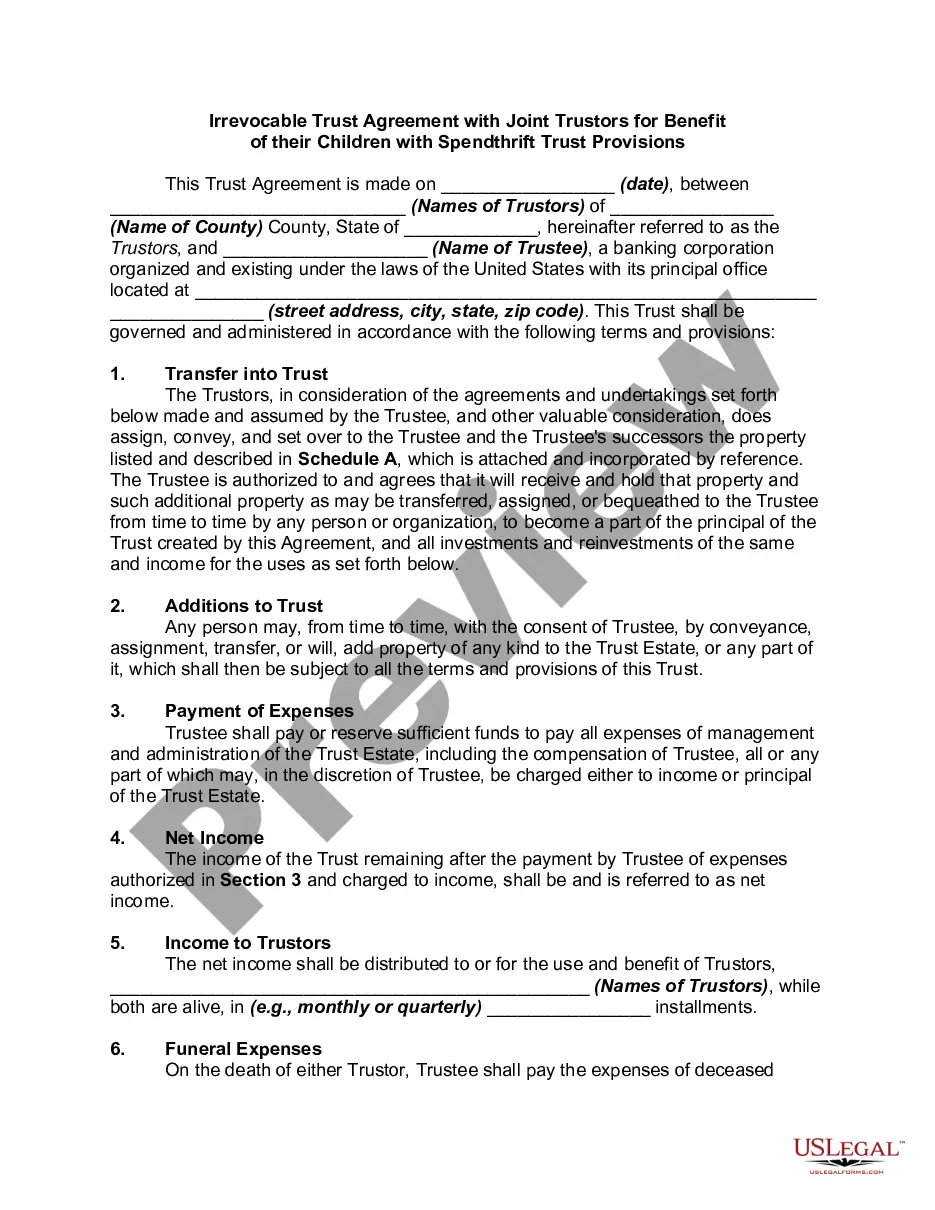
How to fill out Irrevocable Trust Agreement For Benefit Of Trustor's Children And Grandchildren With Spendthrift Trust Provisions?
- Log in to your US Legal Forms account if you're already a subscriber. Click the Download button to get your desired form on your device.
- If you're new to our service, start by browsing the Preview mode and review the form description carefully to choose the correct document meeting your jurisdiction's needs.
- Should you need another template, utilize the Search tab to find the appropriate form that aligns with your requirements.
- Proceed to purchase the document by clicking the Buy Now button. Select your preferred subscription plan and create your account to gain access.
- Complete your purchase by entering your payment details, either through credit card or PayPal.
- After completing your order, download the form directly to your device and access it anytime from the My Forms menu in your profile.
By following these steps, you can easily navigate the process of obtaining legal documents essential for establishing irrevocable grantor trusts with a trustee. US Legal Forms not only simplifies this process but also provides users with extensive support from legal experts.
Start your journey today by visiting US Legal Forms for access to over 85,000 legal templates designed for your needs!
Form popularity
FAQ
Income from irrevocable grantor trusts with a trustee is typically reported on the grantor's personal tax return. The IRS allows this setup to simplify tax reporting for grantors. It means that any income, deductions, or credits can flow through to the grantor directly. For guidance on how to properly report this income, check resources on platforms like uslegalforms.
Normally, the beneficiaries of an irrevocable trust report income generated by the trust once it is distributed. Irrevocable grantor trusts with a trustee can retain some income for tax benefits, but beneficiaries should expect to include any distributed amounts on their personal tax returns. Each scenario may differ, so it’s wise to review trust terms with an expert.
Typically, if an irrevocable grantor trust with a trustee meets certain criteria, it does not need to file a Form 1041. Since the income is reported on the grantor's tax return, the trust remains essentially visible for tax purposes. However, always confirm specific filing requirements with a tax professional or legal advisor to ensure compliance. Our platform offers templates for easy document preparation.
In irrevocable grantor trusts with a trustee, it is generally not advisable for the grantor to serve as the trustee. Serving in both roles can complicate the trust’s administration and may undermine some benefits of irrevocability. Instead, appointing an independent party as the trustee is often better for asset protection and trust management. You can find more support on platforms like uslegalforms for proper trustee assignments.
The grantor usually reports the income from irrevocable grantor trusts with a trustee. Since the grantor retains certain powers over the trust, they remain responsible for any tax obligations. This means the trust may not file a Form 1041 if it operates as a grantor trust. For detailed guidance, consider consulting a tax professional.
Typically, grantors cannot receive income from irrevocable grantor trusts with a trustee. Once assets are placed in such a trust, the grantor relinquishes control. This setup primarily benefits beneficiaries and protects assets from taxes and creditors. However, understanding the specific terms of your trust is essential.
Filling out an irrevocable grantor trust requires careful attention to detail and an understanding of your wishes for asset distribution. You must begin by identifying the grantor, the trustee, and the beneficiaries, outlining the trust provisions clearly. It's often advisable to work with a legal expert or utilize platforms like uslegalforms that provide user-friendly resources to ensure accuracy and compliance. A well-structured trust can prevent future conflicts and ensure your wishes are honored.
In an irrevocable grantor trust, the grantor typically retains some control while also having a designated trustee who manages the trust. While the grantor establishes the trust and may be responsible for its funding, the assets are no longer considered the grantor’s personal property. This arrangement aims to benefit the trust's beneficiaries. Understanding these roles helps in effective trust management.
Your parents should consider placing their assets in irrevocable grantor trusts with a trustee if they seek to protect their wealth and plan for future generations. This option can provide tax benefits and ensure that their assets are managed according to specific guidelines. However, it's crucial for them to understand the implications, such as loss of control over the assets. Consulting with a legal professional can provide clarity and tailor solutions to their situation.
When assets are placed in irrevocable grantor trusts with a trustee, the grantor relinquishes control over those assets. This can be unsettling if personal financial needs change, as accessing those assets may not be possible. Additionally, while the trust can provide benefits like protection from creditors, it may also involve significant upfront costs and ongoing management requirements. Weighing the pros against the cons is essential before proceeding.