Contempt Motion Form With Two Points
Description

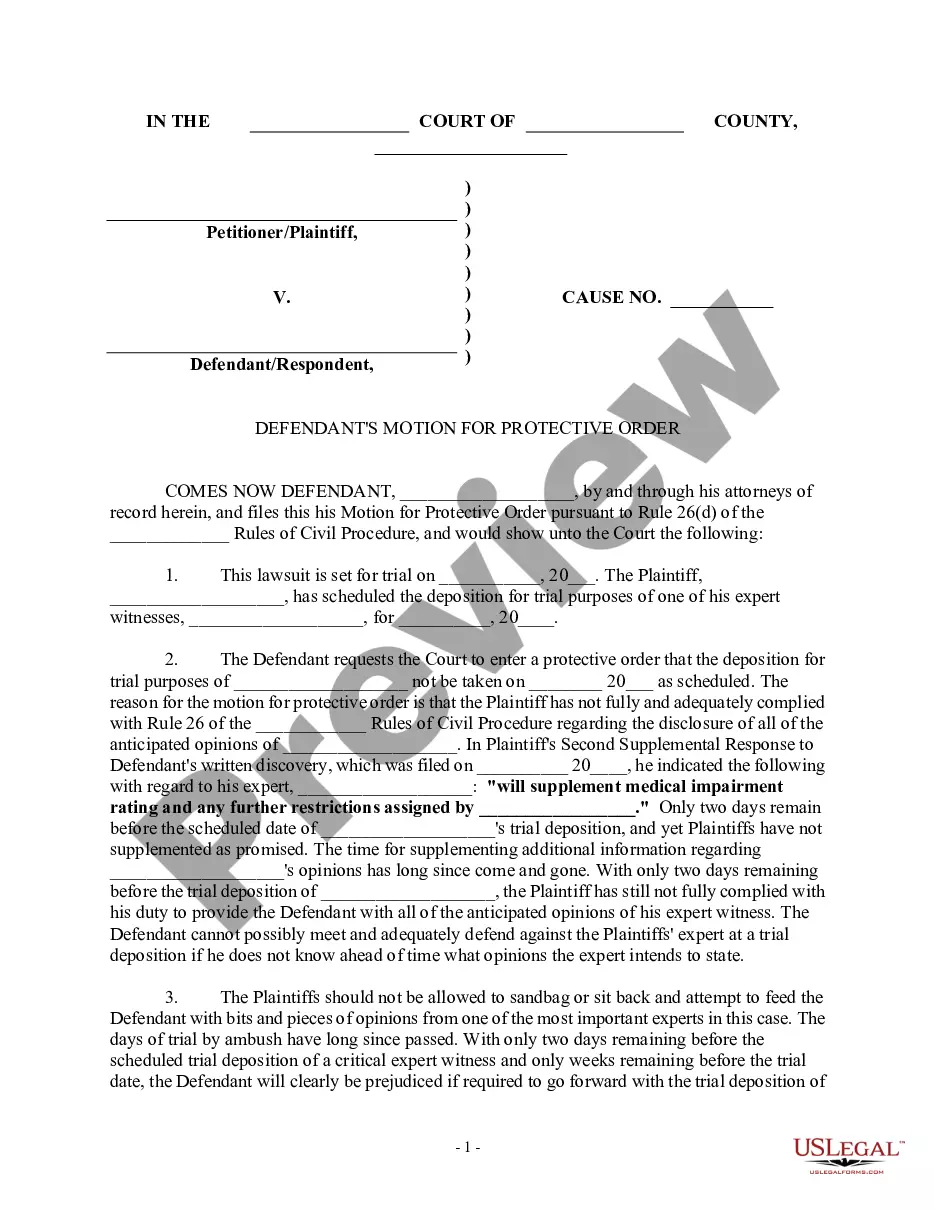
Get your form ready online
Our built-in tools help you complete, sign, share, and store your documents in one place.
Make edits, fill in missing information, and update formatting in US Legal Forms—just like you would in MS Word.
Download a copy, print it, send it by email, or mail it via USPS—whatever works best for your next step.
Sign and collect signatures with our SignNow integration. Send to multiple recipients, set reminders, and more. Go Premium to unlock E-Sign.
If this form requires notarization, complete it online through a secure video call—no need to meet a notary in person or wait for an appointment.
We protect your documents and personal data by following strict security and privacy standards.

Make edits, fill in missing information, and update formatting in US Legal Forms—just like you would in MS Word.

Download a copy, print it, send it by email, or mail it via USPS—whatever works best for your next step.

Sign and collect signatures with our SignNow integration. Send to multiple recipients, set reminders, and more. Go Premium to unlock E-Sign.

If this form requires notarization, complete it online through a secure video call—no need to meet a notary in person or wait for an appointment.

We protect your documents and personal data by following strict security and privacy standards.
Looking for another form?
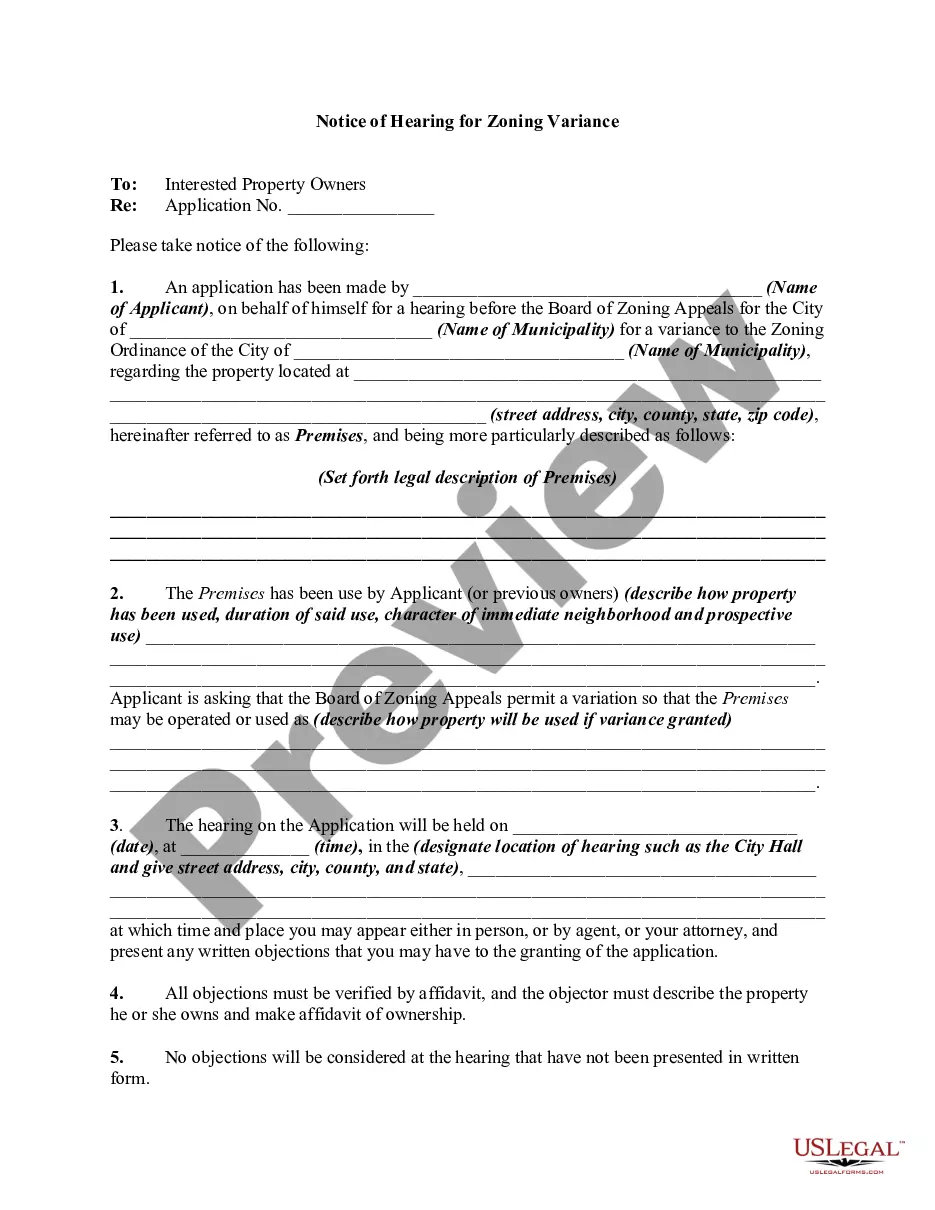






How to fill out Motion For An Order Of Contempt For Violation Of Injunction?
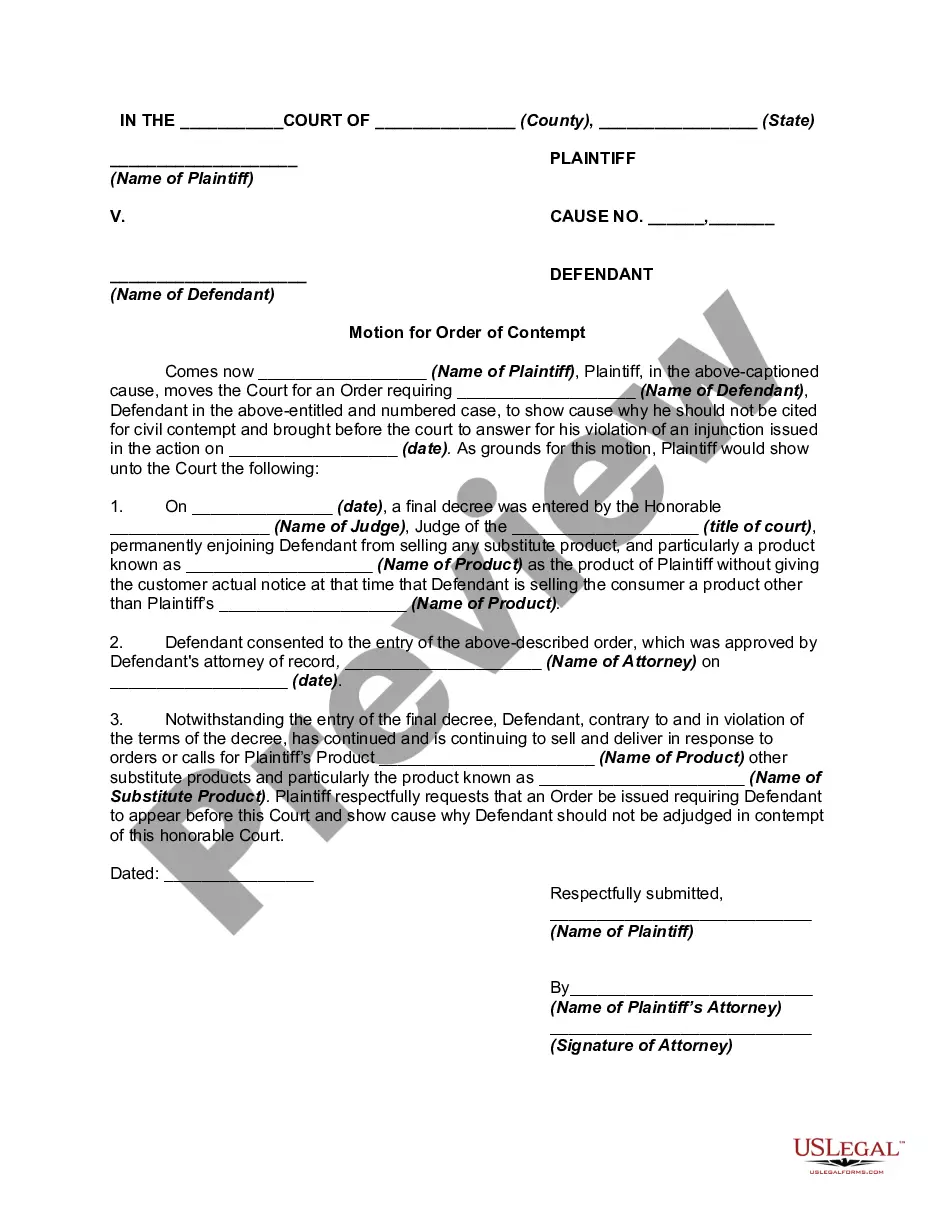
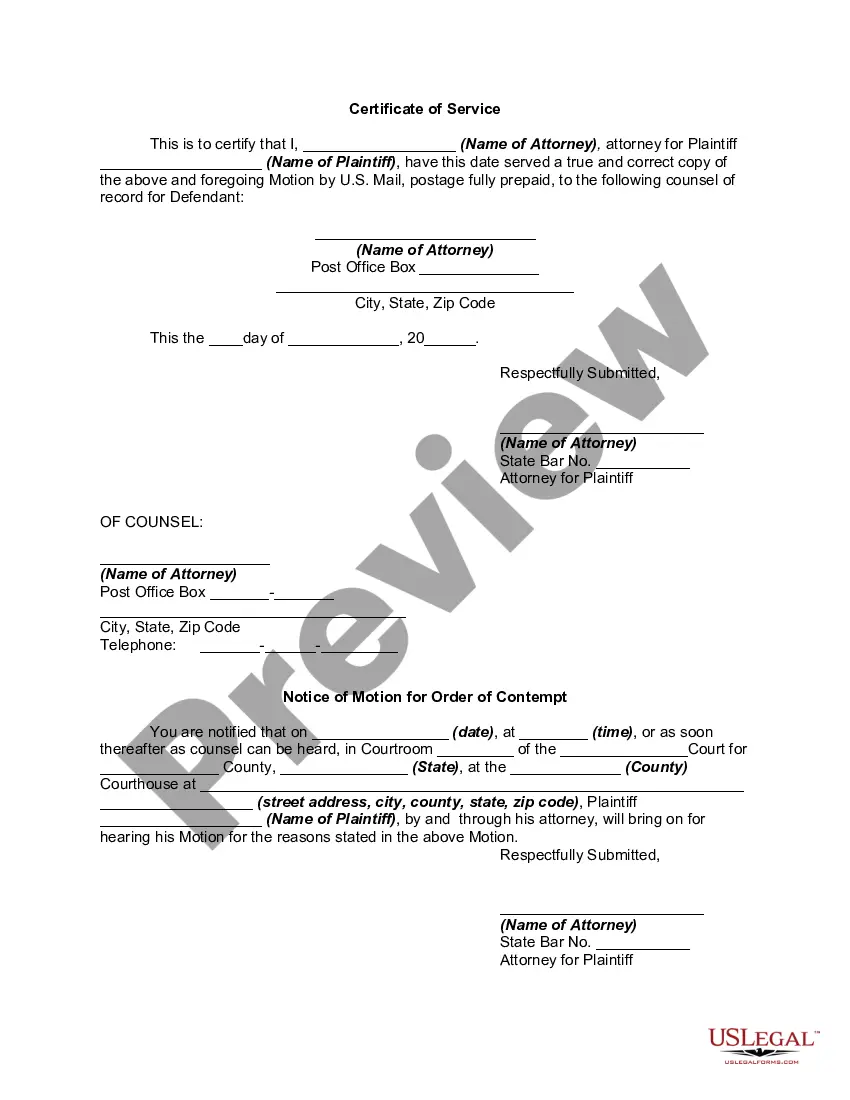
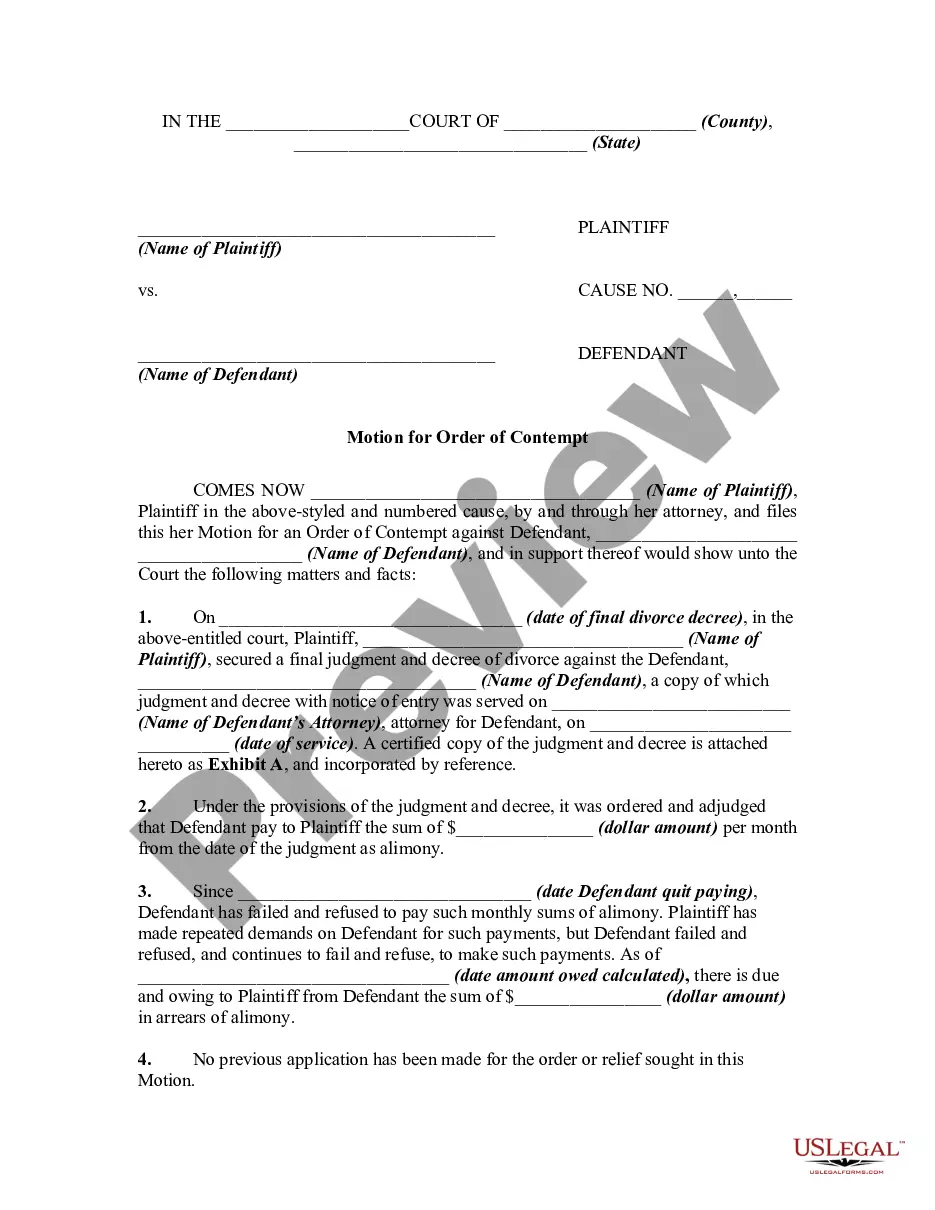
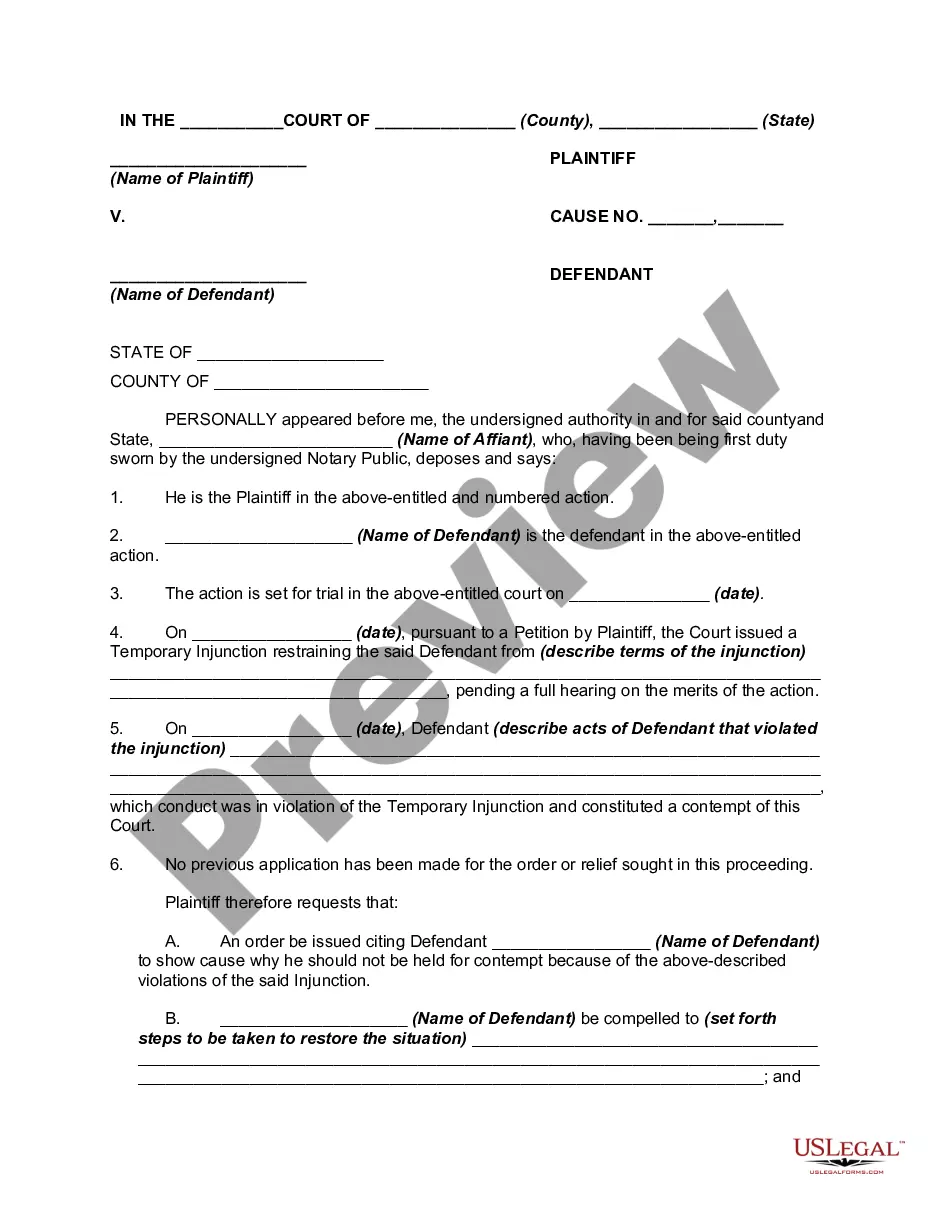
The Contempt Motion Form With Two Points you see on this page is a reusable legal template drafted by professional lawyers in line with federal and regional regulations. For more than 25 years, US Legal Forms has provided people, organizations, and legal professionals with more than 85,000 verified, state-specific forms for any business and personal situation. It’s the fastest, easiest and most trustworthy way to obtain the documents you need, as the service guarantees bank-level data security and anti-malware protection.
Getting this Contempt Motion Form With Two Points will take you just a few simple steps:
- Browse for the document you need and check it. Look through the file you searched and preview it or review the form description to verify it suits your requirements. If it does not, utilize the search option to get the appropriate one. Click Buy Now once you have located the template you need.
- Sign up and log in. Select the pricing plan that suits you and register for an account. Use PayPal or a credit card to make a prompt payment. If you already have an account, log in and check your subscription to proceed.
- Acquire the fillable template. Choose the format you want for your Contempt Motion Form With Two Points (PDF, DOCX, RTF) and download the sample on your device.
- Complete and sign the document. Print out the template to complete it by hand. Alternatively, use an online multi-functional PDF editor to quickly and accurately fill out and sign your form with a legally-binding] {electronic signature.
- Download your papers again. Use the same document once again whenever needed. Open the My Forms tab in your profile to redownload any previously purchased forms.
Sign up for US Legal Forms to have verified legal templates for all of life’s circumstances at your disposal.
Form popularity
FAQ
A motion for contempt is used to enforce a court order. Basically, a person might be found in contempt if they disobeyed a court order. In your case, you are filing the motion because your co-parent has violated or continues to violate the child custody order.
Any court, including a family support magistrate, may punish by fine and imprisonment any person who in its presence behaves contemptuously or in a disorderly manner; but no court or family support magistrate may impose a greater fine than one hundred dollars or a longer term of imprisonment than six months or both.
Upon responding to a motion for contempt, a defendant may either lodge a defense or he or she may purge the contempt by complying with the court's order and remedying any past due support obligations. The defendant responds by filing an answer. The answer may contain defenses against the contempt action.
The Motion must be EFiled. You can come into the Clerks office to use an EFile hub provided at no additional cost. PAYING THE FILING FEE: If the contempt is on Non-Payment of Child Support, Alimony or Medical expenses, the filing fee is waived.
After filing, the motion must be served to the opposing party, providing them with an opportunity to respond. The court then schedules a hearing where both parties present their arguments. Proving contempt of court requires clear and convincing evidence that the respondent has willfully violated a court order.