Plaintiff Court
Description
Get your form ready online
Our built-in tools help you complete, sign, share, and store your documents in one place.
Make edits, fill in missing information, and update formatting in US Legal Forms—just like you would in MS Word.
Download a copy, print it, send it by email, or mail it via USPS—whatever works best for your next step.
Sign and collect signatures with our SignNow integration. Send to multiple recipients, set reminders, and more. Go Premium to unlock E-Sign.
If this form requires notarization, complete it online through a secure video call—no need to meet a notary in person or wait for an appointment.
We protect your documents and personal data by following strict security and privacy standards.

Make edits, fill in missing information, and update formatting in US Legal Forms—just like you would in MS Word.

Download a copy, print it, send it by email, or mail it via USPS—whatever works best for your next step.

Sign and collect signatures with our SignNow integration. Send to multiple recipients, set reminders, and more. Go Premium to unlock E-Sign.

If this form requires notarization, complete it online through a secure video call—no need to meet a notary in person or wait for an appointment.

We protect your documents and personal data by following strict security and privacy standards.
Looking for another form?


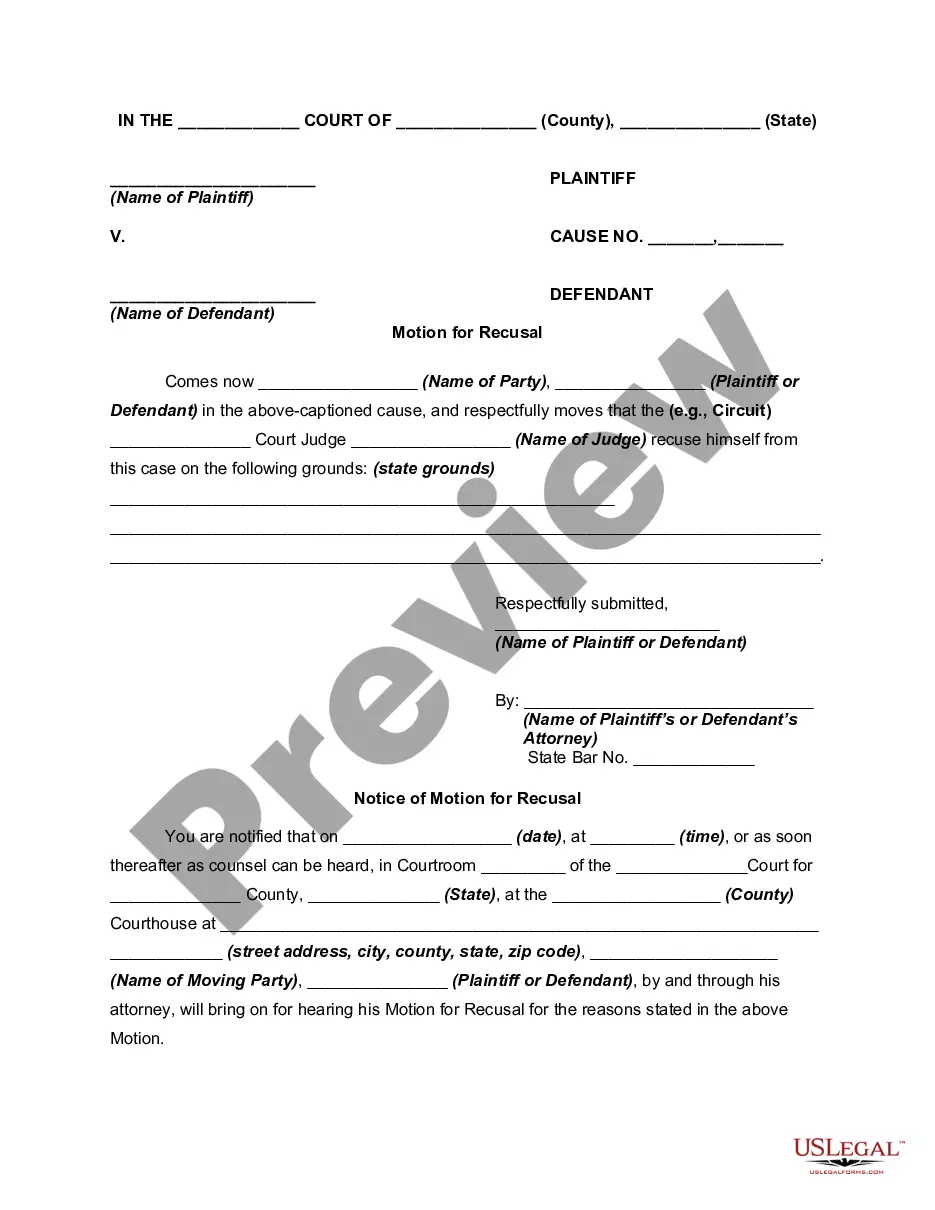
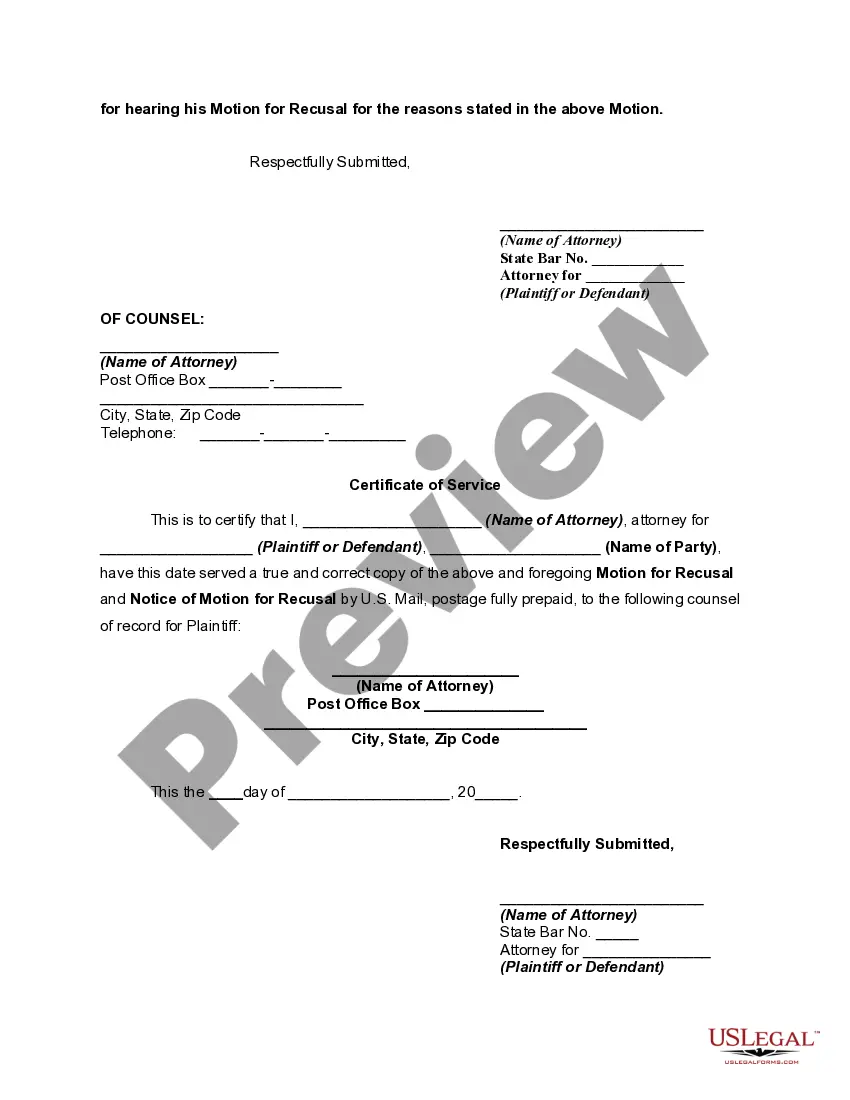
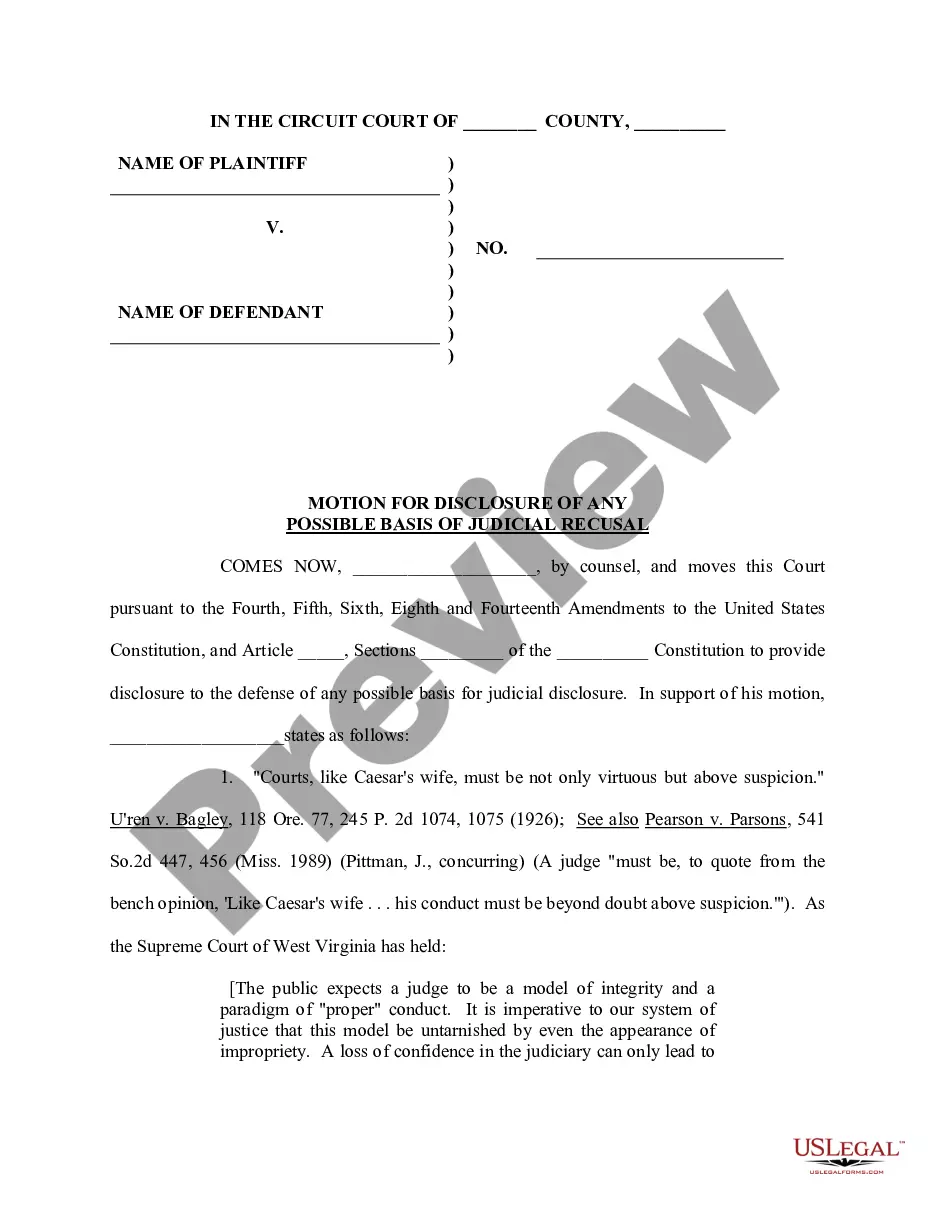
How to fill out Motion For Recusal Of Judge - Removal?
- Log in to your account if you are a returning user and ensure your subscription is active. If it's not, renew it based on your payment plan.
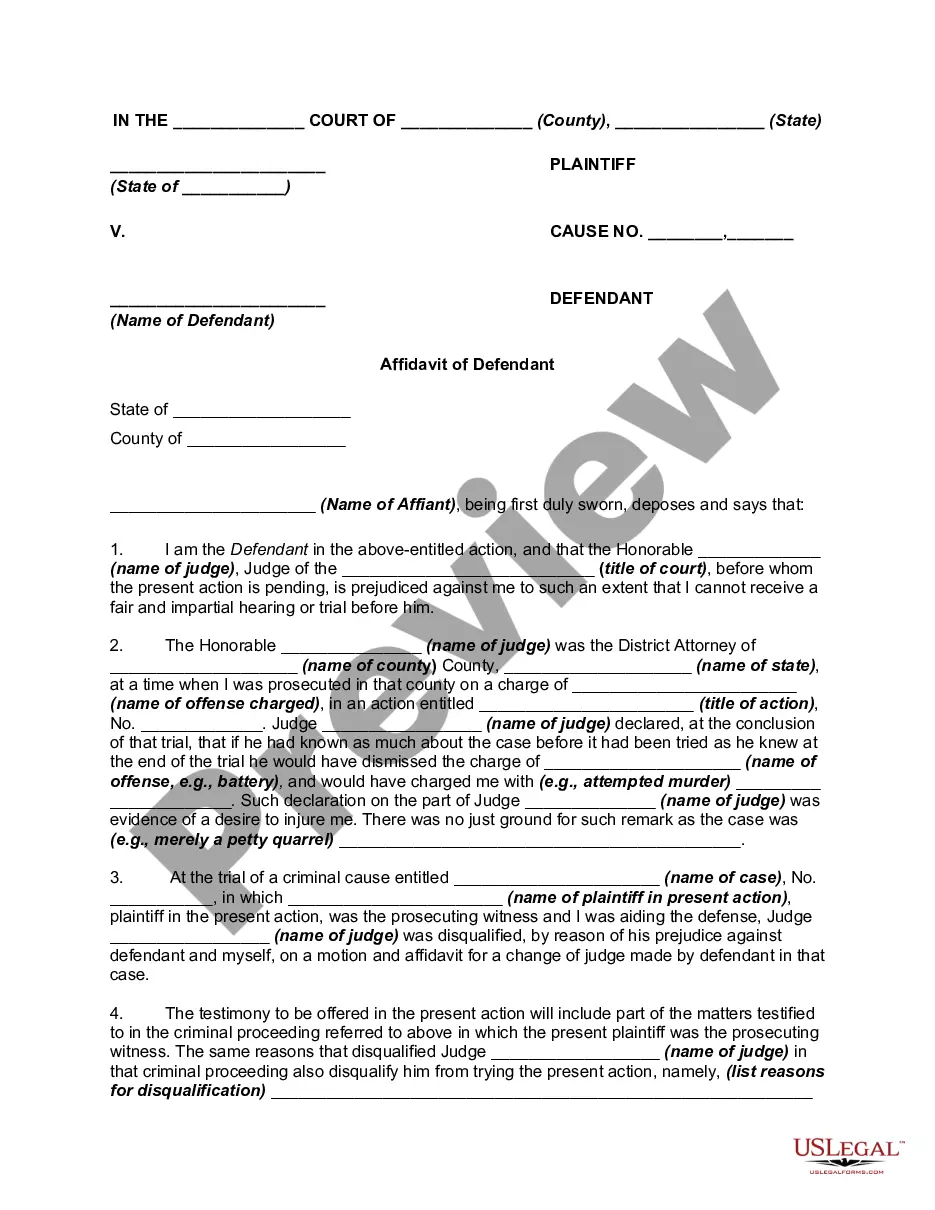
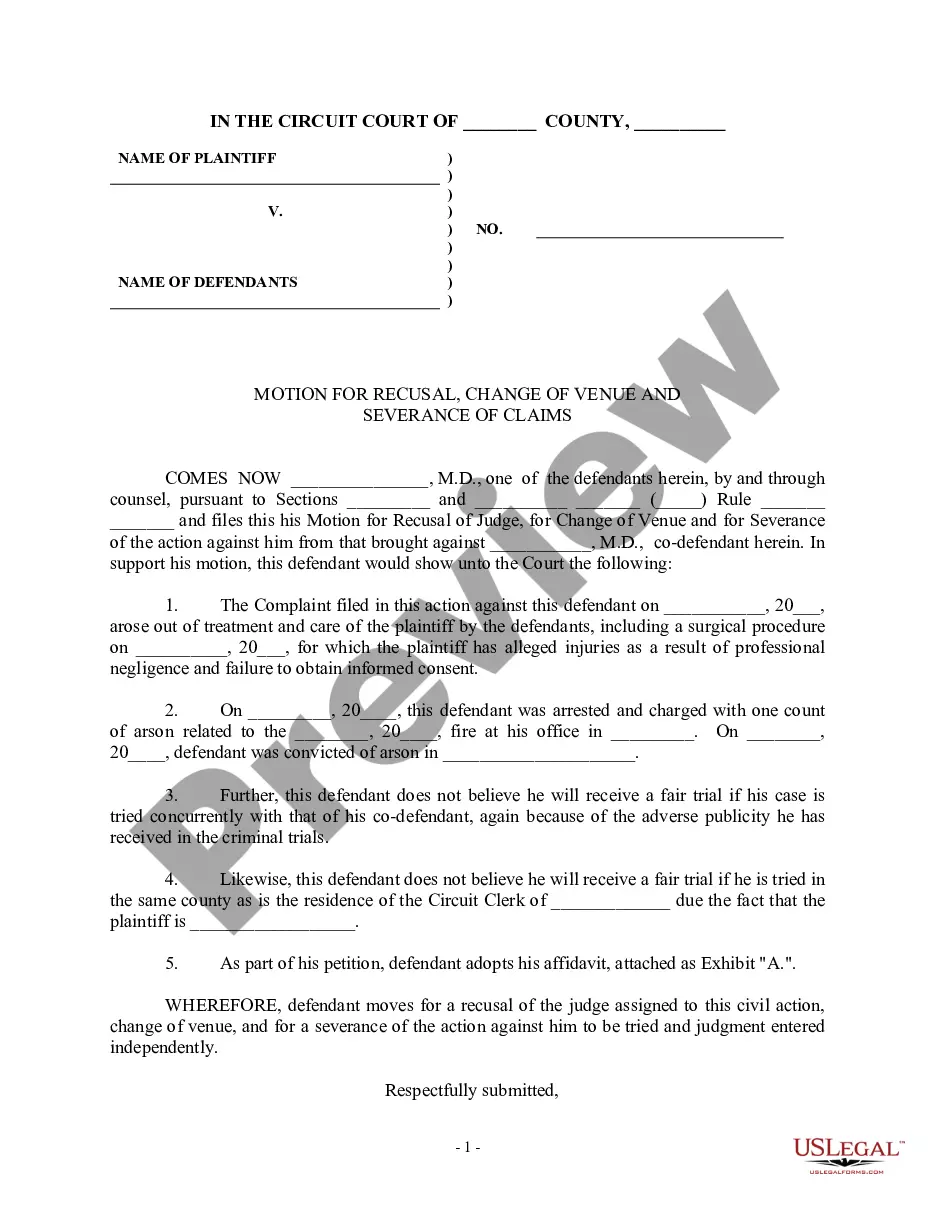
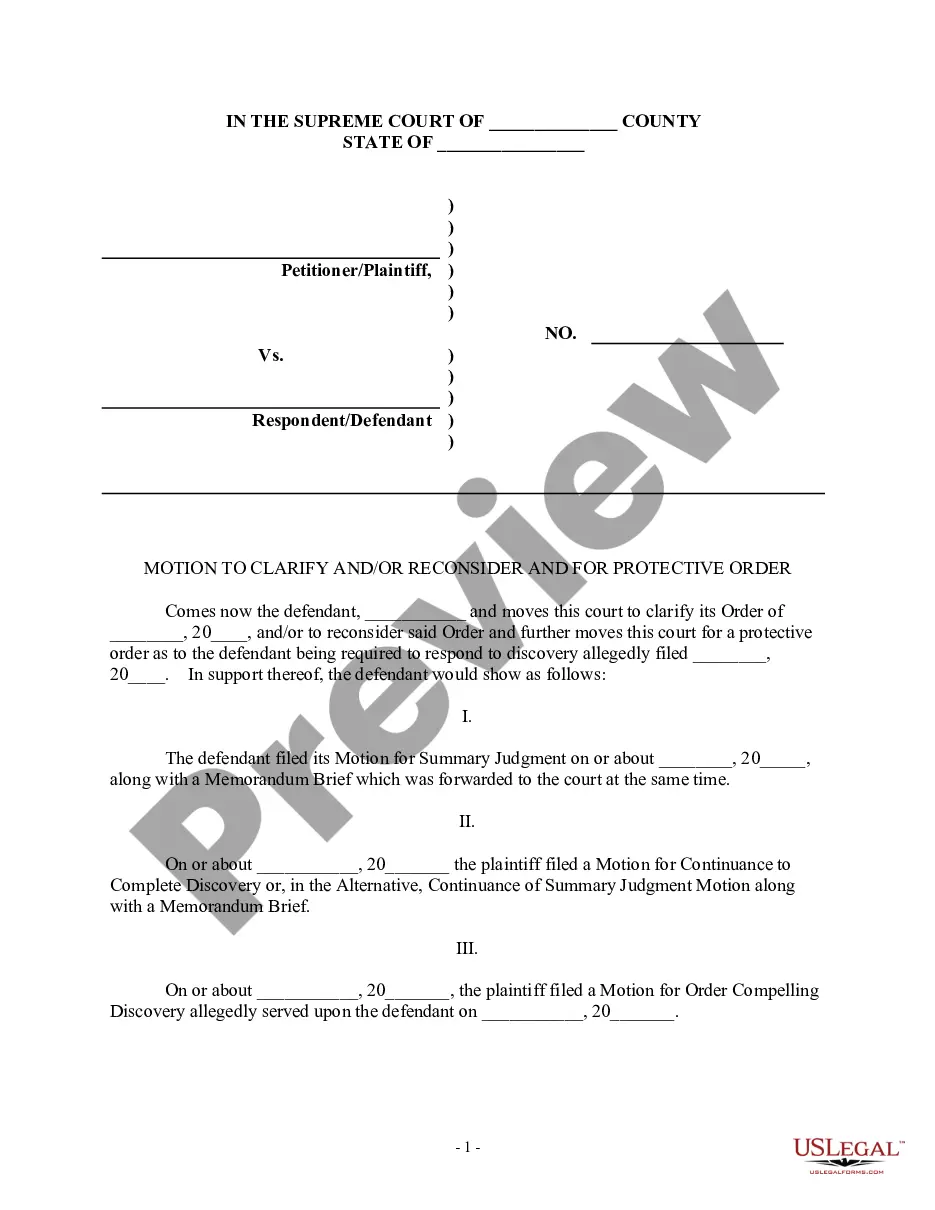
- For first-time users, start by reviewing the Preview mode and the form description to ensure accuracy and relevance to your needs.
- Should you find discrepancies or seek additional forms, utilize the Search tab to find the appropriate template.
- Proceed to purchase your chosen document by clicking the Buy Now button and selecting your preferred subscription plan.
- Complete your transaction by entering your payment details, either credit card or PayPal.
- Download your finished form to your device, making it accessible anytime through the My Forms menu in your profile.
In conclusion, US Legal Forms streamlines the process of securing essential legal documents for use in plaintiff court. By following these simple steps, users can ensure they have the right forms at their fingertips.
Don't wait—take advantage of the extensive resources available at US Legal Forms to empower your legal journey today!
Form popularity
FAQ
The primary difference between a plaintiff and defendant lies in their roles in a court case. The plaintiff initiates the action by filing a lawsuit, while the defendant is the individual or entity being accused or sued. In a plaintiff court, the burden of proof rests with the plaintiff to establish their claims against the defendant. Being clear about these roles helps individuals better understand legal proceedings and potential outcomes.
The role of a plaintiff in a court case is to initiate legal proceedings and articulate their grievances against the defendant. This involves filing a complaint, presenting evidence, and sometimes testifying to support their claims. In a plaintiff court, the success or failure of a case often hinges on how effectively the plaintiff can demonstrate their position. Legal resources, such as those offered by uslegalforms, can help plaintiffs prepare and present their cases more effectively.
A plaintiff in court is the person or entity who brings a lawsuit against another party. This individual seeks a legal remedy for a perceived wrong or injury. In cases heard in a plaintiff court, the plaintiff presents claims and evidence to support their case. Understanding the role of a plaintiff is crucial for anyone navigating the legal system.
Writing a good legal complaint involves clarity and detail. Start with the names of the parties and the nature of the dispute. Then explain the factual background and the legal grounds for your claims, concluding with the relief you are asking the plaintiff court to grant. Resources like US Legal Forms can streamline this process with proper templates.
To write a plaintiff complaint, start by identifying the parties involved and the jurisdiction of the plaintiff court. Clearly state the facts that support your claim, followed by the legal basis for your lawsuit. Lastly, specify the relief you are seeking, ensuring that your complaint follows the required legal format.
To write a powerful complaint letter, clearly outline your issue and the desired resolution. Use a respectful tone, providing specific details about the situation, and back your claims with factual evidence. Presenting your case clearly can lead to a positive response, whether resolving the issue directly or pursuing further legal action in the plaintiff court.
In Kentucky, the minimum amount for small claims court is typically $200. This allows individuals to seek legal redress for smaller disputes without the complexities of a full court case. Always check local regulations as these amounts may change, and consider seeking guidance from tools like US Legal Forms to ensure compliance.
To write a formal complaint against someone, start by addressing the appropriate plaintiff court and clearly stating the parties involved. Include a concise statement of facts and the specific legal claims being made. It’s important to specify the relief or damages sought, ensuring that your complaint is well-structured and aims to present your case effectively.
An example of a civil complaint is a personal injury lawsuit where the plaintiff alleges negligence. The complaint would detail how the defendant's actions led to the plaintiff's injuries and outline the damages sought. Filing this complaint in the plaintiff court initiates a legal process to resolve the dispute.
The first document a plaintiff files to initiate a lawsuit is called a complaint. This document outlines the plaintiff's allegations against the defendant and states the legal basis for the claim. Filing this complaint in the appropriate plaintiff court sets the legal process in motion, allowing the case to be heard.