Terminated
Description
Get your form ready online
Our built-in tools help you complete, sign, share, and store your documents in one place.
Make edits, fill in missing information, and update formatting in US Legal Forms—just like you would in MS Word.
Download a copy, print it, send it by email, or mail it via USPS—whatever works best for your next step.
Sign and collect signatures with our SignNow integration. Send to multiple recipients, set reminders, and more. Go Premium to unlock E-Sign.
If this form requires notarization, complete it online through a secure video call—no need to meet a notary in person or wait for an appointment.
We protect your documents and personal data by following strict security and privacy standards.

Make edits, fill in missing information, and update formatting in US Legal Forms—just like you would in MS Word.

Download a copy, print it, send it by email, or mail it via USPS—whatever works best for your next step.

Sign and collect signatures with our SignNow integration. Send to multiple recipients, set reminders, and more. Go Premium to unlock E-Sign.

If this form requires notarization, complete it online through a secure video call—no need to meet a notary in person or wait for an appointment.

We protect your documents and personal data by following strict security and privacy standards.
Looking for another form?
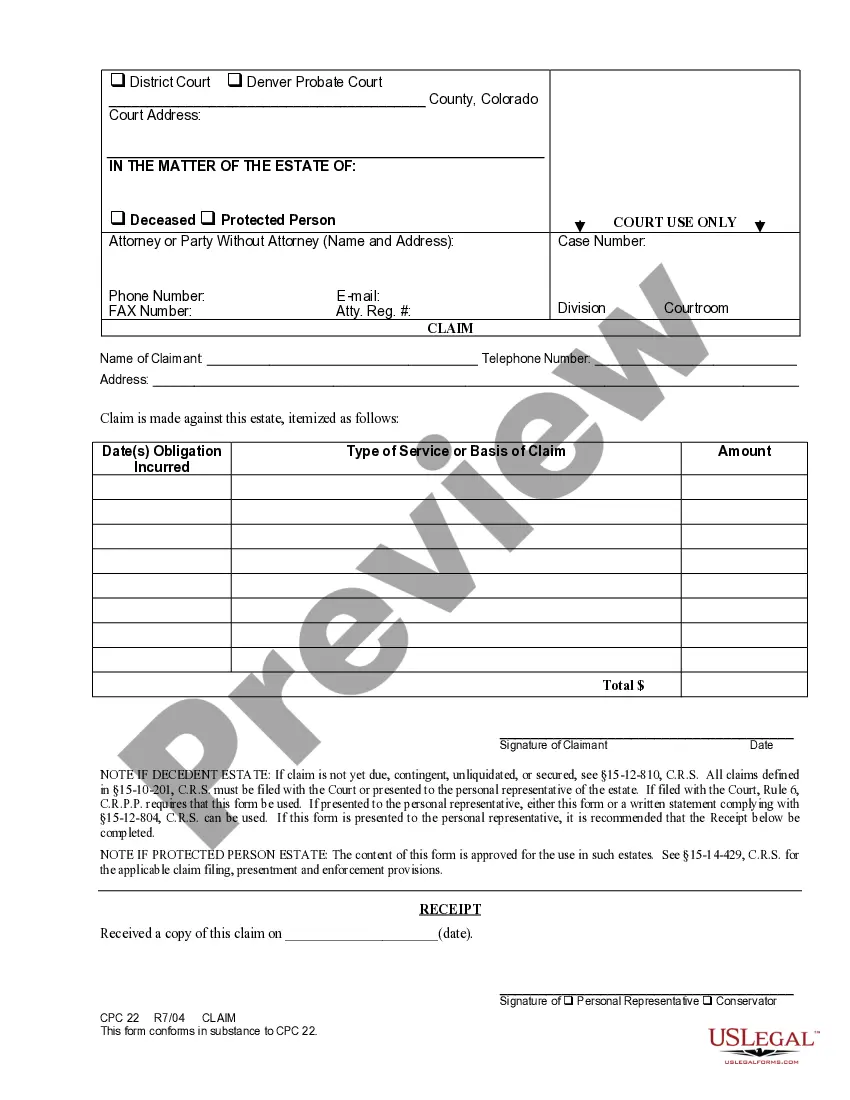

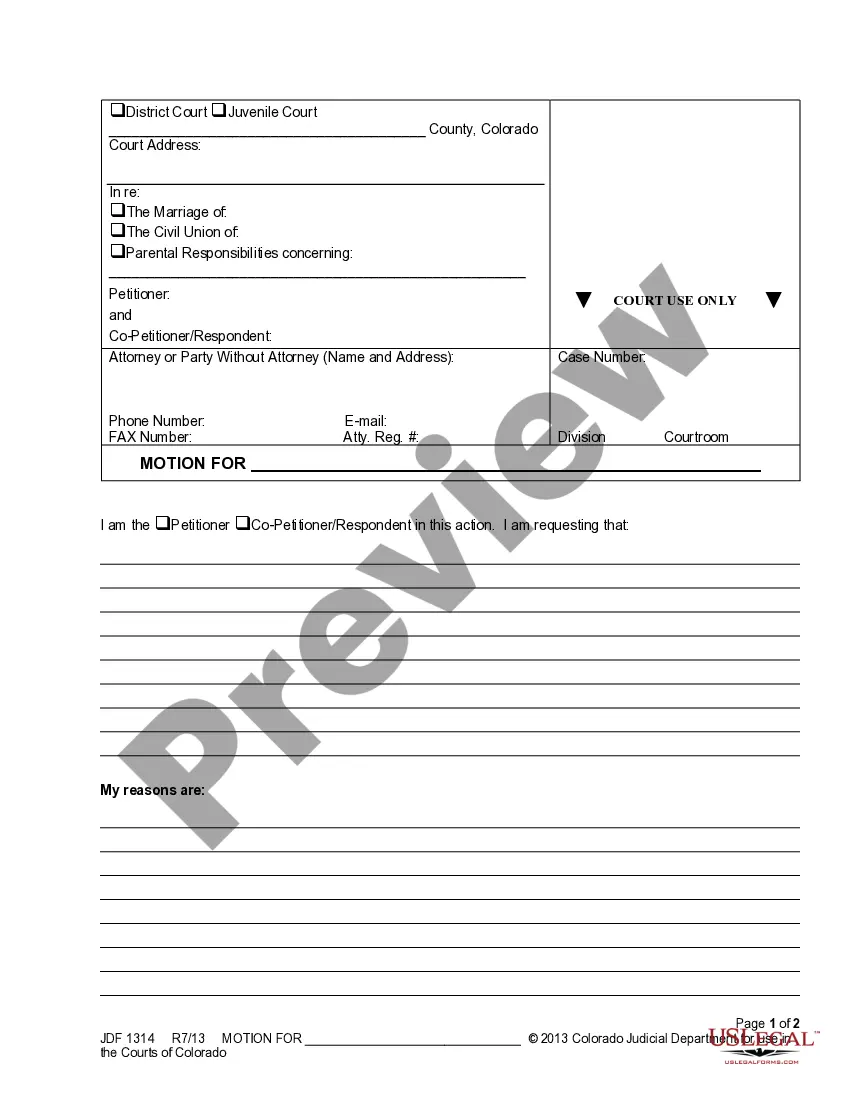
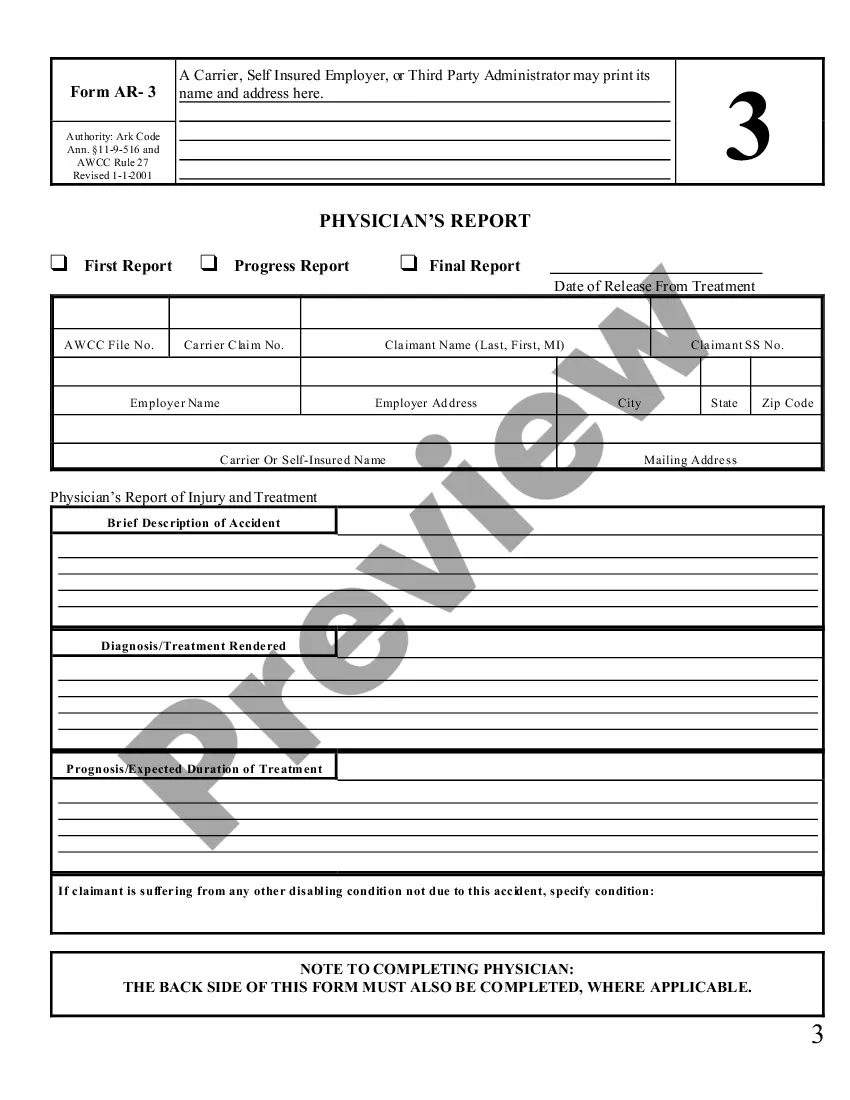
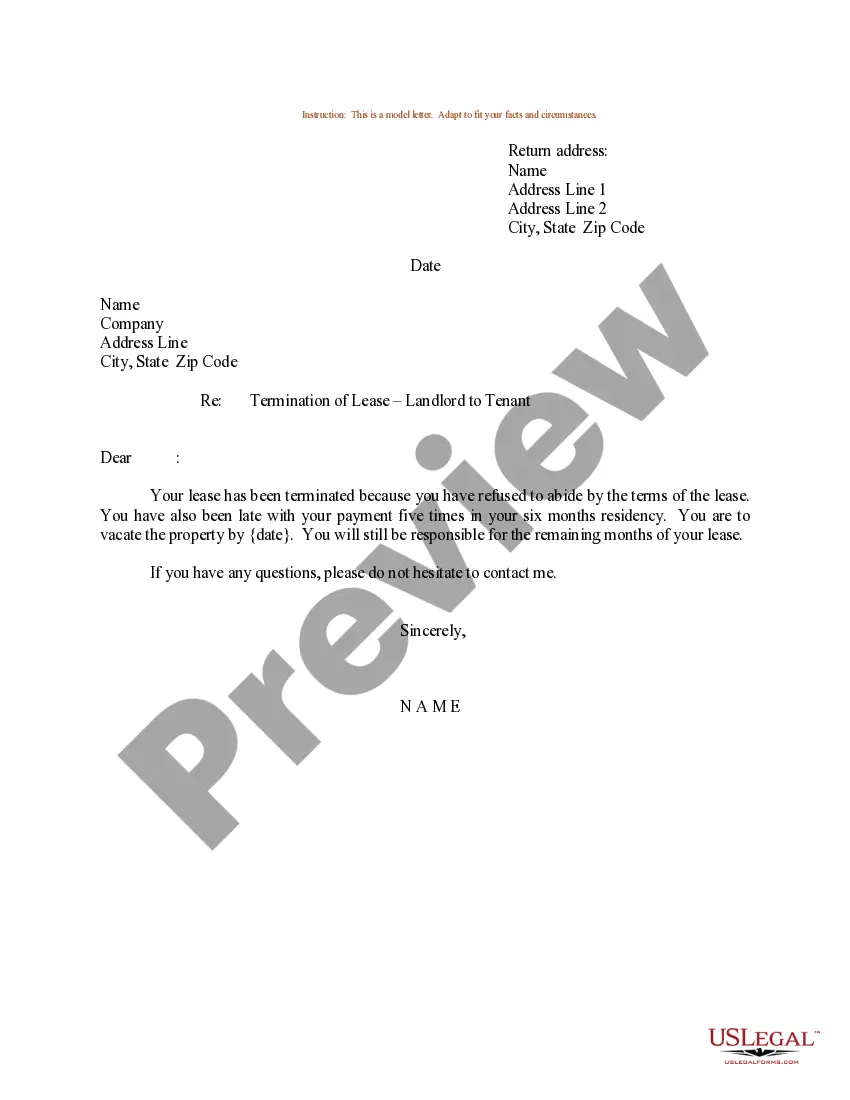
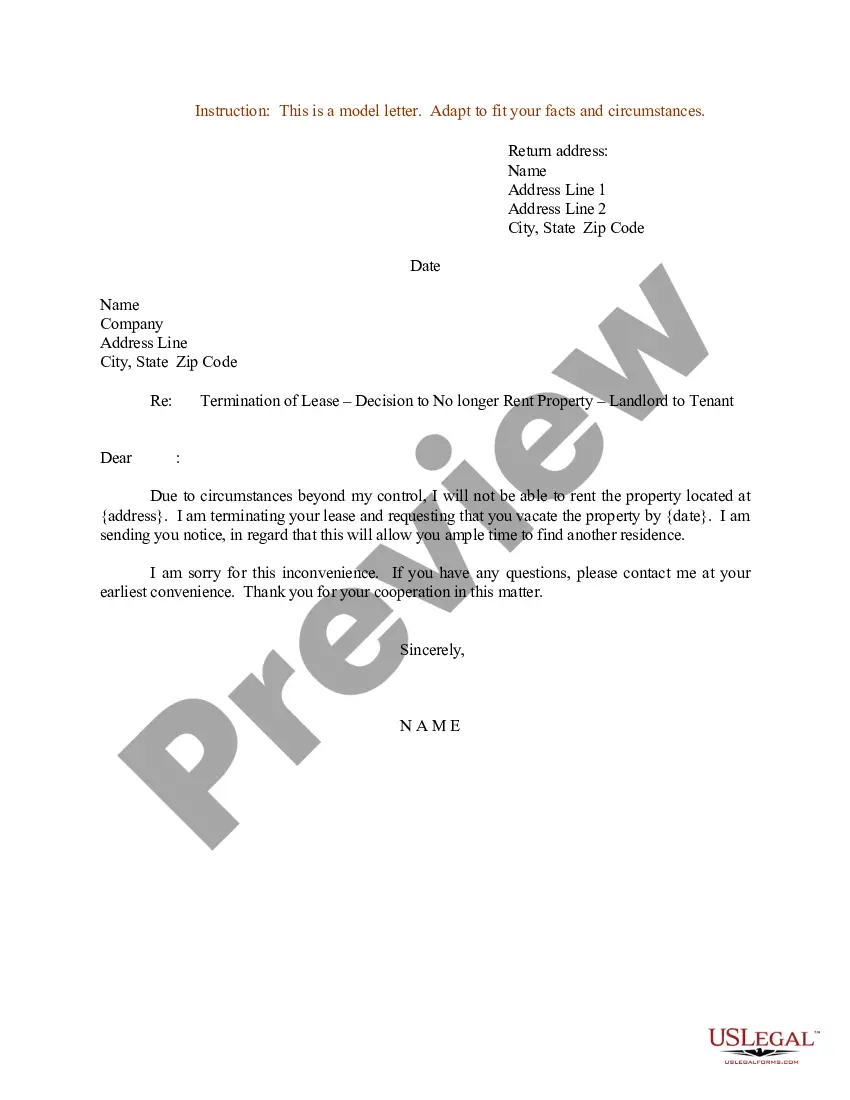
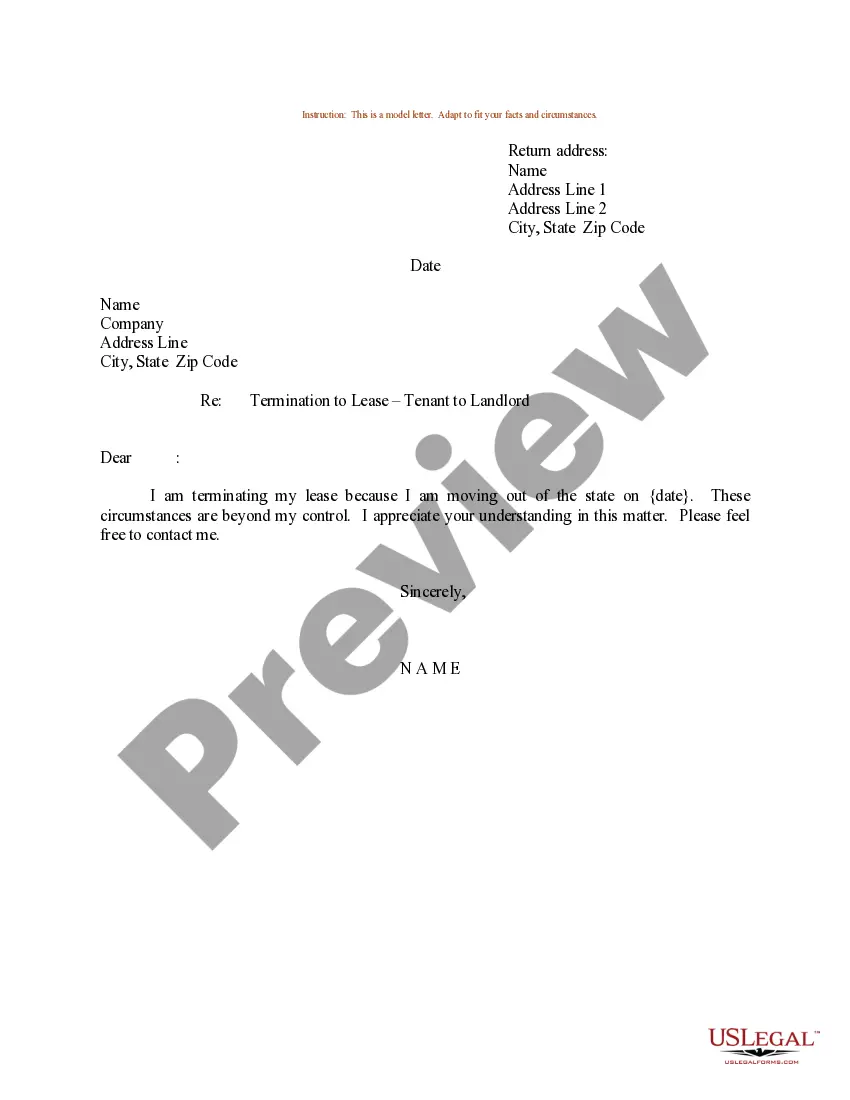
How to fill out Sample Letter For Termination Of Lease From Landlord To Tenant?
- If you're a returning user, log in to your account and ensure your subscription is active; download your required form directly by clicking the Download button.
- For first-time users, start by previewing the form and its description. Confirm it aligns with your needs and complies with local jurisdiction requirements.
- Utilize the Search feature above if you need to find a different template, ensuring it meets all necessary criteria before proceeding.
- To purchase the document, click on the Buy Now button and select a subscription plan that fits your requirements; registration of an account is essential to access the full library.
- Complete your payment using either your credit card or PayPal account to finalize your subscription.
- Once your transaction is confirmed, download the template to your device and access it anytime from the My Forms section of your profile.
In conclusion, US Legal Forms not only offers a quick and straightforward way to obtain legal documents but also provides access to premium experts for form completion ensuring that all your legal needs are accurately met.
Start your journey towards hassle-free legal documentation today by visiting US Legal Forms and explore the benefits!
Form popularity
FAQ
In a job context, 'terminated' means that your employment has ended. This can occur through voluntary resignation or an employer's decision. If you've been terminated, it's essential to understand your situation fully, and tools available at USLegalForms can assist you in handling the aftermath professionally and legally.
Terminated refers to the conclusion of employment between an employee and an employer. It can occur for a variety of reasons, including company downsizing or personal choices. Knowing the implications of being terminated can help you navigate your next steps effectively.
Yes, terminated can mean dismissed. Both terms indicate that an employee's job has ended, but dismissed typically implies that the employee was let go due to specific behaviors or performance issues. If you face such a situation, seeking guidance from peaceful resources like USLegalForms can provide support in understanding your rights.
Yes, in many cases, 'terminated' is simply another way of saying 'fired.' When an employee is terminated, it indicates that their employment has ended, and this can be initiated by either the employer or the employee. Understanding the specific circumstances surrounding the termination can help clarify the situation.
Yes, when someone is terminated, it often means they were fired from their job. Termination refers to the end of employment, which can happen for various reasons, including company restructuring or performance issues. It’s important to note that not all terminations are negative; sometimes they are part of a mutual agreement.
A termination can have implications for your employment record, but it's not always detrimental. Employers often consider the context of a termination, such as whether it was due to downsizing or performance issues. Understanding how to address your termination positively can help you move forward and present your experience in the best light to future employers.
Documenting a termination requires careful attention to detail. Start by recording the date and reason for termination, and include any relevant communications surrounding the decision. Utilizing tools such as uslegalforms can guide you in creating proper documentation, ensuring you comply with legal standards while maintaining a professional record.
In general, terminated and fired convey similar outcomes: your employment has ended. Nevertheless, 'terminated' can sometimes imply a formal process that may involve more than just a firing, such as a company restructuring. It’s important to grasp these nuances to understand the impact on your professional journey.
Yes, when someone is terminated, it essentially means they have been fired from their position. However, the circumstances surrounding the termination can vary greatly. Factors such as layoffs, downsizing, or performance issues may lead to termination, and these distinctions can impact how it affects your career moving forward.
You can use either term, but they often mean the same thing in a work context. When you are terminated, it indicates your employment has ended, typically at the employer's initiative. Using 'terminated' can sometimes feel more formal and less emotional than saying 'fired.' Understanding the terminology can help clarify your situation.