Taxes In Escrow Or Not
Description
Get your form ready online
Our built-in tools help you complete, sign, share, and store your documents in one place.
Make edits, fill in missing information, and update formatting in US Legal Forms—just like you would in MS Word.
Download a copy, print it, send it by email, or mail it via USPS—whatever works best for your next step.
Sign and collect signatures with our SignNow integration. Send to multiple recipients, set reminders, and more. Go Premium to unlock E-Sign.
If this form requires notarization, complete it online through a secure video call—no need to meet a notary in person or wait for an appointment.
We protect your documents and personal data by following strict security and privacy standards.

Make edits, fill in missing information, and update formatting in US Legal Forms—just like you would in MS Word.

Download a copy, print it, send it by email, or mail it via USPS—whatever works best for your next step.

Sign and collect signatures with our SignNow integration. Send to multiple recipients, set reminders, and more. Go Premium to unlock E-Sign.

If this form requires notarization, complete it online through a secure video call—no need to meet a notary in person or wait for an appointment.

We protect your documents and personal data by following strict security and privacy standards.
Looking for another form?






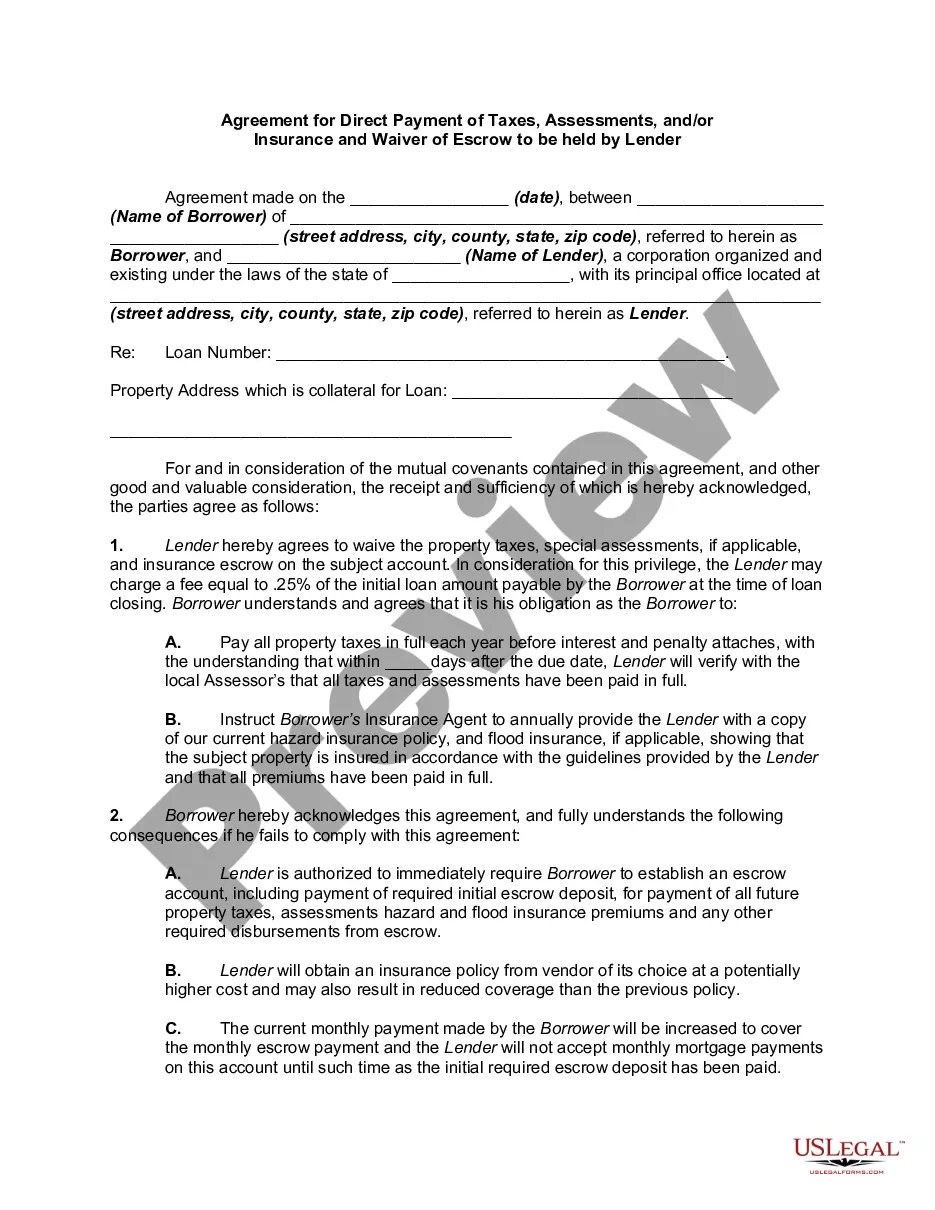
How to fill out Agreement For Direct Payment Of Taxes, Assessments, And/or Insurance And Waiver Of Escrow To Be Held By Lender?
Legal management can be perplexing, even for the most experienced professionals.
If you're curious about Taxes In Escrow Or Not and lack the opportunity to spend time searching for the right and current version, the processes may be overwhelming.
Utilize advanced tools to fill out and manage your Taxes In Escrow Or Not.
Access a valuable resource library of articles, guides, and materials related to your situation and needs.
Verify that this is the correct form by previewing it and reviewing its description.
- Save time and effort searching for the documents you require, and use US Legal Forms' sophisticated search and Preview feature to locate Taxes In Escrow Or Not and obtain it.
- If you have a subscription, Log In to your US Legal Forms account, search for the form, and download it.
- Check your My documents tab to review the documents you've previously saved and manage your folders as needed.
- If this is your first experience with US Legal Forms, create an account to gain unlimited access to all the library's benefits.
- Here are the steps to follow after acquiring the form you need.
- A comprehensive online form database can revolutionize the way anyone handles these matters effectively.
- US Legal Forms is an industry pioneer in online legal documents, offering over 85,000 state-specific legal forms accessible to you at any time.
- With US Legal Forms, you can manage various legal needs seamlessly.
Form popularity
FAQ
To put property taxes in escrow, you typically need to request this option from your lender when you take out a mortgage. They will create an escrow account and calculate the amount needed for your monthly payments. Alternatively, if you already have a mortgage, you can contact your lender to see if they will allow you to set up an escrow for your property taxes. With uslegalforms, you can find resources to guide you through this process smoothly.
Including property taxes in your mortgage can simplify your payment process and enhance financial planning. When you do this, your lender handles the tax payments, reducing the risk of missing deadlines. This arrangement can also help you avoid penalties associated with late payments. It is essential to weigh the pros and cons, and our platform at US Legal Forms can assist you in navigating whether taxes in escrow or not is the right choice for you.
Your property taxes are in escrow to help manage payments effectively and avoid surprises. When you include taxes in escrow, your lender collects a portion of your tax bill each month, ensuring funds are available when due. This process provides peace of mind, as you won't need to budget for a large annual payment. Understanding whether your taxes are in escrow or not can help you manage your finances better.
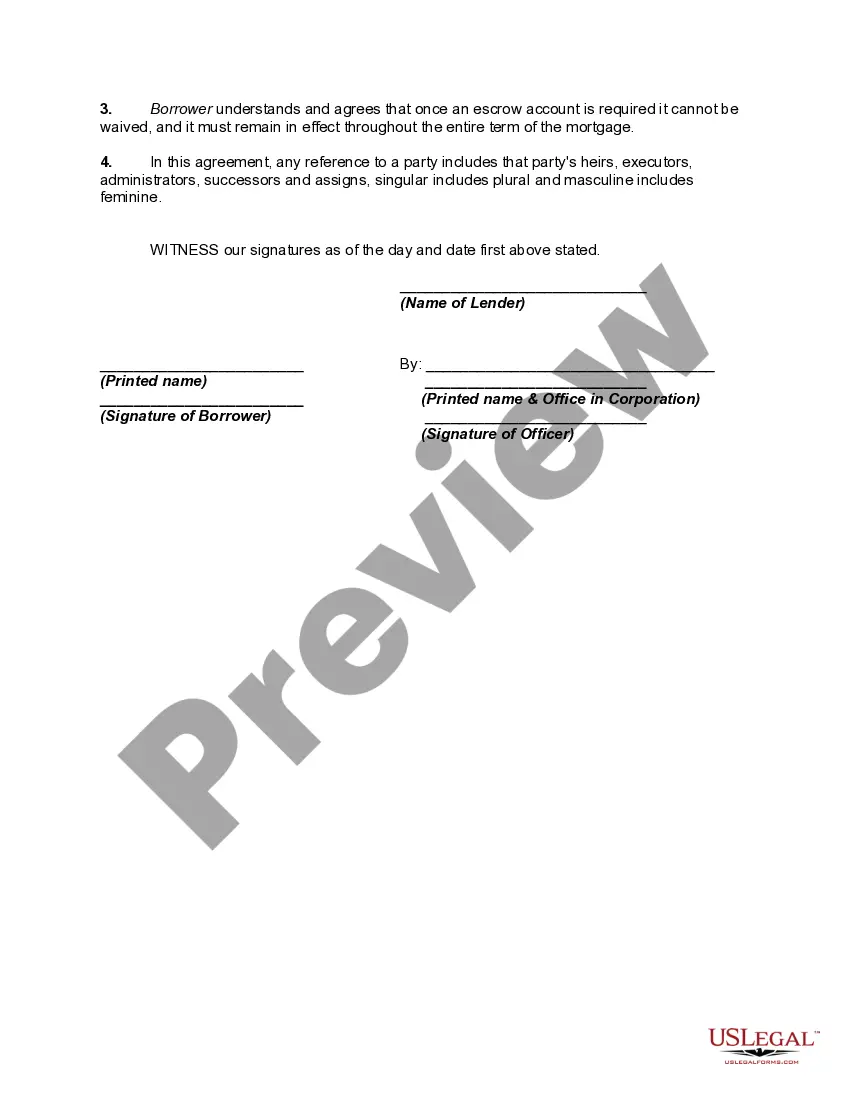
In some cases, you might be able to cancel an existing escrow account, though every lender has different terms for removing one. Sometimes, the loan must be at least one year old with no late payments. Another requirement might be that no taxes or insurance payments are due within the next 30 days.
Escrow is an important part of purchasing a home. It protects buyers and sellers during home sales, and offers a convenient way for you to pay for your taxes and insurance. An escrow account is sometimes required, and sometimes it's not. It depends on the type of loan you get, as well as your financial profile.
While some homebuyers prefer escrow, since it helps to avoid making large annual payments, others (especially those with stable incomes) may prefer to pay for insurance and taxes directly. For example, you may want to pay for insurance with a credit card to earn rewards.
One possible benefit of waiving an escrow account is that you may qualify for a lower interest rate on your mortgage. Some lenders offer a discount on the interest rate if you choose to waive the escrow account and pay your property taxes and homeowners insurance yourself.
If you're granted an escrow waiver, your property taxes and homeowners insurance won't be included in your monthly payment. Instead you'll be responsible for paying each of your bills in one lump sum, typically at the end of the year. This can be useful or risky, depending on how good you are at planning ahead.