Property Taxes With Escrow
Description
Get your form ready online
Our built-in tools help you complete, sign, share, and store your documents in one place.
Make edits, fill in missing information, and update formatting in US Legal Forms—just like you would in MS Word.
Download a copy, print it, send it by email, or mail it via USPS—whatever works best for your next step.
Sign and collect signatures with our SignNow integration. Send to multiple recipients, set reminders, and more. Go Premium to unlock E-Sign.
If this form requires notarization, complete it online through a secure video call—no need to meet a notary in person or wait for an appointment.
We protect your documents and personal data by following strict security and privacy standards.

Make edits, fill in missing information, and update formatting in US Legal Forms—just like you would in MS Word.

Download a copy, print it, send it by email, or mail it via USPS—whatever works best for your next step.

Sign and collect signatures with our SignNow integration. Send to multiple recipients, set reminders, and more. Go Premium to unlock E-Sign.

If this form requires notarization, complete it online through a secure video call—no need to meet a notary in person or wait for an appointment.

We protect your documents and personal data by following strict security and privacy standards.
Looking for another form?


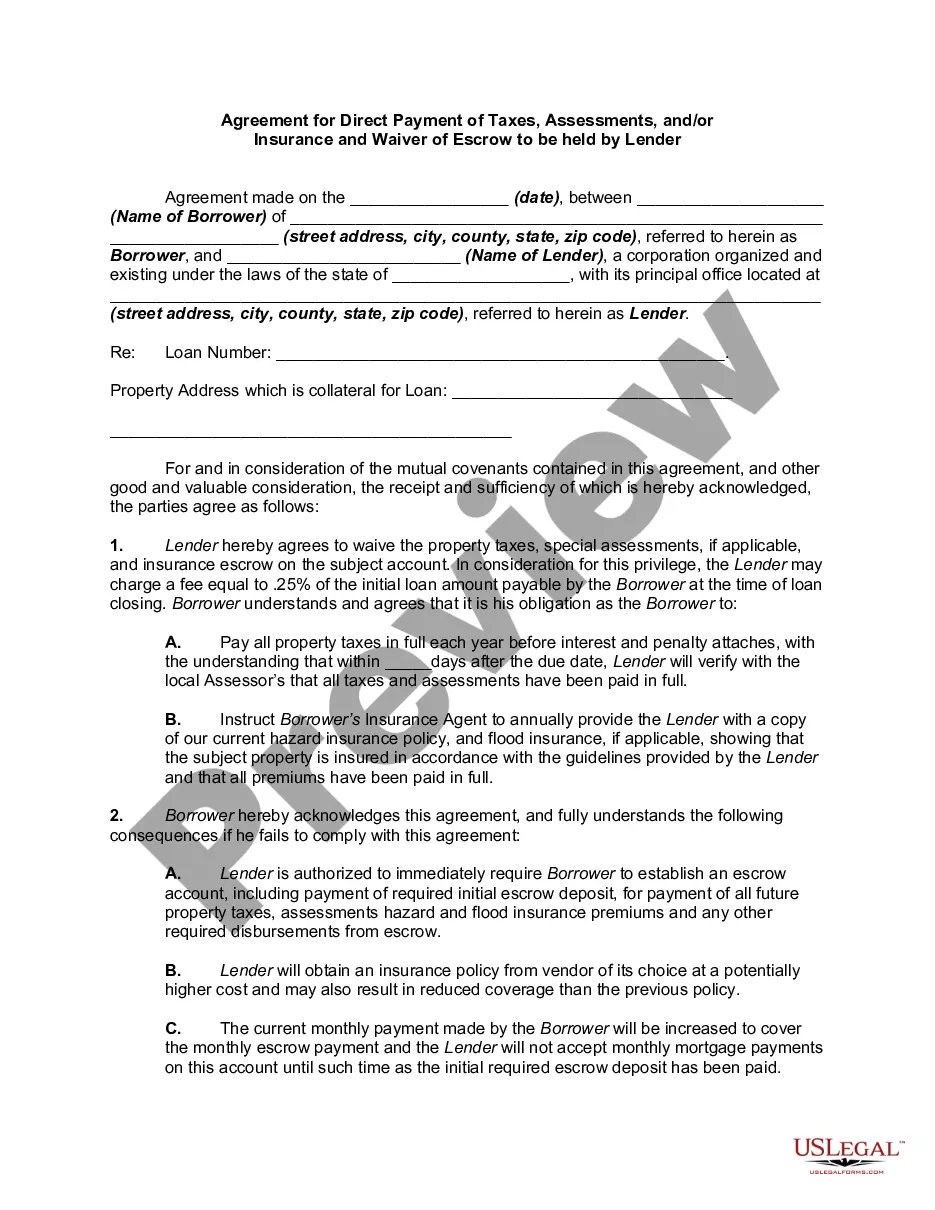
How to fill out Agreement For Direct Payment Of Taxes, Assessments, And/or Insurance And Waiver Of Escrow To Be Held By Lender?
Locating a reliable source to obtain the most up-to-date and pertinent legal templates is a significant part of dealing with bureaucracy.
Identifying the appropriate legal documents necessitates precision and meticulousness, which is why it is crucial to obtain Property Taxes With Escrow samples solely from credible providers, such as US Legal Forms. An incorrect template can squander your time and delay your situation. With US Legal Forms, you have minimal concerns. You can access and verify all the details about the document’s applicability and relevance for your particular case and in your region.
Eliminate the stress associated with your legal paperwork. Explore the extensive US Legal Forms library to discover legal templates, verify their relevance to your situation, and download them instantly.
- Use the catalog navigation or search bar to find your template.
- Examine the form’s description to determine if it meets the criteria of your state and locality.
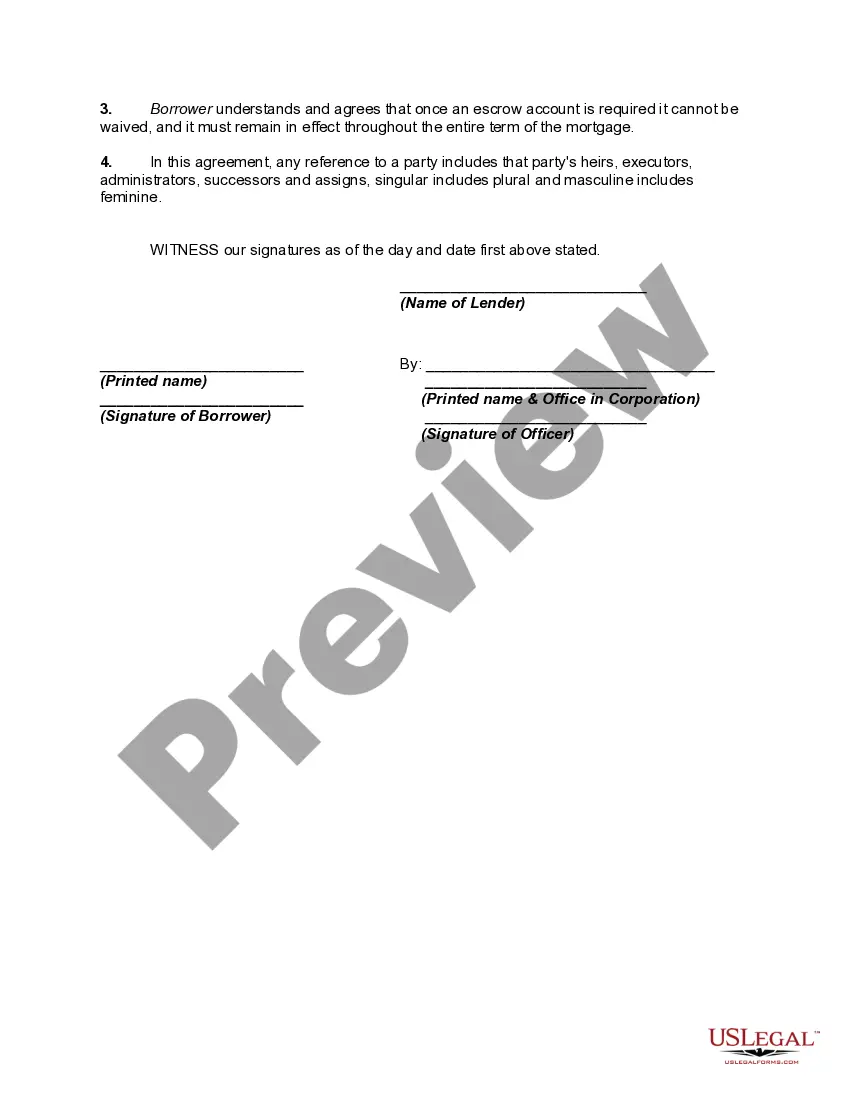
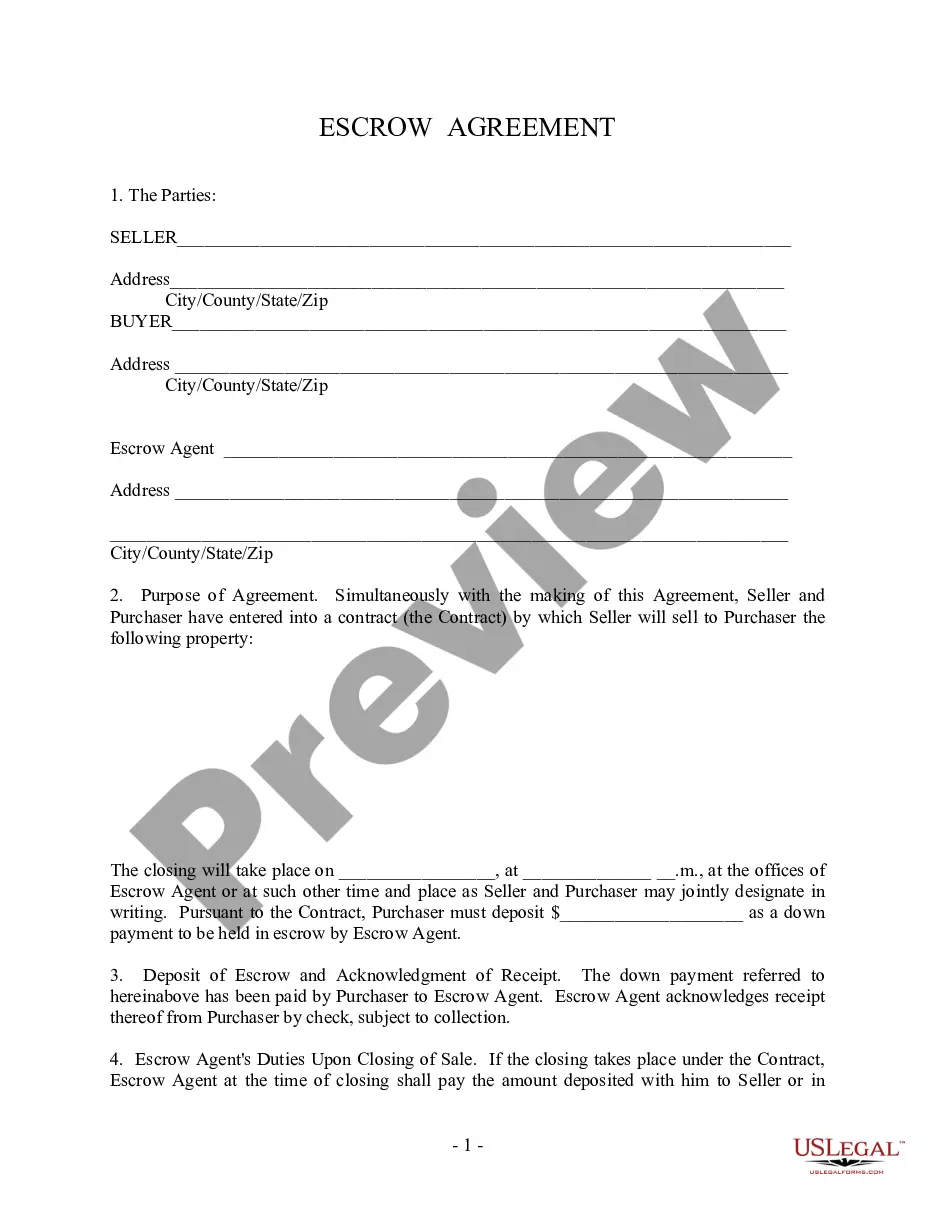
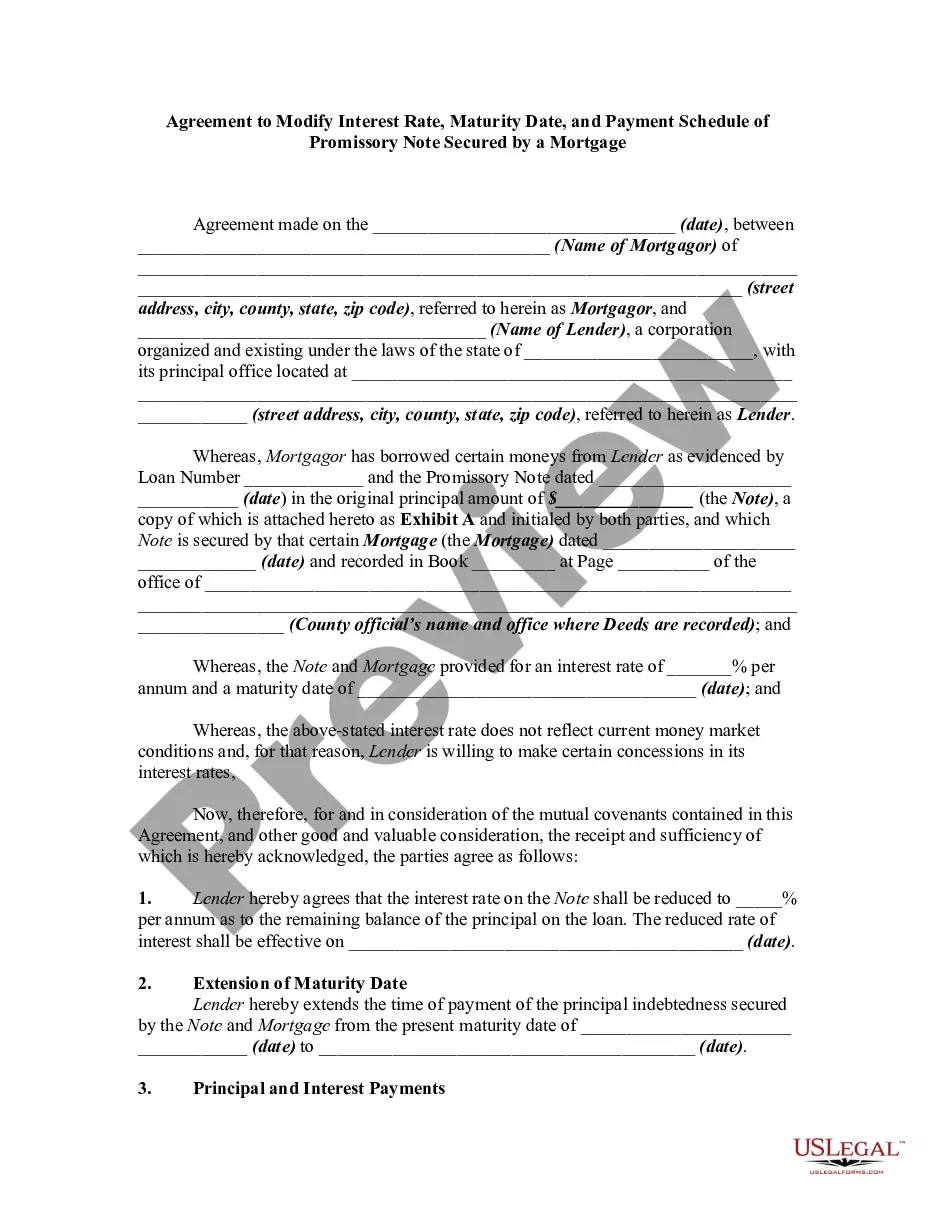
- View the form preview, if available, to ensure that it is indeed the document you are looking for.
- Continue the search and find the appropriate document if the Property Taxes With Escrow does not meet your requirements.
- If you are confident about the form’s applicability, download it.
- As a registered user, click Log in to verify and access your chosen forms in My documents.
- If you do not possess an account yet, click Buy now to acquire the template.
- Select the pricing plan that aligns with your needs.
- Proceed to registration to finalize your purchase.
- Complete your purchase by choosing a payment method (credit card or PayPal).
- Select the file format for downloading Property Taxes With Escrow.
- Once you have the document on your device, you may edit it with the editor or print it and fill it out manually.
Form popularity
FAQ
Including property taxes in your mortgage can provide peace of mind. When you opt for property taxes with escrow, you allow your lender to manage these payments for you. This arrangement helps you avoid any surprises related to large tax bills and keeps your finances organized. However, evaluate your budget to ensure this method aligns with your financial goals.
To put property taxes in escrow, start by discussing this option with your lender. They will typically include property taxes with escrow in your monthly mortgage payment. If you choose this route, your lender will collect a portion of your annual property taxes each month and hold it in an escrow account until the taxes are due. This process helps ensure that you do not miss a payment.
Many monthly house payments include an amount placed in escrow (put in the care of a third party) for real estate taxes. You may not be able to deduct the total you pay into the escrow account. You can deduct only the real estate taxes that the lender actually paid from escrow to the taxing authority.
At the end of each year, the servicer reviews your escrow account to make sure there is enough money to cover the next year's expenses. If the balance in the account exceeds what's needed for anticipated expenses, the lender may refund the difference to you.
The formula for calculating escrow is fairly simple. The tax and home insurance bills for the upcoming year are totaled and then divided by the number of payments per year. (If your mortgage servicer collects for a cushion, the amount needed for that cushion will be factored into the equation as well.)
It's typically twice your monthly escrow contribution ? per the federal Real Estate Settlement Procedures Act (RESPA). For example, if you're required to put $500 a month into escrow, your minimum required balance would typically be $1,000. The CFPB notes that this gives you a two-month cushion.
While some homebuyers prefer escrow, since it helps to avoid making large annual payments, others (especially those with stable incomes) may prefer to pay for insurance and taxes directly. For example, you may want to pay for insurance with a credit card to earn rewards.