Cremation Ashes
Description
Get your form ready online
Our built-in tools help you complete, sign, share, and store your documents in one place.
Make edits, fill in missing information, and update formatting in US Legal Forms—just like you would in MS Word.
Download a copy, print it, send it by email, or mail it via USPS—whatever works best for your next step.
Sign and collect signatures with our SignNow integration. Send to multiple recipients, set reminders, and more. Go Premium to unlock E-Sign.
If this form requires notarization, complete it online through a secure video call—no need to meet a notary in person or wait for an appointment.
We protect your documents and personal data by following strict security and privacy standards.

Make edits, fill in missing information, and update formatting in US Legal Forms—just like you would in MS Word.

Download a copy, print it, send it by email, or mail it via USPS—whatever works best for your next step.

Sign and collect signatures with our SignNow integration. Send to multiple recipients, set reminders, and more. Go Premium to unlock E-Sign.

If this form requires notarization, complete it online through a secure video call—no need to meet a notary in person or wait for an appointment.

We protect your documents and personal data by following strict security and privacy standards.
Looking for another form?

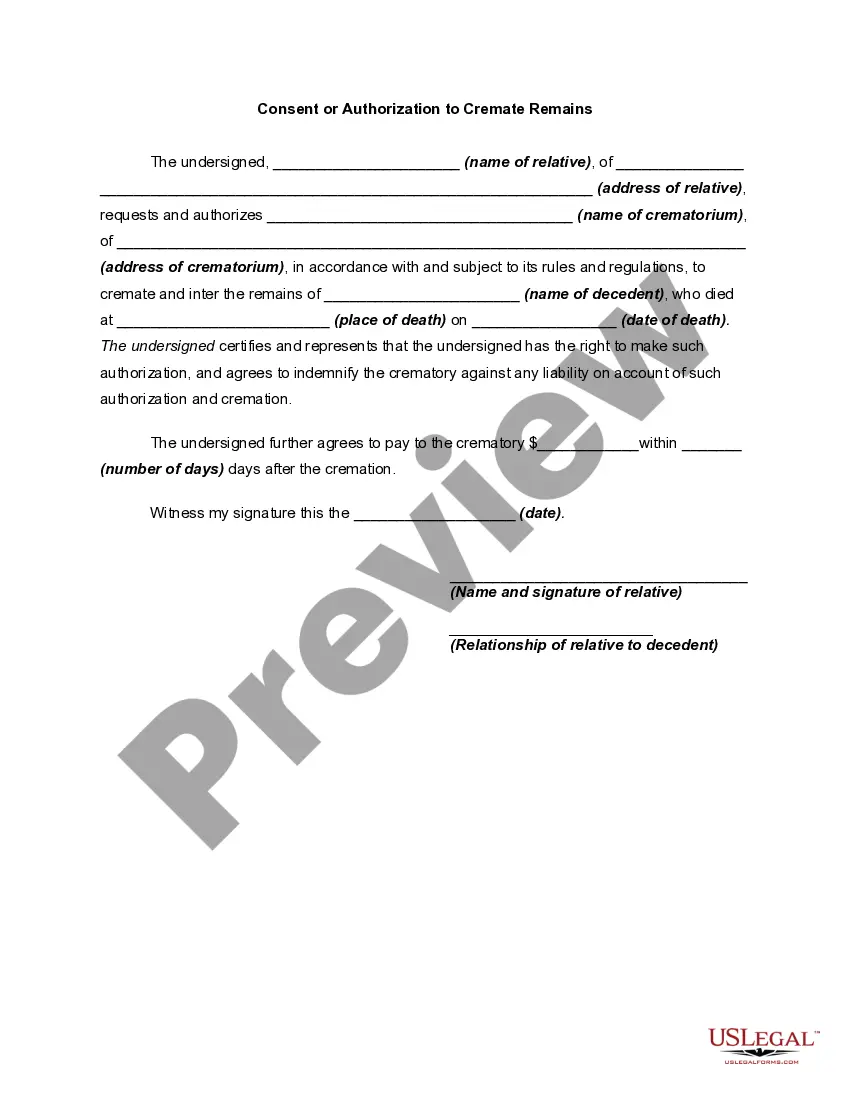
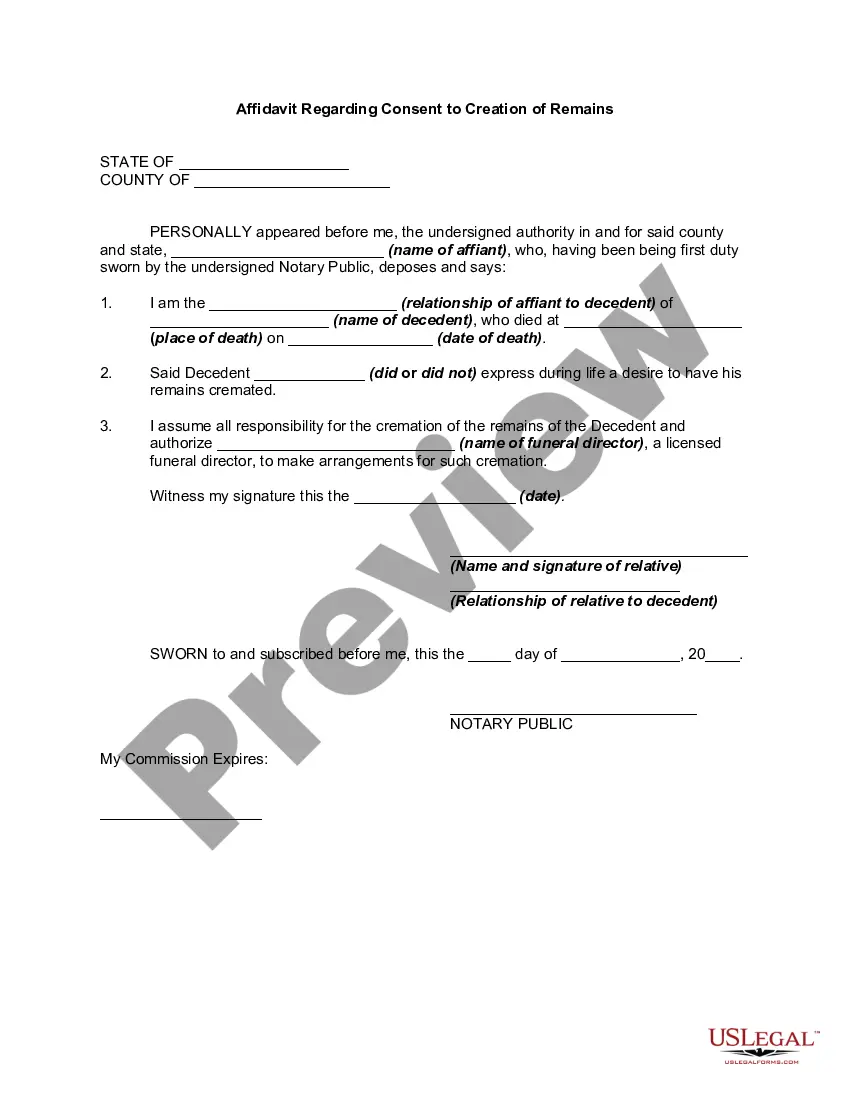
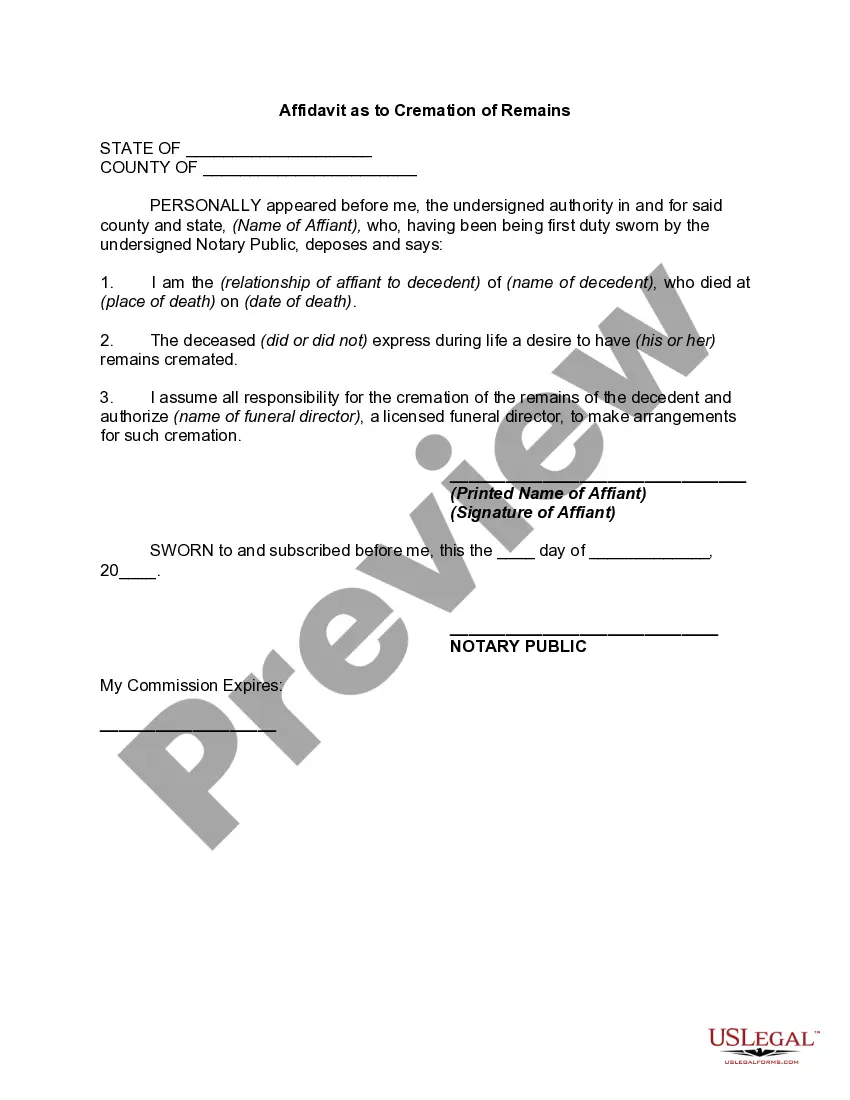
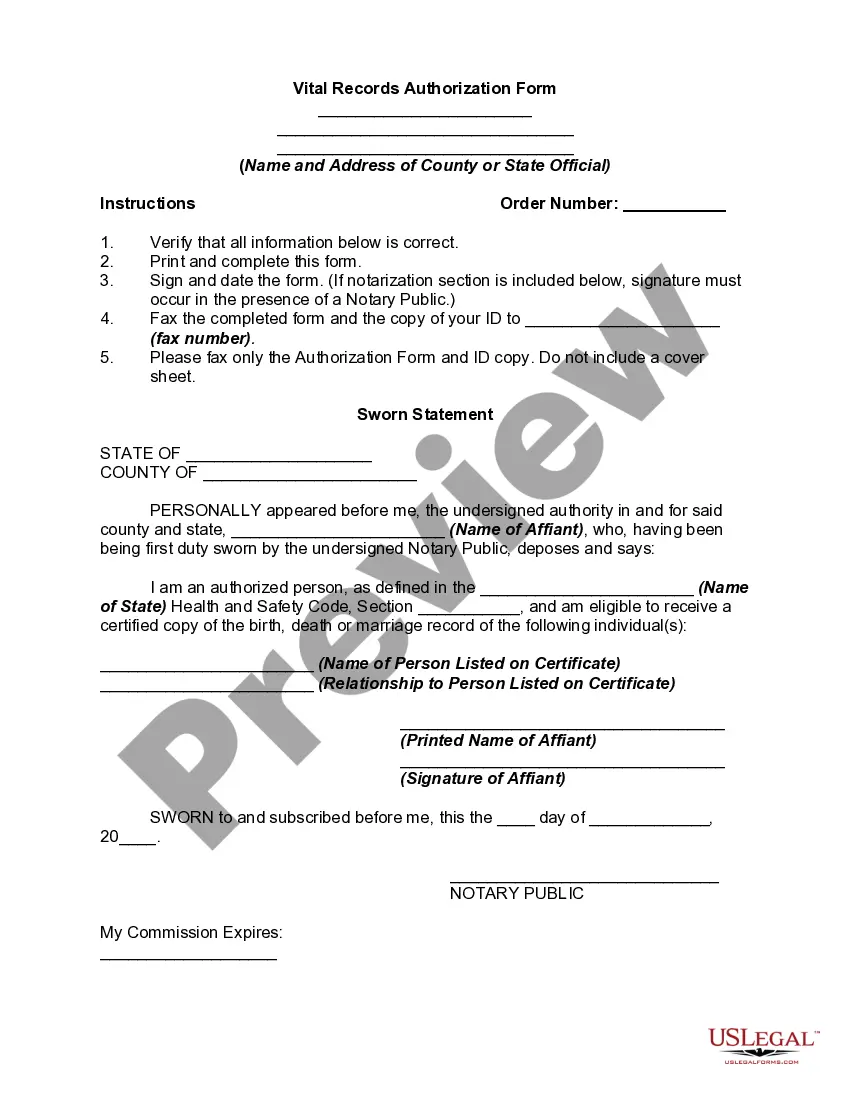
How to fill out Consent Or Authorization To Cremate Remains?
- If you are a returning user, log in to your account to download the necessary form. Ensure your subscription is current; renew it if required.
- For first-time users, start by browsing our extensive collection. Check form descriptions to find one that suits your jurisdiction and needs.
- If you don't find what you're looking for, utilize the Search tab to locate additional templates.
- Once you identify the correct document, click on the Buy Now button and select your preferred subscription plan. Registration is necessary for access.
- Complete your purchase by entering payment details via credit card or PayPal.
- After payment, download the form and save it to your device for easy access anytime via the My Forms section.
With a comprehensive library at your fingertips, US Legal Forms ensures you have the legal tools needed to manage cremation ashes effectively. The platform stands out for its affordable and extensive selection of forms, outpacing competitors.
Don't hesitate—visit US Legal Forms today and utilize our resources to streamline your legal processes.
Form popularity
FAQ
Human ashes can last indefinitely when placed in a quality urn. The urn's material can impact longevity, but cremation ashes themselves do not spoil. If you choose to keep the ashes in an urn, select one that provides protection to preserve the cremation ashes for years to come.
Spreading cremation ashes in Illinois is regulated by local laws. It is generally permissible to scatter ashes in certain public spaces, provided you have the necessary permissions. Always check for any restrictions regarding specific locations to ensure compliance when spreading cremation ashes.
There is no direct biblical mandate regarding keeping cremation ashes. Many believers find that preserving ashes can signify remembrance and love. God emphasizes respect for the body and spirit, making the decision to keep ashes a personal matter guided by individual beliefs.
Cremated ashes can last indefinitely if stored correctly. They typically do not decompose; however, exposure to elements may lead to some wear. If you choose to keep them in an urn, ensure it is well-made to preserve the cremation ashes over time.
In Illinois, the rights to cremation ashes typically belong to the immediate family members, such as the spouse or children. If there are disputes, Illinois law allows for a designated person, often outlined in a will, to have authority over the ashes. It is essential to communicate your wishes to avoid confusion surrounding cremation ashes.
The Bible is not explicit about cremation ashes. It often discusses burial as a tradition, but it does not prohibit cremation. Many Christians find comfort in knowing that the spirit of the deceased is not tied to their physical remains, whether buried or cremated.
The Bible does not specifically mention cremation, but it emphasizes respect for the deceased. Many Christians believe that the manner of disposing of the body, whether through cremation or burial, should honor the individual and their beliefs. Ultimately, what matters is the intention behind the decision regarding cremation ashes.
If you do not pick up cremation ashes after a certain period, many crematories will store them for a limited time before taking further action. Some facilities may offer to inter or scatter the ashes in a designated area. Always inquire about their policies to avoid any unwanted surprises regarding the handling of cremation ashes.
In most cases, it is legal to spread cremation ashes in your yard, but the rules can vary by location. Local laws may dictate specific permissions or restrictions, especially in residential areas. It's wise to check with local authorities or associations for any regulations that pertain to your property.
Yes, it is generally safe to touch cremation ashes. They are composed of minerals and resemble fine sand or powder. While some people may feel apprehensive, touching the ashes can be a meaningful way to connect with the memory of a loved one. Always remember to handle them with care and respect.