Qualified Trust Caps Contract For Employees
Description

Get your form ready online
Our built-in tools help you complete, sign, share, and store your documents in one place.
Make edits, fill in missing information, and update formatting in US Legal Forms—just like you would in MS Word.
Download a copy, print it, send it by email, or mail it via USPS—whatever works best for your next step.
Sign and collect signatures with our SignNow integration. Send to multiple recipients, set reminders, and more. Go Premium to unlock E-Sign.
If this form requires notarization, complete it online through a secure video call—no need to meet a notary in person or wait for an appointment.
We protect your documents and personal data by following strict security and privacy standards.

Make edits, fill in missing information, and update formatting in US Legal Forms—just like you would in MS Word.

Download a copy, print it, send it by email, or mail it via USPS—whatever works best for your next step.

Sign and collect signatures with our SignNow integration. Send to multiple recipients, set reminders, and more. Go Premium to unlock E-Sign.

If this form requires notarization, complete it online through a secure video call—no need to meet a notary in person or wait for an appointment.

We protect your documents and personal data by following strict security and privacy standards.
Looking for another form?








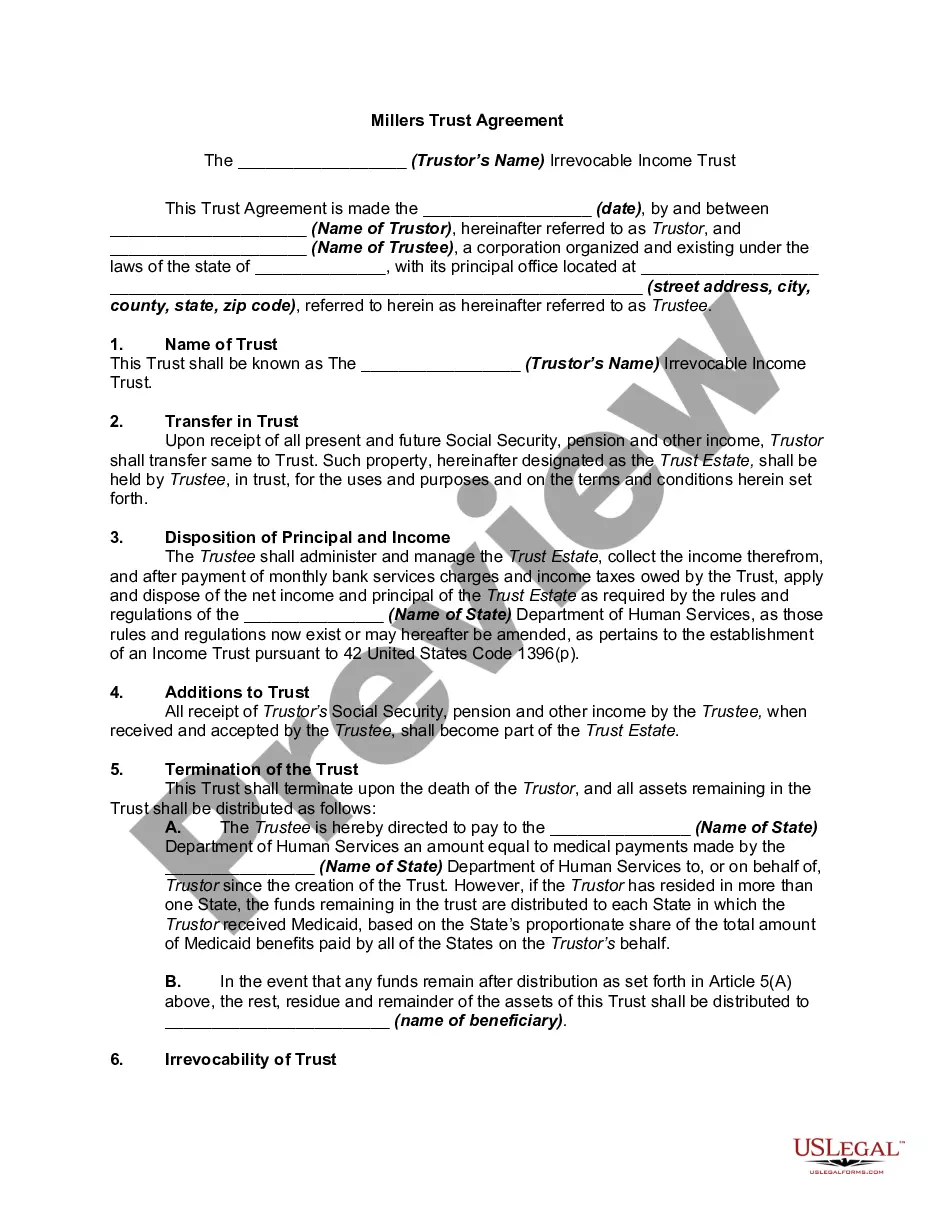
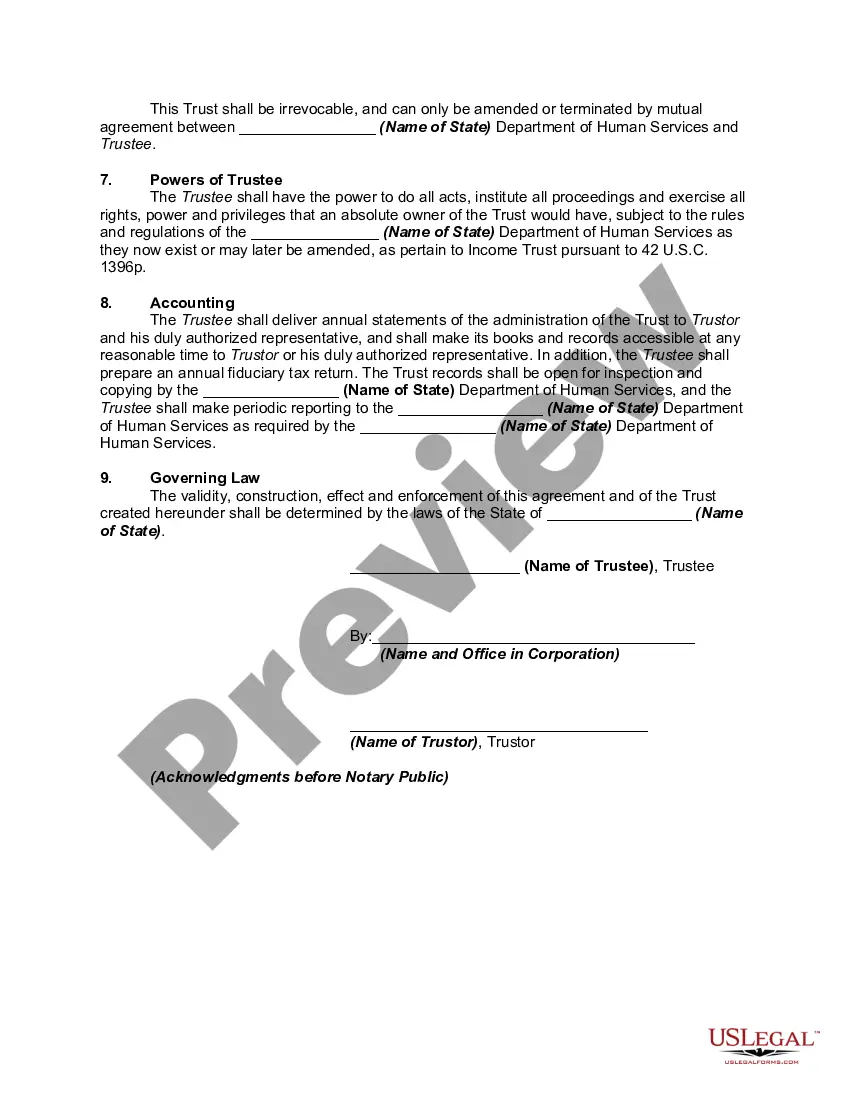
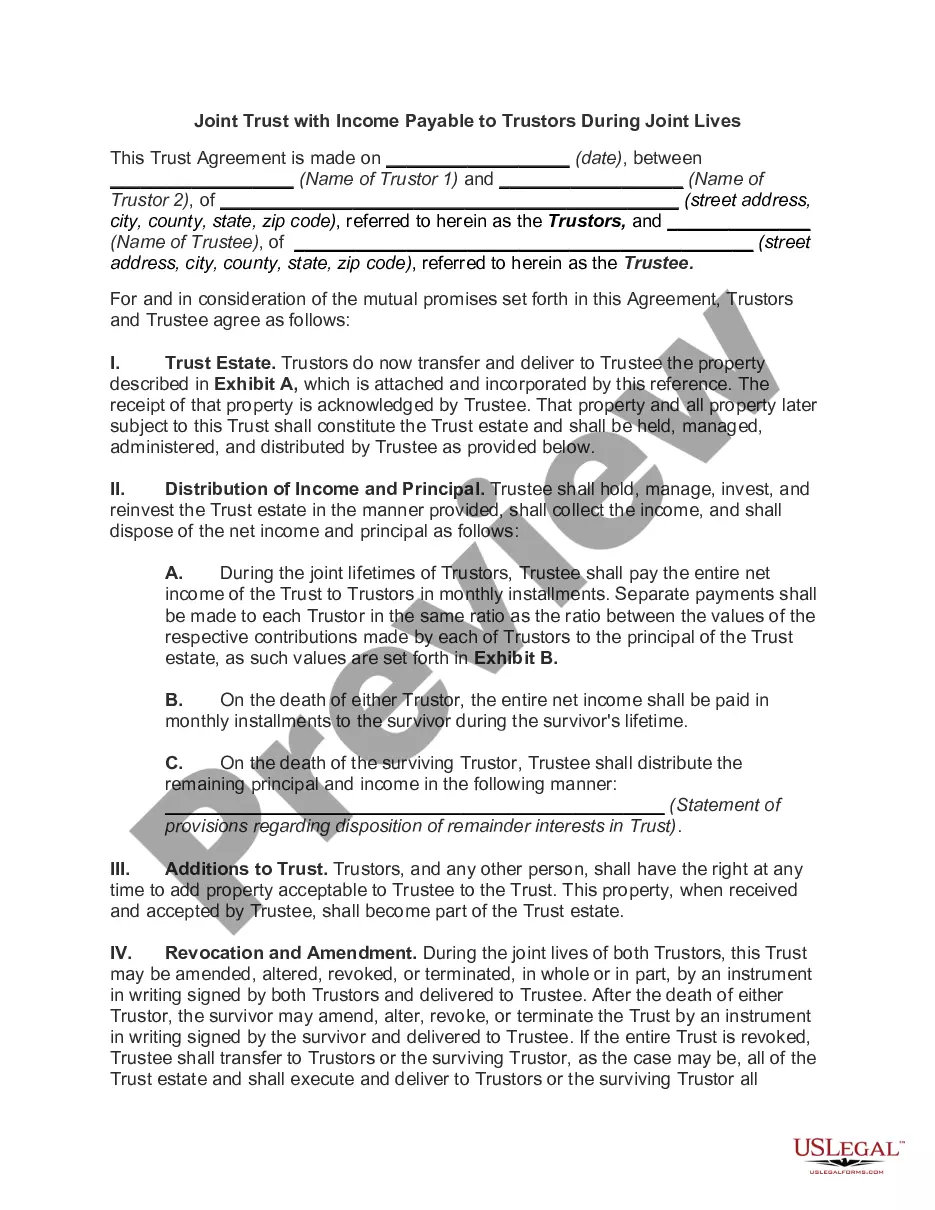
How to fill out Qualified Income Miller Trust?
- Log in to your US Legal Forms account if you are a returning user. Confirm that your subscription is active; if not, renew it based on your payment plan.
- For first-time users, start by browsing the catalog and checking the Preview mode to find the correct form that aligns with your needs and complies with jurisdiction requirements.
- Use the Search tab to locate alternative templates if the initial choice is unsatisfactory. Ensure the selected form meets your specifications before proceeding.
- Select your desired document by clicking 'Buy Now' and choose an appropriate subscription plan. It’s necessary to create an account to gain access to the full library.
- Complete your purchase by providing your credit card information or utilizing your PayPal account for payment.
- Finally, download the form to your device for completion. You can access your downloaded documents anytime through the 'My Forms' section in your account.
In conclusion, US Legal Forms stands out with its robust collection of over 85,000 fillable and editable legal templates, providing users with the tools needed to create accurate legal documents. Additionally, premium expert assistance is available to guarantee your forms are correctly filled out.
Ready to simplify your legal documentation process? Visit US Legal Forms today and take the first step towards hassle-free legal compliance!
Form popularity
FAQ
In New Jersey, a qualified trust caps contract for employees operates under specific state guidelines. The trust accumulates assets and income, which can be used for the benefit of the employees as outlined in the trust agreement. Employing a licensed professional or the US Legal Forms platform can simplify this process, ensuring compliance with state requirements.
A SCA employee refers to someone who works under the Service Contract Act, where certain labor standards apply. This includes prevailing wage rates and specific benefits, which align closely with the benefits offered by a qualified trust caps contract for employees. Understanding the obligations of being an SCA employee helps ensure compliance with federal employment regulations.
Setting up a qualified trust caps contract for employees, or a QIT account, involves several steps. First, you must gather the necessary documents, including proof of identity and employment. Then, you can follow the structured process on the US Legal Forms platform, which facilitates the creation and management of your QIT account efficiently.
To establish a qualified trust caps contract for employees, certain requirements must be met. The trust must be irrevocable, meaning it cannot be altered or terminated without consent. Additionally, the trust must be exclusively for the benefit of employees and their beneficiaries, providing clear guidelines on how assets are managed and distributed.
For a pension plan to qualify as a qualified plan, it must meet specific requirements set forth by the Internal Revenue Service. These include contribution limits, distribution rules, and employee eligibility criteria. Understanding these elements is vital when implementing a qualified trust caps contract for employees to ensure compliance and protect retirement assets.
One of the biggest mistakes is failing to clearly define the terms and beneficiaries of the trust. Parents may overlook important details or assume their intentions will be understood. To avoid confusion and ensure a qualified trust caps contract for employees functions as intended, it's crucial to communicate and document everything thoroughly.
While a trust involves agreements that can resemble a contract, it is not classified as one. A trust is a fiduciary relationship focused on managing and protecting assets for beneficiaries. However, it is essential to understand both concepts when drafting a qualified trust caps contract for employees, as they often work together.
A trust serves multiple purposes, including asset protection, tax benefits, and ensuring that assets are distributed according to the grantor's wishes. It can provide financial security for beneficiaries and simplify the management of assets over time. When it comes to qualified trust caps contract for employees, a trust can effectively secure retirement benefits.
A trust is an arrangement where one party holds assets for the benefit of another, whereas a contract is a mutual agreement between two or more parties. Trusts focus on asset management and protection, while contracts outline the terms of a specific transaction. Both play essential roles in estate planning and qualified trust caps contract for employees.
IRC section 401a9 sets forth the rules governing the distribution of benefits from retirement plans, including qualified trusts. It stipulates that participants must begin receiving distributions by a certain age, usually 72. Understanding these regulations is vital for any qualified trust caps contract for employees, as it ensures compliance and avoids penalties.