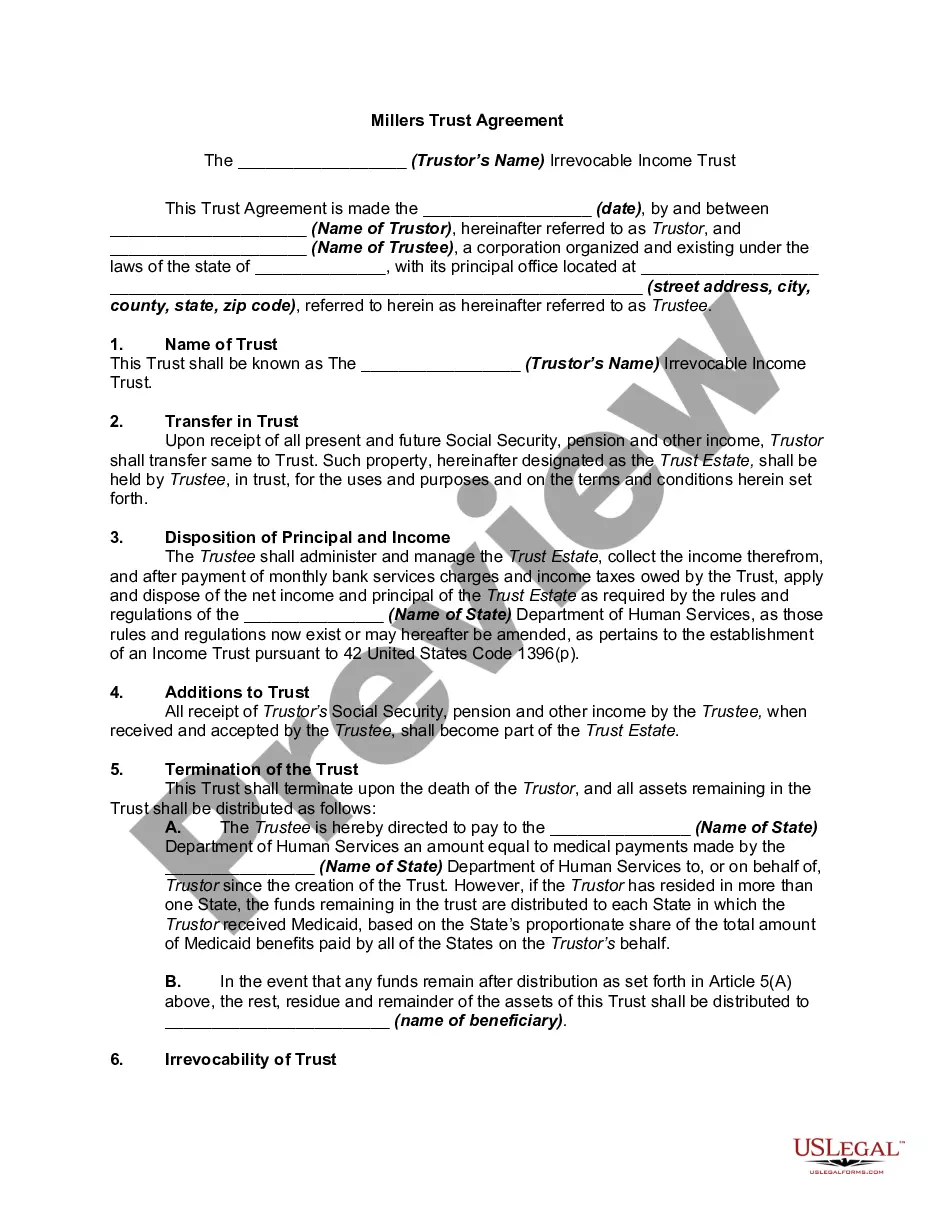
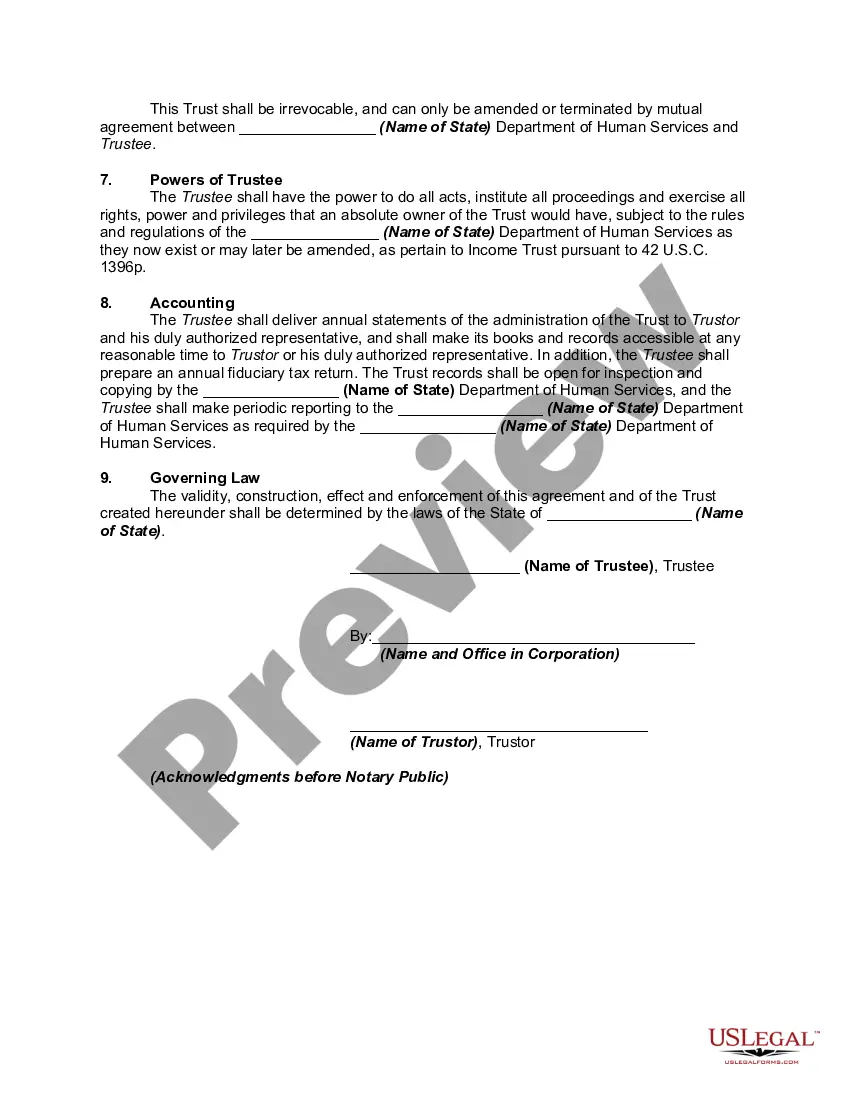
508c1a Trust

Description

Get your form ready online
Our built-in tools help you complete, sign, share, and store your documents in one place.
Make edits, fill in missing information, and update formatting in US Legal Forms—just like you would in MS Word.
Download a copy, print it, send it by email, or mail it via USPS—whatever works best for your next step.
Sign and collect signatures with our SignNow integration. Send to multiple recipients, set reminders, and more. Go Premium to unlock E-Sign.
If this form requires notarization, complete it online through a secure video call—no need to meet a notary in person or wait for an appointment.
We protect your documents and personal data by following strict security and privacy standards.

Make edits, fill in missing information, and update formatting in US Legal Forms—just like you would in MS Word.

Download a copy, print it, send it by email, or mail it via USPS—whatever works best for your next step.

Sign and collect signatures with our SignNow integration. Send to multiple recipients, set reminders, and more. Go Premium to unlock E-Sign.

If this form requires notarization, complete it online through a secure video call—no need to meet a notary in person or wait for an appointment.

We protect your documents and personal data by following strict security and privacy standards.
Looking for another form?
How to fill out Qualified Income Miller Trust?
- Log in to your US Legal Forms account. If you're returning, make sure your subscription is active. Renew if necessary.
- Browse the extensive form library. Use the preview and descriptions to confirm the form matches your needs and local jurisdiction requirements.
- Search for alternative templates. If anything seems off, utilize the search feature to find the correct document.
- Purchase the document. Click 'Buy Now' and select your preferred subscription plan. Registration is required to access the full library.
- Complete your payment. Enter your credit card information or pay via PayPal to finalize your subscription.
- Download your 508c1a trust form. Save it for completion and access it anytime from the 'My Forms' section in your profile.
By following these simple steps, you can leverage the benefits of US Legal Forms, ensuring that you have access to a robust collection of legal documents.
Start your journey towards legal security today by accessing US Legal Forms and streamline your trust management!
Form popularity
FAQ
Yes, you can set up a trust fund by yourself, including a 508c1a trust, but it often requires careful planning and a clear understanding of legal obligations. Many individuals opt to handle this process independently to save on costs; however, incorrect setups can lead to complications down the line. It is advisable to consider using resources such as US Legal Forms, which can provide you with the necessary forms and information to proceed with confidence. Additionally, consulting a legal expert can further ensure that your trust functions as intended.
Filling out a trust fund involves several steps, starting with gathering the necessary information about the trust's purpose, beneficiaries, and assets. In the case of a 508c1a trust, it’s vital to detail how funds will be allocated to support the beneficiaries' needs. Using a platform like US Legal Forms can provide you with user-friendly templates that guide you through the process. After completing the documentation, make sure to review it carefully to ensure accuracy and compliance with applicable laws.
One of the biggest mistakes parents make when setting up a trust fund is failing to define clear terms and intentions for the 508c1a trust. Without specific guidelines, beneficiaries may misunderstand their responsibilities, leading to misuse of the funds. It is crucial for parents to communicate openly and ensure that the trust document outlines distributions, management responsibilities, and longevity. Engaging professionals can also help in establishing a smooth framework.
To form a 508c1a trust, you begin by gathering the necessary documentation, such as your organization’s mission statement and governing documents. It is essential to adhere to IRS guidelines, which may require specific language in your trust’s formation documents. Utilizing a service like US Legal Forms can simplify this process, providing templates that ensure compliance with legal requirements. Additionally, consulting with a qualified attorney can help you navigate any complexities involved.
The benefits of a 508c1a trust include enhanced asset protection, tax advantages, and the ability to maintain privacy from public scrutiny. By utilizing this trust, individuals can also avoid complex regulatory requirements that often come with other forms of tax-exempt organizations. Additionally, a 508c1a trust can facilitate charitable activities while preserving control over the assets. Explore how uslegalforms can guide you in setting up a 508c1a trust to maximize these benefits.
A 508c1a trust is a specialized tax-exempt trust designed primarily for religious organizations and individuals following a spiritual path. It offers unique protections and benefits under the tax code, allowing for greater financial flexibility. This trust does not require the same public reporting as other tax-exempt entities, making it an attractive option for many. Understanding how a 508c1a trust operates can empower you to take advantage of its benefits effectively.
A trust typically functions as a separate tax entity, meaning it can hold assets independently from its creator. This allows trusts, including a 508c1A trust, to manage and distribute funds while adhering to tax laws. Trusts may be subject to specific tax obligations based on their structure and purpose; however, many enjoy tax exemptions. Recognizing the type of tax entity a trust represents is essential for effective financial planning.
Not necessarily, as a non-profit organization can take various forms, including corporations and foundations, instead of being classified as a trust. However, a non-profit organization can operate as a trust, like a 508c1A trust, depending on its structure and purpose. These organizations focus on charitable or community objectives and can still capitalize on tax-exempt benefits. Understanding your organization's structure is vital for maximizing its advantages.
IRS code 508 C1A refers to a specific subsection of the tax code that outlines the criteria for organizations to qualify as tax-exempt. This code allows certain organizations, such as trusts or religious entities, to operate without having to apply for tax-exempt status formally. By understanding IRS code 508 C1A, individuals can efficiently establish a 508c1A trust and enjoy its benefits while staying in line with federal regulations. This clarity can significantly streamline the setup process.
The primary difference between a 501c3 and a 508c1A trust lies in their operational structures and IRS regulations. A 501c3 trust is strictly charitable and often relies on donations, while a 508c1A can operate with broader principles, focusing on religious or educational purposes. Additionally, a 508c1A trust can receive tax-exempt status without applying for it, which provides a significant advantage. Understanding these differences is essential when choosing the right structure for your organization.